Medha Bisht

Author
Medha Bisht

Blogs
Medha is a technical writer and recent graduate who blends curiosity, creativity, and a love for stories. When not writing, she’s exploring long treks, diving into books, or rewatching her favorite anime.
author’s Articles

Insights & Stories by Medha Bisht

Discover Medha’s crisp breakdowns on tech, writing, and the ideas that inspire her - shaped by books, anime, and everyday adventures.
Clear all
Thank you! Your submission has been received!
Oops! Something went wrong while submitting the form.
Filter
Filter

Online Recruitment Software: How to Choose the Right Platform in 2026

Online Recruitment Software

Hiring in 2026 feels different. There is more technology than ever, but making real connections is still tough. Many HR generalists feel buried under endless resumes and manual tasks. If you are feeling overwhelmed, you are not alone. Last year, most companies missed their hiring goals because their systems could not keep up. Picking the right online recruitment software is not just about technology anymore. It is about making your job easier and letting you focus on people, not paperwork. This article will help you choose the right platform without confusing technical terms.

What is online recruitment software?

Online recruitment software is the main place where you manage your whole hiring process. It is a central spot to find, attract, screen, and hire new team members. In the past, these tools were just for storing resumes. Now, they are much more advanced. They help you with everything from building your employer brand to understanding why people stay at your company.

Definition and core purpose

This software is designed to keep everything in one place. You no longer need to track candidates in emails, interviews in spreadsheets, and background checks in another app. For HR generalists, this means no more entering the same information twice or losing track of emails. The software takes care of tasks like posting jobs to many boards at once or scheduling interviews across time zones. It helps make hiring more organized and predictable.

How modern recruitment software has evolved

Recruitment technology has changed quickly. Not long ago, software just waited for people to apply. Now, we have what feels like a digital teammate. Modern platforms use smart assistants that work all the time. They can transcribe interview notes, update candidate records automatically, and even search your old database for strong candidates who did not get hired before but might be a good fit now. The goal is no longer just to fill a job quickly, but to find someone who will stay and succeed.

Era Primary focus Technology shift Candidate experience
2010-2018 Compliance and storage Cloud-based databases Transactional and slow
2019-2023 Efficiency and volume Automated resume parsing Improved but often robotic
2024-2026 Quality of hire and skills Agentic AI and skills-mapping Personalized and high-touch

Types of recruitment software: ATS Vs. CRM Vs. End-to-End platforms

When you begin searching for tools, you will come across many three-letter acronyms. Knowing what each one means will help you find what fits your needs.

Applicant Tracking Software (ATS)

The ATS is the main tool for managing people who have already applied for your job. It helps you stay organized and follow hiring rules. The process is simple: someone applies, gets interviewed, and is either hired or not. If you get many applications for each job, a good ATS is important for handling all that information.

Recruitment CRM (Candidate Relationship Management)

A CRM helps you with the proactive part of hiring. It is made for people who have not applied yet but could be a good fit later. You find someone promising, stay in touch over time, and build a relationship so they are interested when a job opens. CRMs are especially useful for hard-to-fill jobs in fields like healthcare or technology.

End-To-End recruitment platforms

By 2026, most companies are choosing all-in-one systems. These end-to-end platforms combine the CRM and the ATS. This is often the best option for HR teams because everything is in one place. You do not have to worry about data being separated between tools. It lets you manage the entire process, from when someone first learns about your company to when they accept a job offer.

10 must-have features in online recruitment software

When you are looking at new tools, check that they have these ten features. They will help you save time and make your work easier.

  1. Job Posting and Multi-Board Distribution: You should be able to post a job once and have it appear on LinkedIn, Indeed, and dozens of other sites instantly.
  2. Applicant Tracking And Pipeline Management: You need a clear, visual board that shows where every candidate is.
  3. Resume Screening And Parsing: The software should be able to read a resume and automatically pull out important details such as skills and experience.
  4. Candidate Screening and Skills Assessment: Built-in skills tests show you what a person can really do, not just what they claim.
  5. Interview Scheduling and Automation: Good software lets candidates pick their own interview times based on your calendar.
  6. Collaboration and Team Evaluation Tools: You need a place where every interviewer can leave their notes and scores.
  7. Recruitment Workflow Automation: Automation should take care of reminders, such as asking hiring managers to review candidates.
  8. Analytics and Reporting Dashboards: You need to know what is working and where your best hires are coming from.
  9. Candidate Communication and Experience: The software should make it easy to text or email candidates with mobile-friendly forms.
  10. Integrations and API Access: Your recruitment tool needs to talk to your other systems, like your payroll or your Slack channels.

How to evaluate and choose the right recruitment platform

Choosing the right platform is important, but it does not have to be difficult. Here are five steps to help you.

  • Step 1: Audit your current hiring workflow. Review your current hiring process and identify where things slow down.
  • Step 2: Define your company's size, hiring volume, and budget. Be realistic about your needs. Costs usually range from $15 per user for basic tools to several hundred dollars for advanced systems.
  • Step 3: Shortlist based on must-have features. Choose the tool that fits your workflow, not just the one with the most features.
  • Step 4: Run real-world demos and trials. Always request a trial. Use one of your current open roles to test the system.
  • Step 5: Assess vendor support, Security, and Scalability. Make sure the vendor offers strong support and follows current data security and privacy laws.

Common mistakes HR teams make when choosing recruitment software

It is easy to get distracted by new features. Here are some common mistakes to avoid.

  • Choosing based on feature count alone: A tool with many features is not helpful if it is too complicated to use.
  • Ignoring the candidate experience: If the software makes it hard for people to apply, the best candidates will just go somewhere else.
  • Overlooking integration needs: If your new recruitment software does not connect with your payroll system, you will have to do more manual work.
  • Skipping internal stakeholder buy-in: Get a few hiring managers to try it out so they are likely to actually use the tool.
  • Underestimating implementation time: Changing systems takes time and effort. Plan for several weeks of setup and training.

Online recruitment software trends to watch in 2026

The world is changing, so your software needs to be prepared for the future.

  • AI-Powered Screening and Matching: AI can quickly find the best matches, but a person should always make the final decision.
  • Skills-Based Hiring Over Resume-Based Hiring: More companies now focus on what a person can do instead of where they went to school.
  • DEI-Focused Features: The best tools now include diversity and inclusion features, such as hiding names or photos on resumes.
  • Mobile-first recruitment: Almost half of all job seekers apply on their phones.

Final conclusions and strategic recommendations

Choosing the right online recruitment software helps you work better. It lets you save time and focus on the people who make your company strong. When technology takes care of repetitive tasks, you can focus on being a strategic HR leader. The best time to find a new system is before you feel overwhelmed. Start by reviewing your current process, talk with your team, and look for a partner who understands your goals. By 2026, the most successful teams will not be those with the biggest budgets, but those with the smartest and most people-focused systems.

Recruitment Challenges and Solutions

Global recruitment challenges in 2026

In 2026, recruiting is shaped by a mix of ongoing talent shortages, the rise of autonomous AI, and major changes in how employers and workers relate. Attracting and keeping talent has now become central to business strategy. It’s no longer just an administrative task. This analysis looks at the main challenges for talent acquisition and offers a practical framework to help organizations build a resilient workforce in a fast-changing environment.

Talent scarcity and demographic shifts

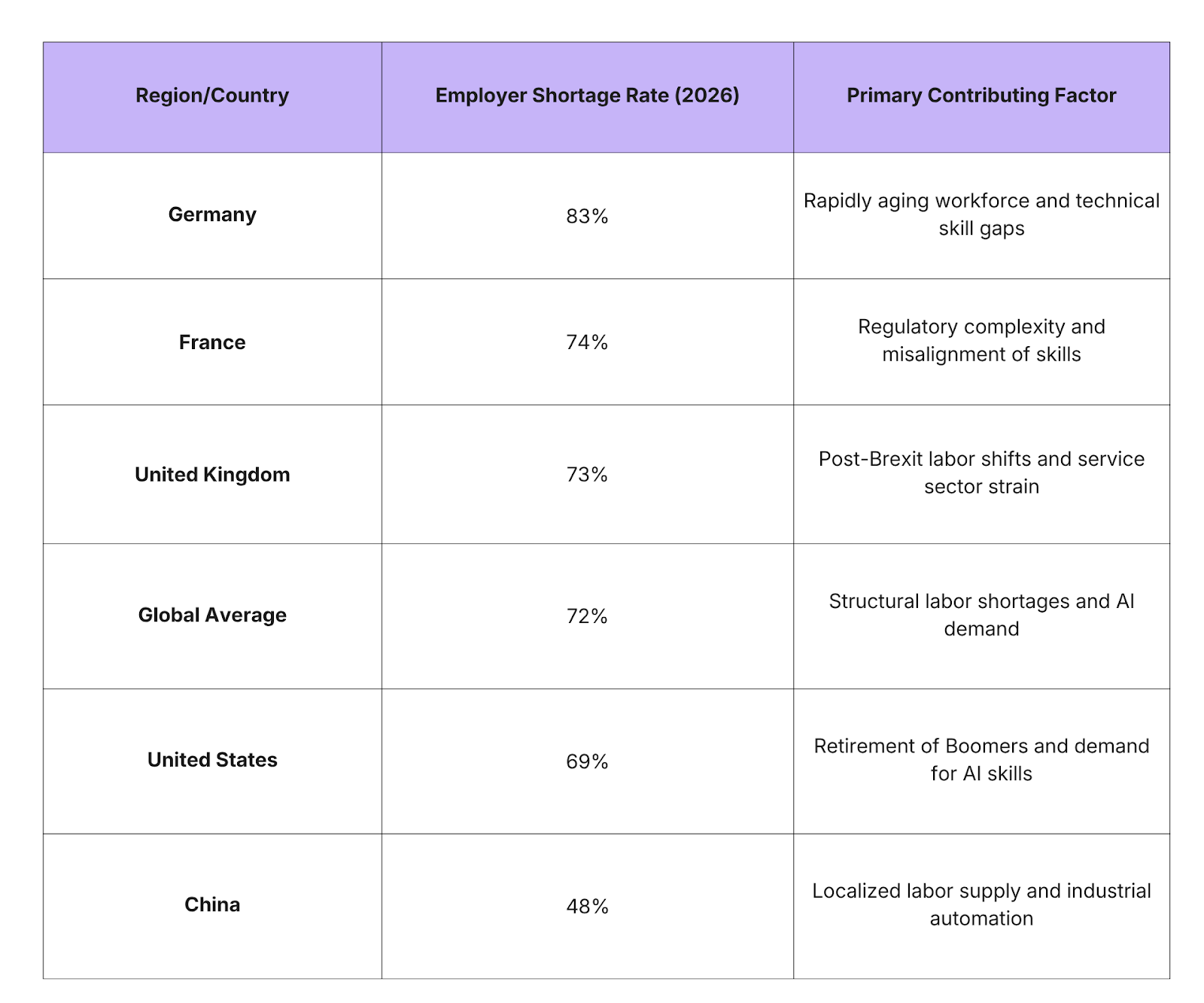
In 2026, the global talent shortage has hit a critical point. Data shows that 72% of employers worldwide struggle to fill roles, and this number remains high even as the overall job market cools. This shortage is not just a short-term issue. It is caused by the rapid retirement of the Baby Boomer generation, with 10,000 people leaving the workforce each day, and by a growing gap between what traditional education provides and what an AI-driven economy needs.

Sectoral volatility and specialized talent gaps

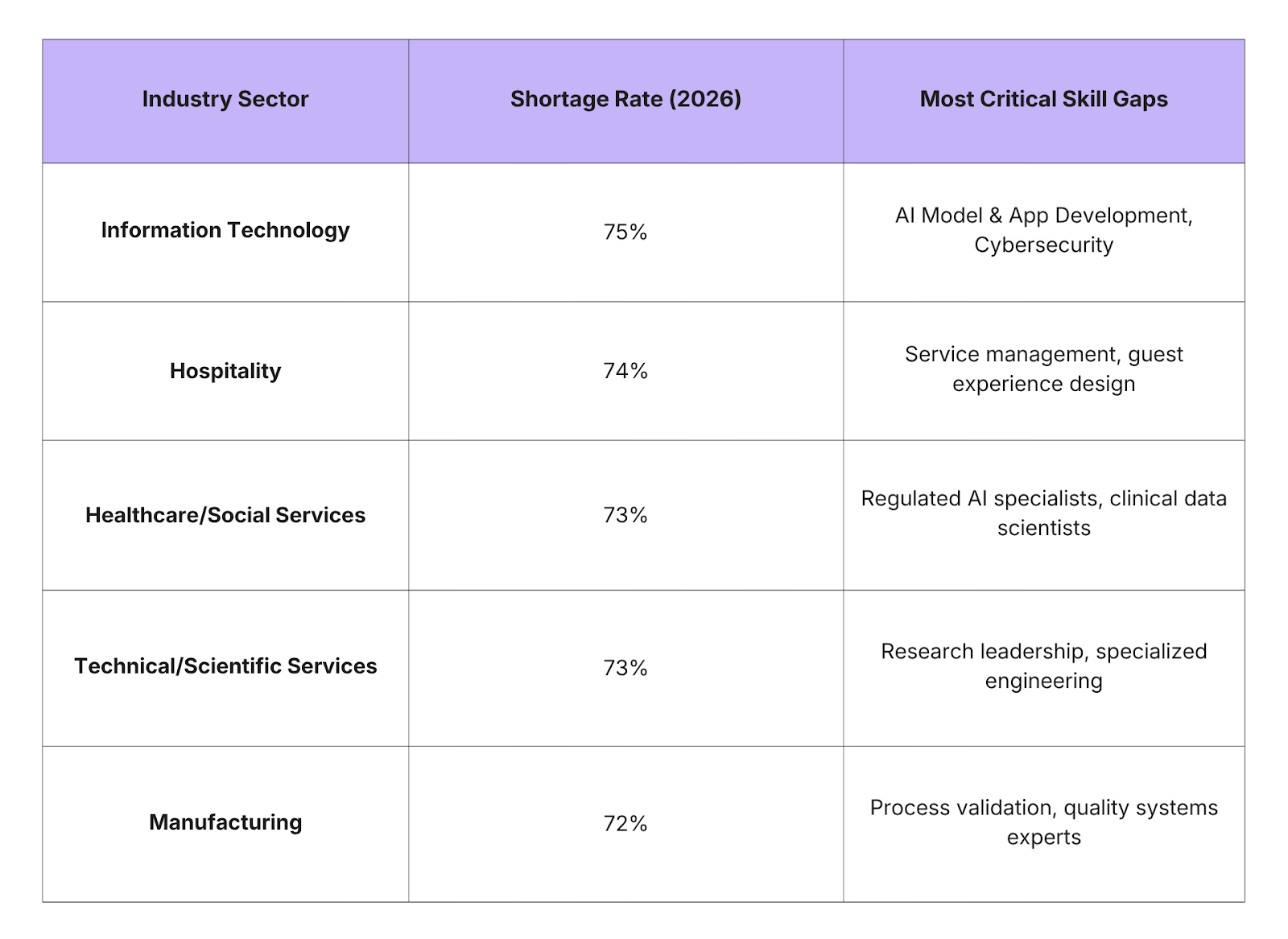
The information technology sector still has the highest shortage rate at 75%. This is mainly because AI skills are now harder to find than traditional software or data analysis skills. Other key sectors, like hospitality and the public sector including healthcare and social services also report high shortage rates at 74%.

The artificial intelligence inflection point in talent acquisition

Artificial intelligence is now being used in all HR tasks, with adoption growing from 26% in 2024 to 43%. The biggest trend is the use of autonomous AI agents. Unlike older chatbots, these agents work on their own to handle sourcing, screening, scheduling, and analyzing the job market.

Research indicates that 52% of talent leaders plan to integrate autonomous AI agents into tResearch shows that 52% of talent leaders plan to add autonomous AI agents to their teams by late 2026. This change is reshaping the recruiter’s job. Recruiters can now spend less time on resume screening and more time on building relationships, assessing culture fit, and giving strategic advice. Companies using AI-assisted messaging have seen a 9% improvement in hire quality, showing that AI works best when it supports human judgment. Challenges in tech recruiting often stem from the proliferation of AI-generated solutions being used by candidates during the evaluation process. To overcome this, organizations are adopting advanced online proctoring suites, such as those provided by HackerEarth.

HackerEarth’s online proctoring uses AI-powered, all-around monitoring to keep technical assessments fair and secure. The platform includes several advanced features to protect test integrity in remote settings:

  • Smart browser technology: This feature creates a sealed-off testing environment by blocking unauthorized software, Virtual Machines (VMs), and screen-sharing tools while disabling copy-paste and drag-and-drop functionality.
  • AI-driven video proctoring: The system provides continuous real-time surveillance, capturing high-resolution snapshots and employing eyeball movement analysis to detect anomalies or external assistance.
  • Logic validation and bluff detection: To ensure candidates truly understand their code, the platform prompts surprise questions after submission, requiring an explanation of the logic and approach used.
  • Behavioral pattern detection: Machine learning algorithms identify suspicious gestures, such as covering the mouth or looking off-screen, providing recruiters with an objective "proctoring score".

Using these tools, organizations can cut time-to-hire by up to 70% and make sure only qualified candidates reach the final interview stages. This is especially important in 2026, since only 26% of applicants trust AI to judge them fairly. Clear and transparent proctoring tools help build trust and give companies an edge.

Navigating the risks of cultural debt and bias

Even with greater efficiency, quickly adding AI can lead to "cultural debt" problems like misalignment, distrust, and ignored workplace norms if organizations do not carefully design how people and AI work together. Leaders need to clarify who is responsible when both humans and machines make hiring decisions. Making decision-making a strategic focus helps ensure AI supports, rather than replaces, human judgment.

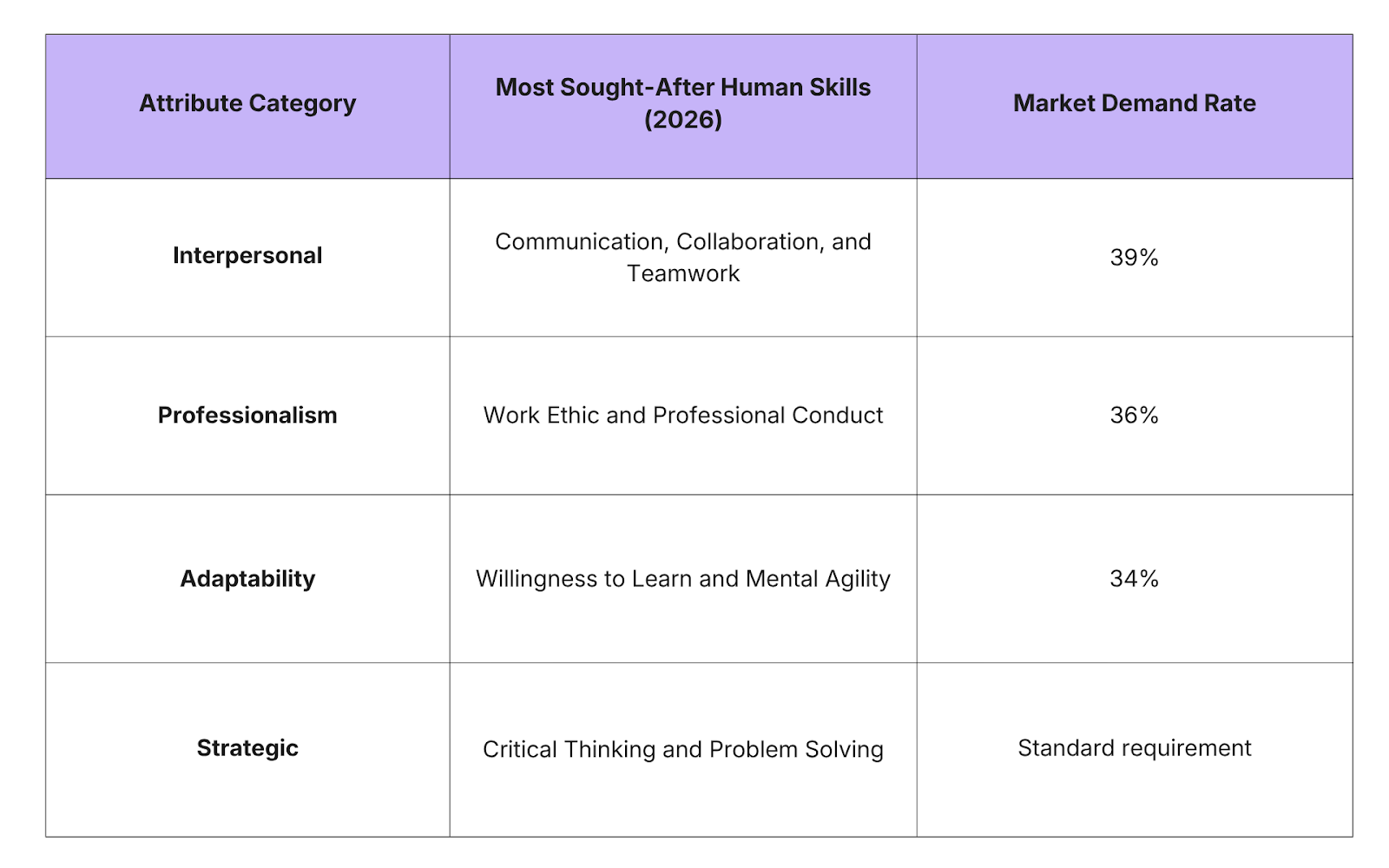
As AI handles more routine tasks, the "Human Edge" skills like empathy, teamwork, and strategic thinking—grows in importance. Organizations are using talent intelligence tools to spot skills in resumes and work history, helping employees move into high-demand AI and tech roles by finding related skills.

Upskilling and internal mobility as business continuity

Because of the talent shortage, companies are moving from quick hiring to building skills within their teams. By 2026, 69% of employers plan to invest in reskilling, seeing internal mobility as key to business continuity. This not only fills skill gaps but also boosts engagement and loyalty. Employees with good experiences and clear growth paths are 68% less likely to leave.

Strategic workforce planning now means identifying skills that can be used in different roles across the company. In manufacturing, for example, workers are learning AI basics to manage new automated systems. This helps experienced employees whose old skills are being replaced by technology stay productive and valuable.

Candidate expectations and the experience mandate

In 2026, candidates are more selective and intentional. Most apply to just one to ten jobs per week and look for employers who are transparent, trustworthy, and share their values. The problem of "ghosting"—candidates dropping out without notice remains, with 41% of organizations seeing more cases.

The shift in work-life priorities

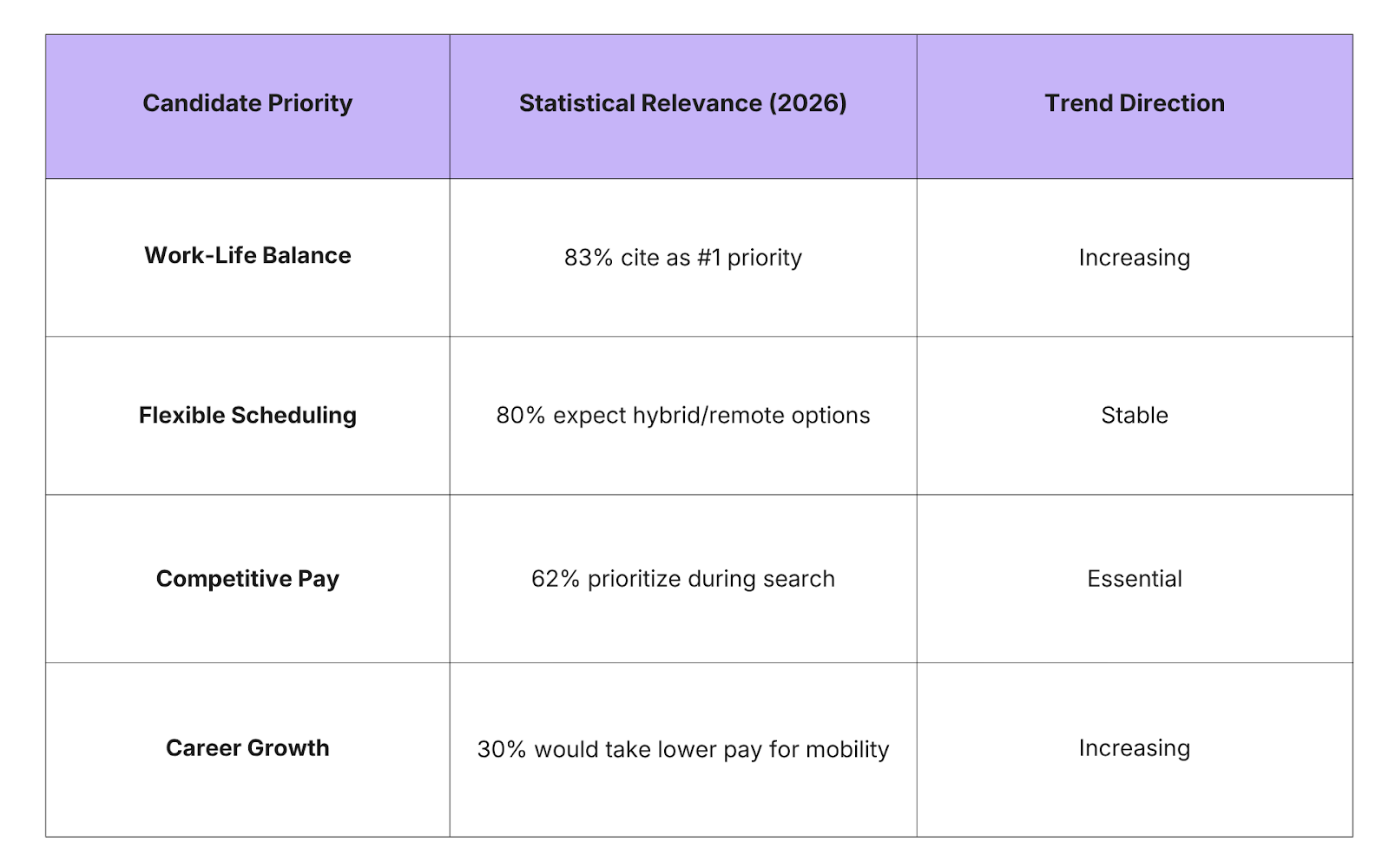
For the first time in more than 20 years, work-life balance is now the top factor for job seekers, ahead of salary. While 62% still see pay as important, 83% say balance matters most. Flexible work is now expected, not a perk. In fact, 62% would not give up remote work, even for higher pay.

Companies that do not offer hybrid or remote work for suitable roles are less attractive to job seekers. In fact, 55% say hybrid work is their top choice.

Reducing application friction and improving responsiveness

It still takes an average of 42 days to fill a job, which leads to lost productivity and higher costs per hire in the U.S. Top organizations are fixing this by making their hiring process simpler. In fact, 92% of candidates quit if the application is too complicated. Cutting application time to under 10 minutes greatly increases the number of people who finish and apply.

To overcome these common recruiting challenges, organizations are adopting several key strategies:

  • Self-scheduling tools: Implementing automated interview scheduling respects the candidate’s time and reduces administrative friction.
  • Pay transparency: Including accurate salary ranges and benefit details in job postings allows candidates to self-select, preventing wasted time for both parties and building initial trust.
  • Prompt communication: Responding to applications and providing updates within 48 hours of key stages helps maintain engagement and reduces drop-off.
  • Structured interviews: Using predetermined questions and consistent evaluation criteria ensures a fair process and reduces the risk of "gut-feeling" decisions that lead to mis-hires.

Managing the global and distributed workforce

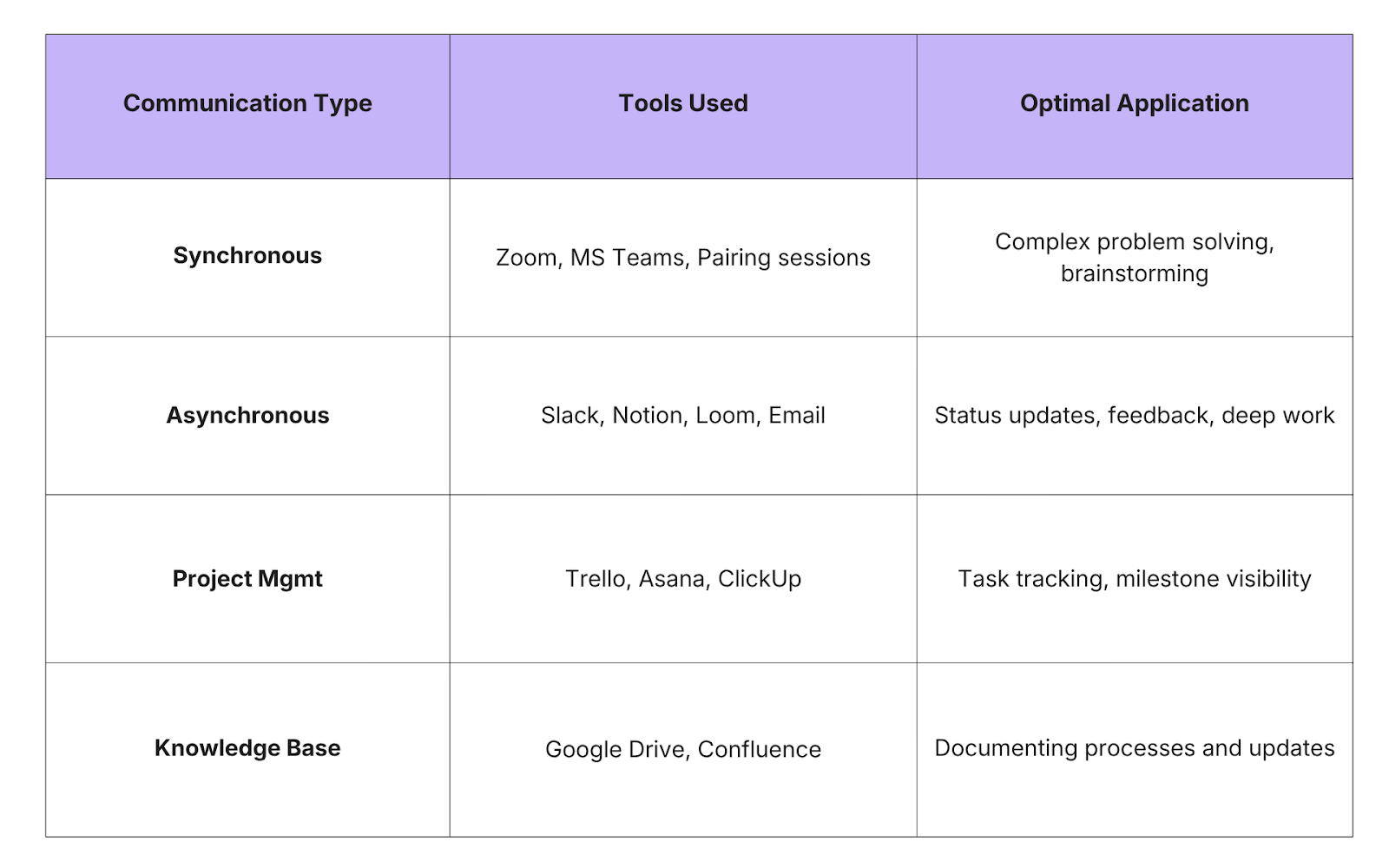
With more remote and hybrid work, managing teams across time zones is now standard in 2026 hiring. Companies are adopting "remote-first" policies that focus on results and asynchronous communication instead of time spent at a desk.

Asynchronous workflows and nearshoring strategies

Effective management of distributed teams requires a clear "communication playbook" that defines when to use synchronous (real-time versus asynchronous communication. Top organizations aim for about 75% asynchronous and 25% real-time communication to help people focus and avoid too many meetings. This approach offers four to eight hours of daily overlap, simpler scheduling, and stronger cultural alignment while maintaining global flexibility.

To keep a strong virtual culture, leaders need to actively build connections. They can do this by holding virtual town halls, setting up peer recognition programs, and having "no-meeting days" to support employee well-being and prevent burnout.

High-volume recruiting challenges and predictive planning

A huge increase in applications, partly because candidates use AI to automate job searches, has created a lot of "noise" for hiring teams. The number of applications per job has doubled since 2022, but the share of qualified candidates is still low.

To handle high-volume recruiting, companies are shifting from reacting to problems to using predictive strategies. Predictive analytics help leaders spot talent shortages and plan hiring months in advance, cutting down on last-minute, expensive hires. In 2026, workforce planning is about quickly adjusting skills and team sizes, giving an edge to firms that can adapt fast.

The cost of mis-hires and the value of total rewards

The financial impact of a bad hire can be three to four times the employee’s annual salary, esA bad hire can cost three to four times the employee’s yearly salary, especially for executives. To avoid this, companies are rethinking their "total rewards" approach. In 2026, candidates want more than salary, they seek financial wellness support, mental health benefits, and home-office budgets. Offering a competitive pay package that matches local living costs is key to attracting top international talent. Organizations that thrive in this environment are those that treat talent as a "renewable resource" rather than a fixed one. By blending "high-tech tools with high-touch leadership," firms can build the resilience necessary to adapt to technological shifts and demographic decline.

To overcome the top recruitment challenges of 2026, talent leaders should prioritize the following actions:

  1. Embrace the Human-AI Partnership: Deploy autonomous AI agents for operational tasks like sourcing and scheduling, while utilizing advanced platforms like HackerEarth to ensure the integrity of technical evaluations through AI-driven proctoring.
  2. Transition to Skills-First Models: Remove unnecessary degree requirements and focus on demonstrable competencies. Invest in talent intelligence to identify internal skill adjacencies and promote upskilling as a core retention strategy.
  3. Optimize the Candidate Experience: Reduce application friction by ensuring processes can be completed in under 10 minutes. Provide transparency in pay and flexibility from the outset to build trust and reduce candidate drop-off.
  4. Operationalize Inclusion: Move DEI from a moral imperative to a business mechanic. Conduct regular bias audits of AI tools and address the "broken rung" in management through data-driven development and mentorship programs.
  5. Build a Predictive Workforce Strategy: Shift from reactive vacancy filling to data-backed resource planning. Use predictive modeling to anticipate skill gaps and adopt flexible "portfolio" workforce structures to remain agile in a volatile market.

By aligning workforce data, engagement strategies, and role forecasting, organizations can move from observing trends to acting on them. When organizations align workforce data, engagement strategies, and role planning, they can act on trends rather than just watch them. The future of recruiting is not about picking people or technology it is about combining both to build a skilled, resilient workforce ready for the challenges ahead.

Blind hiring process: a step-by-step guide to bias-free technical recruitment

In 1952, the Boston Symphony Orchestra realized they had a problem: they were hiring almost no women. To fix this, they started using a screen during auditions so the judges couldn't see the musicians. Surprisingly, the results were still skewed male. The judges could hear the "click" of high heels on the uncarpeted floor. Once they asked musicians to remove their shoes or installed carpets to muffle the sound, the number of women hired jumped by 25% to 46%.

This story is the classic example of blind hiring. It is the practice of removing personal details from the recruitment process so that candidates are judged only on their skills. In 2026, this is no longer just a nice idea—it is a vital strategy for tech teams that want to find the best engineers without letting unconscious bias get in the way.

Why blind hiring matters in tech

We like to think we are objective, but research shows otherwise. A famous Yale study found that even trained scientists preferred a male candidate over an identical female candidate, offering the man a starting salary that was about $4,000 higher.

Racial bias is just as persistent. Research from the National Bureau of Economic Research (NBER) found that resumes with "white-sounding" names received 50% more callbacks than those with "black-sounding" names, even when the qualifications were exactly the same. In technical hiring, where skills are highly testable, there is no reason to let these biases win.

A step-by-step guide to implementation

Building a bias-free process does not happen overnight. Here is how to do it in four clear steps.

Step 1: Fix your job descriptions

Bias starts with the words you use. Terms like "coding ninja" or "rockstar" can accidentally discourage women from applying. Use tools like Textio or DataPeople to scan your job ads for gendered language. Simple changes, like swapping "aggressive" for "growth-oriented," can increase your pool of underrepresented candidates by up to 50%.

Step 2: Anonymize applications

The goal here is to remove "noise" like names, photos, and even school names. Pedigree bias—the habit of favoring graduates from elite universities—often hides great talent from non-traditional backgrounds. Software like Pinpoint or blendoor can automatically redact this information in your applicant tracking system (ats).

Step 3: Use objective skills assessments

Instead of guessing if someone can code based on their resume, let them prove it. Platforms like Hackerearth allow you to send technical tests where the candidate's identity is completely masked. With PII (personally identifiable information) masking turned on, recruiters only see the candidate's score and their code, not their gender or ethnicity. Organizations using these validated tests often see a 20% boost in employee performance.

Step 4: conduct structured, blind interviews

Interviews are the hardest stage to keep blind. However, you can use "structured interviews" where every candidate is asked the same set of questions in the same order. For tech roles, tools like FaceCode offer an anti-bias feature that masks a candidate’s name with an alias during live coding sessions. This keeps the focus on the diagram board and the logic, rather than the person's identity.

The business case for diversity

Diversity is not just about fairness; it is a competitive advantage. McKinsey’s research shows that companies with diverse executive teams are 39% more likely to be more profitable than their competitors. Furthermore, for every 1% increase in racial diversity, companies have seen sales revenue grow by approximately 9%. Diverse teams solve problems faster because they avoid "groupthink" and bring more creative solutions to the table.

Measuring your success

To know if your blind hiring program is working, you need to track the right metrics.

  • Quality of hire: Are the people you hire performing well and staying with the company?
  • Candidate net promoter score (CNPS): Do candidates feel the process was fair and transparent?
  • Adverse impact: Use the "four-fifths rule" to check if any specific group is being accidentally filtered out.

Conclusion

Blind hiring is about giving everyone a fair shot based on what they can actually do. By 2026, automation and AI tools have made this process easier than ever to scale. When you remove the click of the high heels and the bias of a name, you find the talent you’ve been missing.

How to improve the candidate experience

The recruitment landscape of 2026 has transitioned into a high-friction, high-expectation environment where the candidate experience is no longer a secondary human resources metric but a primary driver of competitive advantage and operational resilience. The collective perception of an organization by its prospective employees spanning from the initial job discovery to the final onboarding stage has profound implications for employer brand equity, time-to-hire, and long-term employee retention. Current market dynamics indicate that the average time-to-hire has escalated to approximately 44 days, a notable increase driven by additional interview rounds, complex assessments, and more deliberate decision cycles. This elongation of the hiring process occurs simultaneously with a surge in application volume; job seekers now submit between 32 and 200 applications before securing an offer, yet the success rate for cold online applications remains strikingly low, ranging from 0.1% to 2%.

The consequence of this intensified environment is a growing sentiment of candidate resentment. Statistics reveal that only 26% of North American job seekers report having a "great" candidate experience, while 13% characterize their experience as "terrible" to the point of abandoning brand affinity and future application intent. For mid-size to enterprise technology and finance firms, the cost of a poor candidate experience is not merely an HR concern but a business risk. A negative hiring journey can deter 50% of applicants from engaging with a brand after reading negative reviews, and 72% of those who have a bad experience will share their frustrations with their professional and personal networks. Conversely, a positive experience makes a candidate 38% more likely to accept a job offer, illustrating the direct link between recruitment quality and offer acceptance rates.

What is candidate experience?

Candidate experience encompasses the totality of a job seeker's feelings, behaviors, and perceptions throughout the entire recruitment lifecycle. It is a multi-dimensional construct that begins the moment a potential applicant researches an employer’s reputation and continues through the application, screening, interviewing, and eventual onboarding phases. In the 2026 technological landscape, this experience is heavily mediated by digital touchpoints. With 86% of active job seekers initiating their search via mobile devices and 91% visiting online resources to research an employer’s brand before applying, the digital "front door" of an organization is the first and often most critical component of the experience.

The definition of a quality candidate experience has narrowed significantly in recent years. Speed, transparency, and predictable momentum are now more valued than additional social touchpoints. Candidates prioritize a process that respects their time, provides clear communication, and offers a fair evaluation of their skills. This is particularly relevant in the technology sector, where 60% of candidates invest at least one hour in research and preparation before even starting an online application. The experience is also defined by the quality of interactions; 46% of candidates believe their time is disrespected during interviews, often due to a lack of preparation by the hiring team or redundant questioning.

Why is candidate experience important?

The strategic importance of candidate experience is rooted in its ability to influence both immediate hiring goals and long-term organizational health. Organizations that deliver a superior experience are three times more likely to improve employee retention and twice as likely to enhance their overall net promoter score (NPS). The ripple effects of a poor experience extend beyond a single vacancy; 52% of candidates have declined job offers specifically due to negative experiences during the recruitment process, and 50% of those who have a bad experience may refuse to purchase products or services from that company in the future.

In competitive sectors like technology and finance, the ability to attract top-tier talent is directly correlated with employer brand reputation. Glassdoor research suggests that an effective onboarding process in the final stage of the candidate experience can increase employee retention by 82%. Furthermore, a positive experience creates brand advocates; 8 in 10 candidates will share a positive experience with their professional network, and 50% will post a positive mention on sites like LinkedIn or Glassdoor. This organic promotion reduces reliance on expensive agency fees, which 19% of candidates actively avoid.

Metric category Statistical benchmark Impact on talent acquisition
Offer acceptance 38% increase with positive experience Higher conversion of top-tier candidates
Brand advocacy 80% share positive experiences Organic growth of employer brand equity
Talent loss 52% decline offers due to poor experience Wasted recruitment spend and increased time-to-hire
Retention 82% improvement with effective onboarding Lower turnover and reduced long-term hiring costs
Referral rate 13% of bad experiences stop all referrals Shrinking talent pipeline and higher sourcing costs

15 ways to improve candidate experience in recruitment

Improving the candidate experience requires a comprehensive overhaul of traditional recruitment workflows, shifting toward a model that prioritizes the applicant's journey as much as the hiring manager's needs. The following 15 strategies represent a synthesis of data-driven best practices for 2026.

High-fidelity job descriptions and pay transparency

The first touchpoint of any recruitment process is the job description. In 2026, candidates have become increasingly selective, with 43% reporting that job advertisements do not contain enough information about the role. A modern job description must move beyond a simple list of requirements to provide a realistic "typical week" preview and an overview of the organizational culture. Pay transparency has emerged as a non-negotiable filter; 74% of candidates want pay transparency, and four in ten state they would lose interest in a role that does not list a salary range. This transparency is not just a preference but a growing regulatory requirement in several jurisdictions, making it a critical compliance and branding factor.

Mobile-agnostic and simplified application processes

The application process is where the highest volume of candidate drop-off occurs. Approximately 60% of job seekers have abandoned an application due to its length and complexity, yet 49% of employers continue to provide processes that are perceived as too long. Organizations must transition to mobile-optimized, device-agnostic application systems, as 86% of active seekers start their search on smartphones. The most effective applications are those that respect the "one-click" expectation, avoiding redundant data entry where candidates are asked for the same information already present in their CV.

Predictable and consistent communication cadences

A lack of communication is the single most cited reason for candidate dissatisfaction, with 65% of applicants reporting inconsistent updates. The "ghosting" epidemic has reached critical levels; 61% of job seekers report being ghosted after an interview. To mitigate this, organizations should establish a roadmap of the hiring stages, sharing details about who is involved, the number of rounds, and the estimated timeline. Providing a designated contact person can alleviate confusion and ensure that candidates feel valued rather than processed.

Skills-first hiring and expanded talent pools

Adopting a skills-first methodology expands eligible talent pools by 6.1 times globally. This approach moves away from traditional credentialing (such as specific degrees) and focuses on the candidate's actual ability to perform job-relevant tasks. In 2026, this is particularly relevant in finance and tech, where automation is commoditizing routine work, making the "human-in-the-loop" skills like ethical reasoning and strategic storytelling more valuable.

Developer-friendly technical assessments with HackerEarth

For technical roles, the assessment phase is often a point of friction. Traditional coding tests can feel abstract and disconnected from real-world work. HackerEarth's platform addresses this by offering a developer-friendly environment that supports 40+ programming languages and includes features like autocomplete and pre-populated snippets. By using project-type questions that simulate on-the-job problems, employers can evaluate logic and efficiency rather than just syntax. This realism reduces candidate anxiety and provides hiring managers with a more accurate picture of performance, showing a 95% correlation with on-job success.

Human-AI collaboration and autonomous agents

In 2026, half of talent leaders plan to integrate autonomous AI agents into their teams. These agents, such as the HackerEarth AI Interviewer, can conduct structured, role-specific conversations without the bottlenecks associated with human scheduling.These tools use video avatars to create a natural experience, putting candidates at ease while maintaining consistent evaluation standards.This balance of automation and human oversight addresses the 26% "AI trust ceiling" by ensuring that decisions are auditable and transparent.

Structured interviewing and bias mitigation

Unstructured interviews are significantly less predictive of job performance than structured ones. Companies that use structured interviews where every candidate is asked the same set of questions and evaluated against a consistent rubric earn higher candidate experience ratings and a stronger perception of fairness. Tools like HackerEarth's AI agents further this by masking personally identifiable information (PII) such as gender or accent, ensuring that evaluation is based purely on merit.

Speed-to-schedule and velocity benchmarks

Velocity is a key differentiator in the candidate experience. Candidates who experience a positive hiring journey often hear back within three to five days, whereas the average candidate may wait months. Employers with exceptional experiences aim to schedule interviews within two to six days of the application. Compressing the hiring cycle from the average 44 days to under 10 days not only improves the experience but also significantly reduces the risk of top talent being poached by competitors.

Candidate preparation and coaching

Empowering candidates to perform their best is a hallmark of a mature recruitment process. Providing sample questions, practice tests, or a summary of what to expect during an assessment can dramatically reduce candidate stress. HackerEarth’s AI Practice Agent serves as a "candidate coach," allowing developers to practice in real interview scenarios and receive instant, actionable feedback.This preparation creates a larger pool of "interview-ready" candidates and improves overall hiring success rates.

Collaborative pair programming and FaceCode

The technical interview should mirror the actual work environment. HackerEarth’s FaceCode platform enables live, collaborative coding sessions with HD video and shared editing. This allows interviewers to assess not just the final code but the candidate's problem-solving methodology and communication style in real-time. This interactive approach is preferred by 82% of candidates who favor tech-enabled interview processes.

Meaningful feedback for rejected candidates

The candidate experience does not end with a rejection. Providing detailed, constructive feedback to unsuccessful applicants can leave a lasting positive impression; 70% of rejected candidates say this would lead them to view the employer more favorably. This practice builds long-term connections and ensures that "silver medalist" candidates remain interested in future opportunities.

Respecting the "Last 5 Percent" in human evaluation

As AI automates the "grunt work" of data entry and initial screening, the human interviewer's role shifts to evaluating the "Last 5 Percent" , the intuition, cultural integration, and ethical reasoning that machines cannot replicate. Focusing on these high-level human attributes during the final interview rounds respects the candidate's expertise and ensures a more holistic match.

Seamless virtual and physical logistical support

Whether an interview is virtual or in-person, logistical friction must be minimized. For virtual sessions, this means using stable, user-friendly platforms and providing clear instructions. For in-person visits, providing parking information, directions, and a warm welcome is essential. These details signal to the candidate that the organization values their time and well-being.

Competitive offer delivery and flexibility

Candidates in 2026 are increasingly selective, often declining offers that lack competitive pay or flexibility. Offer trends reflect a workforce that prioritizes value alignment and career growth. Speed in delivering the offer is critical; a delay at this final stage can derail an otherwise perfect experience.

Strategic onboarding and mentorship

A positive onboarding process is the final pillar of a great candidate experience. Assigning a mentor or "buddy" during the first few weeks helps improve employee retention by making the transition from "applicant" to "team member" smoother. Good onboarding communication makes hires 137% more willing to deepen their relationship with the company.

Strategy phase Primary candidate need Key solution/tool
Pre-application Brand trust and transparency Pay transparency and Glassdoor management
Application Speed and simplicity Mobile-optimized, one-click systems
Assessment Fairness and relevance HackerEarth project-based tests
Interview Respect and clarity Structured interviews and AI interviewers
Post-interview Closure and feedback Detailed feedback and timely updates
Onboarding Integration and support Mentorship programs and clear schedules

How to measure candidate experience

Organizations cannot improve what they do not measure. In 2026, advanced recruitment teams prioritize candidate-centric analytics to fine-tune their hiring funnels. Only 11% of organizations currently track candidate satisfaction, presenting a significant opportunity for competitive differentiation. Key metrics to track include:

The application completion rate is a primary indicator of friction; a low rate typically signals that the process is too long or not mobile-friendly. Net Promoter Score (NPS) for candidates, collected via post-application or post-interview surveys, provides a quantitative measure of brand sentiment. Additionally, tracking “ghosting” rates at various stages can highlight where communication is breaking down.

Hiring leaders also monitor “quality of hire” and “time-to-hire” benchmarks. Companies with exceptional candidate experiences often disposition candidates within three to five days, whereas laggards take weeks or even months. Integration with ATS (Applicant Tracking Systems) and CRM (Candidate Relationship Management) platforms allows recruiters to view these metrics in real time and make data-driven adjustments to their sourcing and screening strategies.

Improve your candidate experience with HackerEarth

HackerEarth provides an enterprise-grade ecosystem designed to address the most common pain points in the technical recruitment journey. By automating high-volume, repetitive aspects of screening while maintaining a humanized experience, HackerEarth helps organizations reduce their time-to-hire by up to 75%. The platform’s commitment to objectivity, fairness, and developer-friendly design ensures that every candidate—whether hired or not—leaves with a positive impression of the employer brand.

The HackerEarth suite includes the AI Interviewer, which delivers bias-free, structured evaluations, and the FaceCode platform for collaborative live interviews. These tools are supported by a library of over 40,000 questions and industry-leading proctoring technology to ensure integrity and accuracy. For organizations looking to compete for top talent in the high-stakes landscape of 2026, HackerEarth offers a scalable, efficient, and candidate-centric solution that transforms hiring from a point of friction into a strategic advantage.

The analysis of the 2026 hiring market underscores that candidate experience is the ultimate differentiator. As job seekers face intensified competition and evolving expectations, employers that prioritize speed, transparency, and fairness will be best positioned to attract, engage, and retain the specialized talent required for future growth. The convergence of AI-driven efficiency and human-centered empathy represents the next era of talent acquisition excellence.

The 15 best recruitment analytics tools for smarter hiring

The global recruitment landscape in 2026 has reached a definitive turning point where the traditional reliance on intuition and manual resume screening is no longer sufficient to meet the demands of a high-velocity, skills-based economy. As organizations grapple with the dual challenges of talent scarcity and the rapid lifecycle of technical skills, recruitment analytics software has emerged as the critical infrastructure for strategic talent acquisition. The current hiring environment is characterized by a significant performance gap; data from the previous year indicates that 90% of companies missed their hiring goals, with 34% hitting less than half of their targets.This systemic struggle is compounded by a 60% increase in time-to-hire across most organizations, highlighting an urgent need for tools that can identify bottlenecks and optimize the funnel through predictive intelligence.

Why recruitment analytics is crucial in 2026

The increasing reliance on data for effective hiring decisions is not merely a trend but a response to a global recruitment market projected to reach $1.06 trillion by 2030. In 2026, the shift from traditional recruiting methods to data-driven, predictive analytics is driven by the erosion of the university degree as a primary signal of candidate quality. Employers are now prioritizing demonstrable skills, practical experience, and cognitive adaptability over formal credentials, with 70% of organizations deploying skills-based hiring practices an increase from 65% in the prior year. This shift requires a sophisticated analytical layer that can parse complex competency data and predict a candidate's long-term success and retention likelihood.

The link between recruitment analytics and business outcomes is quantifiable through key metrics such as time-to-hire, quality of hire, and overall return on investment. Organizations that successfully implement these tools report up to 50% faster time-to-hire by automating repetitive sourcing and screening tasks. Furthermore, the financial impact of improved hiring accuracy is substantial; reducing "mis-hires" can lower recruiting costs by up to 30%, as the cost of a failed hire often exceeds twice the employee's annual salary. Successful companies like Tesla, Nvidia, and McDonald's have already integrated these advanced analytics into their talent pipelines to maintain a competitive advantage in the global labor market.

What is recruitment analytics software?

Recruitment analytics software represents a specialized category of human resources technology designed to ingest, process, and visualize data throughout the entire hiring lifecycle. While an applicant tracking system (ATS) focuses on the administrative workflow of moving a candidate from application to offer, and a human resource information system (HRIS) manages post-hire employee data, recruitment analytics software acts as the intelligence layer that connects these disparate systems. It identifies patterns within the hiring funnel, such as where high-quality candidates drop off or which interview stages are most predictive of performance.

This software integrates with existing HR systems to provide actionable insights by centralizing data from sourcing channels, job boards, assessment platforms, and internal workforce records. By applying machine learning and predictive modeling, it shifts the recruiting function from a reactive process to a proactive strategic tool. For instance, it can alert recruiters to hiring slowdowns in specific regions or suggest budget reallocations toward sourcing channels that historically yield higher retention rates.

Key features to look for in recruitment analytics software

Selecting the appropriate recruitment analytics platform in 2026 requires an understanding of several foundational features that define modern talent intelligence. Dashboard capabilities remain central; teams need real-time insights and customizable reports that track KPIs such as source of hire, offer acceptance rates, and candidate Net Promoter Scores. Effective dashboards must go beyond simple counts to show conversion ratios across every stage of the funnel.

Predictive analytics for candidate success and diversity metrics are equally vital. These tools use historical performance data to identify the traits most associated with long-term success in specific roles, while simultaneously tracking representation to ensure the organization meets its diversity, equity, and inclusion goals. AI-powered tools play a critical role here by providing objective match scores and reducing human bias through “blind” screening and standardized assessment criteria. Finally, robust integration capabilities with existing tech stacks, including ATS, job boards, and learning and development platforms, are non-negotiable for maintaining a “single source of truth” for all talent data.

Feature Description Business Impact
Real-time dashboards Instant visibility into pipeline health and KPIs Faster identification of process bottlenecks
Predictive matching AI models that score candidates based on fit Higher quality of hire and reduced turnover
Skills assessments Objective testing of technical and soft skills Reduced bias and better competency alignment
Outreach analytics Tracking engagement on email/SMS sequences Optimized sourcing spend and improved branding
DEI tracking Monitoring representation throughout the funnel Ensured compliance and more inclusive culture

The 15 best recruitment analytics tools (ranked and reviewed)

The market for recruitment analytics in 2026 is diverse, with tools tailored to various company sizes, industries, and specific hiring needs.

1. HackerEarth SmartHire Analytics

HackerEarth SmartHire Analytics is the industry benchmark for organizations prioritizing technical and skills-based recruitment. It is designed to replace manual, inefficient resume screening with data-driven technical assessments that evaluate candidate competence with high precision. The platform is built upon a library of over 40,000 questions covering full-stack, devops, data science, and generative ai topics.

  • Overview: A comprehensive technical screening and engagement suite that leverages data to identify top-performing developers.
  • Pros: Advanced proctoring features, the unique "codeplayer" for replaying candidate logic, and deep reporting on question and test effectiveness.
  • Cons: Primarily focused on technical roles, though it is expanding into soft skill evaluation.
  • Best for: Tech-heavy organizations, fast-growing startups, and enterprises scaling their engineering teams.
  • Pricing: Tiered based on assessment volume; offers high roi by increasing assessment-to-hire conversion rates 10-fold.
  • Why it made the list: Its ability to record every keystroke through codeplayer provides an unparalleled look into a candidate's problem-solving process, making it essential for high-quality technical hiring.

2. Visier

Visier is a people analytics platform that provides an expansive view of the workforce by connecting recruiting data to employee performance and retention outcomes. It is designed to act as the "brain" of the hr department, answering thousands of pre-built business questions using the organization's existing data.

  • Overview: A mature people analytics solution that focuses on predictive forecasting and industry benchmarking.
  • Pros: Deep analytical depth, business-user friendly dashboards, and strong predictive capabilities for turnover and skill gaps.
  • Cons: High total cost of ownership and lengthy implementation cycles for large enterprises.
  • Best for: Large, data-mature enterprises with complex global reporting needs.
  • Pricing: Custom enterprise pricing.
  • Why it made the list: It is the only platform that effectively bridges the gap between pre-hire analytics and long-term workforce planning at scale.

3. Greenhouse Recruiting Analytics

Greenhouse is a leader in "structured hiring," a methodology that uses data to ensure every interview is consistent and objective. Its analytics suite is deeply embedded into its ats, providing granular visibility into interviewer performance and funnel drop-offs.

  • Overview: An ats-first platform with built-in analytics focused on process optimization and dei.
  • Pros: Excellent interview scorecards, robust diversity reporting, and a large marketplace of integrated tools.
  • Cons: Pricing can be high for smaller teams, and the mobile app is limited for end-to-end setup.
  • Best for: Mid-market to enterprise companies that value process consistency and bias reduction.
  • Pricing: Custom pricing, often in the mid-to-enterprise tier.
  • Why it made the list: It excels at providing data that helps teams "structure" their way to better, more equitable hiring decisions.

4. Manatal

Manatal is an AI-powered, cloud-based platform that has become a preferred choice for recruitment agencies and SMBs due to its affordability and ease of use. It offers a unified ATS and CRM with built-in candidate enrichment.

  • Overview: A cost-effective, ai-driven recruiting solution with automated candidate scoring and social media enrichment.
  • Pros: Very fast setup, built-in "ai interviewer," and seamless integration with over 2,500 job boards.
  • Cons: Customization and reporting depth are less advanced compared to enterprise tools like Visier.
  • Best for: Small to mid-sized recruitment agencies and growing startups.
  • Pricing: Starts at $15 per user per month.
  • Why it made the list: It provides powerful ai tools, such as candidate scoring and automated formatting, at a price point accessible to small teams.

5. Eightfold AI

Eightfold AI is a talent intelligence platform that uses deep learning to match candidates to roles based on their potential and transferable skills. It is particularly effective for large-scale talent reskilling and internal mobility.

  • Overview: A predictive analytics platform that evaluates candidates based on their total "skills profile" and future potential.
  • Pros: Strong bias-mitigation tools, superior skills-matching intelligence, and an end-to-end view of the talent lifecycle.
  • Cons: Ai models can be complex to explain to non-technical stakeholders.
  • Best for: Enterprises undergoing digital transformation or those with high internal mobility needs.
  • Pricing: Custom enterprise quotes.
  • Why it made the list: Its focus on "potential over pedigree" is perfectly aligned with the 2026 shift toward skills-based hiring.

6. Bullhorn Analytics

Bullhorn is the dominant platform for staffing and recruitment firms, with a specific focus on consultant productivity and agency revenue tracking.

  • Overview: A dedicated analytics suite for recruitment agencies to track placements, billings, and pipeline efficiency.
  • Pros: Deep integration with Bullhorn ATS, real-time dashboards for recruiter performance, and agency-specific kpis.
  • Cons: Not designed for in-house corporate recruiting teams.
  • Best for: Third-party staffing agencies and executive search firms.
  • Pricing: Custom based on agency size.
  • Why it made the list: It is the industry standard for firms that need to treat recruitment as a sales and revenue-generating engine.

7. Jobvite Analytics

Jobvite is an end-to-end talent acquisition suite known for its "evp-to-onboarding" focus and strong referral management analytics.

  • Overview: A comprehensive suite that provides actionable intelligence across the entire recruitment lifecycle.
  • Pros: Powerful employee referral tracking, branded career site analytics, and robust hiring manager dashboards.
  • Cons: The breadth of the platform can lead to a steep learning curve for smaller teams.
  • Best for: Mid-to-large enterprises focused on building talent communities and referral networks.
  • Pricing: Enterprise custom pricing.
  • Why it made the list: It effectively tracks the "candidate journey," from first interaction on a career site to day one of employment.

8. Tableau for HR

Tableau is a leading data visualization tool that allows hr departments to build completely bespoke dashboards by blending data from multiple recruitment sources.

  • Overview: A business intelligence platform used by data-mature organizations to create interactive recruiting reports.
  • Pros: Unlimited flexibility in dashboard design, the ability to connect to any data source (ATS, HRIS, spreadsheets), and powerful visualization.
  • Cons: Requires technical data science or analytics skills to build and maintain.
  • Best for: Large organizations with dedicated people analytics teams.
  • Pricing: Tiered based on role (Creator $75/mo, Explorer $42/mo, Viewer $15/mo).
  • Why it made the list: It is the "gold standard" for companies that have outgrown the native reporting capabilities of their ATS.

9. IBM Watson Recruitment

IBM Watson Recruitment uses cognitive computing to help recruiters prioritize candidates by predicting their performance and cultural fit.

  • Overview: An ai-powered platform that analyzes candidate data and workforce trends to support evidence-based decisions.
  • Pros: Advanced predictive matching, automated candidate scoring, and industry-wide market intelligence analysis.
  • Cons: Implementation and integration are most effective within the broader IBM ecosystem.
  • Best for: Enterprises looking for "big data" insights and advanced ai assistance in high-volume screening.
  • Pricing: Custom enterprise pricing.
  • Why it made the list: Its "adverse impact analysis" is one of the most sophisticated tools for identifying and mitigating bias in recruitment.

10. TalentLyft

TalentLyft is a user-friendly, all-in-one recruiting software that specializes in recruitment marketing and sourcing analytics.

  • Overview: A suite that combines an ats, crm, and recruitment marketing tools to attract and track talent.
  • Pros: Excellent for tracking job board performance, branded career pages, and candidate engagement levels.
  • Cons: Lacks the deep "post-hire" performance analytics found in tools like Visier.
  • Best for: Mid-sized companies that want to focus on their employer brand and sourcing efficiency.
  • Pricing: Custom quotes, generally mid-market affordable.
  • Why it made the list: It simplifies the complex world of recruitment marketing into actionable data for non-technical recruiters.

11. Ashby

Ashby has gained rapid popularity among tech-centric startups and mid-market teams for its "all-in-one" approach that prioritizes data above all else.

  • Overview: A modern recruiting platform that combines an ats, crm, scheduling, and bi-level analytics in one tool.
  • Pros: Native "bi-tool" quality reports, extremely fast scheduling UI, and highly customizable pipelines.
  • Cons: Steep learning curve and a higher entry price point for smaller teams.
  • Best for: Data-driven startups and mid-market tech companies.
  • Pricing: Starts around $300-$400 per month for foundational plans.
  • Why it made the list: It eliminates the need for separate reporting tools by building enterprise-grade analytics directly into the recruiter's daily workflow.

12. Gem

Gem is a recruitment crm that focuses on passive candidate outreach and pipeline analytics, typically layering on top of an existing ats.

  • Overview: A sourcing-first platform that tracks conversion rates for email sequences and identifies drop-offs in the pre-hire funnel.
  • Pros: Best-in-class outreach analytics, excellent for diverse candidate sourcing, and strong "talent pooling" features.
  • Cons: High cost and potential redundancy for teams that rely solely on inbound applicants.
  • Best for: Sourcing-heavy teams and companies focused on "headhunting" passive talent.
  • Pricing: Starting around $405/month for startups, with custom enterprise tiers.
  • Why it made the list: It provides the most detailed data on "outreach roi," helping teams understand which messages and channels actually lead to hires.

13. iCIMS Talent Cloud

iCIMS is a robust, global enterprise platform that handles massive hiring volumes with advanced ai and deep reporting capabilities.

  • Overview: An established talent cloud that manages the end-to-end recruitment process for global organizations.
  • Pros: Massive marketplace of 800+ integrations, advanced compliance features, and high configurability.
  • Cons: The interface can feel dated and overwhelming without significant training.
  • Best for: Global enterprises and high-volume hiring environments.
  • Pricing: Enterprise-level custom pricing, typically starting at $15,000/year.
  • Why it made the list: It is the definitive choice for large organizations that need a highly secure, audit-ready global talent system.

14. Recruit CRM

Recruit CRM is designed specifically for headhunters and executive search firms, offering a high-speed interface and powerful automation.

  • Overview: An all-in-one ats and recruitment crm focused on scale and recruiter productivity.
  • Pros: Built-in chrome sourcing extension, radius and "x-ray" search features, and automated email sequences.
  • Cons: Some advanced analytics and linkedin integrations require additional paid add-ons.
  • Best for: Staffing agencies and independent executive recruiters.
  • Pricing: Plans range from $85 to $165 per user per month.
  • Why it made the list: It consistently receives the highest ratings for ease of setup and customer support in the agency space.

15. MokaHR

MokaHR is an ai-powered, data-driven platform trusted by global brands to make hiring more efficient and bias-resistant.

  • Overview: An enterprise-grade platform that unifies ai automation with end-to-end recruitment analytics.
  • Pros: Full-funnel visibility, real-time "ai match scores" for applicants, and high accuracy in automated screening.
  • Cons: Best suited for high-volume, enterprise environments; may be complex for small teams.
  • Best for: Multinational corporations and rapidly scaling enterprise teams.
  • Pricing: Custom enterprise pricing.
  • Why it made the list: It has been benchmarked to deliver up to 3x faster screening with 87% accuracy, dramatically improving recruiter bandwidth.

How to choose the right recruitment analytics software for your company

Selecting the appropriate software requires a strategic alignment between the tool's capabilities and the company's operational maturity. Small businesses and startups (smbs) often benefit most from "all-in-one" platforms like Manatal or Ashby that provide basic analytics and a clean ui without requiring a dedicated data scientist. These organizations should prioritize ease of setup and time-to-value.

Mid-market companies typically have more structured hiring processes and a greater need for process optimization. For these teams, Greenhouse or Gem provide the necessary depth to identify funnel bottlenecks and track diverse candidate flow. Enterprise-level organizations require a "talent intelligence" layer that integrates with complex hr tech stacks. Visier, Eightfold AI, or iCIMS are better suited for this scale, as they offer predictive modeling and cross-functional reporting that can connect hiring to overall business growth.

Before implementation, talent leaders should ask three fundamental questions:

  1. What data needs to be integrated? Ensure the tool can ingest data from your current job boards, ats, and slack.
  2. How fast can we get results? Look for tools that offer pre-built dashboards for immediate visibility.
  3. Does it support our specific hiring goals? For example, HackerEarth SmartHire Analytics is ideal for fast-growing tech teams that need to verify skills rather than just resumes.

Pricing: How much should recruitment analytics software cost?

Recruitment software pricing in 2026 generally falls into three models: subscription-based, per-user/seat-based, or volume-based pricing. Subscription models are dominant, with costs scaling based on the number of active job slots or the company's total headcount.

Tier Monthly Cost (Est.) Target Company Size Common Pricing Model
Foundational $15 – $100 SMBs & solo recruiters Per user/month
Growth/Mid-market $150 – $400 Companies with 50–250 employees Per user/month or tiered
Enterprise $500 – $1,250+ Large organizations (250+ employees) Custom annual contracts

Beyond the base subscription, organizations must account for hidden costs such as implementation fees (averaging one month of data migration), training for hiring managers, and premium integrations. However, these costs are often offset by a high roi; for example, organizations using ai-driven scheduling report that the 38% of recruiter time saved on administrative tasks directly correlates to higher goal attainment.

Implementation: Getting the most out of recruitment analytics software

The primary reason for recruitment analytics failure is not the software itself, but poor data hygiene at the start of the project. Before launching a new tool, teams must perform a comprehensive "data clean-up," ensuring that historical candidate records and job statuses are accurate.

Common pitfalls include:

  • Ignoring the hiring manager: If hiring managers do not use the tool to provide feedback, the "quality of hire" metrics will be incomplete.
  • Over-reliance on automation: AI should assist decisions, not replace human judgment. Organizations must maintain a "human-in-the-loop" to ensure ethical standards are met.
  • Measuring too many metrics: Teams should focus on 3-5 "north star" kpis, such as time-to-offer, funnel conversion, and retention, to avoid "data noise".

Success is measured by setting benchmarks. For instance, a leading technology company reported that by utilizing sourcing performance dashboards, they cut underperforming channels and dropped their cost-per-hire by 18% in just two quarters.

Trends in recruitment analytics for 2025 and beyond

The recruitment landscape is evolving toward "talent intelligence," where data is used to predict rather than just track. The rise of ai in predictive hiring means that by late 2026, autonomous ai agents will likely handle over 70% of early-stage candidate engagement and scheduling.

Skills-based recruitment analytics will become the "default" operating model. Instead of searching for "software engineers with 5 years of experience," recruiters will use data to find "candidates with verified proficiency in python, rag, and prompt engineering". Cross-platform data analytics will also play a larger role, as organizations integrate data from learning platforms and external portfolios to create a 360-degree view of candidate potential. Finally, real-time, mobile-first dashboards will ensure that hiring managers can review candidates and approve offers on the go, further reducing time-to-hire.

Why HackerEarth SmartHire Analytics is your best choice

HackerEarth SmartHire Analytics stands out in 2026 as the most rigorous and data-rich platform for technical recruitment. While other tools offer general tracking, HackerEarth provides deep, logical insights into developer ability through features like Codeplayer and question-based health analytics. It effectively addresses the "trust gap" in remote hiring by providing the industry's best plagiarism detection and ai-powered proctoring.

The platform is enterprise-ready, offering iso-certified security and seamless integrations with major ats providers. By focusing on "skill-based" rather than "credential-based" hiring, HackerEarth helps organizations build high-performing, future-proof tech teams. Organizations looking to reduce their candidate-shortlisted-to-hired ratio and maximize recruiter bandwidth by over 60% will find that HackerEarth delivers the highest return on investment in the technical hiring space.

Conclusion: Driving strategic value through data

In 2026, recruitment analytics has matured from a luxury into a core business imperative. As hiring becomes more selective and skills-focused, the organizations that leverage these 15 tools to optimize their funnels and reduce bias will attract the world's top talent The key to success lies in choosing a platform that fits your current needs while providing the scalability to grow with your data maturity. By prioritizing human-centered AI, rigorous skills assessment, and data-driven decision-making, talent acquisition teams can transition from reactive cost centers into the most strategic drivers of organizational growth.

How to create a structured interview process: a step-by-step guide for hiring managers

The prevailing architecture of technical recruitment in the modern corporate environment often rests upon a surprisingly fragile foundation of intuition and unstructured conversation. Despite the significant financial and operational stakes associated with engineering hires, many organizations continue to rely on a process where different interviewers ask disparate questions, evaluate candidates based on subjective impressions, and reach conclusions fueled by internal heuristics rather than objective data. This systemic inconsistency represents a primary drain on engineering resources, as it leads to high variability in hire quality, increased time-to-hire, and the unchecked proliferation of unconscious bias. The solution to this diagnostic failure lies in the rigorous implementation of a structured interview process, a methodology supported by over eighty-five years of industrial-organizational psychology research. By transforming the interview from a casual dialogue into a standardized assessment, firms can achieve a level of predictive validity that is unattainable through traditional means.

The definition and core components of structured interviewing

A structured interview is fundamentally distinct from the common practice of simply having a prepared list of questions. It is a systematic employment assessment approach where every component of the candidate evaluation is kept entirely consistent. To qualify as a truly structured process, an interview must adhere to three non-negotiable pillars: the use of predetermined, job-relevant questions; a consistent delivery process for all candidates; and the application of standardized evaluation criteria. If any of these elements are absent, the process reverts to a state of semi-structured or unstructured evaluation, significantly diluting the predictive accuracy of the hire.

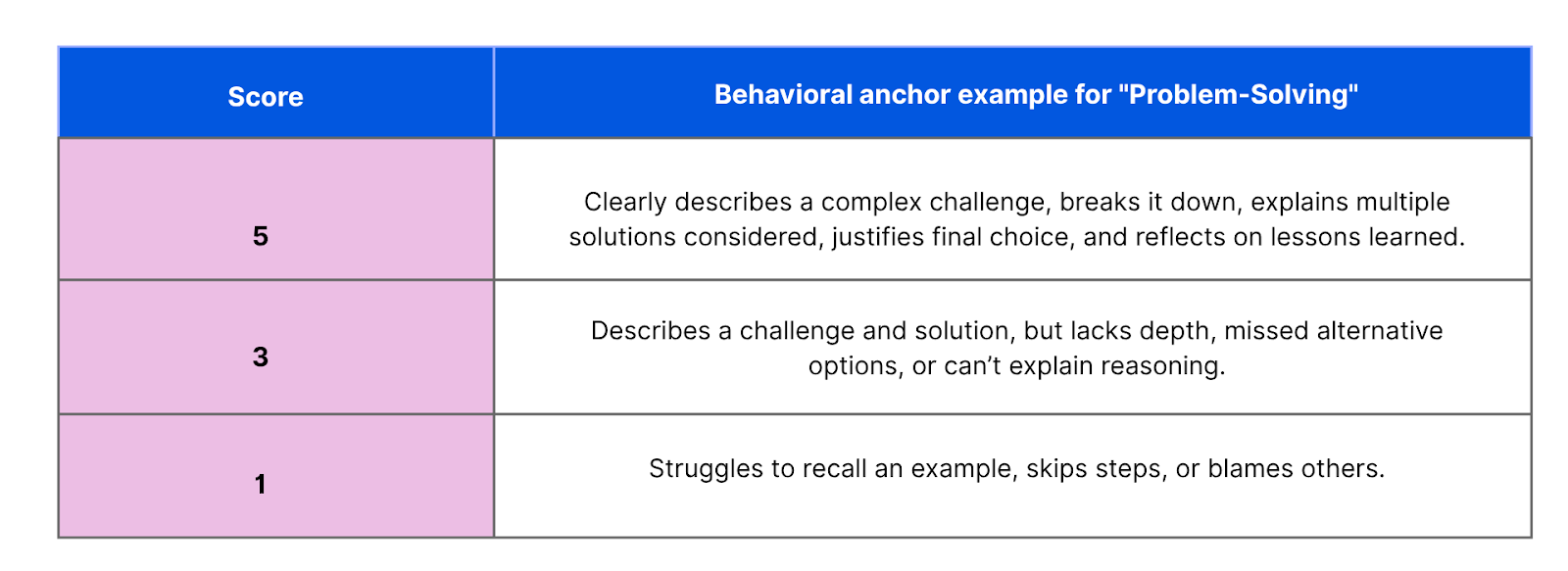
The first pillar, predetermined questions, requires that every candidate for a specific role encounters the exact same queries in the same sequence. This eliminates the variable of interviewer influence on the conversational flow, ensuring that the differences in candidate responses reflect differences in their actual abilities rather than differences in the questions asked. The second pillar involves a consistent process, which encompasses the interview length, the number of interviewers, and the format (whether remote, in-person, or hybrid). The third pillar, standardized evaluation, is perhaps the most frequently overlooked. It necessitates the use of a formal scoring system, such as a rubric or scorecard, created alongside the job description to evaluate every candidate against the same "rulebook".

Component Structured Interview Requirement Impact on Assessment
Question Set Identical questions in identical order for all candidates Ensures horizontal comparability across the candidate pool.
Delivery Process Consistent timing, format, and interviewer count Reduces environmental variables that can skew performance.
Evaluation Standardized scoring rubrics (e.g., BARS) Eliminates subjective "gut feelings" in favor of evidence-based ratings.

The taxonomy of interview formats and hiring outcomes

In technical hiring, interviews exist on a spectrum ranging from entirely ad-hoc to fully standardized. Understanding where an organization currently lands on this spectrum is the first step toward optimization. Research indicates that the move from unstructured to structured formats is not a marginal improvement but a doubling of the tool's effectiveness.

The failure of unstructured interviews

Unstructured interviews, characterized by an informal or casual tone, involve hiring managers asking unplanned questions based on a candidate’s skills or even personal interests. While this format feels natural and allows for a sense of "personal connection," it is objectively the least reliable method of selection. The validity coefficient of an unstructured interview is approximately 0.20, meaning it explains only about 4% of the variance in actual job performance. This is barely superior to a random selection process and leaves the organization vulnerable to legal challenges because there is no documented, consistent process to defend.

The ambiguity of semi-structured interviews

The semi-structured or "hybrid" format is common in mid-sized tech companies. It involves preparing some questions in advance but allows the interviewer to go "off-script" to explore various topics. While this offers more flexibility, it still lacks the objectivity of a fully structured approach. The danger of the semi-structured format lies in the "last mile" of evaluation; when interviewers deviate from the script, they often introduce bias through leading questions or by over-weighting information that is irrelevant to the job requirements.

The predictive power of structured interviews

Structured interviews reach a validity coefficient of 0.51, explaining roughly 26% of the variance in job performance. This makes them one of the best predictors of success available to hiring teams, particularly when combined with General Mental Ability (GMA) tests. Interestingly, a single structured interview has been shown to yield the same level of validity in predicting job performance as three or four unstructured interviews, representing a massive efficiency gain for engineering teams whose time is a premium resource.

Interview Type Validity Coefficient (r) Performance Variance Explained (r²) Research Source
Unstructured 0.20 4% Wiesner and Cronshaw
Semi-structured 0.38 14.4% Schmidt and Hunter
Structured 0.51 26% Journal of Applied Psychology

The science of structured interviews: bias and prediction

The transition to a structured process is not merely an administrative preference; it is a psychological intervention designed to counteract the flaws of human cognition. The human brain is naturally inclined toward heuristics that simplify decision-making but often lead to erroneous conclusions in a professional context.

Cognitive bias reduction

Unconscious bias remains a significant barrier to effective technical hiring. Without a structured framework, interviewers are susceptible to several documented biases. Affinity bias, for instance, leads interviewers to favor candidates who remind them of themselves or share common hobbies, regardless of skill level. The halo effect occurs when an interviewer allows one positive trait—such as a candidate having attended a prestigious university—to color the entire assessment. Confirmation bias drives interviewers to spend the session seeking out information that confirms their first impression, which is usually formed within the first thirty seconds.

Structured interviews mitigate these biases by forcing the focus onto job-relevant criteria. By requiring every candidate to answer the same questions and assessing those answers against a fixed rubric, the process reduces the "noise" created by personal impressions. Research demonstrates that structured interviews can slash bias by up to 85% compared to unstructured methods.

Predictive validity and general mental ability

The work of Schmidt and Hunter is foundational to understanding the predictive power of selection tools. Their meta-analysis of eighty-five years of research identified that General Mental Ability (GMA) is the primary predictor of performance in all types of jobs.6 However, the combination of a GMA test and a structured interview reaches a composite validity of 0.63, providing a highly accurate view of a candidate's future potential. For technical roles, where both cognitive ability and specific behavioral competencies are required, this combination is the most defensible and effective strategy for minimizing "bad hires".

Candidate perception and legal defense

A common misconception is that candidates dislike the rigidity of structured interviews. On the contrary, research suggests that candidates are up to 35% more likely to perceive the process as fair, even when they are rejected, if the process is consistent and standardized. This perception of fairness directly impacts an organization’s employer brand and offer acceptance rates. From a legal standpoint, the lack of objectivity in unstructured interviews makes them vulnerable to discrimination claims. A structured process, which relies on documented job analysis and consistent scoring, provides the legal defensibility required by enterprise-level organizations.

Step 1: conduct a job analysis and define success criteria

The architecture of a successful interview process must be built before a single candidate is met. The most common mistake hiring managers make is jumping directly to question design without first understanding the fundamental requirements of the role. This foundational step involves a deep dive into the specific competencies that drive success within the organization's unique environment.

Identifying core competencies

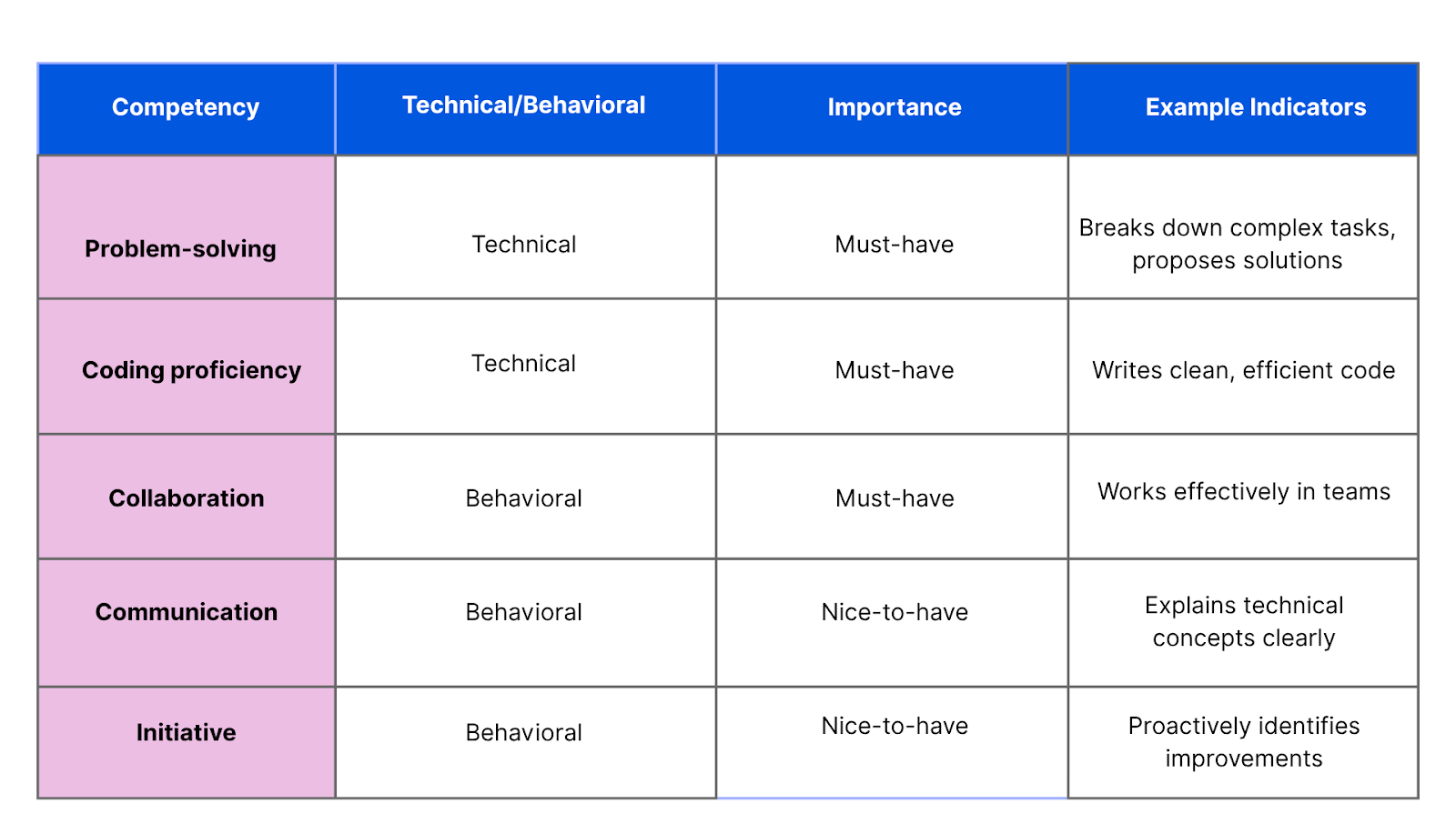
Hiring teams must move beyond generic job descriptions to identify the 5 to 8 core competencies that truly define success in the role. This is best achieved by analyzing actual job tasks and interviewing top performers to determine what behaviors lead to excellence versus those that lead to struggle. For a software engineer, these competencies often include a mix of technical scope, problem-solving, ownership, and collaboration.

Defining the engineering ladder

Success criteria should be mapped to the specific level of the role, as expectations for a junior engineer differ significantly from those of a principal architect. A structured skill matrix helps by mapping observable behaviors to each level of the engineering ladder.

Competency Junior (IC1) Focus Mid-Level (IC3) Focus Staff/Principal (IC5+) Focus
Technical Scope Completes well-defined tasks under close guidance Implements complete features independently Steers architectural vision and anticipates shifts
Problem Solving Fixes straightforward bugs in familiar code Debugs cross-module issues and adapts architecture Identifies systemic bottlenecks and leads evolution
Ownership Takes responsibility for assigned tasks Owns a module or feature end-to-end Refactors legacy code to reduce long-term debt

This level of specificity ensures that the evaluation is grounded in the actual needs of the team, preventing the common pitfall of hiring for "general talent" that may not fit the specific requirements of the current project horizon.

Step 2: design job-relevant interview questions

The effectiveness of a structured interview rests on the "mapping principle": every question must tie directly back to a competency identified in the job analysis phase. If a question cannot be clearly linked to a success criterion, it should be removed from the process.

Categories of structured questions

There are four primary types of questions used in a structured technical interview, each serving a distinct diagnostic purpose.

  1. Behavioral questions: These ask candidates to describe past actions (e.g., "Tell me about a time you had to explain something complex to a non-technical stakeholder"). They are based on the premise that past behavior is the best predictor of future behavior.
  2. Situational (hypothetical) questions: These present a hypothetical scenario to assess judgment (e.g., "What would you do if you were assigned multiple projects with conflicting tight deadlines?").
  3. Job knowledge questions: These assess domain-specific expertise (e.g., "What are the differences between SQL and NoSQL databases?").
  4. Problem-solving/technical questions: These assess analytical approach and technical proficiency through coding challenges or system design discussions.

Anatomy of a high-quality question

A good question is specific enough to elicit detailed responses but open enough to allow for different valid approaches. It should encourage the candidate to use the STAR (Situation, Task, Action, Result) format to provide a comprehensive answer. For example, instead of asking, "Are you good at debugging?" a structured question would be: "Describe a difficult bug you were tasked with fixing in a large application. How did you identify the root cause, and what was the final result?".

Crucially, follow-up questions must also be predetermined. Going off-script with spontaneous probing is where bias often re-enters the conversation. Pre-written prompts such as "What was the biggest challenge in that situation?" or "How did your actions impact the team?" ensure that every candidate is pushed to the same level of depth.

Step 3: Create a standardized scoring rubric

Standardized questions are only half of the solution; without a consistent way to evaluate the answers, the process remains subjective. The gold standard for evaluation is the Behaviorally Anchored Rating Scale (BARS), which links numerical ratings to specific, observable behaviors.

The mechanics of bars

Unlike vague scales (e.g., 1 = poor, 5 = excellent), a BARS provides descriptors for what each score looks like for a specific competency. This eliminates the "rater drift" that occurs when two interviewers interpret an "average" performance differently.

Score Label Behavioral Indicator for Collaboration
5 Exceptional Consistently promotes a highly motivated, growth-driven environment; mentors peers and resolves conflict effectively.
3 Successful Participates in teamwork; honors commitments; treats others with respect but may need guidance in complex group dynamics.
1 Unsatisfactory Resistant to collaborating; breaks team unity; waits to be asked before responding to customer or team needs.

Weighting and knockouts

Not all competencies are equal. For some roles, technical depth may be weighted more heavily than leadership potential. The rubric should reflect these priorities, ensuring that the final score aligns with the most critical requirements of the role. Additionally, clear "knockout" criteria should be established for non-negotiable standards, such as ethical dilemmas or fundamental technical gaps.

Step 4: train your interviewers

The human element is the most significant variable in the interview process. Even the most perfect questions and rubrics will fail if the interviewers are not trained to deliver them correctly. Training is not just about compliance; it is about building interviewer confidence and reducing the perceived burden of the process.

Addressing interviewer resistance

Many experienced engineers feel that structure is too robotic or that it implies their professional judgment is not trusted. Training must address this by framing structure as a tool that amplifies their expertise. When interviewers don't have to worry about what to ask next, they can focus entirely on active listening and evaluating the candidate's responses against the rubric.

Calibration exercises

Calibration is the process of ensuring that different interviewers apply the rubric in the same way. Recommended exercises include:

  • Shadowing: New interviewers observe experienced ones to learn the rhythm of a structured interview.
  • Reverse shadowing: A veteran observes a new interviewer and provides feedback on their delivery and note-taking.
  • Mock scoring: The team watches a recorded interview and scores it individually, then discusses their ratings to align on the standards for a "3" versus a "4".

Regular calibration prevents "rater inflation" and ensures that the hiring bar remains consistent across different teams and departments.

Step 5: standardize the interview day experience

Candidate experience is a critical, yet often overlooked, part of structured interviewing. A chaotic or inconsistent process damages an organization's employer brand and can lead to top talent dropping out of the pipeline.

The ideal interview flow

Every candidate for a specific role should experience the same timeline and agenda. This prevents fatigue or "warm-up" advantages from skewing the results.

Time Segment Activity Purpose
0–5 mins Introductions & rapport Setting the tone and putting the candidate at ease
5–45 mins Core question framework Asking the structured behavioral, situational, and technical questions
45–55 mins Candidate questions Allowing the candidate to assess the company and team
55–60 mins Wrap-up & next steps Clearly explaining the timeline for a decision

Panel coordination

In panel interviews, it is essential to divide the focus areas beforehand. One interviewer may be assigned to assess technical proficiency, while another focuses on collaboration and communication. This prevents the interview from feeling like an interrogation and ensures that all core competencies are covered without unnecessary duplication.

Step 6: evaluate candidates using evidence, not gut feeling

The decision-making process after the interview is where bias most commonly re-enters the system. Many teams do excellent work in the interview itself, only to make the final choice based on who they "liked" most in the debrief room.

Independent scoring first

To prevent groupthink and anchoring, every interviewer must complete their individual scorecard before any group discussion occurs. This ensures that each person's perspective is based solely on their interaction with the candidate, rather than being swayed by the opinions of more senior colleagues.

Evidence-based debriefs

The debrief meeting should be a structured review of the data, not a casual discussion of impressions. Each interviewer should share their scores and provide specific evidence—actual things the candidate said or did—to support those ratings. For example, instead of saying, "They seemed smart," an interviewer should say, "They demonstrated high problem-solving ability by breaking down the system design into three modular components and explaining the trade-offs of each".

If there is a disagreement in scores, the facilitator should ask, "What specific observation led to that rating?" This keeps the conversation focused on objective data and helps the team identify if one interviewer missed a key detail or if another was influenced by an unconscious bias.

Common mistakes that undermine structured Interviews

Even with a well-intentioned process, organizational habits can erode the benefits of structure. Recognizing these pitfalls is essential for long-term success.

  • Going off-script with follow-ups: The temptation to probe with unplanned questions is high, but it reintroduces variability. All probing questions should be pre-set in the interview kit.
  • Failing to retrain: Interviewer habits naturally drift over time. Organizations need regular "refresher" calibration sessions to keep the team aligned.
  • Using generic question banks: A question that works for a Product Manager may not work for a DevOps Engineer. Questions must be mapped to role-specific competencies.
  • Discussing candidates in the "hallway": Casual comments before individual scoring is complete can anchor opinions and undermine the independence of the evaluation.
  • Treating culture fit as a vibe: "Culture fit" is often a mask for affinity bias. It should be replaced with "culture add," assessed through specific behavioral questions tied to company values.

How to measure structured interview effectiveness

Without measurement, an organization cannot know if its structured process is actually delivering better results. Structured interviews generate consistent data, which enables continuous improvement through several key metrics.

Quality of hire (qoh)

Quality of Hire is the ultimate test of any recruitment process. It measures the value a new hire brings to the organization compared to pre-hire expectations. This is calculated by correlating interview scores with post-hire performance data, such as first-year performance reviews, ramp-up time, and retention rates.

Time-to-hire and efficiency

While building a structured process takes more time upfront, it often reduces the overall time-to-hire by speeding up the decision-making phase. Teams should track how long it takes from the initial interview to the final offer. Additionally, monitoring "interviewer load" helps prevent burnout among top engineers.

Pipeline diversity

A primary benefit of structure is the reduction of bias, which should manifest in a more diverse candidate pipeline at the offer stage. Tracking whether underrepresented candidates are being evaluated fairly based on the same rubric as their peers is a crucial metric for modern talent teams.

Metric What It Measures Goal
Quality of Hire Index Correlation of interview scores to actual performance Increase the percentage of "high-performer" hires
Interviewer Consistency Variation in scores between different raters for the same candidate Reduce "rater drift" through calibration
Candidate NPS Perception of fairness and professionalism among all candidates Maintain high employer brand reputation

How technology can scale structured interviewing

For enterprise-level tech companies, the manual execution of structured interviews at high volume is often the biggest bottleneck in the hiring process. Technology serves as the "human amplifier," ensuring the methodology is followed without draining engineering resources.

challenges of manual scaling

Every structured interview requires significant time from trained engineers and recruiters. Coordinating schedules, ensuring consistency across hundreds of interviewers, and managing the documentation burden often leads to "process decay," where the team reverts to unstructured habits to save time.

The role of automation

Modern technical assessment platforms, such as HackerEarth, address these scaling challenges by automating the delivery and evaluation of the interview. Standardized delivery platforms ensure every candidate gets identical questions, while AI-powered screening handles the initial evaluation at scale, identifying the top 20% of candidates in minutes rather than weeks.

Automated scheduling removes the coordination friction that often delays the process, and built-in recording and transcript features ensure that the evidence is captured accurately for the final debrief. Technology doesn't replace the structured methodology; it makes it executable at the speed of a high-growth tech business.

Automate structured interviews with hackerearth

HackerEarth’s suite of tools is designed to help engineering leaders implement a structured interview process with precision and efficiency.

AI interview agent

The AI Interview Agent is the world’s most advanced technical interviewer, capable of conducting end-to-end technical and behavioral interviews without bottlenecks.

  • Expert technical knowledge: Backed by a library of 25,000+ curated questions, it evaluates depth across 30+ programming languages and complex system design.
  • Bias elimination: The agent masks personal information and uses standardized rubrics to achieve near-zero unconscious bias in the evaluation process.
  • Adaptive questioning: It uses candidate responses to shape follow-up questions, creating a natural flow that ensures candidates are neither over-challenged nor under-tested.

Facecode for live interviews

When human intervention is needed for the final rounds, FaceCode provides an intelligent live coding platform that supports structured evaluation. It features collaborative code editing, PII masking, and AI-powered interview summaries that highlight not just technical performance but also behavioral insights like communication clarity and problem-solving approach.

HackerEarth Feature Benefit to the Structured Process
Technical Assessment Library Provides vetted, role-specific questions across 900+ skills
Blind Hiring Mode Masks candidate PII to ensure merit-based evaluation
Interview Recordings Allows for post-interview review and consistent calibration
AI Interview Summaries Generates detailed reports to support evidence-based debriefs

By leveraging these technologies, organizations can move from an ad-hoc hiring culture to a scalable, data-driven engine that consistently identifies and attracts the best technical talent in the world. The structured interview is not just a better way to hire; it is a competitive advantage in the race for engineering excellence.