10 Best AI Recruiting Software for Technical Roles in 2026
AI recruiting software for technical roles refers to platforms that use machine learning, natural language processing, and code evaluation to source, screen, assess, and interview engineering candidates. A 2024 Novoresume survey reported that a majority of hiring managers now use AI in some capacity in their workflows, yet 65% of technology hiring managers still say finding skilled professionals is harder than it was a year ago (Robert Half, 2026 Salary Guide). The problem is not access to candidate assessment platforms; it is that most teams are using tools built for generalist hiring to solve a specialist problem. This guide covers the best AI recruiting software for technical roles in 2026 and identifies which technical screening software actually works for developer evaluation rather than general-purpose screening.
How we evaluated these AI recruiting tools
We scored each platform against six criteria that reflect the realities of technical hiring, not generalist recruiting. The right AI recruiting software for technical roles for a developer hiring team looks very different from the right one for a retail team, and most evaluation frameworks fail to capture the difference.
AI-powered skill assessment accuracy
Does the tool evaluate actual coding ability, or does it infer skills from resume text? Those are not the same thing, and for engineering roles the difference determines whether your shortlist is credible.
Technical role coverage
Coverage across software engineering, data science, DevOps, ML, and other specialized disciplines. A single format for all engineering roles produces noisy signals.
Bias mitigation and compliance
NYC Local Law 144 requires annual independent bias audits for any automated employment decision tool used for NYC positions (effective July 2023). The EU AI Act classifies AI hiring tools as high-risk under Annex III. These are procurement requirements now, not optional considerations.
ATS and HRIS integration
Native connectivity to Greenhouse, Lever, Workday, and SAP SuccessFactors. A platform that cannot route results back to your ATS creates manual reconciliation work that compounds at scale.
Candidate experience
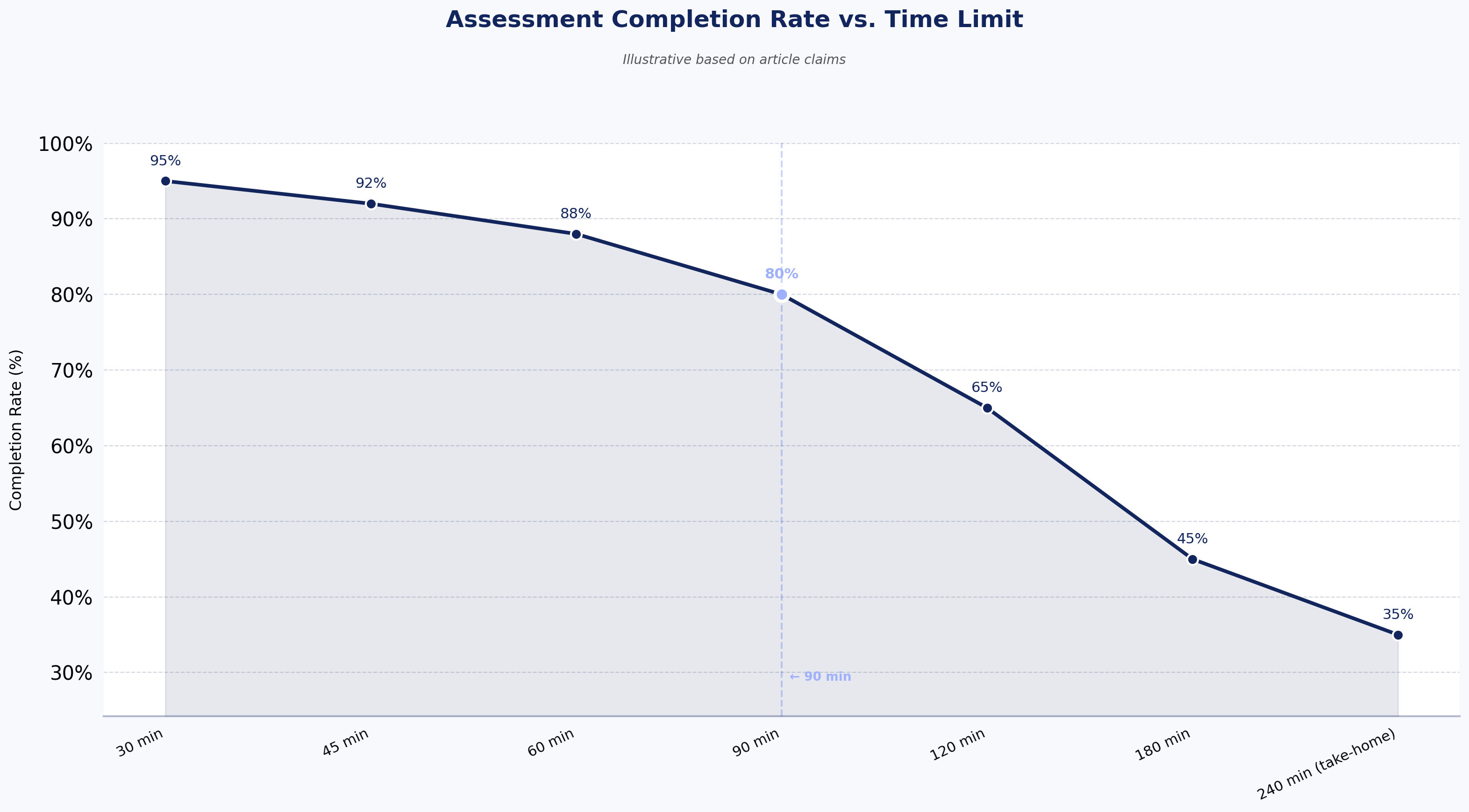
Roughly 31% of candidates have abandoned a job application because AI screening felt impersonal or confusing, according to a 2024 Enhancv report. Candidate experience is a direct signal about employer brand. For a breakdown of how multi-signal proctoring differs from single-signal approaches, see HackerEarth's guide to remote proctoring for online assessments.
Pricing and scalability
Can the platform handle enterprise volume and flex down for growing teams? Custom pricing is common in this category; where public pricing exists, it is noted.
Quick comparison table
| Tool | Best for | AI assessment depth | Live coding | Proctoring | ATS integration | Free trial |
|---|---|---|---|---|---|---|
| HackerEarth | Technical hiring (all-in-one) | High (code + AI interview) | Yes (FaceCode) | Yes (multi-signal) | Yes¹ | Contact sales |
| HireVue | AI video interviewing at scale | Medium (coding limited) | No | Basic | Yes | Demo only |
| Eightfold AI | Talent intelligence and internal mobility | Low (sourcing/matching only) | No | No | Yes | Demo only |
| Codility | Code-testing focused screening | High (coding only) | Limited | Yes | Yes | Yes |
| iMocha | Skills-based hiring across tech and non-tech | Medium | No | Yes | Yes | Yes |
| Paradox (Olivia) | Conversational AI recruiting automation | None (scheduling only) | No | No | Yes | Demo only |
| TestGorilla | Budget-friendly pre-employment testing | Medium | No | AI-assisted | Limited | Yes |
| Fetcher | AI-powered talent sourcing | None (sourcing only) | No | No | Yes | Demo only |
| CoderPad | Live pair programming coding interviews | High (live coding only) | Yes | Limited | Yes | Yes |
| Pymetrics (Harver) | Neuroscience-based cognitive assessment | None (behavioral only) | No | No | Yes | Demo only |
¹ Integration availability and free-trial terms are configured per enterprise engagement; contact sales for current details.
1. HackerEarth: best overall for technical hiring
Most AI hiring software handles one stage of the funnel and hands off. As a leading example of AI recruiting software for technical roles, HackerEarth covers sourcing-to-shortlist in a single workflow purpose-built for engineering hiring, and it is trusted by 500+ global enterprises including Google, Microsoft, Elastic, Flipkart, and Brillio.
The product that sets it apart is OnScreen, HackerEarth's newly launched AI-driven interview product (public launch: April 14, 2026). Where most platforms auto-grade submitted code, OnScreen conducts an AI-led first-round screening interview using role-calibrated conversations that adapt to candidate responses, then produces a structured scorecard for the hiring manager via a deterministic evaluation framework. For teams running high-volume technical pipelines, this can help reduce one of the costlier manual bottlenecks in the process, freeing engineers and recruiters for later-stage judgment work.
Key capabilities
OnScreen handles AI-led first-round screening interviews with role-calibrated conversations, which can reduce the time engineers spend on early screening calls. HackerEarth's coding assessments evaluate work across 40+ programming languages, and candidate ranking helps hiring managers see a prioritized shortlist rather than a stack of raw submissions. Multi-signal proctoring uses signals across the assessment session to flag integrity concerns. Skill assessments also cover non-technical roles including sales, customer support, and finance, and custom content creation lets larger customers cover any job role.
Best for
Enterprise and mid-market companies hiring across technical disciplines, and engineering teams that want to replace resume-based filtering with evidence of actual coding ability.
Integrations
Integrations with major ATS and HRIS platforms are available on enterprise plans; specific connector availability should be confirmed with HackerEarth sales.
Limitation
Teams whose primary need is generalist high-volume hiring (retail, hospitality) may find that HackerEarth's depth in technical evaluation exceeds their core requirements.
Pricing
Contact sales for pricing; see HackerEarth's technical assessment platform for a full capabilities overview.
2. HireVue: best for AI video interviewing at scale
HireVue is one of the most widely deployed AI interview platforms for structured behavioral evaluation, with a large enterprise footprint across one-way video interviewing. For teams comparing AI interview tools across categories, see this resource on best AI interview assistants for a breakdown of autonomous interview capabilities.
Key AI features
AI-scored video interviews using structured behavioral frameworks; game-based cognitive assessments; conversational AI scheduling; basic coding assessments.
Best for
High-volume enterprise hiring programs spanning both technical and non-technical roles, particularly where structured behavioral evaluation at scale is the primary requirement.
Limitation
Coding assessment depth does not match platforms built exclusively for developer hiring. Some candidates also report that one-way video formats feel impersonal compared to conversational alternatives.
3. Eightfold AI: best for AI talent intelligence and internal mobility
Eightfold AI is an intelligent recruiting platform that operates at the sourcing and matching layer, not the assessment layer. Its deep-learning models infer skills and career trajectories from unstructured resume data and match candidates based on potential rather than keyword alignment, which makes it useful for enterprises sitting on large, underutilized talent databases.
Key AI features
AI talent matching based on inferred skills and career trajectory; internal talent marketplace for redeployment; diversity analytics; resume-to-role scoring without structured input.
Best for
Large enterprises managing both external recruiting and internal mobility for technical talent across multiple business units.
Limitation
Eightfold does not offer live coding interviews or AI-graded code evaluation, which means sourcing matches must still pass through a separate technical validation step before an on-site interview — a workflow gap that adds latency for teams hiring senior engineers at volume.
4. Codility: best for code-testing focused technical screening
Codility has been a reliable choice for technical screening longer than most tools in this category have existed, and its coding challenge library is well-regarded among developers. It is a solid first-pass screening tool for backend and algorithmic roles.
Key AI features
AI-assisted code evaluation with automated test-case scoring; plagiarism detection across the candidate cohort; automated scoring and basic candidate ranking.
Best for
Companies that want a dedicated coding test platform for initial screening, particularly for backend and infrastructure roles.
Limitation
Codility does not offer autonomous AI interview capability, system design evaluation, or adaptive questioning, which means teams expecting AI to extend beyond grading submitted code will find the platform serves as a focused entry point in the funnel rather than a full-stack screening solution.
5. iMocha: best for skills-based assessment across tech and non-tech roles
iMocha is the right choice when the need is one assessment platform across both technical and non-technical functions, rather than depth in either. Its library spans coding, cognitive ability, communication, cloud, DevOps, and finance.
Key AI features
AI-LogicBox for live coding assessment; skills benchmarking against industry norms; AI-driven talent analytics and skills gap identification; automated candidate ranking.
Best for
Organizations hiring across technical and non-technical disciplines who want a single assessment platform and unified reporting layer.
Limitation
Breadth trades against depth, and that trade-off shows up most clearly at senior engineering levels where coding rigor lags behind platforms built exclusively for developer hiring — a meaningful gap for mid-to-senior technical pipelines.
6. Paradox (Olivia): best for conversational AI recruiting automation
Paradox solves a specific, unglamorous problem: the scheduling coordination and top-of-funnel communication work that consumes recruiter hours without requiring recruiter judgment. Olivia handles scheduling and top-of-funnel communication continuously, freeing recruiter time for judgment-dependent work.
Key AI features
AI chatbot for candidate communication and FAQ resolution; automated scheduling with calendar integration; initial screening questionnaires and knockout questions; multilingual support.
Best for
High-volume technical recruiting teams that need to automate top-of-funnel engagement and scheduling without adding headcount.
Limitation
Paradox does not evaluate technical skills in any form, which means engineering teams must pair it with a dedicated coding assessment platform — useful for splitting coordination from evaluation, but a meaningful integration cost to plan for.
7. TestGorilla: best budget-friendly AI assessment platform
TestGorilla is the practical choice for startups and SMBs that need structured pre-employment testing without enterprise pricing. Its 400+ test library spans coding, cognitive ability, language, and personality, and setup is fast without implementation support.
Key AI features
AI-generated custom test creation from job descriptions; anti-cheating AI with screen monitoring and shuffle logic; automated candidate ranking.
Best for
Startups and SMBs that need affordable technical screening across multiple role types without dedicated IT support for implementation.
Limitation
Coding tests do not match dedicated developer evaluation tools in depth or rigor, and there is no live coding interview capability or autonomous AI interviewer — which makes TestGorilla best suited to early-stage filtering rather than final-round technical evaluation where senior coding judgment must be observed in real time.
8. Fetcher: best for AI-powered technical talent sourcing
Fetcher addresses a specific upstream problem: finding qualified technical candidates who are not actively applying. Its AI models search across professional databases and automate personalized outreach without requiring recruiter time per contact.
Key AI features
AI candidate sourcing from multiple professional databases including LinkedIn and GitHub signals; automated multi-touch outreach sequences; diversity pipeline filters; recruiter productivity analytics.
Best for
Technical recruiting teams that need passive candidate pipelines for hard-to-fill engineering roles where inbound volume is insufficient.
Limitation
Fetcher is sourcing only. It does not assess, interview, or evaluate candidates. Every person it surfaces still needs technical screening downstream.
9. CoderPad: best for live collaborative coding interviews
CoderPad is the interviewing room, not the screening tool. Think of it as a shared whiteboard where the candidate and interviewer both have keyboards: useful for final-round evaluation, not a replacement for early-stage filtering. CoderPad supports 30+ programming languages including Python, Java, JavaScript, Go, and Rust (CoderPad supported languages).
Key AI features
Optional AI-assisted hints during live sessions; session playback for post-interview review; language-aware syntax support; interview notes integrated into the session record.
Best for
Engineering teams that prioritize live collaborative coding interviews for final-round evaluation where observing real-time problem-solving matters.
Limitation
CoderPad covers the live interview stage only, with no AI-powered screening, no autonomous interview capability, and no proctored take-home assessment — meaning teams that want a single platform spanning early and late funnel will need to stitch CoderPad together with at least one upstream screening vendor.
10. Pymetrics (Harver): best for neuroscience-based AI assessments
Pymetrics measures what code tests cannot: working memory, risk tolerance, attention, and learning speed, using gamified assessments grounded in neuroscience research. Acquired by Harver in 2022 (Harver press release), it includes bias auditing to check for demographic disparities in outcomes.
Key AI features
Gamified cognitive and behavioral assessments from neuroscience research; AI trait-to-role matching; bias auditing across demographic groups; integration with Harver talent workflows.
Best for
Companies that want cognitive and behavioral fit data alongside technical evaluation, particularly for roles where adaptability and learning speed matter as much as raw coding ability.
Limitation
Pymetrics does not assess coding skills or technical knowledge, so it must be paired with a dedicated developer evaluation tool — and cognitive fit without technical validation produces an incomplete picture for any engineering hire, especially at the senior level where code judgment is the primary signal.
How AI recruiting software changes technical hiring outcomes
AI recruiting software for technical roles affects four measurable outcomes for recruiting teams: screening speed, bias exposure, candidate experience, and cost-per-hire. The numbers below come from vendor and industry reports; treat them as directional rather than benchmarks.
Faster screening without sacrificing quality
Vendor-reported figures suggest AI resume screening can reduce time-to-shortlist by up to 75% compared to manual resume review (vendor-reported by Impress.ai; independent replication is limited). For technical roles where average time-to-hire has been reported at roughly 62 days globally (Workable hiring benchmarks, 2024), cutting two to three weeks from the upstream screening stage is one of the higher-leverage interventions available.
Reduced bias in candidate evaluation
One analysis by Fueler claimed properly audited AI tools may reduce unconscious bias by up to 60%, though the underlying methodology has not been independently replicated and Fueler is not a recognized research authority. The mechanism is that skills-based evaluation removes some demographic proxies that creep into unstructured resume review. Machine learning recruiting tools that are continuously monitored against demographic outcome data are more defensible than those audited once at launch. NYC Local Law 144 and the EU AI Act now require vendors to demonstrate this: before purchasing any AI-based hiring platform, ask for bias audit documentation.
Better candidate experience
AI done well shortens and clarifies the process. AI done badly drives candidates away: according to Enhancv's 2024 AI in recruitment report, roughly 31% of candidates have abandoned an application because of an impersonal AI video or chatbot screen, and 68.5% say AI was never disclosed to them. Transparency and relevance separate AI that improves completion rates from AI that reduces them.
Lower cost-per-hire
Vendor reports suggest teams can see 20 to 40% lower cost-per-hire when AI automates screening and scheduling (Greenhouse and GoodTime, 2025; figures are vendor-sourced and should be validated against your own funnel). For technical hiring specifically, the compounding gain comes from consolidating AI recruiting software for technical roles, AI interview software, and proctoring into one platform rather than paying for and integrating three.
How to choose the right AI recruiting software for your team
Start with the specific stage in your funnel where qualified candidates are falling through or where recruiter time is being spent on work that should not require a human, not with the feature list. When evaluating AI recruiting software for technical roles, the sequence below tends to surface fit faster than feature checklists.
- Define your technical hiring volume and role types before evaluating anything.
- Decide which funnel stages need AI: sourcing, screening, interviewing, and proctoring each have different tool requirements.
- Verify ATS and HRIS integration compatibility before shortlisting. A platform that cannot connect to your system of record creates the same manual work you are trying to eliminate.
- Evaluate assessment depth for your specific tech stack, not a generic "coding" capability.
- Complete the candidate experience firsthand before committing. Request a demo environment and take the assessment as a candidate.
- Request bias audit and compliance documentation. For NYC and EU hiring this is mandatory; for everyone else it signals platform maturity.
Frequently asked questions about AI recruiting software
What is AI recruiting software?
AI recruiting software for technical roles uses machine learning and code evaluation to source, screen, assess, and interview engineering candidates. The category label is broad, but the distinction that matters for technical hiring is narrow: does the tool evaluate actual code output, or does it infer skills from resume text? Two platforms in the same category can produce entirely different shortlists from the same candidate pool depending on which side of that line they fall.
How does AI recruiting software compare to traditional hiring methods?
AI screens in minutes, applies consistent criteria across every candidate, and scales to any volume without additional headcount. The important qualifier is that AI works best as a filter and ranker, not as the final decision-maker: the judgment calls at the offer stage still require human context that no model fully captures.
How does AI recruiting software improve hiring speed?
Some research suggests AI can reduce time-to-hire by up to 50% on average by automating resume parsing, scoring assessments, and conducting first-round interviews without scheduling coordination (attributed to SHRM; the underlying report title and year were not specified in available citations, so treat as directional). The gains compound when a single platform handles multiple stages rather than three tools requiring manual handoffs.
Can AI recruiting software reduce hiring bias?
Skills-based evaluation can replace some demographic proxies that show up in unstructured resume review. One analysis by Fueler claimed properly audited tools may reduce unconscious bias by up to 60%, though that figure has not been independently replicated. The catch is "properly audited": models trained on historical hiring data can replicate historical bias, which is exactly why NYC Local Law 144 mandates annual independent bias audits rather than vendor self-reporting.
How do you integrate AI recruiting software with your existing HRIS or ATS?
Most platforms offer native integrations with Greenhouse, Lever, Workday, and SAP SuccessFactors, plus open API access. The integration that matters is not just whether results flow through but whether they trigger automatic stage changes and pass/fail routing -- if it still requires a recruiter to manually move candidates after each assessment, you have not actually automated the bottleneck.
What should you look for in AI recruiting software for developer hiring?
The genuine tension here is between breadth and depth. Tools that cover sourcing, screening, interviewing, and proctoring in one workflow reduce handoff cost but may underperform specialist tools at any single stage. Tools that specialize at one stage tend to evaluate more rigorously but force you to integrate two or three vendors. The right answer depends on which trade-off your hiring volume and role complexity make more expensive.
Final verdict: which AI recruiting software is best for technical roles?
Purpose-built developer evaluation tools tend to outperform generalist platforms at the assessment and interview stages of the funnel for engineering roles. When choosing AI recruiting software for technical roles, a platform designed to evaluate all roles is structurally less equipped to evaluate code than one built for engineering.
Best overall for technical hiring: HackerEarth. Combines AI coding assessment, the OnScreen interview product, live coding via FaceCode, and multi-signal proctoring in a single workflow. Trusted by 500+ global enterprises.
Best for AI video interviewing: HireVue. Proven enterprise-scale behavioral evaluation. Coding depth is limited for dedicated technical pipelines.
Best for talent intelligence and sourcing: Eightfold AI. Strong skills inference and internal mobility. Requires a separate assessment tool for technical validation.
Best for budget-conscious teams: TestGorilla. Accessible pricing, broad test coverage, fast setup. Suits early-stage filtering rather than final-round evaluation.
Best for technical talent sourcing: Fetcher. Strong passive candidate discovery for hard-to-fill roles. Needs pairing with an assessment platform for any evaluation.
Next steps
See HackerEarth's technical assessment platform for a walkthrough of how coding assessments, OnScreen interviews, and proctoring work together in a single workflow. For a deeper look at one component, read our guide to the [best AI interview assistants](https://