Vineet Khandelwal

Author
Vineet Khandelwal

Blogs
author’s Articles

Insights & Stories by Vineet Khandelwal

Clear all
Thank you! Your submission has been received!
Oops! Something went wrong while submitting the form.
Filter
Filter

Top 10 Skills Assessment Tools in 2025

Technical skills tests can be a recruiter’s best ally when designed to filter talent accurately and fairly. Hiring for technical roles often becomes difficult because recruiters may not fully understand specialized jargon or the depth of the required expertise. This gap means that a simple phone screening with a candidate can easily lead to a poor hire if there is no structured assessment in place. 

The right technical skills assessment tools take away this uncertainty by giving recruiters a reliable way to evaluate a candidate’s ability while saving hours of manual effort. Even if a recruiter has enough domain knowledge, using these tools provides an added layer of clarity that makes every hiring decision stronger. In fact, research shows that 90% of companies report fewer hiring mistakes and 94% confirm that skills-based hires outperform those chosen based on degrees, certifications, or years of experience.

In this article, we will compare the top ten skills assessment tools for 2025 so recruiters can find the best options to hire with speed, confidence, and precision.

What Makes a Great Skills Assessment Software?

With so many skills assessment tools available online, it is essential to choose one that works best for your organization. So, here are some features you must look for while picking the right technical assessment tool for your team:

  • Validity and job relevance: The most reliable tools assess candidates on real tasks they would perform on the job, providing recruiters with practical evidence of skills.
  • Customizable question libraries and workflows: Recruiters must adapt assessments to match changing roles. A strong platform enables them to create, reuse, and edit questions with flexibility while maintaining consistent scoring.
  • Candidate experience and secure testing: Good assessment software makes tests easy to understand and complete, reducing dropout rates. At the same time, it should provide secure proctoring and identity checks that protect test integrity without overwhelming candidates.
  • AI-driven insights: AI-driven skills assessment tools analyze candidate responses in detail and present actionable reports, helping recruiters cut down review time and make faster, data-backed decisions.
  • Soft skills evaluation: Soft skills assessment tools bring context that technical results alone cannot provide. By adding communication tasks or problem-solving simulations, companies get a fuller view of candidate potential and long-term fit.

Best Soft Skills Assessment Tools: At a Glance

Now that we have established what features make for a great skills-based assessment tool, we will now focus on the specific tools that consistently help companies find the right candidates. 

Below, you will find a comparison of the ten best skills assessment tools for 2025, detailing their key features, ideal use cases, pros, and cons.

Tool Key Features Best For Pros Cons G2 Rating
HackerRank Real-world coding challenges, plagiarism detection, and integrations All-in-one skills assessment Wide language support, customizable tests, strong community support No low-cost, stripped-down plans 4.5/5
Codility Real-time coding tests, multiple programming languages, project-based tasks High-volume hiring Intuitive interface, AI-powered assistance, strong support Limited customization, occasional editor resizing issues 4.6/5
CodeSignal Diverse coding challenges, daily problems, game-like rewards Skill development Engaging platform, customizable difficulty levels, strong community Limited interoperability, occasional performance issues 4.5/5
TestGorilla Over hundreds of validated tests, customizable, anti-cheating, automated scoring Screening candidates Extensive test library, user-friendly interface, robust analytics Expensive, limited testing options, subscription limitations 4.5/5
Mettl Personality, behavioral, cognitive, technical, and communication skills assessments Remote assessments Cheating-free exams, comprehensive proctoring features Potential device compatibility issues 4.4/5
iMocha 3,000+ skills assessments, AI-driven skills mapping, industry-specific tests AI-driven skills mapping User-friendly, responsive customer support, diverse test options Limited customization, rigid test preparation process 4.4/5
DevSkiller Real-world coding tasks, advanced skill mapping, rich skills repository Developer hiring Intuitive interface, real-time results, pair programming support Manual data maintenance, integration challenges, and access limitations 4.7/5
CoderPad Live coding interviews, real-time collaboration, multiple programming languages Technical interviews Real-time collaboration, wide language support, and easy setup Limited assessment features, occasional performance issues 4.4/5
WeCP Customizable assessments, real-time analytics, ATS integration, plagiarism detection Skill testing Customizable tests, real-time feedback, plagiarism detection Limited integrations, occasional interface issues 4.7/5
Xobin Pre-employment skill tests, real-time analytics, customizable questions Screening candidates Real-time analytics, customizable questions, and a user-friendly interface Limited language support, occasional performance issues 4.7/5

The 10 Best Soft Skills Assessment Tools

We have already reviewed the high-level comparison of key features and limitations in the table above. Now, it is time to get a clearer picture of how each of these social and communication skills assessment tools truly works in a real-world setting.

1. HackerRank

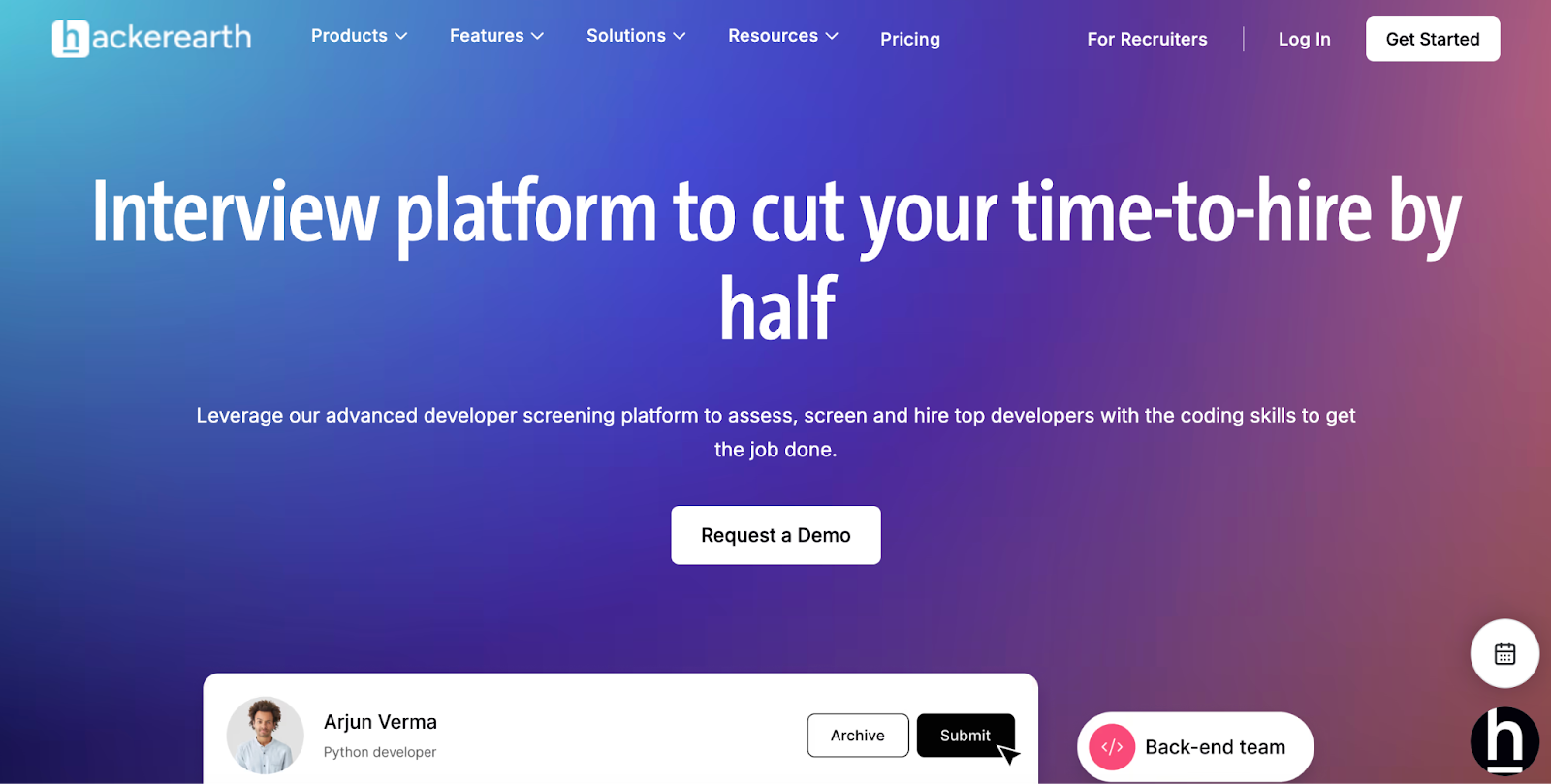
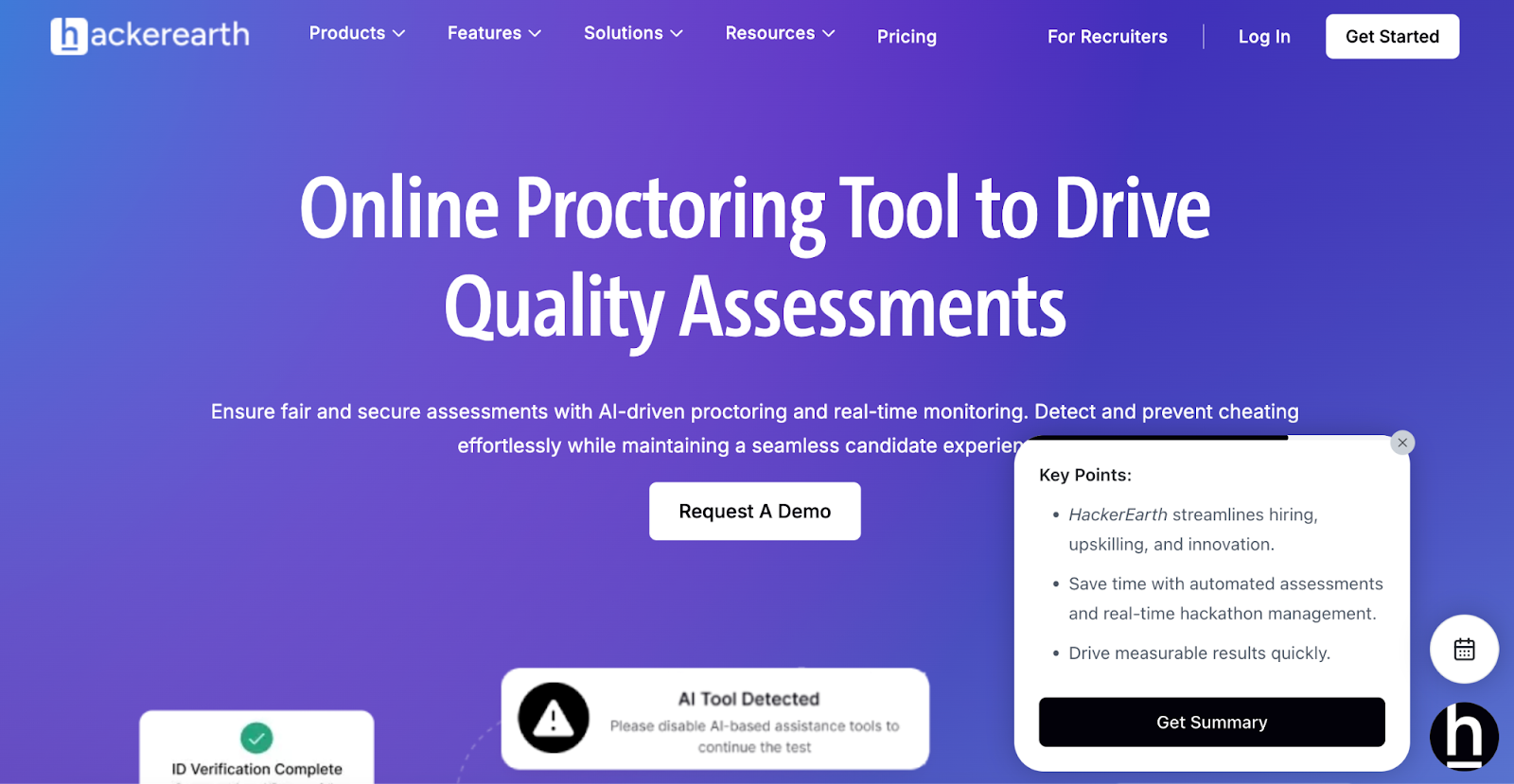
HackerEarth skills assessments page showing features and coding test overview
HackerEarth platform with 36,000+ coding questions, advanced proctoring, and role-based assessments

HackerEarth is a comprehensive AI-driven coding and skills assessment platform tailored for enterprises and teams focused on achieving high precision in the hiring of technical talent. Designed to streamline the recruitment process, it offers tools that facilitate the screening and evaluation of candidates based on their technical skills. With a strong emphasis on AI-based skill validation, HackerEarth has successfully completed over 150 million assessments, making it a trusted resource for organizations looking to enhance their hiring strategies. 

The platform caters to a diverse audience, including hiring managers, recruiters, and HR professionals across various industries. Its extensive library encompasses over 1,000 skills, featuring a comprehensive suite of assessments for GenAI and emerging technologies. This breadth of offerings allows companies to evaluate candidates on a wide range of competencies, ensuring that they can find the right fit for their specific technical requirements. 
With a library of over 36,000 questions and more than 15 question types, including multiple-choice, project-based, and data science questions, recruiters can customize assessments to meet their unique requirements. Flexible test settings allow for customization of test duration, cut-off scores, and programming languages, ensuring a tailored evaluation process.
Additionally, HackerEarth revolutionizes developer hiring by connecting companies with a global community of over 10 million developers across 133 countries and 450+ universities. Our Hiring Challenges enable organizations to go beyond resumes and engage with top-tier talent through curated, real-world coding contests. These challenges not only attract skilled candidates but also enhance employer brand visibility. Trusted by industry giants like Google, Amazon, Microsoft, IBM, Barclays, and PayPal, HackerEarth has facilitated over 100 million code submissions, showcasing its extensive reach and credibility.
Key features

  • Extensive skill assessment library: Access a vast collection of over 36,000 questions across 15+ question types to evaluate a wide range of skills
  • Customizable test settings: Tailor assessments by adjusting test duration, cut-off scores, and programming languages to suit specific hiring needs
  • Real-world coding challenges: Engage candidates with practical coding problems that mirror real job scenarios, providing a true measure of their abilities
  • Global developer community: Tap into a network of over 10 million developers from 133 countries and 450+ universities, expanding the talent pool
  • Fully managed hiring challenges: Benefit from end-to-end support, including promotion, evaluation, and shortlisting, to simplify the hiring process

Pros

  • Leverage a vast and diverse pool of pre-vetted developers
  • Streamline the hiring process with automated assessments and evaluations
  • Enhance employer brand visibility through global coding challenges

Cons

  • Steeper learning curve for new users

Pricing

  • Growth Plan: $99/month 
  • Scale Plan: $399/month 
  • Enterprise: Custom pricing with volume discounts and advanced support

📌Suggested read: The 12 Most Effective Employee Selection Methods for Tech Teams

2. Codility

Codility homepage showing skills-based assessments and tech hiring tools
Codility offers screen-and-interview products for enterprise technical hiring

Because of its simple interface, Codility allows HR professionals who do not have a coding background to quickly create and launch assessments. Without needing technical help, a hiring manager can easily compare a candidate’s abilities to those of other programmers. 

Codility uses AI and machine learning to evaluate code efficiency, accuracy, and scalability, and it can facilitate the development of a set of coding tasks that are appropriate for specific job categories.

Key features

  • Real-time assessments: Evaluate coding skills in real-time during assessments
  • Live interviews: Conduct live coding interviews with candidates
  • Detailed analytics: Access in-depth analytics to assess candidate performance
  • Customizable tests: Create customized coding tests tailored to specific roles

Pros

  • Get access to real-time coding assessments
  • Enable live interview capabilities
  • Deliver detailed analytics on candidate performance

Cons

  • Pricing is higher compared to some competitors

Pricing

  • Starter: $1200/year
  • Sale: $600/month
  • Custom: Contact for pricing

3. CodeSignal

CodeSignal skills assessment homepage view
Build stronger teams with data-driven assessments

CodeSignal is a skills assessment platform that helps companies evaluate developers through real coding tasks and simulations. It offers a range of features to streamline the hiring process, including automated scoring, plagiarism detection, and a vast library of coding challenges. 

The platform is used by leading tech companies to ensure they hire developers with the right skills.

Key features

  • Validated pre-screen assessments: Assess candidates' skills before interviews
  • Advanced live interviewing: Conduct live coding interviews with candidates
  • Industry-leading IDE: Utilize an integrated development environment for assessments
  • ATS integrations: Seamlessly integrate with applicant tracking systems

Pros

  • Tailor assessments to fit specific job requirements
  • Conduct live coding interviews with real-time collaboration tools
  • Access a wide range of coding challenges to assess various skills

Cons

  • May have a learning curve for new users

Pricing

  • Custom pricing

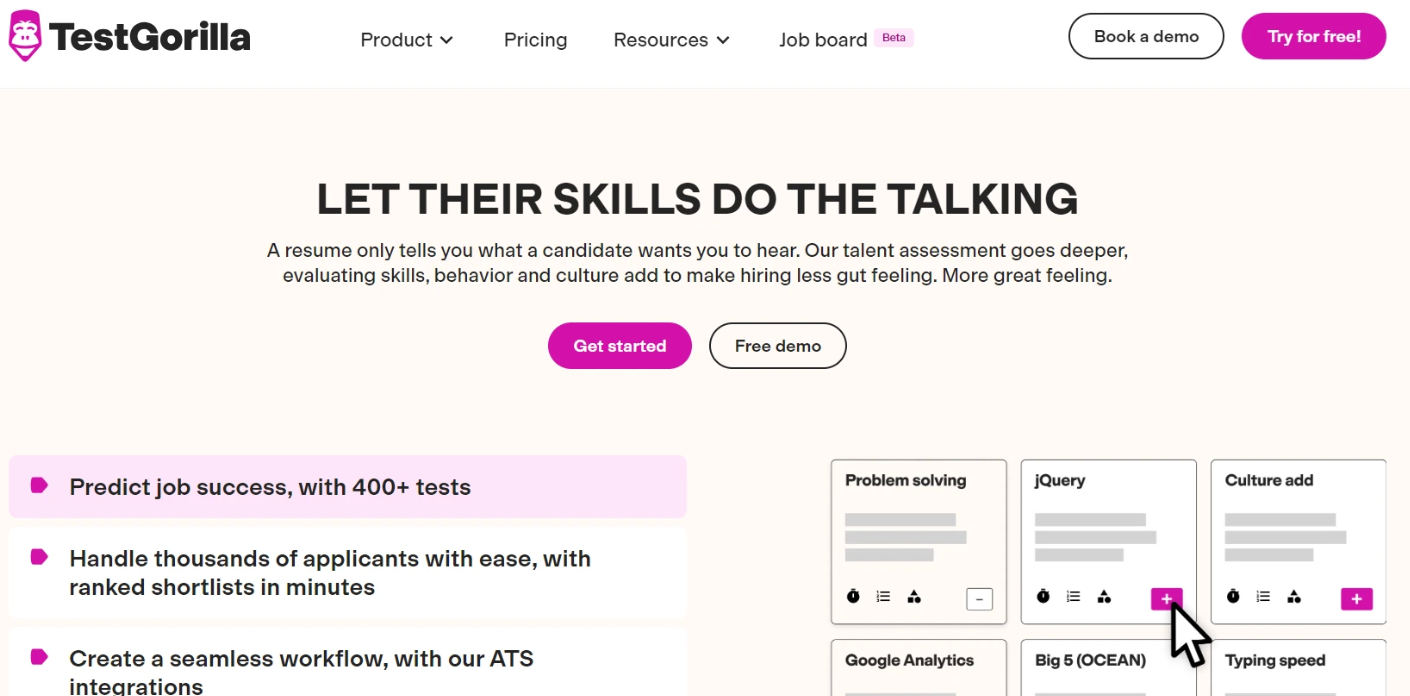
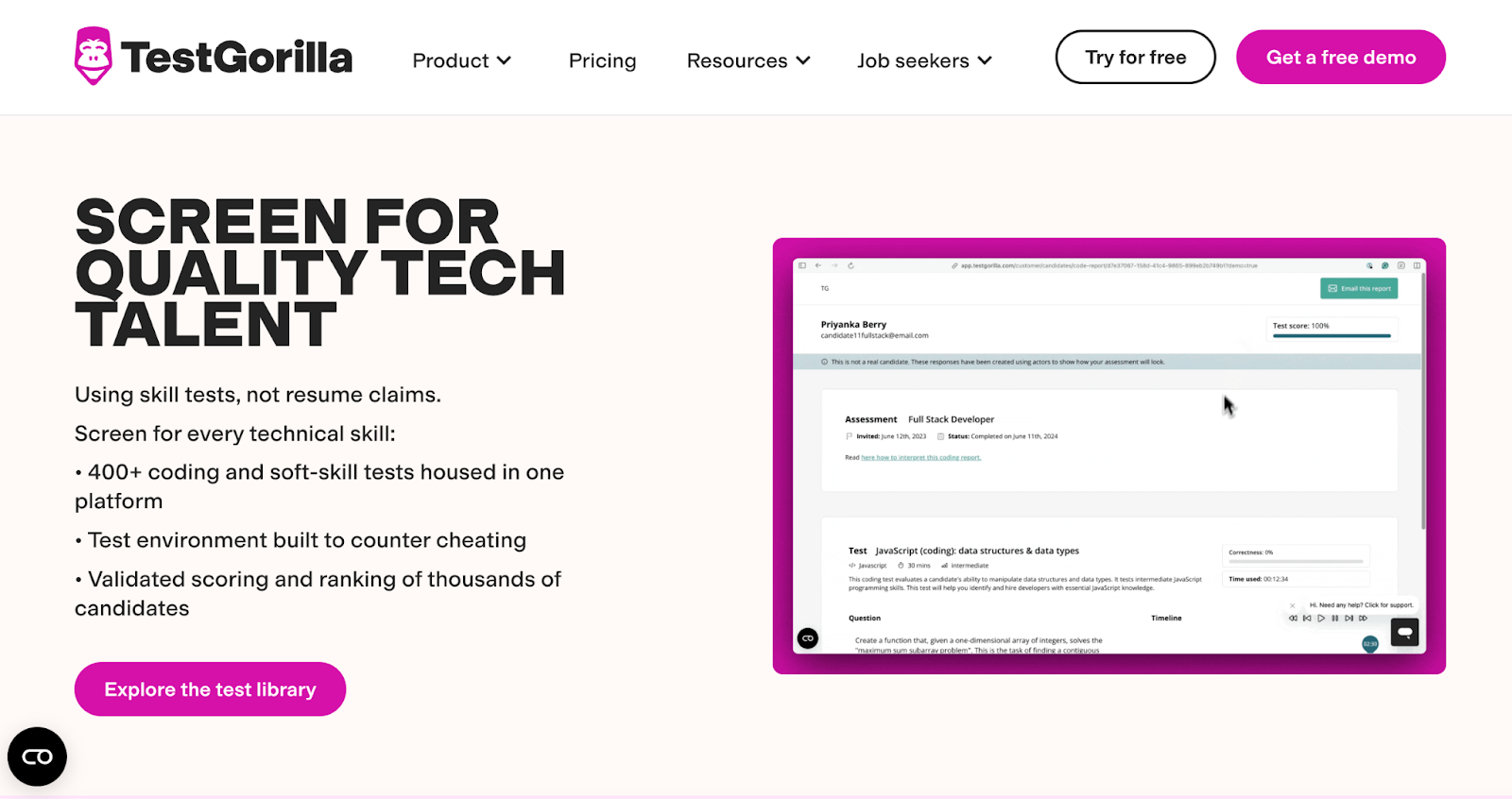
4. TestGorilla

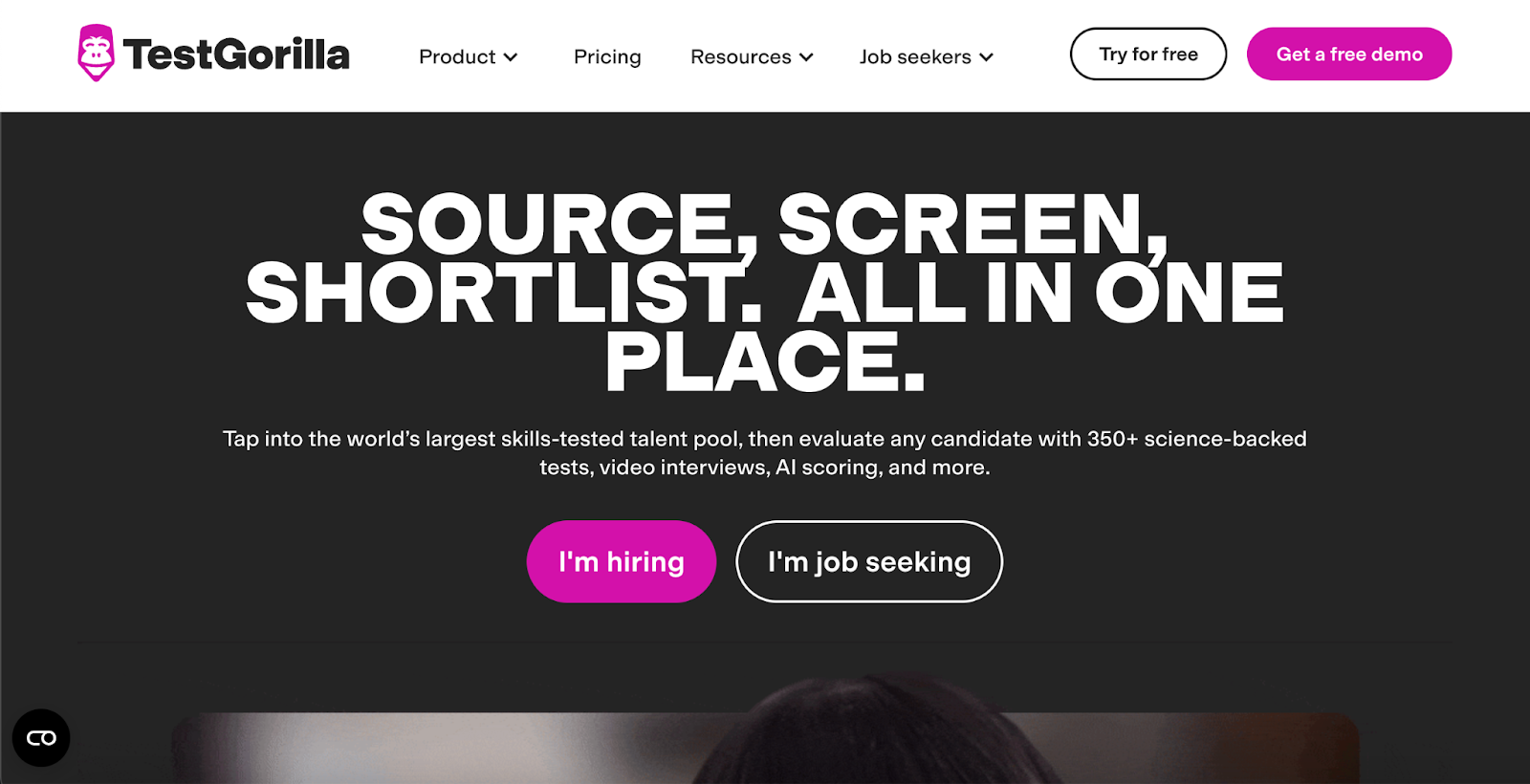
TestGorilla homepage featuring AI-powered talent sourcing and assessments
Get hundreds of validated tests, AI scoring, and a global talent pool

TestGorilla provides a broad array of pre-built tests, including assessments for technical skills, cognitive abilities, language proficiency, and personality traits. With more than 150 pre-built test options, the platform’s extensive test library and user-friendly interface make it a popular choice for hiring across various industries in 2025. 

It also offers features like anti-cheating tools, video response questions, and AI-driven analysis, which help ensure fair and accurate assessments.

Key features

  • Wide range of tests: Access tests in various areas, including cognitive abilities and job-specific skills
  • Scientifically validated: Ensure the reliability of assessments with scientifically validated tests
  • Customizable assessments: Tailor assessments to fit specific job requirements
  • Automated scoring: Quickly evaluate candidate submissions with automated scoring

Pros

  • Navigate the platform easily with an intuitive interface
  • Leverage scientifically validated assessments
  • Grow with flexible credit-based or annual plans to match hiring volume

Cons

  • Lower-tier plans have limitations on branding, integrations, some test types

Pricing

  • Free
  • Core: $142/month (billed annually)
  • Plus: Contact for pricing

📌Related read: How Talent Assessment Tests Improve Hiring Accuracy and Reduce Employee Turnover

5. Mettl

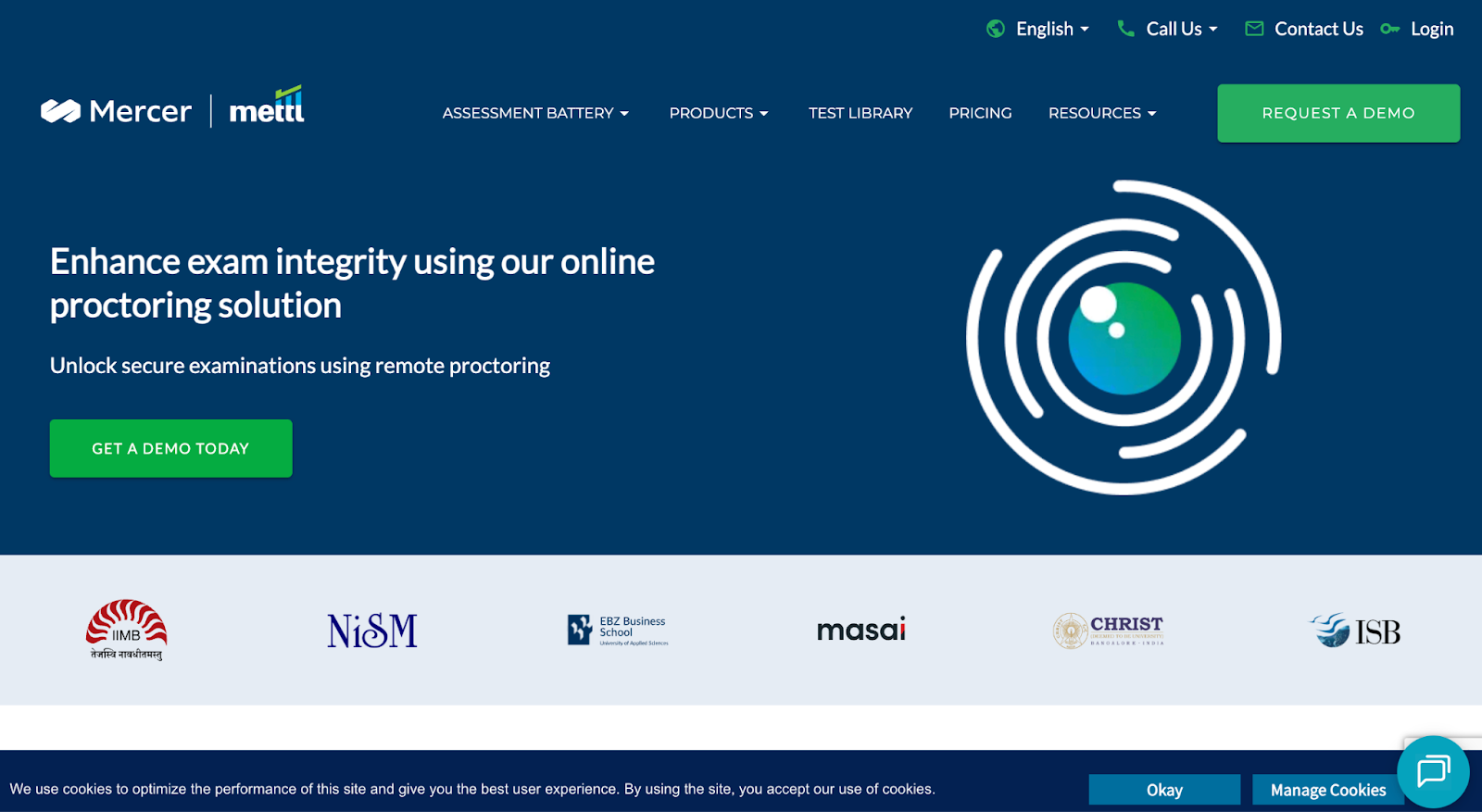
Mettl homepage displaying online assessments and skill evaluation tools
Mettl offers comprehensive online assessments for hiring

Mercer Mettl offers a comprehensive suite of skills assessment tools across technical, cognitive, and psychometric domains. This platform is designed to serve a variety of industries, making it a flexible option for companies of all sizes. 

The detailed reports it provides offer insights into a candidate's strengths, weaknesses, and areas for improvement, which helps hiring managers make well-informed decisions.

Key features

  • Comprehensive skill assessments: Evaluate both technical and non-technical skills
  • Customizable tests: Create tailored assessments to suit specific job roles
  • Real-time analytics: Access real-time analytics to assess candidates' performance
  • Integration capabilities: Integrate with existing HR systems for seamless workflow

Pros

  • Serve both hiring and L&D/training needs for an end-to-end talent lifecycle
  • Offer strong security and features to maintain examination integrity
  • Gain a lot of experience managing assessments on a global scale

Cons

  • Some users find the interface and dashboards less modern or less intuitive

Pricing

  • Custom pricing

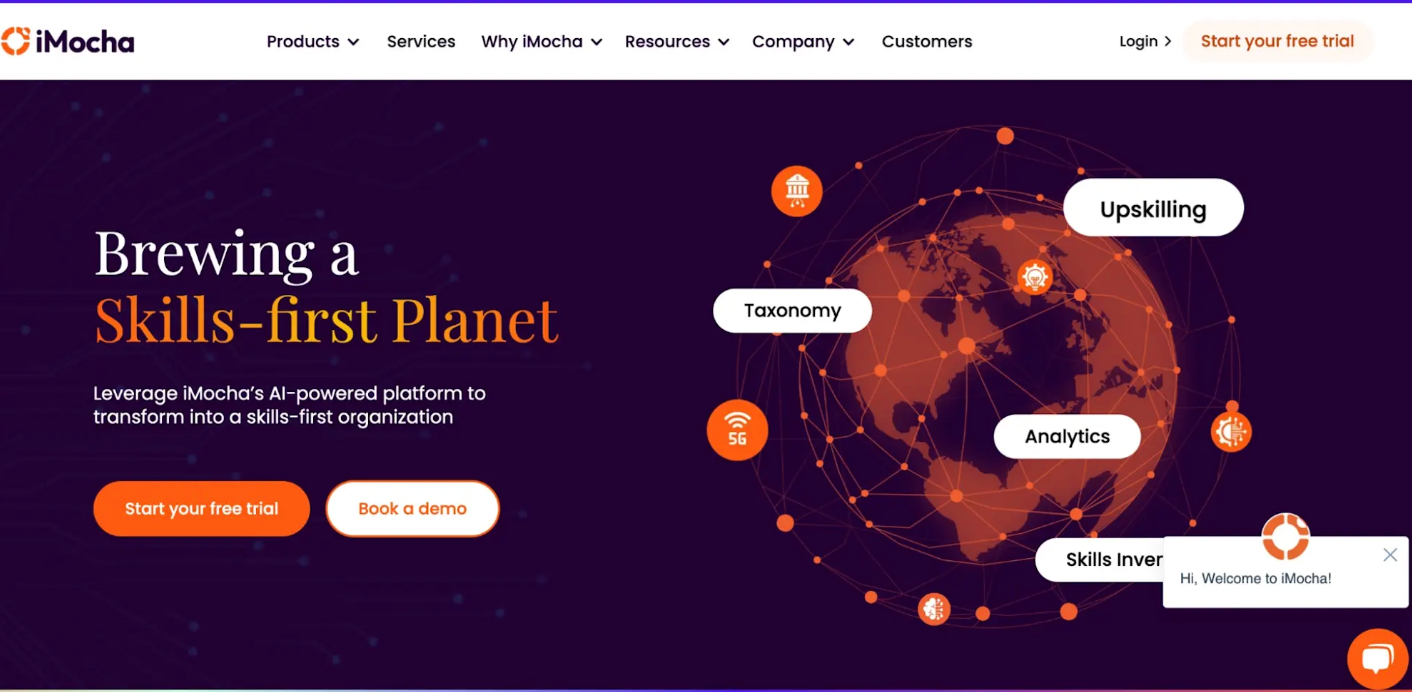
6. iMocha

iMocha homepage showcasing an AI-powered skills intelligence platform
iMocha offers 10,000+ skill assessments, AI inference, and skills-based hiring solutions

iMocha is an AI-powered skills assessment platform offering over 10,000 validated skill tests, including coding assessments in 35+ languages. It features AI-LogicBox for non-compiler-based logic testing, AI-EnglishPro for CEFR-aligned business English evaluation, and a comprehensive interview suite supporting asynchronous, live coding, and whiteboarding formats. 

The platform ensures assessment integrity with AI-powered Smart Proctoring, including violation tracking and alerts. It supports 50+ languages and complies with WCAG 2.1 accessibility standards, making it suitable for global and diverse hiring needs.

Key features

  • Customizable test creation: Design assessments tailored to specific job roles
  • AI-EnglishPro: Evaluate English communication skills based on the CEFR framework 
  • Industry benchmarking: Compare candidate scores with industry standards
  • Multi-format evaluations: Assess candidates through coding, cognitive, and situational tests

Pros

  • Access over 3,000 pre-built skills assessments for technical, domain, soft skills, and cognitive abilities
  • Use AI to evaluate candidate skills accurately
  • Leverage AI-LogicBox, a patented, code-free simulator for assessing logic and problem-solving skills

Cons

  • Excess features for orgs who only need simple screening

Pricing

  • 14-day free trial
  • Basic: Contact for pricing
  • Pro: Contact for pricing
  • Enterprise: Contact for pricing

7. DevSkiller

DevSkiller technical assessments page with skills tests and features
DevSkiller platform for coding tests, real skills, and secure hiring

DevSkiller is a talent assessment platform that employs the RealLifeTesting™ methodology to evaluate candidates through real-world coding tasks. It supports multiple programming languages, frameworks, and tools, allowing for customizable assessments tailored to specific job roles. 

The platform provides detailed reports with skill benchmarking, enabling data-driven hiring decisions. It also integrates with various ATS and offers features for remote hiring, making it suitable for global recruitment efforts.

Key features

  • RealLifeTesting™: Simulate real-world coding tasks to evaluate candidate skills
  • Customizable assessments: Create tests tailored to specific job roles
  • Skill benchmarking: Compare candidate performance against industry standards
  • Integration with ATS: Seamlessly integrate with ATS

Pros

  • Deliver realistic, job-like assessments that show you how a candidate will perform on their first day
  • Give deep insights into a candidate's coding style and understanding of architecture
  • Reduce bias that can result from unnatural or artificial test types

Cons

  • Limited support for non-technical roles

Pricing

  • Skills Assessment: Starting from $3,600
  • Skills Management & Assessment: Starting from $10,000

8. CoderPad

CoderPad homepage with live coding interview platform
CoderPad provides real-time coding interviews and skills assessments

CoderPad is a real-time technical interview platform that allows candidates to write, execute, and debug code in a live, collaborative environment. It supports over 99 programming languages and includes features like a digital whiteboard for system design interviews. 

The platform offers both live coding sessions and take-home projects, providing flexibility in assessment methods. It also includes code playback functionality, enabling interviewers to review candidates' coding processes post-interview.

Key features

  • Drawing mode: Switch to Drawing Mode so candidates can create a system architecture
  • Code playback: Review candidate coding sessions after the interview
  • Whiteboarding: Visualize and solve problems interactively

Pros

  • Enable both developer candidates and interviewers to write and run code together in more than 90 languages
  • Make interviews more accessible with built-in features like code autocompletion, bracket auto-closure, and syntax highlighting
  • Build your own questions ahead of time, or even create take-home projects for screening interviews

Cons

  • Require interviewers to invest time during live sessions vs. asynchronous screening

Pricing

  • Free
  • Starter: $100/month
  • Team: $375/month
  • Custom: Contact for pricing

9. WeCP

Dashboard of a skills assessment platform
Assess candidate skills with real-time insights

While other platforms average a few thousand or just over 10,000 questions, WeCP has one of the largest repository of technical questions. The question bank contains skill assessment test questions for every tech role, including frontend, full-stack development, data science, and DevOps.

Tech recruiters can use WeCP to generate custom tests on demand to evaluate more than 2,000 different technical skills. If you need more customization with test questions and design, WeCP’s team is on standby to help. This tool also has an AI Co-Pilot that helps you curate, evaluate, schedule, and select top-quality candidates in no time. 

Key features

  • AI-powered test creation: Automatically generate assessments tailored to job roles
  • Real-time evaluation: Assess candidate performance instantly
  • Customizable test library: Access a wide range of pre-built tests
  • Detailed reporting: Receive comprehensive reports on candidate performance

Pros

  • Get support to a wide range of job roles and industries
  • Integrate with various HR tools
  • User-friendly interface for both recruiters and candidates

Cons

  • May require a learning curve to fully utilize advanced features

Pricing

  • Premium Plan: $240/month
  • Custom/Enterprise Plan: Contact for pricing

10. Xobin

Xobin homepage showcasing skill assessments, coding tests, and more
Xobin offers 3,400+ skill assessments, AI-driven evaluations, and more

Xobin is a skill assessment software designed for remote online assessments and virtual interviews. It offers an extensive question library, an AI-driven communication checker, and a coding simulator to evaluate both technical and soft skills. 

The platform includes features like video-based forms, AI proctoring, and automatic scoring to streamline the assessment process. Xobin's secure online exams and pre-employment testing tools help organizations efficiently qualify the best talent.

Key features

  • Pre-built test library: Access a wide range of pre-built tests
  • Real-time evaluation: Assess candidate performance instantly
  • Customizable assessments: Design assessments tailored to specific job roles
  • Detailed reporting: Receive comprehensive reports on candidate performance

Pros

  • Create customizable assessments in three simple ways, including from a library, from a job description, or from scratch
  • Utilize psychometric testing to evaluate a candidate's personality and behavioral traits 
  • Ensure test integrity with advanced proctoring features, such as webcam proctoring, AI monitoring, and off-tab activity tracking

Cons

  • Pricing is on the higher side for small businesses

Pricing

  • Complete Assessment Suite: Starting from $699/year

📌Also read: The Impact of Talent Assessments on Reducing Employee Turnover

Accelerate Your Hiring With HackerEarth’s Skills Assessment Platform

Choosing the right skills assessment platform can transform your hiring process by saving time, improving accuracy, and helping you focus on top talent instead of administrative tasks. Start by shortlisting two or three tools from this guide that match your organization’s specific hiring needs. Test them with a pilot assessment or a current job opening to see which delivers the most relevant insights and ease of use.

HackerEarth combines skills assessments, automated candidate ranking, and seamless ATS integration to help recruiters evaluate talent accurately and efficiently. For instance, Apisero, a global consulting firm, used HackerEarth Assessments to evaluate internal developer candidates. Our platform reduced their engineering dependency by 70%, cut time-to-shortlist by 60%, and completed screenings three times faster while highlighting the most qualified candidates.

Book a demo today to see how your team can improve hiring speed and consistently identify top talent across technical and soft skills.

FAQs

1. What is a skills assessment tool?

A skills assessment tool evaluates candidates’ abilities through structured tests, simulations, or coding challenges. It helps recruiters identify qualified candidates, objectively compare competencies, and make informed hiring decisions without relying solely on resumes or interviews.

2. How do AI-driven skills assessments improve hiring?

AI-driven assessments analyze candidate responses, predict job performance, and automatically rank applicants based on their suitability. They reduce human bias, save time, and allow recruiters to focus on the most promising candidates while ensuring consistent, data-backed evaluations across roles.

3. Can soft skills be assessed with online tools?

Yes, soft skills assessment tools such as HackerEarth measure communication, problem-solving, teamwork, and adaptability. By simulating workplace scenarios or using situational judgment tests, recruiters can evaluate candidates’ behavioral traits alongside technical abilities for well-rounded hiring decisions.

4. How do companies ensure fair results using skills assessment tools?

Companies select validated tests that are aligned with job requirements, standardize the instructions, and apply automated scoring. Regular audits of AI algorithms, combined with the use of diverse question types, help minimize bias, enabling organizations to maintain fairness and accuracy in candidate evaluation.

Top 9 SaaS Recruitment Software in 2025

Hiring strong leadership in SaaS is harder than ever, and companies need tools that help them move quickly while making better decisions. The pressure comes from rapid growth, with the global software as a service (SaaS) market is projected to expand from $315.68 in 2025 to $1,131.52 billion by 2032. Budgets are also expanding, with 86% of enterprise buyers planning to boost or maintain SaaS spending and 41% planning to increase it further.

This growth drives more open roles across functions, but the challenge is not simply about volume. Employment for software developers, QA analysts, and testers is projected to grow 15% from 2023 to 2033, creating about 129,200 openings each year. While technical talent remains in high demand, the real shortage lies in leadership because professionals with SaaS-specific experience and a proven record of scaling recurring revenue represent only a small fraction of the overall talent pool. As a result, demand far outpaces supply and competition for these leaders intensifies.

For founders and executives, the task goes beyond filling technical positions. The true challenge lies in hiring leaders who can reduce churn, scale ARR, and build teams that consistently perform in a subscription-driven model. That is why many companies turn to specialized SaaS recruitment platforms, which bring networks, industry expertise, and proven methods that generalist recruiters often lack.

To support companies competing for this talent, here are the top nine SaaS recruitment software platforms in 2025.

What Makes a Great SaaS Recruitment Software?

The best SaaS recruitment software addresses challenges unique to SaaS companies, from scaling recurring revenue models to sourcing leaders who understand subscription-driven growth. When evaluating platforms, here are the SaaS-specific features to prioritize:

  • Subscription-based pricing flexibility: The software should offer tiered pricing models that expand as hiring volumes grow across different stages of scale.
  • Recurring revenue-focused role filters: A strong platform must allow recruiters to filter candidates with proven success in reducing churn and increasing ARR.
  • Technical stack compatibility assessments: Recruiters should be able to test candidates on SaaS-specific tools, programming frameworks, and cloud platforms essential for the role.
  • Go-to-market leadership pipelines: The right solution provides curated talent pools of SaaS leaders across sales, customer success, and product-led growth.
  • Integration with SaaS analytics platforms: An effective system connects seamlessly with Salesforce, HubSpot, or Gainsight to link hiring results with revenue performance.

Best Saas Software for Recruitment: At a Glance

The right SaaS recruitment software must move fast, measure impact on revenue, and scale with your growth goals. To help you pick wisely, here are features, use cases, pros, cons, and G2 ratings for leading platforms:

Software G2 Rating Key Features Best For Pros Cons
HackerEarth 4.5/5 Developer assessments, real-time leaderboards, skill analytics Tech recruitment & screening High ease of use, strong analytics, seamless integration No low-cost, stripped-down plans
Greenhouse 4.4/5 Customizable workflows, automated interview stages, CRM, email automation Mid to large enterprises Highly customizable, excellent customer support Steeper learning curve, higher cost for small teams
Lever 4.3/5 Candidate funnel tracking, email communication logs, cross-department notes Mid-market companies Intuitive interface, strong reporting, excellent customer support Limited AI features, may require integrations for advanced analytics
JazzHR 4.4/5 Resume parsing, customizable workflows, interview scheduling Small to mid-sized businesses User-friendly, cost-effective, strong performance score Resume parsing is less effective, AI capabilities less advanced
BreezyHR 4.4/5 Visual pipeline, candidate messaging, interview scheduling, file sharing SMBs and startups Easy to use, strong file sharing, good candidate experience Performance lags during peak times, less robust reporting
Workable 4.5/5 Multi-job board posting, calendar integrations, interview scheduling SMBs and mid-market companies High ease of use, superior hiring process tracking Reporting features less advanced than competitors
iCIMS 4.2/5 AI-powered hiring, onboarding integration, process automation Large enterprises Strong process automation, good integration capabilities Less intuitive interface, lacks modern features
SmartRecruiters 4.3/5 Job posting, candidate relationship management, analytics Enterprise-level organizations Strong candidate relationship management (8.3), ease of administration (8.8) AI text generation less effective (7.3), performance score (8.7)
Freshteam 4.4/5 Applicant tracking, onboarding, time-off management, HRIS integration SMBs and growing teams High ease of use, strong onboarding features Limited scalability for large enterprises

The 9 Best SaaS Recruitment Software Companies

We’ve already explored a high-level comparison of key features, strengths, and limitations in the table above. To get a clearer picture of how each platform truly works in practice, let’s dive deeper into the 10 best SaaS recruitment software tools:

1. HackerEarth

HackerEarth recruitment platform homepage for SaaS tech hiring
HackerEarth helps recruiters streamline SaaS tech hiring at scale

HackerEarth is a comprehensive online recruitment and technical assessment SaaS platform designed for tech hiring teams aiming to identify, evaluate, and engage candidates at scale. Supporting over 100 roles and 1,000+ skills, it enables recruiters to quickly build coding tests and combine domain-specific skill checks with soft-skill assessments. The platform is built with blind hiring capabilities, masking personally identifiable information to reduce bias and promote more inclusive recruitment practices.

One of HackerEarth’s standout features is its hiring challenges, which let companies connect with a global community of 10M+ developers through curated coding contests and hackathons. These contests not only give access to pre-vetted, highly motivated candidates who may not otherwise be on job boards but also help boost employer branding.

With detailed performance analytics and customizable reporting, HackerEarth allows teams to track and optimize their hiring funnel over time, making data-driven decisions easy. Trusted by major tech companies like Google, Microsoft, IBM, PayPal, and Amazon, HackerEarth functions as both a candidate screening tool and a sourcing engine. It is particularly valuable for organizations seeking a single SaaS solution that integrates technical assessment, candidate engagement, and hiring funnel optimization, helping recruiters save time, reduce bias, and improve the quality of hires.

Key features

  • AI-powered skill assessments: Utilize AI to evaluate coding skills accurately, minimizing human bias
  • Customizable coding challenges: Create role-specific assessments with a library of 10,000+ questions across 500+ skills
  • Integrated video interviews: Conduct live coding interviews with built-in IDE and real-time feedback
  • Advanced proctoring and security: Ensure integrity with advanced proctoring features during assessments
  • Comprehensive analytics dashboard: Access detailed reports and analytics to make data-driven hiring decisions

Pros

  • Enhance hiring accuracy with AI-driven assessments
  • Reduce time-to-hire through automated processes
  • Support a wide range of programming languages and skills
  • Provide a seamless candidate experience
  • Offer scalability for enterprises and startups alike

Cons

  • Initial setup requires time for customization

Pricing

  • Growth Plan: $99/month 
  • Scale Plan: $399/month 
  • Enterprise: Custom pricing with volume discounts and advanced support

📌Related read: How Talent Assessment Tests Improve Hiring Accuracy and Reduce Employee Turnover

2. Greenhouse

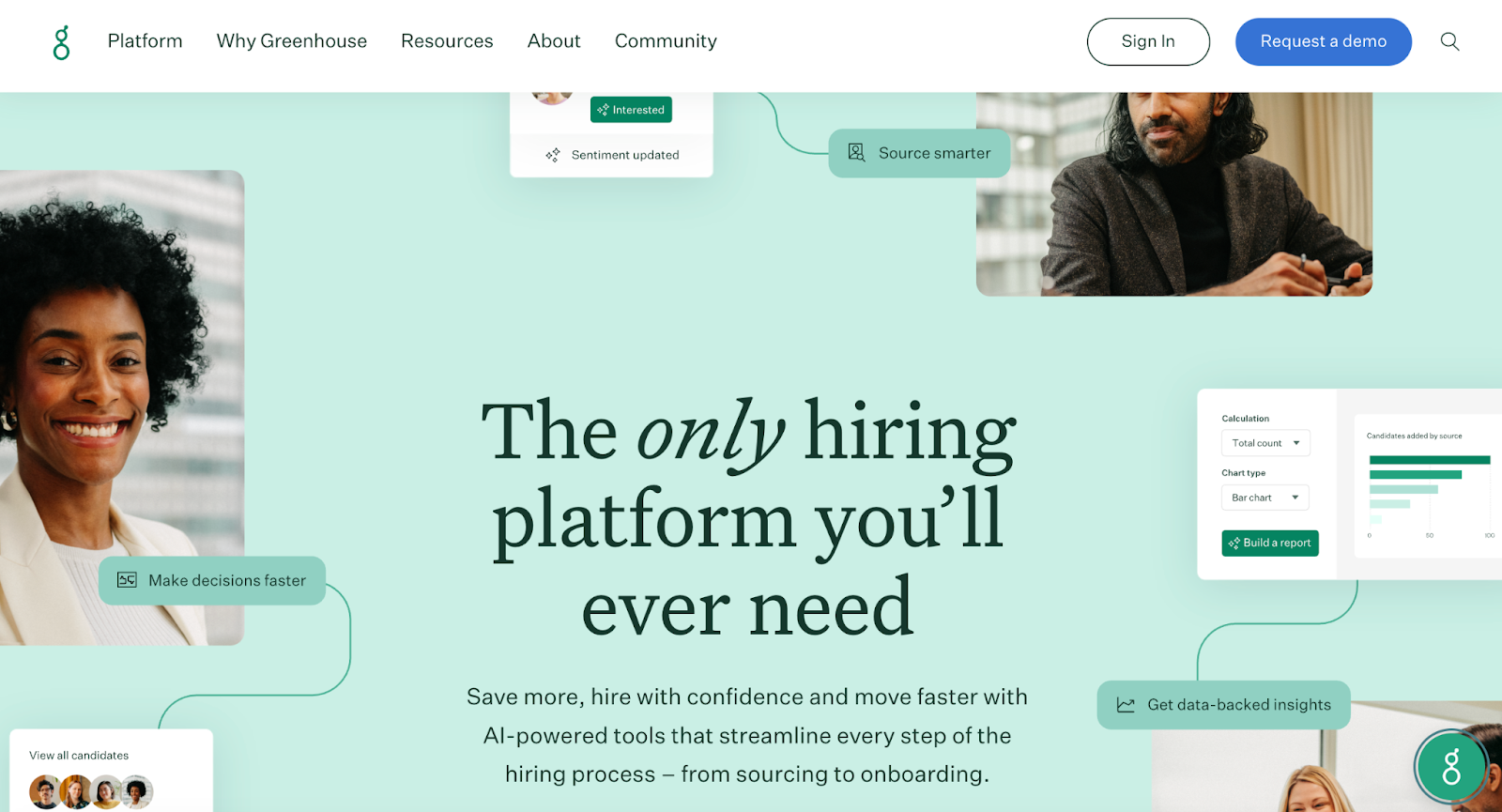
Greenhouse hiring platform homepage featuring AI-powered tools
Greenhouse streamlines hiring with AI tools from sourcing to onboarding

Greenhouse is a comprehensive SaaS recruitment platform designed to streamline the hiring process through structured workflows, collaborative hiring, and advanced analytics. By integrating AI-driven tools, it empowers organizations to make data-informed decisions, enhance candidate experiences, and foster diversity and inclusion in their hiring practices.

Key features

  • Structured hiring workflows: Implement consistent interview processes to reduce bias and improve hiring outcomes
  • AI-powered candidate screening: Utilize artificial intelligence to identify top talent and match candidates to roles effectively
  • Collaborative interview scheduling: Coordinate interview schedules seamlessly across teams to enhance efficiency

Pros

  • Access actionable insights to optimize recruitment strategies and track performance metrics
  • Create branded job listings to attract and engage potential candidates
  • Seamlessly connect with HR systems and third-party applications to streamline workflows

Cons

  • Customization options may require additional setup time and resources

Pricing

  • Custom pricing

3. Lever

Lever recruitment platform homepage showcasing AI-powered tools
Lever's AI-powered platform streamlines sourcing, tracking, and relationship building

Lever provides a SaaS platform designed to unify sourcing, interviewing, and relationship management in one interface. Its AI-driven candidate matching identifies top talent efficiently, while collaborative tools allow hiring teams to stay aligned and transparent. 

The platform’s detailed analytics track every stage of the hiring funnel, helping teams make data-informed decisions and optimize processes. 

Key features

  • AI-driven matching: Use AI to identify and match top talent efficiently
  • Collaborative workflows: Facilitate team alignment throughout the hiring process
  • Custom reporting: Access tailored analytics to track recruitment performance

Pros

  • Enhance recruitment efficiency with AI-powered matching
  • Promote collaboration through structured workflows
  • Make data-driven decisions using custom reporting

Cons

  • Limited mobile interface capabilities compared to desktop

Pricing

  • Custom pricing

4. JazzHR

JazzHR homepage highlighting AI-powered recruitment tools
JazzHR’s AI-powered platform streamlines fast, cost-effective hiring

Growing businesses often need a SaaS ATS that delivers essentials without overwhelming overhead. JazzHR offers a subscription model tailored for small-to-mid size companies, giving them tools to post jobs, screen candidates, and collaborate efficiently. 

Users get job posting & syndication, applicant tracking, custom workflows, offer-letters + eSignature, and reporting, all managed in the cloud. With usage-based add-ons like candidate texting, visual reporting, and Zoom integrations, teams only pay for features they use.  

Key features

  • Job posting: Easily create and distribute job postings to multiple platforms
  • Candidate screening: Use customizable questionnaires to assess candidate qualifications
  • Interview scheduling: Coordinate interviews seamlessly with integrated scheduling tools

Pros

  • Create custom career pages to attract top talent
  • Facilitate team collaboration throughout the hiring process
  • Get access to tools for effective candidate screening

Cons

  • Limited integrations with other HR tools

Pricing

  • Hero: $75/month
  • Plus: $269/month
  • Pro: Custom pricing

📌Suggested read: The 12 Most Effective Employee Selection Methods for Tech Teams

5. BreezyHR

BreezyHR platform homepage offering recruitment tools
BreezyHR streamlines hiring with AI tools to attract better talent faster

With features like candidate sourcing, interview scheduling, and pipeline management, the SaaS-based BreezyHR focuses on automating and streamlining the hiring process. It's automation tools help reduce manual tasks, while its analytics provide insights to optimize hiring strategies. 

The platform also offers customizable workflows and integrations with various HR tools, ensuring a cohesive recruitment process. For companies that want to start small and add features as hiring volume grows, BreezyHR’s tiered offerings let you scale without re-architecting your stack.

Key features

  • Candidate sourcing: Use multiple channels to source top talent
  • Interview scheduling: Coordinate interviews seamlessly with integrated scheduling tools
  • Pipeline management: Track candidates through customizable pipelines

Pros

  • Reduce manual tasks with automated workflows
  • Gain insights into hiring performance to optimize strategies
  • Support virtual hiring processes through built-in, user-friendly video interviewing features

Cons

  • Limited customization for pipelines in lower subscription plans

Pricing

  • Bootstrap: Free
  • Startup: $189/month
  • Growth: $329/month

Business: $529/month

6. Workable

Workable HR platform homepage showcasing recruitment tools
Workable’s future-ready HR platform streamlines hiring and employee management

Workable centralizes sourcing, applicant tracking, and hiring operations into a single SaaS workspace, so teams can move from job post to hire. Its drag-and-drop pipelines and multi-channel job distribution help small and mid-market recruiting teams reach candidates across boards and social channels. 

Built-in screening, interview scheduling, and scorecards speed evaluation while reporting surfaces funnel bottlenecks and time-to-hire metrics. Workable also offers optional HR add-ons (onboarding, payroll integrations) to keep records and HR workflows in one place. 

Key features

  • Candidate sourcing: Create and broadcast job ads to multiple boards and social channels 
  • Pipeline management: Visualize candidate progress and move people through stages with configurable drag-and-drop pipelines
  • Interview scheduling: Automate calendar coordination, send confirmations, and reduce back-and-forth scheduling delays

Pros

  • Collect structured interviewer feedback to reduce bias
  • Analyze funnel metrics and time-to-hire to identify issues
  • Reduce time-to-hire with multi-channel sourcing and an intuitive ATS

Cons

  • See variation in reporting depth for highly complex enterprise needs

Pricing

  • Standard: $360/month
  • Premier: $599/month (billed annually at $7,188/year)

7. iCIMS

iCIMS platform homepage featuring AI recruitment tools
iCIMS AI-powered platform helps enterprises hire top talent faster

Designed for large organizations, iCIMS provides a modular SaaS talent platform that combines applicant tracking, recruitment marketing, onboarding, and internal mobility in a cohesive ecosystem. It’s AI features assist with candidate matching and resume parsing while recruitment marketing tools nurture talent pools and drive employer brand. 

Plus, onboarding and internal mobility modules help organizations retain and redeploy talent without losing workforce data continuity. 

Key features

  • Applicant tracking: Manage requisitions, candidate pipelines, and compliance workflows across global teams
  • Recruitment marketing: Build career sites and campaigns to attract and nurture candidate pools over time
  • Onboarding automation: Streamline new hire paperwork, tasks, and integrations for faster time-to-productivity

Pros

  • Leverage machine assistance to surface qualified candidates and prioritize outreach
  • Enable talent redeployment with skills profiles and internal job matching
  • Support complex, compliant enterprise workflows at scale

Cons

  • See a learning curve for non-technical administrators

Pricing

  • Custom pricing

8. SmartRecruiters

AI-powered SaaS recruitment platform for smarter hiring
Efficient, AI-driven recruitment for high-volume hiring

SmartRecruiters combines an ATS, recruitment marketing, and a partner app marketplace into a cloud SaaS platform focused on candidate experience and scalability. It provides branded career sites, multi-channel job posting, resume parsing, and workflows that support collaborative hiring. 

A notable differentiator is the ecosystem model, where customers can extend functionality with marketplace apps for sourcing, background checks, assessments, and agency partners. SmartRecruiters also includes analytics and compliance features suitable for global hiring, plus a free "Bootstrap" tier for one active job and basic ATS functionality. 

Key features

  • SmartAttrax career sites: Launch branded, compliant career sites integrated with SmartOS for personalized candidate journeys
  • SmartAnalytics dashboard: Access built-in recruiting metrics, visualizations, and insights to drive faster, data-driven hiring
  • SmartTips guidance: Embed custom content, FAQs, and team announcements directly into recruiting workflows

Pros

  • Leverage Winston Match AI to screen applications, rank skills, and reduce bias in shortlisting
  • ​​Gain SaaS agility with modular, subscription-based talent acquisition platform
  • Improve candidate experience with branded career sites and AI-driven personalization

Cons

  • Require training to fully utilize advanced modules like SmartAnalytics

Pricing

  • Available in Essential, Professional, High Volume & Complete: Custom pricing

9. Freshteam

SaaS recruitment platform showcasing key features and capabilities
Comprehensive SaaS recruitment platform for efficient hiring

Freshteam from Freshworks is a subscription cloud software that combines applicant tracking, onboarding, and HRIS basics in one SaaS package, targeted at startups and growing businesses. It allows teams to publish job listings, track applications via configurable pipelines, schedule interviews, and manage offer letters, all via browser or mobile.

As a cloud service, it supports integrations with tools (calendars, communication, job boards), automation of repetitive tasks (emails, candidate status changes), and transparent per-employee/year pricing. Data hosted securely, and Freshteam inherits Freshworks’ ecosystem for scaling into helpdesk, CRM or other modules. Its SaaS model supports quick deployment without heavy technical infrastructure, useful for teams with modest IT resources.

Key features

  • Applicant tracking: Manage open roles, candidate pipelines, and stage-based reviews via cloud UI
  • Onboarding automation: Automate hire-to-employee handover tasks and documentation workflows
  • Custom career page: Publish branded job-listing pages via SaaS builder without needing web dev

Pros

  • Adopt fast with minimal setup and no infrastructure investment
  • Predict costs via a per-employee subscription model
  • Automate mundane tasks to free HR bandwidth

Cons

  • Analytics may be basic for large-scale, enterprise reports

Pricing

  • Custom pricing

Powering the Future of Recruitment with SaaS

Hiring today is no longer defined by paperwork and fragmented systems. It is about intelligent workflows, real-time insights, and experiences that resonate with candidates at every stage. SaaS recruitment platforms make this possible by combining automation, scalability, and flexibility in ways that traditional systems cannot match. 

Each tool we explored addresses different needs, from simplifying SMB hiring to supporting enterprise-level recruitment strategies. Among them, HackerEarth stands out, enabling organizations to evaluate talent at scale with coding assessments, analytics, and global developer engagement. If your focus is on building stronger engineering teams and reducing bias in tech recruitment, HackerEarth is a proven partner.

Ready to elevate your hiring strategy? Book a demo to see how HackerEarth can help you attract, assess, and hire top talent faster.

FAQs

Who is a SaaS recruiter?

A SaaS recruiter refers to a hiring professional who uses cloud-based software to manage recruitment activities. Instead of relying on on-premise systems, they leverage SaaS platforms to post jobs, screen applicants, collaborate with teams, and track candidates in real time. This model ensures scalability, security, and seamless updates without heavy IT overhead.

What is the best software for recruitment?

The best recruitment software depends on your company’s needs. For general applicant tracking and hiring automation, platforms like Greenhouse, Lever, and SmartRecruiters are popular. However, HackerEarth is one of the best choices because it combines technical assessments, blind hiring, and global coding challenges into a single SaaS solution.

What is an ATS SaaS platform?

An ATS SaaS platform is a cloud-based applicant tracking system that helps recruiters manage the hiring funnel from job posting to offer acceptance. Compared to legacy ATS systems, SaaS-based platforms provide automatic updates, integrations with HR tools, and real-time collaboration, making the process faster and more efficient.

Which is the best ATS software?

The best ATS software varies by business size and industry. For large enterprises, Greenhouse and iCIMS are strong contenders due to their scalability. For SMBs, JazzHR and BreezyHR offer affordable, easy-to-use solutions. For companies focused on tech and non-tech hiring, HackerEarth is the best ATS with built-in automated assessments and bias-free candidate evaluation.

Top 10 Talent Assessment Tools of 2025: Accurate, Fair & Fast

You’re hiring for an important role, reading resumes and running interviews, yet still unsure. Traditional hiring feels risky because resumes can mislead, and gut feelings often lead to costly mistakes for companies. This challenge grows bigger as HR leaders admit their current tools are not working well. In fact, HR technology ranked as a top three priority in 2024, yet only 43% of HR professionals and executives rated their tools as effective in 2025.

This gap highlights why assessment tools for talent management are becoming increasingly important today. For example, they help recruiters spot skills, measure potential, and make confident decisions instead of unreliable guesses. These platforms give hiring teams stronger data, sharper insights, and faster ways to identify people who perform.

If you want to hire faster without dropping your standards, you’re in the right place. We will show you the 10 best talent assessment tools in 2025 that help you pick high performers with confidence.

What Makes a Great Talent Assessment Tool?

A great talent management assessment tool becomes a strategic asset that enhances the recruitment process. Whether you're hiring for technical, cognitive, or soft skills, the tool you choose should meet specific criteria that ensure reliable results and support effective decision-making.

Here's what to look for:

  • Code assessment with real-world scenarios: The tool should move beyond simple coding challenges to evaluate a candidate's practical skills. Look for features that allow for the creation of tests based on real-world projects, including collaborative coding environments and debugging exercises. 
  • Automated proctoring and plagiarism detection: To maintain the integrity of assessments, the tool should have built-in security features. Automated proctoring uses a candidate’s webcam to monitor for suspicious behavior. Plagiarism detection algorithms compare submitted code against a vast database to identify instances of cheating.
  • Customization for specific roles: The platform should let you build assessments that mirror the specific demands of each job. This includes the ability to choose from a library of questions, define custom skills to test, and set time limits or constraints that reflect the reality of the role.
  • AI-powered predictive analytics: Advanced analytics and AI capabilities can help you make more informed hiring decisions. The tool should analyze candidate performance data to predict future job success and identify potential top performers. This helps you move beyond resume filters and spot hidden talent.
  • Integration with your existing workflow: Talent assessment tools should integrate effortlessly with your applicant tracking system (ATS), allowing you to automate tasks, consolidate candidate information, and manage the entire hiring process from a single dashboard.

Top Talent Assessment Tools Comparison: At a Glance

Here’s a talent assessment tools comparison across key features, best use case, cons, and G2 rating so you can quickly see which tool might best meet your hiring needs.

Tool Key Features Best For Cons G2 Rating
HackerEarth Coding challenges across many languages; AI-driven skill validation; proctoring; detailed reporting; large skills library. Organizations needing technical assessments at scale for dev hiring & fair screening No low-cost, stripped-down plans 4.5/5
HackerRank Coding challenges in many languages, candidate management, integration, proctoring, test library. Organizations hiring many developers at scale Some assessment issues (tests marked incorrectly); navigation can be difficult. 4.5/5
Codility Real-time coding tests, algorithmic puzzles, plagiarism detection, role-based tests Large-scale tech hires Less flexible on test structure; weaker soft-skill evaluation; deeper code quality review may require manual effort. 4.6/5
Coderbyte Multiple coding languages, video playback, multiple question types, reports. Smaller companies or teams UX bugs reported; some want more variety in question types; occasional platform issues. 4.4/5
Mettl (Mercer) Technical, behavioral, cognitive, personality, communication assessments; remote proctoring. Enterprises wanting broad assessment capability Can be more expensive; slower ROI in some cases; setup can take time. 4.4/5
TestGorilla Library of validated tests (technical, cognitive, language, soft skills), anti-cheating, side-by-side comparison. Companies wanting to assess beyond coding Less specialized for deeper coding/algorithmic problems; interface and customization may lag top coding platforms. 4.5/5
CoderPad Real-time collaborative code interviews, live coding environment, shared IDE, candidate experience focused. Teams doing live interviews Less depth in test library; may lack certain analytics; sometimes more suited to final stage interviews rather than large-scale screening. 4.4/5
Devskiller Real-world task based coding tests, broad tech stack, detailed analytics, TalentBoost options. Companies wanting assessments that mimic actual work More expensive; steeper setup; requires more time to evaluate results thoroughly. 4.7/5
iMocha Very large skills library (>3000), AI-based analytics, coding simulators, proctoring, both technical and functional assessments. Organisations wanting broad coverage: non-tech and tech roles with skills diversity UI can be confusing; cost for full feature set; learning curve in using advanced analytics. 4.4/5
Xobin Ability to test many skills (tech, non-tech), scale assessments, automation, proctoring. Organisations hiring for many different roles Some limitations in candidate experience; Data on analytics depth limited. 4.7/5

Top 10 Talent Assessment Software in 2025

As the hiring landscape becomes increasingly competitive, leveraging the right talent acquisition assessment tools are crucial for making data-driven, unbiased decisions. These platforms streamline the recruitment process, ensuring that only the most qualified candidates are selected. 

Here’s a comprehensive look at the top tools shaping the future of hiring in 2025.

1. HackerEarth

HackerEarth Assessments page showing features and coding test overview
HackerEarth platform with 36,000+ coding questions, advanced proctoring, and role-based assessments 

As an all-in-one coding platform and developer assessment tool, HackerEarth is used by companies for tech talent management, primarily to conduct developer assessments, interviews, and hackathons to identify and hire skilled candidates. It provides tools for creating coding tests, automating the screening process, and conducting virtual interviews with built-in IDEs.

With a developer community of over 10 million members across 133 countries, it provides organizations access to a talent pool that is both diverse and highly skilled. Through its Hiring Challenges, companies can go beyond resumes and traditional job boards to engage developers directly with real-world coding problems. This not only acts as a sourcing engine but also strengthens employer branding by showing candidates the kind of challenges they’d work on. 

What sets HackerEarth apart is the combination of its vast library of 36,000+ questions, its project-based assessments, and its detailed evaluation reports that give hiring teams a complete view of each candidate’s problem-solving ability. Its proctoring system adds a layer of reliability, offering advanced invigilation features to prevent impersonation and misconduct during tests. 

At the same time, candidates benefit from a developer-friendly interface that supports 40+ programming languages and tools like Jupyter Notebooks, which helps them demonstrate their skills in an authentic environment. Large enterprises and fast-growing companies alike rely on HackerEarth to build strong technical teams, with clients ranging from Microsoft and Google to PayPal and Barclays. 

Key features

  • End-to-end hiring at scale: Manage everything from coding assessments to sourcing and evaluation in one platform
  • Hackathons: Organize coding competitions that engage a global talent pool, providing real-world scenarios to test candidate capabilities
  • Advanced proctoring: Ensure fairness with SmartBrowser, image processing, and tab-switch detection
  • Automated candidate evaluation: Automatically assess technical submissions and provide detailed reports on performance
  • ATS integration: Seamlessly integrate with applicant tracking systems to streamline recruitment workflows
  • 36,000+ questions across 1,000+ skills: Evaluate candidates with a vast library covering emerging AI and niche tech skills
  • Project-based assessments: Simulate real-world challenges with custom datasets and test cases

Pros

  • Source engaged, pre-vetted talent beyond traditional job boards
  • Simulate real-world challenges with project-based coding assessments
  • Improve hiring speed with AI-assisted test creation and evaluations
  • Strengthen employer brand with global Hiring Challenges

Cons

  • Steeper learning curve for new users

Pricing

  • Growth Plan: $99/month 
  • Scale Plan: $399/month 
  • Enterprise: Custom pricing with volume discounts and advanced support

📌Suggested read: The 12 Most Effective Employee Selection Methods for Tech Teams

2. HackerRank

HackerRank Certified Assessments page highlighting skills verification features
HackerRank certified assessments validate candidate skills with trusted benchmarks

For hiring teams that need rigorous technical screening, HackerRank offers a mature platform with large question sets, strong grading tools, live coding interviews, and advanced detection of cheating. It provides a vast library of pre-built coding challenges and supports live interviews for coding and problem-solving assessments. It works well where coding skill verification must be precise and standard.

Key features

  • Live coding interviews: Conduct real-time coding interviews, allowing interviewers to assess coding proficiency on the spot
  • Automated grading: Let the system automatically evaluate candidates’ submissions based on accuracy, efficiency, and scalability
  • Customizable assessments: Tailor challenges to your specific hiring needs, selecting skill levels, languages, and problem types

Pros

  • Access a large library of coding challenges
  • Reduce time-to-hire with automated assessments
  • Seamlessly integrates with ATS systems for better workflow management

Cons

  • Limited customization for interview setups
  • Can be expensive for small teams

Pricing

  • Starter: $199/month
  • Pro: $449/month

3. Codility

Codility homepage showing skills-based assessments and tech hiring tools
Codility offers screen-and-interview products for enterprise technical hiring

Codility is a popular coding assessment platform designed for evaluating developers’ algorithmic thinking and problem-solving skills. It allows recruiters to create and customize coding tests that assess technical skills through real-time challenges. 

The platform also features anti-cheating mechanisms, such as plagiarism detection, to ensure the integrity of the assessments. Codility's integrated interview features allow for live coding during the interview process, making it a comprehensive solution for tech recruitment.

Key features

  • Algorithmic coding tests: Create coding challenges to assess problem-solving, algorithms, and data structure knowledge
  • Anti-cheating mechanisms: Detect similarities in code submissions to ensure the integrity of the process
  • Plagiarism detection: Automatically checks for potential plagiarism in candidates' submissions

Pros

  • Deliver clear insights into candidate code performance and mistakes
  • Provide reliable user experience with good support and variety of tasks
  • Offer strong cheating protection for credible assessments

Cons

  • Requires manual review for deeper quality beyond automated scoring

Pricing

  • Starter: $1200/year
  • Sale: $600/month

Custom: Contact for pricing

4. Coderbyte

Coderbyte homepage with coding tests and assessments
Coderbyte offers coding tests, interviews, and skill training

Coderbyte offers a platform that focuses on coding assessments for developers, helping recruiters test technical skills through pre-built challenges. It includes a variety of challenges across multiple languages and difficulty levels, along with live coding interviews.

Small to mid-size companies or teams that want flexibility often pick Coderbyte because it supports project-based screenings, interviews, and take-home tasks. It suits mixed roles where coding clarity and candidate experience matter.

Key features

  • Pre-built challenges: Choose from hundreds of pre-built challenges to assess developers' skills in multiple programming languages
  • Live coding interviews: Conduct live, real-time coding interviews with candidates
  • Custom test creation: Build customized coding tests based on job role requirements

Pros

  • Offer realistic tasks that reflect what candidates will do on job
  • Provide strong UX and intuitive interface for both recruiters and candidates
  • Enable lower-cost entry for smaller teams, good value for mid-market

Cons

  • Pricing may feel expensive if many custom or take-home tasks involved

Pricing

  • Pro: $199/month
  • Enterprise: Starts at $9,995/year

5. Mettl (Mercer)

Mettl homepage displaying online assessments and skill evaluation tools
Mettl offers comprehensive online assessments for hiring

Mettl, now part of Mercer, offers a variety of technical, cognitive, and behavioral assessments. It allows organizations to assess candidates on a wide range of skills, including programming, personality traits, and aptitude.

The platform’s AI-powered insights help recruiters make data-driven decisions and streamline the hiring process. It also features remote proctoring, ensuring secure and fair testing during assessments.

Key features

  • Psychometric assessments: Measure personality, cognitive abilities, and aptitude to evaluate soft skills and potential 
  • Technical assessments: Evaluate IT and non-IT skills, digital readiness, and coding abilities through simulators and customized tests
  • 360-degree feedback: get support for multi-rater feedback processes to gain comprehensive performance insights

Pros

  • Serve both hiring and L&D/training needs for end-to-end talent lifecycle
  • Offer strong security and examination integrity features
  • Provide experience managing assessments at scale globally

Cons

  • Some users find interface or dashboards less modern or less intuitive

Pricing

  • Custom pricing

6. TestGorilla

TestGorilla homepage featuring AI-powered talent sourcing and assessments
Get hundreds of validated tests, AI scoring, and a global talent pool

TestGorilla is a talent assessment platform that helps companies identify top candidates with a data-driven approach. It provides a library of over 400 tests for technical, soft, and job-specific skills.

The platform includes powerful features like custom questions, AI-driven candidate scoring and ranking, and robust anti-cheating measures. By automating assessment creation and candidate screening, TestGorilla helps companies streamline the hiring process across various industries.

Key features

  • Extensive test library: Access over 400 scientifically verified, expert-crafted skills tests covering cognitive abilities, technical skills (including coding), personality traits, language proficiency, and job-specific functions
  • Custom assessment building: Create unique, multi-skill assessments with a combination of tests and up to 20 custom questions
  • Anti-cheating features: Ensure the integrity of tests with built-in anti-cheating mechanisms

Pros

  • Save time screening by using premade, validated tests across many disciplines
  • Use AI scoring to reduce manual work and speed up candidate evaluation
  • Grow with flexible credit-based or annual plans to match hiring volume

Cons

  • Lower-tier plans have limitations on branding, integrations, some test types

Pricing

  • Free
  • Core: $142/month (billed annually)

Plus: Contact for pricing

📌Related read: How Talent Assessment Tests Improve Hiring Accuracy and Reduce Employee Turnover

7. CoderPad

CoderPad homepage with live coding interview platform
CoderPad provides real-time coding interviews and assessments

CoderPad specializes in live coding interviews and collaborative coding environments, helping interviewers see how a candidate works in real time. It suits final-stage interviews, pair programming exercises, or whiteboard style tasks rather than mass screening.

Key features

  • Multi-file IDE: Work on multi-file projects in a familiar VS Code-based environment
  • Live coding: Write, execute, and debug code together in real-time within the browser-based environment
  • Gamified coding challenges: showcase their skills while maintaining assessment integrity with cheat-resistant coding challenges

Pros

  • Let hiring teams observe candidate work live on code with immediate feedback
  • Build authentic simulations of real work tasks rather than isolated puzzles
  • Engage candidates better through interactivity and hands-on tasks

Cons

  • Require interviewers to invest time during live sessions vs. asynchronous screening

Pricing

  • Free
  • Starter: $100/month
  • Team: $375/month
  • Custom: Contact for pricing

8. Devskiller

DevSkiller platform for coding tests, real skills, and secure hiring
DevSkiller technical assessments page with skills tests and features

For assessing technical talent, Devskiller offers a comprehensive platform built on realism and objectivity. Its core is the RealLifeTesting™ methodology for remote coding tests, which uses a large library of customizable recruitment tasks to replicate real-world scenarios.

The platform provides a positive candidate experience while maintaining test integrity through automated objective scoring, real-time observation of tests, and powerful anti-plagiarism tools. For hiring teams, seamless ATS integration streamlines the workflow, and the platform's capabilities extend to ongoing skill management and employee development.

Key features

  • Customizable assessments: Select from 5,000+ ready-to-use tasks or create own custom tasks 
  • Remote & flexible testing: Send test invites from anywhere
  • Automated, objective scoring: Fair, automated scoring with easy-to-understand reports for technical and non-technical professionals

Pros

  • Deliver realistic job-like assessments so you see how candidate will perform on day one
  • Give deep insight into coding style and architecture understanding
  • Reduce bias from unnatural or artificial test types

Cons

  • Longer setup/ evaluation time per candidate due to detailed tasks

Pricing

  • Skills Assessment: Starting from $3,600
  • Skills Management & Assessment: Starting from $10,000

9. iMocha

iMocha homepage showcasing an AI-powered skills intelligence platform
iMocha offers 10,000+ skill assessments, AI inference, and skills-based hiring solutions

Targeting a fair, skill-based hiring approach, iMocha provides an extensive library of pre-built and customizable assessments for technical, soft, and cognitive skills. The platform features AI-driven tools like AI-LogicBox for code-free logic testing and AI-EnglishPro for communication evaluation. 

With integrated proctoring to protect exam validity, seamless ATS integrations, and options for live coding and interviewing, iMocha gives companies the resources to make informed hiring decisions.

Key features

  • Vast skill library: Access over 3,000 pre-built skills assessments for technical, domain, soft skills, and cognitive abilities 
  • Advanced assessment types: Conduct live coding, live whiteboarding, and structured interviews
  • AI-LogicBox: A patented, code-free simulator for assessing logic and problem-solving skills

Pros

  • Evaluate English communication skills based on the CEFR framework via AI-EnglishPro
  • Generate actionable insights into candidate gaps and team skill levels
  • Scale from small teams to enterprises with flexible pricing options

Cons

  • Excess features for orgs who only need simple technical screening

Pricing

  • 14-day free trial
  • Basic: Contact for pricing
  • Pro: Contact for pricing
  • Enterprise: Contact for pricing

10. Xobin

 Xobin homepage showcasing skill assessments, coding tests, and more
Xobin offers 3,400+ skill assessments, AI-driven evaluations, and more

As one of the most-preferred talent assessment tools, Xobin features over 3,400 customizable skill tests, 2,500 role-based assessments, and a library of 180,000+ questions. It automates the evaluation of written, verbal, and coding answers and uses advanced proctoring with eye tracking to uphold exam integrity. 

The platform also provides psychometric tests and actionable reports for data-driven hiring, all integrated with your existing ATS tools.

Key features

  • Customizable assessments: Create pre-employment tests tailored to specific roles, skills, or your company's unique needs
  • Extensive question library: Access over 180,000 tech and non-tech questions to build diverse assessments
  • AI-powered evaluation: Automatically score written, verbal, and coding answers with AI-driven precision

Pros

  • Conduct autonomous AI-led interviews with auto-generated plans
  • Evaluate developer skills with real-time coding environments
  • Measure personality traits and assess cultural and role alignment for a holistic fit

Cons

  • Gaps in language-specific coding challenges as reported by users

Pricing

  • Complete Assessment Suite: Starting from $699/year

📌Also read: The Impact of Talent Assessments on Reducing Employee Turnover

Accelerate Your Hiring with HackerEarth

Ultimately, choosing the right technical assessment tools comes down to your scalability, feature and budget needs. To make it easier for you: 

  • Shortlist two or three platforms from this guide that match your core needs.
  • Request demos, run a small pilot, and test with a current job opening or a few team members to check relevance and usability.

Of all options, HackerEarth combines coding assessments, automated candidate rankings, and seamless ATS integration to help organizations evaluate talent efficiently. Recruiters can quickly create tests, invite candidates in bulk, and gain actionable analytics to make informed decisions faster.

For example, Apisero, a global consulting firm, used HackerEarth Assessments to evaluate candidates for internal developer roles. The platform reduced engineering dependency by 70% and cut time-to-shortlist by 60%, completing screenings 3x faster while focusing on top candidates.

Book a demo today to see how your team can accelerate hiring and consistently bring in top technical professionals.

FAQs

What is a talent assessment tool?

A talent assessment tool is a software solution that evaluates candidates’ skills, knowledge, and potential using tests, simulations, or psychometric assessments. It helps organizations make data-driven hiring decisions and identify the best-fit talent efficiently.

What are the three types of assessment tools?

The three types of assessment tools are: 

  • Cognitive or aptitude tests, which measure problem-solving and reasoning
  • Skill-based tests, which evaluate job-specific abilities
  • Personality or behavioral assessments, which analyze traits, motivations, and cultural fit for a role

How to do a talent assessment?

To conduct a talent assessment, define the role’s key skills, select appropriate tests or evaluations, administer assessments to candidates, analyze results for strengths and weaknesses, and use insights to guide hiring, promotions, or development decisions.

How I used VibeCode Arena platform to build code using AI and learnt how to improve it

I Used AI to Build a "Simple Image Carousel" at VibeCodeArena. It Found 15+ Issues and Taught Me How to Fix Them.

My Learning Journey

I wanted to understand what separates working code from good code. So I used VibeCodeArena.ai to pick a problem statement where different LLMs produce code for the same prompt. Upon landing on the main page of VibeCodeArena, I could see different challenges. Since I was interested in an Image carousal application, I picked the challenge with the prompt "Make a simple image carousel that lets users click 'next' and 'previous' buttons to cycle through images."

Within seconds, I had code from multiple LLMs, including DeepSeek, Mistral, GPT, and Llama. Each code sample also had an objective evaluation score. I was pleasantly surprised to see so many solutions for the same problem. I picked gpt-oss-20b model from OpenAI. For this experiment, I wanted to focus on learning how to code better so either one of the LLMs could have worked. But VibeCodeArena can also be used to evaluate different LLMs to help make a decision about which model to use for what problem statement.

The model had produced a clean HTML, CSS, and JavaScript. The code looked professional. I could see the preview of the code by clicking on the render icon. It worked perfectly in my browser. The carousel was smooth, and the images loaded beautifully.

But was it actually good code?

I had no idea. That's when I decided to look at the evaluation metrics

What I Thought Was "Good Code"

A working image carousel with:

  • Clean, semantic HTML
  • Smooth CSS transitions
  • Keyboard navigation support
  • ARIA labels for accessibility
  • Error handling for failed images

It looked like something a senior developer would write. But I had questions:

Was it secure? Was it optimized? Would it scale? Were there better ways to structure it?

Without objective evaluation, I had no answers. So, I proceeded to look at the detailed evaluation metrics for this code

What VibeCodeArena's Evaluation Showed

The platform's objective evaluation revealed issues I never would have spotted:

Security Vulnerabilities (The Scary Ones)

No Content Security Policy (CSP): My carousel was wide open to XSS attacks. Anyone could inject malicious scripts through the image URLs or manipulate the DOM. VibeCodeArena flagged this immediately and recommended implementing CSP headers.

Missing Input Validation: The platform pointed out that while the code handles image errors, it doesn't validate or sanitize the image sources. A malicious actor could potentially exploit this.

Hardcoded Configuration: Image URLs and settings were hardcoded directly in the code. The platform recommended using environment variables instead - a best practice I completely overlooked.

SQL Injection Vulnerability Patterns: Even though this carousel doesn't use a database, the platform flagged coding patterns that could lead to SQL injection in similar contexts. This kind of forward-thinking analysis helps prevent copy-paste security disasters.

Performance Problems (The Silent Killers)

DOM Structure Depth (15 levels): VibeCodeArena measured my DOM at 15 levels deep. I had no idea. This creates unnecessary rendering overhead that would get worse as the carousel scales.

Expensive DOM Queries: The JavaScript was repeatedly querying the DOM without caching results. Under load, this would create performance bottlenecks I'd never notice in local testing.

Missing Performance Optimizations: The platform provided a checklist of optimizations I didn't even know existed:

  • No DNS-prefetch hints for external image domains
  • Missing width/height attributes causing layout shift
  • No preload directives for critical resources
  • Missing CSS containment properties
  • No will-change property for animated elements

Each of these seems minor, but together they compound into a poor user experience.

Code Quality Issues (The Technical Debt)

High Nesting Depth (4 levels): My JavaScript had logic nested 4 levels deep. VibeCodeArena flagged this as a maintainability concern and suggested flattening the logic.

Overly Specific CSS Selectors (depth: 9): My CSS had selectors 9 levels deep, making it brittle and hard to refactor. I thought I was being thorough; I was actually creating maintenance nightmares.

Code Duplication (7.9%): The platform detected nearly 8% code duplication across files. That's technical debt accumulating from day one.

Moderate Maintainability Index (67.5): While not terrible, the platform showed there's significant room for improvement in code maintainability.

Missing Best Practices (The Professional Touches)

The platform also flagged missing elements that separate hobby projects from professional code:

  • No 'use strict' directive in JavaScript
  • Missing package.json for dependency management
  • No test files
  • Missing README documentation
  • No .gitignore or version control setup
  • Could use functional array methods for cleaner code
  • Missing CSS animations for enhanced UX

The "Aha" Moment

Here's what hit me: I had no framework for evaluating code quality beyond "does it work?"

The carousel functioned. It was accessible. It had error handling. But I couldn't tell you if it was secure, optimized, or maintainable.

VibeCodeArena gave me that framework. It didn't just point out problems, it taught me what production-ready code looks like.

My New Workflow: The Learning Loop

This is when I discovered the real power of the platform. Here's my process now:

Step 1: Generate Code Using VibeCodeArena

I start with a prompt and let the AI generate the initial solution. This gives me a working baseline.

Step 2: Analyze Across Several Metrics

I can get comprehensive analysis across:

  • Security vulnerabilities
  • Performance/Efficiency issues
  • Performance optimization opportunities
  • Code Quality improvements

This is where I learn. Each issue includes explanation of why it matters and how to fix it.

Step 3: Click "Challenge" and Improve

Here's the game-changer: I click the "Challenge" button and start fixing the issues based on the suggestions. This turns passive reading into active learning.

Do I implement CSP headers correctly? Does flattening the nested logic actually improve readability? What happens when I add dns-prefetch hints?

I can even use AI to help improve my code. For this action, I can use from a list of several available models that don't need to be the same one that generated the code. This helps me to explore which models are good at what kind of tasks.

For my experiment, I decided to work on two suggestions provided by VibeCodeArena by preloading critical CSS/JS resources with <link rel="preload"> for faster rendering in index.html and by adding explicit width and height attributes to images to prevent layout shift in index.html. The code editor gave me change summary before I submitted by code for evaluation.

Step 4: Submit for Evaluation

After making improvements, I submit my code for evaluation. Now I see:

  • What actually improved (and by how much)
  • What new issues I might have introduced
  • Where I still have room to grow

Step 5: Hey, I Can Beat AI

My changes helped improve the performance metric of this simple code from 82% to 83% - Yay! But this was just one small change. I now believe that by acting upon multiple suggestions, I can easily improve the quality of the code that I write versus just relying on prompts.

Each improvement can move me up the leaderboard. I'm not just learning in isolation—I'm seeing how my solutions compare to other developers and AI models.

So, this is the loop: Generate → Analyze → Challenge → Improve → Measure → Repeat.

Every iteration makes me better at both evaluating AI code and writing better prompts.

What This Means for Learning to Code with AI

This experience taught me three critical lessons:

1. Working ≠ Good Code

AI models are incredible at generating code that functions. But "it works" tells you nothing about security, performance, or maintainability.

The gap between "functional" and "production-ready" is where real learning happens. VibeCodeArena makes that gap visible and teachable.

2. Improvement Requires Measurement

I used to iterate on code blindly: "This seems better... I think?"

Now I know exactly what improved. When I flatten nested logic, I see the maintainability index go up. When I add CSP headers, I see security scores improve. When I optimize selectors, I see performance gains.

Measurement transforms vague improvement into concrete progress.

3. Competition Accelerates Learning

The leaderboard changed everything for me. I'm not just trying to write "good enough" code—I'm trying to climb past other developers and even beat the AI models.

This competitive element keeps me pushing to learn one more optimization, fix one more issue, implement one more best practice.

How the Platform Helps Me Become A Better Programmer

VibeCodeArena isn't just an evaluation tool—it's a structured learning environment. Here's what makes it effective:

Immediate Feedback: I see issues the moment I submit code, not weeks later in code review.

Contextual Education: Each issue comes with explanation and guidance. I learn why something matters, not just that it's wrong.

Iterative Improvement: The "Challenge" button transforms evaluation into action. I learn by doing, not just reading.

Measurable Progress: I can track my improvement over time—both in code quality scores and leaderboard position.

Comparative Learning: Seeing how my solutions stack up against others shows me what's possible and motivates me to reach higher.

What I've Learned So Far

Through this iterative process, I've gained practical knowledge I never would have developed just reading documentation:

  • How to implement Content Security Policy correctly
  • Why DOM depth matters for rendering performance
  • What CSS containment does and when to use it
  • How to structure code for better maintainability
  • Which performance optimizations actually make a difference

Each "Challenge" cycle teaches me something new. And because I'm measuring the impact, I know what actually works.

The Bottom Line

AI coding tools are incredible for generating starting points. But they don't produce high quality code and can't teach you what good code looks like or how to improve it.

VibeCodeArena bridges that gap by providing:

✓ Objective analysis that shows you what's actually wrong
✓ Educational feedback that explains why it matters
✓ A "Challenge" system that turns learning into action
✓ Measurable improvement tracking so you know what works
✓ Competitive motivation through leaderboards

My "simple image carousel" taught me an important lesson: The real skill isn't generating code with AI. It's knowing how to evaluate it, improve it, and learn from the process.

The future of AI-assisted development isn't just about prompting better. It's about developing the judgment to make AI-generated code production-ready. That requires structured learning, objective feedback, and iterative improvement. And that's exactly what VibeCodeArena delivers.

Here is a link to the code for the image carousal I used for my learning journey

#AIcoding #WebDevelopment #CodeQuality #VibeCoding #SoftwareEngineering #LearningToCode

Top 7 AI Interview Tools in 2026

Recruiters everywhere handle countless interviews each week while trying to fill roles faster than before. Hiring teams move under tight timelines and can’t afford to lose quality during the process. Many still review piles of profiles, send reminders, and manage endless interviews while keeping candidates interested.

Top applicants rarely wait when other employers move faster with their offers and updates. AI interview tools now help recruiters act quickly by removing repetitive work and bringing structure to every step. In 2024, about 64% of companies already used AI to support hiring through screening and evaluation. These tools save time, add consistency, and provide data-backed insights that guide smarter decisions.

Here, we’ve picked seven AI interview tools shaping how companies hire in 2026.

What is an AI Interview Tool (and Why It Matters in 2026)

An AI interview tool is a software that uses artificial intelligence, automation, and interview intelligence to record, analyse, and evaluate candidate responses, generating structured insights that help recruiters make faster, fairer hiring decisions.

Before recruitment adopted automation, most companies conducted interviews manually via traditional video or phone calls. However, as hiring volumes grew and teams became distributed across regions, companies began exploring more efficient ways to assess candidates. This change gave rise to AI tools for interview preparation, which now redefine how modern recruitment operates.

To understand how these tools differ from traditional platforms, take a look at the comparison below.

Feature Standard Video Interviewing AI Interview Tool
Scheduling Recruiters manually set up and track interview timings for each candidate. The system automatically schedules interviews, sends reminders, and easily manages timing conflicts.
Interview Review Hiring managers must watch complete recordings and take manual notes for every session. The tool analyses recordings, highlights critical responses, and presents summarized data for quick review.
Candidate Evaluation Recruiters rely on personal judgment to assess each candidate’s fit for the role. The system applies structured scoring and provides data-backed insights on candidate suitability and fairness.
Consistency Across Interviews Assessments vary depending on the interviewer's experience and interpretation. The platform maintains uniform evaluation criteria across all interviews for consistent outcomes.

As organizations adopt smarter hiring practices, three main factors explain why AI tools for interviews matter so much right now:

  • Advanced AI maturity: AI technology now supports deeper analysis of tone, content, and engagement in candidate responses.
  • Fairness regulations: Global recruitment standards now encourage the use of transparent and unbiased tools to promote equal opportunity.
  • Hybrid work models: Teams working across remote and physical spaces need tools that keep the hiring experience connected and reliable.

In a research study, Gartner states that recruitment teams face risks when interview schedules drag, interviewers are unprepared or inconsistent, and candidate expectations aren’t met. AI interview platforms such as HackerEarth, iMocha, Xobin, etc., can mitigate these risks by automating key processes, improving consistency, and helping hiring teams make faster, fairer decisions.

📌Related read: How Talent Assessment Tests Improve Hiring Accuracy and Reduce Employee Turnover

What to Look for in an AI Interview Tool (Buyer Criteria)

Selecting the right AI interview tool involves evaluating several key features to ensure it meets your organization's needs. These features include:

  • Bias mitigation and fairness controls: Look for tools that provide explainability, regulatory compliance, and audit logs to maintain fairness in the hiring process.
  • ATS and workflow integrations: Ensure the tool integrates seamlessly with your Applicant Tracking System (ATS) and existing workflows to streamline the hiring process.
  • Multimodal assessment capabilities: Choose tools that support video, audio, and transcript analysis to assess candidates.
  • Customizable question sets: Select tools that allow customization of question sets, especially for technical interviews, to align with specific job requirements.
  • Actionable analytics: Opt for tools that provide insights into hiring velocity and candidate quality to inform decision-making.
  • Candidate experience: Consider tools that offer mobile-first interfaces and support multiple languages to enhance the candidate experience.
  • Data security, privacy, and regulations: Verify that the tool complies with data security standards and regulations, such as GDPR and EEOC, to protect candidate information.

In the next sections, we will explore how these tools address each of these criteria to improve the hiring process.

At a Glance: Top 7 AI Interview Tools for 2026

Evaluating AI interview preparation tools can be overwhelming, but understanding their unique features and benefits can simplify the decision-making process. Here's a comparative overview of seven leading platforms:

Tool Best For Key Features Pros Cons G2 Rating
HackerEarth Helix + FaceCode Comprehensive end-to-end hiring, skill assessments, benchmarking, and continuous talent development Live coding interviews, real-time collaboration, Zoom integration, system checks Supports multiple programming languages, customizable question sets, seamless calendar integration Limited deep customization, no low-cost, stripped-down plans 4.5
HireVue Comprehensive candidate evaluation AI-scored video interviews, role-specific content, and interview analytics Reduces time-to-hire, scalable for large volumes, and integrates with ATS May have a learning curve for new users; some candidates find AI assessments impersonal 4.1
Vervoe Skill-based hiring Customizable skill assessments, real-world task simulations, and AI scoring Supports a wide range of skills, a user-friendly interface, and detailed analytics Limited integration with some ATS, may require manual setup for complex assessments 4.6
WeCP Technical and soft skills assessment Real-time coding interviews, video responses, customizable question banks Multi-language support, integrates with various platforms, and detailed candidate reports The interface may be complex for new users, with limited soft skills assessment features 4.7
Xobin Pre-employment skill testing Live coding assessments, customizable tests, and detailed analytics Supports multiple programming languages, integrates with ATS, user-friendly interface Limited soft skills evaluation, may require a technical setup for candidates 4.7
TestGorilla Pre-employment testing AI video interviews, skills tests, personality assessments Reduces hiring bias, offers a wide range of tests, easy to use Some candidates may feel uncomfortable with AI assessments, limited real-time interaction 4.5
iMocha Skills-first hiring One-way video interviews, technical and soft skills assessments, and AI scoring Supports a wide range of skills, integrates with various platforms, and provides detailed analytics Limited real-time interaction, may require technical setup for candidates 4.4

Top 7 AI Interview Tools for 2026

We’re kicking off with one of the leading AI recruitment and interview preparation tools, and here’s a closer look at:

HackerEarth Helix + FaceCode

AI-powered interviewer interface for recruiters
HackerEarth’s AI tool automates unbiased tech interviews

HackerEarth Helix and FaceCode together provide a comprehensive, AI-powered solution, tech interview preparation and live coding assessments. Helix helps candidates get interview-ready by offering AI-led mock interviews that simulate real-world scenarios from top tech companies like Google, Amazon, and Meta. 

Candidates can select mock interviews in system design, resume screening, or language/framework-specific tracks, and receive instant Job Ready Scores, skill analysis, and improvement plans. 

FaceCode complements Helix with a collaborative, real-time coding interview environment that automates evaluations and summaries. Its features include a code editor supporting over 40 programming languages, built-in question libraries, HD video chat, and diagram boards for system design assessments. FaceCode allows panel interviews with up to 5 interviewers, stores recordings and transcripts for later review, and supports role-based assessments while masking candidate PII.

What sets this stack apart is the AI Interview Agent, a virtual interviewer available anytime, trained on 36,000+ curated questions. It evaluates both technical and behavioral dimensions, producing structured, bias-free insights without requiring senior engineer involvement.

Built for high-volume, enterprise-grade hiring, HackerEarth integrates seamlessly with ATS workflows, complies with EU-GDPR and EEOC standards, and connects recruiters to a global developer network of 10M+ professionals through Hiring Challenges.

Key features

  • AI-generated questions: Deliver AI-generated interview questions that challenge candidates across technical and behavioral competencies
  • Candidate analysis: Provide a detailed performance analysis highlighting strengths, weaknesses, and actionable improvement suggestions
  • Interviewer assist: Capture real-time notes, transcripts, and auto-summaries to simplify interview evaluation
  • Bias reduction: Apply bias reduction features and PII masking to maintain fair and objective assessments
  • ATS integration: Enable deep integration with ATS to track, organize, and manage candidates efficiently

Best for

  • Technical hiring, developer screening, structured interviews, systems design evaluation

Pros

  • Reduce interviewer workload with AI-assisted evaluation
  • Practice coding and system design anytime without scheduling conflicts
  • Gain comprehensive insights on candidate skills and communication

Cons

  • Does not offer low-cost or stripped-down plans

Pricing

  • Free: $0/interview 
  • Pro: $10/interview
  • Practice: $3/interview

📌Related read: Automation in Talent Acquisition: A Comprehensive Guide

HireVue 

HireVue AI interview platform showing video and candidate scoring
Streamline your hiring with the AI video interview tool

HireVue provides on-demand and live video interviews that let candidates share their story while giving hiring teams real-time evaluation tools. You can automate candidate routing, create structured interview guides, and share recordings effortlessly. 

The platform integrates seamlessly with ATS systems, offers over 1,000 validated, role-specific interview guides, and enables candidates to interview anytime via omnichannel tools such as SMS, WhatsApp, Zoom, Teams, or Webex. It reduces bias, standardizes evaluations, and improves candidate experience with flexible, conversational AI-powered interactions.

Key features

  • Video interviewing: Conduct live or on-demand video interviews that capture candidate skills accurately
  • Interview guides: Build structured, job-specific interviews quickly using validated content libraries
  • ATS integration: Sync seamlessly with your ATS to manage candidates efficiently and reduce redundancies

Best for

  • Structured interviews, candidate engagement, standardized evaluation, and modern recruitment experience

Pros

  • Reduce hiring time with automated routing and interview scheduling
  • Standardize evaluation across multiple interviewers with validated guides
  • Allow candidates to interview anytime, improving flexibility and engagement

Cons

  • Users frequently face scheduling issues with HireVue

Pricing

  • Custom pricing

Vervoe 

Vervoe AI recruitment software with candidate profile bubbles
Find the right candidate for every role using AI

Vervoe uses AI-powered assessments to evaluate candidates’ job-ready skills while reducing bias. It combines three AI models, such as How, What, and Preference, to track candidate interactions, analyze response content, and incorporate employer-specific preferences. The platform provides personalized grading, scorecards, rankings, and analytics to streamline hiring. 

All personal identifying information is removed to ensure fair assessment, while automated ranking and grading allow hiring teams to identify top talent quickly. Its AI Assessment Builder creates tailored tests for any role.

Key features

  • Personalized grading: Assess candidates’ responses accurately based on role-specific requirements and preferences
  • Candidate scorecards: Generate detailed reports highlighting strengths, weaknesses, and actionable insights
  • AI assessment builder: Create customized assessments quickly by uploading job descriptions or titles

Best for

  • AI-driven candidate evaluation, bias-free assessment, role-specific hiring, skills-based ranking

Pros

  • Reduce bias by removing all personal identifying candidate information
  • Automate grading and ranking to save significant recruiter time
  • Customize assessments to match any job role and skill requirement

Cons

  • Requires initial setup to train the Preference Model effectively

Pricing

  • Free (7 days)
  • Pay As You Go: $300 (10 candidates)
  • Custom: Contact for pricing

*Pay As You Go is charged as a one-time payment. The pricing varies based on the number of candidates.

WeCP 

WeCP hiring platform dashboard 
Use AI to upskill and recruit your best employees yet

WeCP’s AI Interviewer streamlines candidate screening with asynchronous video and coding interviews. Automated AI scoring evaluates technical and non-technical roles using structured rubrics, adaptive assessments, and real-time summaries. 

Candidates complete interviews on their own schedule, while recruiters receive instant results, red flags, and skill-based scores. This reduces manual phone screens, accelerates hiring, and ensures consistent, unbiased evaluations across all candidates.

Key features

  • AI-scored interviews: Automate evaluation of coding, video, and text responses using NLP and ML models
  • Asynchronous format: Enable candidates to complete interviews anytime, anywhere, on any device
  • Skill coverage: Evaluate technical and non-technical roles with consistent, role-specific scoring guidelines

Best for

  • Technical hiring, non-technical screening, asynchronous interviews, skills-based evaluation

Pros

  • Access 2000+ customizable, role-specific interview templates quickly
  • Simulate deeper assessments using AI-adaptive follow-up questions
  • Analyze video and voice for communication, confidence, and behavioral insights

Cons

  • The tool can be expensive for small businesses and startups

Pricing

  • Premium: $240/month (Up to 40 candidates)
  • Custom/Enterprise: Custom pricing

📌Suggested read: The 12 Most Effective Employee Selection Methods for Tech Teams

Xobin 

Xobin AI interview tool landing page for smarter, stronger hires
Let AI conduct dynamic, role-specific conversations for hiring

Xobin offers agentic AI interviews that conduct dynamic, role-specific conversations with candidates. The platform adapts questions in real-time, scores responses instantly, and provides actionable analytics on technical skills, communication, and cultural fit. Supporting 29+ languages with structured, bias-free assessments, Xobin eliminates scheduling hassles and costly panel interviews. 

With global coverage across 9,000+ job roles, multi-format questions, and strict enterprise-grade data security, Xobin streamlines hiring while improving completion rates, engagement, and quality of hire.

Key features

  • Adaptive interviews: Enable AI to adjust questions based on candidate responses dynamically
  • Global support: Conduct interviews in multiple languages with real-time translation and adaptation
  • Real-time analytics: Receive instant insights on skills, behavior, and cultural fit

Best for

  • Technical hiring, multi-role screening, global recruitment, AI-powered interviews

Pros

  • Reduce hiring costs by up to 75% with AI-driven interviews
  • Eliminate scheduling conflicts using 24/7 AI interview avatars
  • Access enterprise-grade security with SOC 2, ISO, and GDPR compliance

Cons

  • Fewer ATS integrations than other enterprise-grade tools

Pricing

  • 14-day free trial
  • Complete Assessment Suite: Starting from $699/year

TestGorilla 

TestGorilla AI video interview screen with scores and transcript
Get skill-based shortlists fast with automated AI scoring

TestGorilla automates candidate screening using AI video interviews that provide structured, role-specific scores. The platform offers conversational AI for high-stakes roles and one-way AI interviews for high-volume hiring. Every response is evaluated against expert-designed rubrics, ensuring fair, explainable, and editable scoring. 

Validated on over 21,000 responses, TestGorilla delivers highly reliable results, continuous bias monitoring, and instant comparisons. Recruiters can override scores, capture STAR-aligned answers, and build skills-based shortlists efficiently, eliminating time-consuming phone screens while maintaining high accuracy and consistency.

Key features

  • AI video: Conduct AI-led interviews capturing dynamic, structured, role-specific responses
  • One-way interviews: Screen high volumes instantly with custom, expert-designed questions
  • Fair scoring: Ensure consistent, explainable, and editable scoring for every candidate

Best for

  • Structured interviews, high-volume hiring, AI-led candidate screening, skills-based shortlisting

Pros

  • Save time by eliminating manual screening calls completely
  • Ensure fairness with validated, structured, and editable AI scoring
  • Capture complete, STAR-aligned answers with dynamic follow-up questions

Cons

  • Lower-tier plans have limitations compared to competitors

Pricing

  • Free
  • Core: $142/month (billed annually)
  • Plus: Contact for pricing

📌Interesting read: Guide to Conducting Successful System Design Interviews in 2025

iMocha

iMocha AI platform for skills-first assessment and hiring
Leverage AI for skills validation & learning recommendations

iMocha is an AI-powered interview platform that enables skills-first hiring. It evaluates candidates across technical, functional, and soft skills using AI-driven assessments, automated and live interviews, and in-depth analytics. 

The platform’s Smart Interview Solutions suite streamlines end-to-end hiring workflows, providing recruiters with precision, speed, and fairness in candidate evaluation while reducing scheduling conflicts and improving shortlisting efficiency.

Key features

  • AI-powered interviewer: Conduct conversational interviews assessing technical, behavioral, and communication skills
  • AI-LogicBox: Evaluate logical thinking and problem-solving through coding simulations
  • Automated video: Enable one-way video interviews for flexible candidate response scheduling

Best for

  • Skills-first hiring, technical and functional assessments, structured interviews

Pros

  • Conduct live coding interviews across 50+ programming languages seamlessly
  • Deliver real-time, unbiased evaluations across multiple candidate skill dimensions
  • Monitor assessments using advanced AI proctoring to prevent cheating

Cons

  • The interface can feel cluttered at times

Pricing

  • 14-day free trial
  • Basic: Contact for pricing
  • Pro: Contact for pricing
  • Enterprise: Contact for pricing

Implementation Roadmap: How to Pilot an AI Interview Tool

When teams first consider adopting AI interview tools, the idea can feel both exciting and a little overwhelming for recruiters and managers. Getting started in a controlled way helps your organization test the platform while gathering meaningful insights from real candidates and hiring teams.

Here’s how teams can get started:

Step #1: Start small

Begin your pilot with one department that regularly conducts interviews and handles high candidate volumes. Focus on testing workflows, observing real results, and gathering meaningful insights before expanding the tool company-wide. 

Starting small allows teams to identify challenges and adapt quickly without overwhelming recruiters or candidates.

Step #2: Key stakeholders

Include all essential participants from day one to get diverse perspectives and ensure smooth adoption:

  • Talent acquisition leads to guide recruitment strategies and provide operational input
  • Legal teams to verify compliance and address privacy concerns
  • IT specialists to support technical setup and integration
  • Hiring managers to evaluate usability and candidate experience

Step #3: Bias testing and feedback loops

Set up regular sessions to review candidate responses, scoring consistency, and interviewer observations. Encourage teams to discuss the relevance, fairness, and overall user experience of the questions. 

Then, capture feedback continuously so adjustments can be made to improve the process and maintain a positive candidate experience.

Step #4: Metrics to track

Measure results using specific metrics to assess impact and adoption success, including:

  • Time to hire to monitor process efficiency
  • Completion rate to understand candidate engagement
  • Interviewer satisfaction to gauge recruiter comfort and workflow effectiveness
  • Candidate NPS to track candidate perception and experience

Combine insights from these metrics with AI tools for interview preparation to provide structured guides, scoring rubrics, and coaching resources for hiring teams. This ensures a fair, consistent, and transparent evaluation process while maximizing the effectiveness of your AI interview tools.

Regulatory and Ethical Considerations

As AI interview tools grow in popularity, companies must carefully consider their legal and ethical responsibilities. Organizations need to address multiple aspects of fairness, transparency, and compliance before deploying these tools widely:

  • Bias & fairness in hiring: Every question and scoring method can influence candidate evaluations, so it is important to watch for unconscious bias. Training hiring teams to spot subtle bias helps maintain fair comparisons, and reviewing AI results regularly keeps hiring decisions equitable while reflecting real potential.
  • Candidate consent & transparency: Candidates need clear explanations of how AI tools for interview preparation work and what information is collected. Sharing instructions on video recordings, scoring methods, and follow-up steps helps build trust and makes the candidate experience feel open and reliable.
  • GDPR, EEOC compliance, explainability standards: Companies must handle personal data carefully while using AI tools. Keeping employment records in compliance with regulations protects both candidates and the company, and designing scoring logic that explains results in simple terms avoids confusion.
  • Risks of black-box models: Avoid using opaque algorithms that make it impossible to understand how decisions are made. Regular audits and testing of AI responses reduce the chance of hidden bias affecting candidate outcomes. 
  • Importance of human oversight: Involve recruiters in reviewing AI-generated scores and interview summaries to catch mistakes or questionable decisions. Combine human judgment with AI suggestions to maintain fairness, accuracy, and a personal touch in all hiring decisions. 

Choosing the Right AI Interview Tool

There are countless options claiming to make hiring faster and fairer, but selecting the right one depends entirely on your team’s specific needs and hiring goals. HackerEarth simplifies recruitment by combining the AI interview tools with clear scoring, making every assessment fast, fair, and structured. The platform also integrates candidate insights into easy-to-read dashboards so hiring teams can make confident decisions without second-guessing results.

However, even with advanced AI, human recruiters must remain involved to review recommendations and maintain fairness across all candidate evaluations. Starting with a small pilot in one department allows teams to refine processes and expand gradually into a full rollout model that works for everyone.

Schedule a demo with HackerEarth to see how the platform improves candidate experience and helps your hiring team focus on real talent evaluation.

FAQs

Are AI interview tools fair?

AI interview tools can provide consistent evaluation across candidates by objectively scoring answers. They reduce human bias in certain areas, but combining AI insights with human judgment ensures fairness and an accurate assessment of a candidate's potential.

What kind of interviews work best with AI?

AI performs best in structured interviews that focus on skills, coding challenges, and scenario-based problem solving. These formats allow AI to evaluate answers consistently while providing meaningful feedback for both technical and soft skill assessments.

How to use AI-powered interview tools?

Start by selecting the roles and skills you want to assess. Configure assessments, run pilot interviews, and review AI-generated scores alongside human evaluations to refine the process before scaling across multiple teams or departments.

What do users say about AI mock interview tools?

Users appreciate the time-saving and structured approach of AI mock interviews. HackerEarth, for example, receives positive feedback for combining skill-based assessments with clear scoring, giving candidates actionable insights and improving confidence before real interviews.