Home
/
Blog
/
Hiring Tools
/
10 Remote Hiring Tools for Faster, Smarter, and Bias-Free Recruiting

10 Remote Hiring Tools for Faster, Smarter, and Bias-Free Recruiting

Author
Vineet Khandelwal
Calendar Icon
December 19, 2025
Timer Icon
3 min read
Share

Explore this post with:

  • Remote hiring used to be messy and manual, but the complexity of global hiring pushed companies to adopt more innovative tools.
  • This shift intensified, with 77% of leaders struggling with international labor laws, making tech-powered recruiting essential.
  • Platforms like HackerEarth helped teams fix this by delivering faster, skills-first evaluations that cut screening time and improved candidate quality.

Remote hiring tools weren’t always part of the picture. There was a time when everything happened face-to-face, including frantic note-taking, trying to recall which candidate said what, and hoping someone clearly stood out. Ah yes… the “good old days” (or not 🙄).

Today, with so much shifting online, hiring has transformed just as quickly. Remote’s 2025 Global Workforce Report shows that 77% of business leaders have struggled with international labor laws in the past six months, making global hiring far more complex than it looks. In other words, a positive attitude, an Excel sheet, and a free Zoom plan won’t cut it anymore, especially when you’re dealing with a never-ending task list.

To lighten the load, we’ve rounded up 10 remote hiring tools to streamline your workflow. From promoting your remote job openings to tying your entire hiring process together, these tools have you covered.

Why Remote Hiring Tools Are Crucial in 2025

Remote work has grown so fast that remote hiring tools have become essential for managing the recruiting process. Time zones, payroll rules, and local labor laws can get complicated, but you do not have to handle them all alone.

These tools help teams overcome the challenges of global hiring and make the process smoother, fairer, and more efficient:

  • Manage the recruiting process: Remote hiring tools keep every step organized, from posting roles to tracking candidates, so that you can run recruitment without chaos. In fact, nearly 70% of organizations still struggle to fill roles even in 2025, according to the SHRM 2025 Talent Trends report.
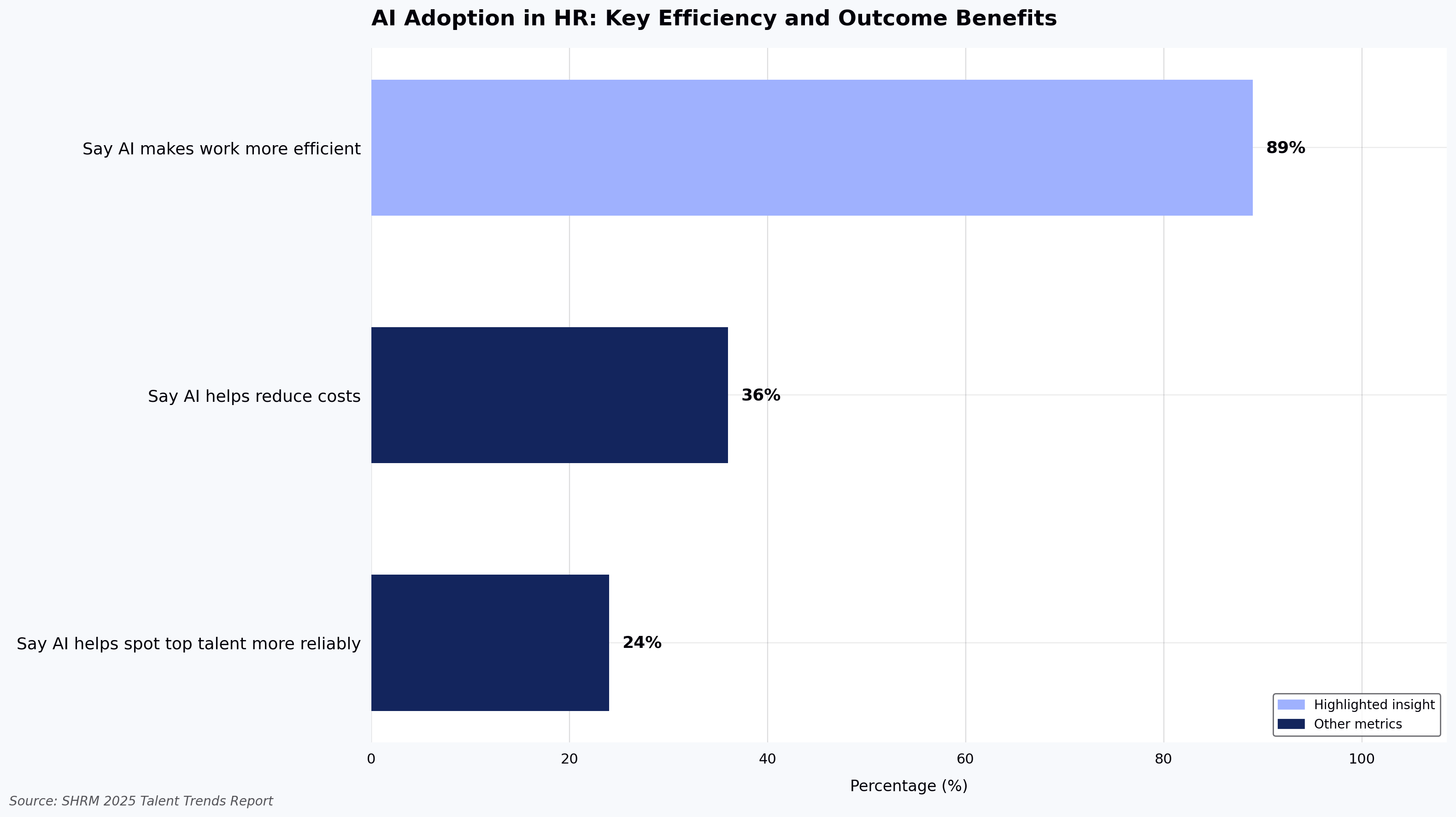
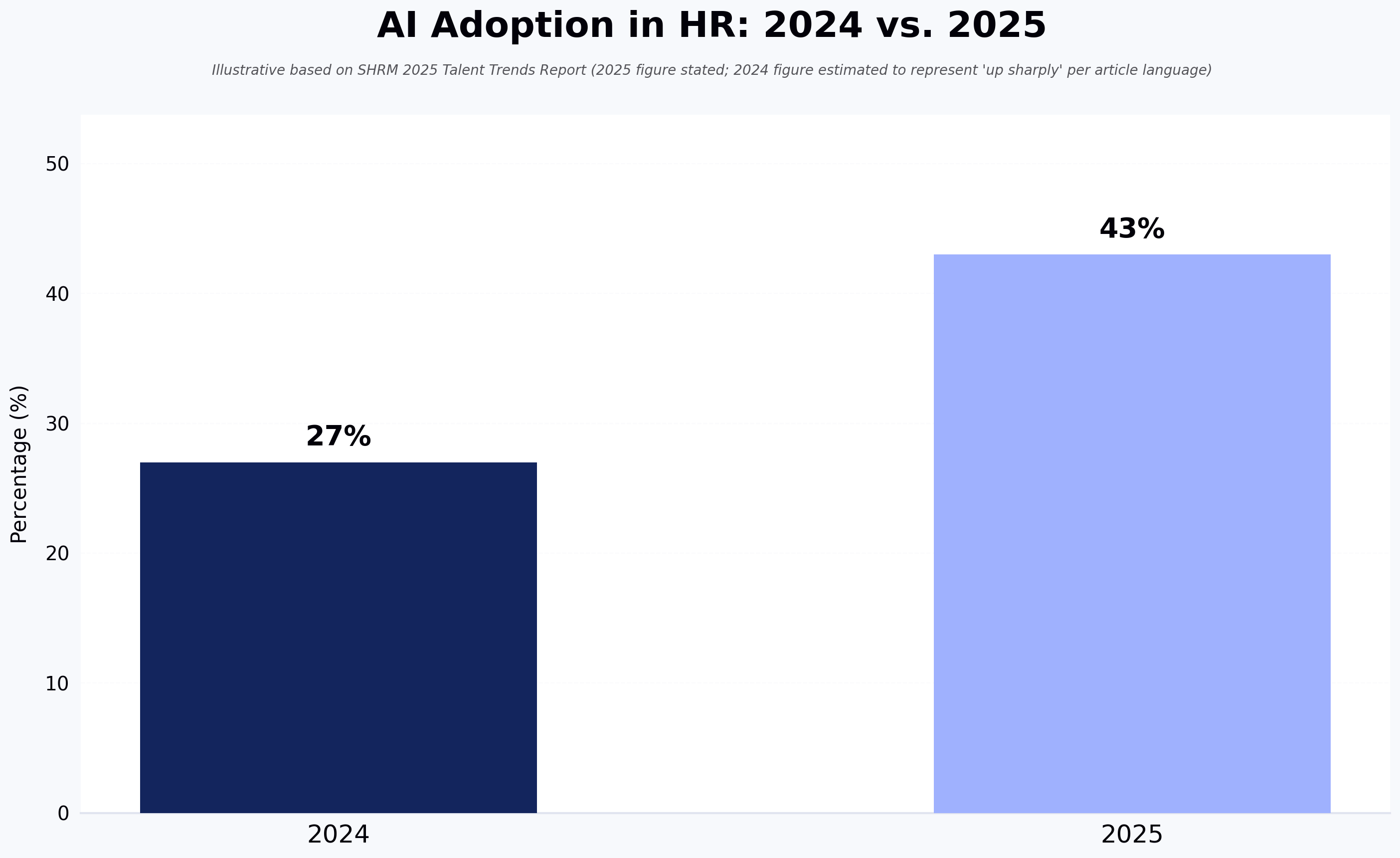
  • Reduce bias and improve fairness: AI and automation support screening and evaluation, helping you make more objective decisions and create a fairer hiring process. In fact, the 2025 Talent Trends report from SHRM shows that 43% of organizations now use AI in HR, up sharply from 2024, with over half applying it to recruiting tasks such as resume screening. Also, among the HR professionals using AI for recruiting, nearly 9 in 10 (89%) say it makes their work more efficient, and 36% say it helps reduce costs. In comparison, 24% say it actually helps them spot top talent more reliably.
  • Overcome global challenges: 74% of companies say they’ve faced compliance problems abroad, and each incident costs an average of $42,000. Remote hiring tools, especially those that integrate payroll, contracts, and EOR (Employer of Record) services, help mitigate this risk. 

When you use the right remote hiring tools, you empower your team to hire globally without stress or avoidable mistakes.

📌Also read: How Candidates Use Technology to Cheat in Online Technical Assessments

Key Categories of Remote Hiring Tools

Remote hiring tools enable you to recruit, assess, onboard, and pay global talent. Below, we’ve broken down the main categories that matter most:

1. Applicant tracking systems (ATS)

ATS tools automate resume screening, track applicants, and manage job postings. Examples include Greenhouse, SmartRecruiters, and Workable. These systems play a vital role by efficiently handling large volumes of remote applicants, helping you avoid being overwhelmed. 

According to a recent report, 51% of organizations specifically apply AI to recruiting tasks such as screening and candidate communication. 

2. Talent sourcing platforms

Talent sourcing platforms help HR teams find and connect with potential candidates beyond traditional job boards. LinkedIn Recruiter, hireEZ, and SeekOut are some powerful options. 

These tools matter because remote hiring demands a much broader talent pool, and sourcing platforms let you tap into passive, international, and niche candidates.

3. Skills assessment platforms

Skills assessment tools evaluate candidates' actual capabilities through tests or challenges. Platforms like TestGorilla, Codility, and HackerRank make this possible. In fact, resumes alone rarely tell the whole story of a candidate’s ability. With remote roles, you really need to know people can walk the walk. 

SHRM data also shows that over a quarter of organizations (28%) require new or evolving skills in full-time roles, especially technical skills like data analysis and AI. 

4. Global payroll & compliance solutions

These tools help businesses manage payroll and follow international labor laws and tax rules when hiring remote employees. Some of the examples of global payroll and compliance solutions include Deel, Remote.com, and Papaya Global.

This category matters because remote teams often span multiple countries, and a compliance or payroll mistake can cost big money. 

5. Onboarding and collaboration tools

Onboarding and collaboration tools help your remote hires settle in and work together smoothly. Think BambooHR for HR onboarding, Slack for communication, and Monday.com for task and project coordination. 

These tools are crucial because remote new joiners need more structure and connection, and they must feel part of the team even if they never walk into your office. Remote’s report also shows that 64% of routine HR tasks are expected to be automated by 2026, freeing up HR capacity to focus on human connection and employee experience. 

Comparison Table: The Top 10 Remote Hiring Tools

To give you an idea of what each tool covers, here’s a concise comparison of remote hiring tools with key features, pros, and cons, so you can match each product to your hiring needs and make faster decisions.

Tool Ideal for Key features Pros Cons G2 rating
HackerEarth All-in-one technical hiring and developer assessments Coding tests, proctoring, question library, AI-powered candidate reports Strong support for real-world coding challenges; integrates well with ATS Limited deep customization, no low-cost, stripped-down plans 4.5 ★
Greenhouse Structured hiring and ATS for all roles Job tracking, interview scorecards, reporting dashboards, structured workflows Very good integrations; data-driven hiring; high user satisfaction Complex setup; limited customization reported by some users 4.4 ★
TestGorilla Skills assessments across technical and non-technical roles Pre-built tests, cognitive/soft-skill/coding tests, reporting, ATS integrations Intuitive interface; broad test library; reliable performance Support response times vary; test difficulty can be inconsistent 4.5 ★
LinkedIn Recruiter Sourcing active and passive professionals Advanced search filters, InMail, talent pool analytics Huge talent pool; strong recommendations; excellent outreach tools High subscription cost; response rates can vary 4.5 ★
hireEZ Proactive sourcing beyond applicant pipelines AI sourcing, contact enrichment, Boolean search, outreach workflows Excellent for passive candidates; reduces sourcing time Dependent on data quality; occasional contact inaccuracies 4.6 ★
Workable Small to mid-sized teams needing a simple ATS Job posting, candidate tracking, pipelines, interview scheduling Easy to use; straightforward hiring flow Limited enterprise analytics; advanced features gated by higher plans 4.5 ★
SmartRecruiters End-to-end recruitment for growing and enterprise teams ATS, sourcing marketplace, offer management, collaboration tools Strong integrations; self-scheduling; CRM capabilities Performance issues; resume download limitations 4.3 ★
BambooHR Onboarding and HR management for remote teams Employee database, onboarding workflows, document management, time-off tracking Great onboarding experience; intuitive HR tools Not built for high-volume hiring; limited ATS depth 4.4 ★
HireVue Video interviews and assessments On-demand video interviews, game-based assessments, rating guides Speeds up interviewing; good competency assessment Can feel impersonal; technical glitches; limited interaction 4.1 ★
Lever ATS with candidate relationship management (CRM) Pipeline management, interview scheduling, analytics, CRM features Excellent candidate tracking; user-friendly for scaling teams Higher pricing; limited assessment depth 4.3 ★

📌Interesting read: Guide to Conducting Successful System Design Interviews in 2025

The Top 10 Remote Hiring Tools

Now that we have a fair idea of what each remote hiring tool has in store, let’s dive deeper into them!

1. HackerEarth

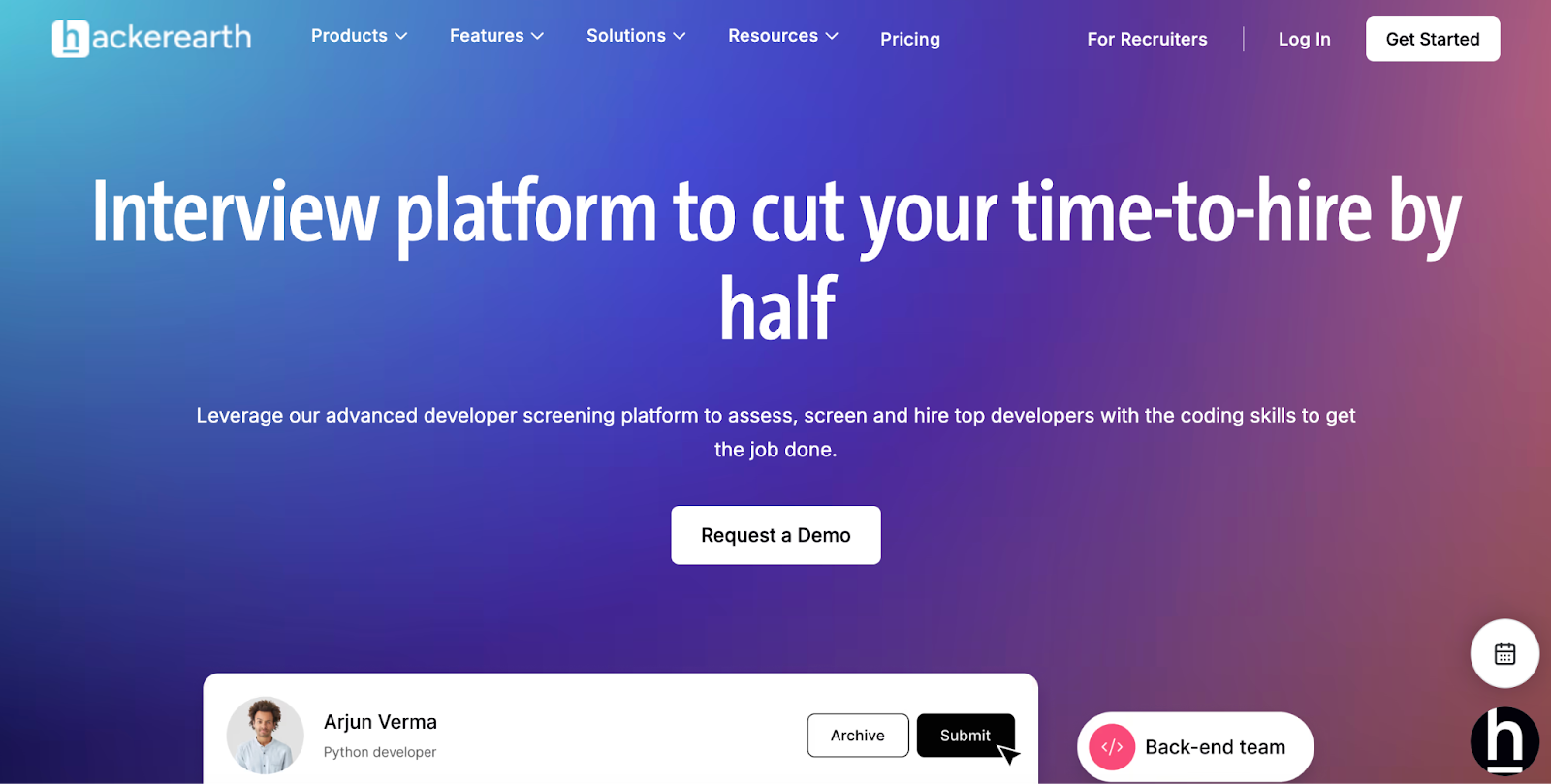
HackerEarth’s all-in-one interview platform for remote hiring
Use HackerEarth to recruit and assess top developers

HackerEarth gives hiring teams a single platform to attract, assess, and engage remote technical talent effectively across multiple countries and time zones. It helps hiring managers show off company culture while testing real technical skills, so candidates understand exactly what working remotely with your team will feel like. With a library of over 36,000 questions spanning 100+ roles and 1,000+ skills, you can create assessments that reflect the tasks remote employees will actually handle every day.

You can design project-based coding challenges that simulate remote work scenarios, which keeps candidates engaged while giving you better insights into their problem-solving abilities. AI-powered reports track code quality, efficiency, and logical thinking, letting recruiters quickly identify strong talent and focus on people who will thrive in distributed teams.

HackerEarth protects the integrity of remote hiring with SmartBrowser technology and advanced proctoring, preventing cheating, tab switching, and impersonation. Candidates can code in their preferred language with inline error highlighting, auto-complete, and linting, providing a smooth, fair remote experience while improving your employer brand.

The platform also includes an AI Interview Agent that simulates live interviews and evaluates both technical and soft skills, such as communication, problem-solving, and adaptability in remote settings. AI Screening Agents automatically filter out up to 80% of unqualified applicants, letting recruiters spend their time engaging only the most promising candidates. 

Key features

  • Assess developers using 36,000+ technical questions across 100+ job roles
  • Run project‑based coding challenges and AI‑adaptive interview sessions
  • Use SmartBrowser technology to prevent cheating during online assessments
  • Analyze candidate code quality, efficiency, and problem‑solving with reports
  • Engage candidates through a platform supporting 40+ programming languages

Pros

  • Reduce hiring cycles from over 30 days down to under 10 days
  • Access a global network of over 10 million skilled developers quickly
  • Gain AI‑driven insights for both technical skills and soft skills
  • Improve candidate experience with error highlighting, auto‑complete, and linting
  • Screen out unqualified applicants automatically, saving recruiters time efficiently

Cons

  • Does not offer low-cost or stripped-down plans
  • Fewer customization options at entry-level pricing

Pricing

  • Growth Plan: $99/month per user (10 credits)
  • Scale Plan: $399/month (25 credits)
  • Enterprise: Custom pricing with volume discounts and advanced support

2. Greenhouse

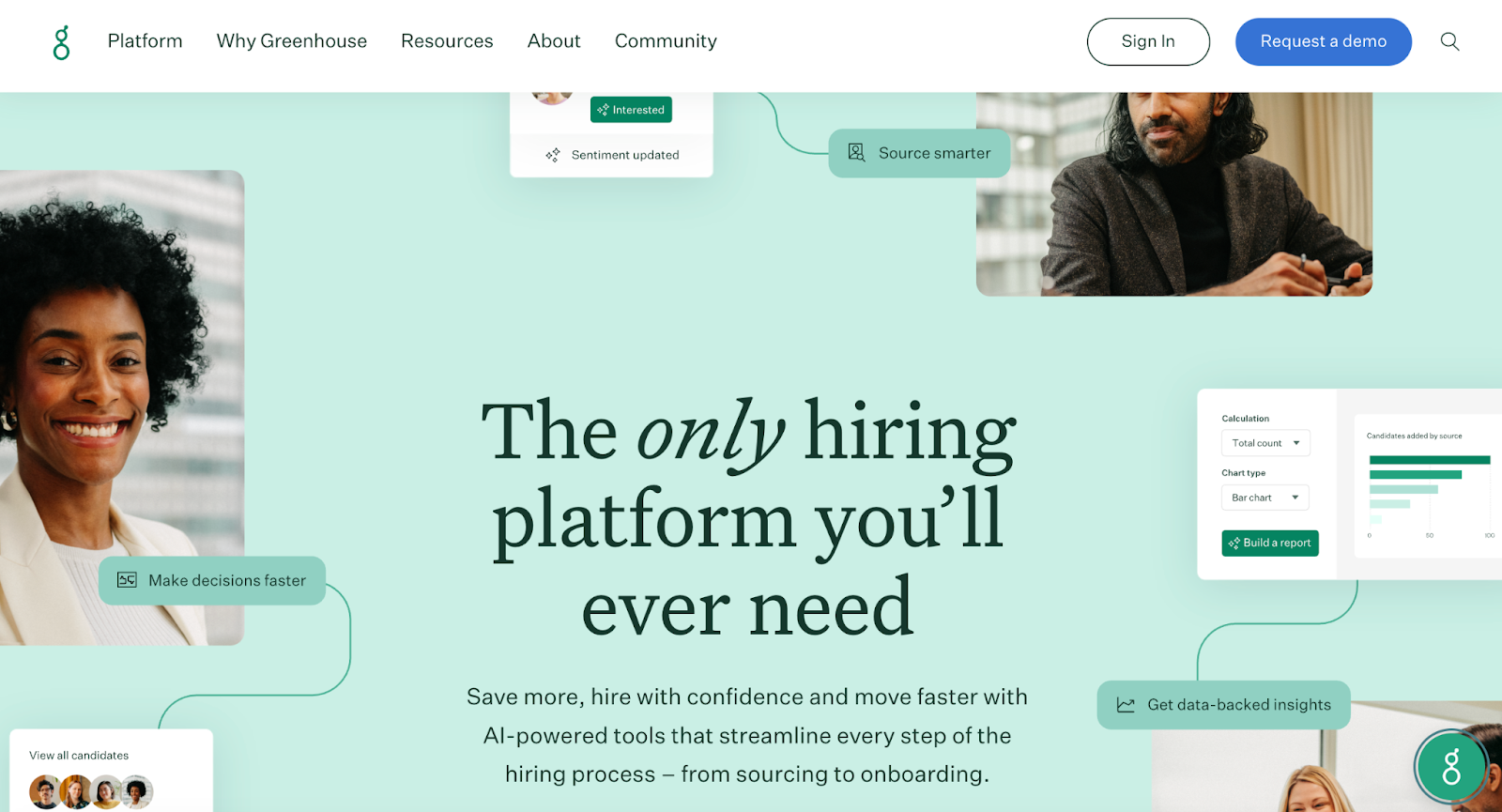
Save more and hire with confidence with Greenhouse
Save time, cut costs, and hire top talent confidently with Greenhouse

Greenhouse acts as a robust ATS built to support remote hiring teams across multiple countries and distributed workflows. Experts rely on it to design structured interview plans, automate scheduling across different time zones, and integrate with global HR tools so hiring stays consistent no matter where interviewers or candidates sit. 

Through its Remote‑Greenhouse integration, you can securely sync candidate profiles with onboarding platforms, reducing manual effort while preserving accuracy.

Key features

  • Build structured interview workflows and shared scorecards for consistent hiring
  • Automate interview scheduling across remote calendars to reduce admin hassle
  • Use AI‑assisted sourcing filters and job‑post creation to reach global remote talent

Pros

  • Reduce time spent on repetitive hiring tasks with powerful automation
  • Access deep analytics and reporting to make data‑driven hiring decisions
  • Collaborate more easily across remote teams with shared notes and feedback tools

Cons

  • Less ideal for very small hiring teams
  • Restricted remote job‑posting geography in some cases, limiting visibility for truly distributed roles

Pricing

  • Custom pricing

3. TestGorilla

TestGorilla homepage featuring AI-powered remote sourcing 
Get hundreds of validated tests, AI scoring, and a global talent pool

TestGorilla gives hiring teams a skills‑based platform to assess remote candidates and speed up decision-making objectively. It offers an extensive test library with cognitive, technical, personality, language, and job‑specific assessments so you can evaluate how well someone will perform in a remote role. 

For distributed teams, it helps you compare candidates on real abilities rather than just resumes. TestGorilla also supports remote‑friendly features, such as custom test creation, anti‑cheating measures, and detailed score reports so that you can trust your hiring data even across time zones.

Key features

  • Create pre‑employment tests for cognitive abilities, personality, and skills
  • Build custom assessments tailored to specific remote role requirements
  • Generate detailed reports showing each candidate’s strengths and weaknesses

Pros

  • Access a wide variety of assessments to evaluate remote‑work abilities
  • Use a clean, intuitive interface to build and manage tests easily
  • Promote fair hiring by focusing on skills rather than background

Cons

  • Offers limited integration with smaller or less common ATS systems
  • Charges a subscription that may feel steep for very small hiring teams

Pricing

  • Free
  • Core: $142/month (billed annually)
  • Plus: Contact for pricing

4. LinkedIn Recruiter

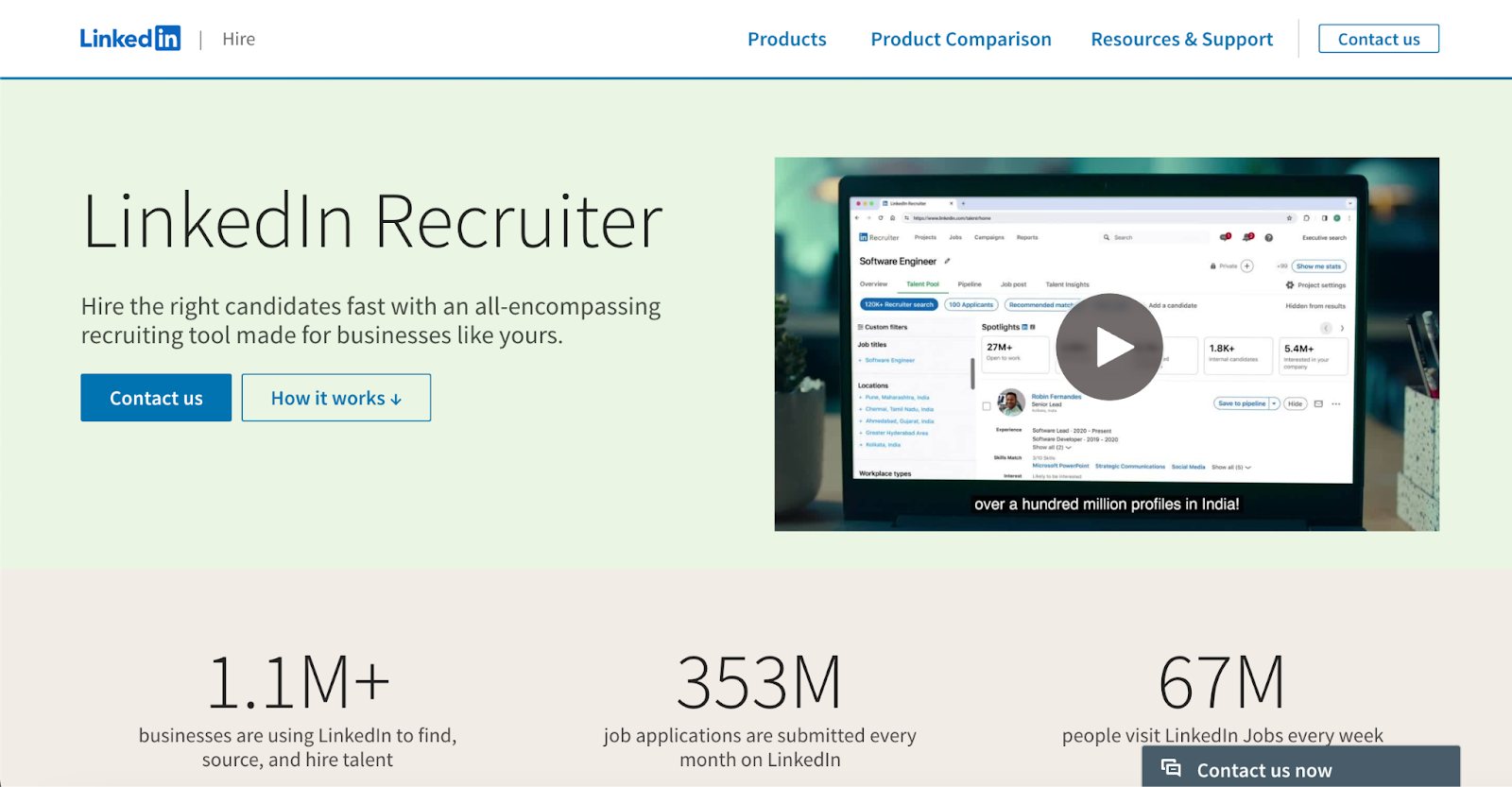
LinkedIn Recruiter homepage for remote hiring
LinkedIn Recruiter helps businesses find and hire top talent fast

LinkedIn Recruiter helps hiring teams find highly skilled remote candidates while saving hours on repetitive tasks. The platform uses AI tools to highlight top candidates, prioritize pipelines, and personalize outreach for every role. 

Recruiters can send InMails directly to candidates, track responses in real time, and collaborate with team members within a single dashboard. Its integration capabilities with ATS, CRM, and email systems help distributed teams work efficiently while maintaining consistent candidate experiences and keeping all hiring processes organized for faster, smarter decisions.

Key features

  • Use AI-assisted search and filters to discover candidates matching remote job requirements
  • Send personalized InMail messages and automated follow-ups to potential hires
  • Connect LinkedIn Recruiter with ATS, CRM, and email systems for workflow efficiency

Pros

  • Access millions of verified profiles across India and shortlist top talent quickly
  • Track candidate engagement and team communication within a single intuitive platform
  • Use AI tools to prioritize candidates based on skills, experience, and fit

Cons

  • Limited DEI-specific features compared to other recruitment platforms
  • Depends on candidates maintaining up-to-date LinkedIn profiles for accurate search results

Pricing

  • Custom pricing

5. hireEZ

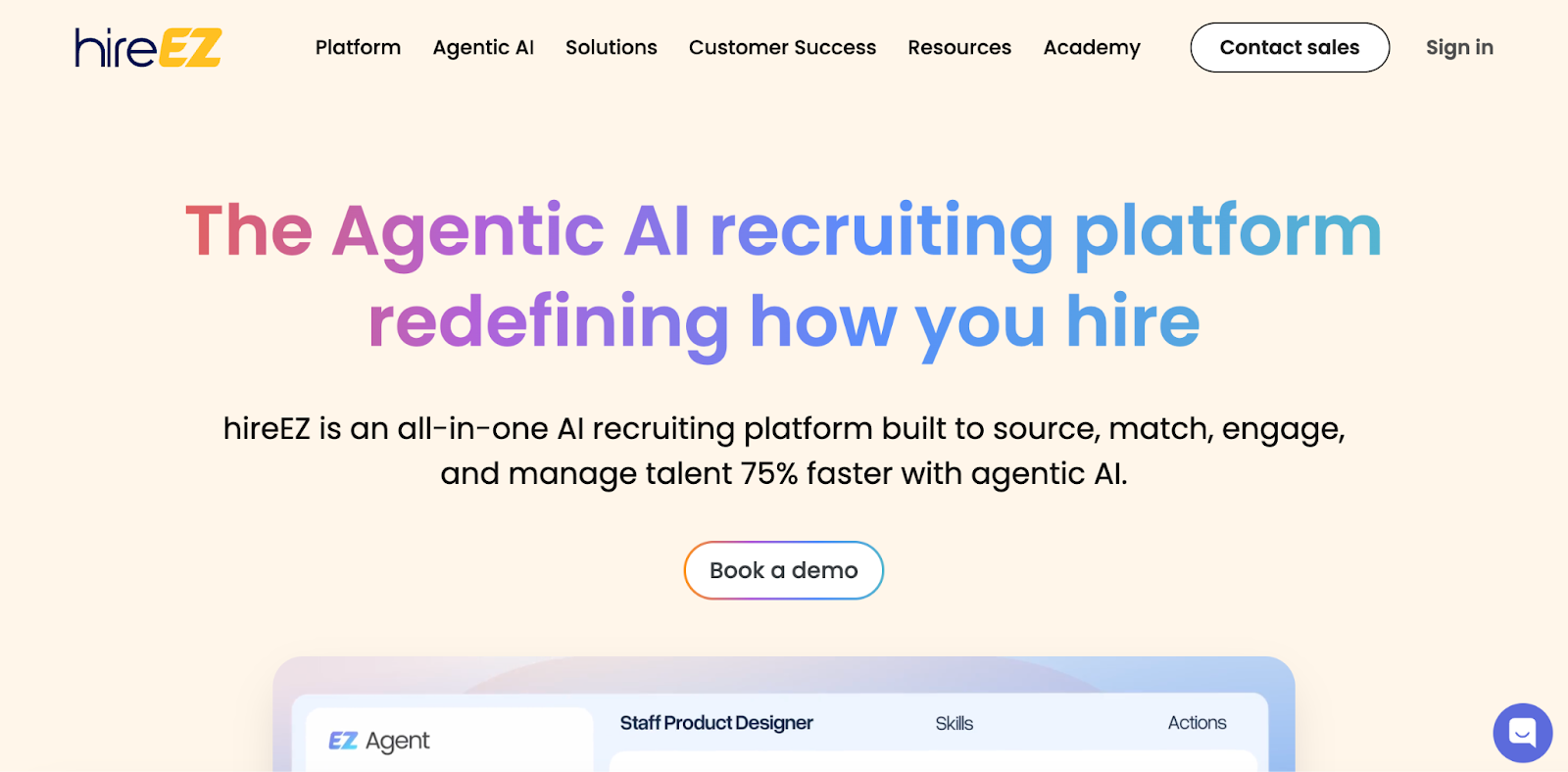
Discover hireEZ AI recruiting platform to hire talent faster
Transform hiring with hireEZ AI and find remote talent faster

hireEZ gives distributed hiring teams an AI‑first, people‑centric platform that helps them source, match, engage, and manage remote talent more quickly and effectively. Recruiters can tap into web‑wide profiles, enrich candidate data across their ATS, and run outreach campaigns seamlessly. 

The system’s multi‑step Agentic AI (called EZ Agent) automates sourcing, score matching, and scheduling so hiring teams can spend more time on strategic work rather than repetitive tasks. It also supports GDPR and CCPA compliance, making it trustworthy for global and remote hiring.

Key features

  • Use AI Sourcing Hub to find top remote candidates across the open web and ATS
  • Create and run multi‑channel campaigns (email, InMail, SMS) for proactive candidate engagement 
  • Leverage Applicant Match to rank candidates by role fit using AI analytics automatically

Pros

  • Reduce hiring time by automating sourcing, screening, and engagement
  • Scale outreach with personalized, AI‑generated messages without manual effort
  • Increase candidate response with data‑driven engagement and nurturing workflows

Cons

  • Display of contact information may sometimes be inaccurate
  • Requires a relatively high cost for small teams

Pricing

  • Custom pricing

6. Workable

Workable's intelligent tools for streamlining remote hiring
Use Workable's ATS and sourcing suite to hire remotely

Workable gives hiring teams a complete ATS solution that works really well for remote recruiting across distributed teams. It lets recruiters post jobs to 200+ boards, run pre‑set or custom hiring pipelines, schedule virtual interviews, and collaborate on feedback, all from a single dashboard. 

That makes coordinating with hiring managers in different time zones easy and keeps remote hiring organized. Workable also supports anonymized screening, video interviewing, AI-powered candidate summaries, and mobile recruiting for teams that are always on the move.

Key features

  • Create and use anonymized screening to reduce bias in remote candidate review
  • Use video interviews with Zoom, Teams, or Google Meet for distributed hiring
  • Automate recruiting tasks with AI‑powered sourcing, interview scheduling, and email templates

Pros

  • Speed up hiring with a user‑friendly interface and easy automation
  • Collaborate with hiring managers seamlessly through shared notes and interview kits
  • Support remote hiring through flexible pipelines, mobile app, and self‑scheduling tools

Cons

  • Charges relatively high prices that may feel steep for smaller remote teams
  • Limited customization in workflows and reporting at lower plan levels

Pricing

  • Standard: $299/month (1-20 employees)
  • Premier: $599/month (1-20 employees)

7. SmartRecruiters

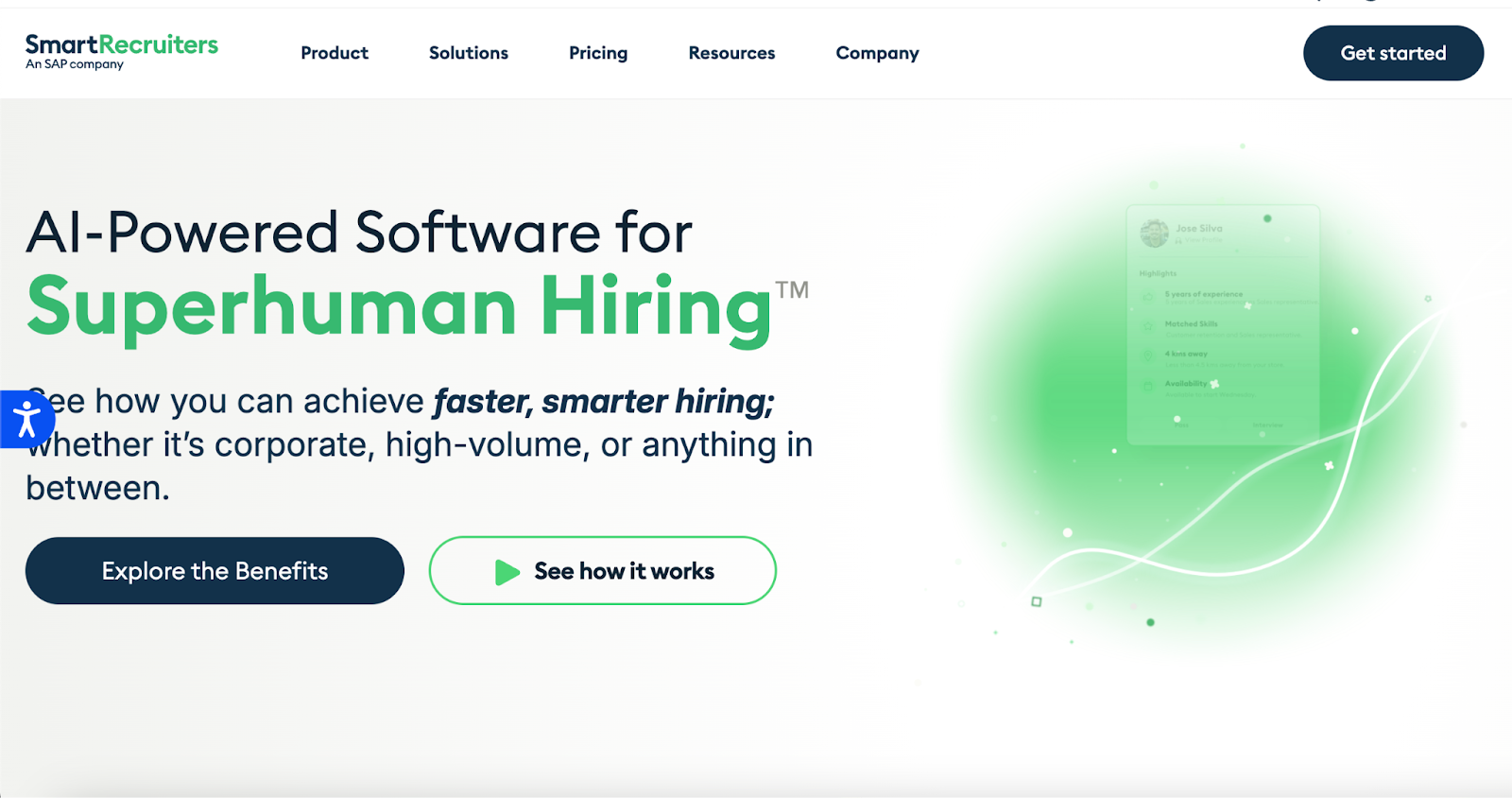
AI-powered SaaS recruitment platform for remote hiring
Efficient, AI-driven recruitment for high-volume hiring

SmartRecruiters offers a full talent‑acquisition suite built to help remote hiring teams work together, hire globally, and move fast without breaking things. Recruiters can post jobs to many boards, run collaborative hiring workflows, and tap into AI tools for matching and screening. 

The platform supports localized job creation in 37 languages, has robust candidate‑relationship management to nurture passive remote talent, and integrates with over 650 tools, making it one of the best remote hiring tools for scaling teams.

Key features

  • Use AI‑powered Winston modules to match, screen, and engage remote candidates
  • Manage global hiring with permission roles, local workflows, and multilingual candidate experience
  • Collaborate seamlessly on interview scheduling, feedback, and decision-making across distributed teams

Pros

  • Automate sourcing and candidate outreach with AI agents and campaign workflows
  • Scale hiring globally with localization, compliance, and global talent reach
  • Work with hiring managers easily across remote teams using shared notes and mobile feedback tools

Cons

  • It takes significant time to set up the tool
  • Charges relatively high costs per job or per module 

Pricing

  • Available in Essential, Professional, High Volume & Complete: Custom pricing

8. BambooHR

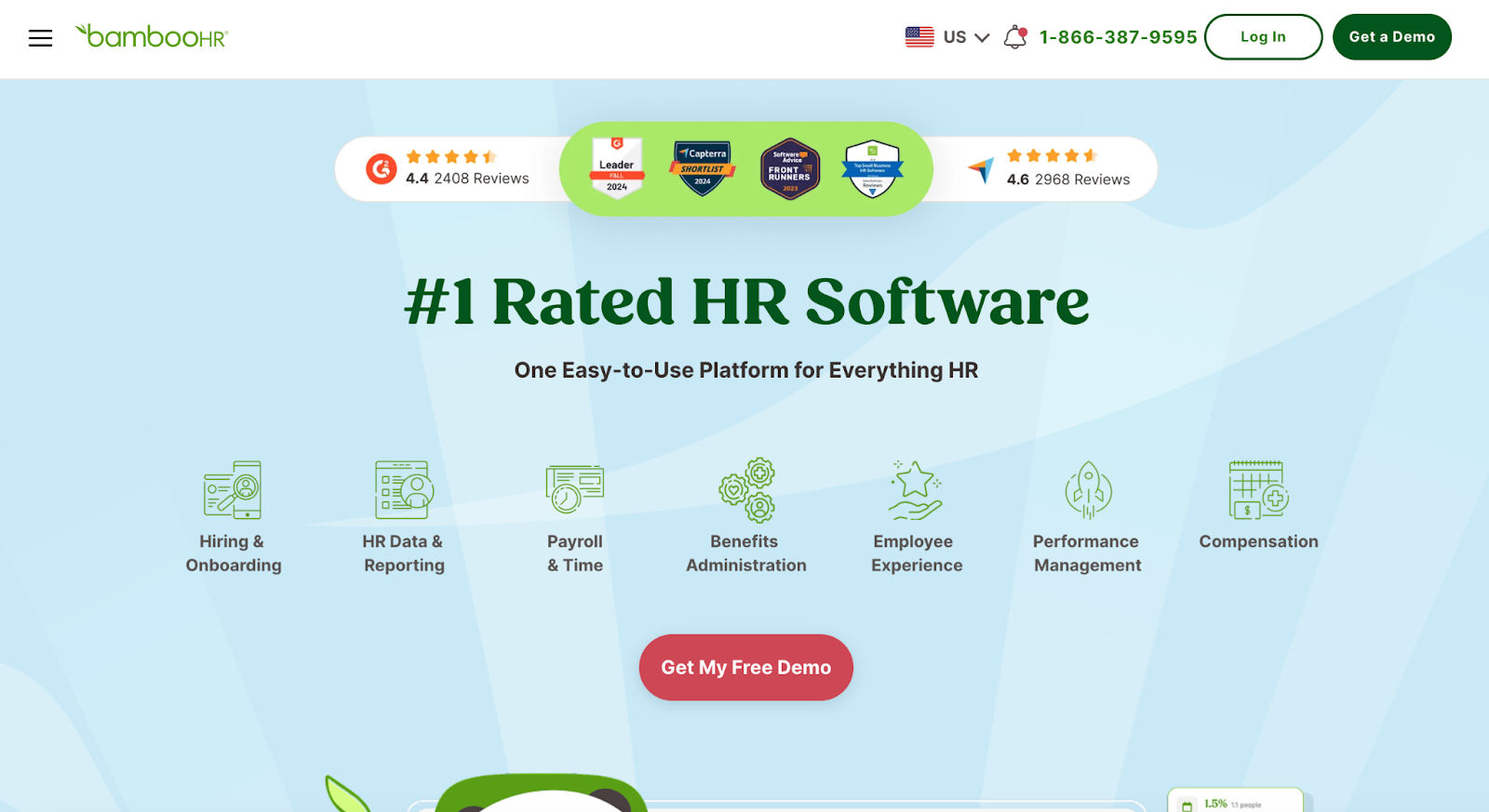
BambooHR homepage with ratings and HR features
Use BambooHR as a top-rated HR software platform for remote hiring

BambooHR acts as a solid HRIS for remote hiring teams that want a single place to manage employee data, time off, onboarding, and performance. Its intuitive interface lets remote employees update their own profiles, request leave, and access documents easily, which frees HR from constant back‑and‑forth. 

The system supports e‑signatures for onboarding paperwork and sends automated reminders to remote new hires so no task falls behind. It also integrates with over 50 third‑party apps to help distributed teams connect BambooHR with payroll, performance tools, and more.

Key features

  • Store employee data centrally with self‑service access for distributed teams
  • Automate onboarding workflows and task reminders for new remote hires
  • Track time off, performance reviews, and e‑sign documents in one system

Pros

  • Simplify HR operations with a highly user‑friendly, clean interface
  • Support remote onboarding with automated task management and e‑signatures
  • Provide strong data reporting and analytics for headcount, turnover, and more

Cons

  • Offers limited reporting customization in lower‑tier plans
  • Has occasional software glitches that disrupt HR workflows

Pricing

  • Available in Core, Pro & Elite: Custom pricing

9. HireVue

HireVue remote hiring platform
Streamline remote recruiting with AI

HireVue gives remote hiring teams a way to screen, interview, and assess candidates through AI‑powered video and game‑based challenges, making the process faster and more data‑driven. It supports both one‑way (asynchronous) interviews and live conversations, letting candidates record on their schedule while reducing the back‑and‑forth of scheduling. 

The system integrates with your ATS, uses validated assessments to evaluate job‑relevant skills, and offers automated workflows that let recruiters focus on people rather than logistics.

Key features

  • Conduct AI‑driven virtual job tryouts and skill‑validation before final interviews
  • Enable on‑demand video interviews with self‑scheduling and structured questions
  • Automate candidate engagement with workflow automation, chatbots, and scheduling tools

Pros

  • Save significant time by using asynchronous video interviews for early screening
  • Assess both technical and soft skills through validated AI‑scored challenges
  • Hire across time zones without manual scheduling, thanks to self‑scheduling features

Cons

  • Feels impersonal to some candidates when using one‑way video format
  • Occasional technical glitches or scheduling integration issues

Pricing

  • Custom pricing

10. Lever

Lever recruitment platform homepage showcasing AI-powered tools
Lever's AI-powered platform streamlines sourcing, tracking, and relationship building

Lever is a smart ATS and CRM tool built for remote hiring teams who want to track, nurture, and convert candidates from anywhere in the world. It supports automated sourcing, structured interview processes, and candidate relationship management, enabling you to attract and engage remote talent effectively. 

The platform gives you access to a searchable talent database, AI‑powered recommendations, and real‑time analytics to make data‑driven hiring decisions across distributed teams. It also enables remote and video interviewing, making it easier for hiring teams to evaluate candidates without having to bring them on site. 

Key features

  • Automate candidate outreach, workflow steps, and email campaigns 
  • Conduct remote and video interviews with scheduling and self‑scheduling support
  • Build and maintain a talent database with smart search, sourcing, and CRM tools

Pros

  • Simplify remote recruiting with powerful automation and candidate outreach
  • Collaborate with hiring managers across time zones using shared pipelines and notes
  • Use data and analytics to measure hiring efficiency and team performance

Cons

  • Lacks deep reporting customization in some use cases
  • Relatively high cost that might not suit very small or lean teams

Pricing

  • Custom pricing

How to Choose the Best Remote Hiring Tool for Your Needs

Selecting the right remote hiring tool can make your recruitment process smoother, faster, and more effective. Focus on these key factors when evaluating options:

  • Hiring Stage: If your team is struggling to find qualified remote talent, focus on sourcing tools that reach candidates globally. For teams with multiple applications, pick interviewing and assessment tools that save time without losing candidate quality.
  • Integration: Remote teams often handle multiple HR tools, so choose a platform that connects directly with your ATS, payroll, and video interview systems. This prevents manual work and keeps your distributed team on the same page without constant follow-ups.
  • Scalability: If your startup is growing fast and hiring across time zones, pick a tool that adapts as your team expands. You don’t want to switch platforms mid-hiring because your software can’t handle multiple locations or hundreds of candidates.
  • Compliance: When hiring globally, different labor laws and data regulations can become a nightmare. Choose a tool that automatically stores and manages candidate information in compliance with local laws to protect your company from fines or disputes.
  • User Experience: Remote candidates may drop out if your platform feels clunky or confusing, so pick tools that are easy to navigate. A clean, intuitive interface keeps candidates engaged and makes your team look professional.

The Benefits of AI in Remote Hiring Tools

AI helps remote hiring teams make fairer, smarter decisions and reduce tedious administrative work. In fact, 99% of hiring managers use AI in some part of their hiring process, and 98% of them say it significantly boosts hiring efficiency.

Here’s how it actually pays off:

  • When you use the best remote hiring AI tools, you give your team a powerful way to reduce hiring bias by evaluating candidates against consistent criteria instead of gut feeling. 
  • Predictive analytics and AI‑driven shortlisting help your hiring team pinpoint high-potential candidates faster and improve the overall quality of hires. 
  • Automation handles routine tasks like resume screening, interview scheduling, and candidate communication, so your HR team spends more time on strategy and less on logistics.

How Remote Hiring Tools Save Time and Money

Remote hiring platforms let recruiters offload bulky, repetitive work by reducing the hours spent on resume screening and interview scheduling through intelligent automation. These tools also unlock access to a global talent pool, so you can hire exceptional people from anywhere rather than limiting yourself to local candidates. 

When you combine that global reach with more accurate, objective evaluation, you drastically reduce the risk of bad hires, saving serious money in the long run. Here’s how:

When your team uses remote hiring tools well, you free up budget and man‑hours to focus on building relationships, improving candidate experience, and growing your business instead of drowning in admin.

How HackerEarth Embraces the Future of Remote Hiring

Remote hiring tools are essential because companies need faster ways to find the right candidates. They save recruiters hours on repetitive tasks, such as screening resumes or scheduling interviews. 

HackerEarth makes this process easier by offering tools that support every stage of the hiring process. You can quickly identify top talent, assess skills efficiently, and manage the interview process smoothly without endless back-and-forth emails. 

Here’s how using HackerEarth makes a difference at each stage:

  • Sourcing: Discover qualified candidates from a global talent pool in less time
  • Assessment: Evaluate technical and soft skills accurately using structured tests and challenges
  • Interviewing: Schedule and conduct interviews seamlessly with minimal manual work

Using these tools, your hiring team can focus on making meaningful connections with talent. Schedule a consultation today to see how HackerEarth can improve your recruitment process.

FAQs

What are the best tools for remote hiring?

The best tools help manage sourcing, assessments, and interviews from a single platform, saving time. HackerEarth provides a comprehensive solution that combines candidate sourcing, skill evaluation, and interview scheduling in a single, easy-to-use interface.

What should I consider when choosing skills assessment tools for remote hiring?

Look for tools that accurately assess both technical and soft skills, with automated grading and reporting. The platform should support various question types and allow you to customize them to match your hiring criteria efficiently.

How can businesses stay compliant with international hiring laws when using global payroll tools?

Businesses must carefully track local labor regulations, tax requirements, and employment contracts. Using payroll tools that update automatically for international compliance reduces risk and helps maintain legal and financial accuracy across borders.

What are the best tools for conducting virtual interviews?

The best tools allow scheduling, recording, and real-time collaboration without glitches or delays. HackerEarth supports structured interview workflows, integrates with calendars, and provides a seamless video experience for both candidates and recruiters.

How do remote hiring tools improve candidate experience?

Remote hiring tools simplify application steps, communicate clearly, and provide timely updates to candidates. HackerEarth makes it easier to take tests, schedule interviews, and receive feedback, creating a smooth and positive experience for applicants.

Subscribe to The HackerEarth Blog

Get expert tips, hacks, and how-tos from the world of tech recruiting to stay on top of your hiring!

Author
Vineet Khandelwal
Calendar Icon
December 19, 2025
Timer Icon
3 min read
Share

Hire top tech talent with our recruitment platform

Access Free Demo
Related reads

Discover more articles

Gain insights to optimize your developer recruitment process.

Mettl vs HackerEarth: Which Rules Coding Interviews?

When a hiring manager sets out to evaluate software engineers, most teams turn to online technical assessment platforms to run fair and scalable interviews. The need for structured skill evaluation has pushed companies to move beyond manual interviews and whiteboard sessions.

And the shift is accelerating. The percentage of companies using AI in hiring grew from 26% in 2024 to 43% in 2025, according to SHRM. This shows that teams are no longer satisfied with gut instinct or basic coding tests. 

Recruiters want smarter systems that help them identify strong candidates earlier and with more confidence. Additionally, they look for reliable scoring, data-driven insights, and tools that capture top talent early while helping predict on-the-job performance with confidence.

This article offers a comprehensive comparison of two widely used hiring assessment platforms in tech: Mettl and HackerEarth. We’ll explore core features, real-time collaboration, integration ecosystems, analytics, and pricing signals, so you can choose the right tool for your team.

What are Online Assessment Tools?

Online assessment tools are software used by organizations to evaluate skills, knowledge, and abilities through structured digital tests. These tools replace manual methods with scalable, objective evaluations and help hiring teams identify the right candidates efficiently.

Such tools support roles ranging from entry-level to senior developers and help teams screen, interview, and assess talent with minimal bias.

What is Mettl?

Mettl is a talent assessment platform designed to support technical evaluations and broader skill testing for hiring and development. It emphasizes secure online testing and scientific assessment methodologies.

The platform is ideal for companies that need deep, customizable pre-employment tests that measure coding skills, cognitive ability, personality, and job-related competencies. Its coding assessment tools are used across industries to screen developers, quality assurance engineers, data scientists, and engineers working with modern stacks. Mettl also offers 400+ pre-built customized tests in multiple languages, ranging across front-end, back-end, database, DevOps, and data science roles. Recruiters can choose from multiple question formats, including multiple choice, simulation-based coding tests, and case studies that mirror real job scenarios.

One of its best features is its AI-powered remote proctoring system. This system records a candidate’s screen, browser interactions, and video stream to protect assessment integrity. Its secure browser environment tries to prevent cheating and unauthorized navigation during high-stakes evaluations.

Mettl suits both small technical teams and large enterprises that want centralized evaluations across multiple roles and regions. Its analytics give hiring managers insights into performance trends, skill gaps, and role-specific benchmarks. Integration with applicant tracking systems like Workday and Greenhouse also strengthens its role in end-to-end recruitment workflows.

What is HackerEarth?

HackerEarth is an all-in-one coding assessment platform that allows hiring teams to assess candidates’ coding abilities, problem-solving skills, and communication in real time. 

Its Interview FaceCode tool is an online coding interview platform that includes a collaborative code editor, HD video chat, interactive diagram boards for system design, and a built-in library of more than 40,000 questions.  It supports panel interviews with up to five interviewers in a single session, making it easy to assess technical depth and collaboration skills together.

The platform also features an AI-powered Interview Agent that runs structured interviews based on predefined rubrics, adapts to candidate responses, and generates unbiased scores. FaceCode records full interview sessions and transcripts for later review, and it can mask personally identifiable information to support fair evaluations.

FaceCode integrates with leading ATS platforms, including Greenhouse, Lever, Workday, and SAP. It is GDPR-compliant, ISO 27001-certified, and offers 99.99% uptime, making it reliable for both growing teams and large enterprises.

Beyond assessments, HackerEarth connects companies to a global developer community of more than 10 million developers through hackathons and hiring challenges. This gives teams a more interactive way to discover and evaluate talent. Smart Browser Proctoring helps maintain interview integrity by monitoring activity, blocking unauthorized tools such as ChatGPT, and tracking audio, browser tabs, and IP location during assessments.

Feature Comparison: HackerEarth vs Mettl

Before we dive deeper into the features of both tools, let's take a side-by-side look at how HackerEarth and Mettl compare.

Feature Mettl HackerEarth
Assessment Breadth Offers comprehensive pre-employment assessments covering personality, behavioral, cognitive, domain knowledge, coding, and communication skills Focused on developer-centric assessments with 40,000+ coding questions, project-based problems, soft skills, and emerging AI capabilities
Coding Assessment Tools Provides role-based coding simulators, project-based tests, hands-on IDEs, code playback, and automated scoring Offers Coding Assessment Test with 40,000+ questions, real-time code editor, project-based assessments, automated leaderboards, and partial scoring
Live Coding & Collaboration Supports pair programming, interactive whiteboards, role-specific simulators, and secure AI-assisted proctoring FaceCode allows real-time collaborative coding interviews, up to five interviewers, HD video, interactive diagram boards, and AI-generated interview summaries
Evaluation & Scoring Auto-grades objective questions, allows manual scoring of subjective answers, supports custom scoring rules, and detailed analytics Auto-evaluates coding tests, supports partial scoring, leaderboards, and performance dashboards with time, accuracy, and trend metrics
Proctoring & Security Multi-layered AI + human proctoring, three-point authentication, Secure Browser, dual camera, audio monitoring, record & review, ISO-certified AI-driven proctoring with Smart Browser, video snapshots, eyeball tracking, audio monitoring, plagiarism checks, dynamic question shuffling, surprise questions, e-KYC ID verification
Reporting & Analytics Clear, concise reports, interactive graphs, cross-device access, 26+ languages, global-ready dashboards In-depth analytics, Codeplayer records keystrokes, question health scores, candidate funnel insights, completion rates, and score distributions
Integrations & Hiring Workflows Pre-built ATS integrations (Greenhouse, Freshteam, SmartRecruiters, iCIMS, Lever, Workable, Zoho, Keka, others), API & SSO support, webhook updates Pre-built ATS integrations (Greenhouse, LinkedIn Talent Hub, Lever, iCIMS, Workable, JazzHR, Zoho, Eightfold), Recruit API, webhook support, SSO/SAML
Pricing Model Custom quotes based on volume, test type, and enterprise requirements; bundled support/services; high flexibility Transparent tiered pricing for skill assessments, AI interviews, talent engagement, and L&D; options for small teams or enterprise; monthly & yearly billing
Candidate Experience Supports realistic IDEs, hands-on tests, secure proctoring, and project-based assessments Real-time coding interviews, collaborative IDE, Smart Browser, dynamic question sets, plagiarism checks, and surprise questions
Best Use Case Enterprise assessments, large-scale screening, multi-dimensional evaluation (technical, behavioral & cognitive) Developer-focused hiring, live coding interviews, collaborative technical evaluation, scalable coding tests, and AI-driven interview insights

Deep Dive: Assessment & Interview Capabilities

Now that we’ve compared the platforms at a high level, let’s take a closer look at their assessment and interview capabilities to see how they perform in real-world hiring scenarios.

Assessment breadth & depth

To begin with, Mettl offers a comprehensive pre-employment assessment suite that measures both core traits and acquired skills. Some of its core traits include personality, behavioral tendencies, and cognitive abilities, while acquired skills cover domain knowledge, coding, and communication. 

The platform provides customizable assessments, AI-assisted proctoring, and integrations with major ATS platforms. You can evaluate candidates across hundreds of technical and psychometric competencies, including real-world coding simulators and project-based assessments. Mettl emphasizes data-driven insights, predictive on-job behavior evaluation, and security, making it suitable for both large-scale and high-stakes hiring.

As a Mettl alternative, HackerEarth allows teams to assess developers’ technical and soft skills through an extensive library of 40,000+ questions covering 1,000+ skills, including emerging AI capabilities. The platform supports project-based questions, automated leaderboards, and a real-time code editor that works with 40+ programming languages and Jupyter Notebooks. 

The platform provides robust proctoring with SmartBrowser technology, detailed performance reports, and data-driven insights to optimize the hiring funnel. Role-specific assessments, including DSA, psychometric tests, and GenAI tasks, enable recruiters to evaluate both technical problem-solving and critical soft skills efficiently.

🏆Winner: HackerEarth

HackerEarth takes the edge here for developer-focused assessment depth, hands-on coding simulations, and real-time evaluation tools, making it ideal for tech hiring. Mettl is strong in holistic pre-employment testing but doesn’t match HackerEarth’s technical assessment precision.

Live coding & collaboration

When it comes to live coding and collaboration, Mettl provides a robust coding assessment platform with role-based simulators for front-end, back-end, and full-stack development. Candidates can work in realistic IDEs, attempt hands-on coding tests, and even participate in project-based assignments. 

The platform supports seamless pair programming using integrated coding simulators, interactive whiteboards, and a notepad for brainstorming solutions. Auto-graded evaluations, code playback features, and real-time analytics allow hiring teams to quickly review candidate performance and make informed decisions. Mettl also enables secure, AI-assisted proctoring and integration with major ATSs for smooth end-to-end assessment.

Similarly, HackerEarth offers two complementary tools for coding evaluation. The Coding Assessment Test lets recruiters create automated, role-specific coding tests with 40,000+ questions, project-based problems, automated leaderboards, and SmartBrowser proctoring for secure assessments. 

Meanwhile, FaceCode enables real-time, collaborative coding interviews with up to five interviewers, HD video, interactive diagram boards, and support for 40+ programming languages. FaceCode automatically generates AI-powered interview summaries, capturing technical performance, communication, and collaboration insights. Recordings and PII masking helps support fairer, less biased evaluations, and both tools together cover end-to-end coding assessment needs.

🏆Winner: HackerEarth

HackerEarth takes the lead for real-time collaboration and live coding interviews, thanks to FaceCode’s interactive IDE, panel interview support, and AI-driven insights. Mettl does offer simulated coding tests and scalable assessments but lacks the same live collaboration and panel interview sophistication that FaceCode delivers.

Evaluation & scoring

Good scoring can make or break your hiring process. Mettl automatically grades objective questions like multiple-choice items and coding problems, and it also lets evaluators manually score subjective or long-answer responses whenever needed. This combination of automated and human scoring gives hiring teams control over how different question types influence the final result. 

Administrators can design tailored test blueprints, define scoring rules, and create custom evaluation schemes to match the priorities of each role. Additionally, detailed analytics help recruiters benchmark performance across candidates and competencies, ensuring data-driven hiring decisions.

Similarly, HackerEarth focuses on robust automated scoring and actionable analytics. It auto-evaluates coding assessments against predefined test cases and even supports partial scoring, awarding points for solving individual components of a problem. 

The platform generates automated leaderboards and rich analytics on candidate performance, tracking metrics like accuracy, time taken, and problem-solving trends. Its assessment dashboard lets hiring teams compare candidates, spot performance patterns, and refine future tests based on completion rates, score distribution, and other insights.

🏆Winner: Both

Both platforms deliver strong scoring capabilities. HackerEarth edges ahead in automation and partial scoring, while Mettl excels when teams need manual evaluation of subjective responses. The best choice depends on your assessment format.

Proctoring & security

Both Mettl and HackerEarth offer strong solutions, but they approach it slightly differently.

For example, Mettl ensures integrity with a multi-layered proctoring system that combines AI and human oversight. 

  • Before the exam, candidates go through three-point authentication, including email verification, mobile OTP confirmation, and official ID checks. 
  • During the exam, the Secure Browser locks candidates to the test screen and restricts access to unauthorized applications. 
  • AI-powered monitoring flags suspicious behavior, while live human proctors can verify identities in real time. 

Mettl also provides dual-camera monitoring, audio proctoring, and flexible record & review capabilities, allowing administrators to audit exams after they finish. With over 32 million proctored test takers, 2,000+ proctors deployed in a single day, and ISO certifications for data security, Mettl scales proctoring for both small and massive assessments. 

On the other hand, HackerEarth delivers AI-driven proctoring designed for secure, cheat-proof assessments. Their Smart Browser verifies that test scores reflect only a candidate’s ability by blocking unauthorized actions. The platform monitors candidates using video surveillance with AI-powered snapshots and eyeball-tracking, audio monitoring for whispers or external assistance, and dynamic question pooling and shuffling to prevent collaboration. 

Post-test, HackerEarth challenges candidates with surprise follow-up questions to verify understanding and originality. A plagiarism engine scans submissions across the web and past candidate responses, and identity verification leverages government-grade e-KYC systems like DigiLocker. Administrators can further customize proctoring rules, from IP restrictions to copy-paste lockdowns, for airtight security without compromising candidate experience.

🏆Winner: Mettl

Mettl takes this round for its layered combination of AI and human proctoring, three-point authentication, dual-camera monitoring, and proven scale with over 32 million proctored sessions. HackerEarth's AI-driven Smart Browser and plagiarism detection are strong, but Mettl's depth of oversight gives it the edge in high-stakes, compliance-sensitive assessments."

Reporting & analytics

Making sense of candidate data shouldn’t feel like decoding hieroglyphs. With Mettl and HackerEarth, you’ll get actionable insights that help you hire smarter and faster.

Mettl delivers insightful, easy-to-read reports that highlight each candidate’s strengths and weaknesses. Recruiters can navigate quickly through summaries, interactive graphs, and charts, and even customize the report format to match their priorities. Reports support cross-device access and more than 26 international languages across 80+ countries, making them usable globally. 

However, HackerEarth provides in-depth, data-driven analytics that focus on top performers and test effectiveness. The platform uses Codeplayer to record every keystroke and replay coding sessions, giving recruiters insight into logical approach, problem-solving, and programming skills. 

Question-based analytics and a health score for each question help teams pick questions that match desired difficulty and learning outcomes. HackerEarth tracks assessment completion, score distribution, and candidate funnel metrics, helping teams refine future tests. 

🏆Winner: Mettl

While HackerEarth provides robust, in-depth analytics, Mettl wins this round for its combination of clarity, actionable insights, cross-device access, and international readiness, which makes it easier for hiring teams to make fast, confident decisions at scale.

Integrations & Hiring Workflows

In modern hiring, your technical assessment platform needs to fit into your broader ATS, HRIS, SSO, and API workflows, so recruiters and hiring ops can move smoothly through every hiring stage. 

Here’s how Mettl and HackerEarth perform with respect to integrations and hiring workflows:

Mettl

Mercer | Mettl integrates tightly with a wide range of ATS and hiring tools, helping teams manage assessments and candidate data without breaking their existing workflows. It offers pre‑built integrations with major ATS platforms, such as: 

  • Greenhouse
  • Freshteam
  • SmartRecruiters
  • iCIMS
  • Ashby
  • Lever
  • Workable
  • Zoho Recruit
  • Keka
  • Peoplise
  • Superset, and more

This enables teams to trigger assessments from within their ATS, sync candidate test status, and pull back detailed results directly into the recruiting system dashboard.

Mettl’s support for REST APIs lets you map jobs, create assessments, register candidates, and push scores and report URLs back into your HR systems programmatically. It also supports SSO (including SAML‑based sign‑on) and webhook‑style callbacks to deliver real‑time updates when tests start, finish, or get graded. This helps orchestrate workflows like interview scheduling or automated stage progression.

HackerEarth

HackerEarth also fits neatly into existing hiring stacks and helps recruiters automate assessment tasks across systems. It supports direct integrations with popular ATS platforms, including: 

  • Greenhouse
  • LinkedIn Talent Hub
  • Lever
  • iCIMS
  • Workable
  • JazzHR
  • SmartRecruiters
  • Zoho Recruit
  • Recruiterbox
  • Eightfold 

These integrations let teams create tests, invite candidates, and view detailed candidate reports without switching between tools.

On top of pre‑built ATS connectors, HackerEarth provides a Recruit API that developers can use to manage tests, invites, and results from their own systems. This makes it possible to automate candidate invites, collect reports, and embed assessment tasks into broader HRIS‑driven workflows. Detailed API support and webhook‑style event flows help plug assessments and live interviews (including FaceCode) into your hiring operations.

In terms of SSO and security, both platforms support modern authentication standards like SAML and API key‑based access, which helps your teams manage user access consistently across tools and protect candidate data throughout the hiring lifecycle.

🏆Winner: HackerEarth

HackerEarth combines a broader set of ready‑to‑use ATS integrations with flexible APIs and automated invite/report workflows. This makes it easier to connect assessments and live interviews with your hiring pipeline. 

Pricing Signals & Packaging

Pricing transparency influences buying decisions, and the right assessment platform delivers maximum value and clear results for your investment.

Mettl

Mettl does not publish standard pricing online, and instead offers customized plans based on your organization’s size, assessment volume, and feature needs. You’ll have to speak with their sales team or request a demo to get a quote.

Here's what you can generally expect from Mettl's pricing approach:

  • Custom quotes tailored to your business context
  • Plans shaped by assessment volume, test types, and usage rather than rigid tiers
  • Support and customization bundled into pricing, such as bespoke tests, branding, and integration help
  • High‑security and compliance credentials (ISO 9001, ISO 27001, SOC2 Type 2) often reflected in pricing for enterprise customers

Because Mettl doesn’t list prices publicly, smaller teams or startups may find it harder to estimate a budget without engaging sales upfront. However, enterprises with complex assessment needs, especially those requiring custom workflows, integration support, or remote proctoring at scale, can benefit from Mettl's tailored plans.

HackerEarth

HackerEarth publishes clear-tiered pricing for many of its core offerings, making it easier to budget and compare. Their pricing structure breaks into distinct product areas with monthly and yearly billing options (yearly offers roughly 2 months free):

1. Skill Assessments

  • Growth ($99/month): Starter tier with basic assessment credits, coding questions, and plagiarism detection.
  • Scale ($399/month): Larger question library (20K+), advanced analytics, video response support, calendar and ATS integrations.
  • Enterprise (custom pricing): Full library access (25K+), API/SSO, professional services, global benchmarking, and premium support.

2. AI Interviewer

  • Growth ($99/month): AI‑driven interviews, real‑time code evaluation, screening, templates, and analytics.
  • Enterprise (custom pricing): Additional enterprise‑grade SSO, custom roles & permissions, and professional services.

3. Talent Engagement & Hackathons

  • Custom Pricing: Includes hackathons, community challenges, and brand engagement

4. Learning & Development

  • Free developer practice content
  • Business tier (~$15/month per user) for developer upskilling, competency mapping, and insights

HackerEarth’s pricing is among the most transparent in the space, and its tiered plans help teams pick the most relevant level based on hiring volume and sophistication. Smaller teams can start with reasonably priced, self‑service plans, while larger orgs can opt for enterprise capabilities.

To make it easier for you, here’s a side-by-side HackerEarth vs Mettl comparison in terms of pricing:

Aspect Mettl HackerEarth
Price Transparency Low: Custom quotes only High: Published tiers and demos
Best Fit for Small Teams Harder to estimate without sales Clear starter plans available
Enterprise Flexibility Strong, highly customizable Strong with a custom enterprise tier
Bundled Support/Services Often included Available, sometimes premium
Modular Product Pricing Assessment-centric Skill tests, AI interviews, engagement, and learning

Decision Framework: Which Platform Should You Choose?

Finding the right online technical assessment platform can be challenging. You want a solution that fits your hiring needs, supports your workflow, and gives candidates a smooth experience. 

However, each platform has strengths, depending on what your team is looking for. For example, if your main goal is conducting coding interviews, HackerEarth works exceptionally well. Its real-time coding environment allows multiple interviewers to collaborate, supports over 40 programming languages, and automatically generates detailed reports after each session. Recruiters can evaluate candidates quickly, compare results, and make confident decisions without manual intervention.

If you need deep analytics and structured scoring, Mettl is the absolute winner. It allows administrators to create custom scoring rubrics, combine auto-graded and manual evaluations, and produce interactive reports that highlight candidate performance trends. Mettl works well for large enterprises that require detailed insights across multiple roles and skill levels. Its reporting helps you spot skill gaps, benchmark candidates, and make data-driven decisions with confidence.

Integrations and hiring workflows are another key consideration. Both platforms support ATS and HRIS integrations and single sign-on, but HackerEarth provides a slightly more seamless experience for connecting assessments to existing systems. You can schedule interviews, share results, and track candidates across the funnel with minimal manual effort. Mettl offers flexibility and customization for enterprises that want complete control over the assessment and reporting process.

HackerEarth gives candidates a smooth coding experience with instant feedback and a clean interface. Mettl provides a highly secure environment with AI-assisted proctoring, dual-camera monitoring, and browser lockdowns. Candidates feel that the assessment is fair and reliable, which is particularly important for high-stakes tests.

Here’s a simple way to think about your decision:

  • Ask yourself if coding interviews are your top priority. If yes, HackerEarth is a strong choice. 
  • Consider whether deep analytics and structured scoring are essential. If yes, Mettl becomes the clear option. 
  • Determine if ATS integration and workflow automation are critical. If yes, HackerEarth provides a more ready-to-use solution. If no, Mettl still offers flexibility for customization.
  • Think about the candidate experience. If you want a highly secure proctoring setup, Mettl stands out. If you want a fast, interactive coding experience, HackerEarth excels.

The Right Tool Depends on How You Hire

In all your hiring processes, data drives decisions, and a structured tech assessment platform comparison highlights the strengths of each solution.

Many organizations combine both, using HackerEarth as an all-in-one online coding interview tool and Mettl for large-scale, data-driven assessments. Your choice should match your team’s workflow, hiring volume, and the type of insights you want from each assessment.

Choose Mettl if you:

  • Need enterprise-grade depth and compliance control
  • Want structured scoring and detailed analytics across multiple roles and skills
  • Conduct high-volume assessments where standardized evaluations matter most

Choose HackerEarth if you:

  • Focus on real-time coding interviews with a collaborative coding environment
  • Want fast, developer-friendly workflows that scale easily
  • Need actionable insights instantly to make better hiring decisions

Elevate your hiring process from start to finish. Get started with HackerEarth today and discover top candidates with confidence.

FAQs

Is Mettl better than HackerEarth for coding assessments?

Both platforms support coding assessments, but they work differently. Mettl offers a broad range of test types that go beyond pure coding, including personality, behavioral, and cognitive evaluations, as well as programming problems. HackerEarth provides a large library of coding questions (40,000+) and tools focused more on developer skill evaluation and interview workflows, which many teams prefer for technical screening.

Which tool offers better live coding experiences?

If live coding interaction matters most, HackerEarth stands out. Its online coding interview tool integrates a real‑time editor, video chat, diagram boards, and collaborative features that let multiple interviewers work with a candidate in one session. This setup makes it easier to evaluate problem‑solving and communication together.

Which has deeper analytics?

Mettl provides detailed analytics across many dimensions, including performance trends and candidate behavior, and reports that cover both technical and non‑technical skills. HackerEarth also gives valuable analytics, especially focused on coding performance and behavior during tests, but teams that need broad analysis across multiple assessment types often find Mettl’s reporting more comprehensive.

What integrations do these platforms support?

Both platforms integrate with applicant tracking systems and HR tools. HackerEarth integrates with many ATS products, allowing teams to launch tests and view results without leaving their systems. 

Which platform is more scalable?

Both platforms handle large hiring volumes. Mettl’s architecture supports massive assessment loads in a single day and a wide range of assessment types, making it suitable for enterprise screening. HackerEarth scales especially well for technical interviews and ongoing developer hiring at medium to large organizations.

HackerRank vs HackerEarth: Which Rules Coding Interviews?

Technical hiring has changed dramatically over the last few years. Recruiters face more applicants per role, developers expect faster feedback, and teams need tools that do more than just run coding tests. As a result, large companies are rethinking how they assess engineers. 

Modern talent‑acquisition platforms that combine live interviewing, structured scoring, and detailed analytics are helping organizations make better decisions faster. In fact, nearly 60% of HR leaders say AI‑powered tools have improved talent acquisition by reducing bias and accelerating hiring, highlighting how technology is reshaping recruiting workflows and outcomes.

In this article, we'll do a HackerRank vs HackerEarth comparison and see how these online coding interview platforms perform against key criteria like interview workflows, integrations, analytics, and candidate experience to help you make the right choice.

What are Coding Interview Platforms?

A coding interview platform is software that helps companies evaluate candidates' technical skills during the hiring process. These tools provide coding tests, live interview environments, scoring tools, candidate dashboards, and integrations with HR systems. 

Additionally, they help recruiters and engineering managers assess candidates fairly, consistently, and with objective data.

What is HackerRank?

HackerRank delivers a full suite of coding assessments, live interviews, and workflow tools for recruiters and engineering teams. It handles large volumes of technical tests daily and supports 55+ programming languages, making it a reliable option for enterprises facing heavy hiring needs.

The platform extends beyond simple coding tests. It includes advanced proctoring, adaptive AI interview tools, and the ability to simulate real-world tasks that reflect on-the-job coding challenges. Its question library spans thousands of challenges, enabling recruiters to build customized assessments for screening, take-home projects, and live interviews.

Recruiters use HackerRank for:

  • High-volume screening campaigns, such as campus hiring or global rollouts
  • Structured technical assessments that filter candidates before human interviews
  • Supporting engineering managers in live pair-programming interviews

The platform’s scoring features allow weighted grading and custom test creation. It integrates with major ATS systems, enabling automated workflows that seamlessly move candidates from online tests to interview stages.

That said, HackerRank's depth of features can come with a steeper onboarding curve, and some smaller teams have noted that the platform's workflows feel designed more for high-volume hiring than lightweight interview schedules.

What is HackerEarth?

Known as one of the best HackerRank alternatives, HackerEarth is an all-in-one coding interview platform that combines technical assessments with recruiting workflows. It combines coding tests with virtual interviewing via FaceCode, reporting dashboards, and structured analytics. 

It brings screening and interview tools together, allowing hiring teams to move candidates smoothly from initial assessments to live technical interviews and final review stages. HackerEarth also emphasizes ease of use for recruiters and candidates. It has built-in ATS connectors and reporting that help teams track candidate pipelines and recruiter performance across interviews.

Some of its core capabilities include:

  • FaceCode interviews: Browser-based coding challenges with live audio/video
  • ATS integration: Seamless connections with applicant tracking for smoother recruiter workflows
  • Analytics dashboards: Structured insights into test performance and interview outcomes
  • Custom question library: Recruiters can build tests tailored to specific roles and skills

The platform suits small to mid-sized companies and teams that want a balanced mix of screening and interviewing tools with intuitive workflows. It works well for companies that need clear candidate pipelines with structured steps from test invitation to interview completion. That said, HackerEarth is primarily developer-focused and may not be the best fit for teams that need broad psychometric, behavioral, or cognitive assessments alongside technical screening.

Feature Comparison: HackerRank vs HackerEarth

To help you decide which platform fits your hiring needs, we’ll dive into a HackerEarth vs HackerRank coding interview tool comparison. We’ll compare both tools side by side on the basis of workflows, integrations, analytics, and the candidate experience.

Side‑by‑Side Feature Deep Dive: HackerRank vs HackerEarth

Now that we understand what each platform offers, it’s time to dive deeper into a technical interview software comparison to see how they perform in real-world hiring scenarios.

Live coding & collaboration

Ever wondered how a developer really thinks under pressure? Real-time coding reveals problem-solving instincts, collaboration style, and adaptability in ways a resume can’t. 

Here’s how HackerRank and HackerEarth tackle this critical part of technical hiring:

HackerRank

HackerRank lets you run live coding interviews in a shared, real-time environment that mirrors how developers work daily. You can review code, debug issues, or build features alongside candidates. Pair programming gives a clear sense of how well you might collaborate with someone on your team. 

The platform also includes code repository questions, realistic coding challenges, and built-in AI assistants that let you see how candidates interact with modern developer tools. Security features track tab switches, multiple monitors, and outside help, helping maintain trust in the interview results.

HackerEarth

HackerEarth’s FaceCode offers a collaborative real-time editor that supports over 40 programming languages. You can run live-coding interviews with panels of up to 5 interviewers and integrate diagram boards for systems design. Its Coding Assessment Test and library of 40,000+ pre-built questions let you tailor interviews to your job requirements while evaluating candidates objectively. 

FaceCode also uses AI to generate detailed session summaries that cover technical skills, problem-solving approach, and collaboration style. The platform records interviews for later review, masks candidate information to support unbiased evaluations, and securely handles high-volume hiring, all while keeping the candidate experience smooth and professional.

🏆Winner: HackerEarth

While HackerRank provides a realistic coding workflow, HackerEarth gives teams more tools to evaluate, record, and analyze performance across multiple dimensions, making it the stronger choice for structured and scalable hiring.

Structured evaluation & scoring

Live coding is one thing, but structured evaluation turns raw performance into hiring decisions you can trust. 

This section looks at how HackerRank and HackerEarth measure, score, and analyze candidate results:

HackerRank

HackerRank automatically scores coding tests against predefined unit tests and lets you build flexible scorecards with custom criteria you define. You can benchmark candidate results against a global developer pool and see weighted scoring rather than just pass/fail outputs. 

Meanwhile, advanced evaluation features show code quality, efficiency, and AI fluency, giving you a richer view of how a candidate approaches problems from multiple angles. Reports capture detailed analytics and highlight performance across coding, logic, and higher‑order skills.

HackerEarth

HackerEarth auto‑evaluates coding assessments using test cases and supports partial scoring, so candidates earn points for solving components of a problem. The platform generates leaderboards and analytics that show metrics such as accuracy, speed, and problem‑solving trends. 

Its assessment dashboard makes it easy to compare candidates at a glance, spot performance patterns, and refine future tests based on real data. Teams can also tap into AI‑generated summaries and performance trends to help make decisions faster. 

🏆Winner: HackerEarth

HackerEarth’s scoring and analytics feel more complete for structured evaluation because they combine large‑scale automated scoring, partial credit, and ready dashboards that hiring teams actually use to compare and iterate.

Candidate experience

How your candidates feel during and after an interview matters as much as how well they perform in it. 

Research shows that around 77 % of candidates who have a negative experience will share it with their networks, potentially harming your employer brand and future recruiting efforts. In contrast, about 65% of candidates who have a positive experience are likely to engage with that company again, whether as future applicants or even as customers.

Let’s look at how HackerRank and HackerEarth shape the candidate experience:

HackerRank

HackerRank gives candidates a familiar coding environment with a fully featured IDE based on the Monaco Editor, the same editor that powers Visual Studio Code, offering things like autocomplete, real‑time linting, and IntelliSense across many languages. This lets candidates code in a workspace that mirrors professional tools rather than a barebones test box. 

The platform also includes preparation resources and compatibility checks to help candidates familiarize themselves with it before their interview or test. It supports real‑time communication with interviewers during live sessions and collects feedback on performance, helping both sides communicate clearly throughout the process.

HackerEarth

HackerEarth focuses on a smooth and intuitive coding experience with an IDE designed for clarity and usability. Candidates see inline error messages and detailed feedback as they code, can choose from more than 40 programming languages, and access practice tests and assessments that help them get comfortable before the real interview. 

The platform also lets candidates take tests in multiple regional languages and invites them to provide feedback after assessments to help recruiters improve future experiences. These elements work together to reduce friction and make the overall process feel respectful and engaging.

🏆Winner: HackerRank

HackerRank edges ahead here with its Monaco Editor-based IDE, which gives candidates the same autocomplete, linting, and IntelliSense experience they use in professional development environments like VS Code. This familiarity reduces friction and lets candidates focus on problem-solving rather than adjusting to an unfamiliar interface. HackerEarth offers strong candidate-centric features like multi-language support and practice tests, but HackerRank's IDE experience is hard to beat for developer comfort during high-pressure interviews. 

Integrations & hiring workflows

Integrating assessments with applicant tracking systems and workflow tools keeps recruiters focused on hiring rather than hopping between apps.

HackerRank

HackerRank connects directly with a broad ecosystem of ATS, scheduling, and productivity tools. It supports 40+ ATS integrations, including Greenhouse, Ashby, BreezyHR, Darwinbox, Freshteam, and more, allowing recruiters to send coding tests, schedule live interviews, and view results all from within their existing systems. Recruiters can use a REST API to build custom workflows and push assessment invites, test results, and interview links into internal HR systems. 

These integrations also help keep scorecards, interview notes, and candidate records synchronized without manual data entry. HackerRank includes scheduling tool integrations and single sign-on options to help teams manage user access and streamline authentication.

HackerEarth

HackerEarth also fits into your existing hiring stack and helps recruiters automate assessment tasks across systems. It provides direct ATS integrations with popular platforms, including Greenhouse, LinkedIn Talent Hub, Lever, iCIMS, Workable, JazzHR, SmartRecruiters, Zoho Recruit, and Recruiterbox. 

These connections let teams create assessments, invite candidates, and view detailed reports without switching apps. In addition to pre‑built ATS connectors, HackerEarth offers a Recruit API so teams can manage tests, invites, and results from custom internal systems. This API supports webhook‑style event flows that help embed coding assessments and live interviews into your broader HRIS workflows. 

🏆Winner: Tie

Both HackerRank and HackerEarth connect with major ATS platforms, support APIs for custom workflow automation, and offer secure single sign-on. HackerEarth adds extensive webhook support, while HackerRank has a broad ecosystem of integrations, including scheduling tools. Either platform can integrate smoothly into modern hiring stacks, making them equally strong choices for managing recruitment workflows.

Analytics & reporting

Hiring decisions should rest on solid data. Analytics help you understand what worked, what didn’t, and why across your assessments and interviews:

HackerRank

HackerRank offers a range of analytics tools that help you measure candidate performance and hiring funnel metrics. Recruiters can access dashboards showing test usage, interview usage, and question‑level insights, and they can create custom reports combining selected data points from tests, candidate attempts, and invites. These reports give you the flexibility to export and analyze data in formats like Excel to support deeper evaluation and external sharing. 

It also provides structured interview scorecards that map performance to predefined skills, allowing you to compare evaluator feedback consistently across interviews. Recruiters can view detailed candidate reports that include problem‑solving scores, code-quality indicators, session-integrity markers, and more, helping teams make informed decisions based on both quantitative and qualitative signals.

HackerEarth

HackerEarth delivers in‑depth, data‑driven analytics to identify top performers and assess test effectiveness. The platform’s Codeplayer records every keystroke and replays sessions, helping you see how candidates approached a problem, shifting analysis from scores to reasoning patterns. 

Alongside this, HackerEarth offers question‑based analytics and a health score for each question based on difficulty, language choice, and historical data, helping teams build better assessments over time. Test analytics include metrics on score distributions, test completion times, and candidate funnel performance, giving recruiters a clear picture of how assessments perform and where adjustments make the most impact.

🏆Winner: HackerEarth

HackerRank provides robust dashboards and custom reports, but HackerEarth’s combination of detailed session replay, question analytics, and test effectiveness metrics gives hiring teams richer insight into both candidate behavior and assessment quality.

Pricing & Packaging Signals

Hiring teams vary widely in size, technical needs, and hiring volume, so choosing the right plan comes down to which features and flexibility matter most. Pricing transparency and scalability also shape the overall value a platform delivers.

HackerRank

Here’s a quick look at how HackerRank structures its plans for teams of all sizes:

  • Starter: $199/month
    • 1 user
    • 2000+ questions
    • Access to Screen + Interview
    • Advanced plagiarism detection
    • Leaked question protection
    • Multi-file project questions
    • 10 assessment attempts per month ($20/additional attempt)
  • Pro: $449/month
    • Unlimited users
    • 4000+ questions
    • Three-star AI features
    • AI-assisted IDE
    • AI proctoring & identity verification
    • Advanced evaluation & scorecard assist
    • Integrations: ATS (Greenhouse, Lever, Ashby), Calendar (Google & Outlook)
    • 25 assessment attempts per month ($20/additional attempt)
  • Enterprise: Custom Pricing
    • Full library of 7500+ questions
    • 40+ integrations (including Workday, Oracle, Eightfold)
    • Test up to 100k candidates at once
    • Advanced user roles and permissions
    • Designated account manager and professional services
    • SSO/SCIM support and premium support

HackerEarth

HackerEarth offers clear, tiered pricing that scales from small teams to large enterprises:

A] Skill Assessments

  • Growth ($99/month)
    • Basic assessment credits
    • Coding questions
    • Plagiarism detection
  • Scale ($399/month)
  • 20,000+ question library
  • Advanced analytics
  • Video response support
  • Calendar and ATS integrations
  • Enterprise (Custom Pricing)
  • Full access to 40,000+ question library
  • API & SSO support
  • Professional services and global benchmarking
  • Premium support

B] AI Interviewer 

  • Growth ($99/month)
    • AI-driven interviews
    • Real-time code evaluation
    • Screening templates and analytics
  • Enterprise (Custom Pricing)
  • Enterprise-grade SSO
  • Custom roles & permissions
  • Professional services

C] Talent Engagement & Hackathons: Custom Pricing

  • Hackathons, community challenges, and brand engagement

D] Learning & Development: Business Tier (~$15/month per user)

  • Developer upskilling
  • Competency mapping
  • Insights and analytics
  • Free developer practice content available

Here’s a side-by-side summary for quick comparison:

Feature/ Tier HackerRank HackerEarth
Entry Level Starter $199/month, 1 user, 2000+ questions, basic AI & plagiarism tools Growth $99/month, basic assessment credits, coding questions, plagiarism detection
Mid Tier Pro $449/month, unlimited users, 4000+ questions, AI-assisted IDE, ATS & calendar integrations Scale $399/month, 20,000+ questions, advanced analytics, video response, ATS/calendar integrations
Enterprise Custom, 7500+ questions, 40+ integrations, SSO/SCIM, account manager Custom, 40,000+ questions, API & SSO, professional services, global benchmarking, premium support
Annual Discounts 2 months free, pre-purchase attempts ~2 months free, flexible modules for team needs

Which One Should You Choose?

After exploring features, workflows, pricing, and candidate experience, it’s clear that both HackerRank and HackerEarth offer powerful solutions. However, your final decision comes down to your team’s priorities, hiring volume, and workflow needs.

Here's when to choose HackerRank:

  • You want a professional-grade IDE experience that mirrors tools like VS Code, helping candidates perform at their best during live coding sessions.
  • Your team runs high-volume screening campaigns such as campus hiring or global rollouts and needs a platform built to handle scale efficiently.
  • You prefer structured technical assessments with global benchmarking, weighted scoring, and AI-assisted evaluation to compare candidates objectively.
  • You already use an ATS or scheduling tool that HackerRank integrates with, and you want a straightforward plug-and-play setup..

Here's when to choose HackerEarth:

  • You need structured interviews at scale, with access to 40,000+ questions and customizable Coding Assessment Tests tailored to specific roles.
  • Your hiring process requires enterprise-grade workflow automation, API support, and detailed analytics for data-driven decisions.
  • You want candidate-centric experiences that include multi-language assessments, practice tests, and AI-generated session summaries.
  • Your team values modular product offerings that cover AI Interviewer, Talent Engagement, and Learning & Development in addition to assessments.

Ultimately, your choice depends on your team’s priorities, whether you value real-time coding simplicity, structured assessment depth, or enterprise-scale workflows.

HackerEarth is one of the most comprehensive coding interview platforms available, helping teams hire faster, evaluate candidates more thoroughly, and deliver a better candidate experience. Get started with a demo today and see how it fits your hiring needs.

FAQs

Is HackerRank better than HackerEarth?

It depends on your priorities. HackerRank works well for teams that want simple, real-time coding interviews, a strong IDE, and structured assessments. HackerEarth wins for teams that need large-scale structured evaluations, extensive question libraries, modular features, and advanced analytics.

Which has better interview analytics?

HackerEarth provides more detailed, actionable analytics, including Codeplayer session replays, question health scores, and candidate funnel metrics. HackerRank offers dashboards, custom reports, and skill-based benchmarking, but HackerEarth’s approach gives deeper insight into both candidate behavior and assessment quality.

Can HackerEarth replace HackerRank?

For most technical hiring needs, yes. HackerEarth covers coding assessments, live interviews, and candidate analytics with comparable depth. It also adds features like multi-language assessments, AI interview summaries, and modular tools for engagement and upskilling. However, teams that heavily depend on HackerRank's Monaco Editor IDE or its specific global benchmarking data may want to evaluate both before switching.

Which platform is more scalable?

HackerEarth scales better for high-volume hiring, enterprise workflows, and large question libraries (40,000+ questions). HackerRank can also support enterprise needs, but HackerEarth’s modular offerings, APIs, and automation give it a slight edge for large organizations.

Do both support remote hiring?

Yes. Both platforms fully support remote coding interviews with live collaboration, real-time IDEs, AI-assisted evaluation, and proctoring features. HackerEarth emphasizes candidate experience and session recordings, while HackerRank focuses on real-time coding and structured evaluation.

AI‑Driven Remote Proctoring: The Next Frontier in Online Assessments

Around two years ago, an instructional designer at Polk State College named Katie Ragsdale ran an unusual experiment. She posed as a student and hired a contract-cheating service called Exam Rabbit to take her online exam. The plan was simple: to see if the system could catch it.

It didn’t.

After verifying her identity through an AI-powered proctoring platform, she sat in front of the screen while someone thousands of miles away remotely controlled her computer and completed the test for her. She walked away with an A grade and an even more troubling discovery. When a payment delay occurred, the cheating service threatened to blackmail her using recordings from the exam.

Stories like this reveal how sophisticated modern cheating operations have become, and why traditional exam precautions are no longer enough. 

Online testing is expanding rapidly as institutions embrace digital learning and remote assessments. But as exams move online, the stakes remain the same, and sometimes even higher. Universities rely on them to certify knowledge, employers use them in recruitment, and professional bodies depend on them for licensing and credentials.

As assessments move online, it becomes difficult (and more critical than ever) to protect integrity. This is where AI-driven remote proctoring enters the picture. 

In this article, we’ll explore how AI-based remote proctoring works, why it’s becoming essential for modern online assessments, and how AI is reshaping the future of exam integrity.

What is Remote Proctoring? Meaning & Fundamentals

Remote proctoring is the process of supervising an exam when the test‑taker and the examiner are not in the same physical space. It uses webcams, microphones, screen monitoring, and often artificial intelligence (AI) to make sure the person taking the test is really who they say they are and that they aren’t cheating, usually from the moment the exam starts until it ends. 

It can be live, with a real person watching in real time, automated with AI to watch for suspicious behavior, or a mix of both, where software flags moments for later review by humans.

Here’s how it works:

  • Before the exam begins, remote proctoring systems typically verify identity by scanning a photo ID and matching it to the person’s face on camera. 
  • Then, they may ask the candidate to move their webcam around the room, so the system can check for textbooks, phones, or another person nearby. 
  • Once the test starts, the software keeps watching through the webcam and microphone and often the test‑taker’s screen. 
  • It looks for behavior that might indicate cheating, like repeated glances away from the screen, unusual noise, or a second person entering the camera view.

Remote proctoring first gained widespread adoption during the COVID‑19 pandemic, when in-person exams became difficult or impossible. However, real-world experiments, such as Katie Ragsdale’s undercover test at Polk State College, have highlighted the limits of even AI-driven systems. In her case, a hired contract-cheating service bypassed an AI proctoring system and completed an exam remotely. 

Such examples highlight the ongoing need for layered monitoring, careful vendor selection, and pedagogical adjustments to maintain exam integrity.

How Remote Proctoring Works: Software & Tools

Today, remote proctoring is not just a pandemic stopgap. It has become a core part of online education and assessments, with the global online exam proctoring market valued at $836.43 million in 2023. It is projected to reach $1.99 billion by 2029, growing at a CAGR of approximately 16% from 2024 to 2029. 

Some of its key drivers include the rising adoption of online education and certification programs, internationalization of learning, the need for cost‑effective and scalable assessment security, and advances in AI and machine learning that enhance detection capabilities.

How does it work

Because AI handles most of the work, we need to train machine learning models to look for things that we would generally consider to be a potential flag. These signals are very specific! 

Here are some examples:

  • Two faces appearing on the screen simultaneously
  • No face detected in front of the camera
  • Voices detected in the background
  • Small rectangles (~2–3 in × 5 in), indicating a phone or other device
  • Face looking away or down, suggesting the test-taker may be consulting notes
  • Large rectangles (~8 in × 11 in), suggesting a notebook or extra paper is present

These cues are continuously monitored, sometimes twice per second, and machine learning models analyze each video frame, often using support vector machines or similar algorithms. Each flag is assigned a probability, and the system calculates an overall "cheating score" to flag suspicious behavior for further review.

If you have seen the show Silicon Valley, you might remember the “hot dog vs not hot dog” app, a simple AI model trained to classify images into a very narrow set of categories. The first version only solved one small problem. It either said "hot dog" or "not hot dog". 

Remote proctoring works in the same way. It breaks a complex problem into very specific pieces. Then, it watches for each piece, scores it, and flags anything unusual in real time.

Live proctoring vs AI proctoring

Now, how do you decide which type of remote proctoring is right for your exam?

To begin with, live proctoring is a process that uses human supervisors who watch candidates through webcams in real time. A single proctor can watch several exam sessions simultaneously. If suspicious behavior happens, the proctor can intervene immediately. At a broad level, this method is generally recommended for high-stakes exams (e.g., medical or professional certification tests). 

However, large-scale testing requires a different approach.

In AI-remote proctoring, artificial intelligence and other related technologies analyze exam sessions automatically. The system detects unusual patterns such as repeated head movement, multiple faces in the frame, or attempts to access restricted materials. 

In fact, it is suitable for medium-stakes assessments (e.g., pre-employment skill screenings). 

But even within AI-based platforms, functionality can vary widely. Institutions should carefully evaluate features, accuracy, and integration capabilities to select a solution that meets their specific requirements.

Security & anti‑cheating mechanisms

Exam security stands at the heart of online remote proctoring software. Developers design these platforms to detect several forms of misconduct.

Modern proctoring platforms look for many different kinds of misconduct. For example, they use:

  • Face recognition, to make sure the candidate stays present throughout the exam
  • Object detection, to spot phones or books that should not be in view
  • Eye tracking, to notice when someone keeps looking away from the screen for too long
  • Audio monitoring, to pick up whispered conversations or other unusual sounds 

They even scan the room so no hidden help is waiting just out of sight.

At the same time, organizations keep detailed logs of exam sessions. If there is ever a concern, reviewers can go back and study every second of video, audio, and activity data.

📌Also read: 10 Best AI Interview Assistants for Smarter Hiring in 2026

Types of Remote Proctoring Software

There are several types of software that institutions use to keep online exams fair and secure. Each type has its own way of watching over a test and stopping cheating.

Type of Proctoring How It Works Key Benefits Best For
Live Online Proctoring A real person watches candidates in real time using video and audio. The proctor can intervene immediately if something seems off. Feels most like a traditional exam hall. Immediate action possible. High-stakes exams like medical certifications or professional licensing
Recorded Proctoring The system records video, audio, and screen activity. Nobody watches live. Review happens after the exam, either by a person or AI. Flexible scheduling. Reviewers can focus only on flagged moments. Medium-stakes exams or remote assessments where live monitoring isn’t practical
Automated Proctoring AI monitors the session in real time, flagging unusual behavior such as movement, extra faces, or noises. Reviewers check flagged events later. Highly scalable. Can monitor thousands of sessions at once. Medium-stakes exams or large-scale assessments

Some platforms also mix these approaches. They might use AI monitoring along with human review only when needed, often referred to as hybrid proctoring. This gives you the speed of automation and the judgment of a person when a flagged moment needs context.

AI in Remote Proctoring: Today and Tomorrow

Remote proctoring has changed a lot in just a few years. 

What started as simple webcam monitoring has grown into AI‑powered systems that watch for cheating with over 90% accuracy using facial recognition, eye‑tracking, and behavior analysis. These tools now catch suspicious activity that human proctors would easily miss and help institutions maintain fairness in online exams.

Today’s AI proctoring combines biometric checks, screen monitoring, and real‑time behavior analytics to flag irregularities like unusual gaze patterns or secondary device use. Together, these give educators and employers confidence that the person taking the test is really who they say they are.

HackerEarth’s AI Proctoring Suite takes this even further. Our Smart Browser ensures every candidate’s score reflects their own ability by locking down the test environment. Video proctoring uses AI snapshots and eye-tracking to catch candidates glancing off-screen, talking to someone, or hiding materials. Audio proctoring listens for whispers, keyboard-sharing sounds, or other cues of cheating.

The system also adds layers of intelligence after the exam. For example:

  • Candidates may get a surprise follow-up question to explain their logic, which helps confirm genuine understanding. 
  • Plagiarism checks compare submissions to other candidates’ work and online repositories, verifying originality. 
  • Question pooling and shuffling deliver unique exam paths to each test-taker, making collaboration or pattern recognition nearly impossible. Yes, you read that right!
  • Finally, ID verification through DigiLocker or other e-KYC providers confirms the person on screen is the registered candidate. 

Additional controls, like disabling copy-paste, restricting IP addresses, and enforcing time limits, close all remaining loopholes.

Looking ahead, AI in proctoring will continue to get smarter. Systems will use deeper behavioral analytics, richer biometric signals, and adaptive learning to distinguish between legitimate and suspicious behavior. They will also integrate more seamlessly with learning and certification platforms so assessments stay secure without slowing users down. 

📌Interesting read: Top 7 Online Coding Interview Platforms in 2026

Benefits of Remote Proctoring

When remote proctoring was first adopted widely during the pandemic, many thought it was just a temporary fix. 

Now, it has become a core tool for secure online assessments. In fact, recent data shows that the majority of institutions that integrate online proctoring report nearly 60% fewer cheating incidents compared with exams without proctoring. 

This real impact shows why remote proctoring continues to grow in both education and professional testing environments.

Enhanced security and integrity

As we mentioned earlier, remote proctoring uses modern tools, like AI behavior monitoring, facial recognition, and secure browsers, to keep exams fair and honest. These systems watch the testing session continuously and flag anything unusual for review. 

Because remote exams use these technologies, institutions can trust that the person taking the test is really the candidate registered for it. This level of integrity helps preserve the value of degrees, certificates, and credentials earned online.

Flexible scheduling and greater access

Remote proctoring frees candidates from the constraints of physical test centers. Instead of having to travel or book a specific exam slot, they can take tests at a time that fits their schedule and from a location of their choice. 

This flexibility makes assessments more inclusive, especially for students in remote areas or those managing work, family, and study. 

It also effectively opens up opportunities for people who would otherwise struggle with strict in‑person schedules.

Cost and resource savings

Traditional, in‑person exams come with real price tags that most people never see at first glance. For example, test centre rental alone can run roughly £500–£3,000 per day (about $600–$3,600 USD) before staffing, equipment, and other overheads are included. 

When you add invigilators, admin support, security personnel, marking, printing, and logistics, annual costs can easily climb into the six figures for organisations running frequent exams. 

In comparison, remote proctoring cuts these costs dramatically. By removing the need for physical spaces, travel reimbursements, printed materials, and large onsite teams, institutions can reduce operational costs by 40–60% or more when they switch to online proctoring platforms. 

Candidates save too, as they do not incur travel or accommodation expenses. These savings make frequent testing, continuous learning programs, and global certification initiatives more affordable and sustainable.

Scalability and consistency

Compared to traditional exams that require more rooms and more invigilators as numbers grow, proctoring software can monitor hundreds or thousands of candidates simultaneously. 

This consistency means every test session follows the same monitoring standards, giving institutions confidence that large‑scale assessments remain fair and well‑managed. 

Challenges & Ethical Concerns

Remote proctoring brings real benefits, but it also comes with challenges that matter for students and institutions alike. 

Below are the key issues and ethical concerns to consider.

Privacy concerns

Video, audio, and screen activity is what is essentially a candidate’s private space, and AI monitoring can make that feel even more intrusive. Test‑takers can feel like they are being watched in their homes, and that discomfort can affect their experience and trust in the process. 

Organizations also have to navigate strict data protection rules like GDPR or other privacy laws to make sure personal information isn’t misused or stored longer than needed.

Fairness and bias

It’s also important to be realistic about bias in exams. Traditional in‑person testing can itself introduce unfairness when resources differ by location or demographic group. 

While remote proctoring offers a way to standardize the testing environment, it is not completely immune to bias. Studies have shown that some AI systems can unfairly flag certain students, particularly when the algorithms are trained on non‑representative data. 

Many platforms claim very low false-positive rates. For example, Turnitin reports less than 1%. However, independent research by The Washington Post found much higher rates in a smaller sample, with false positives reaching 50%. False positives in an academic setting often result in accusations of academic misconduct, which can have serious consequences for a student's academic record.

Researchers and institutions are addressing this by training algorithms on more diverse datasets and combining AI review with human oversight. These measures reduce the likelihood of unfair flags and strengthen trust and fairness in online assessments, making remote proctoring a valuable tool for standardized evaluation when implemented carefully.

Detecting AI-generated work

Remote proctoring and AI monitoring now face the added challenge of distinguishing human-written work from AI-generated text. For example, a 2024 study from Brock University found that human participants could identify AI-generated responses only about 24% of the time. 

Since AI detection tools are often unreliable as well, this raises a critical question. 

Should educators focus on developing better detection strategies or redesign assessments to be more resistant to AI-generated work?

Racial disparities in AI detection

In general, technology often reflects existing social biases, including racism and sexism. These same biases are appearing in test proctoring software, which can unfairly impact students from marginalized groups.

According to a 2024 Education Week report, while 10% of teens overall said their work was falsely flagged as AI-generated, 20% of Black teens were misidentified, compared with 7% of white and 10% of Latino teens. 

This highlights a serious equity concern and strengthens the need for careful oversight, inclusive algorithm design, and human review alongside automated checks.

The Future of Online Remote Proctoring

The future of online remote proctoring is shaped by rapid technological advances and expanding use cases. We’re also looking at hybrid proctoring models becoming more common. These combine automated AI monitoring with human oversight, so machines can flag potential issues and trained professionals can review them with context.

Integration with core learning platforms is another strong trend. Remote proctoring tools now work more smoothly with major learning management systems (LMS), which means fewer technical challenges for students and simpler workflows for institutions.

At the same time, vendors are innovating around privacy and user experience, using techniques that collect only what is necessary and improve comfort for test‑takers. These developments point to a future where remote proctoring is secure, as well as more respectful of the people it serves.

Remote Proctoring Will Shape the Next Era of Digital Assessments

Given all the challenges we’ve seen, can remote proctoring really lead the way? 

Short answer: YES.

Physical exam halls no longer define assessment environments. Technology now enables secure testing from almost anywhere in the world. Modern platforms combine webcam monitoring, identity verification, and intelligent analytics to detect suspicious activity during exams. AI adds another layer of capability.

HackerEarth’s AI Proctoring tools secure exams with features like Smart Browser lockdown, AI-powered video and audio monitoring, ID verification, and shuffled question paths. It also verifies understanding with follow-up questions, checks for plagiarism, and uses time limits and copy-paste restrictions to close any remaining loopholes.

This careful balance between technology and oversight is what will define the future of digital assessments. While implementing these tools, organizations and educational institutions must stay mindful of fairness, accessibility, and transparency.

Book a demo today and see how remote proctoring can safeguard your assessments.

FAQs

What is remote proctoring, and how does it ensure integrity?

Remote proctoring means supervising an exam from a distance using technology like webcam monitoring, screen tracking, and identity checks to make sure the right person takes the test and follows the rules. It combines real‑time observation with automated behavior analysis to flag suspicious activity and keep assessments fair and secure. Modern systems use biometric verification and advanced analytics to maintain trust in online exams.

Is AI‑based remote proctoring effective?

Yes, AI‑based remote proctoring has become highly effective at detecting cheating, with many platforms reporting accuracy rates above 90%. These systems help institutions uphold exam integrity at scale, though human review often complements AI to reduce false alarms.

Can remote proctoring invade privacy?

Remote proctoring can feel invasive because it may record video, audio, and screen activity in a private space, and up to 40% of students report discomfort with continuous monitoring. Privacy regulations such as GDPR and CCPA require clear consent and data-handling practices to protect users.

What industries use remote proctoring?

Remote proctoring is widely used in higher education for online exams, in corporate training for skill certification, and in professional licensing and recruitment testing to verify candidate competence and prevent fraud.

Is remote proctoring software replacing human proctors?

Remote proctoring software is not fully replacing human proctors. However, it is automating many monitoring tasks and working alongside humans for review and decision‑making. AI tools flag potential issues for people to assess, making the combination more reliable than either alone.

Top Products

Explore HackerEarth’s top products for Hiring & Innovation

Discover powerful tools designed to streamline hiring, assess talent efficiently, and run seamless hackathons. Explore HackerEarth’s top products that help businesses innovate and grow.
Frame
Hackathons
Engage global developers through innovation
Arrow
Frame 2
Assessments
AI-driven advanced coding assessments
Arrow
Frame 3
FaceCode
Real-time code editor for effective coding interviews
Arrow
Frame 4
L & D
Tailored learning paths for continuous assessments
Arrow
Get A Free Demo