Estimated read time: 12 minutes
By the HackerEarth Editorial Team — written for recruiters, talent acquisition leads, and engineering hiring managers evaluating technical screening platforms.
Editorial note: This guide is published by HackerEarth. We've included direct competitors so readers can compare honestly, with links to product pages and pricing where available. Every claim about HackerEarth is verifiable on our site, and we've tried to represent each platform on the criteria where it's strongest.
Hiring managers screening 200 developer applications a week don't need another definition — they need a shortlist of coding assessment platforms that maps to their volume, seniority mix, and ATS. This guide compares the ten most-used developer assessment tools in 2026 so recruiters and engineering hiring leads can narrow options in one read.
In this article, we'll cover:
- What a developer assessment tool is and why it matters for skills-based hiring
- A side-by-side comparison of ten widely used developer assessment tools in 2026
- Detailed reviews with features, trade-offs, and pricing signals
- A decision framework to help you narrow the list to two or three tools to trial
- Example question types for full-stack and other role-specific assessments
- FAQs on pricing, ATS integration, bias reduction, and startup fit
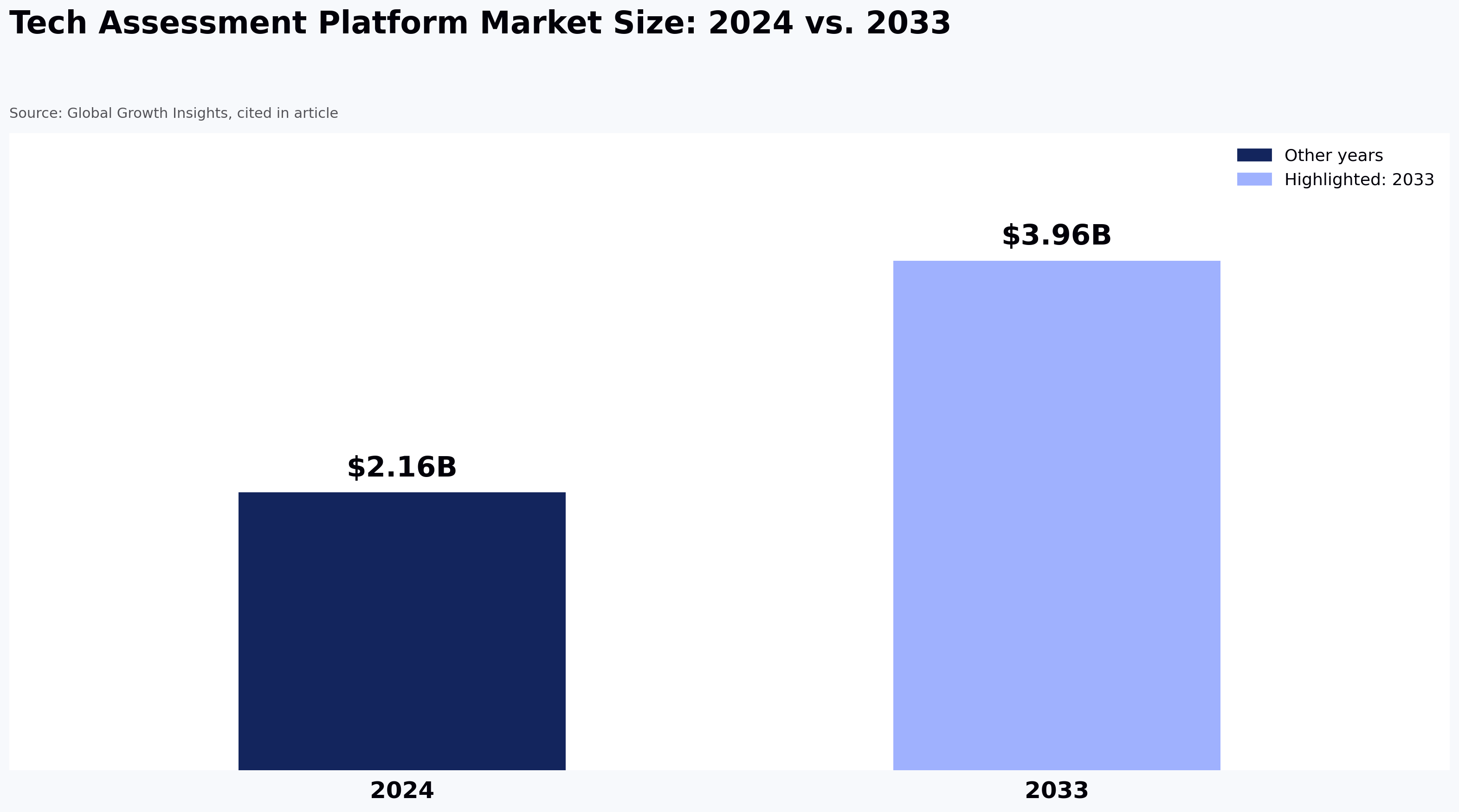
Market context (sidebar): One market estimate from Global Growth Insights values the tech assessment platform market at $2.16 billion in 2024, projected to reach $3.96 billion by 2033 (figures are vendor-published market research and have not been independently verified). The 2025 HackerRank Developer Skills Report also notes that most developers now prefer remote or hybrid roles, which pushes hiring teams toward online, work-sample assessments.
What is a developer assessment tool?
A developer assessment tool is a software platform that evaluates a candidate's coding ability, problem-solving, and applied technical knowledge through standardized tests, real-world simulations, and structured scoring. These platforms — sometimes called coding assessment platforms or technical interview platforms — typically include a question library, an in-browser IDE, automated grading, proctoring or plagiarism signals, and reporting that hiring teams can use to compare candidates on the same rubric.
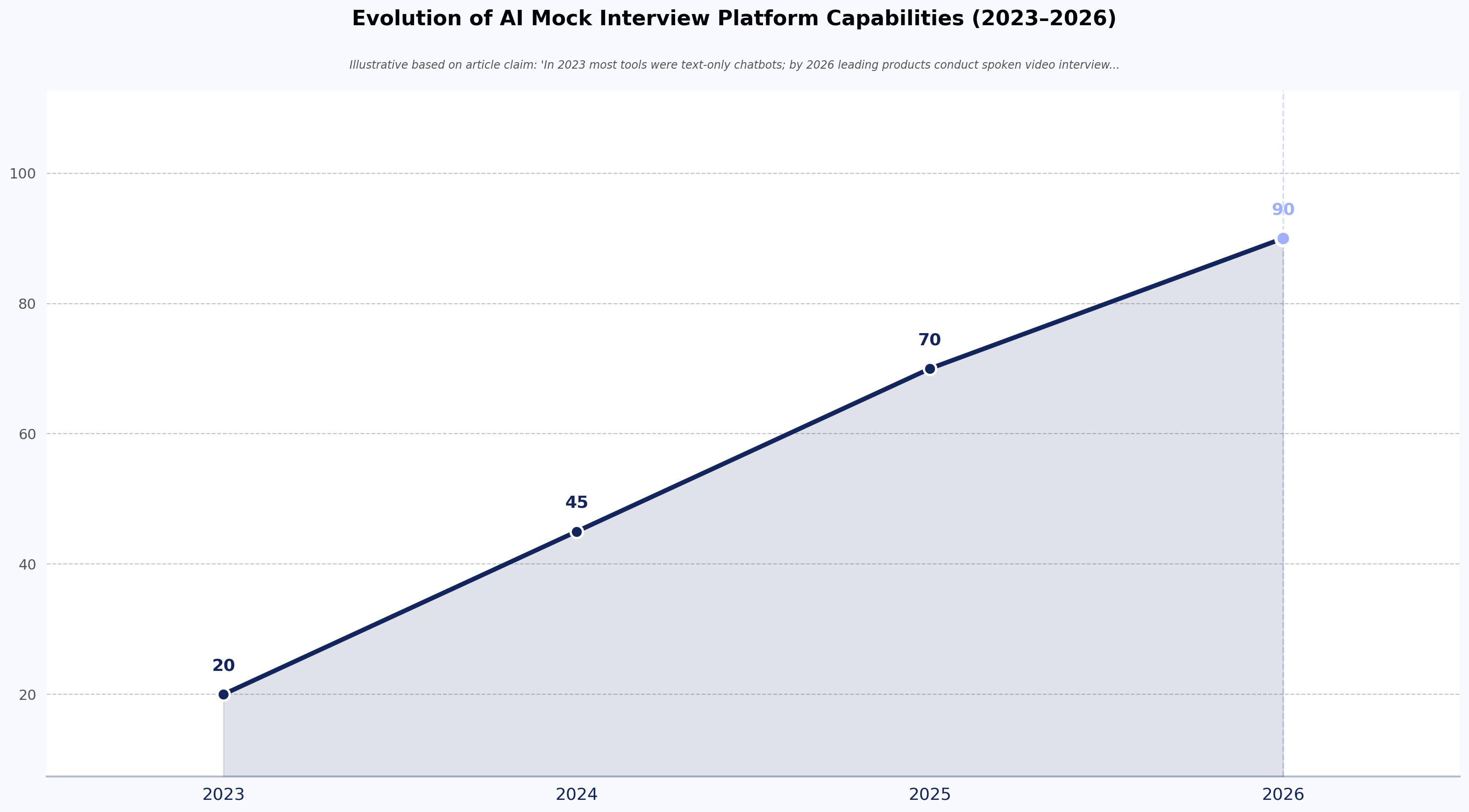
Most tools cover three job stages: asynchronous screening (take-home or timed coding tests), live technical interviews (collaborative coding), and, increasingly, AI-assisted interviews or scoring. The best-fit tool depends on your hiring volume, the seniority of the roles, and whether you need coverage beyond coding (e.g., data engineering, DevOps, or behavioral tests).
Why developer assessment tools matter for hiring teams
Developer assessment tools evaluate applied technical skill
Developer assessment tools give hiring managers a way to test coding, architecture, and problem-solving rather than relying on resume signals. The 2025 HackerRank Developer Skills Report notes that many developers prefer assessments built around real-world tasks over algorithmic puzzles, and feel current tests don't reflect actual work.
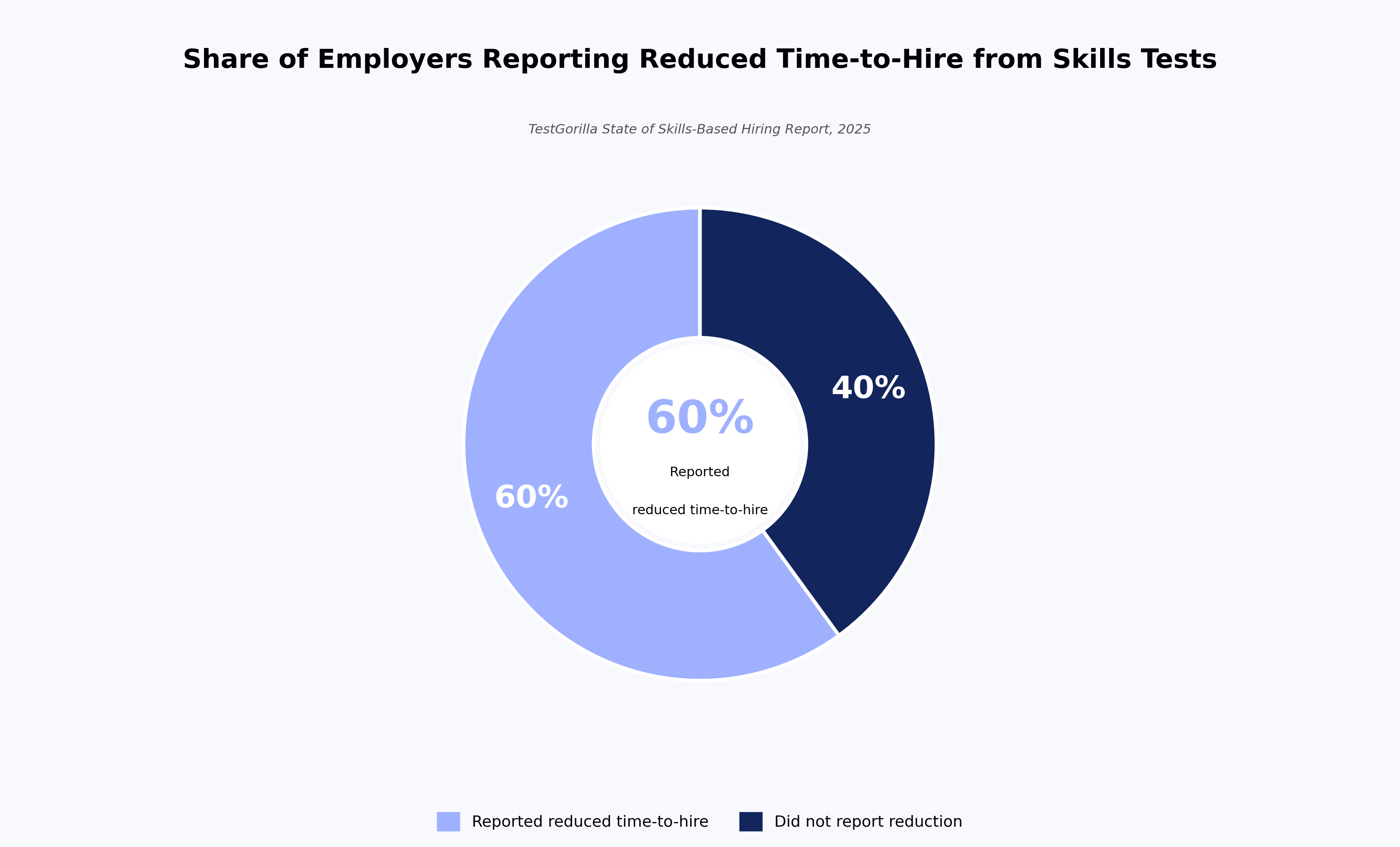
These tools also save recruiter time. The 2025 TestGorilla State of Skills-Based Hiring report — a vendor-published survey, so treat the specific figures as directional — reports that 3 in 5 employers said skills tests reduced their time-to-hire. Because you're testing applied skills, you filter for candidates who can perform on day-one tasks rather than screening on credentials alone.
Well-designed, role-specific challenges (for example, debugging a live codebase rather than answering an abstract algorithm question) also show how candidates think, react, and produce in a context similar to your work.
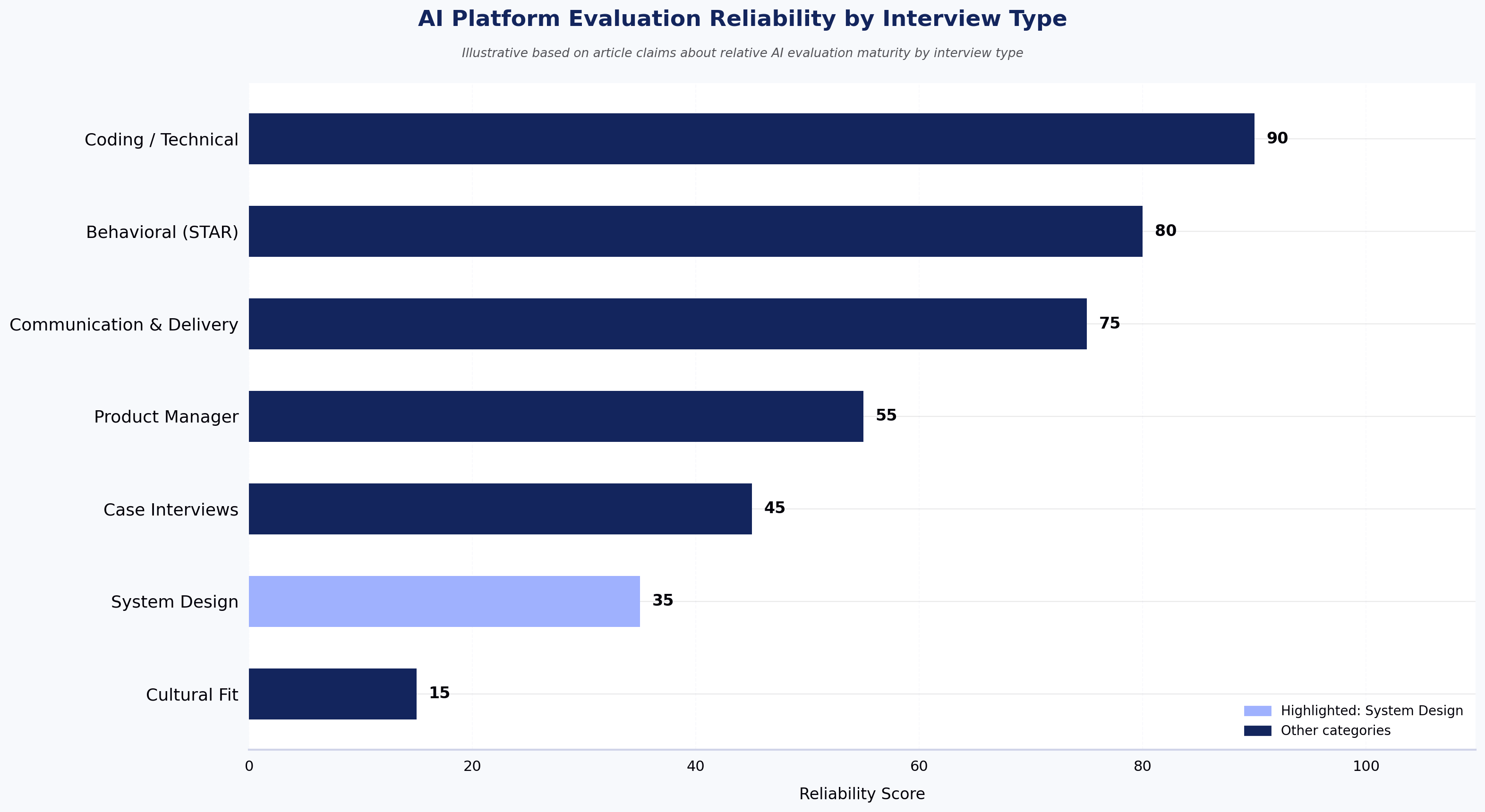
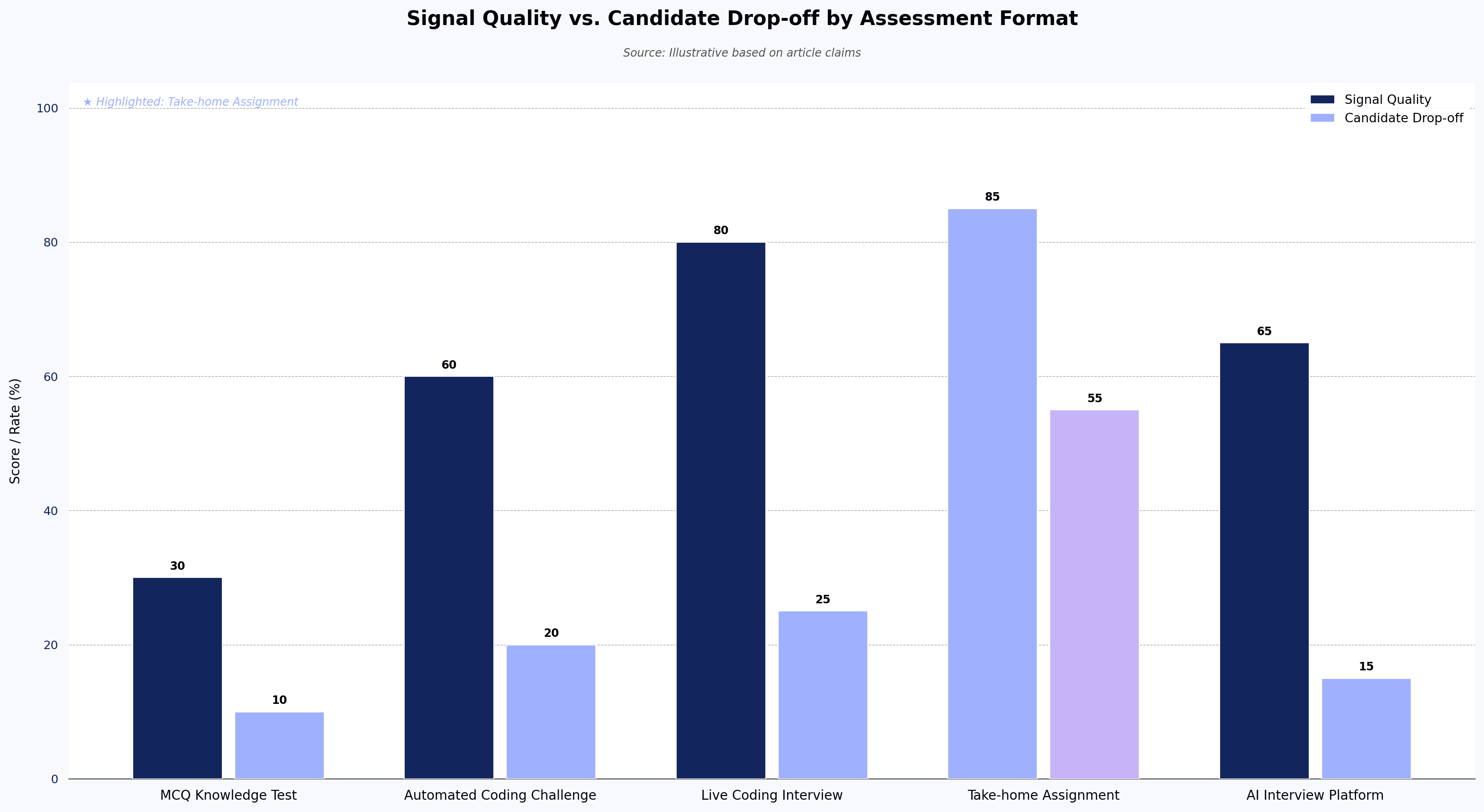
One contestable point worth flagging: algorithm-heavy assessments in the style of competitive-programming problem sets may screen out strong practitioners who lack CS-degree preparation, not just weak candidates. Assessment format has selection consequences beyond signal quality — which is why some platforms, including HackerEarth, invest in role-based, project-style assessments alongside algorithm libraries.
Developer assessment tools can pair coding tests with behavioral signals
A well-run screening process evaluates more than code — it also captures how a candidate communicates, collaborates, and reasons through ambiguous problems. Several developer assessment platforms now pair coding tests with communication, personality, and situational-judgment assessments. HackerEarth's OnScreen AI interview tool, for example, conducts structured technical interviews and produces rubric-based reports (see the mechanism note in the HackerEarth section below); iMocha ships combined technical and behavioral libraries in a single workflow.
The 2025 TestGorilla report (vendor-supplied data) also indicates 78% of surveyed employers plan to maintain or increase their skills-evaluation budgets. Combining behavioral scenarios, personality tests, and team simulations reduces the chance of hiring someone who looks strong on paper but doesn't fit the workflow.
How developer assessment tools can reduce hiring bias
Standardized assessment platforms can help make evaluations more consistent. Traditional hiring often skews toward pedigree, referral network, or interviewer preference. A 2025 OECD study notes that biased decision-making in both data-driven tools and human processes can worsen hiring inequities — a reminder that assessment tools reduce, but do not eliminate, bias.
When recruiters use standardized assessments and anonymized scoring, factors such as school name, gender, or background carry less weight in decisions. Rubric-based scoring also stays more consistent across candidates than interviewer-led screens, though no automated system removes bias entirely.
According to SHL's 2025 hiring report, organizations using job-relevant technical assessments reported roughly 25% throughput improvements and roughly 27% better outcomes for female candidates — figures SHL attributes to customers using its assessment library across the hiring funnel. These are vendor-reported figures; methodology and sample details are not independently verified, and readers should treat them as directional rather than benchmark data.
📌 Related reads: * Top 10 Recruiting Software Platforms for Hiring Developers * How Talent Assessment Tests Improve Hiring Accuracy and Reduce Employee Turnover * HackerEarth's Approach to Technical Screening and Proctoring
Top 10 developer assessment tools in 2026: at a glance
The table below summarizes ten widely used developer assessment tools. Ordering reflects a mix of skill coverage, adoption, and workflow breadth for engineering hiring in 2026; it is not a definitive ranking, and each tool has scenarios where it is the strongest fit (called out in the individual reviews). G2 star ratings vary over time and by segment; check current scores directly before shortlisting.
| # | Tool | Key features | Pros | Cons |
|---|---|---|---|---|
| 1 | HackerEarth | Assessments across a large skill and language library; SmartBrowser proctoring; OnScreen AI interviews; Hiring Challenges with a 10M+ developer community | Broad skill coverage; end-to-end sourcing-to-hire workflow; consistent rubric-based evaluation; global hiring challenges | Higher-tier plans required for some capabilities |
| 2 | HackerRank | Certified role-based assessments, live coding, plagiarism/proctoring signals | Broad adoption; strong benchmarking | Higher cost for small teams; some anti-cheating gaps reported |
| 3 | CodeSignal | Standardized scorecards, real-time proctoring, wide language support | Strong benchmarking, suited to high-volume hiring | Limited pricing transparency; coverage gaps for niche roles |
| 4 | Codility | Coding challenges, session playback, plagiarism detection, multi-language support | Solid technical screening; detailed candidate insight | Some users report a learning curve on the reporting UI |
| 5 | iMocha | Technical + personality tests, AI proctoring, wide skill library | Versatile beyond coding; enterprise-friendly | Reporting depth varies; some navigation friction |
| 6 | CoderPad | Real-time collaborative IDE, take-home projects, interview whiteboard | Great for live interviews; intuitive UI | Smaller test library; less suited to bulk automated screening |
| 7 | DevSkiller (now SkillPanel) | RealLifeTesting™ tasks, custom tests, browser IDE | High realism; suited to advanced dev roles | Higher cost; setup effort can be a factor for new teams |
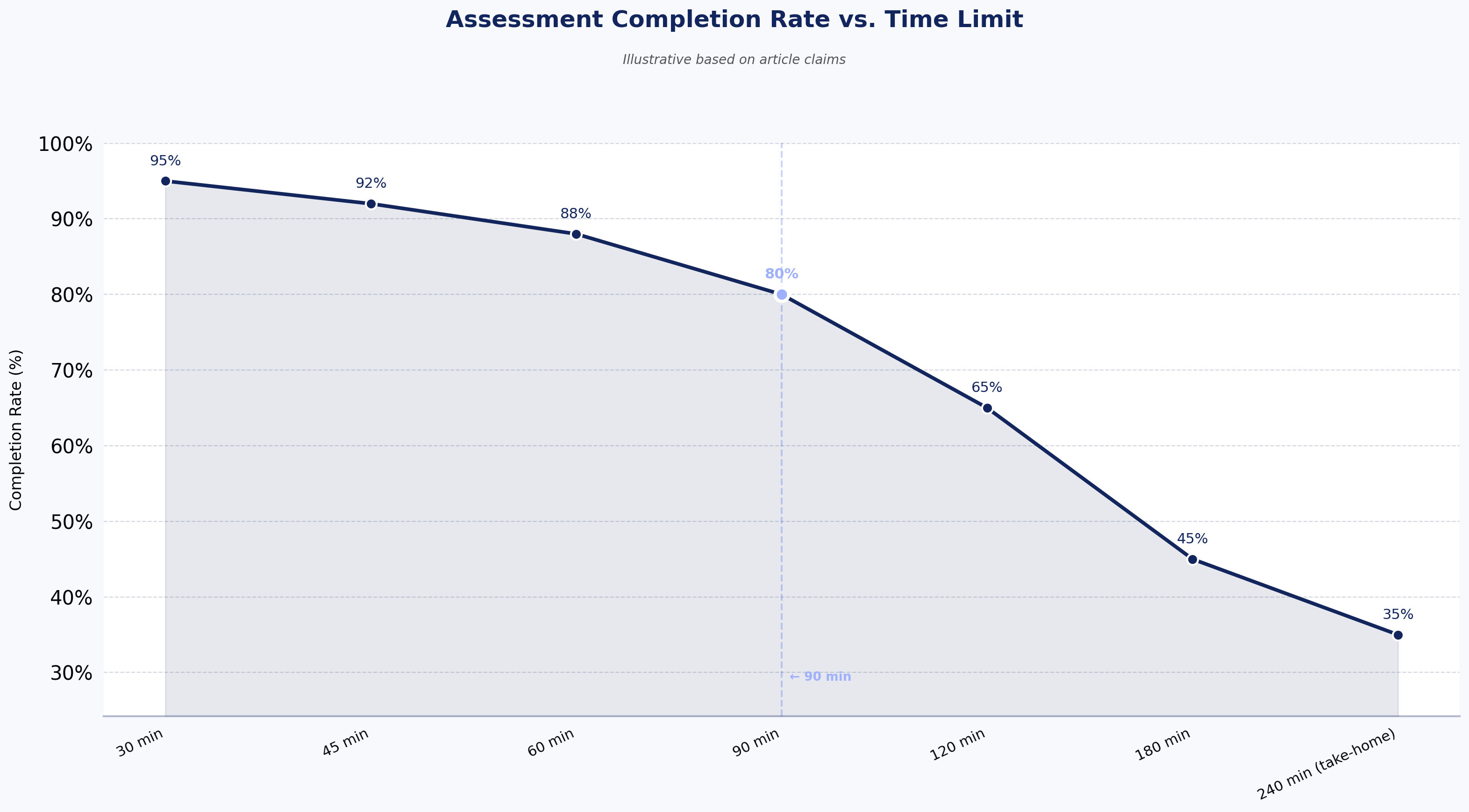
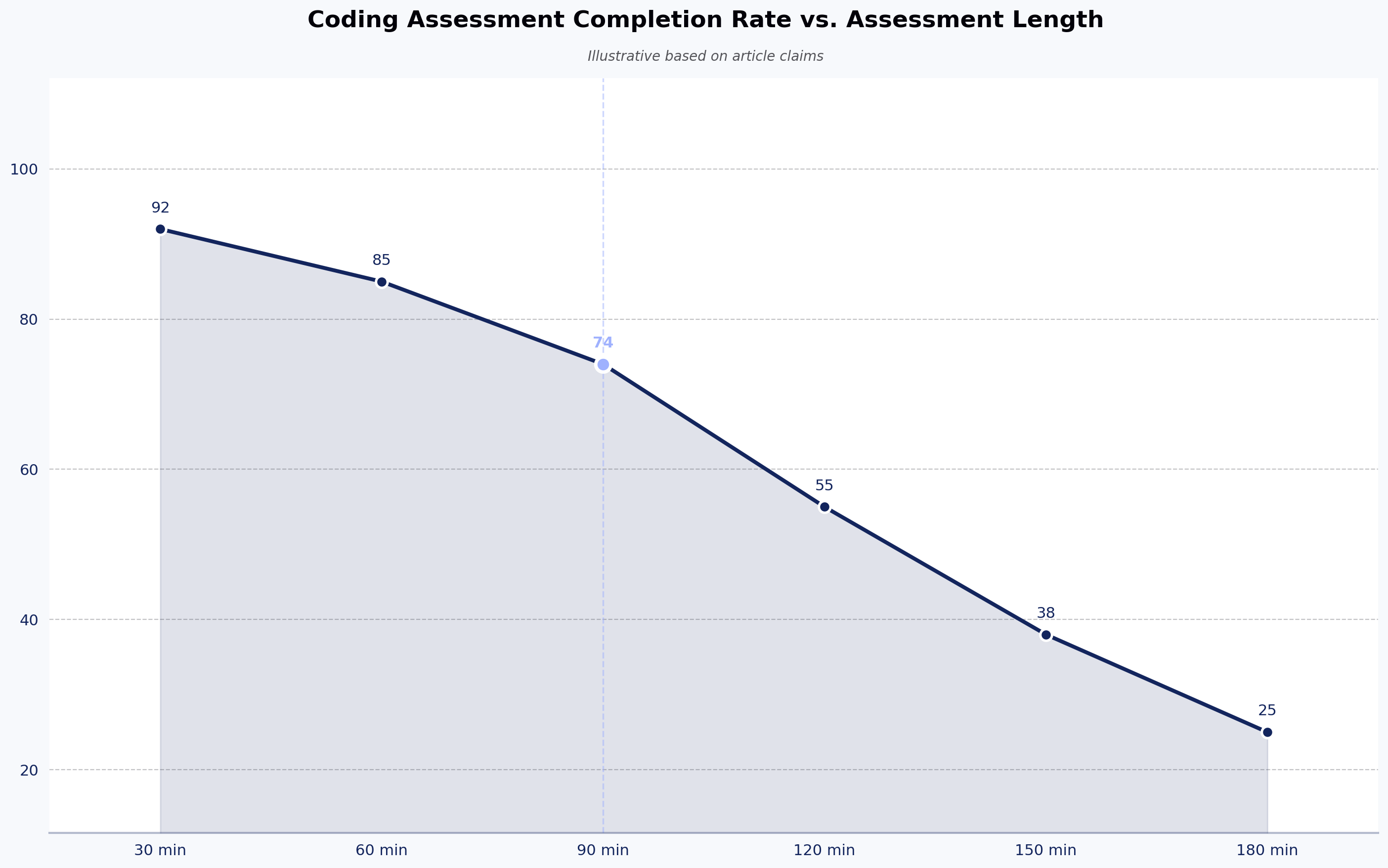
| 8 | SHL | Broad skills/competency catalog, research-backed instruments, enterprise reporting | Extensive coverage; enterprise reliability | Complex pricing; long assessments can reduce completion |
| 9 | Woven | Human-scored senior scenarios, architecture debugging, AI-assisted screening | Strong candidate experience for senior roles | Not cost-effective for bulk junior hiring |
| 10 | LeetCode | Large algorithm/data-structure library, live editor, candidate practice ecosystem | High candidate familiarity; strong algorithmic coverage | Built for candidate practice, not employer workflows |
The ten developer assessment tools compared
1. HackerEarth — end-to-end coding assessment platform
End-to-end platform for sourcing, skill assessment, AI interviews, benchmarking, and upskilling.
HackerEarth is designed to cover the full hiring workflow in one platform — sourcing through a 10M+ developer community, customized coding assessments that recruiters can build without coding expertise, AI-supported interviews, and proctoring — where many competitors focus on part of the stack.
The platform covers a broad range of skills and programming languages, supports project-based assessments that simulate real work, and offers Hiring Challenges that draw from the developer community for high-volume sourcing. Full-stack, .NET, Laravel, data engineering, DevOps, and machine-learning assessments are all available.
HackerEarth's OnScreen AI interview product conducts structured technical interviews with candidates and produces rubric-based reports for hiring teams. How the AI works and its limits: OnScreen uses large language models fine-tuned on HackerEarth's question library and interview rubrics; it asks scripted and adaptive follow-up questions within a defined role skill map, and scores against rubric criteria rather than open-ended judgment. It is designed to standardize structured screening and reduce interviewer variance, not to replace human interviewers for later-stage judgment such as team fit or offer decisions. Scores should be reviewed by a human interviewer before hiring decisions.
SmartBrowser proctoring, tab-switch detection, and plagiarism checks round out the workflow. ATS integrations are available; check the current integrations list for coverage against your specific stack (Greenhouse, Lever, Workday, SmartRecruiters, and others are commonly requested).
Pros: Broad skill coverage; consistent rubric-based evaluation across geographies and hiring rounds; global hiring challenges through a 10M+ developer community; end-to-end sourcing-to-offer workflow. Cons: Some capabilities are gated to higher-tier plans. Pricing: Current tiers on HackerEarth's pricing page.
2. HackerRank
Technical screening and interview tooling for hiring teams.
HackerRank offers role-specific certified assessments, live coding interviews, and cheating-detection signals. The platform scales from single-role hiring to enterprise builds and surfaces candidate performance and test-quality data. It is a common pick for teams that want broad ATS coverage and standardized certified tests.
Pros: Certified assessments; broad ATS integrations; strong benchmarking libraries. Cons: Higher cost for small teams; some reviewers note algorithm-heavy tracks in specific role tests. Pricing: Contact HackerRank for current tiers.
3. CodeSignal
Standardized coding assessments for high-volume and early-career hiring.
CodeSignal focuses on standardized coding scorecards, which helps teams hiring at scale — particularly for early-career and campus pipelines. The standardized approach supports benchmarking across a large candidate pool. The platform includes real-time proctoring for remote assessments.
Pros: Strong benchmarking for volume hiring; consistent scoring across large candidate pools. Cons: Limited pricing transparency; some role coverage gaps. Pricing: Contact CodeSignal for current tiers.
4. Codility
Automated coding tests for engineering hires.
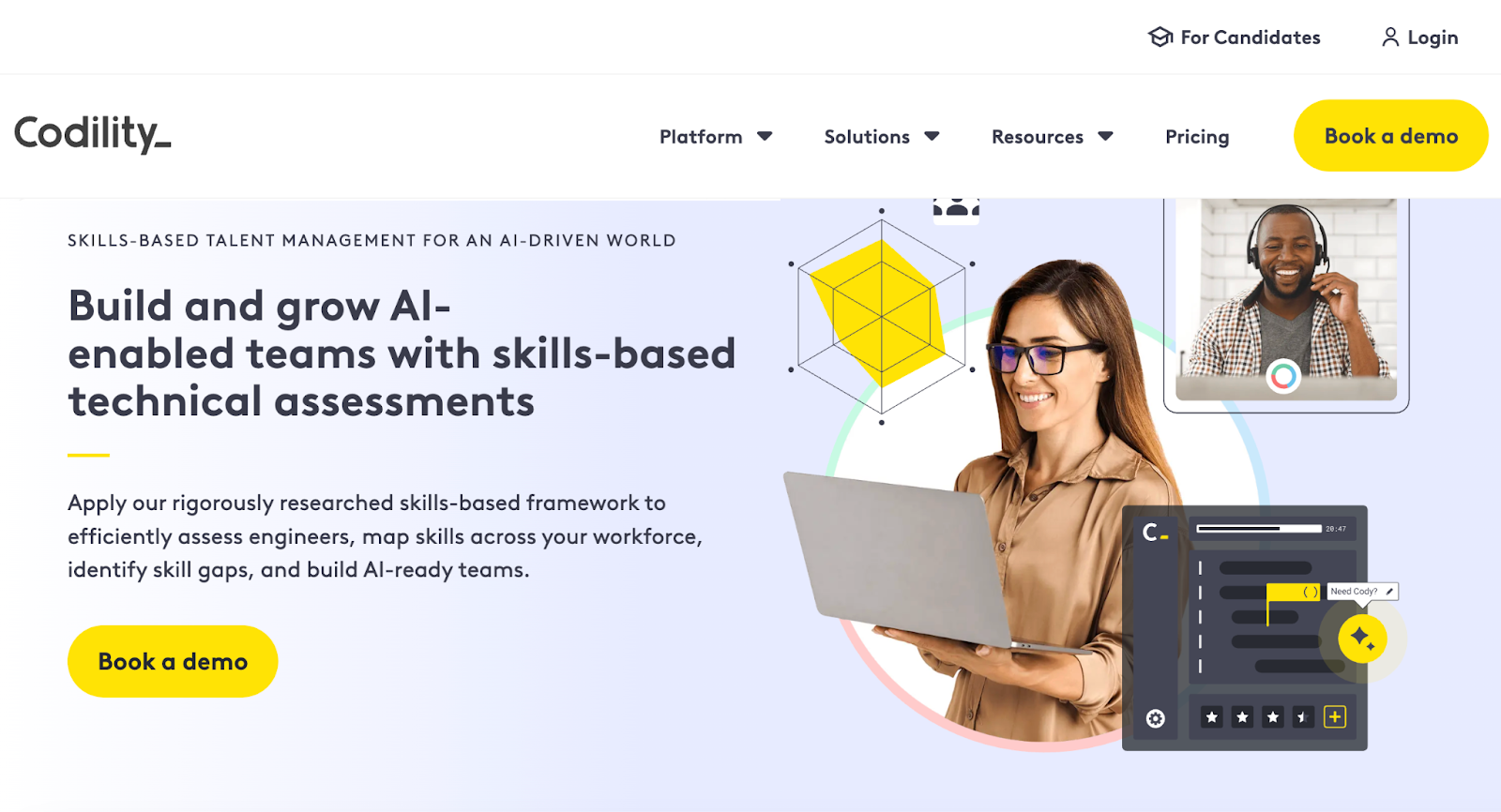
Codility's coding projects and challenges let hiring teams assess problem-solving, algorithmic thinking, and coding efficiency across multiple languages. CodeLive supports live technical interviews, and CodeCheck delivers automated evaluation and reports.
Pros: Real-world tasks with automated scoring; simplified reports reduce recruiter workload. Cons: Some users report a learning curve for recruiters new to technical hiring. Pricing: Contact Codility for current pricing.
5. iMocha
Skills intelligence and assessment platform.
iMocha combines technical assessments with soft-skill and personality tests, backed by AI proctoring. Its library covers a wide spectrum of technical and business roles, which suits enterprises hiring across engineering, data, and adjacent functions.
Pros: Versatile skill coverage beyond coding; enterprise-friendly. Cons: Reporting depth varies by role type; some navigation friction reported by users. Pricing: Contact iMocha for current tiers.
6. CoderPad
Live, collaborative coding interviews.
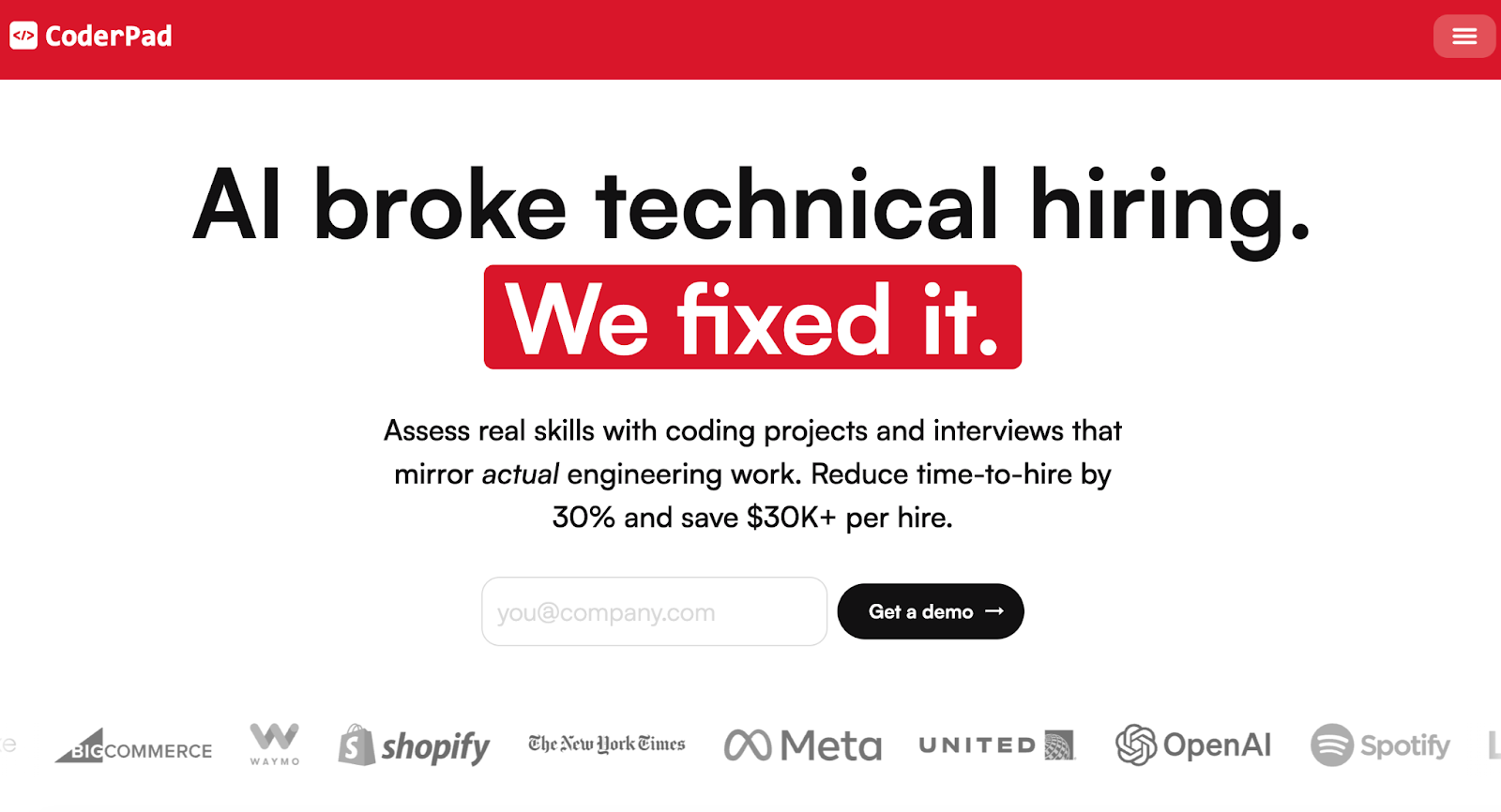
CoderPad functions as a browser-based IDE, enabling interviewers and candidates to write, run, and debug code together. It also offers a digital whiteboard and project-based assessments to support interview workflows. It's a strong pick for the live-interview stage but doesn't replace a full assessment platform.
Pros: Real-world dev environment; broad language support. Cons: Limited scalability for large hiring batches; smaller test library; thin sourcing capabilities. Pricing: Free tier available; contact CoderPad for paid tiers.
7. DevSkiller (now SkillPanel)
Skills-focused hiring and assessment platform.
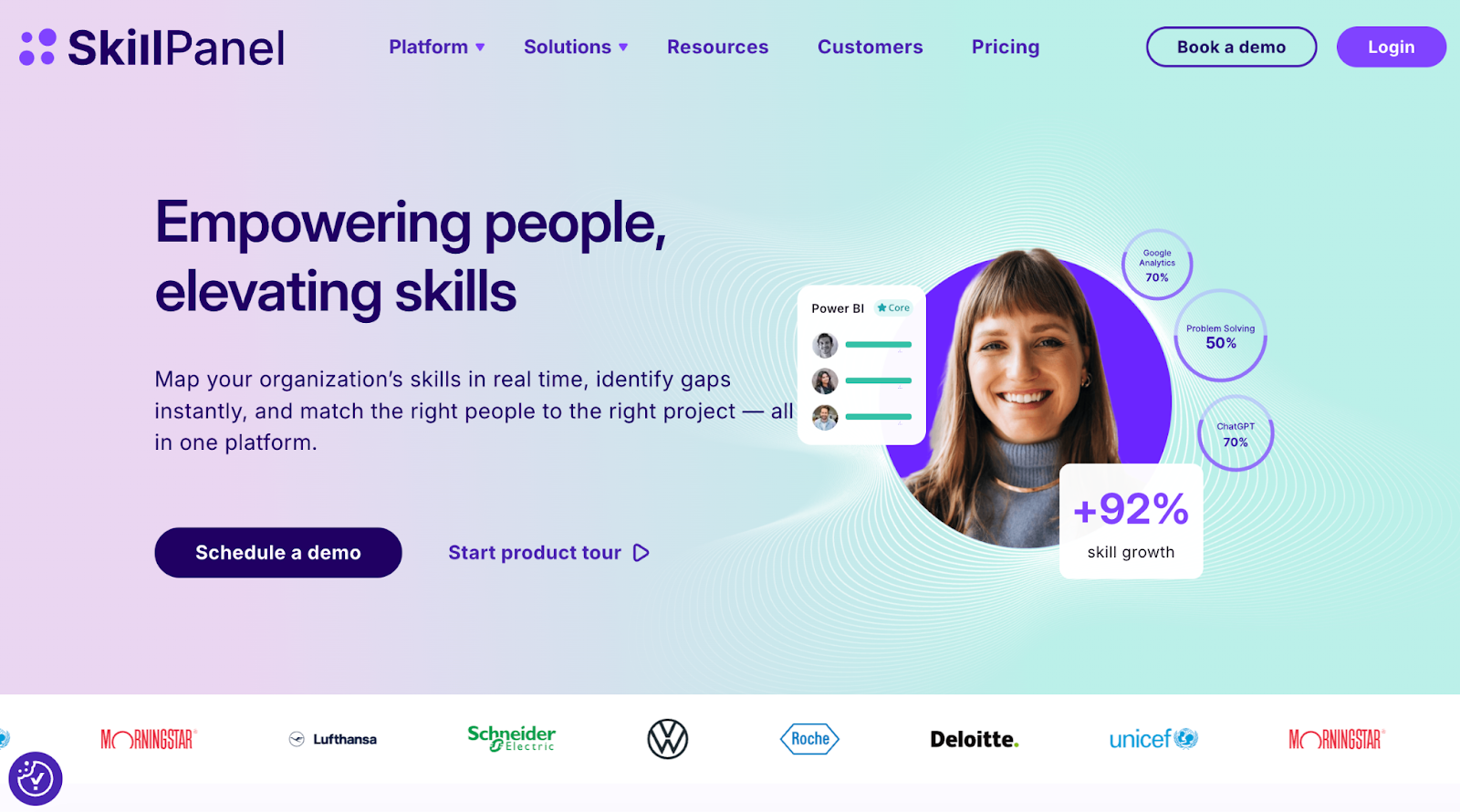
DevSkiller uses its RealLifeTesting™ methodology to evaluate programming skills in a realistic environment. It supports automated coding tests, skill-based ranking, and ATS integrations. Teams can evaluate a broad range of IT and digital skills to identify strengths, uncover gaps, and plan hiring or upskilling programs.
Pros: ATS integrations; multi-source assessment inputs (self, peer, manager, technical). Cons: Higher cost for small teams; setup effort can be a factor for new teams. Pricing: Contact DevSkiller for current figures.
8. SHL
Enterprise assessment platform for technical, behavioral, and competency evaluation.
SHL is an enterprise-grade assessment provider with a broad catalog of skills, cognitive, and behavioral assessments. Large organizations use SHL when they need research-backed instruments across many roles and geographies. Its scale is also its trade-off: pricing is complex and longer assessment sequences can affect completion rates for high-volume tech hiring.
Pros: Extensive coverage across job families; enterprise-grade reliability; research-backed behavioral instruments — an area where SHL has a longer track record than most coding-first tools. Cons: Complex pricing; longer assessments may reduce completion. Pricing: Contact SHL for enterprise pricing.
9. Woven
Human-scored assessments for senior engineering hires.
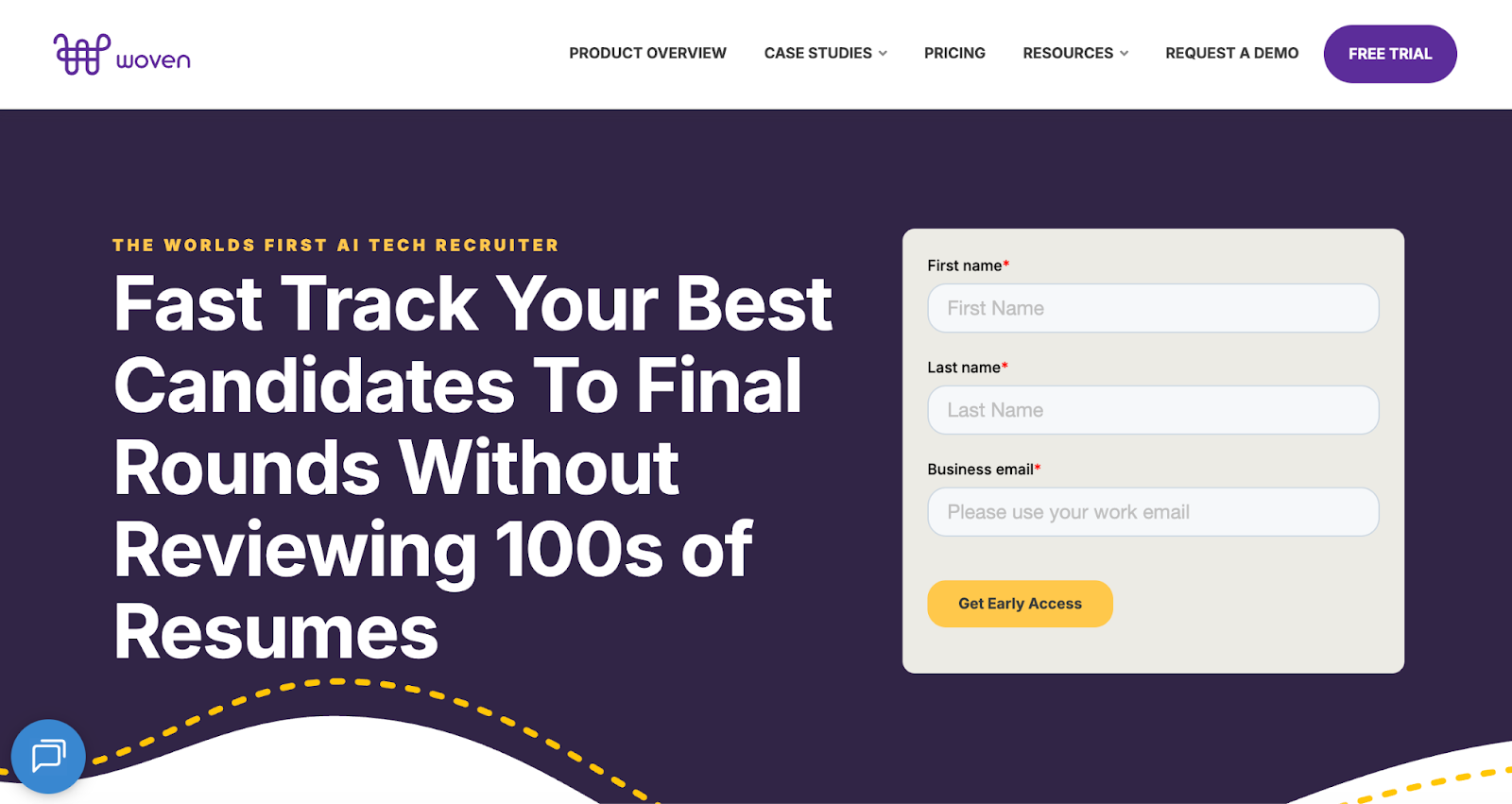
Woven is positioned for senior engineering hires, where deep, scenario-based problems and expert review add signal a puzzle-style test cannot. Human scoring on architecture and debugging scenarios is Woven's core strength, and it's typically the strongest option when hiring staff-plus engineers who need to be evaluated on judgment as much as code. It is not designed for high-volume early-career screening, and per-hire pricing reflects an assumption of lower-volume, higher-value roles.
Pros: Human-scored feedback on senior scenarios; personalized candidate conversations. Cons: Not cost-effective for bulk junior hiring; per-hire pricing can escalate. Pricing: Contact Woven for base and per-hire pricing.
10. LeetCode
Primarily a candidate-side practice platform, with employer tooling available.
LeetCode's problem library and brand familiarity make it a common reference point for algorithmic screens — and its candidate familiarity is a real advantage when your process leans on standard algorithm/data-structure signal. Its recruiter-side tooling — dashboards, ATS hooks, structured role-based assessments, and reporting — is thinner than platforms purpose-built for employer workflows, and teams that adopt it for hiring often build their own scoring and tracking outside the product.
Pros: High candidate familiarity; broad algorithmic coverage. Cons: Limited employer workflow; algorithm-heavy style may not reflect day-to-day engineering work. Pricing: Contact LeetCode for current employer figures.
Full-stack developer assessment tests: what to include
Because "full stack developer assessment test" is a common search — often paired with HackerRank in queries — it's worth calling out what a useful full-stack test actually contains, regardless of vendor. A strong full-stack screen typically combines four elements:
- Front-end task. A component-level exercise (React, Vue, or plain JS/TS) that tests state handling, API integration, and basic accessibility.
- Back-end task. A short API endpoint or service function — often in Node, Python, Java, or Go — that tests request handling, validation, and error paths.
- Data layer question. A schema-design or SQL query task that surfaces how the candidate models relationships and writes queries under constraints.
- Integration or debugging scenario. A small bug in an existing full-stack repo, or a task that connects the front-end and back-end elements above.
Sample question types that appear on most full-stack assessments (HackerRank, HackerEarth, Codility, CoderPad):
- "Given this failing test suite, fix the API endpoint so the tests pass."
- "Add pagination to this list view and update the API to support it."
- "Write a SQL query that returns the top-N users by activity in the last 30 days."
- "Refactor this component to remove unnecessary re-renders."
If you're evaluating vendors specifically for full-stack hiring, ask each one for two sample tests at the seniority level you hire most, and run a small pilot with your engineers as reference candidates before rolling out to applicants.
How to choose a developer assessment tool
The right platform depends more on your hiring pattern than on feature checklists. Use this five-part framework — none of the criteria is vendor-specific, and different tools win on different criteria:
- Volume and seniority mix. For high-volume, early-career hiring (100+ candidates a month), prioritize standardized scorecards and benchmarking; CodeSignal and HackerRank are common picks alongside HackerEarth. For senior roles with lower volume, human-scored scenario platforms like Woven are worth trialing.
- Coverage breadth. If you hire across engineering, data, and adjacent business roles, prefer platforms with wide skill libraries — HackerEarth, iMocha, and SHL all offer broad coverage, and each has scenarios where it fits best (HackerEarth for engineering-heavy hiring, iMocha when business roles are in scope, SHL for enterprise multi-role programs). Single-language or algorithm-focused platforms will leave gaps for cross-functional hiring.
- Interview format. For live technical interviews, a collaborative IDE (CoderPad, CodeLive on Codility, HackerEarth FaceCode) matters more than test-library depth. For asynchronous screening, prioritize proctoring quality and question-bank breadth.
- ATS integration. Confirm the platform's ATS integration with Greenhouse, Lever, Workday, or your stack before trialing. Weak integrations create manual work that erases screening time savings.
- Cost model and pilot terms. Ask each vendor for a 60-day pilot with a defined role, sample size, and success metric (time-to-hire, offer-acceptance rate, or first-90-day performance). Compare on outcomes, not feature counts.
Shortlist two or three tools that match your top three criteria, run parallel pilots on the same role, and pick the one with the strongest signal-to-recruiter-time ratio.
FAQ
What is the best developer assessment tool overall?
There isn't one "best" tool for every team — the strongest fit depends on volume, seniority, and whether you need coverage beyond coding. Teams that want a single vendor covering sourcing, assessment, AI interviews, and proctoring often shortlist HackerEarth for its workflow breadth. Teams optimizing for certified benchmarking across a large candidate pool often shortlist HackerRank or CodeSignal. Teams hiring staff-plus engineers often shortlist Woven for human-scored senior scenarios. Run parallel pilots on one role before committing.
What is the best developer assessment tool for startups?
Startups typically need a low-cost, fast-to-configure platform with a usable free or entry tier. CoderPad's free tier suits early-stage teams running a handful of live interviews a month, and HackerEarth's entry-tier assessments work when startups need broader skill coverage than a live-interview tool provides (note that Hiring Challenges are custom-priced and generally used at higher volumes, not on entry plans). One consideration many startups miss: pick a tool that your future ATS can integrate with, so you don't have to switch when you scale past 10 hires a quarter.
How do developer assessment tools reduce hiring bias?
Developer assessment tools reduce bias by standardizing evaluation criteria, anonymizing candidate identifiers, and applying the same rubric to every submission. This removes some of the variance introduced by interviewer mood, resume signals, or referral networks. A less-discussed limit: rubric design itself can carry bias — for example, if the rubric over-weights algorithm speed, it may still disadvantage candidates without competitive-programming backgrounds. The 2025 OECD skills report notes that no automated system eliminates bias — these tools reduce it, they do not remove it.
Which developer assessment tool is best for high-volume hiring?
For hiring 100+ developers a month, prioritize platforms with standardized scorecards, benchmarking, and strong proctoring. CodeSignal and HackerRank are frequently used at this volume for their benchmarking libraries. HackerEarth is also common when sourcing volume is a bottleneck, because Hiring Challenges pull candidates from a 10M+ developer community. A caveat: high-volume screening only works if your downstream interview capacity can absorb the shortlist — otherwise the throughput gain converts into candidate ghosting.
Do developer assessment tools integrate with Greenhouse or Lever?
Most enterprise-tier developer assessment tools offer ATS integrations with Greenhouse, Lever, Workday, and similar systems, but coverage varies by field (candidate status, score sync, interview scheduling) and by ATS plan. Check each vendor's current integration documentation for your specific ATS before signing — an integration marketplace listing does not always mean two-way sync on every field you need.
What's the difference between a coding challenge platform and a technical interview platform?
A coding challenge platform (e.g., HackerEarth Hiring Challenges, HackerRank contests) is built for high-volume, asynchronous sourcing and screening, often across a public developer community. A technical interview platform (e.g., CoderPad, CodeLive) is built for live, one-to-one or one-to-few coding interviews with real-time collaboration. A less-obvious point: the two categories score candidates differently — challenges rank on relative performance across a cohort, while interview tools capture qualitative signal from a single interviewer — so combining both usually gives a fuller picture than either alone.
How much do developer assessment tools cost?
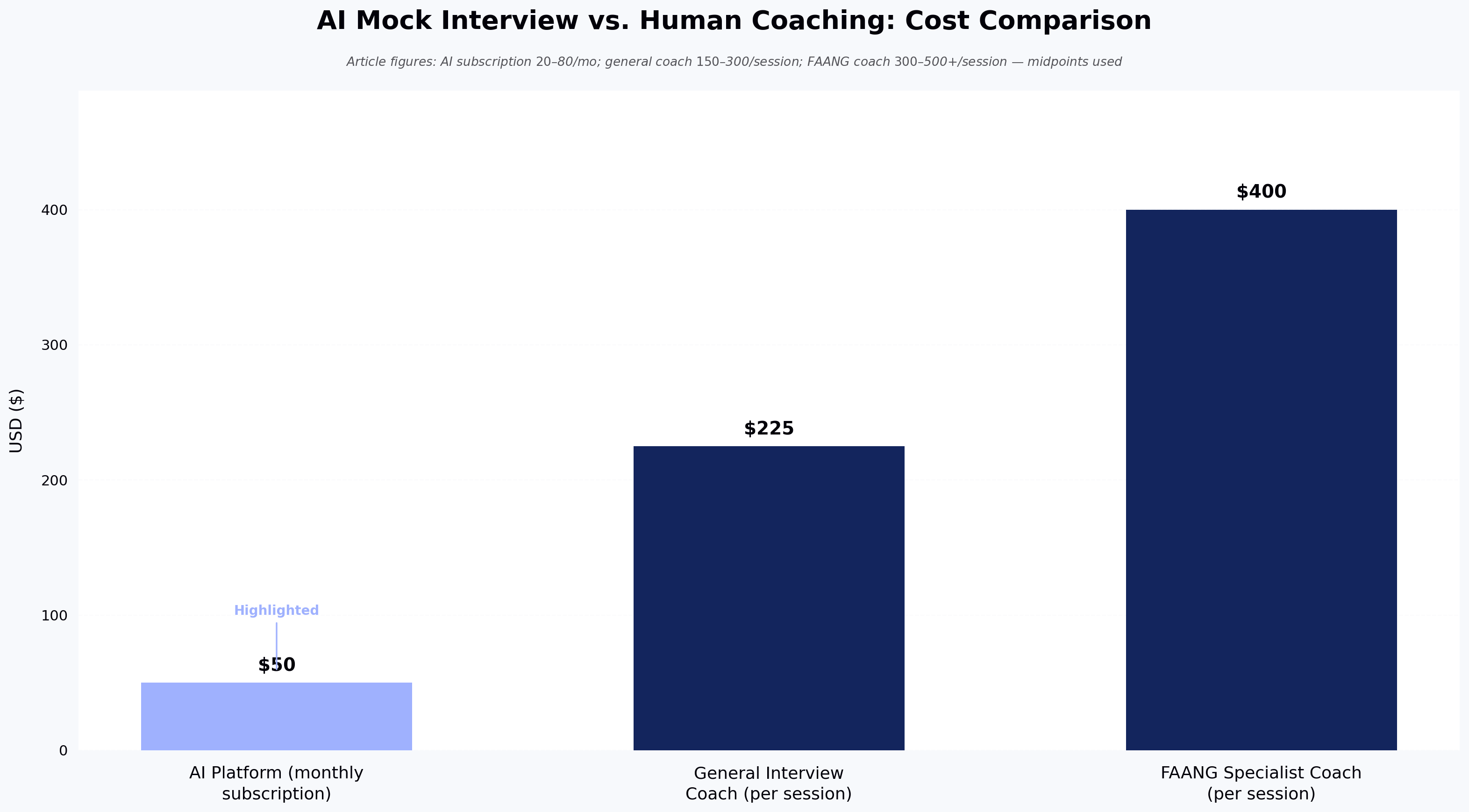
Pricing ranges widely and most enterprise vendors do not publish list prices, so directional guidance is the best any public article can offer. Entry tiers on live-interview tools like CoderPad start with a free plan. Enterprise assessment platforms typically require annual contracts, and per-hire pricing models (e.g., Woven) shift cost to successful hires rather than seat count. HackerEarth publishes tiered pricing on its pricing page. Ask every vendor for a pilot and a written price quote before committing to annual pricing — reported price ranges from third-party review sites are often out of date.
Ready to trial a developer assessment tool?
If you'd like to see how HackerEarth handles your specific role, request a demo on our tech recruiter page or browse current pricing tiers. We're happy to set up a 60-day pilot against a defined role and success metric so you can compare on outcomes rather than feature lists.