Why ATS resume screening is losing ground to AI interviewers in technical hiring
Meta title: AI Interviewers vs. ATS Screening in Technical Hiring Meta description: AI interviewers apply a consistent rubric to every candidate, easing ATS screening load in technical hiring while keeping recruiter judgment central.
Estimated read time: 8 minutes
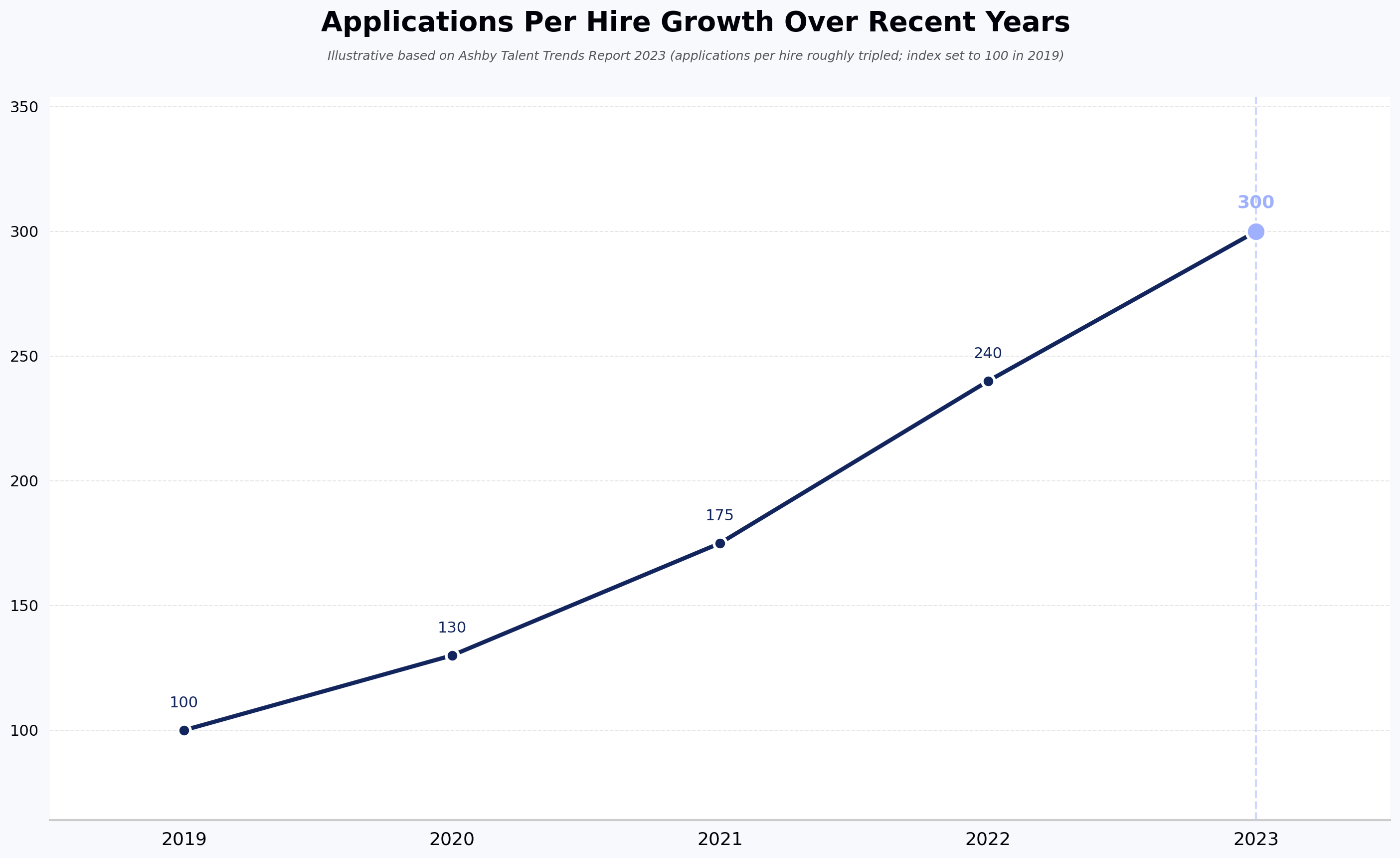
If you lead a technical hiring pipeline, your ATS is no longer the bottleneck you can ignore. Per the 2023 Ashby Talent Trends Report, applications per hire have roughly tripled, and keyword-matching ATS tools cannot keep pace with that volume. An AI interviewer — software that conducts structured, two-way candidate conversations using video-based AI interview avatars and applies a consistent rubric to every response — is increasingly used to supplement or replace ATS resume screening as the first filter in technical hiring. For recruiters and talent acquisition leaders, the practical question is which parts of screening to hand off to an AI interviewer and which to keep human.
The hiring crisis: what the 2023 data shows
Behind the tripling in applications sits a second trend that hits recruiter capacity harder: interviews per hire have also risen year-over-year, meaning each additional application does not just add screening work — it adds downstream interview work too. The Ashby report cited above also documents a significant rise in interviews per hire year-over-year; specific percentage changes vary by role and segment within the underlying dataset, but the trend line is consistent: recruiters spend more time filtering unqualified candidates than engaging promising ones.
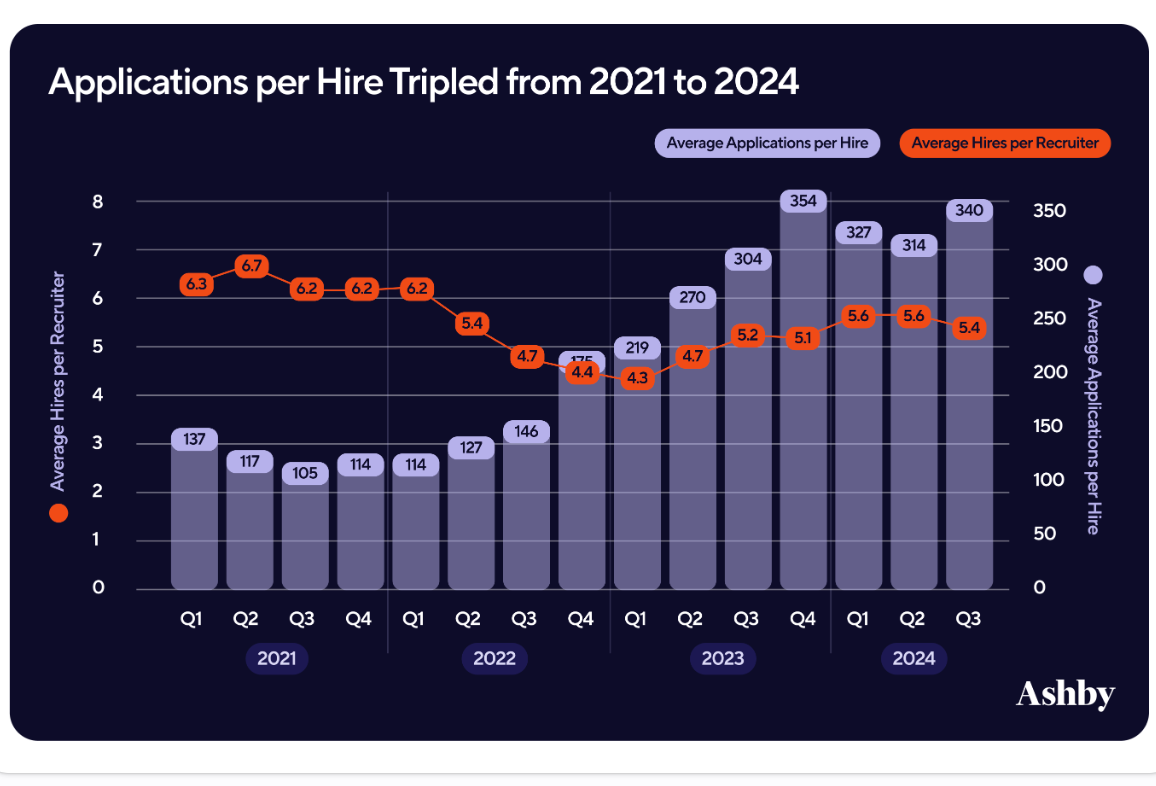
Credit - Ashby Talent Trends Report (2023)
For technical roles, the burden compounds. Hiring a developer or engineer typically requires more interview hours than a comparable non-technical role, though the exact gap varies by company, level, and source. Beyond direct spend, the cost shows up as delayed projects, engineer interview load, and a recruiting process that cannot scale.
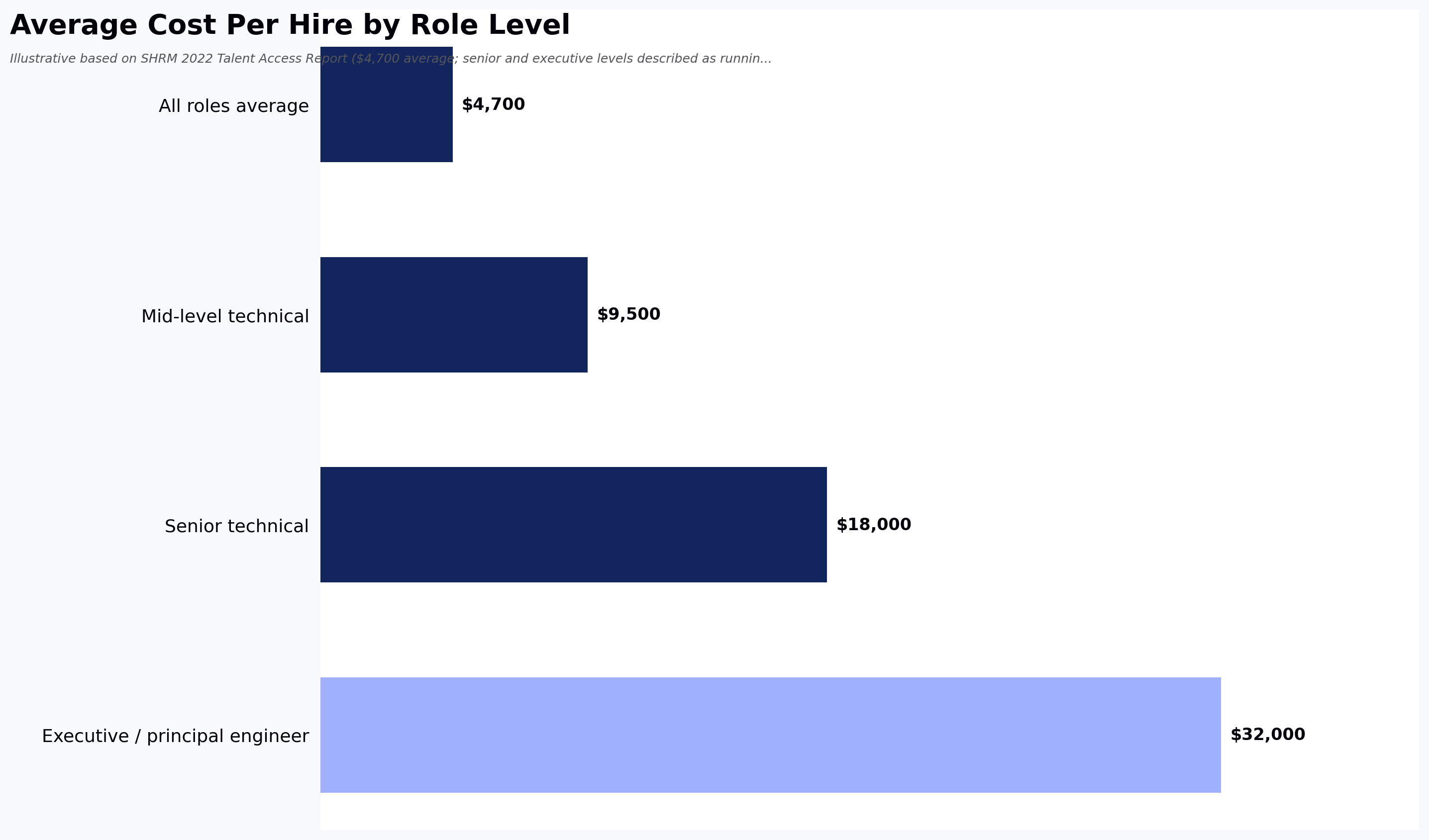
These delays translate directly into spend: SHRM's 2022 Human Capital Benchmarking Report puts the average cost per hire at roughly $4,700 (as of 2022 — more recent SHRM benchmarks trend higher), with senior and executive-level technical hires often running several times higher. For a recruiter running a technical pipeline, that published benchmark is likely a floor rather than a ceiling: recruiter overtime, engineering capacity consumed by interviews, and productivity loss on open roles all compound the figure in ways cross-industry averages do not capture.
The hidden costs of ATS screening without an AI interview layer
Traditional ATS-led hiring carries deeper costs that rarely appear on spreadsheets — and most of them land directly on the recruiter's desk.
Recruitment capacity is the first casualty. When recruiters spend the majority of their week on administrative tasks and initial screenings — a pattern reported across recruiter productivity surveys, including Ashby's — they have little time for the work that builds their credibility with hiring managers: sourcing passive talent, calibrating on role requirements, and managing candidate relationships through to offer.
Inconsistent evaluation is the second. Different interviewers ask different questions, evaluate against different standards, and bring different energy levels depending on the day. One candidate may face a rigorous technical grilling while another moves through with surface-level questions. For a recruiter, this inconsistency erodes trust with the hiring manager — every debrief becomes a negotiation over whether the signal is real or an artifact of who ran the screen.
Human bias is a related vulnerability. Research summarized by SHRM finds that unstructured interviews are vulnerable to unconscious bias — affecting decisions based on candidates' names, educational backgrounds, or even interview time slots. These biases also create legal exposure under frameworks such as NYC Local Law 144, EEOC guidance on algorithmic hiring tools, and the EU AI Act's high-risk classification for hiring systems. For a broader view of where AI helps and where it introduces risk, see AI In Recruitment: The Good, The Bad, The Ugly.
Candidate experience is the final cost. Per CareerPlug's 2024 Candidate Experience Report, 26% of job seekers have declined a job offer because of poor communication or unclear job expectations during the hiring process. Long screening delays and disorganized early-stage interviews compound this — candidates who wait weeks after applying, or receive no feedback after a first-round screen, share those experiences publicly and erode employer brand at the top of the funnel.
Three priorities for AI interview adoption: objective, consistent, efficient
High-performing technical hiring teams share three operational traits: objective evaluation, consistent methodology, and efficient throughput. Each can be tied to a specific recruiter workflow change.
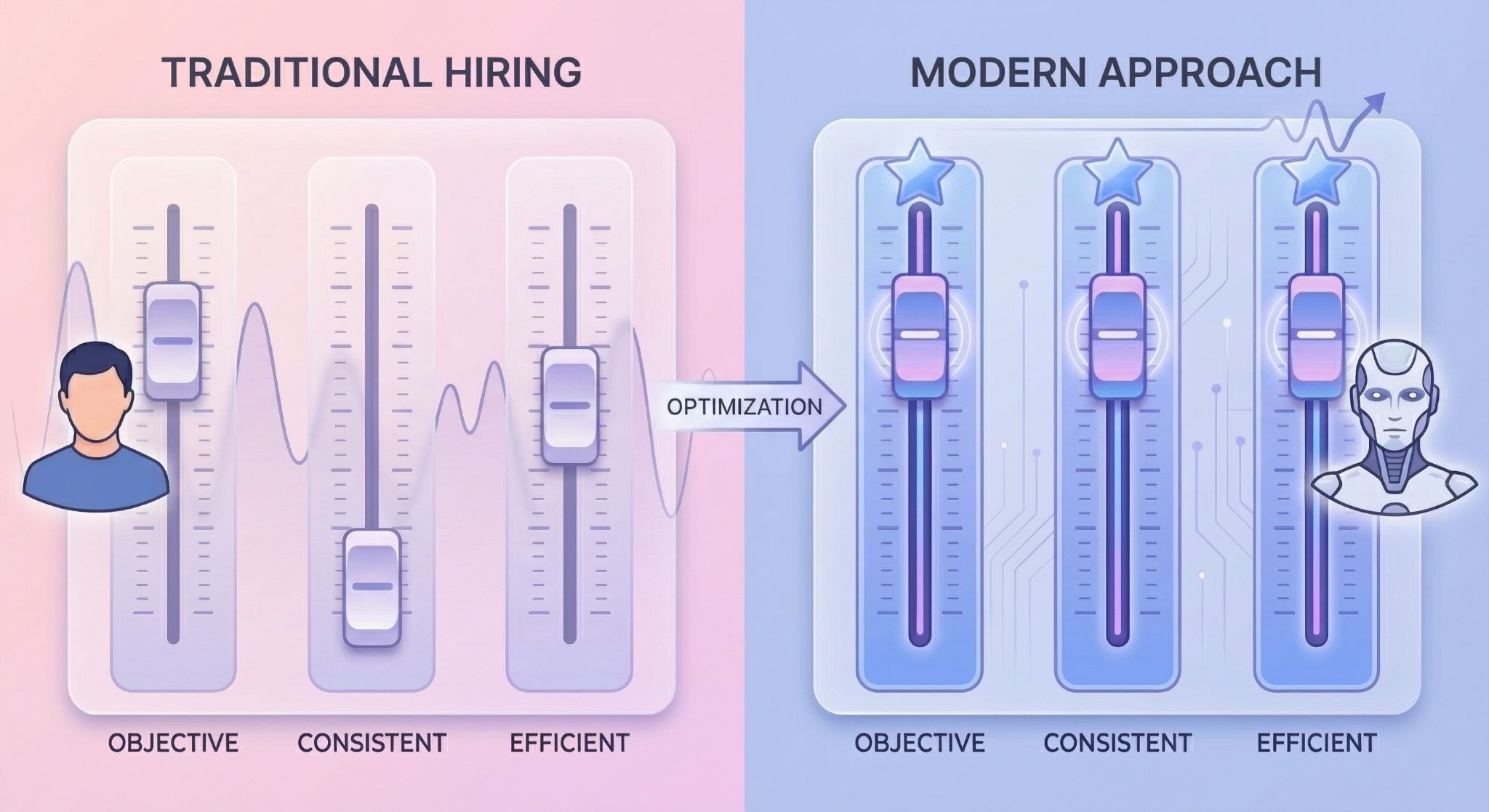
The three pillars of modern talent acquisition
Objective screening means every candidate is scored against the same rubric, independent of the interviewer's mood or the candidate's name. Specifically: define a rubric tied to the role's competencies, score against that rubric, and require evaluators to cite evidence from the response. Companies that adopt rubric-based screening report more comparable data across candidates and reduced reliance on gut-feel decisions.
Consistent methodology applies the same questions, rubric, and scoring pass to every candidate, whether they apply at 9 AM Monday or 11 PM Friday. Over time, that consistency produces benchmarkable data recruiters can use to refine criteria against actual hire outcomes.
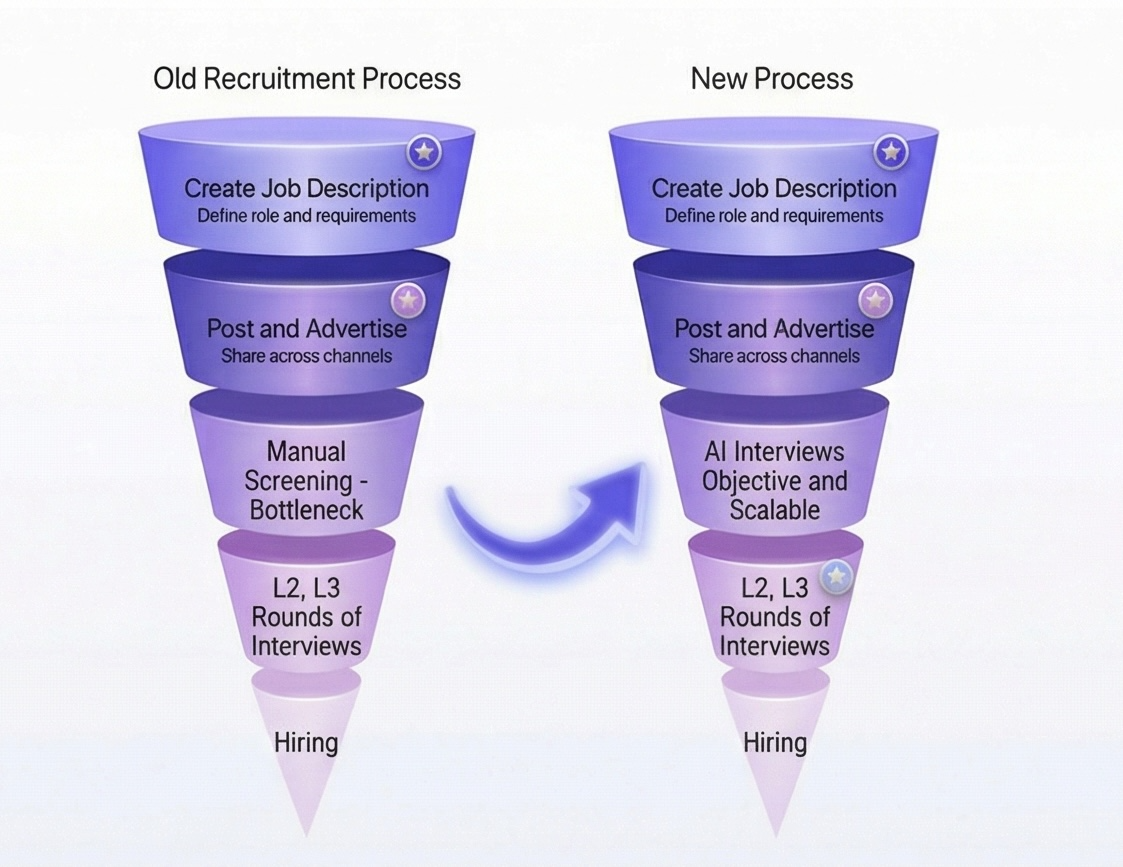
Efficient processes let a team screen hundreds of candidates without proportionally adding recruiters or engineering interview load. In practice, recruiters delegate first-round structured screens to an AI interviewer and reserve their own time for offer conversations, calibration, and pipeline strategy.
Large enterprises historically built this through standardized interview training, structured scorecards, and dedicated recruiting operations teams. AI interviewer tooling now extends a similar standard to teams with sufficient candidate volume to justify structured first-round automation — typically role families with more than a handful of candidates per cycle.
How an AI interviewer works in technical hiring
An AI interviewer addresses volume directly: structured first-round conversations run in parallel, on candidate time, with scorecards delivered to recruiters rather than added to their calendars. Reported time-to-fill improvements vary widely by organization, role, and integration approach, and should be validated with a pilot rather than assumed from vendor benchmarks. For a wider look at the tooling landscape, see this 2025 guide to AI hiring tools for tech recruiting.
The bias-reduction case is more nuanced than vendor marketing suggests. Structured, rubric-driven evaluation is more consistent across candidates than human-led screens, because the same questions and scoring criteria apply to everyone. That consistency reduces some forms of interviewer variability, but AI systems can also encode bias from their training data, which is why frameworks such as NYC Local Law 144 require bias audits of automated employment decision tools.
For recruiters, an AI interviewer shifts the role from administrative coordinator to talent advisor. Instead of running repetitive first-round screens, recruiters can spend that time on candidate engagement, offer negotiation, and pipeline development. Practically, this means recruiters can review structured scorecards and recordings rather than conducting every introductory call themselves. For more on how AI is reshaping the broader funnel, see How AI Is Transforming The Talent Acquisition Process In Tech?.
Where AI interviewing does not apply
AI interviewers are not the right fit for every role or context. Senior leadership hires, highly creative positions, and roles where cultural judgment is the primary signal still benefit from human-led conversations. Candidates with low-bandwidth internet connections, older hardware, or accessibility needs can be disadvantaged by video-based AI assessment, which is a reason to offer alternative formats. Jurisdictions including New York City and several U.S. states require bias audits and candidate notification for automated hiring tools; the EU AI Act classifies hiring systems as high-risk and imposes additional transparency obligations. Any AI interviewer deployment should account for these limits rather than treat the tool as universal.
How HackerEarth implements the AI interviewer pattern
The pattern above — structured, rubric-scored, parallel first-round screens — is what a well-designed AI interviewer product should operationalize. HackerEarth's implementation is one example of how the pieces fit together.
For recruiters, the two failure modes of first-round screens are inconsistent evaluation across interviewers and no reliable way to confirm the candidate on the call is the candidate being evaluated. HackerEarth, a skills intelligence platform used by enterprise technical hiring teams, offers two products that together address these failure modes: OnScreen, an always-on AI interview platform using video-based AI interview avatars for role-calibrated conversations, addresses the first by applying the same rubric to every candidate, and the second through identity verification tied to the interview session; Skill Assessments covers coding evaluation separately, with role-mapped questions across a range of programming languages. This is particularly relevant given how AI-generated CVs are breaking technical hiring at the resume layer. Buyers should confirm evaluation-model, training-data, and audit specifics with HackerEarth directly.
If you are evaluating a first-round screening change, a practical starting point is to pilot a structured AI interviewer alongside your current process for 60–90 days on a single role family, then compare scorecard data to hire outcomes before broader rollout.
See it in your workflow: Request an OnScreen demo to walk through the structured interview flow, identity verification, and scorecard review on a role of your choice.
FAQ
What is an AI interviewer — and what is it not? An AI interviewer is software that conducts structured, rubric-scored candidate conversations automatically, without a human interviewer present. It is a first-round structured screen, not a hiring decision-maker, and not a replacement for hiring-manager judgment on scope, level, or team fit. The definition breaks down in practice when teams use AI interview scores as a sole pass/fail gate rather than one signal in a scorecard reviewed by a recruiter and hiring manager.
Does AI interviewing reduce bias? AI interviewing can reduce some forms of interviewer variability because the same questions and rubric apply to every candidate. It does not eliminate bias: AI systems can encode bias from training data, which is why jurisdictions such as New York City require bias audits of automated employment decision tools under Local Law 144.
How does an AI interview agent work? The counterintuitive part: the score is only as good as the rubric — a poorly defined rubric produces confident but meaningless scores. Under the hood, the agent scores each rubric dimension independently before aggregating, so rubric design (not model choice) is where teams should spend their calibration effort.
Does replacing ATS resume screening mean removing resume review entirely? The tradeoff is sequencing, not elimination. Moving skills demonstration earlier via an AI interview means resumes get reviewed later in the funnel, on a smaller pool — which flips the traditional funnel economics but can create friction with hiring managers who want to see resumes first. Teams that shift sequencing successfully usually pair it with a hiring-manager calibration session to align on which credentials still gate an offer versus which are informational.
Are AI interviewers legal to use in hiring? In most jurisdictions, yes, with conditions. NYC Local Law 144 requires bias audits and candidate notification. The EU AI Act classifies hiring AI as high-risk and imposes transparency requirements. EEOC guidance applies to algorithmic hiring tools in the U.S. Confirm requirements in each jurisdiction where you hire.
Does ATS resume screening reject AI-generated resumes? Most ATS platforms do not specifically detect or reject AI-generated resumes — they parse keywords and structured fields regardless of authorship. That is part of why skills-based first-round screening via an AI interviewer is gaining traction: it evaluates demonstrated ability rather than resume text that may have been drafted or embellished by a generative tool.
When should you not use an AI interviewer? Senior leadership roles, highly creative positions, and contexts where candidate accessibility or connectivity is a concern are usually better served by human-led or hybrid formats.
Key takeaways on AI interviewer adoption
- ATS resume keyword screening cannot keep up with application volumes that have roughly tripled, per the 2023 Ashby Talent Trends Report.
- Cost per hire averages around $4,700 per SHRM's 2022 benchmark, with senior technical hires running materially higher and more recent SHRM benchmarks trending higher still.
- An AI interviewer applies a consistent rubric to every candidate, which is more consistent across candidates than human-led screens but does not eliminate bias.
- Regulatory frameworks (NYC Local Law 144, EU AI Act, EEOC guidance) apply to automated hiring tools and should shape deployment.
- A 60–90 day pilot on a single role family, with scorecard data compared to hire outcomes, is a practical way to evaluate an AI interviewer before broader rollout.