Top 11 Recruiting Trends to Watch in 2026
Recruiting trends in 2026 — the shifts in how companies source, assess, and hire talent — are being reshaped by AI assessment, skills-based evaluation, and remote-first hiring practices. Talent shortages, rising costs, and changing candidate expectations continue to challenge hiring teams worldwide, and recruiters now need both data-driven decision-making and softer skills like empathy and adaptability to attract and retain the right talent.
According to Gartner's Top Priorities for HR Leaders research, companies that embed a performance-focused culture with AI productivity tools can see meaningful gains in employee output (Gartner HR Priorities). With the US staffing industry projected to reach $183.3 billion by 2026, talent acquisition trends are evolving faster than ever.
This article explores the top 11 recruiting trends that will redefine hiring strategies and reshape how recruiters build successful teams in 2026.
Top 11 recruiting trends to watch in 2026
If you're a recruiter planning to hire the best talent in 2026, competition is getting tougher, and staying current on recruiting trends will help you prioritize where to invest your time. Consider this a working guide to what's changing in recruitment and how to adapt.
We'll walk through 11 hiring trends shaping the future of recruitment, share real examples from the field, and offer practical guidance for recruiters planning their 2026 hiring strategy.
1. The surge of soft skills assessments
Soft skills assessments evaluate non-technical capabilities — emotional intelligence, adaptability, communication, and leadership — that predict long-term team performance. In 2026, recruiters increasingly view these foundational skills as critical signals alongside technical qualifications.
A limitation to keep in mind: soft skills assessments work best when paired with structured interviews. For small teams without an assessment platform, lightweight scorecards may be more practical than dedicated tooling.
With an AI-driven coding and skills assessment platform like HackerEarth, recruiters can measure these skills more consistently across candidates. HackerEarth's assessment library covers 1,000+ skills, and recruiters can configure tests with customizable durations, cut-off scores, and language restrictions, along with automated bulk invites and reminders to scale outreach.
For instance, PwC Australia has publicly shifted its hiring strategy to prioritize "human skills" such as emotional intelligence, collaboration, curiosity, ethics, and critical thinking amid the rise of AI technologies, according to reports from the firm's leadership team. The company has been integrating micro-credential courses and online learning platforms such as Udemy to upskill employees in AI tools while still emphasizing human judgment and interpersonal skills.
PwC has also signaled a move toward recruiting graduates from broader disciplines, including law and the arts, rather than focusing solely on commerce degrees — reflecting a shift away from purely technical evaluations toward assessing how candidates work with others and solve complex problems.
2. AI in recruiting and candidate screening
AI in recruiting refers to software that automates resume screening, candidate communication, and interview scheduling so recruiters can focus on higher-value decisions. AI recruiting tools have moved from experimental to mainstream over the past two years.
For example, Chipotle Mexican Grill has been using an AI-driven virtual assistant named Ava Cado to streamline its hiring process. During its busiest hiring season, the company aimed to hire 20,000 new employees and reduced the average hiring time from 12 days to four. The job application completion rate also rose from 50% to over 85%.
There is real candidate pushback on AI in hiring that recruiters should not ignore. A secondary report citing survey data suggests 66% of U.S. adults would avoid applying for jobs that use AI in hiring decisions. This tension matters: AI can speed throughput, but if candidates perceive the process as opaque, top talent may self-select out. Transparent disclosure of where AI is used, and keeping a human in the loop for final decisions, is a reasonable response.
Companies that use AI tools thoughtfully can save time, reduce costs, and improve candidate experience. HackerEarth's AI assessment features — including Smart Browser proctoring, AI snapshots, audio monitoring, auto-evaluation of subjective responses, and FaceCode for live coding interviews — are trained on assessment-specific signals and used to flag patterns for recruiter review rather than to make autonomous hiring decisions. Limits: these tools support recruiter judgment, not replace it, and require oversight for fairness audits.
For more on integrating AI into hiring workflows, see our guide on AI in recruitment.

3. Skills-based hiring in 2026
Skills-based hiring evaluates candidates on demonstrated abilities — coding tests, work samples, role simulations — rather than degrees or credentials. This approach surfaces talent that traditional filters miss and can reduce credential-driven bias.
Skills-based hiring also has trade-offs: building good assessments takes time, and poorly designed tests can introduce their own bias. Recruiters should validate tests against role outcomes before rolling them out broadly.
Platforms like HackerEarth support skills-based hiring with a 10M+ developer community and 150M+ assessment signals to draw on. Recruiters can run Hiring Challenges — curated coding contests that surface candidates by what they can build, not what they list on a resume.
For example, Soliton Technologies ran a HackerEarth hiring challenge to fill multiple lateral developer positions in C#, LabVIEW, and web technologies. The challenge attracted 1,228 applicants, and candidates above the average score advanced to virtual interviews. Soliton hired 8 engineers and completed the entire screening and interview process in under a month — a cycle that previously took more than 6 months.
4. The rise of remote and hybrid hiring
Remote and hybrid hiring trends are now permanent fixtures of the future of recruitment. According to consultant Darren Murph, 94% of applicants want flexibility in when they work and 80% want flexibility in where they work.
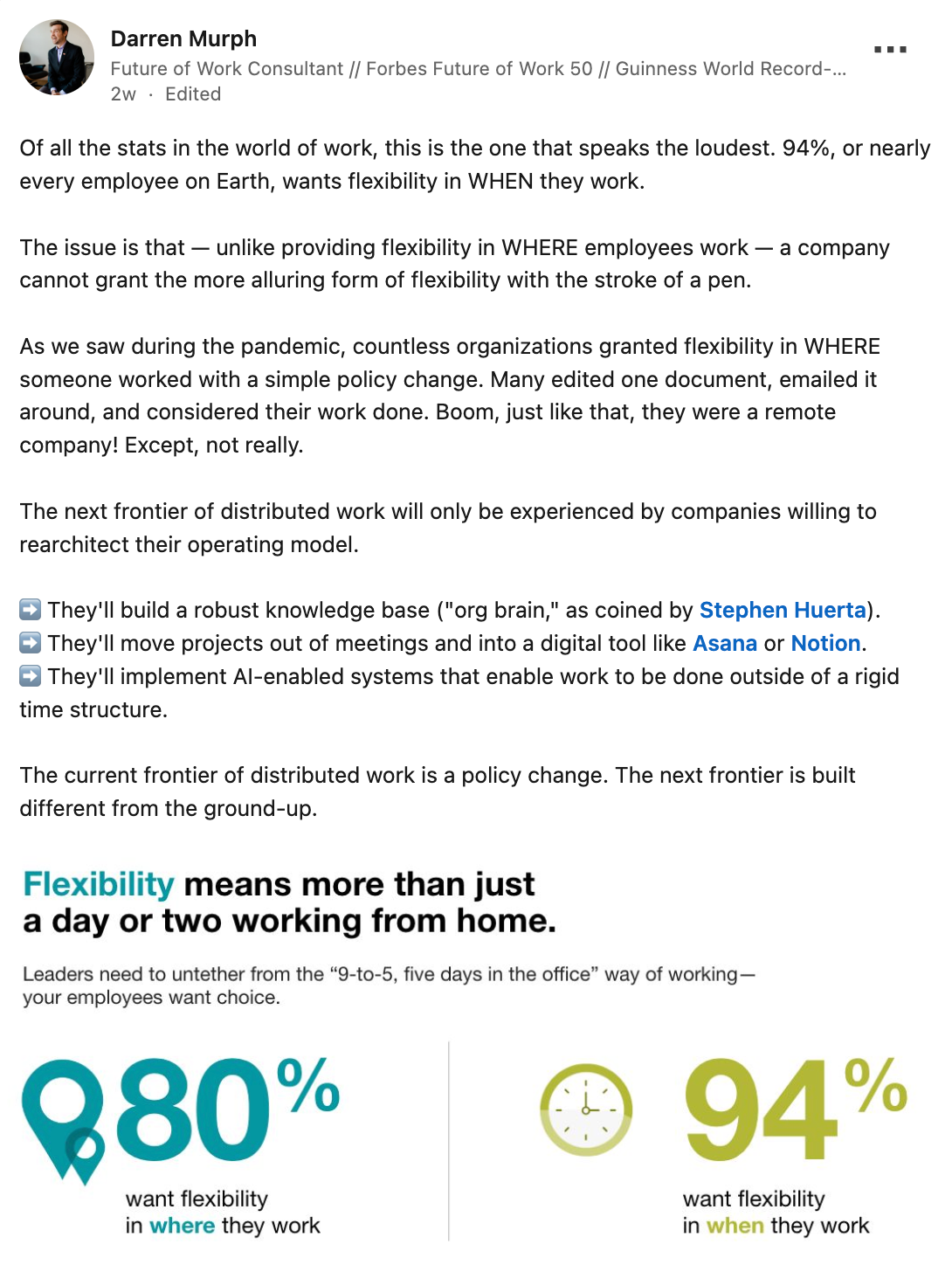
Time flexibility is harder to operationalize than location flexibility. Many organizations shifted to remote work during the pandemic by updating policies without the infrastructure for asynchronous collaboration. Traditional in-person interviews also struggle to gauge how a candidate works independently or collaborates virtually.
HackerEarth's remote hiring platform supports this with coding assessments, secure proctoring, and live interviews to evaluate technical and collaborative skills. Virtual hackathons can simulate real-world problem-solving for distributed teams. Amazon is among the enterprise customers that use HackerEarth for technical assessment at scale.
5. AI interview agents in technical hiring
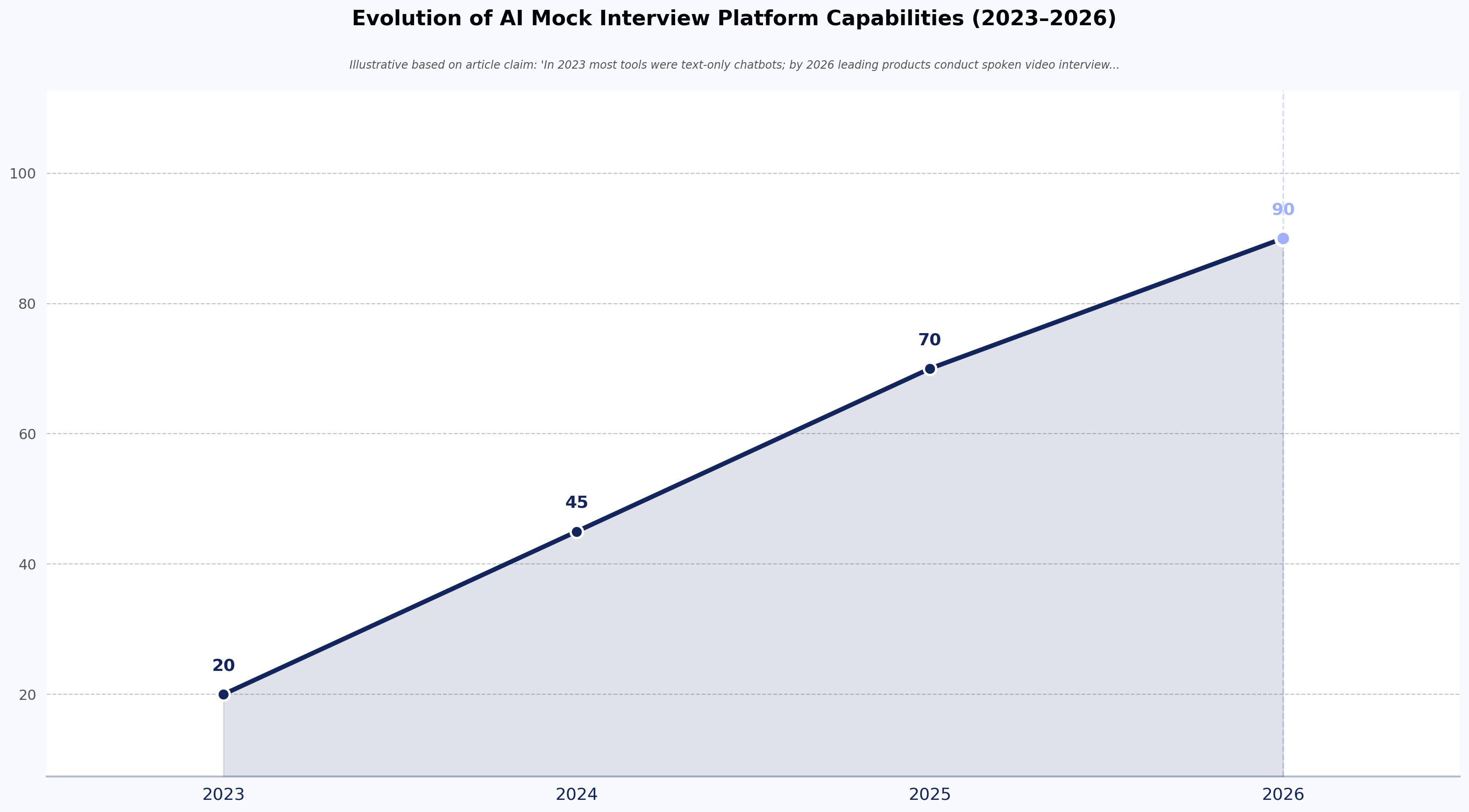
AI interview agents conduct structured technical conversations with candidates — asking follow-up questions, probing reasoning, and producing a summary for human review. Unlike scripted chatbots, the goal is genuine two-way conversation that adapts to candidate responses.
This is different from the recruitment chatbots used for top-of-funnel candidate engagement, like General Motors' Ev-e, which reduced interview scheduling time from 5-7 days to 29 minutes. Chatbots handle scheduling and FAQs; AI interview agents handle technical evaluation.
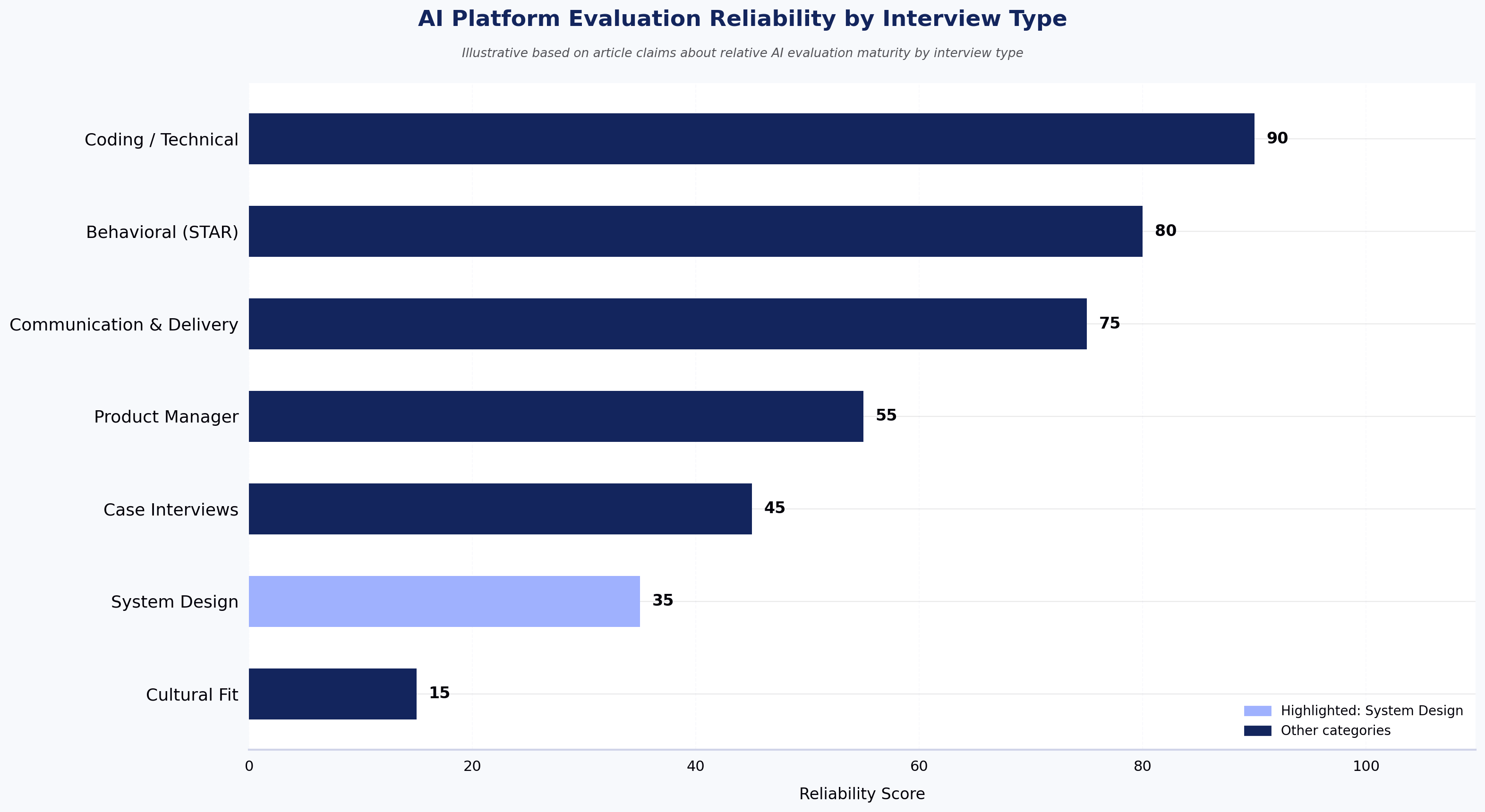
Limits worth naming: AI interview agents work well for structured technical screens but are less suited for evaluating leadership presence, ambiguous design problems, or culture fit. They are a layer in the funnel, not the entire funnel.
HackerEarth offers a suite of AI agents for technical hiring:
- AI Interview Agent: Conducts technical interviews across 40+ programming languages, assessing problem-solving methodology and code quality.
- AI Practice Agent: Lets developers practice with real interview scenarios, building a larger pool of interview-ready candidates.
- FaceCode Agent: Acts as an AI assistant during live technical interviews, helping interviewers run more consistent evaluations.
These agents apply a consistent rubric across candidates, so evaluation doesn't vary by interviewer mood or fatigue. They are trained on assessment data, scored against a defined rubric, and reviewed by a human recruiter before any hiring decision.
6. Data-driven recruitment decisions
Data-driven recruitment uses metrics from sourcing, screening, and interviewing to identify what predicts a successful hire. Research from Aptitude Research (Madeline Laurano, Talent Acquisition Technology Buyer's Guide) found that organizations with data-driven hiring practices report stronger talent outcomes than those without — though the gains depend on data quality and recruiter adoption.
For example, RootQuotient faced rapid growth and needed to hire a high volume of candidates quickly. Resume-level filtering worked for smaller drives, but assessing 2,000 to 3,000 candidates required an automated approach to keep screening fair and competitive.
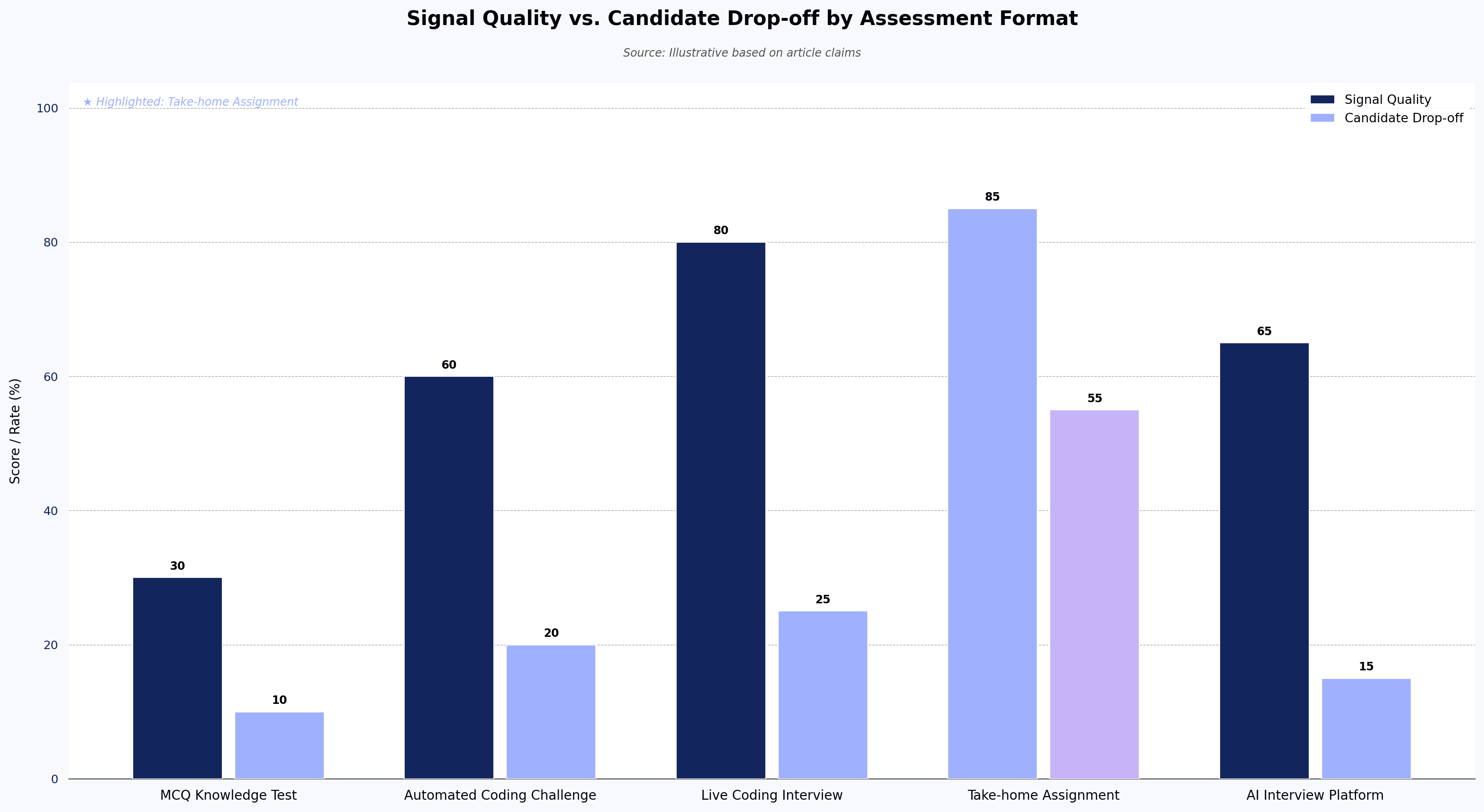
HackerEarth's platform supported their campus hiring with two-step assessments (MCQs followed by coding challenges), proctoring features (candidate screenshots, question shuffling, disabled copy-paste), a health score for question quality, and Codeplayer to replay candidate coding approaches step by step. Centralized support reduced technical-staff dependency from 5 people to 1.
Over one year, RootQuotient onboarded 25 technical team members and several interns. Each campus drive began with a screening test that advanced the top 72% of candidates to coding challenges. The process cut time-to-hire from 5 days to 2 or 3 days. HackerEarth's technical screening analytics let the team spot top performers and track question and test effectiveness.
7. Diversity, equity, and inclusion in hiring
DEI-focused hiring practices aim to broaden candidate pools and reduce bias in screening. A McKinsey study found companies with diverse leadership teams are 9% more likely to outperform peers, though correlation is not causation, and DEI programs need consistent execution to move outcomes.
Practical steps recruiters can take include:
- Writing gender-neutral job descriptions so candidates are evaluated on skills and experience.
- Masking personally identifiable information during early screening to reduce unconscious bias on resumes.
- Auditing interview panels and scoring rubrics to surface where bias enters the process.
HackerEarth supports anonymized screening through its Personal Identifiable Information (PII) masking feature, which presents candidates as gender-neutral aliases and removes details like age, religion, and educational background from the early review stage. For more on DEI hiring practices, see our piece on embracing DEI in tech hiring.
8. Employee value proposition (EVP) as a recruiting lever
An employee value proposition (EVP) is the bundle of culture, growth opportunities, work-life balance, and benefits a company offers in exchange for an employee's contribution. A clear EVP is one of the most reliable signals of whether a company will attract candidates who stay.
According to Gartner's research on EVP, only 31% of employees say their organization offers a unique experience, even when employers invest in perks like pet-friendly offices or game rooms. The gap is usually between stated benefits and felt experience. Employees who report positive emotional connection are 65% more likely to be satisfied with their EVP.
Caveat: EVP alone won't fix a broken hiring funnel. If interview experience is slow or screening is opaque, candidates will form impressions from those interactions long before they read the careers page.
Recruiters can use a coding assessment platform to align hiring signals with the skills and ways of working the EVP advertises — so what candidates experience in the funnel matches what they're promised once hired.
9. Upskilling and internal mobility
Upskilling and internal mobility programs move existing employees into open roles by closing specific skill gaps. As skills-based hiring grows in 2026, internal mobility becomes a recruiter's leverage: instead of opening every requisition externally, recruiters can partner with L&D to fill from within.
Practical components of an internal mobility program include:
- Skills inventories: Track current employee capabilities against role requirements so recruiters can identify internal candidates before posting externally.
- Internal talent marketplaces: Tools like Gloat or Eightfold let employees see open roles and gig assignments matched to their skills.
- Targeted learning paths: Sponsored courses on platforms such as Coursera, Udemy Business, or Pluralsight tied to specific role progressions.
A common failure mode: companies announce internal mobility but reward managers for retention within team, not movement across the company. Without aligned incentives, the program stalls. Recruiters can help by reporting on internal-fill rate alongside external time-to-hire.
10. AI for bias reduction in hiring
AI for bias reduction uses algorithms to apply consistent evaluation criteria across candidates, surfacing patterns a human reviewer might miss. AI does not produce a bias-free process — it produces a different bias profile than human review, which is why audits matter.
Responsible practices include:
- Auditing algorithms regularly to detect skewed outcomes by demographic group.
- Training on diverse datasets that reflect a wide range of backgrounds.
- Maintaining transparency about where AI is used in the funnel so candidates can ask questions.
HackerEarth uses tools like FaceCode to structure technical interviews with a rubric-applied evaluation that doesn't vary by interviewer mood or fatigue. Combined with PII masking earlier in the funnel, the goal is more consistent evaluation across candidates than human-led screens alone — not the elimination of bias, which no system can claim.
11. Virtual recruiting beyond the metaverse hype
Virtual recruiting — online job fairs, remote interview platforms, virtual onboarding — is now standard practice. The broader metaverse-based recruiting that drew attention in 2021–2022 has largely not materialized as a mainstream channel; most enterprise hiring teams found the ROI did not justify the headset and platform investment.
What has stuck is more practical: virtual job fairs, asynchronous video introductions, and online hackathons. These are not "metaverse" experiences, but they are virtual-first and serve the same goal of reaching distributed talent.
For example, HackerEarth hosts online hackathons that let participants collaborate and compete in a shared virtual setting. In 2025, the "AI Agents Summit 2025 - HackAIthon" attracted over 1,400 participants building AI agents — a virtual recruiting and community event, but not a metaverse one.
Preparing for 2026: the future of recruitment
Hiring trends in 2026 will be shaped by a combination of technology, employee-focused strategies, and data-driven decision-making. Recruiters who adopt AI assessments thoughtfully, virtual hiring practices, upskilling programs, and a clear EVP can attract and retain talent more effectively — though no single trend is a silver bullet, and what works for enterprise hiring may not fit a 10-person startup.
Key takeaways from the 11 recruiting trends:
- AI in recruiting can reduce throughput friction and apply consistent rubrics, but requires candidate transparency and ongoing bias audits.
- Virtual recruiting reaches global talent without the metaverse overhead that didn't pan out.
- Upskilling and internal mobility close skill gaps faster than external hiring, when manager incentives align.
- A clear EVP creates loyalty when the candidate experience matches what's advertised.
Next steps: see HackerEarth in action
HackerEarth provides AI-supported assessments and virtual interview tools that help recruiters screen technical candidates more consistently. Schedule a demo to see how the platform fits your 2026 hiring workflow.
FAQs
How can recruiters reduce bias in hiring with AI?
Reduce bias by combining PII masking, rubric-based scoring, and regular algorithmic audits — AI alone won't eliminate bias, but it can apply criteria more consistently than ad-hoc human review. Pair AI screening with diverse interview panels for the strongest effect.
What is skills-based hiring in 2026?
Skills-based hiring in 2026 evaluates candidates on demonstrated abilities through work samples, coding tests, and role simulations rather than degrees. It expands talent pools but requires validated assessments to avoid introducing new forms of bias.
When does an AI interview agent fail to fit the hiring funnel?
AI interview agents struggle with ambiguous design problems, leadership presence, and culture fit — they work best as a structured technical screening layer, not as a replacement for senior human interviews late in the funnel.
How are recruiters measuring the ROI of recruiting trends in 2026?
Most teams track time-to-hire, quality-of-hire at 6 months, internal-fill rate, and candidate experience scores. Trends that don't move at least one of these metrics within two quarters are usually deprioritized regardless of industry hype.
Is metaverse recruiting still a real trend?
Metaverse recruiting has largely not delivered on its 2022 hype. What remains useful is virtual-first recruiting — online job fairs, video interviews, and online hackathons — which serve similar goals without the headset overhead.