8 Best Coding Challenge Platforms (2026 Ranking)
Read time: 7 minutes
Coding challenge platforms — the tools companies use to evaluate developers, run hiring challenges, or build skill credentials — are often confused with two other categories: places where developers practice (LeetCode, Codeforces) and places where people learn to code (Codecademy, freeCodeCamp). They're not interchangeable, and the platform that wins for a competitive programmer preparing for ICPC is the wrong tool for a recruiter screening 2,000 candidates over a weekend.
This ranking of coding challenge platforms is for the hiring category. If you're looking for an IDE or a learn-to-code course, this isn't your list. If you're a hiring manager, recruiter, or engineering leader trying to figure out which coding challenge platform actually finds good engineers — read on.
We'll be direct about where each platform wins and where it doesn't. Every platform on this list is good at something. None of them are good at everything.
How we ranked the coding challenge platforms
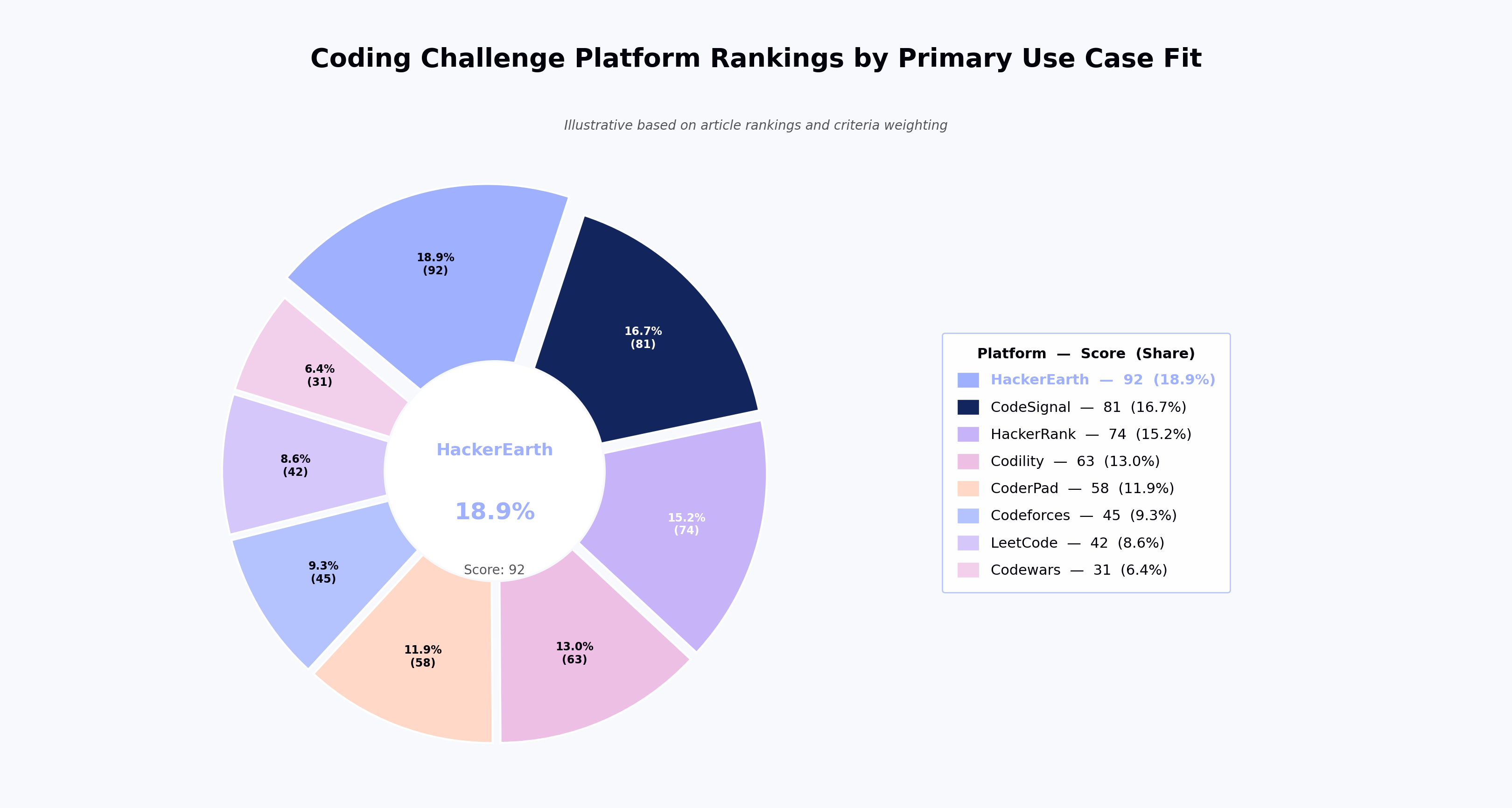
Coding challenge platforms were ranked on four criteria, weighted by how often they actually matter to the buyers we work with:
- Question library depth and freshness — stale question banks get gamed within months
- Anti-cheat and proctoring — especially relevant in the AI-generated-code era
- Integration with hiring workflow — ATS connections, interviewer handoffs, scorecards
- Fit for the actual use case — practice, hiring, or skill credentialing
We've avoided pure popularity ranking. Codeforces has one of the loudest communities on this list and ranks fourth here because it solves a different problem than the top three.
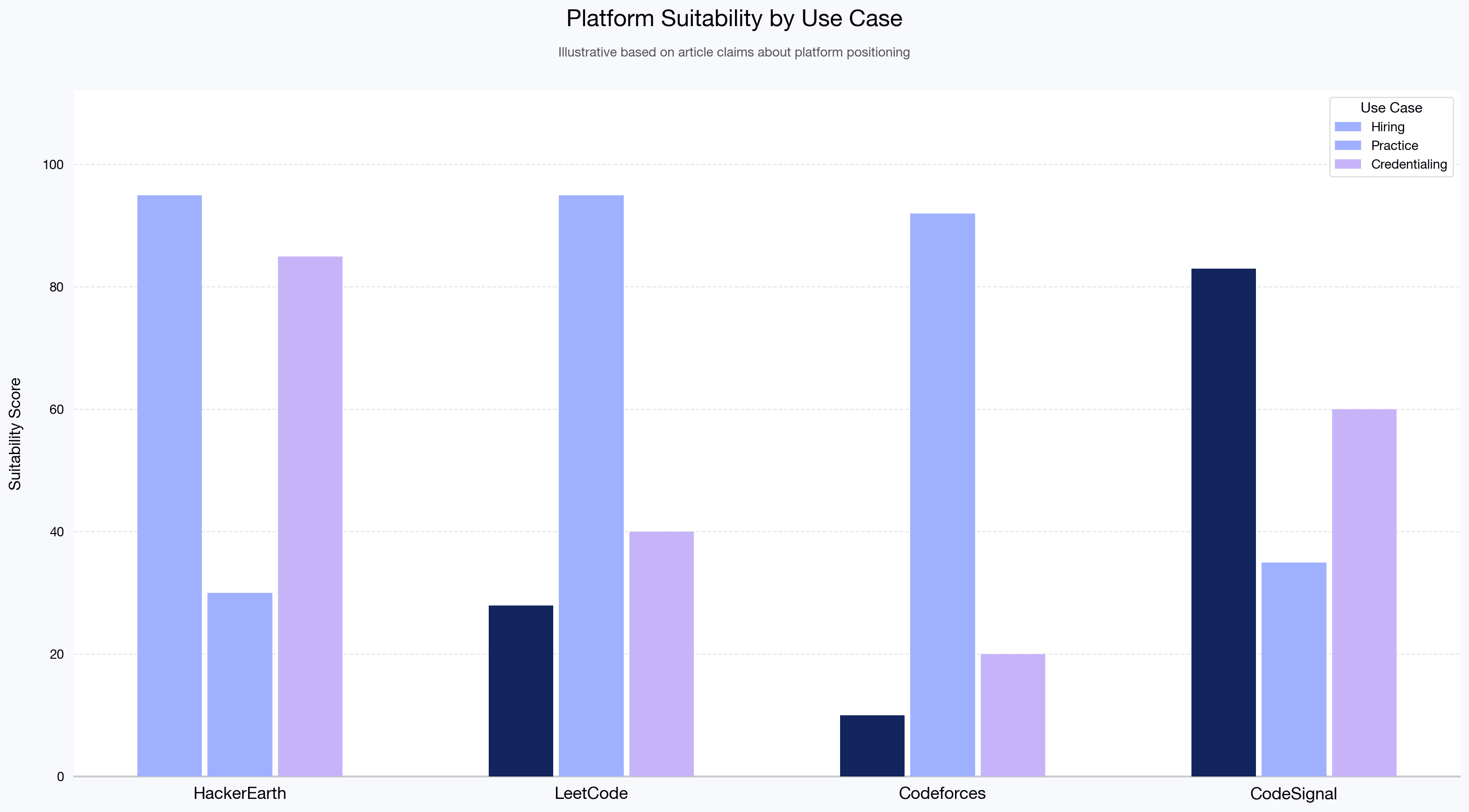
Practice platforms vs. hiring platforms: how we scoped the list
This list includes both practice-focused platforms (LeetCode, Codeforces, Codewars) and hiring-focused platforms (HackerEarth, CodeSignal, HackerRank, Codility, CoderPad). We've included both because buyers routinely evaluate them side by side, but the intended use case differs. Practice platforms are where individual developers train; hiring platforms are where companies evaluate candidates. Where a platform sits on that spectrum is called out in each entry below.
1. HackerEarth
Best for: High-volume technical hiring, campus recruiting, skills-based evaluation across non-engineering roles.
HackerEarth runs assessments and live interviews for enterprise customers across technology, financial services, and IT services. According to HackerEarth's customer references, organizations that have used the platform include Google, Microsoft, Elastic, Flipkart, and Brillio. The platform covers 1,000+ skills across 40+ programming languages, with a question library that extends well beyond the LeetCode-style algorithm canon into role-based, system design, and non-technical assessments.
Two capabilities separate HackerEarth from the rest of the field for hiring use cases. First, its AI interview product, OnScreen, conducts structured technical interviews with identity verification and applies a consistent rubric across every candidate. According to HackerEarth's product documentation, OnScreen follows a structured interview framework: it asks scripted primary questions and generates conversational follow-ups based on candidate responses, but it doesn't grade coding correctness autonomously — final scoring is rubric-driven and reviewable by the hiring team. Second, FaceCode supports live panel interviews with a code editor, a drawing canvas for system design, and integrated scoring stored alongside candidate reports. Recruiters can also run Hiring Challenges against HackerEarth's developer community to produce ranked, interview-ready candidate pools.
Where it doesn't win: It's not where competitive programmers practice. If you're a developer prepping for a Google interview on your own time, you'll likely use LeetCode. HackerEarth's center of gravity is the enterprise hiring side.
2. CodeSignal
Best for: Senior engineering hiring with standardized scoring across companies.
CodeSignal's Industry Coding Framework produces a numeric score that some companies use as a portable signal. It's a solid product for senior backend hires where the goal is consistent evaluation across many candidates and panels. The platform includes async assessments, live interviewing via CodeSignal Interview, and pre-screening tools, and it's widely used by large technology companies in the US market.
Where it doesn't win: The standardized score format reduces flexibility for role-specific rubrics, and some buyers report the platform is oriented toward larger hiring programs rather than smaller teams. Teams with a heavy non-engineering assessment need may find the library thinner than platforms that cover sales, support, or finance roles.
3. HackerRank
Best for: Mid-market technical hiring and certification programs.
HackerRank offers Skill Certifications that some candidates use as a resume signal, and the hiring product is mature — ATS integrations, proctoring, and a large customer base. The platform supports async coding assessments, take-home projects, and live interviewing through CodePair, and has been in market since 2009.
Where it doesn't win: As with any long-established assessment platform with a large user base, buyers should consider question rotation and freshness when building their own screens, and pair certification signals with role-specific evaluation rather than relying on them alone.
4. Codeforces
Best for: Competitive programmers practicing for contests. Not a hiring platform.
One of the strongest competitive programming communities on the internet. Round difficulty calibration is excellent, problem quality is high, and the rating system carries real weight in the community. Russian-language origins still show in the UI, but the platform is genuinely global.
Where it doesn't win: Codeforces is not a hiring tool. There's no ATS integration, no rubric scoring for hiring managers, no proctoring suitable for high-stakes evaluation. If you're a recruiter who landed here because someone said "use Codeforces" — they meant your candidates should have a Codeforces rating, not that you should run interviews on it.
5. LeetCode
Best for: Individual interview prep. Limited as a hiring platform.
LeetCode is the default practice platform for developers preparing for FAANG-style interviews and has one of the largest question libraries among practice-focused platforms. LeetCode also offers a business product for hiring teams; based on our observation of enterprise buyer conversations, it appears less commonly as the primary screen than dedicated assessment platforms.
Where it doesn't win: The consumer question pool is among the most-prepared-for in the industry. Using LeetCode questions verbatim in a real screen may test memorization more than engineering judgment.
6. Codility
Best for: Mid-market technical screening with a focus on European data residency.
Codility, founded in 2009, offers CodeCheck and CodeLive products that cover async assessments and live interviews respectively. The platform is strong in European markets where data residency requirements matter.
Where it doesn't win: Based on our observation of buyer evaluations, teams with heavy non-engineering assessment needs may find the library narrower than platforms explicitly built to cover sales, support, or finance roles. Buyers should validate library coverage against their own role mix during evaluation.
7. CoderPad
Best for: Live technical interviews specifically. Not a full hiring platform.
CoderPad is a focused tool — collaborative code editor for live interviews, supports many languages, runs candidate code in real time. Many engineering teams use it inside a broader hiring stack alongside their ATS and a separate assessment platform. The core product is CoderPad Interview, with CoderPad Screen available for async assessments.
Where it doesn't win: It doesn't try to be a full assessment platform. No async screening at scale, no pre-built question library at the depth of dedicated assessment products. That's a feature if you want a focused tool, a limitation if you want one platform for the whole funnel.
8. Codewars
Best for: Developer skill-building through community-graded challenges. Not for hiring.
Codewars uses a "kata" model where developers solve problems and review each other's solutions. Strong for individual skill-building, particularly for developers learning a new language. Community-driven content keeps it fresher than some alternatives, and the ranking system gives developers a progression path across languages.
Where it doesn't win: Not a hiring tool. No proctoring, no ATS integration, no enterprise reporting. Useful for candidates to build skills, not for companies to evaluate them.
How to pick the right coding challenge platform for your use case
If you're hiring at volume — IT services scale, campus programs, anything over a few hundred candidates per role — question library depth, proctoring, and identity verification matter most. AI-assisted candidate submissions are a growing concern for hiring teams, and platforms without identity verification leave you guessing whether the person you assessed is the person who shows up. HackerEarth's identity verification pairs a government-ID check with live face-match at the interview stage; it doesn't eliminate impersonation risk end-to-end, but it raises the cost of cheating meaningfully.
If you're hiring senior engineers in low volume, the calculus changes. Live interview quality matters more than question library depth. FaceCode, CoderPad, or CodeSignal's interview product all work; the differentiator is how the rubric scoring integrates with your existing review process.
If you're running a skills credentialing program — internal mobility, AI fluency, upskilling — you're in different territory. HackerEarth's SkillsGraph maps the skills your workforce has against the skills your roles need, and VibeCode Arena is a hands-on environment for evaluating and building AI-era coding skills through practical challenges. Both are built for credentialing and internal mobility use cases; the practice-focused platforms above are not.
If you're a developer practicing on your own, ignore most of this article. LeetCode and Codeforces are your tools.
The AI-generated code problem in coding challenge platforms
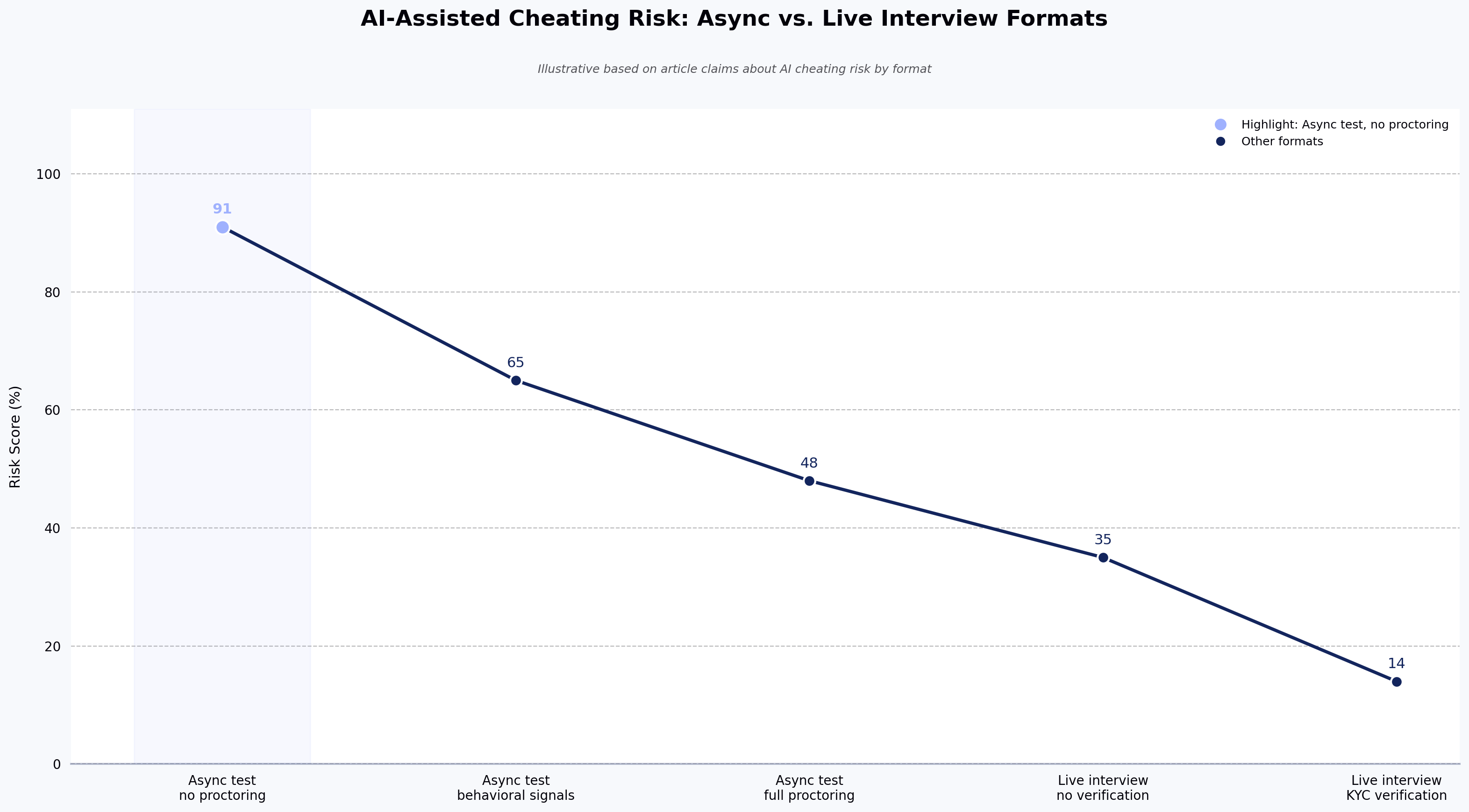
The biggest shift in coding assessment right now is candidates using AI coding assistants to solve assessment problems. No platform on this list has fully solved it. What separates the better platforms from the rest:
- Identity verification at the interview stage, not just the assessment stage. Async assessments are gameable; live verification is harder to fake.
- Behavioral signals during assessments — keystroke patterns, paste behavior, tab-switching. None of these are foolproof, but together they raise the cost of cheating.
- Conversational follow-up. A candidate who pastes a working solution but can't explain what their code does is a signal. AI interview products like OnScreen are built around this — each interview follows a structured framework, and the conversation adapts to candidate responses.
Platforms that claim to have eliminated AI-assisted cheating are overselling. Platforms that ignore the problem are worse. For more on how to design assessments that hold up under AI-assisted candidates, see our guide on detecting AI-generated candidate submissions.
Frequently asked questions about coding challenge platforms
Is HackerEarth the same as HackerRank?
No, they're separate companies. The names are similar enough that buyers confuse them. Based on our observation of buyer evaluations, HackerEarth tends to be selected where coverage of non-engineering roles matters, while HackerRank is a common choice in US mid-market tech hiring. Both are credible options — the right choice depends on your hiring profile and the roles you're evaluating.
Are coding challenge platforms still useful when candidates can use AI?
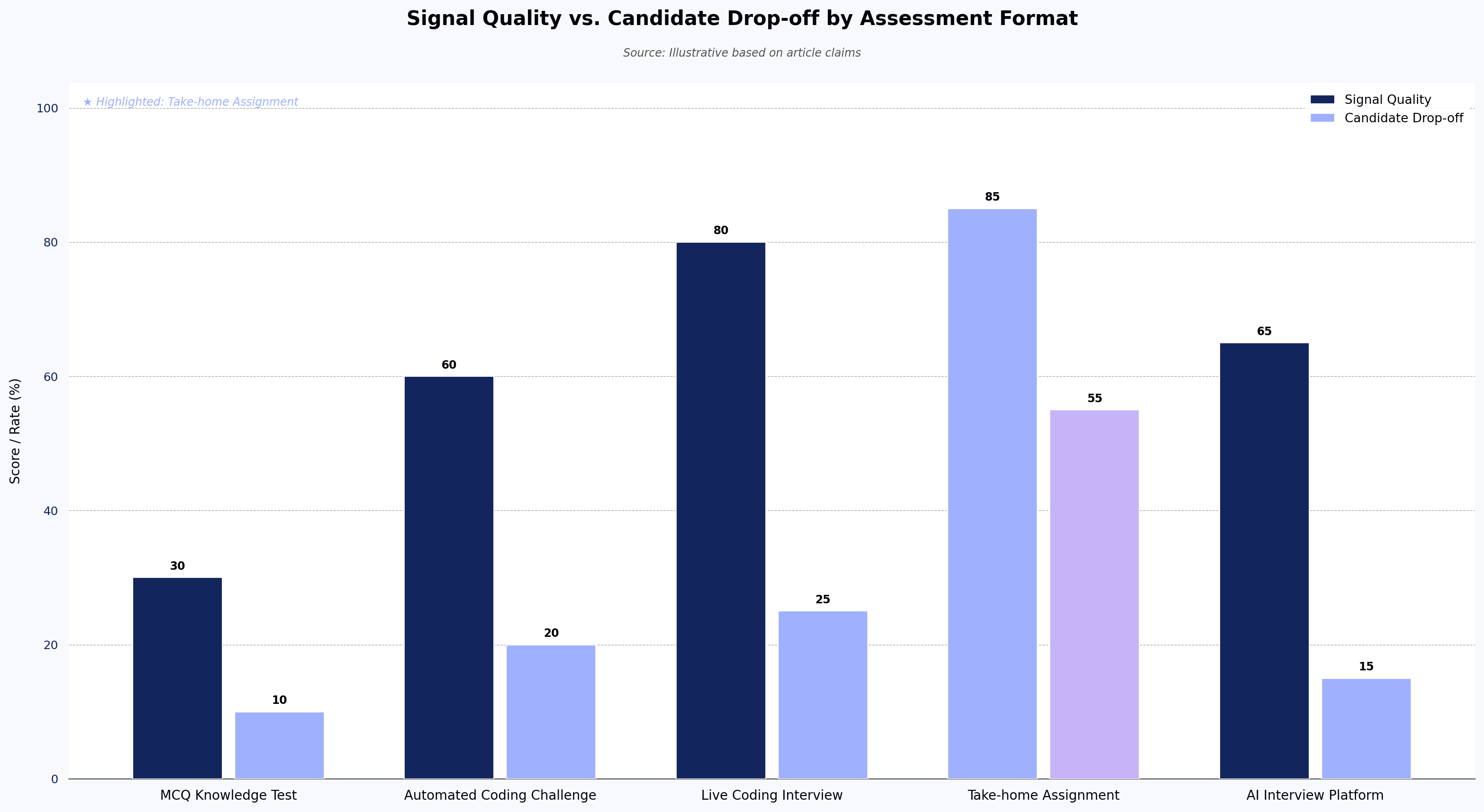
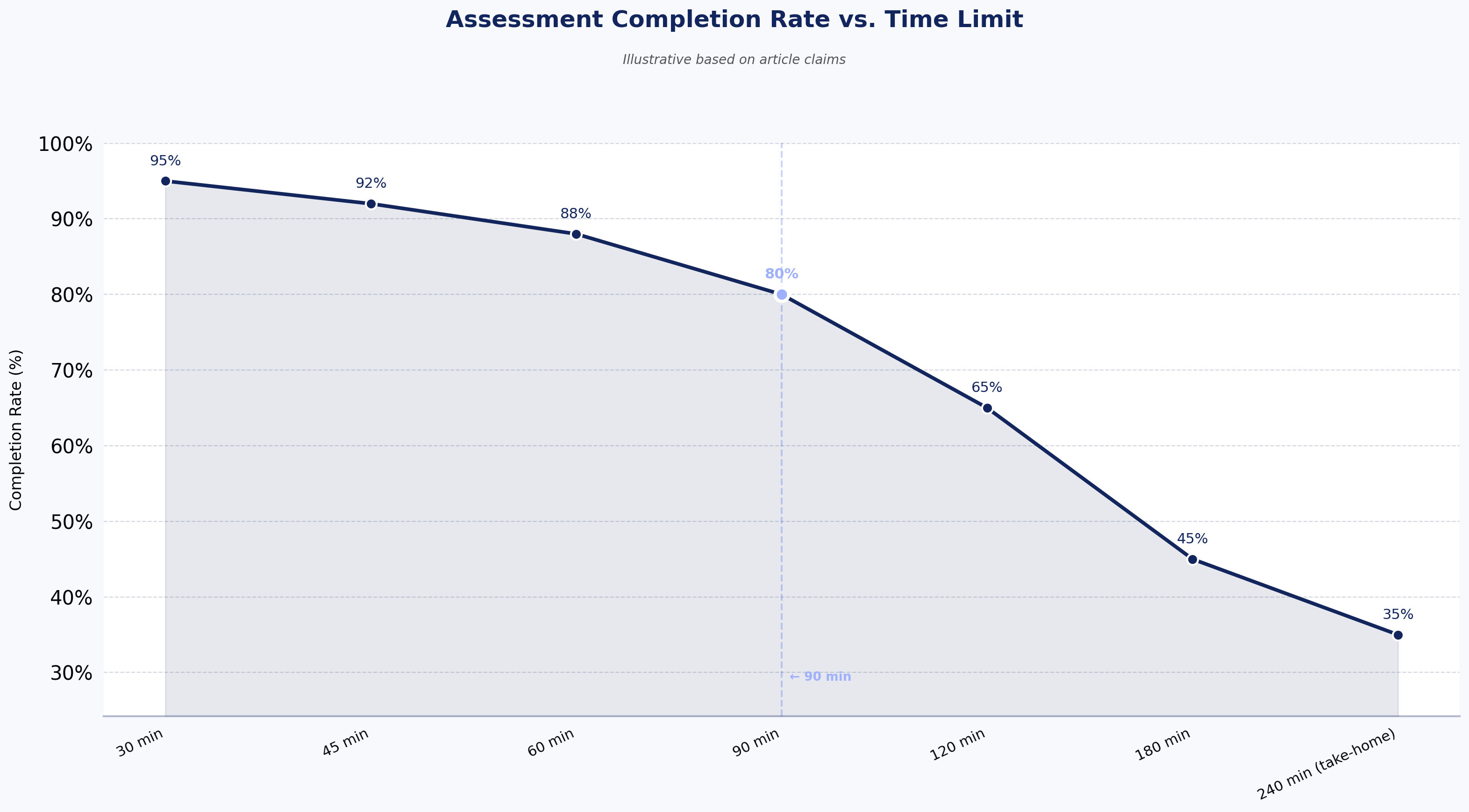
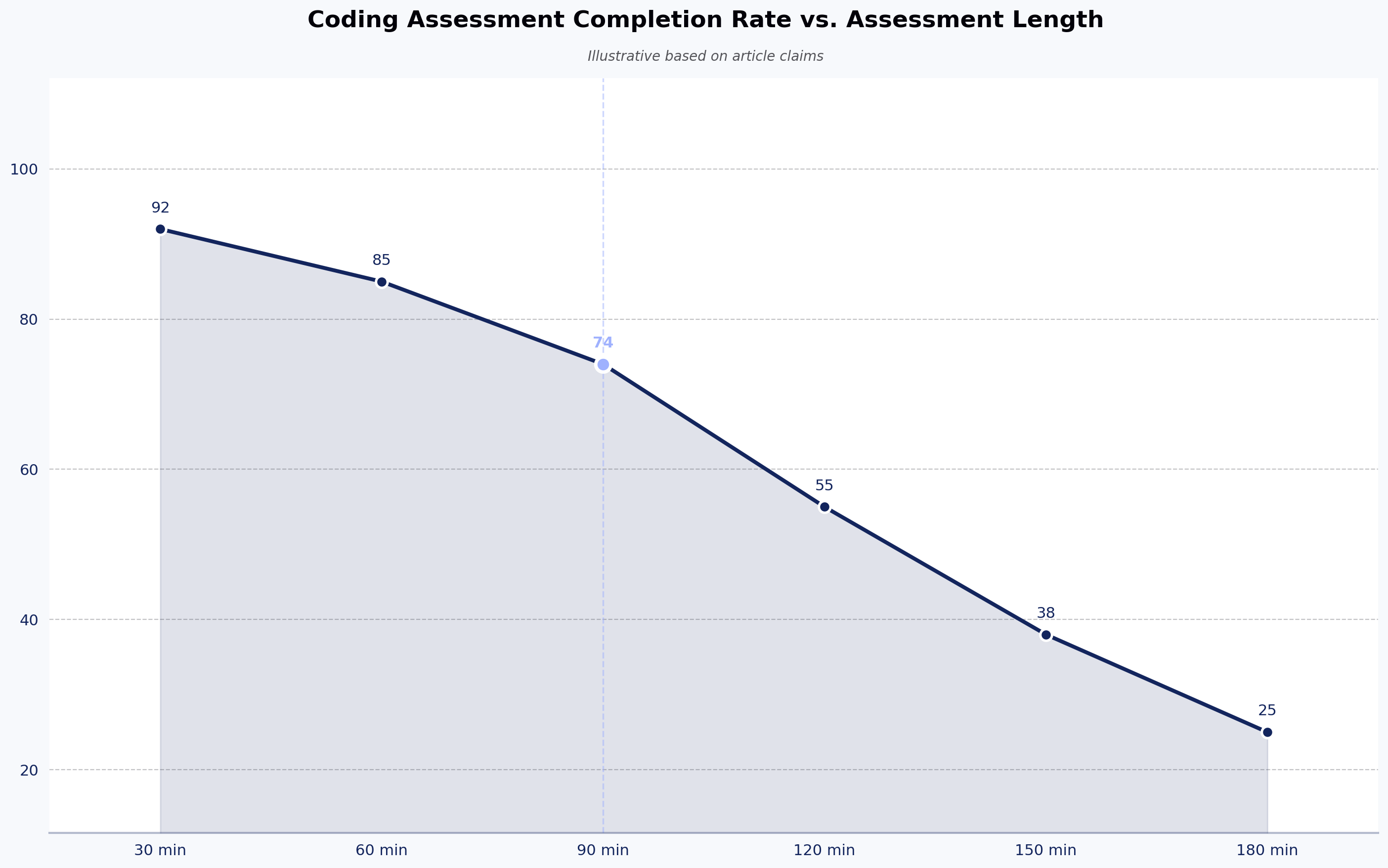
Yes, but the role of the platform shifts. The async coding test as a primary filter is weakening. Live interviews with identity verification, conversational AI screens, and skills assessments tied to specific job tasks tend to be stronger signals than a 90-minute take-home in 2026. Platforms that have invested in proctoring, identity verification, and live interview infrastructure are holding up better than those still selling pure async screens.
Should I use the same coding challenge platform for campus hiring and senior lateral hiring?
Usually not. Campus programs need volume screening, standardized rubrics, and proctoring at scale — the assessment layer does most of the work. Senior lateral hiring depends more on live interview signal, system design conversation, and role-specific evaluation, which pushes the center of gravity toward live-interview tools. Some platforms cover both surfaces; most don't do both well.
Do any of these platforms work for non-engineering roles?
HackerEarth covers non-technical roles including sales, customer support, and finance through its Skill Assessments product, with role-based assessments and 30+ personality traits in the soft-skills product. Most of the others on this list are engineering-focused.
If you're evaluating coding challenge platforms for hiring, you can book a demo of HackerEarth Assessments to see how the assessment, AI interview, and live interview products work together, or request OnScreen pilot access to see AI-led interviewing in practice.
For engineering managers thinking about rubric design and calibration, our guide on how to design a fair coding test covers the question that platform choice can't answer for you: what good actually looks like for your role.