How to use AI for recruiting
How to use AI for recruiting starts with a simple shift: stop using it to rank people, and start using it to remove the work that keeps recruiters from talking to them. For recruiters drowning in high-volume requisitions, AI for recruiting means automating sourcing, screening, scheduling, and candidate communication — while keeping human judgment on the hiring decision itself. According to SHRM's 2024 Talent Trends report, a large majority of hiring leaders now use AI somewhere in their workflow, though the quality and ethics of those deployments vary widely. This guide walks through where AI works, where it fails, and what recruiters should actually do with it.
How to use AI for recruiting: the strategic shift
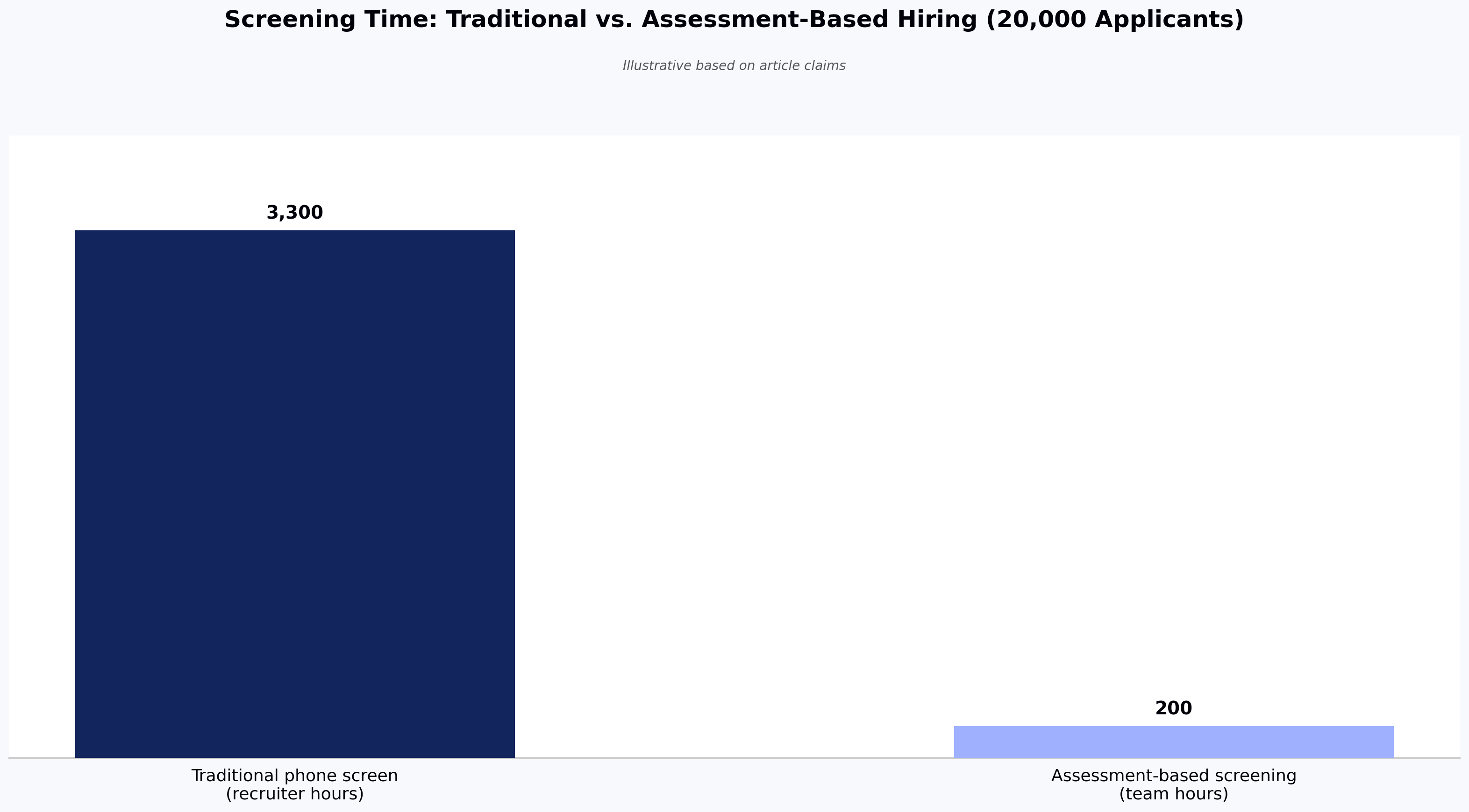
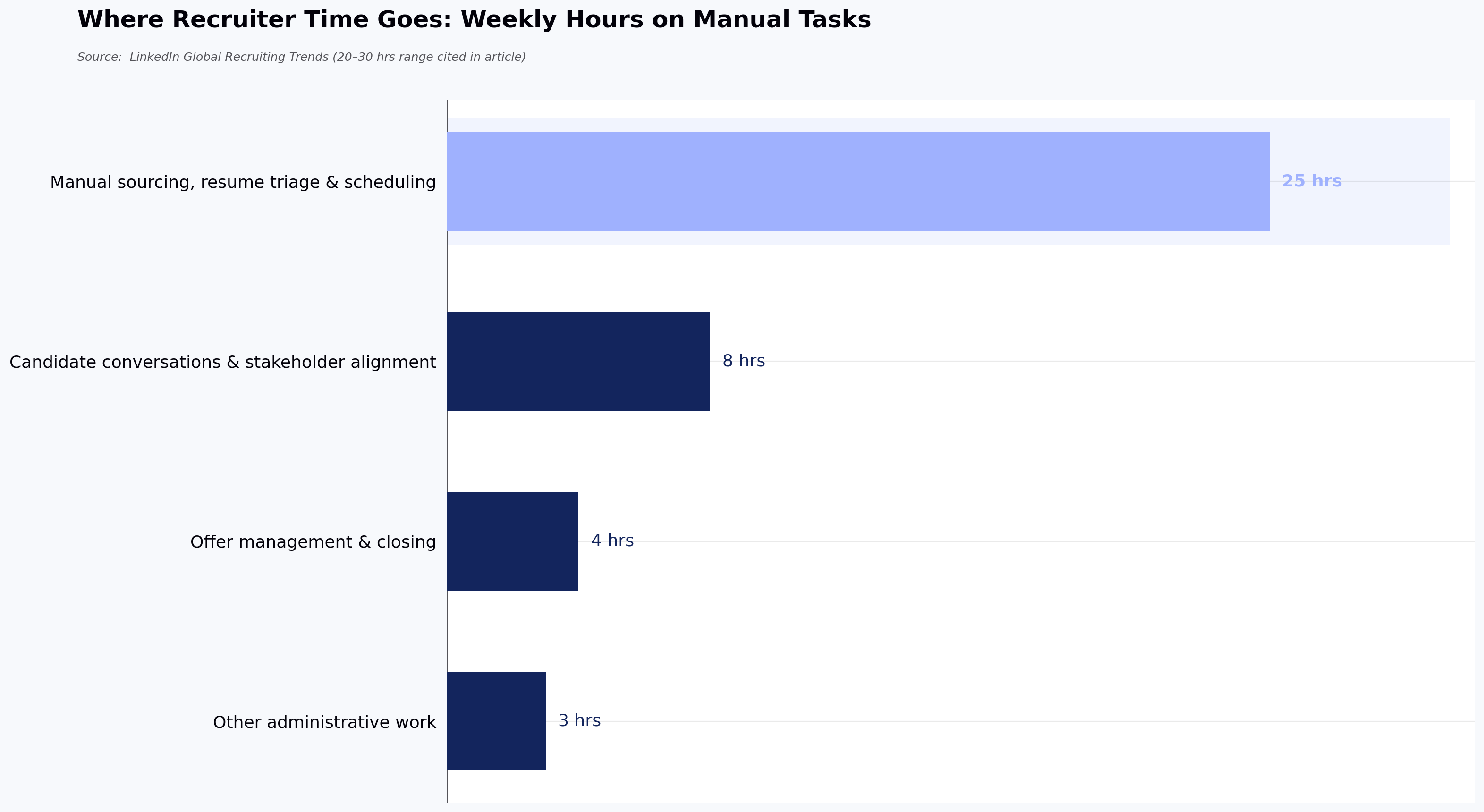
AI in recruiting is best understood as a workload reallocation, not a hiring decision engine. Recruiters have historically spent a large share of their week on manual sourcing, resume triage, and scheduling — LinkedIn's Global Recruiting Trends has reported figures in the range of 20–30 hours weekly on these tasks. Machine learning, natural language processing (NLP), and large language models (LLMs) can absorb most of that load. That frees recruiters for the work AI cannot do: cultural read, stakeholder alignment, and candidate conversations that close offers.
One caveat: efficiency gains are well-documented in certain contexts but not universal. Poorly integrated tools often add work rather than remove it.
Economic and productivity drivers
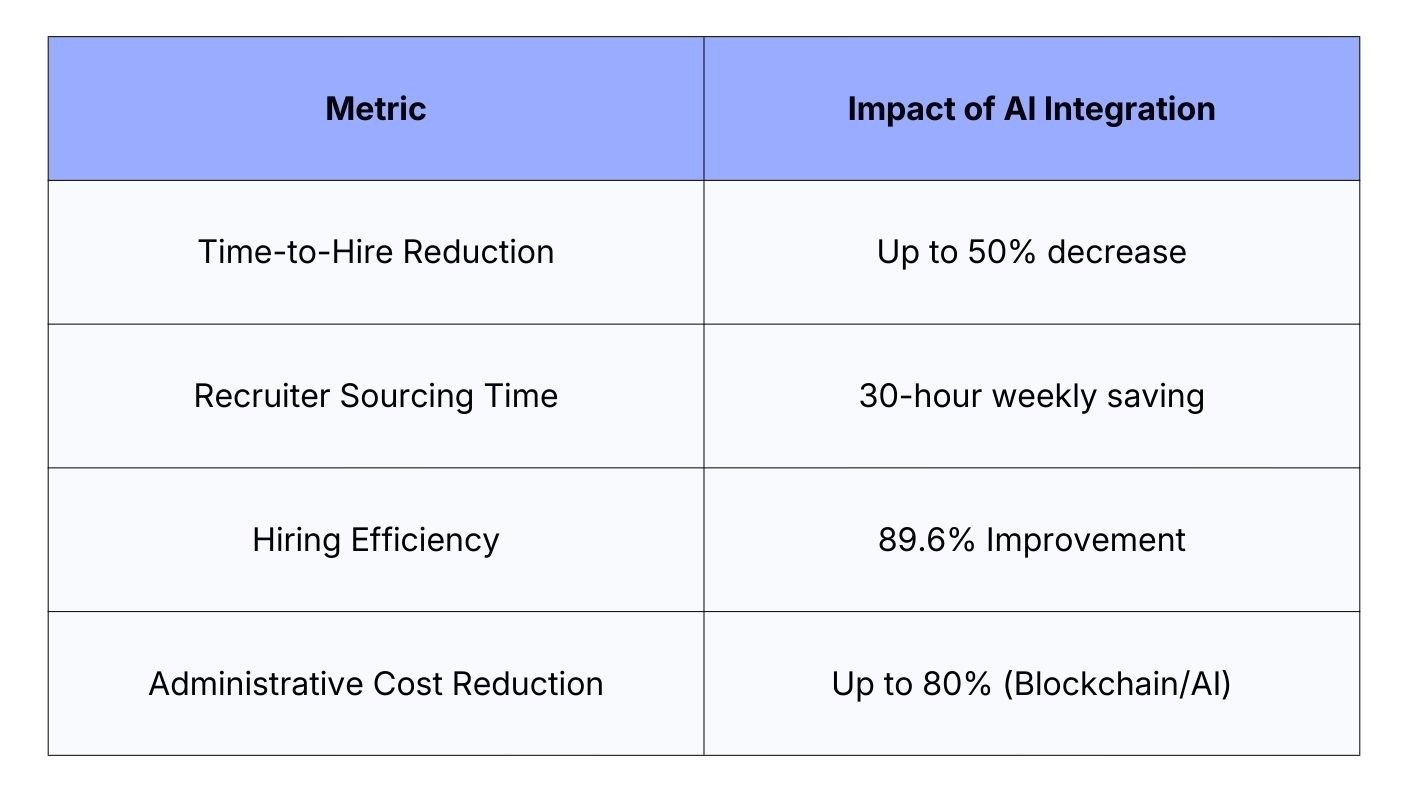
Vendor-reported figures suggest hiring efficiency improvements in the range of 80–90% and time-to-hire reductions approaching 50% in some deployments. These figures come largely from vendor case studies and should be read with that bias in mind. Independent benchmarks are harder to find.
Skill churn is the other half of the case. Research from the World Economic Forum's Future of Jobs Report 2025 suggests skills demanded by employers are shifting substantially faster in AI-exposed roles. Some analysts estimate a candidate's formal training in fast-moving technical fields can lose relevance within 12 to 18 months, which is why skills-based assessment matters more than credentials.
Candidate and manager experience
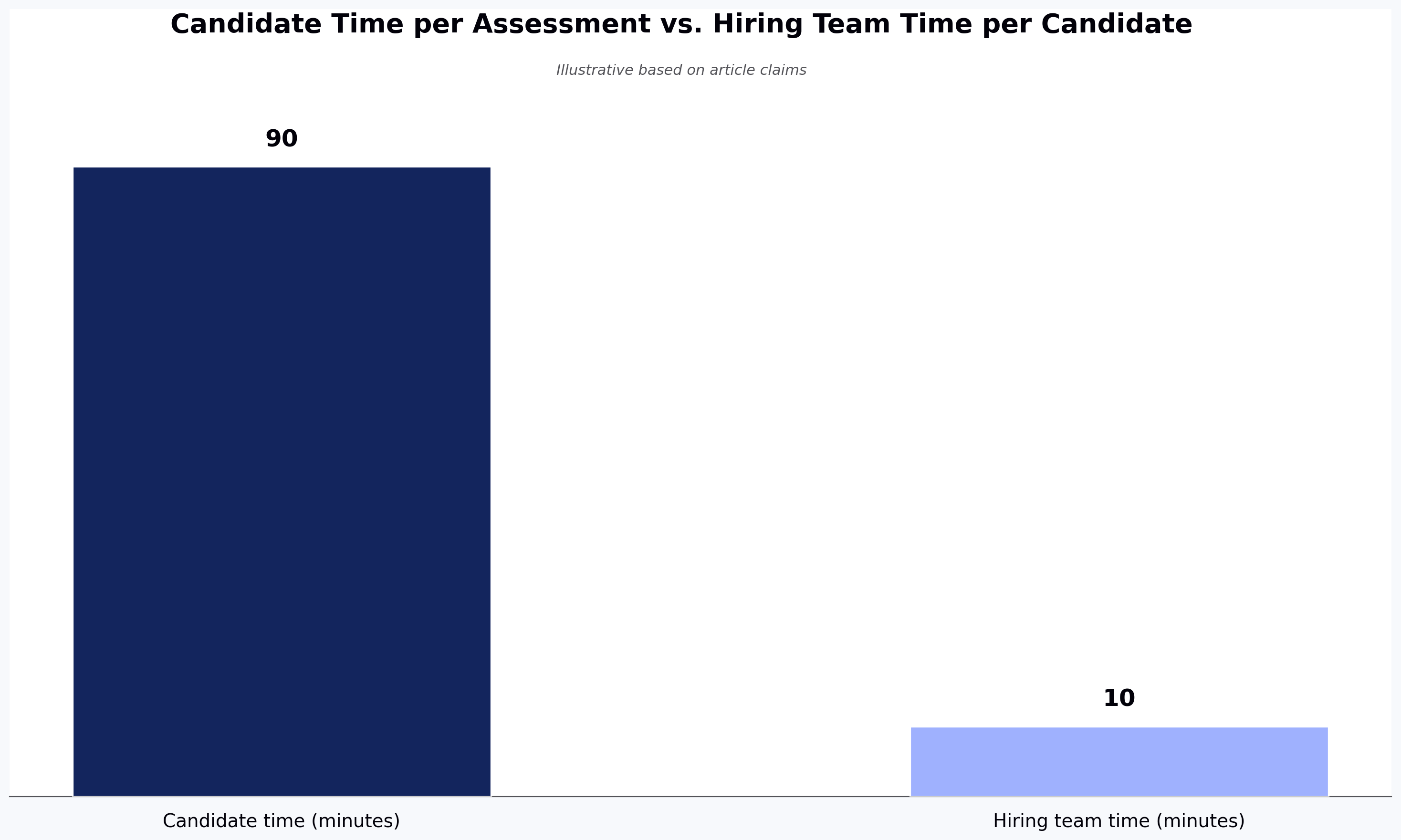
AI personalizes job recommendations and helps internal mobility tools surface adjacent roles for existing employees. For hiring managers — especially senior engineers — automated technical screening reduces the hours lost to early-stage interviews. Surveys from vendors such as Paradox and Phenom report candidate satisfaction rates around 70–75% for chatbot interactions, though these figures come from the vendors themselves and should be hedged accordingly.
A point worth holding: positive UX metrics and bias risk can coexist. A candidate can rate a chatbot interaction highly and still be screened out by a biased model downstream.
Using AI for recruiting: functional applications across the funnel
AI shows up across every stage of hiring — sourcing, screening, assessment, scheduling, and onboarding. The applications below are the ones with the most operational maturity in 2025.
Sourcing and intelligent discovery
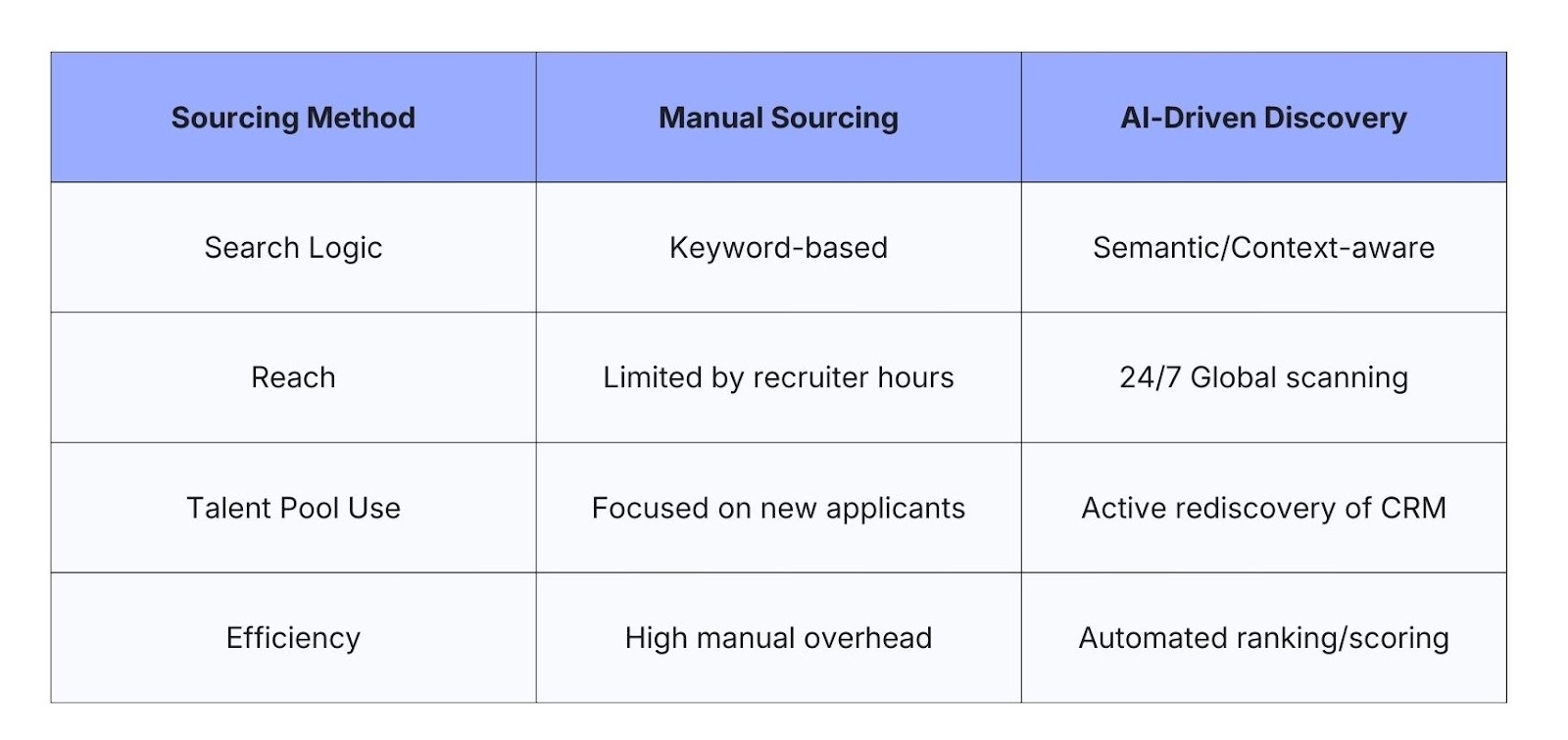
Semantic search reads candidate intent and context instead of matching keywords. AI agents continuously re-scan an organization's ATS to surface "silver medalists" — strong past applicants who fit a new role. This turns a stale database into a working pipeline and reduces the chance that strong candidates go unreviewed (though no system catches everyone).
Automated screening and skill assessment
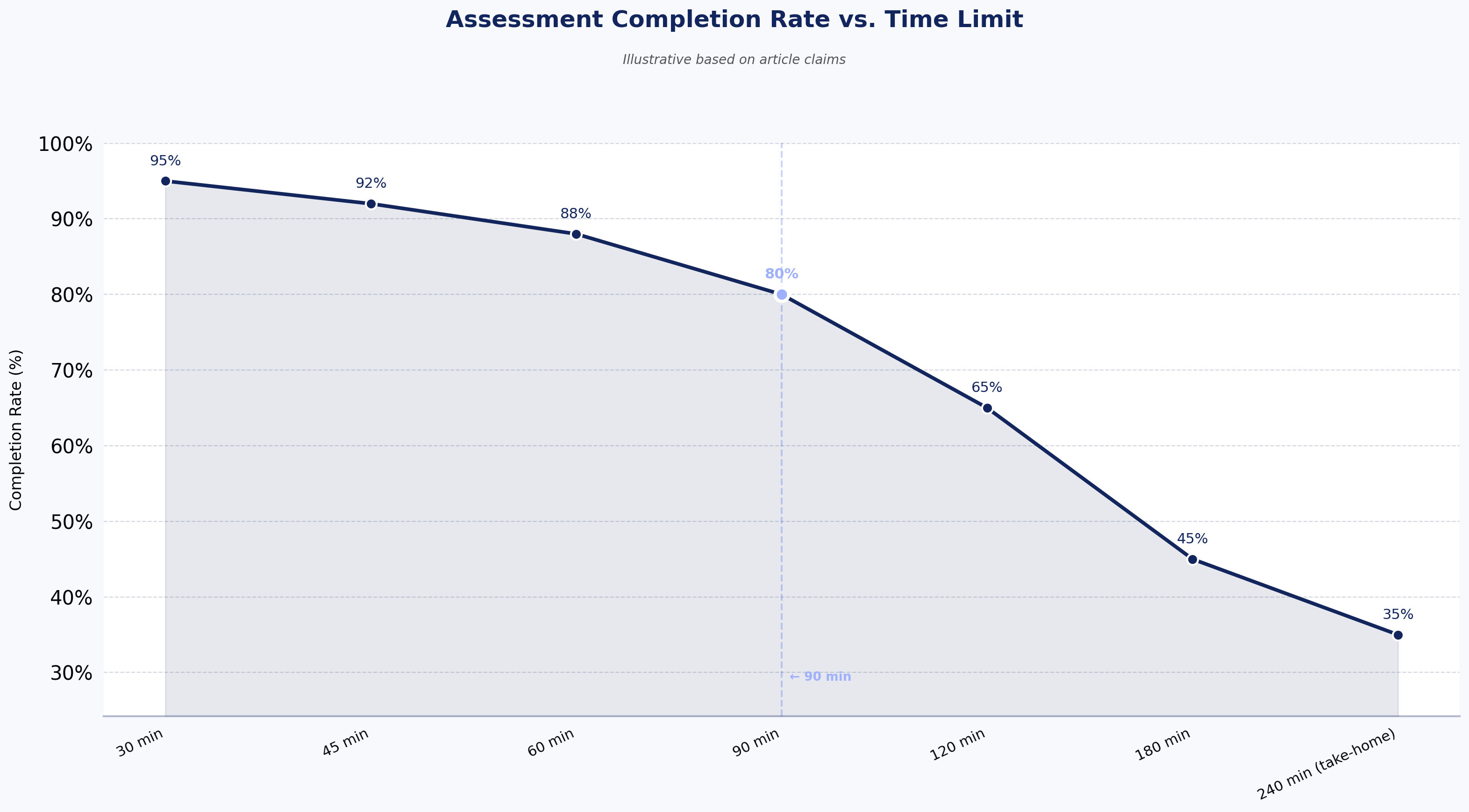
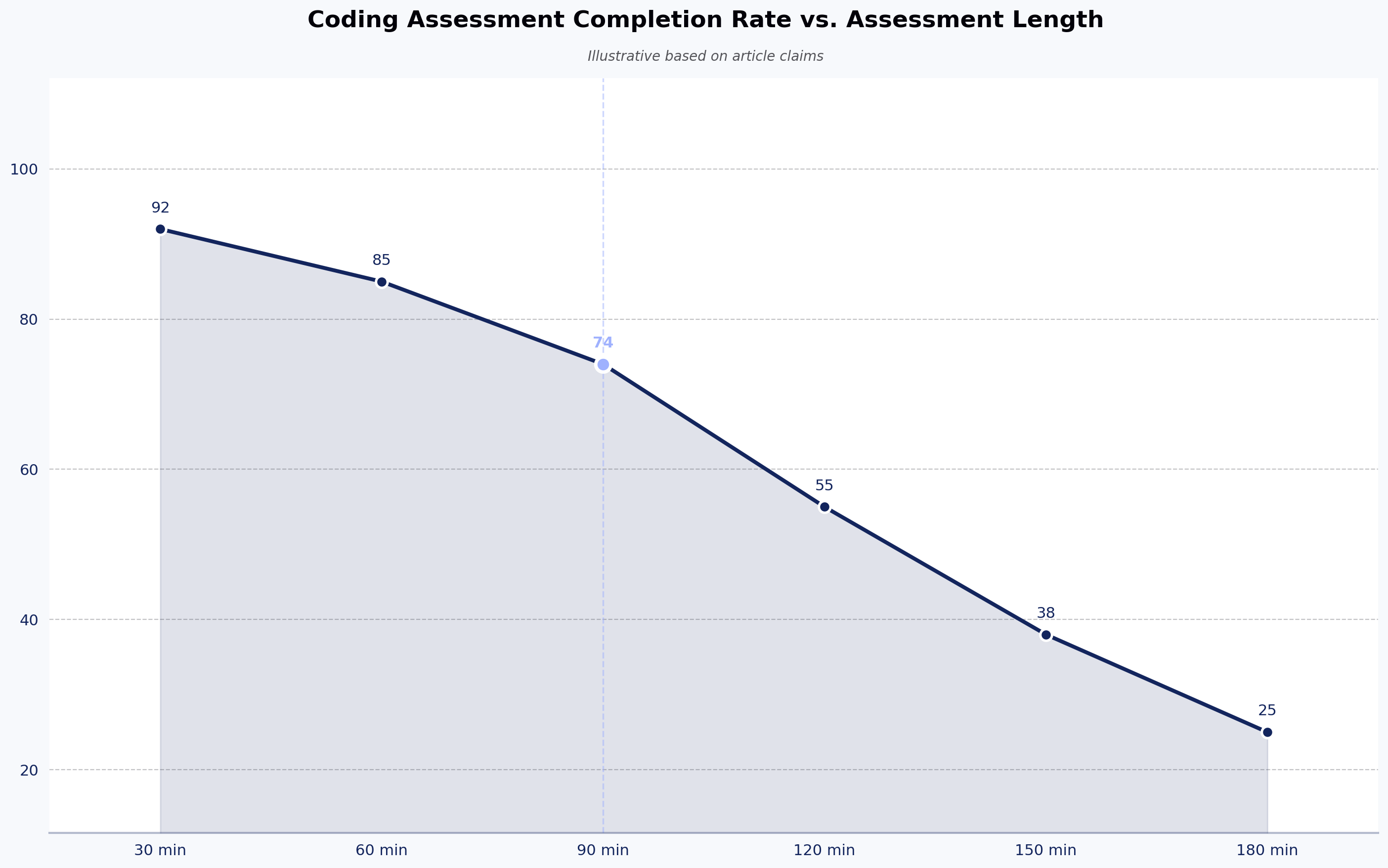
AI screens resumes and cover letters in minutes. The more meaningful shift is the move toward skills-based assessment, where candidates are evaluated on demonstrable work rather than resume language. Platforms like HackerEarth Assessments use intelligence-backed question engines and real-world project simulations to benchmark candidates on code quality, logic, and efficiency.
A hedge worth stating: skills-based assessments are not bias-free. Simulation design, time limits, and rubric weighting can encode the same demographic gaps as resume screens. They need the same audit discipline.
Conversational AI and intelligent scheduling
Chatbots handle initial candidate communication, answer FAQs, and collect screening data. Industry surveys put adoption among recruitment agencies at roughly half to a majority, though figures vary by source. Scheduling tools eliminate the back-and-forth that typically delays interviews. Both are operational AI — useful, low-risk, and easy to govern.
How to use AI for recruiting ethically: bias, privacy, and legal risk
Efficiency is the easy story. The harder story is that AI recruiting tools can encode discrimination at scale, and the legal exposure is rising.
Algorithmic bias is persistent
Research from the University of Washington (Wilson and Caliskan, 2024) found that AI resume screeners preferred white-associated names in roughly 85% of head-to-head comparisons, and that in certain race-and-gender pairings, the models failed to prefer the Black candidate in any of the test cases. The full study is available through the University of Washington's research repository.
Bias often comes through proxies — school names, zip codes, employment gaps — that correlate with race or socioeconomic background. Recency bias can disadvantage older workers with long, stable careers. Longer resumes sometimes score lower than shorter ones because length is interpreted as lack of focus. None of these failure modes are theoretical.

Humans mirror AI bias
A related 2024 University of Washington finding is that human reviewers tend to adopt the AI's recommendations even when those recommendations are visibly biased. Because most organizations require human review before a final decision, this matters: the human-in-the-loop is not a reliable bias check by itself.
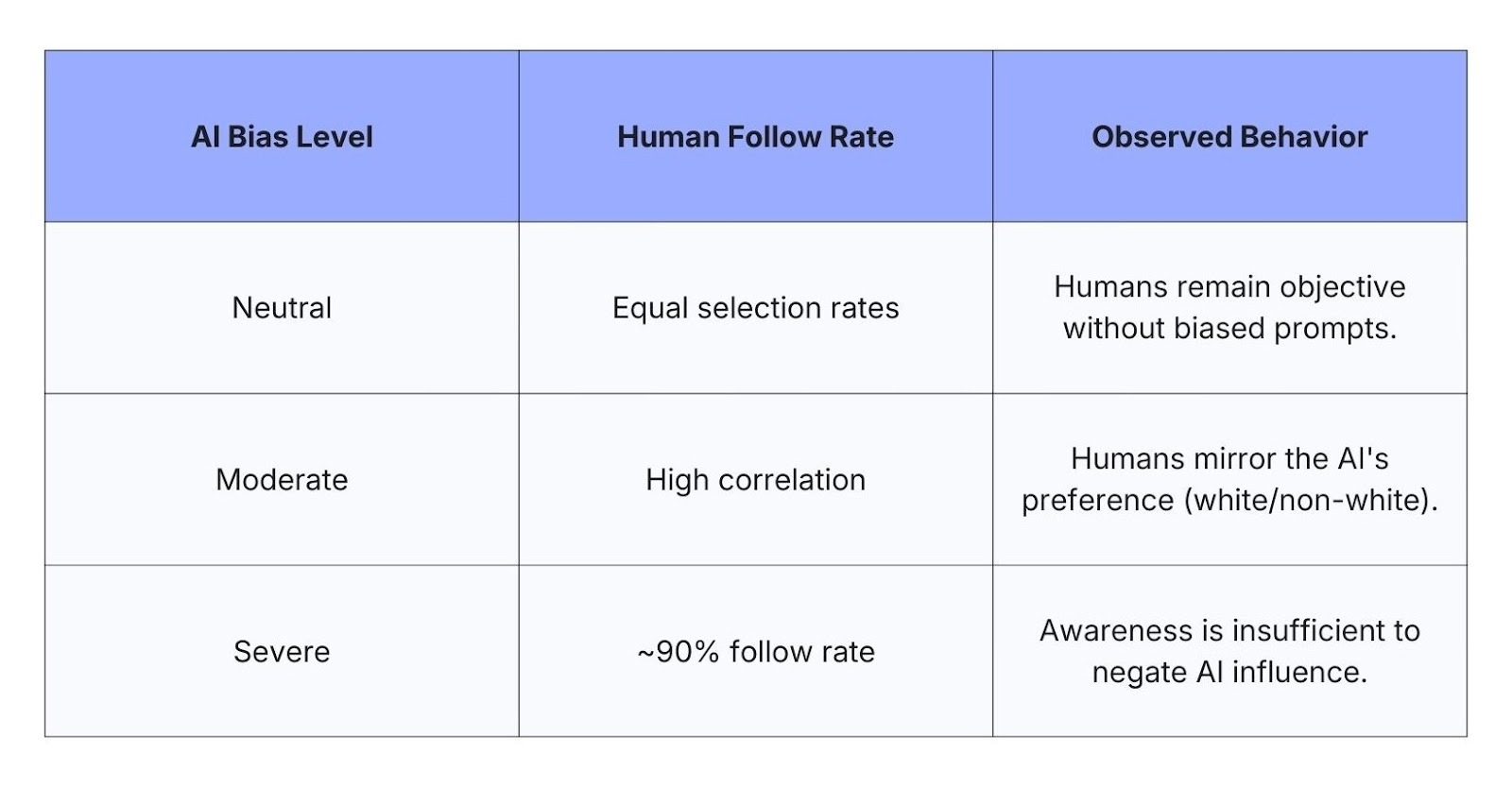
The same line of research suggests reviewer bias drops meaningfully when participants complete an implicit association test (IAT) before screening. The implication is that human oversight has to be designed and trained, not assumed.
How to use AI for recruiting under the EU AI Act and global compliance
Recruiting AI is now classified as "high-risk" under the EU AI Act, which means hiring teams — not just vendors — carry compliance obligations. The practical reading for recruiters:
- What you must stop doing: Emotion recognition in interviews or video assessments is prohibited. Biometric categorization that infers sensitive attributes is prohibited. If your current vendor offers these features, turn them off.
- What you must document: For any high-risk AI system in your stack, you need risk assessments, up-to-date documentation, and evidence of data quality controls. Plan for these to be auditable.
- What you must disclose to candidates: Candidates have to be told when high-risk AI is used in a decision affecting them, and they can ask for an explanation of how the decision was made. Build this into your candidate-facing comms.
- What non-compliance costs: Penalties can reach the higher of €35 million or 7% of global annual turnover. Timelines for prohibitions, high-risk obligations, and penalty enforcement are phasing in across 2025–2027; check the Act's official implementation timeline before publication of any compliance materials.
Reframed bluntly: the regulation is less about what the AI does and more about what your team can prove about it.
Future horizons: blockchain, VR, and agentic AI
A short note on emerging tech, with the caveat that most of this is not yet operational for the average recruiter.
Blockchain for verifiable credentials
Resume fraud is a documented problem — multiple employer surveys put the share of employers who have caught candidate misrepresentation at well over half. Blockchain-based credentialing lets institutions issue tamper-resistant digital diplomas; MIT's Digital Diploma program is one of the earlier examples. Adoption outside a handful of universities is still limited.
Virtual reality and immersive simulations
VR is being used by some large employers for managerial scenario testing, safety training, and realistic job previews. Walmart and Siemens have publicly discussed VR-based assessment and onboarding programs, though independent efficacy data is thin. Vendor-reported figures on satisfaction lift and diversity gains exist but should be read as directional, not benchmarked.
Agentic AI
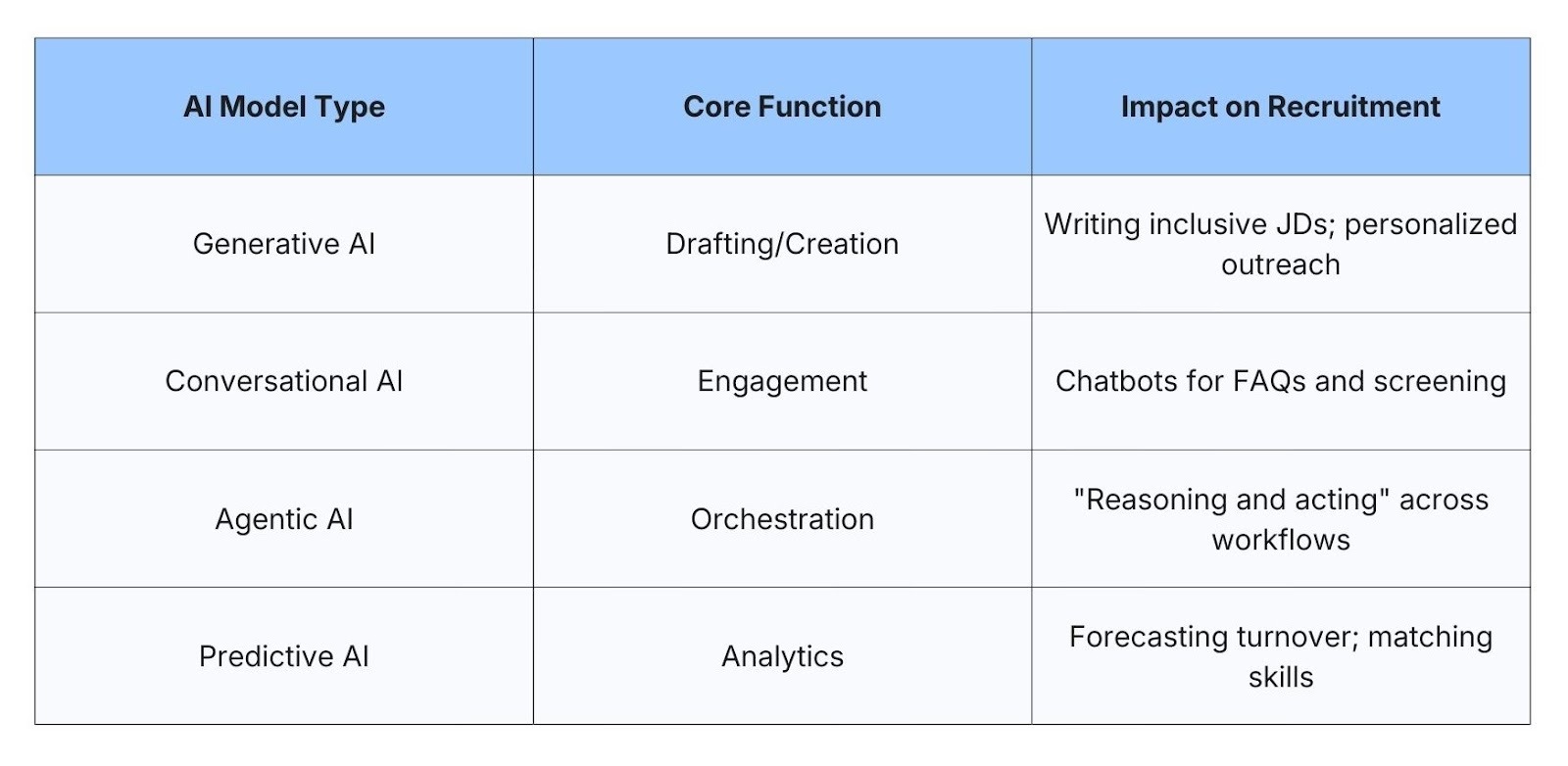
The 2025 shift is from generative AI (drafts content) to agentic AI (executes workflows). Agentic systems can notify candidates, advance them through stages, and manage scheduling end-to-end. Survey data from analysts including Gartner suggests a majority of organizations were experimenting with these systems by late 2025, though "experimenting" covers a wide range of maturity.
Redefining the recruiter
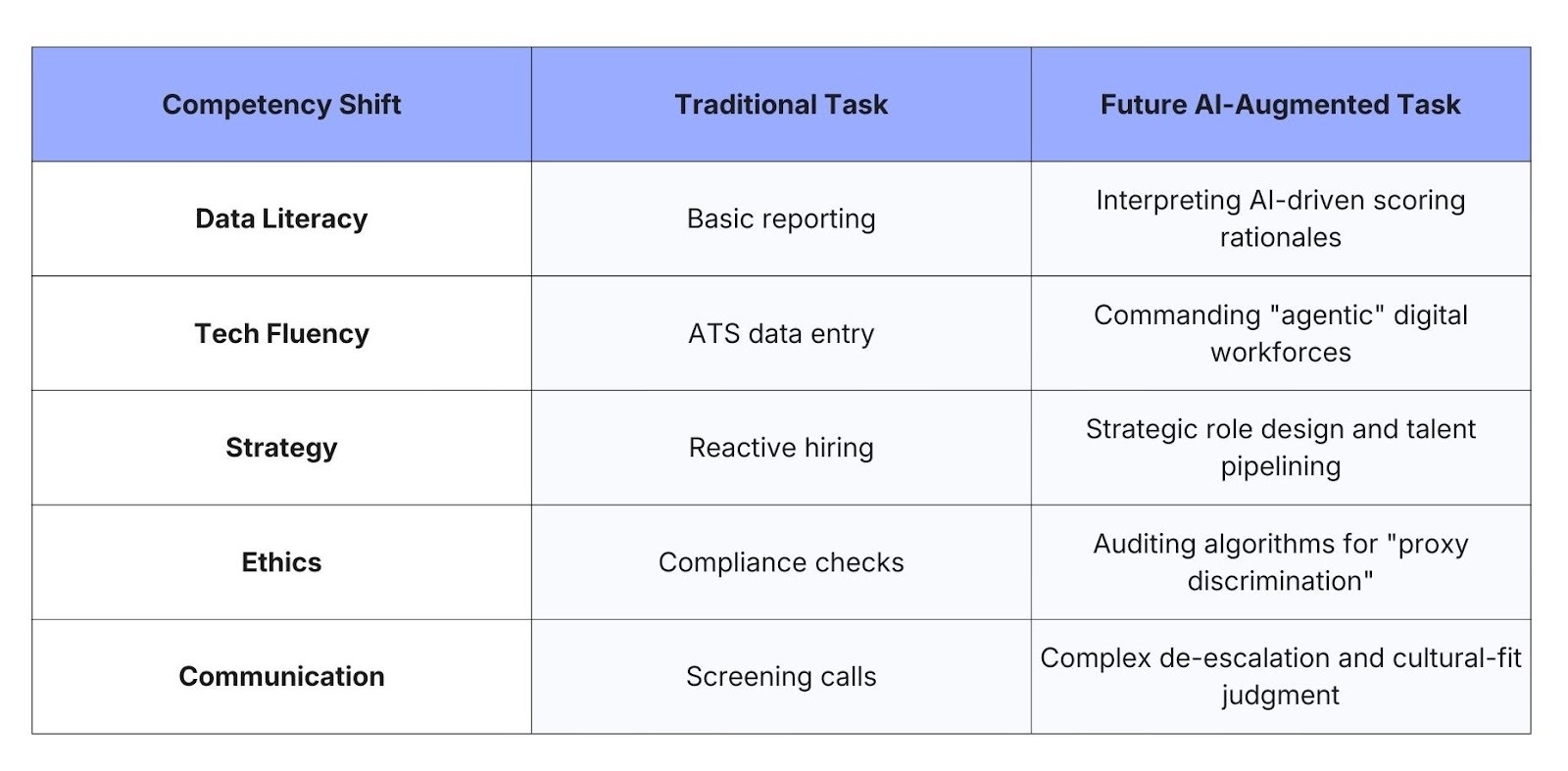
Automating low-complexity tasks does not eliminate the recruiter role. It changes what the role rewards.
Toward complex problem solving
According to Gartner's HR research, recruiters in the next two years will need stronger skills in talent strategy, role design for scarce-skill hiring, and long-term relationship building with passive candidates. The transactional work is going to the machine; the consultative work is staying with the human.
The human-centric premium
Hiring manager surveys consistently show that the large majority still consider human involvement essential to the hiring decision. AI-skilled workers — those who can prompt, orchestrate, and audit these tools — are also commanding meaningful wage premiums in 2025 labor market data, with some industry reports citing premiums in the 50%+ range.
Enterprise case studies (with sourcing caveats)
The figures below are drawn from vendor case studies and company press materials. They are useful as directional evidence, not independent benchmarks.
- Emirates NBD: Vendor-reported figures suggest AI-driven video assessments saved approximately 8,000 recruiter hours and around $400,000 in under a year, with reported improvements to quality of hire and time-to-offer.
- Hilton Hotels: Hilton has publicly described predictive AI use for seasonal staffing, with reported reductions in emergency hires of roughly 30%.
- Siemens (executive recruitment): Case material from Siemens' HR communications cites time-to-fill reductions around 40% and quality-of-hire improvements around 30% in AI-augmented executive search. (Distinct from Siemens' VR onboarding work referenced earlier.)
- Teleperformance: Company materials report that AI screening allowed review of roughly 250,000 candidates annually without growing recruiter headcount.
- Humanly.io restaurant client study: The vendor Humanly.io (not a restaurant chain itself) published case data on a high-volume restaurant client showing time-to-interview reduced by 7–11 days and candidate show rates roughly doubled.
Read each of these as the company's account of its own deployment, not as audited results.
How to use AI for recruiting: an implementation checklist
The strategic advice in most AI-recruiting content is too abstract to act on. Below is a concrete starter checklist a recruiter or talent leader can run this quarter.
- Audit your ATS for proxy fields before deploying any ranking model. Pull a list of fields the AI will see — school name, zip code, employment gaps, graduation year. If any correlate with protected characteristics in your applicant base, exclude them from model inputs or document why they remain.
- Pick fewer tools, integrated deeply. If a tool does not write back to your ATS, it will create a parallel data trail. Reject tools that cannot integrate at the API level.
- Write a one-page AI governance policy before the next deployment. It should name: which tools are approved, what data they can access, where human review is mandatory, and who owns the audit log.
- Separate operational AI from judgment AI. Operational AI (scheduling, note-taking, FAQ chatbots) can be fully adopted. Judgment AI (ranking, scoring, shortlisting) needs validation against your own hires, not just vendor benchmarks.
- Run a skills-based assessment pilot on one high-volume role. Compare outcomes — quality of hire, time-to-hire, demographic distribution — against resume screening for the same role. HackerEarth Assessments is one option for technical roles.
- Publish your AI use to candidates. A short notice in the application flow — what AI is used for, where humans decide, how to request explanation — covers most EU AI Act transparency obligations and builds trust regardless of jurisdiction.
- Re-audit every six months. Models drift. So do applicant pools.
What recruiters should take away
The honest version of "how to use AI for recruiting" is: use it for the work that wastes recruiter time, audit it for the work that affects candidate outcomes, and don't trust either vendor benchmarks or your own intuition without checking. Forward-looking projections — including widely cited claims that AI fluency will be standard for the majority of hiring processes within the next few years — are directionally plausible but should be treated as forecasts, not facts. The teams that will benefit most are the ones that build governance and skills-based assessment into their stack now, while the regulatory ground is still moving.
FAQs
What AI tools are used in recruiting? The common categories are sourcing tools (semantic search across ATS and external databases), screening tools (resume parsing and ranking), assessment platforms (skills-based testing and simulations, such as HackerEarth Assessments), conversational AI (chatbots for candidate FAQ and intake), scheduling automation, and increasingly agentic AI that executes multi-step workflows.
How do I start using AI for hiring? Start with one operational use case — typically scheduling or candidate FAQ chatbots — because the risk is low and the time savings are immediate. Then pilot a skills-based assessment on a single high-volume role before introducing any ranking or scoring AI. Document governance before, not after, deployment.
Is AI bias in hiring illegal? In several jurisdictions, yes. New York City's Local Law 144 requires bias audits of automated employment decision tools. The EU AI Act classifies recruiting AI as high-risk and imposes documentation, transparency, and human-oversight obligations. In the US, the EEOC has stated existing anti-discrimination law applies to AI-driven hiring decisions. The legal exposure sits with the employer using the tool, not only with the vendor.
Does AI replace recruiters? No. It replaces specific tasks within recruiting — resume triage, scheduling, initial candidate communication — and shifts recruiter time toward consultative work: stakeholder alignment, talent strategy, and closing offers. Hiring manager surveys consistently show human judgment is still considered essential to the final decision.
Can AI improve diversity in hiring? It can, and it can also worsen it. Skills-based assessment platforms that evaluate demonstrable ability tend to reduce reliance on credential proxies that correlate with demographic background. But poorly designed assessments and resume-ranking models have been shown to encode bias at scale. Diversity outcomes depend on auditing, not on the technology itself.
How much does AI recruiting software cost? Pricing varies widely — from per-seat SaaS models in the low hundreds of dollars per recruiter per month, to enterprise platforms with six- and seven-figure annual contracts. Total cost of ownership should include integration work, governance overhead, and audit cost, not just licensing.
Ready to put this into practice?
If you're evaluating skills-based assessment as a starting point, explore HackerEarth Assessments or request a demo to see how technical screening can be benchmarked, audited, and integrated into your existing ATS.
Editor's notes for production: - Meta title (≤60 chars): "How to use AI for recruiting: a practitioner's guide" - Meta description (140–155 chars): "How to use AI for recruiting in 2025: where AI works, where it fails, EU AI Act obligations, bias risks, and a checklist recruiters can run now." - Read time: set to 8 min read. - Featured image and all in-body images require descriptive alt text per Section 5; placeholder alt text has been added inline. - All "2025" statistics should be reviewed annually for staleness.