A recruiter's guide to behavioral assessments
Roughly 46% of new hires fail within 18 months, and 89% of those failures trace to behavioral issues rather than technical skill gaps, according to Leadership IQ's three-year study of 5,247 hiring managers. If you're running 20–40 candidate touches a week and your slate keeps clearing the technical screen but stalling in panel — or worse, washing out three months post-offer — the gap usually isn't sourcing or skills. It's behavioral signal.
Behavioral assessments — psychometric tools that measure how a candidate is likely to act, decide, and collaborate on the job — give recruiters a structured way to surface that signal earlier in the pipeline. This guide covers what they measure, where they break, and how to slot them into a req without adding drag to time-to-fill (TTF) or eroding quality of hire (QoH).
Used well, behavioral assessments can reduce mis-hire risk and tighten the link between screen and offer. Used badly, they introduce new bias and candidate drop-off. Both outcomes are covered below.
What are behavioral assessments?
Behavioral assessments are standardized, objective methods used in pre-hire screening to measure a candidate's soft skills, personality traits, and likely fit for a role. Unlike a technical skills test, which measures what a person knows, a behavioral assessment estimates how they are likely to perform and interact within a team. They act as a bridge between a candidate's stated qualifications and observable workplace behavior.
Why does it matter?
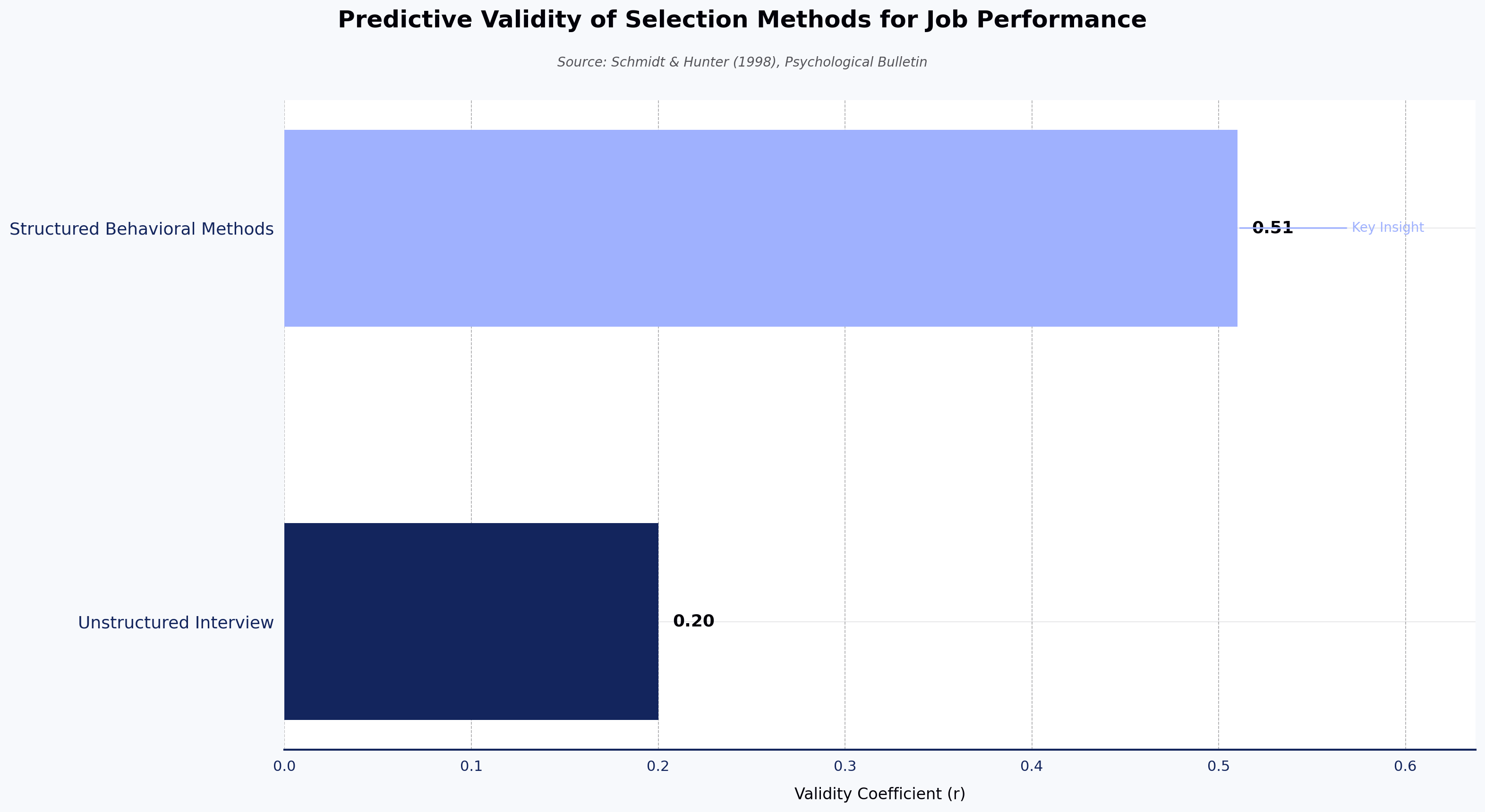
Unstructured interviews have a corrected validity coefficient of roughly 0.20 for predicting job performance, while structured behavioral methods (including assessments and structured behavioral interviews) sit closer to 0.51, according to the widely cited Schmidt & Hunter (1998) meta-analysis published in Psychological Bulletin. For recruiters, that gap translates into fewer panels burned on candidates who interview well but underperform after onboarding — and a more defensible paper trail when a hire is challenged. For a deeper look at structured methods, see our guide to structured interviews.
Key types of behavioral assessments
There are three methodologies worth knowing before you choose a tool.
Situational Judgment Tests (SJTs)
Situational Judgment Tests present candidates with hypothetical, work-related scenarios and ask them to choose the best (and sometimes the worst) course of action from a list of options. SJTs tend to be useful in practice because they map directly to role scenarios, are harder to fake than self-report personality tests, and produce results panel interviewers can act on.
- What they measure: practical judgment, problem-solving, decision-making under constraints, and prioritization.
- Example: a candidate is shown a scenario where a top-tier client escalates a production bug 30 minutes before a board demo, and asked how they would sequence the response. Adaptable across industries — customer success, healthcare triage, retail floor management, field operations.
- Limitation: research suggests SJTs vary widely in predictive validity depending on construction quality. Off-the-shelf SJTs not validated for your role can underperform a well-built structured interview.
Personality assessments
These assessments use psychological frameworks to map a candidate's traits and preferences. The two most common in recruiting:
- The Big Five (OCEAN): measures Openness, Conscientiousness, Extraversion, Agreeableness, and Neuroticism. Meta-analyses indicate Conscientiousness is the most consistent Big Five predictor of job performance across roles (Barrick & Mount, 1991, Personnel Psychology).
- DISC: maps four traits — Dominance, Influence, Steadiness, and Conscientiousness (sometimes labeled Compliance). Note that the "C" in DISC is not the same construct as Big Five Conscientiousness — DISC's Compliance dimension centers on rule-following and detail orientation, while Big Five Conscientiousness covers a broader cluster including achievement-striving and self-discipline. Conflating them when reading reports is a common practitioner error.
AI-driven & adaptive tools
Some newer behavioral platforms — including Pymetrics, HireVue, and Criteria Corp — use machine learning models trained on incumbent performance data to score candidates on behavioral dimensions and, in some cases, adjust question difficulty in real time.
- Real-time adaptation: the platform adjusts question difficulty or type based on prior answers, which can shorten assessments while preserving signal.
- Richer outputs: some tools generate cultural fit indicators and suggested follow-up interview questions, reducing the time recruiters spend translating raw scores into panel guidance.
- Limitations: AI scoring is only as good as the training data. Models trained on a non-diverse incumbent population can encode and amplify existing bias — a documented failure mode that drew regulatory scrutiny from the EEOC's guidance on algorithmic decision-making in employment. Ask vendors for the model's training population, validation studies, and adverse impact reports before rollout.
Benefits of behavioral assessments
Used in the right part of the funnel, behavioral assessments can produce measurable improvements in QoH, TTF, and panel efficiency.
Improve decision-making
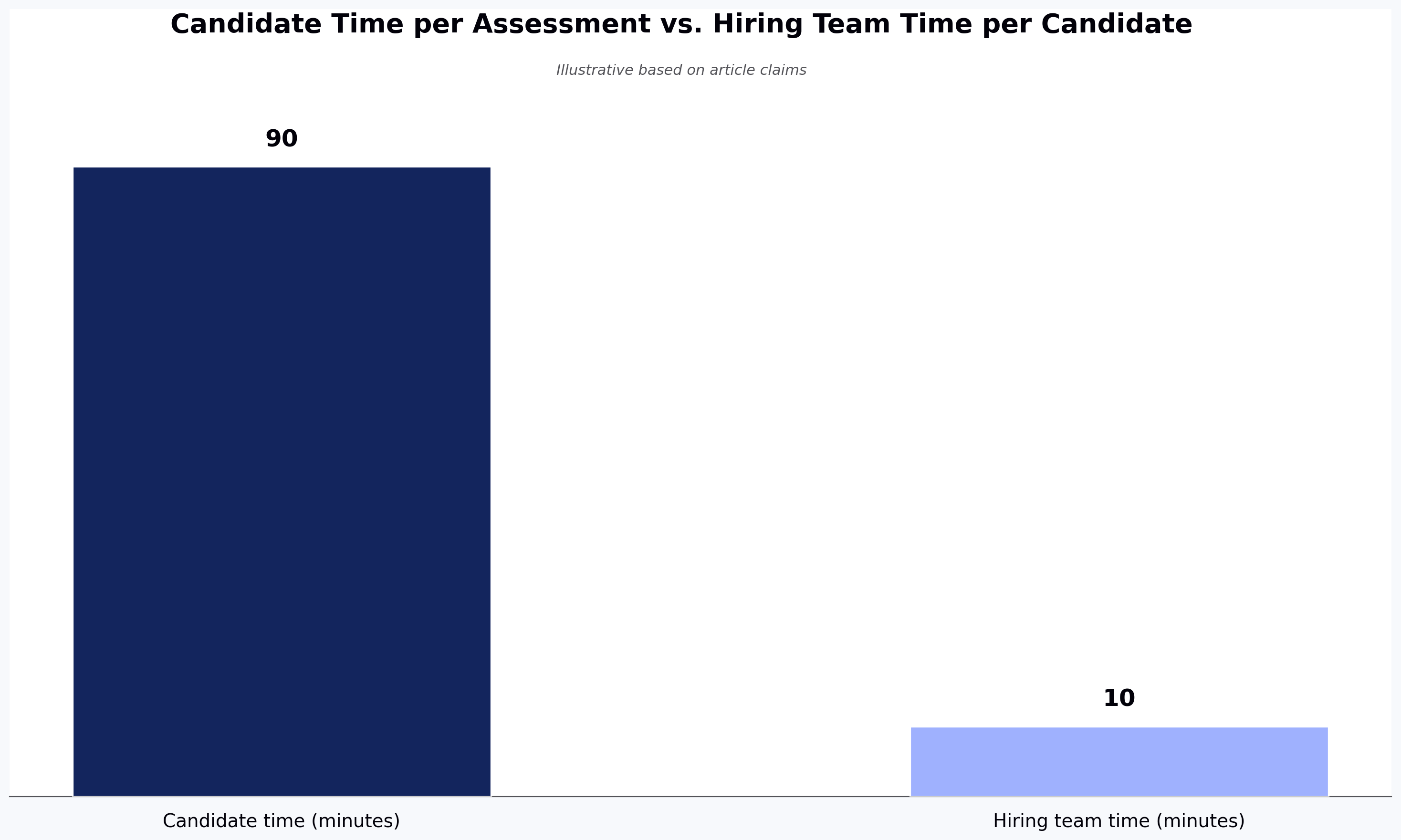
Assessments can move screening decisions from interviewer impression toward measurable criteria. By quantifying soft skills and behavioral traits, recruiters can compare candidates on the same scale rather than relying on subjective recall from a 45-minute interview.
This is particularly relevant for roles where soft skills carry heavy weight — customer success, sales, nursing leadership, frontline management — and where unstructured panels tend to drift toward "culture fit" reasoning that's hard to defend.
Reduce bias — with caveats
Structured assessments can help reduce certain interviewer biases (affinity bias, halo effect) by standardizing the evaluation step. Research suggests structured methods produce more consistent ratings across candidates than unstructured interviews when validated for the role.
That said, behavioral assessments are not bias-neutral by default. Poorly validated tests can introduce different bias profiles — cultural, linguistic, or accessibility-related. The honest framing: assessments can be more consistent across candidates than unstructured interviews when the instrument has been validated for the specific role and population.
Enhance the candidate experience — when designed well
Research suggests that when implemented transparently and kept proportionate to the role's level, behavioral tests can improve perceived fairness in the process. Candidates report:
- clearer expectations about the job's actual demands;
- a chance to demonstrate strengths that don't surface in interviews;
- a sense that the employer is investing in fit, not just speed.
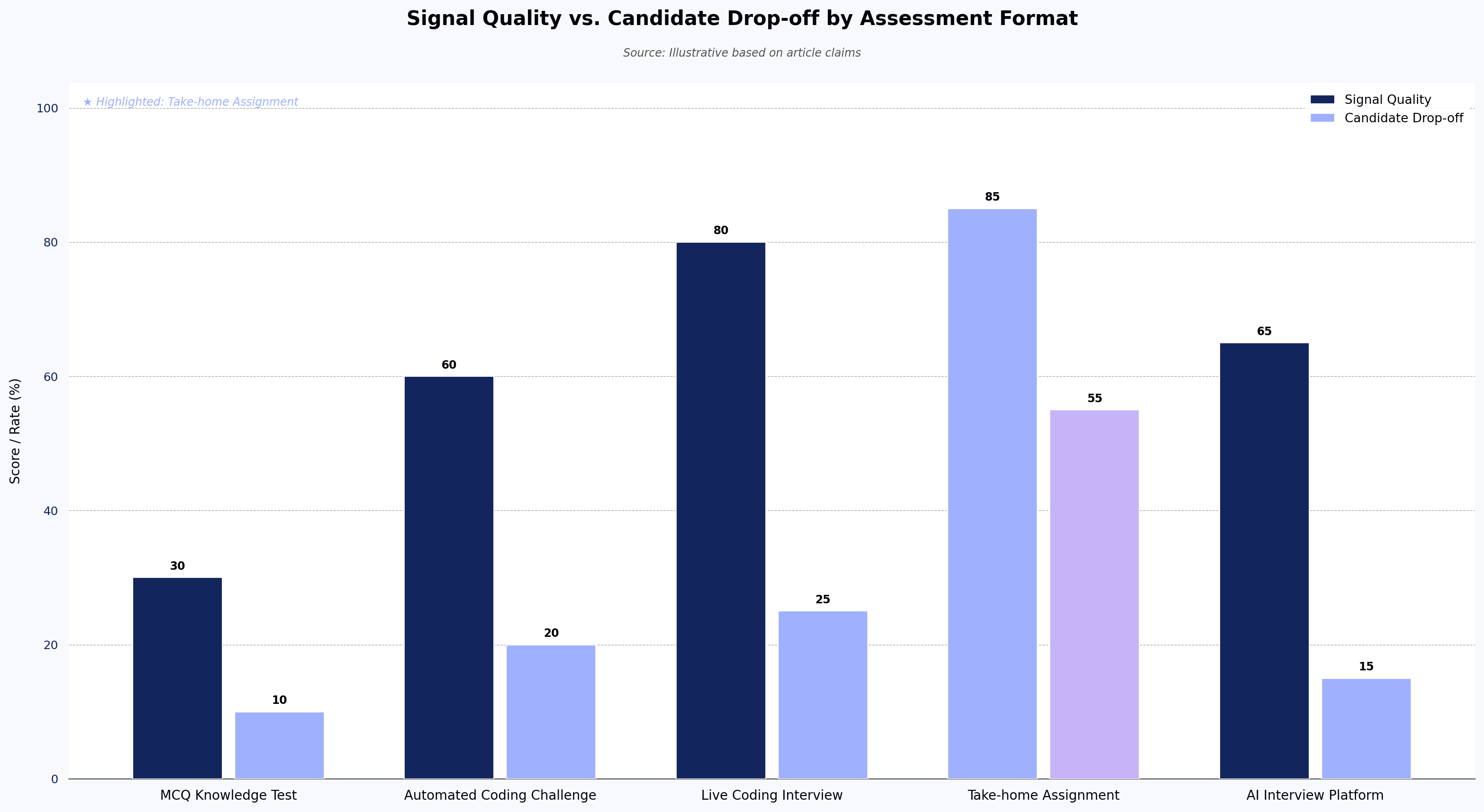
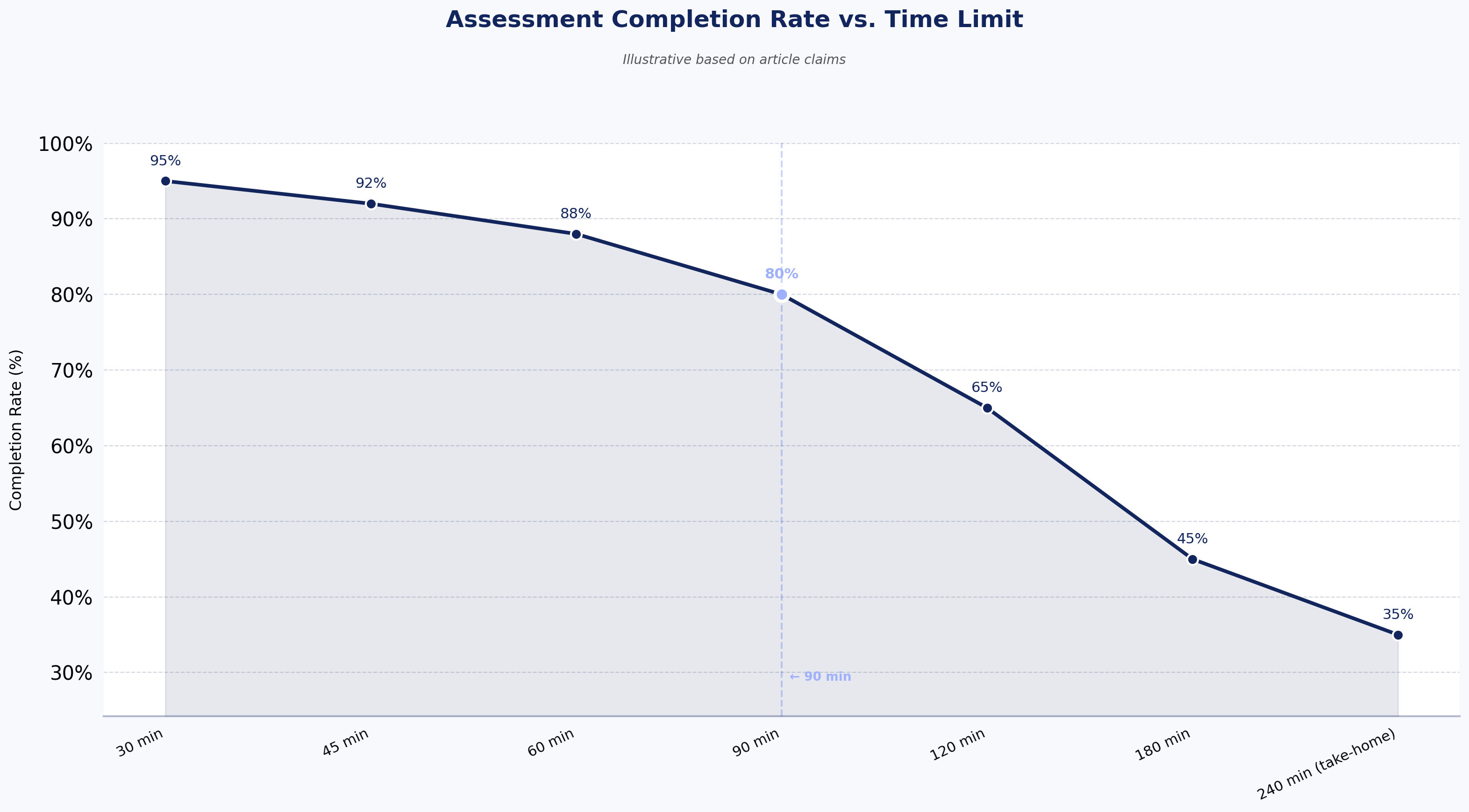
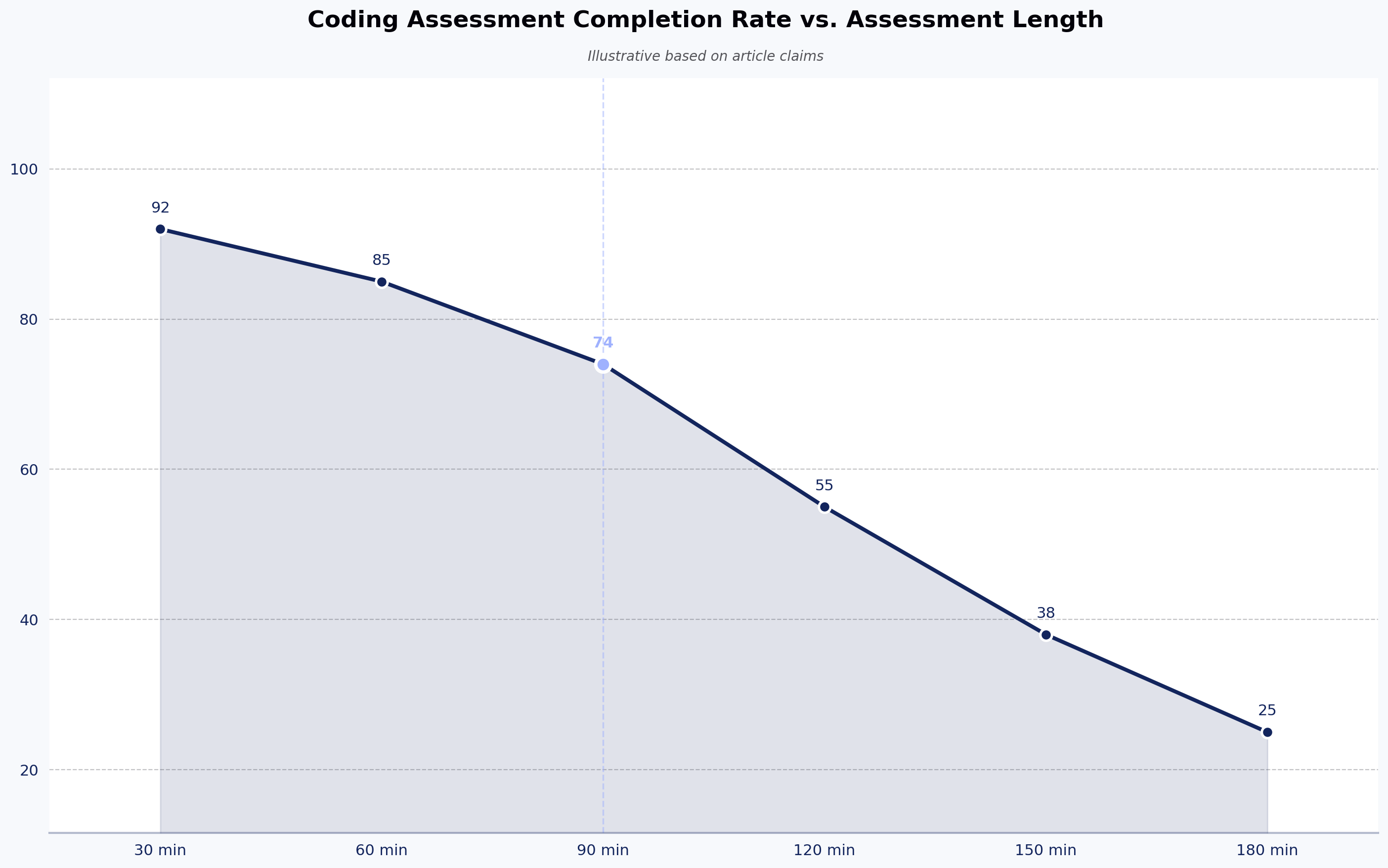
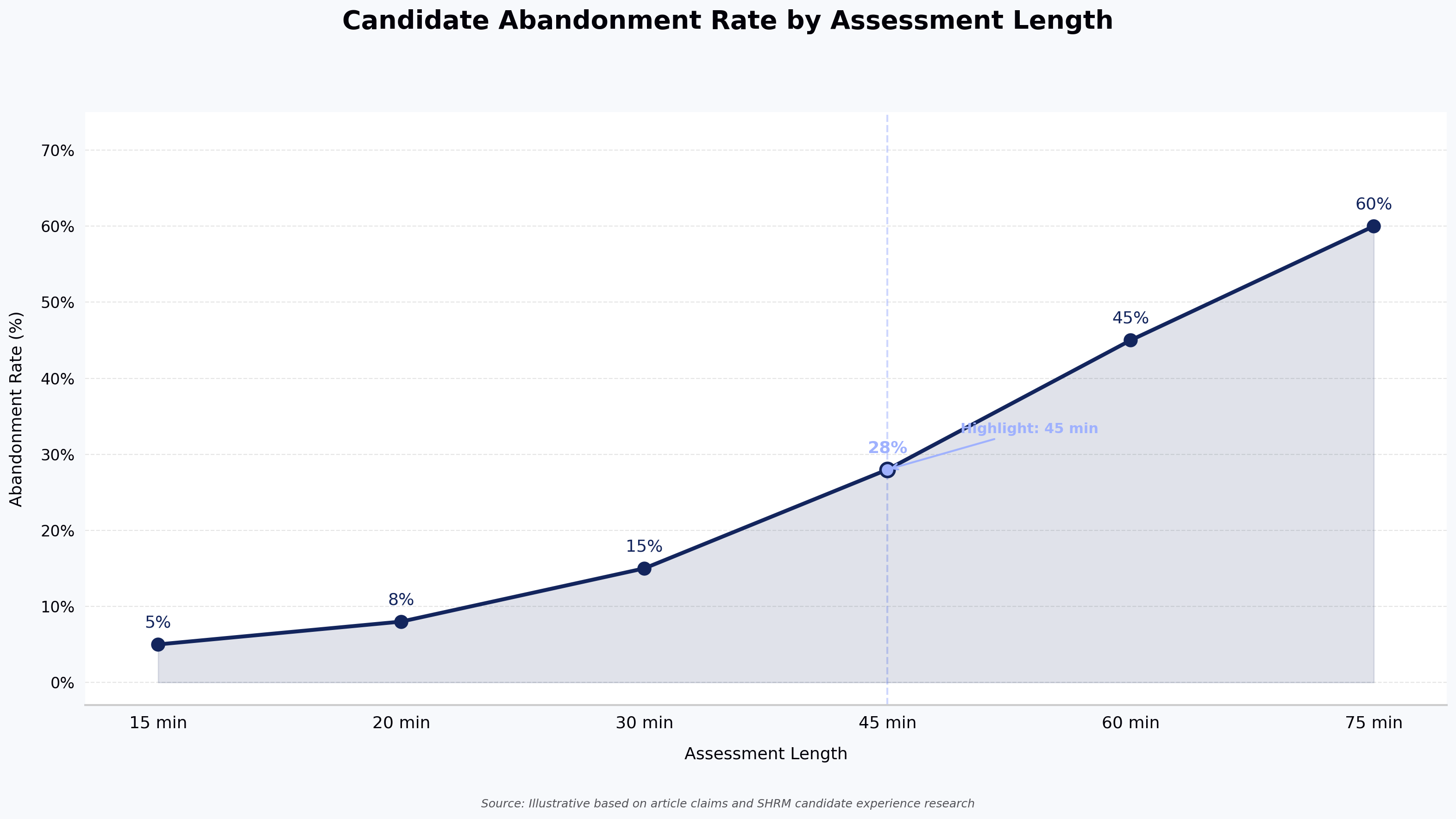
The opposite is also documented: long, opaque, or repetitive assessments drive candidate drop-off, particularly at the senior level. SHRM's research on candidate experience flags assessment length as a top friction point.
Predict performance — within limits
The core value proposition is improved prediction of on-the-job performance. Research suggests behavioral traits, particularly Conscientiousness and aspects of emotional stability, tend to be more stable than situational skills and can improve prediction of long-term performance when combined with structured interviews and work samples.
This claim has real boundaries. Personality assessments are susceptible to faking on self-report items. SJT validity varies by construction. And no assessment outperforms a multi-method approach. Treat behavioral data as one input in the decision, not the decision itself.
How to implement behavioral assessments
A structured rollout looks roughly like this — applicable across industries, with SaaS as one example among many.
1. Define competencies
Before testing, define what you're testing for. Work with the hiring manager to identify 4–6 behaviors that distinguish high performers from average performers in the specific role.
A practical approach: pull 3–5 current top performers and 3–5 underperformers in the role, interview their managers, and identify the behavioral patterns that separate them. For a customer success manager, this might surface "escalation calm under pressure" and "proactive account expansion." For a nurse manager, it might surface "shift-level conflict resolution" and "documentation discipline." Generic competency lists ("communication," "teamwork") are too vague to assess against.
2. Select tools
Choose assessment methods that align with the competencies you defined. For entry-level customer-facing roles, an SJT focused on communication and empathy often fits. For senior leadership, a validated Big Five-based instrument paired with a structured interview tends to produce better signal.
Confirm the platform integrates with your ATS so results flow into the candidate record without manual export. Ask vendors for validation studies specific to your role family and a recent adverse impact report.
3. Train teams
Assessment data is only useful if hiring managers and panel interviewers can read it. Training should cover:
- how to read the report format and score bands;
- how to translate results into targeted, open-ended interview questions;
- the failure mode of using assessment scores to exclude rather than to deepen the panel conversation.
A common mistake: treating a single dimension score as a hard cutoff. Most validated assessments are designed to inform interviews, not replace them.
4. Monitor & optimize
Establish a feedback loop after the hire is made:
- track the correlation between assessment scores and 6-, 12-, and 18-month performance and retention;
- re-evaluate the predictive power of the instrument at least annually;
- refine the ideal behavioral profile per role as the work itself evolves.
In our experience working with hiring teams running 200+ assessments a month on HackerEarth, the profiles that hold up at 18 months rarely match the profile written at kickoff. The feedback loop is where the real validity gets built.
Limitations and contested findings
A recruiter's guide that only lists upside isn't useful. The documented failure modes worth knowing:
- Faking on personality tests. Self-report personality items are susceptible to socially desirable responding. Forced-choice formats reduce but don't eliminate this.
- Variable SJT validity. Off-the-shelf SJTs not validated against your role can perform worse than a well-structured interview.
- Candidate drop-off. Assessments over ~30 minutes show meaningful abandonment rates, particularly for passive candidates and senior roles.
- Algorithmic bias in AI tools. Models trained on non-representative incumbent data can encode bias. The EEOC and several state laws (notably NYC Local Law 144) now require bias audits for automated employment decision tools.
- Construct overlap. Different vendors label similar constructs differently, making cross-vendor comparison unreliable.
None of these invalidate behavioral assessments as a category. They do mean the choice of instrument, vendor, and rollout matters more than the choice to use assessments at all.
Ethical considerations
Fairness and legal compliance
Any assessment used in hiring should be job-related and validated against industrial-organizational psychology standards — the SIOP Principles for the Validation and Use of Personnel Selection Procedures and the EEOC's Uniform Guidelines on Employee Selection Procedures are the reference points. The assessment must not disproportionately screen out candidates based on protected characteristics, and the traits measured must be tied to essential job functions.
Bias risk: cultural and gender
Even well-designed tests can carry cultural or gender bias if not validated across diverse populations. Language or scenarios that are clear in one cultural context can be confusing in another. Recruiters should:
- select tests validated across the populations you actually hire from;
- scrutinize question wording for subtle bias;
- request adverse impact data from the vendor before rollout.
Transparency
Transparency builds trust and reduces drop-off. Candidates should be clearly informed:
- what the assessment measures and why it's part of the process;
- how long it will take;
- how the results will be used in the hiring decision;
- who will see the results and how long the data is retained;
- their rights regarding accommodation and, where applicable, opting out.
Being upfront about the process reduces confusion, respects the candidate's time, and reinforces the employer brand.
FAQs
Are behavioral assessments legally compliant in the US?
They can be, but compliance depends on validation and use. The EEOC's Uniform Guidelines require that any selection procedure with adverse impact be demonstrably job-related. New York City's Local Law 144 (effective 2023) requires annual bias audits for automated employment decision tools and candidate notice. Illinois and Maryland have similar disclosure requirements for AI-driven video interviews. Confirm with employment counsel before rolling out a new instrument.
How long does a behavioral assessment take?
Most validated instruments run 15–45 minutes. SJTs typically sit at the shorter end (10–20 minutes); full Big Five inventories run 20–40 minutes; combined adaptive batteries can run longer. Assessments over 45 minutes show meaningful candidate abandonment, particularly for senior and passive candidates.
Can behavioral assessments replace interviews?
No, and treating them that way is one of the more common rollout failures. Assessments are most predictive when combined with structured interviews and work samples. Use them to inform and tighten the interview, not substitute for it.
What's the difference between a behavioral assessment and a personality test?
Personality tests are one category of behavioral assessment. The broader category also includes situational judgment tests, cognitive ability tests with behavioral components, and structured behavioral interviews. "Behavioral assessment" describes any standardized method that estimates likely on-the-job behavior; "personality test" specifically maps trait dimensions.
How are behavioral assessment results used in interviews?
Assessment results are best used to inform and enhance interview discussions, not to filter candidates out before they're seen. Recruiters and panel interviewers should:
- Tailor questions — identify dimensions where the candidate scored unexpectedly high or low and craft targeted, open-ended questions to explore those traits.
- Validate results — ask for past behavioral examples that confirm or contradict the assessment's findings.
- Discuss fit — use the data to discuss the practical realities of the job and confirm the candidate understands what will be expected.
Next steps
If you're evaluating whether behavioral assessments belong in your pipeline, start with one req — ideally a role where you've had two or more mis-hires in the last 12 months — and pilot a validated instrument alongside your current process. Compare 6-month performance ratings between the cohort scored with the assessment and the cohort scored without.
To see how HackerEarth's assessment platform combines behavioral signal with skills evaluation in a single candidate workflow, request a demo or browse our library of role-based assessments.