How to reduce time-to-hire: 7 effective hiring strategies using HackerEarth
Read time: 8 min read
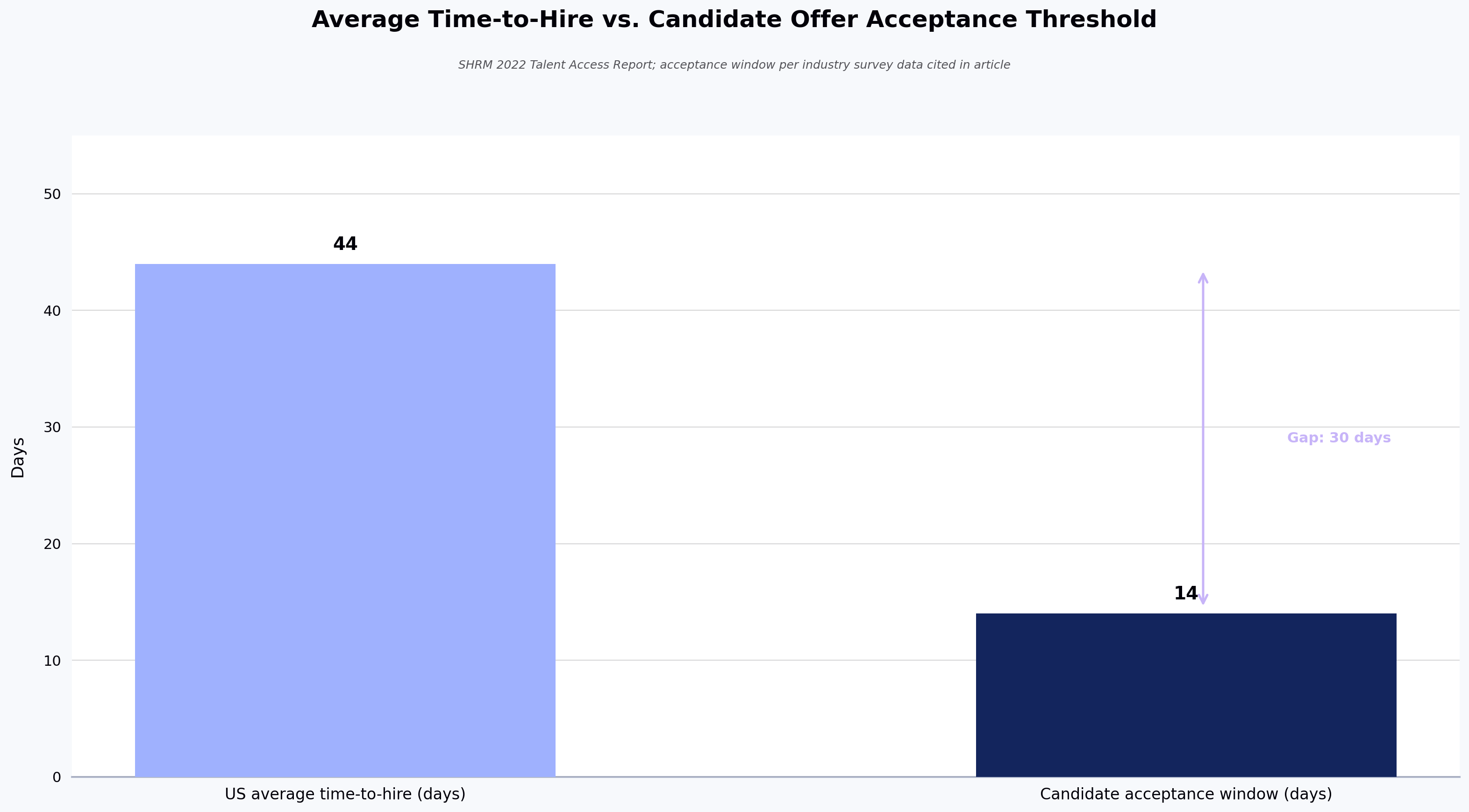
Applications per hire in the US are up roughly 182% since 2021 while recruiter capacity has stayed roughly flat, according to Workable's hiring benchmarks. That structural mismatch — not candidate scarcity — is why most technical recruiting teams are losing offers to faster competitors. The average time-to-hire in the United States sits at around 44 days per SHRM's 2022 Talent Access Report, and unfilled roles carry meaningful daily productivity costs that compound for high-demand technical roles.
This guide is written for recruiters and technical hiring managers running requisitions today. It covers seven effective hiring strategies for reducing time-to-hire without trading off candidate quality, and where each one tends to break down in practice. Throughout, we point to specific HackerEarth capabilities recruiters can operationalize now.
Note: This article discusses legal and compliance topics for context only and is not legal advice. Consult qualified counsel for guidance on EEOC compliance and employment law.
Understanding the cost of slow hiring
The real cost of a slow hiring process
Slow hiring looks like diligence from the inside and disorganization from the outside, and candidates act accordingly. SHRM's 2022 Talent Access Report puts average cost per hire at approximately $4,700, and reports from technical recruiting agencies suggest that figure often runs higher for engineering roles at startups. Industry surveys also indicate candidates are more likely to accept an offer when the process concludes within about two weeks. Every week over that threshold is a week your best candidates spend considering competing offers.
Time-to-hire vs. time-to-fill — why the distinction matters
These measure different failure modes, and fixing the wrong one wastes effort. Time-to-hire tracks the candidate journey from application to offer acceptance and reflects process efficiency. Time-to-fill tracks the organizational journey from role approval to filled seat and reflects pipeline health. Time-to-hire is the metric most recruiters can move this quarter — through better assessment and interview design — which is why the strategies below focus there. (Pipeline and workforce planning are typically owned at the Head of Talent Acquisition level and are out of scope here.)
Strategy 1 — Replace resume screening with skills-based assessments
Why resumes are a bottleneck, not a filter
Resumes feel like a filter but function more like a lottery, and most hiring managers already know it. Employer surveys have consistently found that a majority of US employers report problems using resumes to rank candidates or determine skills. The volume is higher and the signal is weaker. Moving the quality gate earlier — rather than adding more resume reviewers — is a common approach to reducing early-stage drag, and is a foundation of most skills-based hiring programs.
Where this strategy underperforms: Skills-based assessments work best for high-volume individual-contributor and mid-level technical roles. For senior engineering leadership, staff-level roles at FAANG-tier companies, or highly specialized niche hiring, resumes plus reference calls typically outperform assessment-only screening because context and trajectory matter more than skill probes.
How to operationalize skills-based hiring
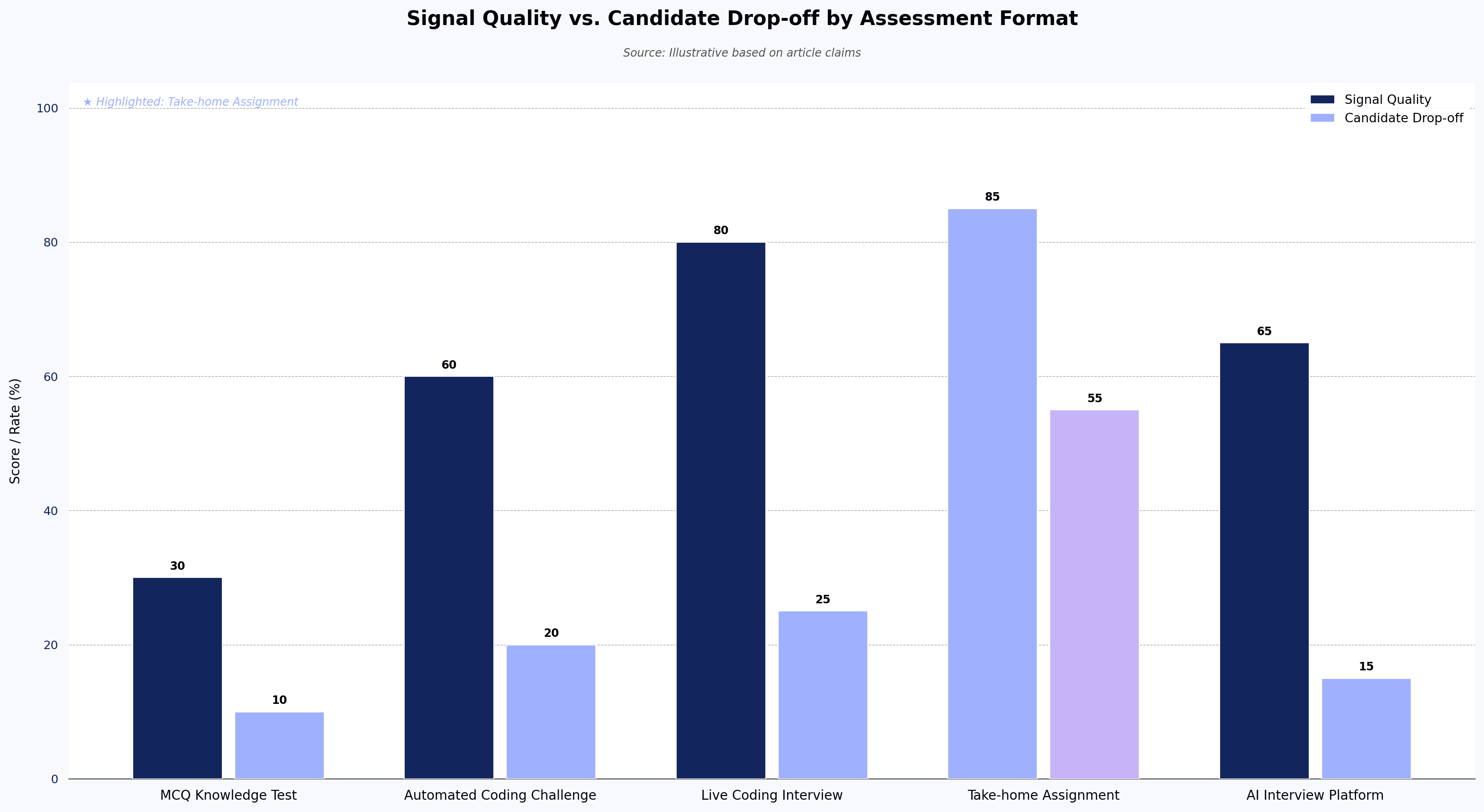
Moving skills evaluation to the top of the funnel sounds straightforward until you try to do it with a generic assessment tool that was not built for technical roles. HackerEarth Assessments evaluates candidates across 1,000+ skills and 40+ programming languages using a curated question library rather than self-reported proficiency. Candidates receive an automated invite, complete the assessment on their own schedule, and recruiters review ranked candidates instead of unranked applications.
Strategy 2 — Build a structured interview framework for hiring
The problem with unstructured interviews
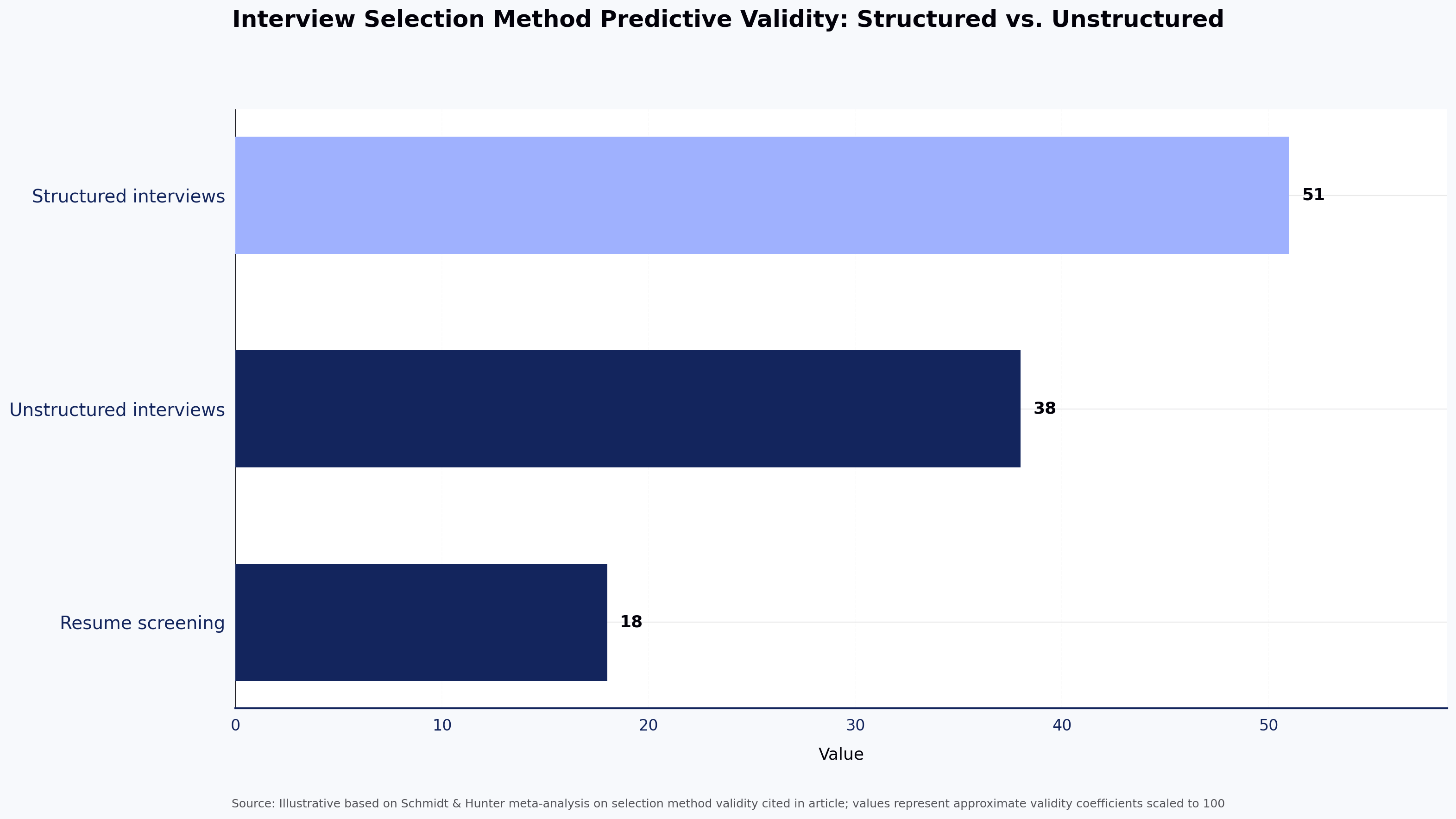
Structured interviews produce more reliable predictive signal than unstructured ones. Schmidt and Hunter's foundational meta-analysis on selection methods, along with subsequent updates, has consistently shown structured interviews outperforming unstructured formats on predictive validity. Candidates also drop out when scheduling drags — some recruiter surveys report that candidates disengage when interview scheduling takes too long, and that four or more rounds is often cited as excessive. For a deeper walkthrough, see our guide to running structured technical interviews.
Creating a repeatable scorecard system
A structured interview has three parts: standardized questions tied to specific competencies, a consistent rubric applied by every interviewer, and a scorecard that aggregates ratings into a comparable score. Recruiters can operationalize this pattern with rubric-based scoring in a shared coding environment — an approach supported by HackerEarth's FaceCode for interviewer-led live technical interviews, which produces a comparable performance summary across candidates. For fully AI-led interviews at scale, HackerEarth OnScreen is an AI interview tool that conducts structured technical interviews 24/7 using video-avatar interviewers and built-in identity verification for candidates, which is useful when scheduling capacity is the bottleneck.
Where this strategy underperforms: Structured interviews reduce variance but do not eliminate the need for calibration meetings when roles involve ambiguous seniority signals or novel domains.
Strategy 3 — Use data-driven hiring to identify pipeline bottlenecks
Which hiring metrics actually matter
Most ATS platforms produce more dashboards than decisions. That's why most teams ignore them.
Five metrics worth tracking: time-to-hire by role type, stage-by-stage conversion rates, source-of-hire by quality outcome, offer acceptance rate, and — as a general hiring best practice — correlating early assessment scores with post-hire performance. The last one is the most underused and the most valuable. It tells you whether the early signals in your funnel actually predict anything. Measuring it requires two data inputs: the candidate's assessment percentile at the top of the funnel, and a structured performance signal 90 days after hire (typically a manager review score or ramp milestone). Match the two in a spreadsheet or BI tool per role family — no exotic tooling needed.
Turning data into action
The teams that use data well share one habit: a regular cadence of acting on what the numbers say. If most drop-off happens between assessment completion and first interview, the fix is scheduling automation. If one sourcing channel consistently produces higher assessment scores, the fix is budget reallocation. Small, boring, repeated moves — that's what effective hiring strategies look like in practice.
Where this strategy underperforms: Analytics is only useful once you have enough volume for the numbers to stabilize. For teams filling fewer than 20 requisitions per year in a given role family, cohort sizes are too small for statistically meaningful decisions.
Strategy 4 — Optimize candidate sourcing strategies
Diversifying beyond job boards
Overreliance on job boards is like fishing only in the most crowded part of the lake. LinkedIn and Indeed regularly account for a majority of application volume in industry sourcing reports, but volume and quality are not the same thing. Modern sourcing blends four channels: job boards for volume, employee referrals for quality and speed, talent community engagement for passive candidates, and event-based sourcing.
Using hiring challenges and hackathons
For technical hiring specifically, HackerEarth Hiring Challenges function as a recruiting funnel — the platform evaluates submissions automatically and returns a ranked, pre-assessed candidate list. Hackathons on the same platform sit better as developer engagement and brand-building tools. Teams looking to convert participants into hires should reach for Hiring Challenges instead.
Where this strategy underperforms: Challenge-based sourcing does not scale well for low-volume, highly specialized senior roles where the pool is small enough to be reached through targeted outreach.
Strategy 5 — Embed diversity into evaluation without slowing the process
Skills-based assessments with anonymized scoring can reduce demographic bias without adding process steps.
Why diversity and speed are not competing goals
Building diversity into evaluation design removes subjective variability rather than adding steps. McKinsey's Diversity Matters Even More report (2023) found that companies in the top quartile for diversity are more likely to outperform peers on profitability. On compliance exposure, the EEOC's FY2024 enforcement statistics show a substantial year-over-year increase in new charges. This is context, not legal advice — consult employment counsel for compliance guidance.
Anonymized evaluation with rubric consistency
The most effective approaches replace a biased signal with a better one rather than adding a review layer. No system removes bias entirely, and teams should still audit outcomes by demographic group. Within that bounded context, rubric-based scoring tends to be more consistent across candidates than human-led resume screens, and structured assessments let reviewers evaluate performance on a relevant technical problem before other signals enter the review. See our post on building an inclusive technical hiring process for a fuller treatment.
Where this strategy underperforms: Anonymization is more useful in early-stage screening than in final rounds, where cultural context and communication assessment necessarily involve the candidate as a whole person.
Strategy 6 — Automate administrative hiring tasks
The hidden time drain — scheduling, follow-ups, status updates
Administrative overhead is the part of recruiting that everyone complains about and almost no one fixes systematically. Recruiter coordination time per candidate stacks up quickly across dozens of open roles. Automation does not replace recruiter judgment — it redirects it. When the system handles assessment invites, reminders, scheduling triggers, and stage progression, recruiters spend their time on evaluating fit, selling the role, and calibrating with hiring managers.
ATS integration considerations
HackerEarth supports ATS integration for common recruiter workflows; the specific integration list should be confirmed with your account team for your stack. In typical configurations, assessment invitations trigger automatically at a defined stage, scores flow back into the candidate record without manual entry, and stage progression can be automated based on thresholds the hiring team sets.
Where this strategy underperforms: Automation amplifies whatever process you already have. If the underlying stage definitions are inconsistent across roles, automating them locks in the inconsistency.
Strategy 7 — Invest in candidate experience to accelerate decisions
Candidate experience as a competitive advantage
Candidate experience is a conversion problem. Some industry surveys have reported that a meaningful share of candidates abandon applications midway through the process. Strong employer positioning tends to correlate with lower cost-per-hire and faster fills, though the specific magnitude depends heavily on baseline conditions. Our candidate experience playbook covers concrete tactics recruiters can apply this week.
Public technical challenges as brand signal
A public technical challenge does something a careers page cannot: it lets candidates experience the technical bar and problem style before they apply. Participants who are not hired in the current cycle often stay warm for future searches when their experience was substantive.
Where this strategy underperforms: Brand-building through public challenges takes 6–12 months to show measurable impact on inbound quality. For a role you need to fill this quarter, direct sourcing is faster.
A 90-day sequence: what to do, and what to do when it doesn't work
The three phases below give sequencing plus decision criteria for when to pivot.
Weeks 1–4: Foundation (assessment + baseline data)
Pull your current stage conversion rates, time-to-hire by role, and source-of-hire data to establish a baseline. Configure assessments for your highest-volume role type, set a score threshold with your hiring manager (typical starting point: top 30% of the assessment cohort advances), and run the first cohort through the new process in parallel with the existing one.
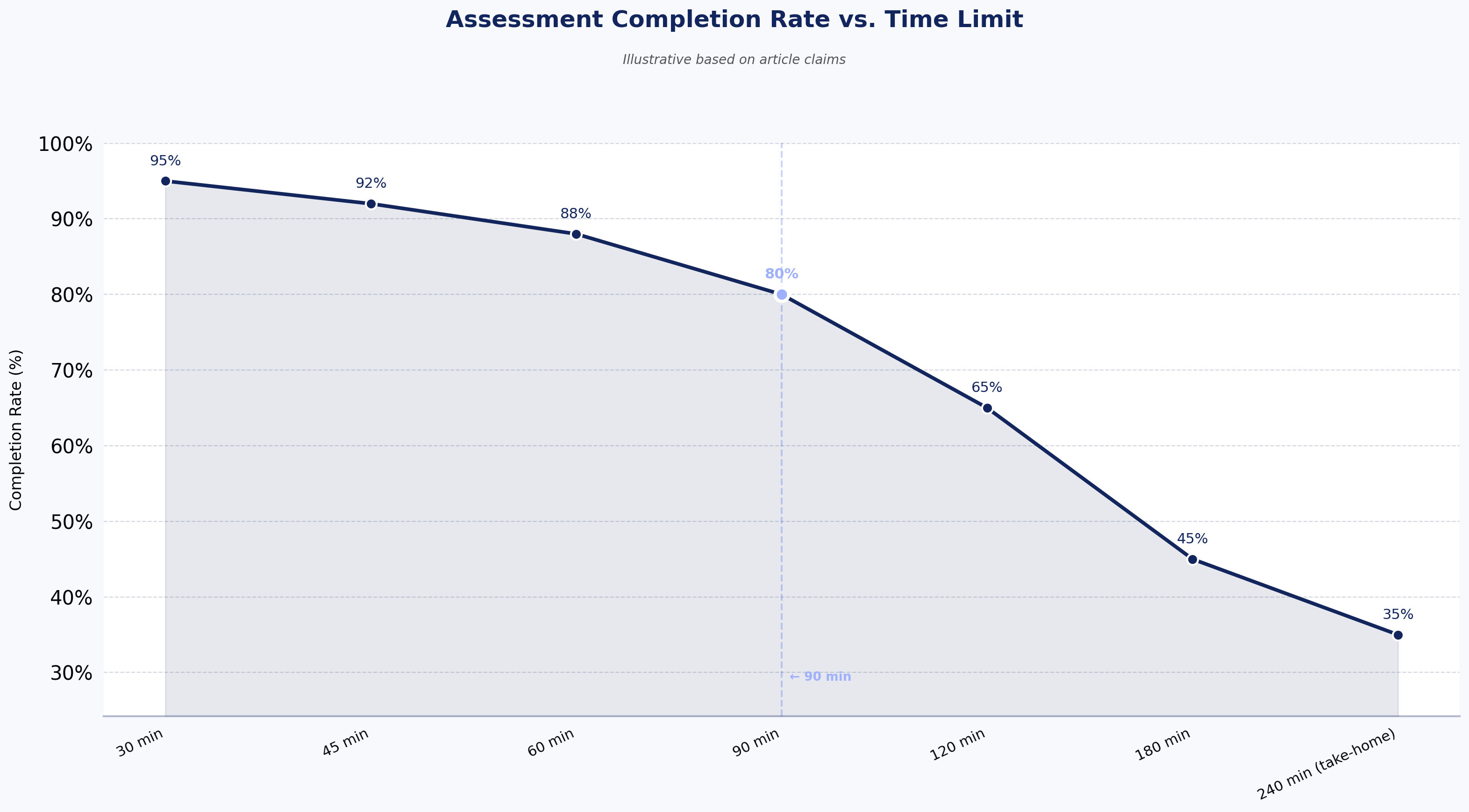
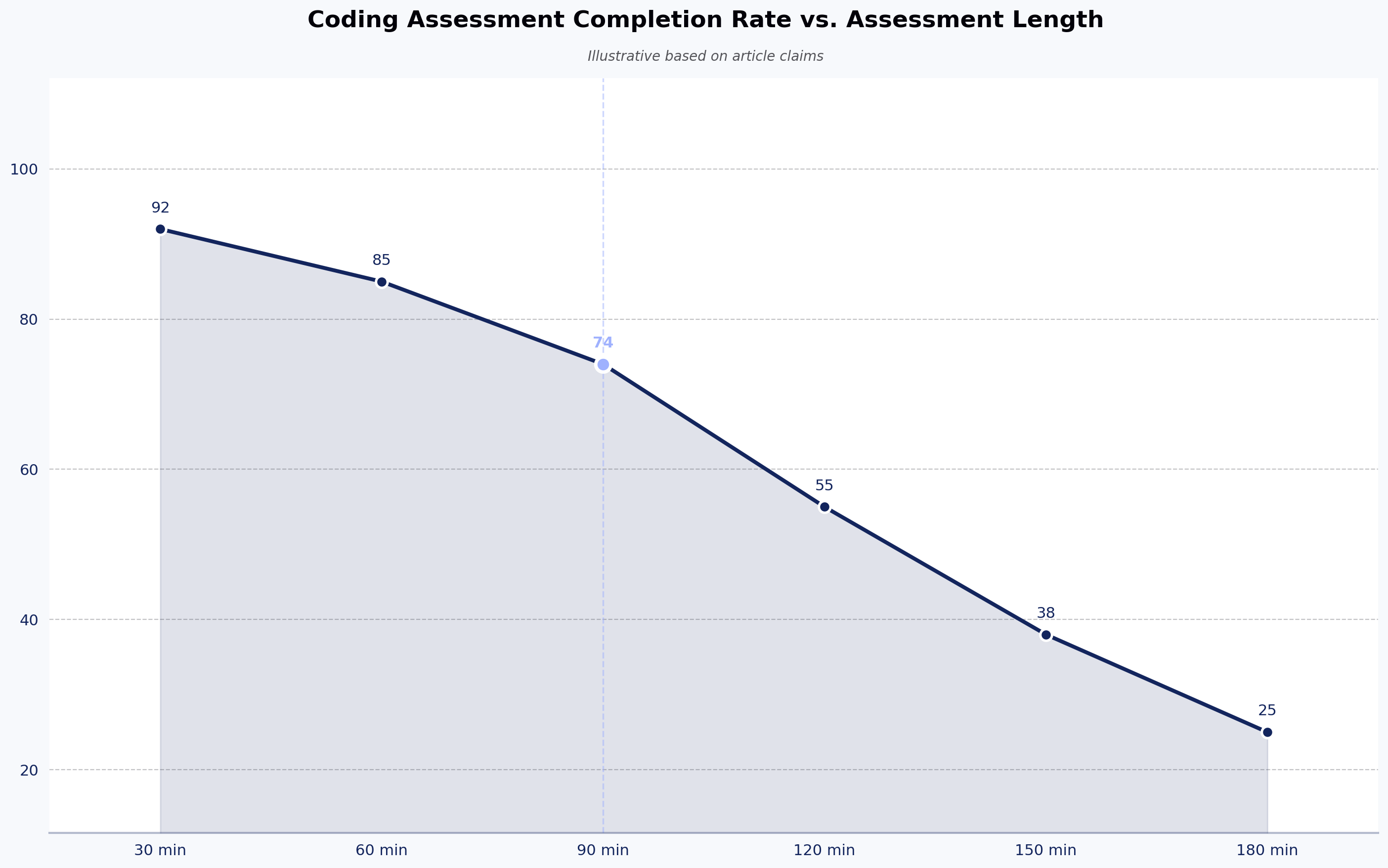
Pivot criteria: If assessment completion rates fall below 50% in the first cohort, the assessment length or difficulty is likely misaligned — cut length by a third before proceeding.
Weeks 5–8: Structure (interviews + automation)
Define the structured interview framework for the roles where assessment is live and configure the ATS integration so scores appear in the candidate record automatically.
Pivot criteria: If the time between assessment completion and first interview does not drop meaningfully after automation is live, the bottleneck is interviewer availability, not scheduling — that's a capacity conversation with hiring managers, not a tooling fix.
Weeks 9–12: Scale (sourcing + evaluation audit)
Run a hiring challenge and feed candidates into the validated funnel. Reallocate sourcing budget toward the channels that produced the highest-quality candidates in weeks one through eight. Review assessment score distributions across demographic groups and adjust rubrics where the data shows gaps.
Pivot criteria: If early assessment scores show weak correlation with post-hire performance after two hiring cycles, the assessment content is not measuring what the role actually requires — rebuild the assessment with the hiring manager rather than tuning thresholds.
Frequently asked questions
How do I reduce time-to-hire for technical roles? The counterintuitive lever most teams miss is removing interview stages rather than adding automation on top of the ones they have. Every stage compounds scheduling drag; a four-stage loop cut to three often saves more calendar days than any single tooling change. Audit which stages actually produce a decision-changing signal — the ones that don't should be merged or dropped.
What is the best hiring strategy for high-volume technical recruiting? The nuance the strategies above skip: high-volume hiring breaks not on assessment throughput but on interviewer capacity downstream. Even a perfectly ranked candidate list dies if you don't have panelists to interview the top 30%. Before scaling sourcing or assessments, confirm your interviewer bench has committed hours per week — otherwise you're building a bigger funnel that empties into the same bottleneck.
When do skills assessments not work well? For senior engineering leadership, highly specialized niche roles, or executive hiring, assessments provide weaker signal than structured reference checks and portfolio review. Assessments are best suited to mid-level and high-volume individual-contributor roles.
How is time-to-hire different from time-to-fill? Time-to-hire measures application to offer acceptance and reflects process efficiency. Time-to-fill measures role approval to filled seat and reflects pipeline health. Recruiters typically have more direct control over time-to-hire.
Do hackathons work as a primary recruiting channel? Hackathons are stronger for developer engagement and employer brand than as a primary funnel. For direct hiring outcomes, hiring challenges — which produce a ranked, pre-assessed candidate list — are the better fit.
Conclusion
Return to the opening tension: applications per hire up 182%, recruiter capacity flat. No single tactic closes that gap. What does is treating effective hiring strategies as a system — where early-stage skills signal, structured interviews, funnel analytics, and automation reinforce each other rather than sitting as isolated projects. The teams that reduce time-to-hire durably are the ones that stop asking "what tool" and start asking "which stage produces a decision, and which one just produces delay." Start there with one role, and expand.
Request a demo of HackerEarth Assessments to see the platform working on your specific role types. For related reading, see our skills-based hiring guide for teams evaluating the approach end-to-end.