Data-driven tools for technical screening: make smarter hiring decisions
Suggested meta title: Data-Driven Tools for Technical Screening: Make Smarter Hiring Decisions
What are data-driven tools for technical screening?
Data-driven tools for technical screening are platforms that replace subjective candidate evaluation with structured assessments and measurable performance signals collected at every stage of the funnel — from assessment scores and code quality to comparative benchmarks — and use that data to surface the candidates most likely to succeed in the role. For recruiters running high-volume technical pipelines, these tools convert resume reviews and interview gut-feel into objective, defensible decisions.
For recruiters building a case for adopting these tools, the cost of the alternative is concrete. Bad hires are commonly cited as costing organizations a significant portion of an employee's first-year compensation, with senior technical roles climbing higher still. A structured screening process backed by data is a financial risk management decision, not a nice-to-have.
Why technical screening specifically needs a data-driven approach
Technical hiring is uniquely difficult to evaluate without data. A developer can interview confidently and still write unmaintainable code. With candidates increasingly using generative AI tools during their job search, a polished resume tells you little about real ability.
Skills-based screening closes this gap. Industry reporting suggests that companies using skills-focused hiring see reductions in time-to-hire and higher predictive confidence in assessment results. That is the difference between hoping your instincts are right and having a measurable signal to point to.
Key features of data-driven tools for technical screening
Standardized, skill-based coding assessments
Most teams waste interview time on candidates who looked good on paper but cannot do the actual work. The fix starts with assessments built around real job-relevant problems, not abstract puzzles. Look for tests configurable by role, seniority, and programming language, with work samples like debugging tasks and code reviews that reflect actual day-to-day responsibilities. HackerEarth's Skill Assessments cover 1,000+ skills and let recruiters tailor evaluations to role-specific requirements.
Real-time analytics dashboards and recruitment analytics
A score out of 100 tells you little without context. A strong recruitment analytics tool shows how each candidate ranks against others who took the same assessment, where their skill gaps are, and how your entire pipeline is performing at every stage. This is what turns screening from an administrative task into something hiring managers actually trust.
Automated proctoring and plagiarism detection
Automated monitoring detects tab switching, copy-paste behavior, and unauthorized tool usage during an assessment. These systems are trained on patterns of candidate behavior during online tests and rely on browser-level signals; they cannot detect every form of off-screen assistance and should be paired with assessment design that limits the value of external help. Without this layer, the data you collect from remote assessments is unreliable.
Predictive scoring and candidate ranking models
Good predictive hiring tools go beyond raw scores by factoring in code quality, problem-solving approach, and patterns from prior successful hires to rank candidates by likely job performance. The goal is not to find the best test-taker — it is to find the person most likely to thrive six months after joining.
Integration with existing HR tech stack
Your hiring data tools need to push candidate information directly into your ATS without manual copying between systems. A disconnected stack creates admin overhead and means insights never reach the people making hiring decisions. Look for documented ATS integrations; refer to current HackerEarth product documentation for the latest list of certified integrations.
Critical metrics data-driven screening tools should track
Recruiters running data-driven pipelines should track these metrics consistently:
- Time-to-hire — the baseline operational metric. Commonly cited industry benchmarks place average time-to-hire in the range of 40–45 days; data-driven tools cut this by filtering unqualified candidates earlier in the funnel.
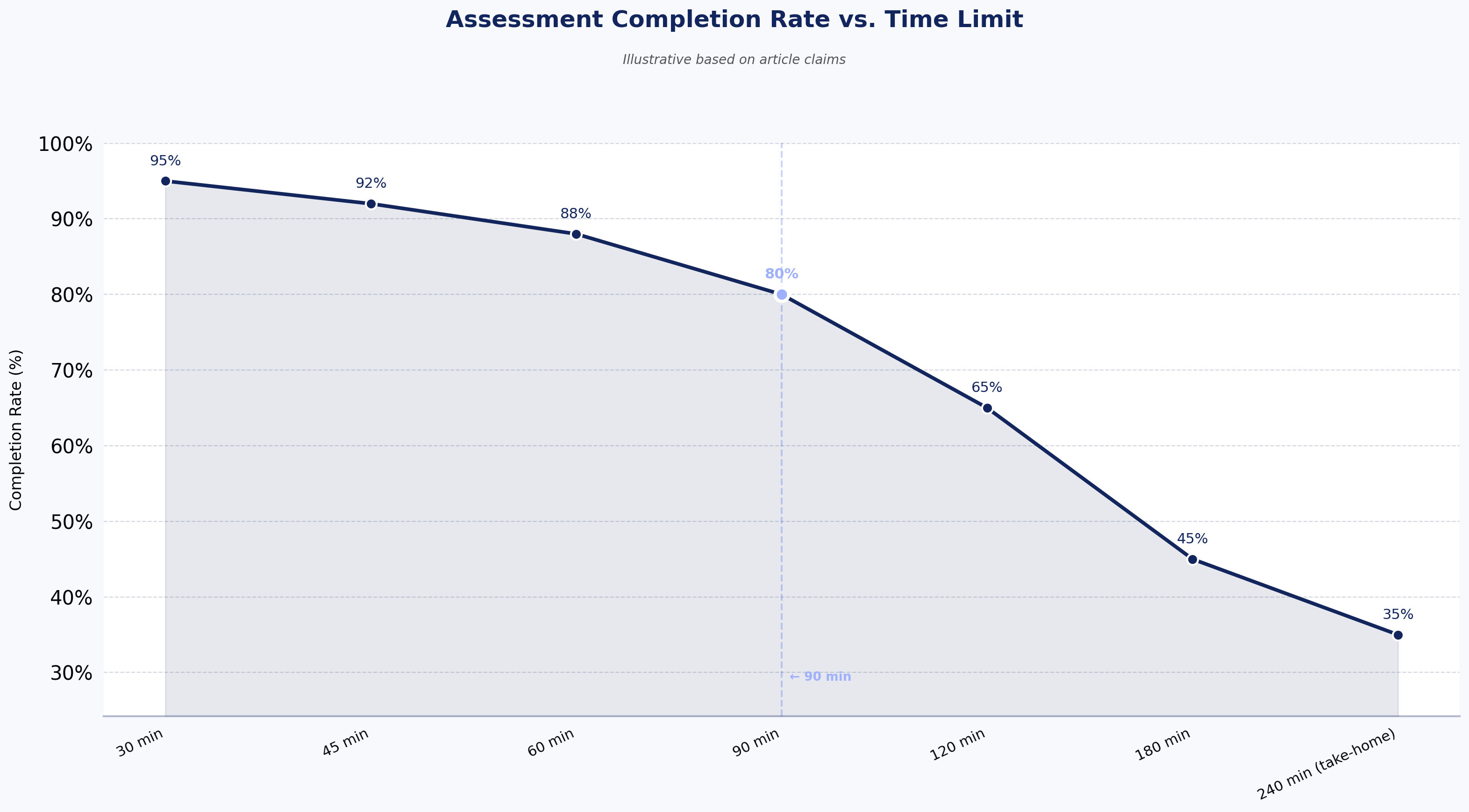
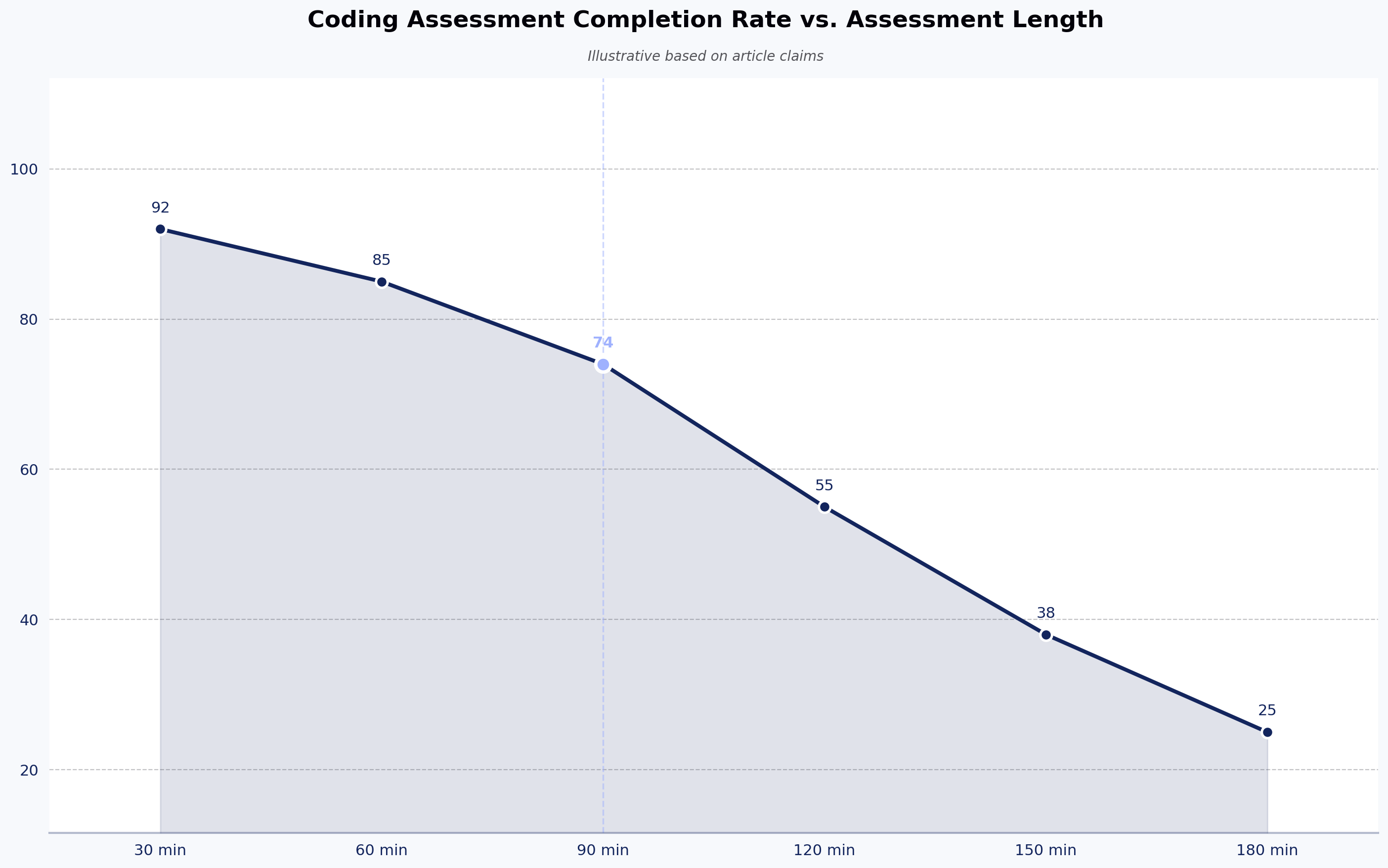
- Assessment completion rate — an early warning signal for assessment design. A low rate usually means the test is too long or poorly calibrated for the target seniority.
- Candidate quality score — tracks how many people passing your screening succeed in live interviews. A consistently low score means your assessment is measuring the wrong things.
- Cost-per-qualified-candidate — tells you whether your sourcing channels generate volume or genuine quality, which matters when justifying budget.
- Post-hire performance correlation — closes the loop by comparing assessment scores to six- or twelve-month performance reviews, telling you whether your screening tool is predictive or just creating the appearance of rigor.
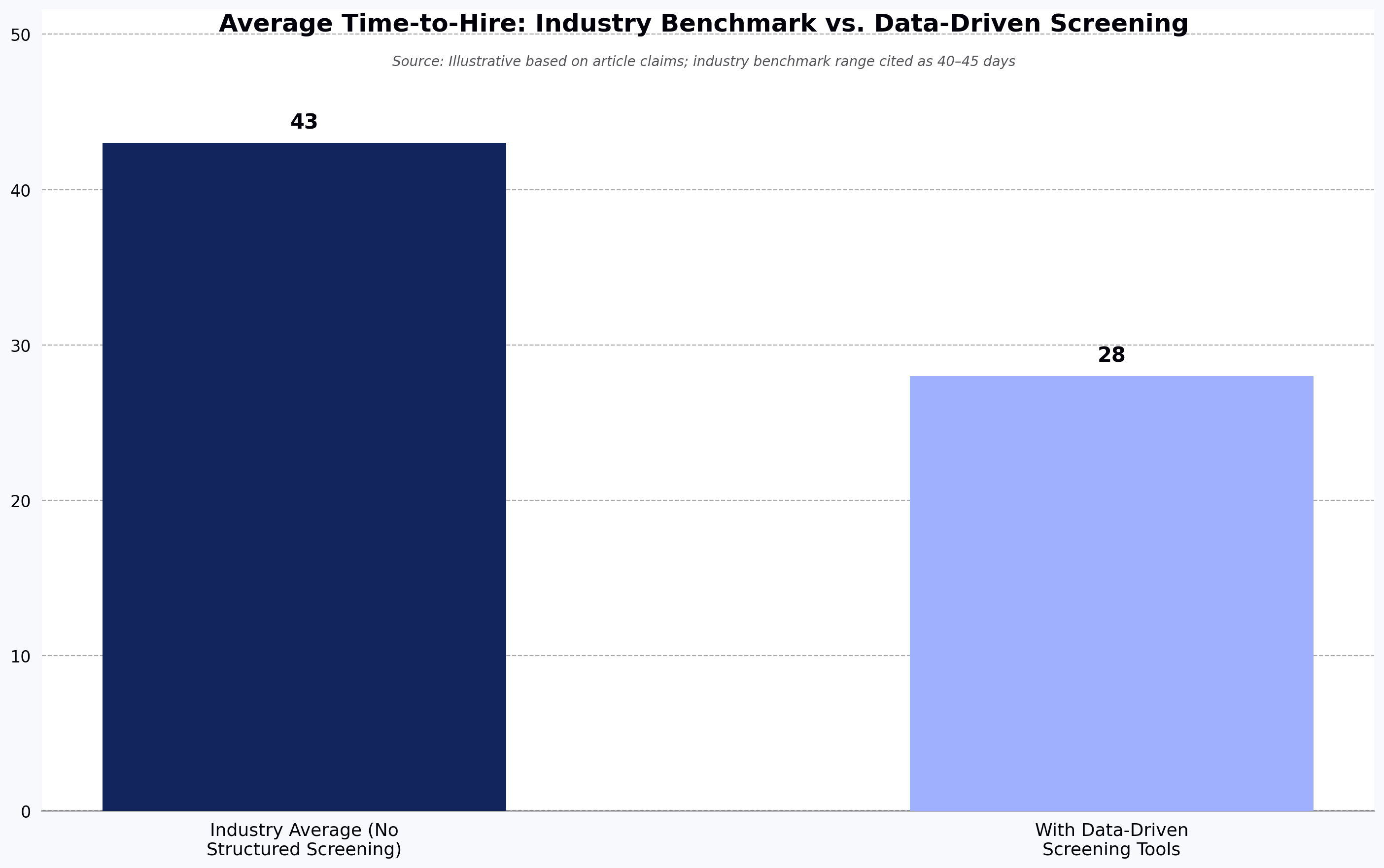
The ROI of data-driven tools for technical screening
Quantifying cost-per-hire reduction
Teams using automation across screening and scheduling can see meaningful cost-per-hire reductions, according to industry hiring benchmark reporting. Technical roles frequently cost between $10,000 and $20,000 to fill, so even a modest percentage reduction across 50 hires a year is a number worth bringing to leadership. Pair this with your current average cost-per-hire to model the impact of data-driven tools for technical screening on your annual recruiting budget.
Reducing mis-hires and turnover costs
Industry surveys consistently report that direct replacement costs for a failed hire run into the thousands of dollars per role — before accounting for delayed projects, team morale damage, and the engineering manager hours absorbed supporting a struggling employee. Structured, skills-based assessments that measure actual job-relevant ability can reduce how often this happens. That is the core value of data-driven talent acquisition.
Scaling hiring without scaling headcount
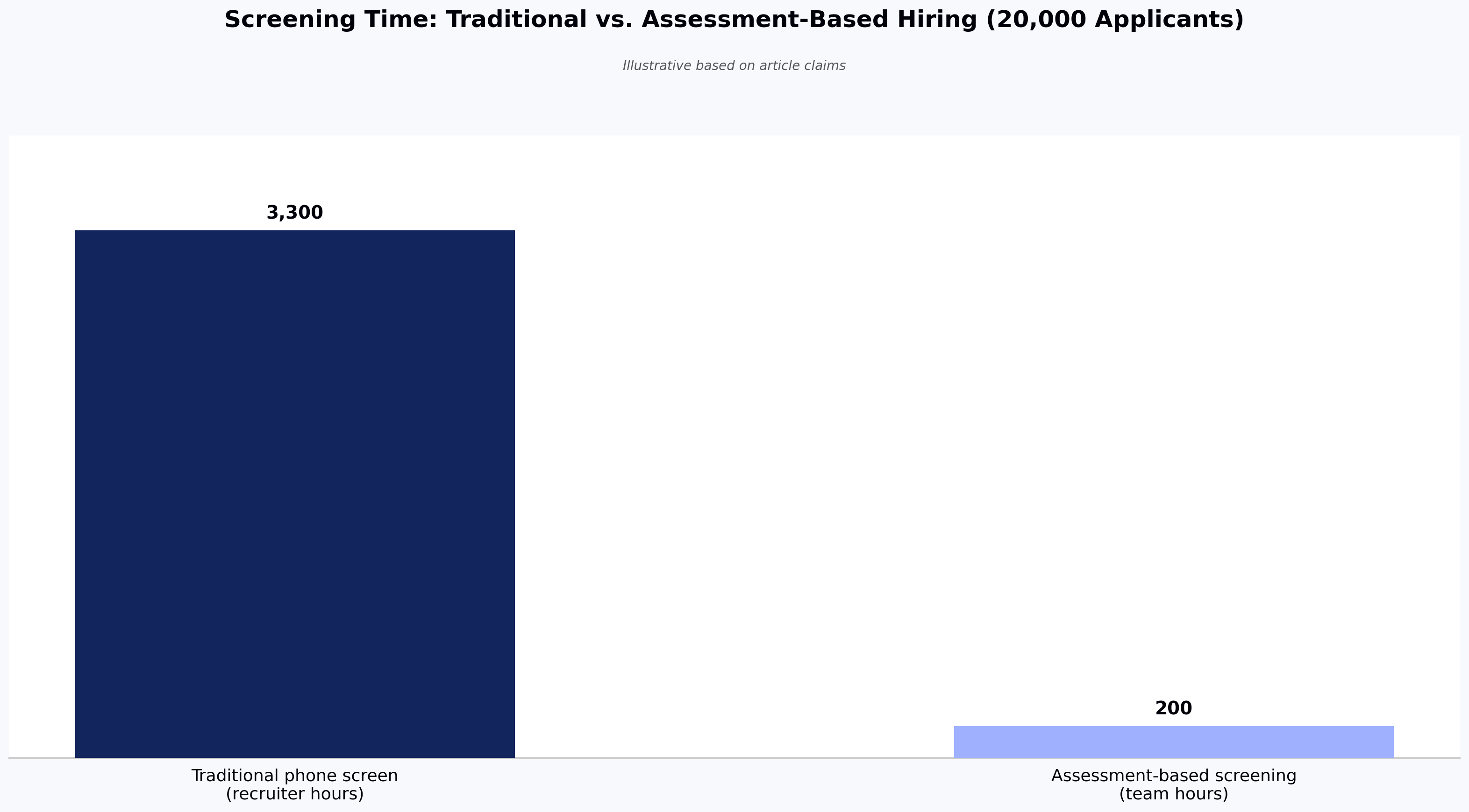
Recruiter capacity is shrinking while application volume grows. Recent industry reporting describes shrinking recruiter team sizes alongside rising open-role counts and higher application volumes per role. Smaller teams need analytics and automation to maintain quality at higher volume without burning out.
Where data-driven screening tools fall short
Data-driven tools are not a fit for every hiring scenario, and one-sided framing helps no one. Common limitations include:
- Niche or low-volume roles. When candidate pools are small, benchmarking and predictive scoring lose statistical reliability.
- Roles where soft skills dominate. Engineering management, staff-plus IC roles, and design leadership depend on judgment, communication, and stakeholder management that automated assessments capture poorly.
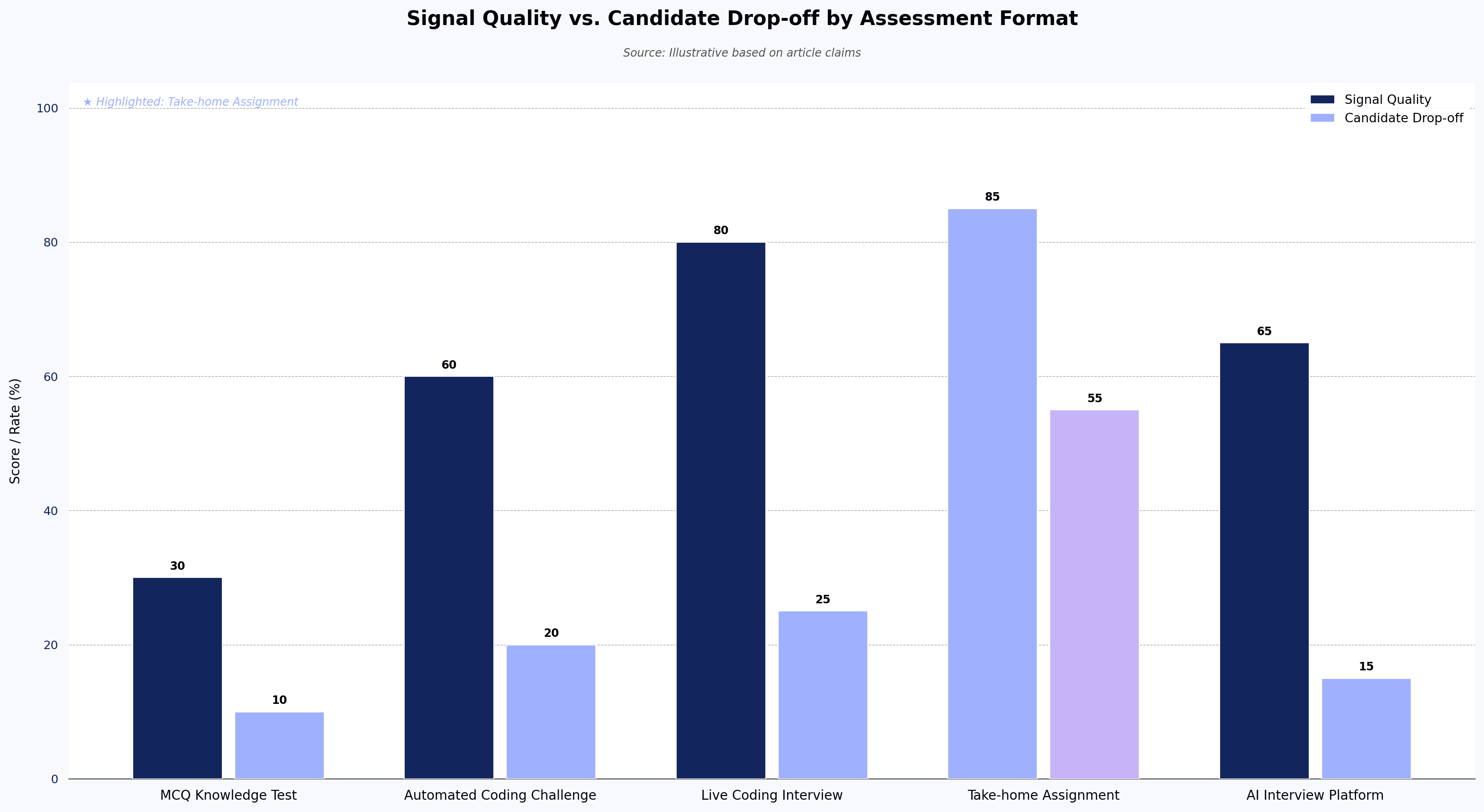
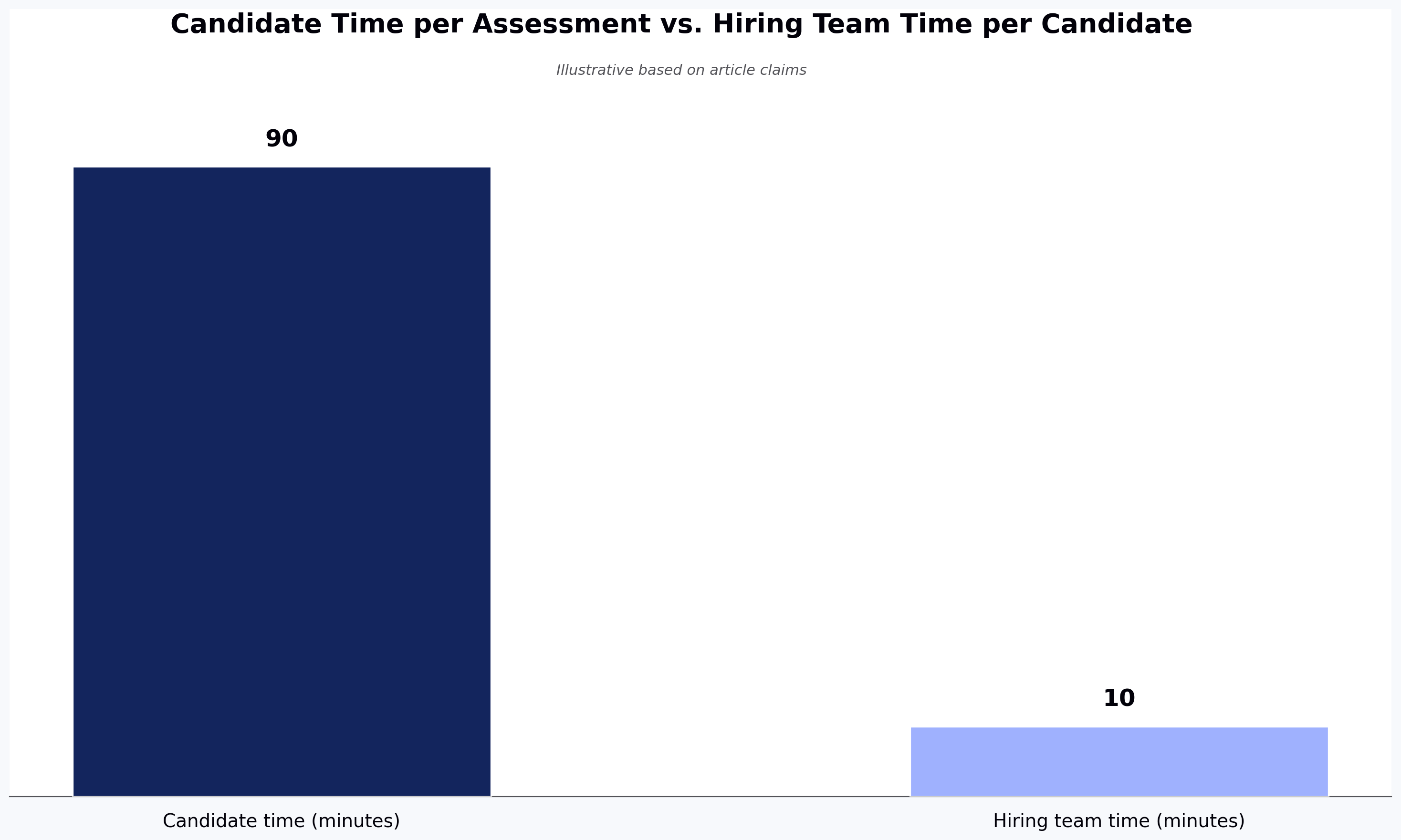
- Assessment fatigue at senior levels. Experienced candidates often refuse long take-home assessments, biasing your pipeline toward those with more time, not more skill.
- Embedded model bias. Predictive models trained on past hires can reproduce historical bias unless audited regularly.
Recruiters should pair data-driven screening with structured interviews and human review for these cases.
How HackerEarth supports data-driven tools for technical screening
HackerEarth is built specifically for technical hiring, so the analytics are designed around what engineering teams care about rather than repurposed from a generic HR dashboard. The platform's 1,000+ skill library lets recruiters configure assessments at a level of role specificity that maps directly to the data granularity criterion in the decision framework below — instead of a single pass/fail signal, recruiters get a breakdown across the specific competencies the role actually requires. Rubric- and role-based scoring surfaces signals on whether code runs correctly, which addresses the reporting capabilities criterion by giving hiring managers a defensible view of candidate ability rather than a single composite score.
HackerEarth supports role-specific assessment customization. Refer to current HackerEarth product documentation for the latest list of certified ATS integrations, compliance certifications, and dashboard capabilities.
How to choose a data-driven technical screening tool: a decision framework
The criteria below are vendor-agnostic. Use them to evaluate any platform on your shortlist.
Assess your hiring volume and complexity
Higher volume hiring demands stronger automation and tighter ATS integration. Smaller teams often care more about assessment customization and role-specific benchmarking. Getting this wrong means paying for features you will not use.
Evaluate data granularity and reporting capabilities
Ask every vendor to show you an actual candidate report, not a demo slide. Does it show code quality dimensions or just pass and fail? Does it benchmark against a comparable candidate pool? Vague answers signal a weak analytics layer.
Prioritize candidate experience
The candidates most likely to abandon a clunky or overly long assessment are the ones with other options. Ask every vendor for their average assessment completion rate. A low number reveals more about the candidate experience than any sales demo.
Check for compliance and fairness auditing
Ask for documented bias audits, regional data protection compliance, recognized security certifications (such as SOC 2), and clear data retention policies. Any platform making predictions about candidates needs to demonstrate its models do not systematically disadvantage protected groups.
Evaluate vendor independence and lock-in
Ask about data export, model transparency, and contract flexibility. A platform that locks your historical assessment data in is harder to leave when needs change.
Companies that invest in structured technical screening tend to make better hires, faster, with less wasted interviewer time — particularly when assessments track post-hire performance and feed that signal back into screening criteria over time. For recruiters, the practical gain from data-driven tools for technical screening is a defensible view of candidate ability based on real work, and a process that gets sharper as more post-hire performance data accumulates. The decision framework above is the place to start; the right platform is the one whose features map cleanly to your hiring volume, role mix, and compliance needs.
Next steps
Recruiters evaluating data-driven screening platforms can schedule a demo of HackerEarth Assessments to see role-specific assessments, analytics dashboards, and ATS integrations applied to their own hiring workflow.
FAQs
Where do data-driven screening tools tend to underperform? They lose statistical reliability for niche or low-volume roles where the candidate pool is too small for meaningful benchmarking, and they capture soft-skill-heavy roles (engineering management, design leadership) poorly. For these cases, structured interviews and human review remain the stronger signal.
How do predictive hiring tools reduce time-to-hire for engineering roles? By automatically filtering unqualified candidates at the top of the funnel using objective assessment scores, so engineering managers spend interview time only on candidates who have demonstrated real ability.
What recruitment analytics metrics should recruiters track? Time-to-hire, cost-per-qualified-candidate, assessment completion rate, candidate quality score, offer acceptance rate, and post-hire performance correlation. Together they show whether your screening process is working.
Can data-driven hiring software eliminate unconscious bias in screening? No tool eliminates bias. Structured assessments are more consistent across candidates than human-led screens because everyone is evaluated against the same criteria, but ongoing bias audits of assessment content and scoring models remain necessary.
What is the single most useful artifact to request from a screening vendor? A real, anonymized candidate report from a recent assessment — not a demo slide. The report reveals whether the platform actually surfaces code-quality dimensions, comparative benchmarking, and defensible scoring rationale, which a sales demo will almost always obscure.
Editor notes (metadata, not content): - Meta title: "Data-Driven Tools for Technical Screening: Make Smarter Hiring Decisions". H1 and meta title now aligned. - Read time should be calculated as word count ÷ 250, rounded to the nearest minute, and locked before publication. - Target word count is a metadata constraint and remains undefined; lock before publishing. - UNRESOLVED — Primary-source URLs for the previously cited DOL, SHRM/CareerBuilder, Gem, LinkedIn Talent Solutions, Greenhouse, and GoodTime statistics could not be verified to specific reports. All such statistics have been removed or softened to commonly cited / industry-reporting language pending sourcing. - UNRESOLVED — Toggl Hire and GoodTime references removed from body content pending Brand Guardian approval for competitor/adjacent-vendor mentions. - UNRESOLVED — '500+ global enterprises' claim and specific product capability claims (approach-level reporting, dashboard view names, dedicated enterprise support tier, code-efficiency scoring dimension) removed pending verification against the current HackerEarth product catalog and named case studies. Recommend adding a named customer reference with role, hiring volume, and measurable outcome before publication. - UNRESOLVED — A second distinct HackerEarth internal link is needed. The ATS integration guide anchor was removed because no distinct destination URL was confirmed. Replace with a real internal URL (e.g., a specific assessments product page or skills intelligence resource) before publication.