Meta title: Technical screening in 2026: 5 practices with no signal Meta description: Technical screening in 2026 has broken in specific ways. Here are five practices that no longer produce signal — and what actually replaces them.
Technical screening in 2026: 5 practices with no signal and what replaces them
Technical screening in 2026 is broken in ways that were only inconvenient two years ago. Resume filters, unmonitored take-homes, and standard LeetCode-style questions have all lost most of their signal to generative AI — and the teams still using them are calibrating on noise. This piece names the five practices that have stopped working, what replaces each, and where the trade-offs live.
The through-line: modern engineering screening is less about whether a candidate can produce working code and more about whether the candidate produced this code, understands it, and can extend it live. Every replacement below tightens one of those three checks.
Practice 1: Resume-based shortlisting as the primary filter (why the AI-resistant funnel starts earlier)
What stopped working: resume screening has always been weak signal for engineering ability, but through 2023 it was at least cheap weak signal. In 2026, LinkedIn's 2025 Future of Work Report indicates job applications have risen significantly year over year while recruiter time-per-application has dropped. Much of that volume is AI-authored. A resume that reads well now tells you the candidate can prompt a model, not that they can build.
What replaces it: a short, mandatory skills check applied to every applicant before human review. Fifteen to thirty minutes, role-calibrated, with the rubric visible to the reviewing recruiter. This inverts the funnel for technical screening in 2026: candidates prove baseline capability first, and resumes become context for the ones who cleared the bar.
Trade-off to name: you will lose some senior candidates who refuse to test. In our observation, the loss is smaller than teams feared at junior and mid levels, and real at staff-plus, where you should replace the assessment with a scoped conversation instead.
Practice 2: Unproctored take-home assignments
What stopped working: the unproctored take-home was already flawed — favoring candidates with time, penalizing candidates with caregiving responsibilities — but it produced some signal because most candidates wrote most of the code. That assumption no longer holds. Frontier-class models and coding assistants such as Claude and Cursor are capable of producing a competent solution to most take-home prompts in under an hour. Reviewers grading the output have no way to distinguish the candidate's contribution from the model's.
What replaces it: either a proctored, timed environment with a locked browser and screen recording, or — better for senior roles — a short async submission followed by a live extension round. In the live round, the interviewer asks the candidate to add a feature to their own submission. The signal comes from how they navigate their own code, not from whether the original submission compiles. This is one of the higher-leverage moves available in technical screening in 2026.
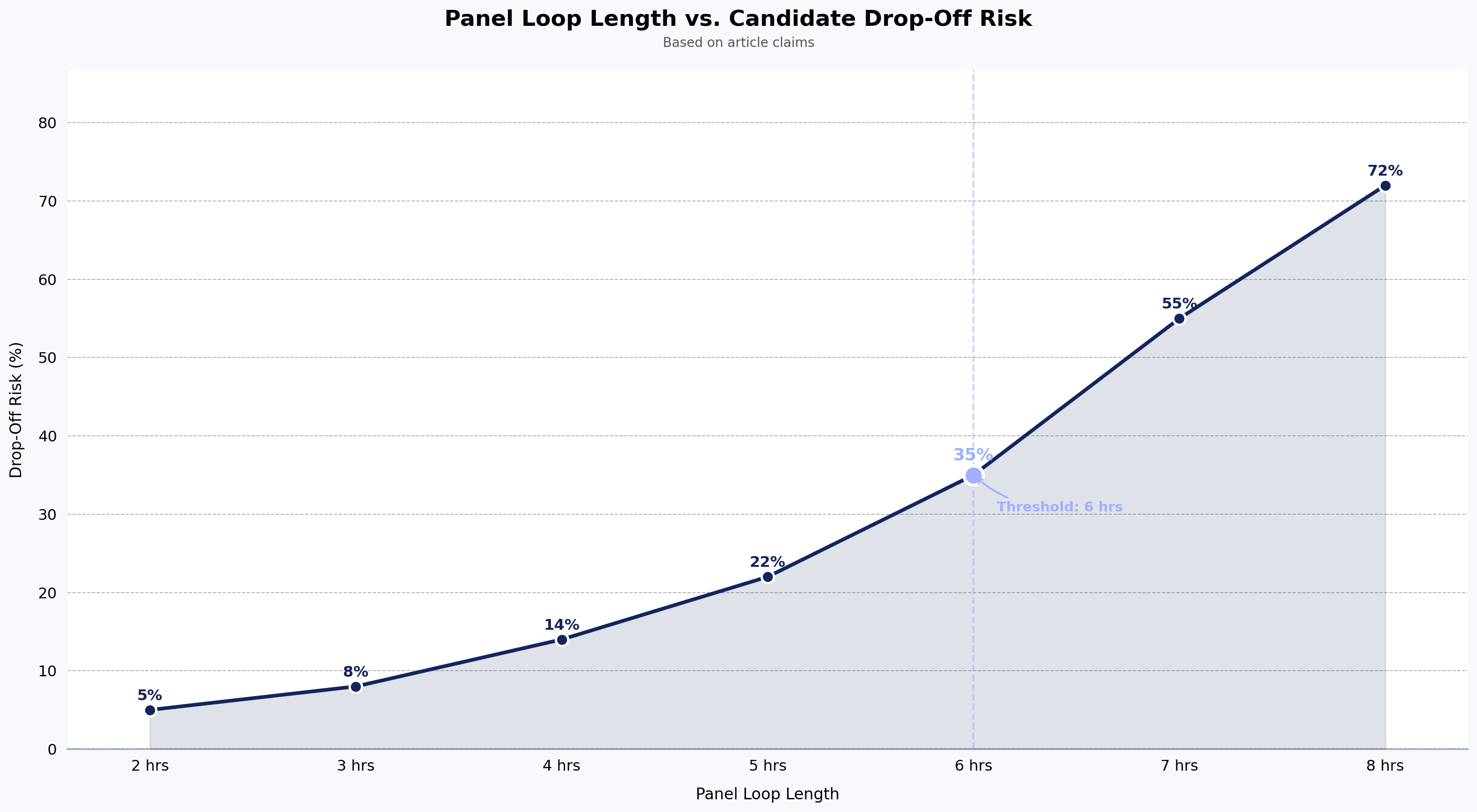
Trade-off to name: proctoring adds friction and some candidates will drop out. In our observation, most of the drop-outs are not the ones teams wanted to hire, but this is worth measuring in your own funnel before making it policy.
Practice 3: Standard algorithm questions and LeetCode-style screens
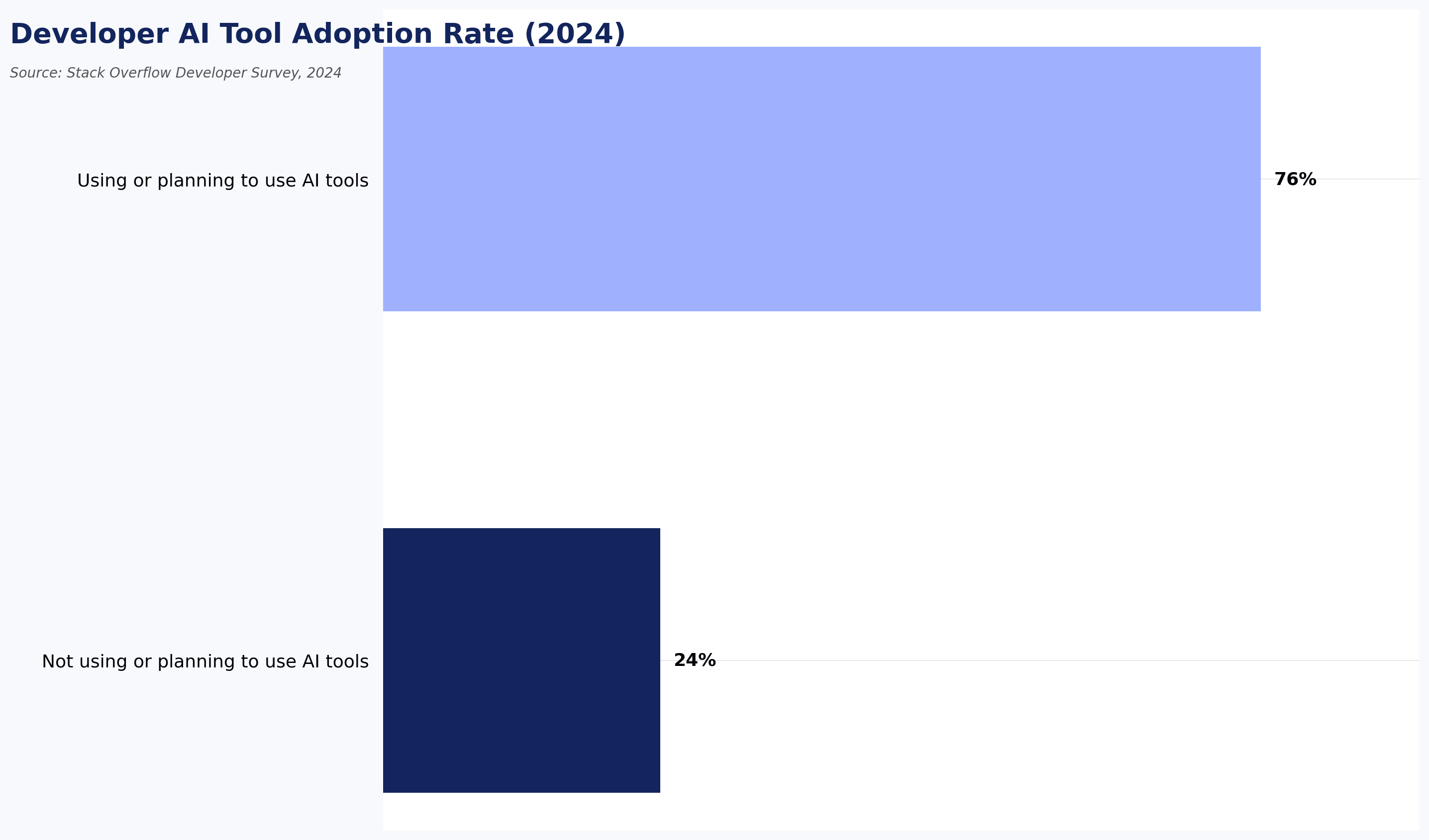
What stopped working: the top 500 LeetCode-style questions are memorized by any competent model. A candidate using a hidden second device, a browser extension, or even an earpiece can clear most standard algorithm screens without independent understanding. Widespread AI-tool use in day-to-day development — the 2024 Stack Overflow Developer Survey reported 76% of developers were using or planning to use AI tools — makes it reasonable to assume the same tools are reaching into screening environments; combined with anecdotal reports from hiring teams about proxy and assistant use, the signal from a canonical question is now closer to zero than to weak.
What replaces it: questions where the problem statement itself is unusual. Not harder — unusual. A domain-specific twist ("here's a rate limiter, extend it to handle burst traffic with these constraints") produces observable reasoning that a model can help with but cannot fully substitute for. The interviewer's job shifts from watching the candidate solve to watching the candidate decide — which assumption to make, which edge case to defer, what to name the variable.
Trade-off to name: unusual questions are harder to calibrate across interviewers. Rubric drift is a real cost, and it gets worse the more bespoke your questions become. Build fewer, calibrate more.
Practice 4: Single-interviewer technical screens without rubric enforcement
What stopped working: the 45-minute call with one engineer, unstructured notes, gut-feel yes/no. This has always produced inconsistent evaluations — the same candidate hitting a "strong yes" from one interviewer and a "no" from another — but the inconsistency is now expensive in a way it wasn't. When AI-inflated CVs are increasing the false-positive rate at the top of the funnel, the screen has to do more actual work. Gut-feel screens don't.
What replaces it: structured screens with a rubric the interviewer fills as they go, and a second reviewer who sees the artifact — recording, transcript, or code — before the decision. Two problems tend to travel together at this stage: interviewer variance and proxy candidates. Category tools built for structured screening address these problems in various ways; the right fit depends on volume, role mix, and the depth of identity verification you need.
Note: HackerEarth's OnScreen pairs a shared rubric with KYC-grade candidate identity verification in the same step, so interviewer variance and candidate-authenticity checks resolve together rather than sequentially.
Trade-off to name: rubric-enforced screening feels mechanical to interviewers who value their own judgment. Some of them are right — judgment matters — but the right place for it is the on-site, not the initial screen.
Practice 5: Screening without identity verification
What stopped working: for years, identity verification in technical hiring meant checking the government ID at the on-site. That was fine when the on-site was the first live touchpoint. It isn't fine now. Proxy candidates — where a stronger developer takes the screen on someone else's behalf — appear, based on reports from hiring teams, to have moved from a rare edge case to a more frequently reported pattern, particularly in high-volume remote hiring. The FBI's 2024 advisory on North Korean IT workers using proxies to obtain remote roles is the extreme version; in our observation, the broader pattern shows up in day-to-day pipelines as well. Identity verification is one of the biggest gaps in technical screening in 2026.
What replaces it: identity verification at the screen stage, not at the offer stage. KYC-grade checks, live face match against ID, and — for higher-stakes roles — a live video component to the technical screen where the candidate can be seen working. The verification doesn't need to be adversarial; it needs to be routine.
Trade-off to name: adding verification steps increases friction and raises privacy questions candidates are increasingly attentive to. Be explicit about what you store, for how long, and who sees it. In regulated industries, this is a compliance conversation, not a UX conversation.
What a good engineering screening process actually looks like in 2026
Three properties, in order:
- Mandatory baseline check on every applicant, short enough that drop-out is manageable
- Live component — even a 20-minute one — where the candidate extends or explains their own work
- Structured evaluation with identity confirmed and rubric applied consistently across candidates
If you cannot say those three things about your current process, the odds that you are calibrating on noise are high. This is the honest version of technical screening in 2026: the tools got better on both sides of the interview, and the process has to close the gap the candidates' tools opened.
For teams rebuilding the flow, our guides to AI-powered technical assessments and technical recruiting on HackerEarth go deeper on each layer.
Frequently asked questions
Should we ban candidates from using AI tools during technical screening in 2026? Banning is enforceable in proctored environments and unenforceable outside them. A more durable approach is to design questions where AI help is allowed but insufficient — the candidate still has to reason through decisions the model can't make from the prompt alone.
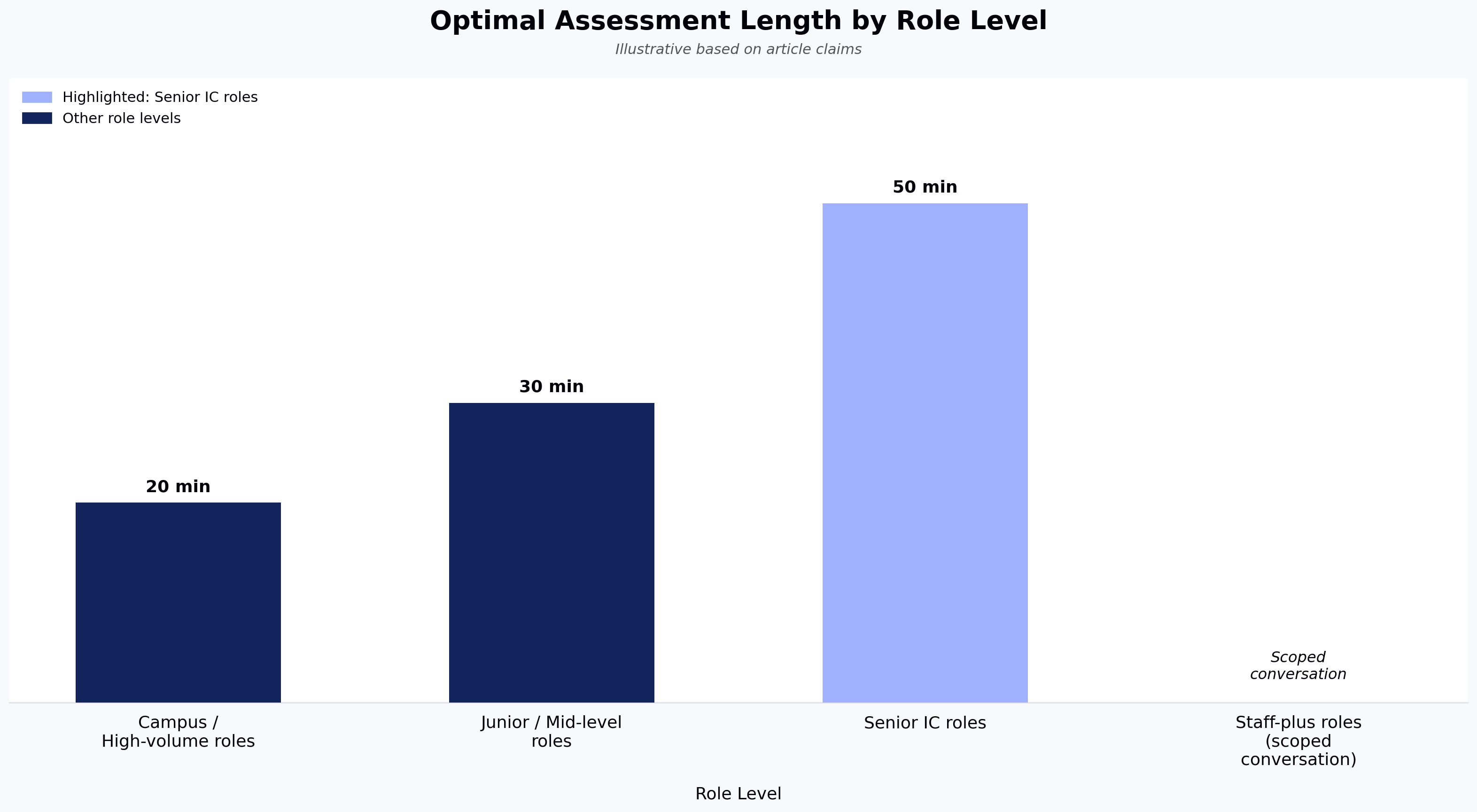
How long should a mandatory baseline assessment be in 2026? For most roles, 20–40 minutes is a common range reported by hiring teams we work with. Shorter than that and you lose signal; longer than that and completion rates tend to fall off. Campus and high-volume roles trend toward the lower end; senior IC roles that use an assessment at all typically sit in a 40–60 minute range, though your funnel may vary.
Does identity verification at the screen stage hurt candidate experience? It depends how it's framed. Candidates who expect it — because you told them at application, in plain language, why it's happening — complete it at high rates. Candidates surprised by it mid-process drop out. The friction is in the framing, not the verification itself.
Are AI interview tools better than human screeners? AI tools apply a rubric more consistently across candidates than human-led screens, and they don't vary by interviewer mood or fatigue. Humans still matter for later rounds where judgment, context, and stakeholder read are load-bearing. A common split is AI for the initial rubric-applied screen (which is high-volume and where consistency matters most) and humans for the later rounds.
What about senior engineers who refuse to take assessments? Don't force them. Replace the assessment with a scoped technical conversation — architecture discussion, code review of an open-source PR they've merged, or a design walkthrough. You still get signal; you just get it in a format staff-plus candidates will engage with.
How do we detect AI-generated code in take-home submissions? AI detection is widely reported among hiring practitioners to be unreliable and getting less accurate as models improve. Stop trying to detect and start structuring around it: require a live extension round on the candidate's own submission. If they can't extend their own code, the submission wasn't theirs regardless of what a detector says.
What are the best technical screening tools 2026 buyers should evaluate? Look for three capabilities together: a shared rubric applied consistently across interviewers, KYC-grade identity verification at the screen stage (not the offer stage), and a live extension component on candidate-submitted work. Category capabilities vary — some platforms lead on developer-facing question libraries, some on enterprise integrations and role-based benchmarks, and some on tightly coupled identity verification and assessment. The right fit depends on volume, role mix, and where authenticity checks sit in your pipeline.
Next steps
See how OnScreen applies rubric-based screening with KYC-grade identity verification across high-volume remote pipelines, and how the shared rubric surfaces interviewer variance before it reaches the hiring manager: request a walkthrough of HackerEarth OnScreen.