Meta title: Technical Assessments & Coding Tests for Hiring (2026 Guide) Meta description: A practical 2026 guide to designing technical assessments and coding tests for hiring — what to test, timed vs. take-home, proctoring, rubrics, and platform fit.
Technical Assessments and Coding Tests for Hiring: A Practical Guide for 2026
Technical assessments and coding tests for hiring have moved from optional to load-bearing, because resume-led hiring has been visibly breaking down over the past year and a half. Between AI-generated CVs, LinkedIn profiles polished by ChatGPT, and cover letters that read like they were written by the same person across a thousand applications, the top of the funnel has become noise. Technical assessments and coding tests are how hiring teams cut through that noise — but only if they're designed well. In short: technical assessments and coding tests evaluate candidate skill directly through structured coding challenges, rubric-graded work samples, and live debugging or system design sessions — producing comparable, auditable signal in place of resume proxies.
This guide is for recruiters and engineering hiring managers who already run assessments and want to run them better. If you're looking for a definition of what a coding test is, this isn't that article. If you're trying to decide what to change about your current process, keep reading.
What technical assessments actually solve in 2026
Technical assessments and coding tests for hiring do one job well: they replace unreliable proxies (resumes, referrals, brand-name schools) with a structured skill signal that's comparable across candidates. Every candidate answers the same questions under the same conditions, and the rubric — not the interviewer's mood — decides who moves forward.
That's the ideal. In practice, most assessment programs drift from it within a year.
The three problems worth naming:
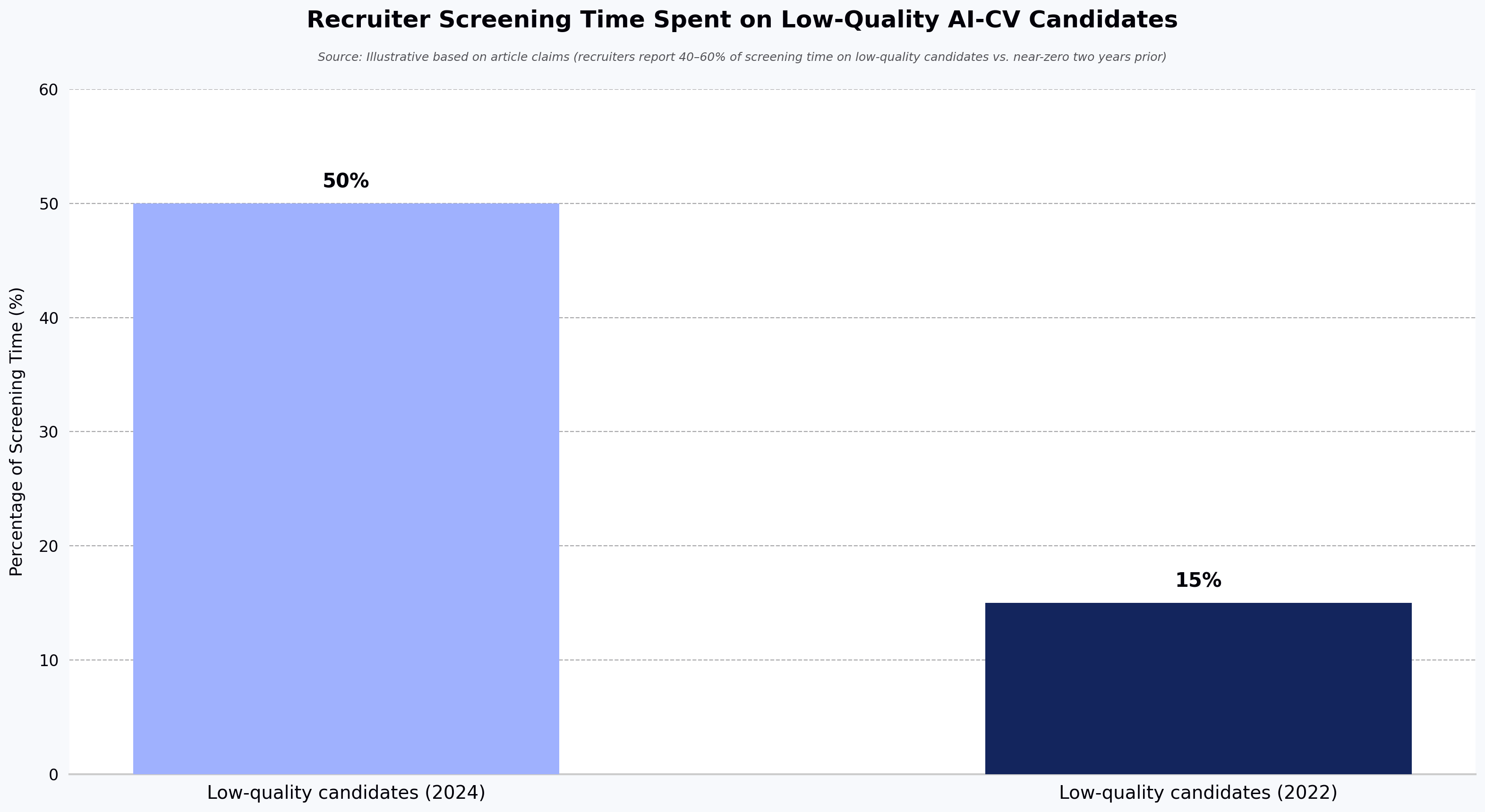
- The AI-CV problem. Applicant volume is up, but the median quality signal from a resume is down. In our own experience working with recruiting teams, a growing share of screening time now goes to candidates who would have been auto-rejected two years ago — we don't have a clean industry benchmark for this yet, but the pattern is consistent enough across teams we talk to that it's worth naming.
- The proxy candidate problem. Someone completes the assessment, someone else shows up to the interview. Anecdotally, this was rare a few years ago and is common enough now that many hiring teams treat identity verification as table stakes.
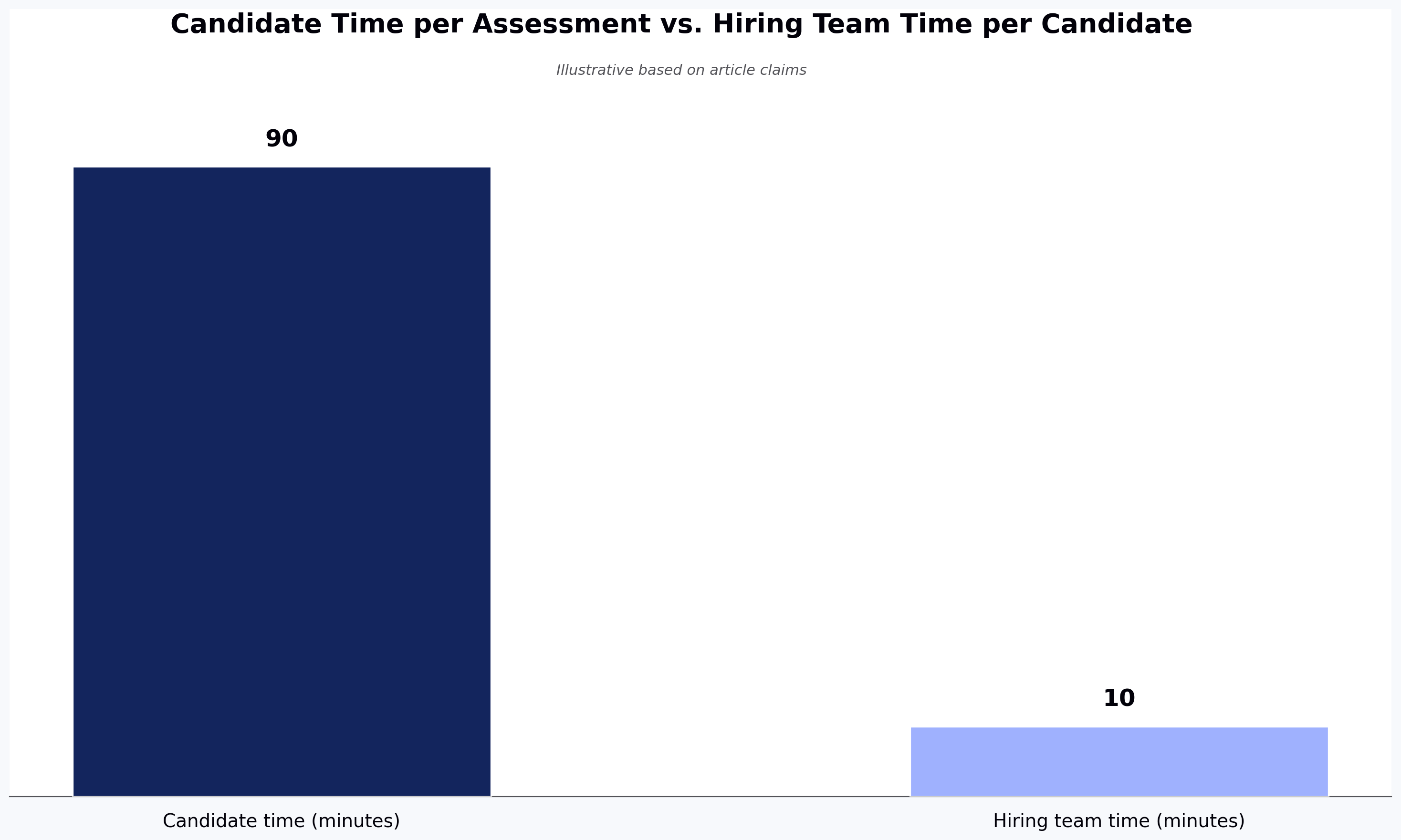
- The senior engineer time problem. Every hour a staff engineer spends on a phone screen is an hour not spent shipping. If your assessment doesn't reduce that load meaningfully, it's failing at its main job.
A well-designed assessment addresses all three. Most don't.
Five design decisions for effective technical assessments and coding tests
Before picking a platform or writing a single question, five design decisions do more to determine outcomes than any tool.
1. What are you actually testing for?
"Coding ability" is not a rubric. It's a category. A useful assessment tests for something specific: ability to debug unfamiliar code, ability to reason about API design, ability to write correct SQL against a messy schema, ability to explain trade-offs in a system design conversation.
Pick two or three specific competencies per role. Write them down. Then design questions that isolate each one. If a question could be passed by memorizing a LeetCode pattern, it isn't testing what you think it's testing.
2. Take-home versus timed
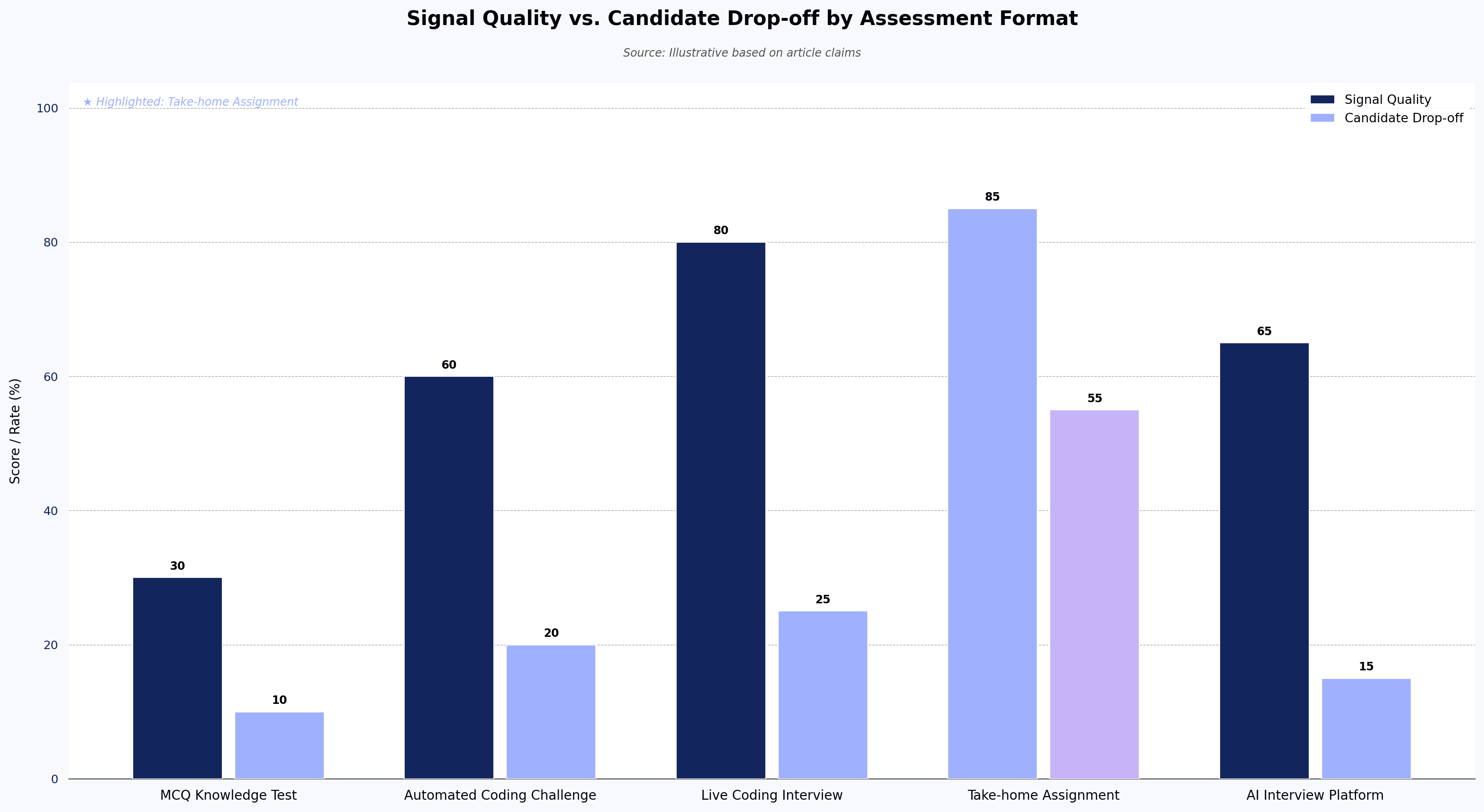
Both have failure modes. Take-homes are more realistic but harder to grade consistently and increasingly hard to attribute — AI-generated take-home submissions are increasingly difficult to distinguish from strong human ones. Timed assessments are more comparable across candidates but penalize candidates who don't test well under artificial pressure.
The honest answer: timed assessments are better for early-stage screening at volume. Take-homes are better for final-round work-sample evaluation, and only if you have the reviewer bandwidth to grade them properly. Most companies use them backwards.
3. Proctoring — how much, and where
There's a spectrum from no proctoring (honor system) to full lockdown browser, webcam monitoring, and ID verification. The trade-off is friction versus signal integrity.
Our position: for early-funnel screening at volume, some form of identity verification and behavior monitoring is worth the friction. For final-round assessments after multiple human touches, heavy proctoring is theater. The person you've video-interviewed twice isn't a proxy candidate.
4. Rubric design and calibration
The rubric is the assessment. Everything else is delivery mechanism.
A rubric that produces different scores when applied by different reviewers isn't a rubric — it's a suggestion. Calibration sessions where two or three reviewers grade the same five submissions and reconcile differences are the single highest-leverage activity in assessment quality. Most teams do this once at rollout and never again. Do it quarterly.
5. What happens after the assessment
An assessment score is an input, not a decision. The question is what your hiring managers actually do with it. If a strong assessment score plus a mediocre resume gets rejected while a weak assessment score plus a prestigious resume gets advanced, you don't have an assessment program — you have decoration.
Audit this every quarter: pull the last quarter's assessment scores alongside interview-loop outcomes, and check whether candidates in the top rubric band advanced at a materially higher rate than those in the middle band. If they didn't, the rubric or the downstream decision is broken.
Coding tests for different hiring contexts
Advice for junior frontend hiring is not advice for staff backend hiring. Here's how the assessment problem changes by context.
High-volume campus and early-career hiring
The problem is volume and consistency. You're evaluating 5,000–50,000 candidates for a few hundred roles. Human judgment doesn't scale here; a well-designed timed assessment does.
What works: structured coding challenges, 60–90 minutes, covering fundamentals (data structures, basic algorithms, one language-specific competency). Rubric-based auto-scoring with a manual review layer for borderline cases. Identity verification and behavior monitoring are non-negotiable at this scale.
What doesn't: elaborate multi-round assessments. Attrition kills your funnel. Keep the first screen short and sharp.
Mid-level engineering hires (2–7 years of experience)
The problem is signal quality. Resumes at this level are often inflated; interviews are often inconsistent. Assessment is the equalizer.
What works: a mix of coding (correctness plus code quality) and applied problem-solving. 60–90 minutes. Include at least one question that requires reading unfamiliar code, not writing new code from scratch — reading is what engineers actually do most of the day.
What doesn't: pure algorithm puzzles. They filter for interview prep, not job performance.
Senior and staff engineering hires
Assessments matter less here, and they matter differently. A staff engineer's job is mostly judgment, communication, and technical leadership, with coding a smaller share of the week. A coding test alone will systematically underweight the candidates you actually want.
What works: shorter coding component (45 minutes, focused on code review or debugging) paired with a live system design conversation using a tool like FaceCode that supports collaborative whiteboarding, multi-interviewer panels, and pair-debugging on the same shared workspace — which matters when a system design conversation needs to shift into a short code-reading exercise mid-interview. The design conversation is where the real signal lives.
What doesn't: three-hour take-home assignments. Senior candidates with options won't do them, and you'll systematically lose your best applicants.
Non-technical roles (sales, support, finance, operations)
Assessments for non-technical roles are underused. Structured rubrics for evaluating writing samples, sales role-plays, or analytical exercises produce meaningfully more consistent signal than unstructured interviews. Decades of selection-validity research, including Frank Schmidt and John Hunter's 1998 meta-analysis in Psychological Bulletin, find that structured evaluation methods generally outperform unstructured ones across job categories.
What works: role-specific work samples scored against a rubric. 30–45 minutes. Soft-skills assessments as a supplement, not a primary signal.
Where AI interviews fit alongside coding tests
AI interviews are a new category — distinct from coding tests but adjacent enough to matter for this decision.
The trade-off is honest: AI interviews are more consistent than human phone screens (same questions, same rubric applied to every candidate), and they run 24/7 so candidates aren't waiting days for a slot. They're worse than human interviews at context-dependent judgment — reading between the lines when a candidate hedges, or recognizing that a non-standard answer is actually creative rather than wrong.
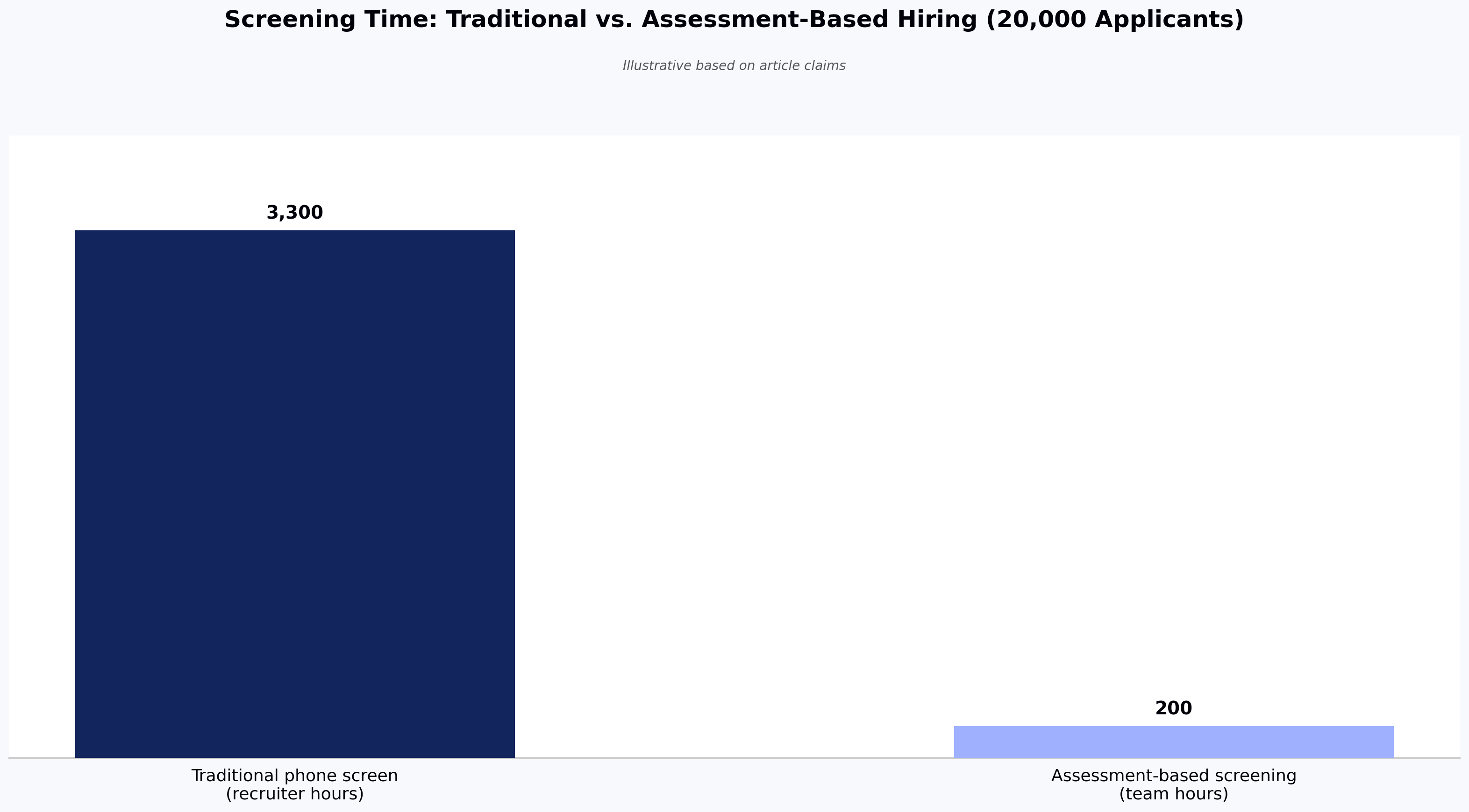
The job that AI interviews are actually good at is the one human recruiters shouldn't be spending time on in the first place: conducting the same structured screening interview 200 times with consistent rubric application and identity verification. Tools built for this pattern — OnScreen is one, conducting structured technical interviews around the clock using lifelike AI video avatars with built-in identity verification and proctoring — don't replace the human interview loops that follow. They replace the phone screens that were already inconsistent.
If your senior engineers are spending five-plus hours a week on early-stage screening interviews, this is where the math starts to work. If they're not, the ROI is weaker.
Common failure modes in technical assessment and coding test programs
Assessment programs fail in predictable ways. If you're running assessments today, check whether you're doing any of these. Many of these patterns overlap with the mistakes senior developers point out in tech hiring assessments.
Testing what's easy to test instead of what matters. LeetCode-style problems are easy to write and grade, but they tend to correlate weakly with actual job performance. Design questions that mirror real work, even if they're harder to grade.
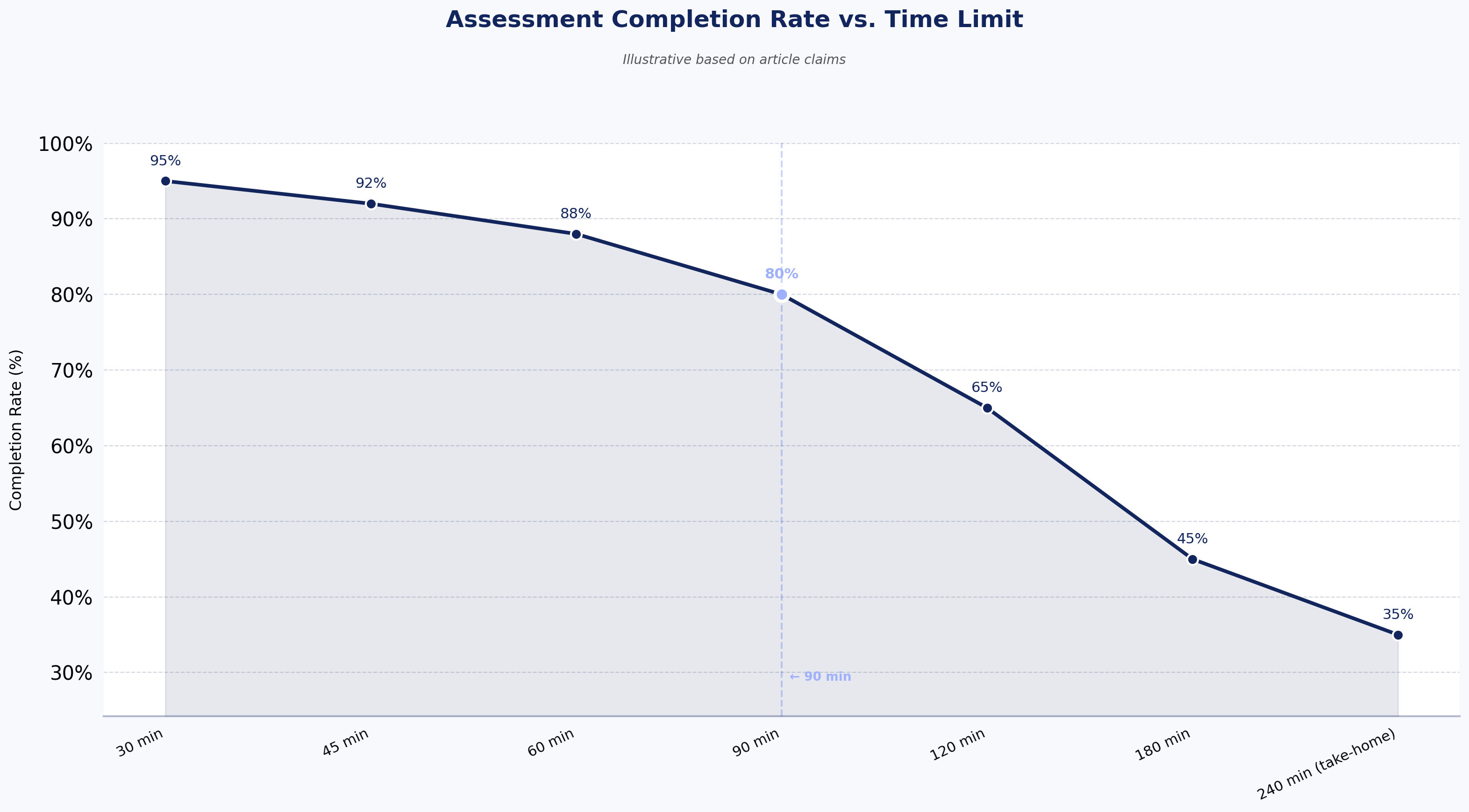
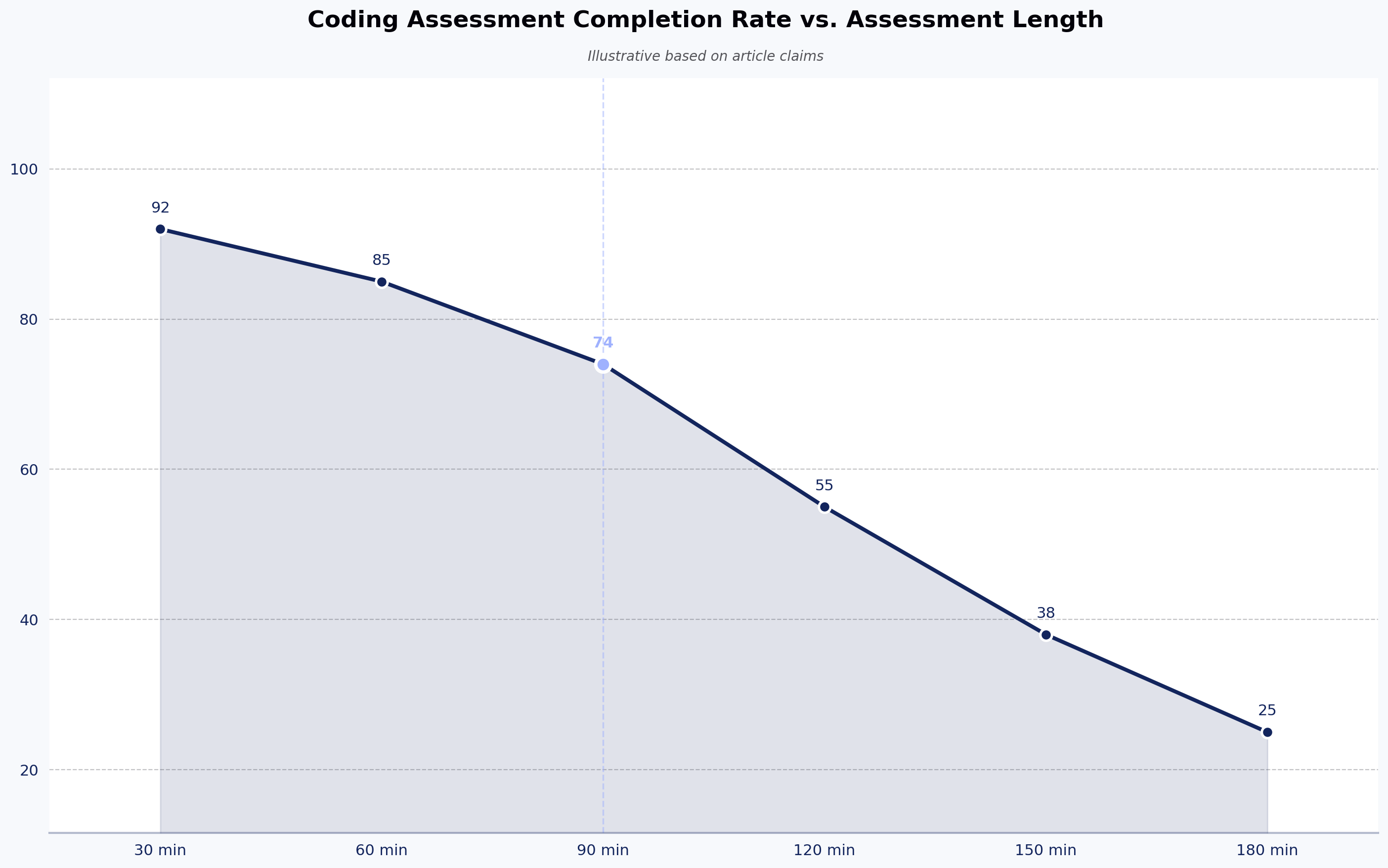
Ignoring completion rates. If most candidates start your assessment and only a small share finish, you're not filtering — you're driving away candidates. The strong ones have options and will drop first.
Never revisiting the rubric. Rubrics decay. What made sense for the role in 2023 doesn't make sense in 2026. Review rubrics whenever the role definition changes, and at least annually regardless.
Assessment-in-isolation. If the assessment score doesn't connect to what happens in the interview loop that follows, you have two disconnected processes. The strongest programs use assessment findings to shape the interview — "the candidate struggled with recursion in the assessment; probe that in the technical round."
No feedback loop from hires to assessments. Which questions predicted successful hires? Which produced false positives? If you're not tracking this a year out, you're guessing about what your assessment is actually measuring.
Questions to ask any technical assessment platform
Rather than a feature checklist, these are the questions worth pressing every vendor on — the answers will separate platforms that fit your role mix from ones that don't. For a broader treatment, the hiring assessment tools buyer's guide walks through the same trade-offs in more depth.
- Does the question library actually match your roles? A library of 10,000 questions is useless if none of them cover the stack you hire for. Ask for a mapping to your specific role mix, not a headline count.
- Can you build and iterate on your own rubric? Off-the-shelf rubrics rarely fit specific role requirements. If the platform locks you into vendor defaults, your calibration work has nowhere to land.
- What does anti-cheating look like at each funnel stage? Identity verification and behavior monitoring make sense for volume screening; blanket lockdown-browser policies at every stage lose candidates. The platform should let you dial proctoring by stage.
- How does it integrate with your ATS? Manual data reconciliation eats recruiter time. If a platform can't push scores and status changes into your ATS cleanly, keep looking.
- What does the reporting actually surface? Not just who scored what, but which questions produce signal, which produce noise, and where candidates drop off. Reporting that can't answer those questions won't help you improve the program.
Every vendor claims all of these. Ask for the specific proof — a live demo with your data, not a canned demo with theirs. If you're rebuilding from the ground up, the technical skills test guide for hiring covers the evaluation design questions that sit upstream of platform choice.
Frequently asked questions
How long should a technical coding test be?
60–90 minutes is the right range for early screening and mid-level roles; 45 minutes is enough for senior roles where a system design conversation carries more weight. In our experience across hiring teams, assessments that run past 90 minutes see materially higher drop-off, especially among candidates with competing offers.
What is the difference between take-home and timed coding tests?
The practical difference is where they belong in the funnel. Use timed tests (60–90 minutes) for early screening — they produce comparable scores across candidates and typically clear in a single sitting, so completion rates hold up. Reserve take-homes for final-round work samples, and only when at least two reviewers can grade each submission against the same rubric within a week; without that reviewer bandwidth, take-homes decay into inconsistent scoring, and AI-generated submissions make attribution harder still.
How do you prevent cheating on a coding assessment?
The three mechanisms in common use are identity verification (photo ID plus liveness check at start), behavior monitoring (tab-switch detection, copy-paste flags, timing anomalies), and full lockdown browsers that block everything outside the assessment window. Identity verification and behavior monitoring carry low friction and high signal, so they belong on early-funnel volume screens. Lockdown browsers add real candidate friction and are usually overkill after multiple human touches — reserve them for the specific cases where a role or client contract requires it.
Do coding tests work for senior engineering hires?
Partially. A staff engineer's role weights judgment, communication, and technical leadership heavily, so a coding test alone underweights the strongest candidates. A shorter coding component paired with a live system design conversation gives better signal.
What is the single biggest mistake teams make when choosing an assessment platform?
Buying on question-library size. A 10,000-question library is a vanity metric if none of the questions map to the stacks you actually hire for. Before comparing feature counts, ask each vendor to show questions covering your top three roles against your current rubric — most demos will not survive that request, and that failure is the signal you need.
How do coding tests affect candidate experience?
Length and proctoring are the two biggest levers. Assessments that stretch past about 90 minutes tend to hurt completion, and blanket lockdown-browser policies at every stage drive strong candidates — who have options — to drop first. Match proctoring to funnel stage, keep early screens short, and treat completion rate as a signal about your assessment, not just your candidates.
Key takeaways
- Assessments work when they replace unreliable proxies with structured signal; they fail when they become theater bolted onto the existing process.
- The five design decisions (what you're testing, timed vs. take-home, proctoring level, rubric quality, downstream use) matter more than platform choice.
- Different hiring contexts need different assessment designs — the same test won't serve high-volume campus and senior engineering hiring.
- Rubric calibration is the single highest-leverage activity in assessment quality. Do it quarterly, not once at rollout.
- AI interviews and coding tests solve related but distinct problems. Use them together where the volume math works.
Next steps
If your current assessment program has drifted or you're building one from scratch, the fastest path forward is to audit what you have against the five decisions above, then talk to a platform that can support the design you've committed to. Explore HackerEarth Assessments or book a walkthrough to review your current setup.