Technical Assessment: A Practical Guide to Technical Hiring
A technical assessment is a structured evaluation that measures a candidate's ability to solve problems, write code, or apply domain knowledge relevant to a specific job — administered before or during the interview loop, and scored against a defined rubric. Done well, a technical assessment replaces the guesswork of resume screening with signal you can defend to a hiring manager, a CFO, or a regulator.
Done badly — and most are done badly — a technical assessment filters out strong candidates, wastes engineering time, and produces scorecards nobody trusts. This guide covers what a good technical assessment looks like in 2026, how to design one, and where to be skeptical of vendor claims (including our own).
What is a technical assessment?
A technical assessment is a pre-hire or in-loop evaluation designed to test the specific skills a role requires — coding, system design, SQL, data analysis, security fundamentals, or role-specific knowledge for non-engineering technical roles. The output is a score, a rubric-applied evaluation, or a work sample that a hiring manager can compare across candidates.
The distinction that matters: a technical assessment measures what a candidate can do, not what they claim on a resume. This is why interest in structured assessments has grown even as overall search demand for the term has softened — the practice is moving from a separate stage into the interview itself.
A well-designed technical assessment answers one question: "Can this person do the work we would actually pay them to do?" Not "did they memorize LeetCode," not "did their resume pass the ATS parser," not "did they charm the recruiter."
How does a technical assessment work?
Most technical assessments follow a similar shape. The company defines the skills a role requires, selects or authors questions that test those skills, sets a time limit, and invites candidates to complete the assessment in a proctored or unproctored environment. Submissions are auto-graded where possible (unit tests, MCQs, SQL execution) and manually reviewed where judgment matters (system design, code quality, take-home projects).
The mechanics vary by format:
The scoring rubric is the part most teams underinvest in. A test without a calibrated rubric produces different "yes" and "no" decisions from different reviewers looking at the same submission. That's not a signal. That's noise wearing a lab coat.
Why are technical assessments important for technical hiring?
Resume signal is broken. Anecdotally, technical recruiters we work with report that AI-generated CVs now make up a noticeable share of top-of-funnel volume, and industry observers suggest AI-assisted job applications have grown sharply since ChatGPT launched. A resume that reads well no longer means the person who submitted it can write a for-loop under observation. For a deeper look at how this is reshaping screening, see how AI-generated CVs are breaking technical hiring.
There is also the credentialism problem. Research from the Burning Glass Institute and Harvard Business School has shown that many employers who required four-year degrees for technical roles have quietly loosened the requirement — because the degree wasn't predicting performance. Skills-based hiring works better when the skills are actually measured.
A well-designed technical assessment does three things a resume cannot:
The third point matters more each year. In regulated industries — BFSI in particular — a defensible rubric is not a preference. It's a requirement under scrutiny from bodies like the EEOC's Uniform Guidelines on Employee Selection Procedures.
What skills can a technical assessment evaluate?
Modern technical assessments — sometimes called technical aptitude tests or technical ability tests — cover a broader range than most hiring managers assume. The obvious skills:
Less obvious but increasingly measured:
For non-engineering technical roles — data analysts, SREs, technical program managers, security analysts — assessments now cover Excel modeling, incident response walkthroughs, and analytical writing. Structured evaluation is not just for developers anymore.
One caveat: the more you try to test in a single assessment, the less signal you get on any of it. A 90-minute test that touches algorithms, system design, SQL, and framework knowledge produces a mediocre read on all four. Pick two skills that actually matter for the role — our guide on how to evaluate developers accurately with a technical skills test walks through the trade-offs.
What are the different types of technical assessments?
The format should match the signal you're trying to capture.
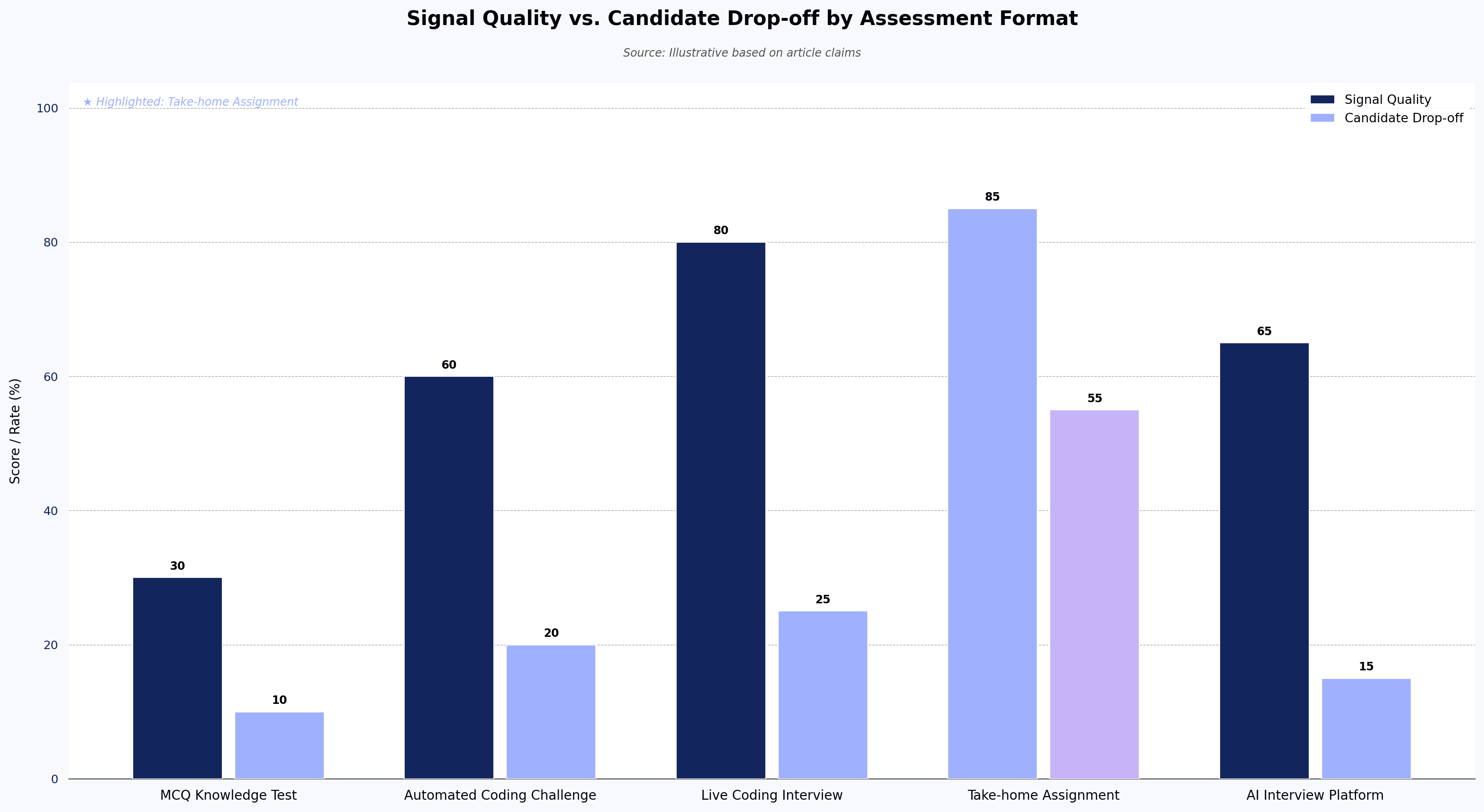
Coding challenges. Short problems with automated test cases. Best for screening at volume, especially early-career and mid-level roles. Weak signal for senior engineers, whose day job rarely involves solving self-contained algorithmic puzzles under time pressure.
MCQ knowledge tests. Fast, cheap, easy to scale. Good for filtering candidates who lack foundational concepts. Poor for anything that matters beyond the basics — a candidate who can't recognize a hash table probably shouldn't advance, but a candidate who can pick the right answer among four hasn't proven they can write one.
Take-home assignments. Multi-day projects that produce a work sample. Best signal-to-noise for mid-to-senior roles when scoped tightly (4–8 hours of work, not weekends). The trade-off is candidate drop-off — many strong candidates decline take-homes, especially those weighing multiple offers. And AI-assisted completion has made take-home authenticity harder to verify.
Live coding interviews. Real-time coding with an interviewer. Best for evaluating communication, problem decomposition, and how a candidate responds to feedback. Requires calibrated interviewers, which most companies don't have.
AI interview platforms. Structured, video-based technical interviews conducted by AI, with proctoring and identity verification built in. Useful for high-volume screening and time-zone-distributed hiring where scheduling human interviewers creates multi-day delays. HackerEarth's OnScreen is one of these; others exist. The trade-off is that AI-led interviews are a filter, not a final decision — the last-mile judgment still belongs to humans.
Hackathons and challenge-based sourcing. A time-boxed challenge that doubles as both evaluation and sourcing. Best for hard-to-fill roles or when employer brand needs a lift. Long cycle time makes it a poor fit for urgent hires.
How are technical assessments used in the hiring process?
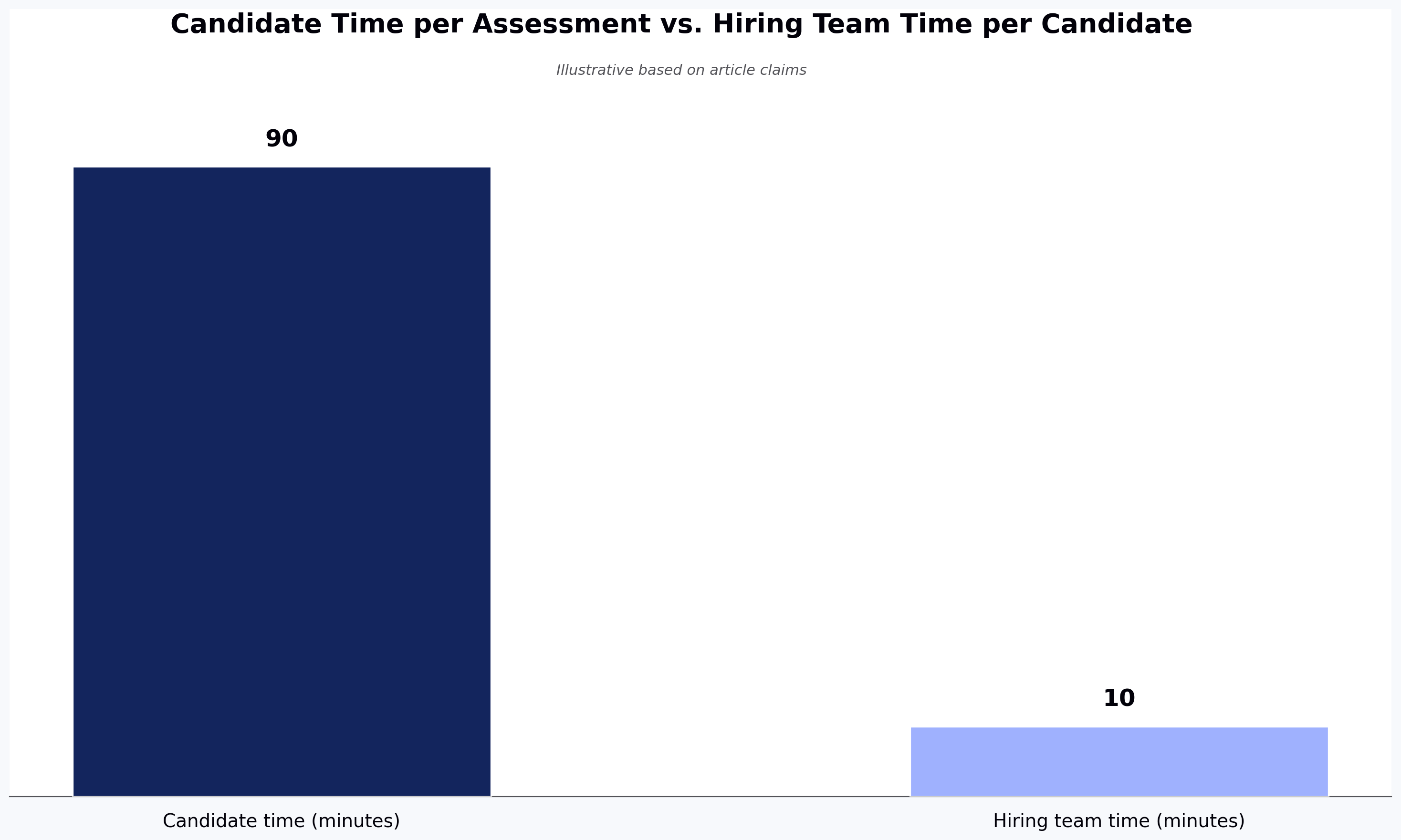
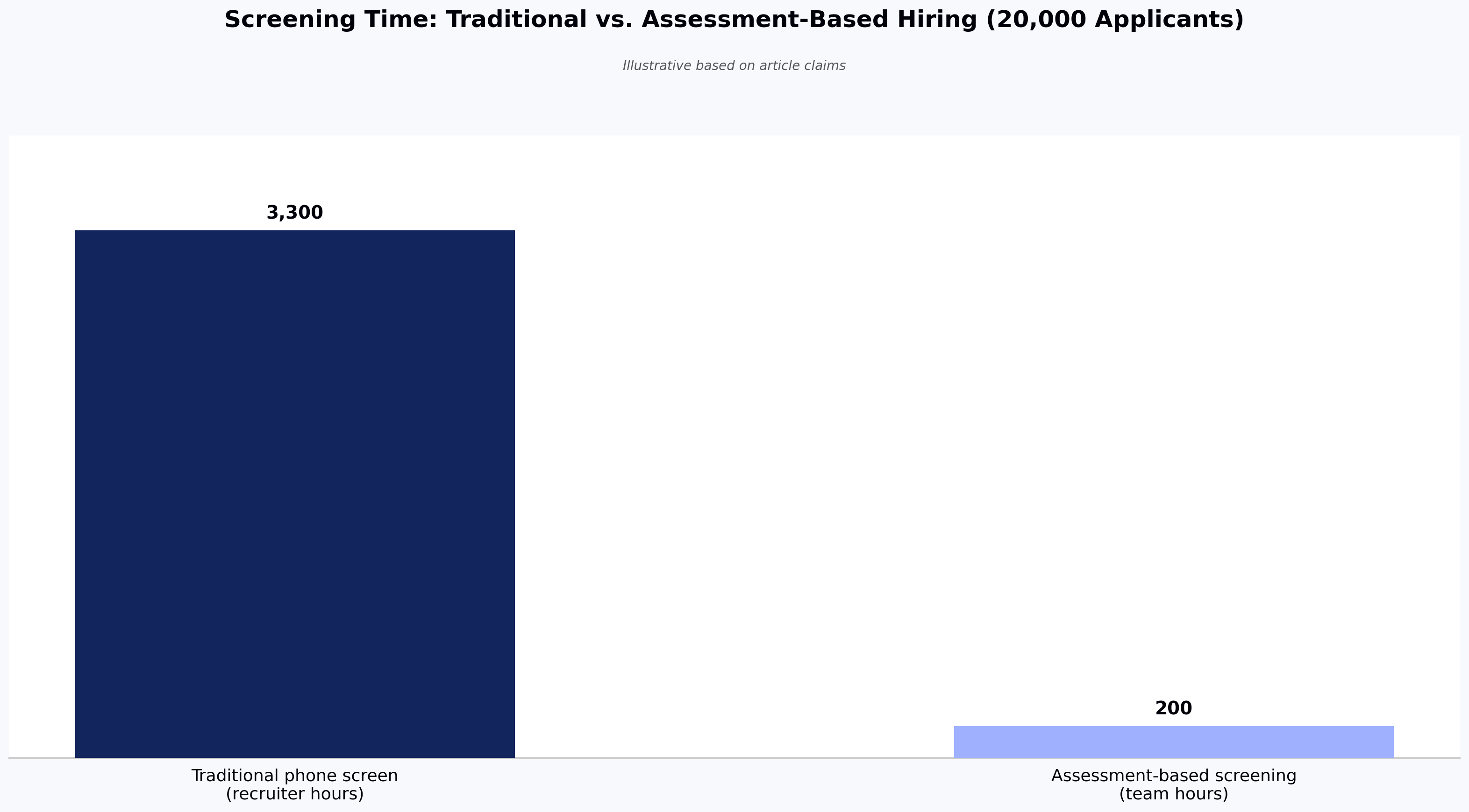
The most common placement is between resume screen and technical phone screen — a 45- to 90-minute filter that determines who gets an engineer's time. This is where volume-heavy pipelines gain the most. If your recruiter is spending three hours a week screening candidates who fail the first coding round, moving the assessment earlier pays for itself.
For senior roles, assessments increasingly appear later in the loop — after a hiring manager phone screen and before an onsite. The reasoning: senior candidates resist upfront tests, and the cost of a bad onsite is high enough that a mid-loop take-home is worth the friction.
A hybrid pattern is gaining traction: short automated screen upfront (30 minutes), followed by a live coding round with an engineer for candidates who pass. This preserves engineering time while giving finalists a human-led evaluation. For a deeper look at common pitfalls, see 4 mistakes to avoid with tech hiring assessments.
Technical assessment vs. technical interview: what's the difference?
A technical assessment is structured, scored, and often asynchronous. A technical interview is conversational, judgment-based, and almost always live. They test overlapping but distinct signals.
An assessment answers: Can this person solve this problem? An interview answers: How does this person think, and would I want them on my team?
Assessments produce comparable data across candidates. Interviews produce context — the "why" behind a decision, the read on communication and collaboration, the trade-off discussions that reveal seniority. A hiring process that relies only on assessments will hire technically strong people who can't work in a team. A process that relies only on interviews will hire technically weak people who interview well.
Most hiring teams need both. The question is sequencing and weight, not which one to keep.
What features should a technical assessment platform have?
Rather than a feature checklist that maps to any single vendor, here is what a serious platform should do:
Ignore any feature that doesn't map to a decision you actually make. "AI-powered scoring" is decoration unless the vendor can explain what the AI is doing, what it's trained on, and where it fails. For a fuller checklist, see our hiring assessment tools buyer's guide.
How do technical assessments improve developer hiring?
The honest answer: they improve hiring in three ways, and they don't help with a fourth.
They reduce false positives. Candidates who look strong on paper but can't code get filtered before a hiring manager spends an hour on them.
They surface false negatives — candidates whose resumes wouldn't survive a keyword scan but who perform well on the assessment. Companies willing to source outside traditional pipelines get the most benefit from this.
They create comparable data. Two candidates from different backgrounds, evaluated against the same rubric, produce a signal that's easier to defend when a hiring manager and a recruiter disagree.
What they don't help with: hiring for cultural contribution, for judgment on ambiguous problems, or for the kind of engineering leadership that shows up over months, not minutes. Assessments are a filter. They're not a substitute for the interview loop that comes after.
How can companies use technical assessments for high-volume hiring?
Volume is where the math changes. If you hire 50 engineers a year, the ROI on a good assessment platform is real but modest. If you hire 5,000 — as most large IT services firms in India do, and as many campus-heavy programs do — the math is different.
At scale, three things matter:
For campus and high-volume hiring specifically, hiring challenges and structured coding assessments produce ranked candidate pools rather than raw applicant piles — the difference between interviewing 200 people and interviewing the 20 most likely to convert.
What are the common challenges with technical assessments?
Most implementations fail in predictable ways.
Poor question design. Questions copied from LeetCode leak into practice sets within weeks. Custom, role-relevant questions produce better signal but require investment to author.
Rubric drift. Reviewers apply different standards over time and across teams. Without regular calibration, the same score means different things depending on who scored it.
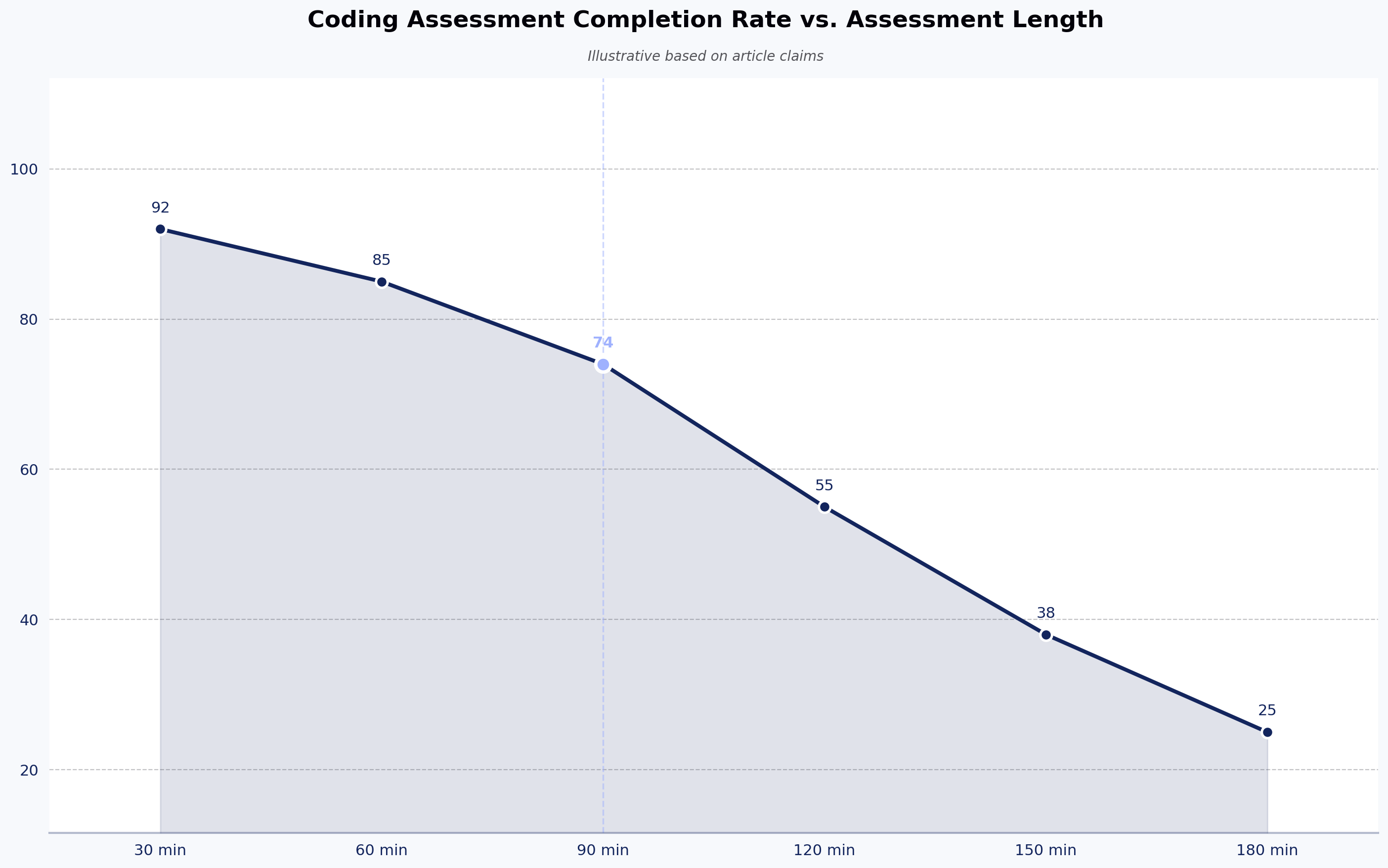
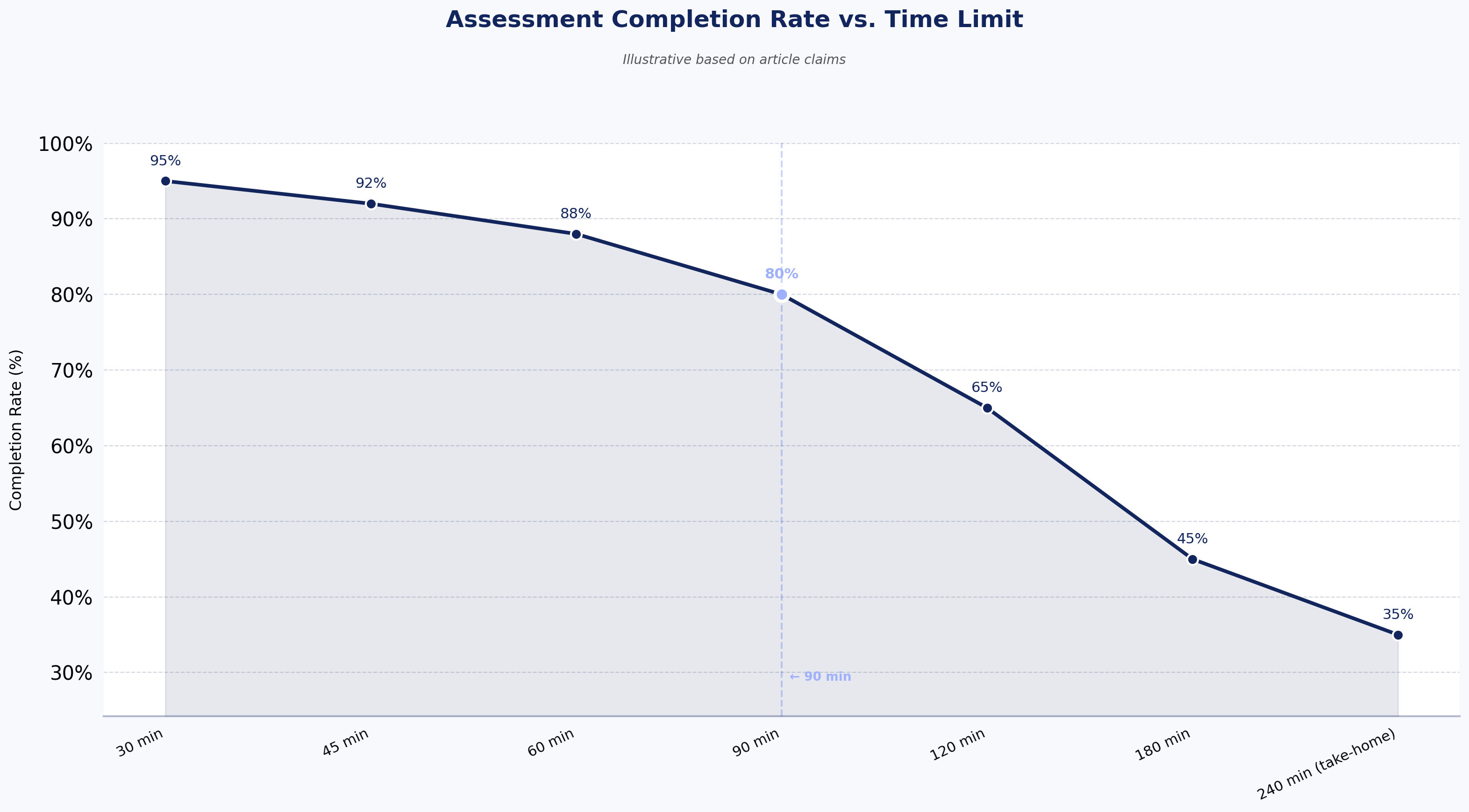
Candidate drop-off. Long assessments filter out candidates with other offers first. If your assessment takes three hours and your competitors ask for 45 minutes, you'll lose the top of the market.
AI-assisted cheating. Take-homes are the most exposed. Live coding and proctored assessments are more resilient, but even those can be gamed. The response is layered: proctoring, follow-up conversation, and code-authorship checks — not a single silver bullet.
Adverse impact. Any structured selection tool can produce disparate outcomes across protected groups. The EEOC's Uniform Guidelines require validity evidence when adverse impact appears. Most companies don't audit for this. They should.
Over-testing. Some teams stack a coding test, a take-home, and a system design assessment before the candidate meets a human. That's not rigor. That's attrition dressed as process.
How can companies create an effective technical assessment process?
Start with the job, not the platform.
The teams that do this well treat the assessment like a product. They ship, measure, and iterate.
How to choose the right technical assessment platform
The right platform is the one that fits your volume, your roles, and your hiring maturity. A startup hiring 15 engineers a year does not need what an IT services firm hiring 50,000 needs.
Questions worth asking any vendor:
A vendor who can't answer the last two isn't ready for enterprise deployment. A vendor who answers all five with confidence is worth a pilot.
By HackerEarth's own numbers, our assessment platform covers 1,000+ skills across 40+ programming languages and has run 150 million+ assessments to date — useful context, but the harder question is whether the platform matches your specific role mix. Any vendor claim, ours included, should be validated against your own candidate pool before you commit.
Frequently Asked Questions About Technical Assessments
A technical assessment is a structured evaluation of a candidate's technical skills, administered before or during the interview process and scored against a defined rubric. It measures what a candidate can do rather than what their resume claims — coding, problem-solving, system design, or role-specific technical knowledge.
Common examples include automated coding challenges with hidden test cases, SQL exercises against a sample database, take-home projects that produce a small working application, multiple-choice tests on foundational concepts, and live coding interviews on a shared editor. For senior roles, system design discussions and code review exercises are increasingly common.
A concrete example: a SQL screening prompt might provide a two-table schema (orders, customers) and ask the candidate to return the top five customers by revenue in the last 90 days, excluding refunded orders. The rubric scores correctness (does the query return the right rows?), handling of edge cases (NULLs, ties, timezone boundaries), and query quality (appropriate joins, no unnecessary subqueries). Auto-grading runs the query against a hidden dataset; a reviewer spot-checks the top-scoring submissions for query style.
For employers: the best assessments require little candidate preparation beyond familiarity with the format, because they test skills the candidate either has or doesn't. If your candidates consistently need extensive prep to pass, the assessment is probably testing memorization rather than skill — and that's a signal to redesign it. As a brief inversion for candidates: coding challenges reward familiarity with data structures and edge-case thinking; take-homes reward scoping and clean code over cleverness; system design assessments reward the ability to make trade-offs out loud.
For screening, 45–90 minutes is the range where signal peaks. Beyond 90 minutes, drop-off rises faster than signal quality improves. Take-homes should be scoped for 4–8 hours of candidate time, not a weekend project. Assessments that consume more than a working day are a candidate-experience problem regardless of what they measure.
Partially. Proctored live assessments and follow-up conversations are the most reliable filters. Take-homes and unproctored coding tests are more exposed — some platforms use process monitoring, LLM-output pattern matching, or authorship checks, but no single detection method is complete. The pragmatic response is to layer defenses and to structure later interview rounds so a candidate has to explain and extend their own submission.
When they are job-relevant, applied consistently, and audited for adverse impact, yes. The
Key takeaways
See it in action
If you want to evaluate whether structured assessments would improve your specific hiring funnel, schedule a demo of HackerEarth Assessments and bring a role you're currently hiring for. We'll walk through how the rubric would apply to your candidate pool.