How to Hire Remote Developers: 2026 Roadmap
Estimated read time: 10 minutes
Hiring remote developers in 2026 means competing for engineers across borders, not zip codes — and a remote hiring 2026 roadmap now runs through global sourcing, AI-assisted assessment, and compliant employment structures. This guide lays out the sourcing channels, assessment steps, compensation choices, and onboarding practices that separate a working plan from a wish list. The geography-bound hiring model has been largely replaced by a remote-first default, especially in software engineering, where async collaboration and digital-native workflows fit the work.
A practical roadmap for talent, engineering, and HR leaders building distributed developer teams in 2026 — covering sourcing, assessment, compliance, pay, and onboarding.
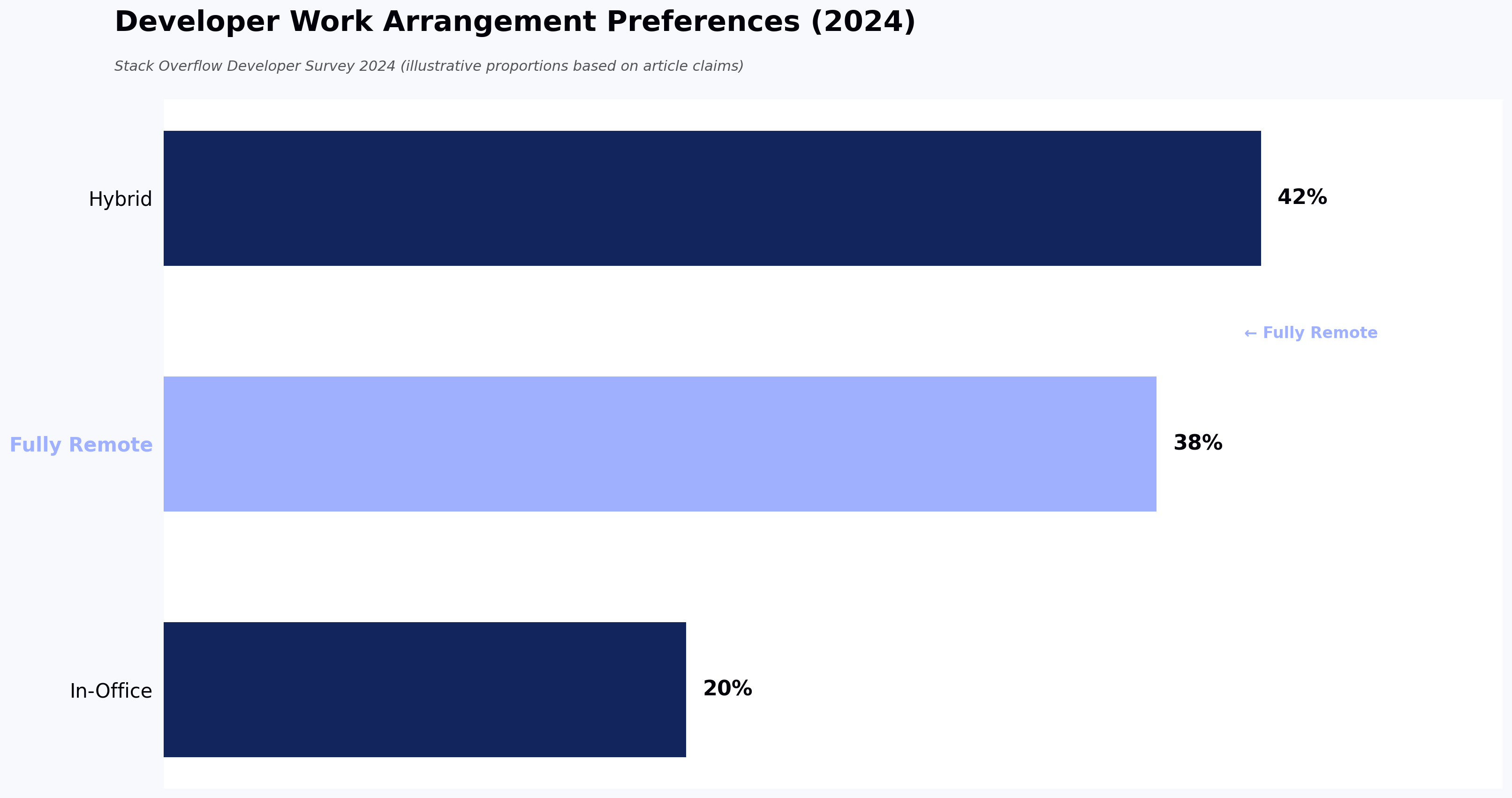
The developer workforce treats flexibility as a baseline expectation. Stack Overflow's 2024 Developer Survey found that a majority of professional developers work either hybrid or fully remote, with hybrid the most common single arrangement and fully remote close behind. Companies restricted to local talent pools compete against firms using global sourcing to reach specialists across multiple continents.
The strategic case for global engineering talent
Remote hiring in 2026 is less about cost arbitrage and more about talent density — finding the specific engineer who can solve a specific problem, wherever they live. That access matters most in AI, cloud architecture, and cybersecurity, where regional supply falls short of demand.
Productivity research on remote work is mixed rather than uniformly positive. GitLab's Remote Work Report points to fewer interruptions and reclaimed commute time as the main drivers of reported productivity gains, while Microsoft's Work Trend Index has flagged async communication gaps and meeting fatigue as real costs.
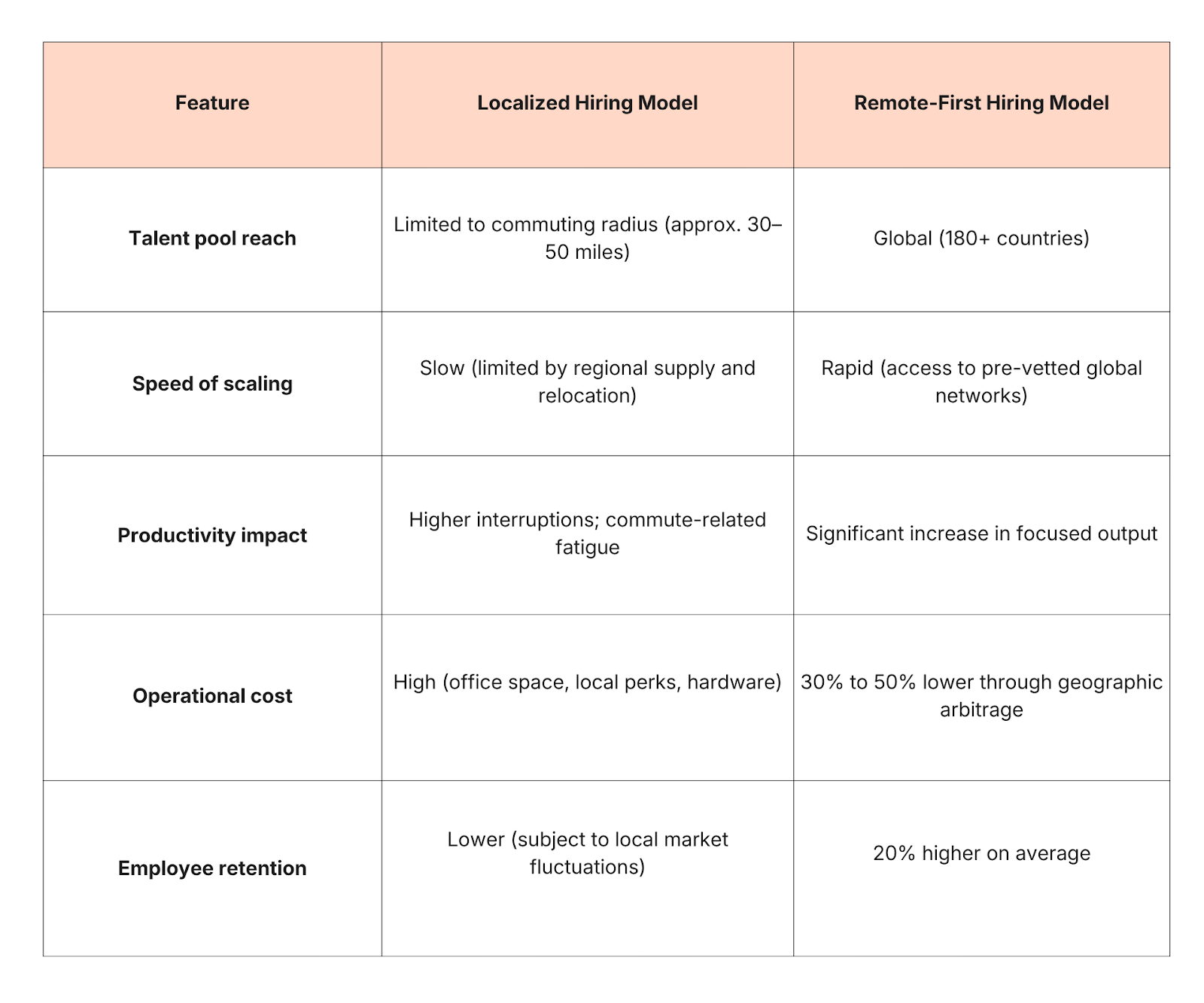
Real estate and infrastructure savings are the most-cited employer benefit, though reported per-employee figures vary widely by company size and geography. Global Workplace Analytics offers a widely cited but older estimate of roughly $10,000–$11,000 in annual employer savings per half-time remote employee, driven by reduced office space, utilities, and absenteeism — a figure that should be treated as illustrative rather than universal. The chart below compares remote-first and localized hiring across common decision criteria; the key takeaway is that remote-first models expand talent reach and typically shorten time-to-hire but require heavier investment in compliance and onboarding infrastructure.
Defining technical and operational roles for distributed teams
A remote hire starts with a role definition that leaves no room for interpretation. Ambiguity in job requirements is the single most common source of misaligned expectations and costly mis-hires in distributed environments. For engineering managers, this is where you own the outcome most directly — even when TA or HR runs the process, the role spec is yours.
Technical requirements should name specific languages, frameworks, and cloud stacks rather than generic titles like "Full-Stack Developer." By 2026, expectations often include React, Next.js, and Node.js on the application side and Docker and Kubernetes on the infrastructure side. As AI tooling spreads, developers are also expected to work alongside coding agents and review AI-generated code critically. A well-designed technical assessment tied directly to that stack does more to catch mis-hires than any resume screen.
Seniority and autonomy signals matter more in remote hiring than in colocated hiring. Senior remote developers need to manage their own environments, unblock themselves on ambiguous problems, and sustain momentum across async cycles. Junior remote developers need the same eventually, but the honest trade-off is that remote work makes juniors harder to support, not easier — the informal shoulder-taps and whiteboard sessions that accelerate early-career growth are difficult to replicate over Slack. Teams hiring juniors remotely should either invest heavily in structured mentorship or acknowledge that some early-career roles are a poor fit for fully distributed setups.
Where remote hiring is a poor fit. Not every role belongs on a remote roadmap. Hardware-dependent work, roles with heavy on-site customer interaction, and early-stage teams that need high-bandwidth whiteboarding for product discovery are all cases where remote hiring adds friction rather than removing it.
Strategic sourcing and global talent hubs
Finding the right developers takes a multi-channel sourcing strategy that balances reach against candidate quality. In 2026, sourcing splits across broad-reach job boards, specialist developer communities, and regional hubs, and channel choice should follow the technical niche and seniority target.
Remote-focused job boards such as We Work Remotely and Remote OK reach candidates already committed to remote work but produce high application volumes that require strong screening. Developer communities like GitHub, GitLab, and Stack Overflow offer more signal — public repositories, contribution histories, and answer quality all reveal how a candidate actually works before you schedule a call.
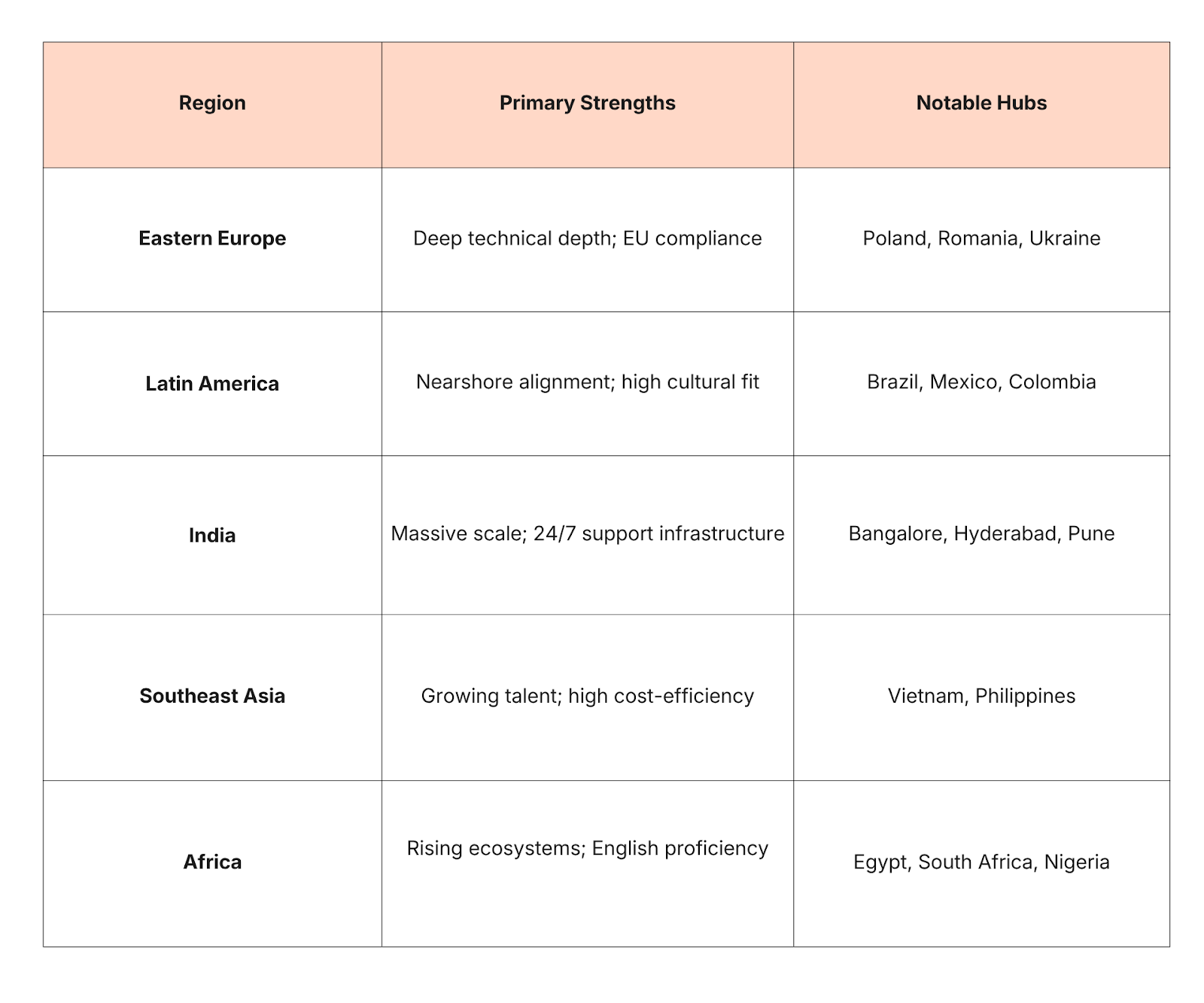
Regional hubs trade off on cost, engineering depth, and time zone. Latin America — particularly Brazil, Mexico, and Colombia — is a common choice for North American teams because time zone overlap supports real-time collaboration. Eastern Europe, especially Poland, Romania, and Ukraine, is known for depth in fintech and cybersecurity engineering. Regional signal is easier to read when paired with structured skills-based screening that normalizes candidates across markets.
Technical assessment in a 2026 remote hiring roadmap
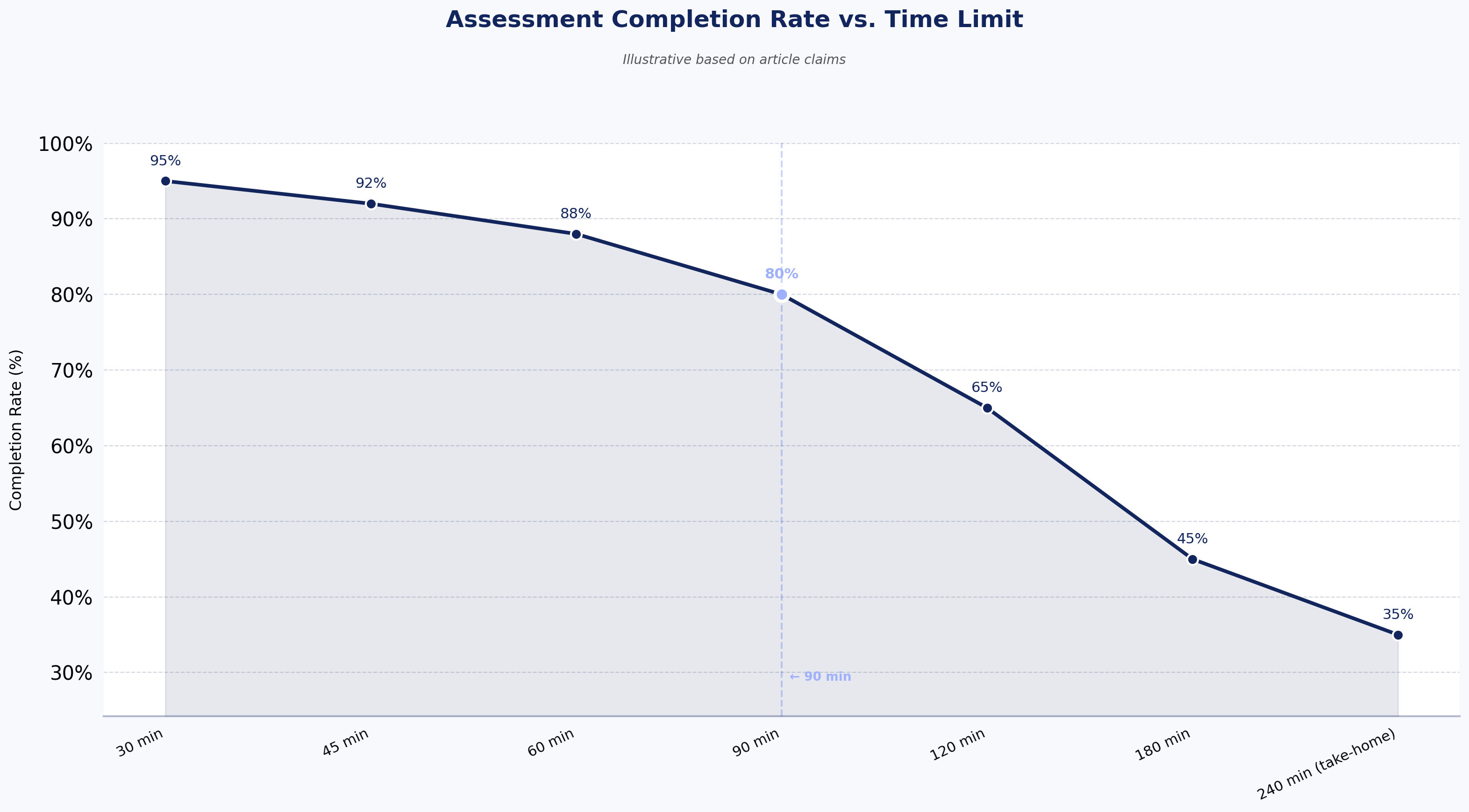
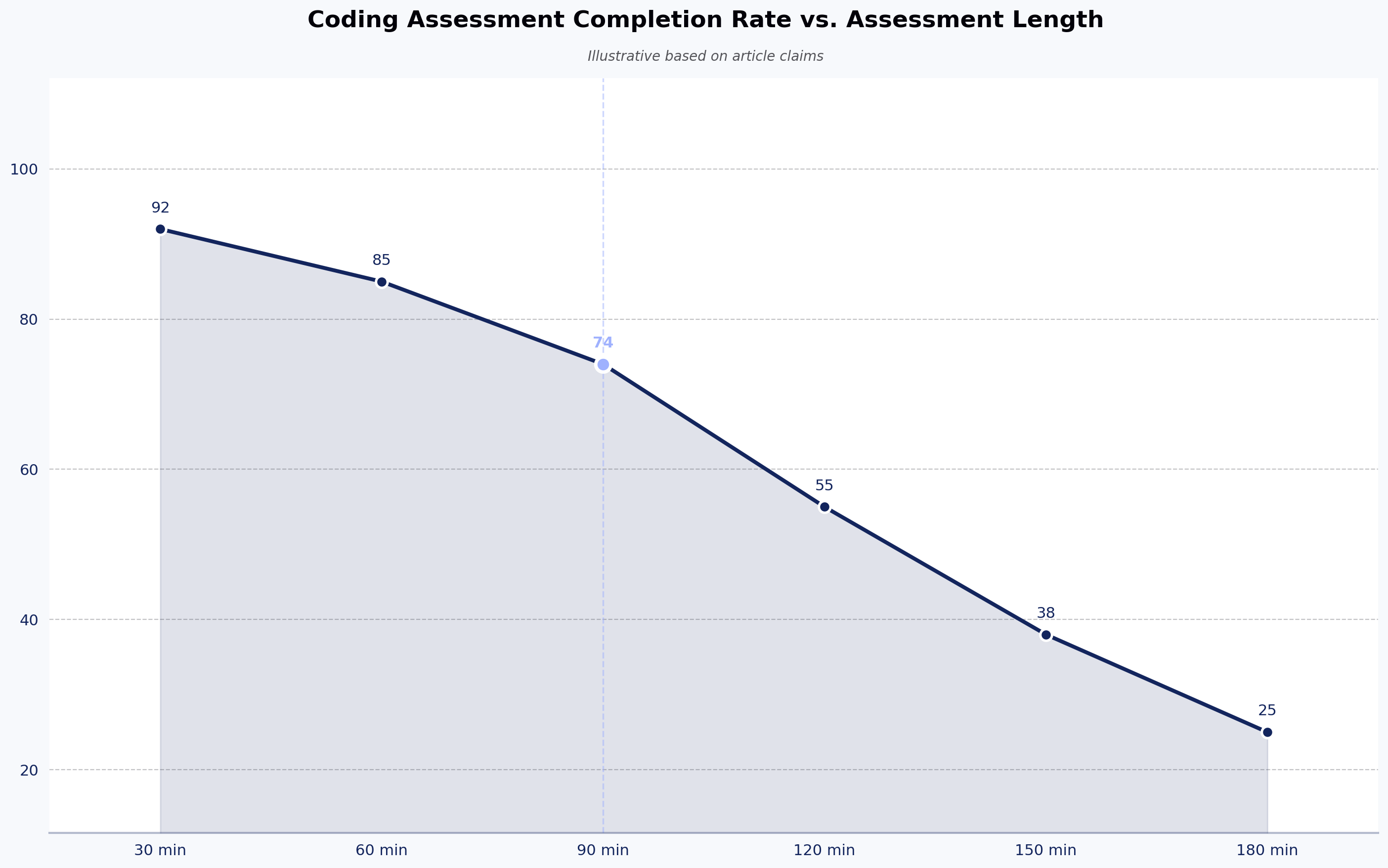
Verifying technical skills without in-person contact is the core problem in remote hiring. A structured assessment process now runs in three stages: async screening, structured interviews, and live collaborative coding. HackerEarth's technical assessment platform is built around this flow, with role-specific tests and integrated interviews — and pairs with OnScreen, HackerEarth's AI interviewer that runs role-calibrated technical conversations at scale.
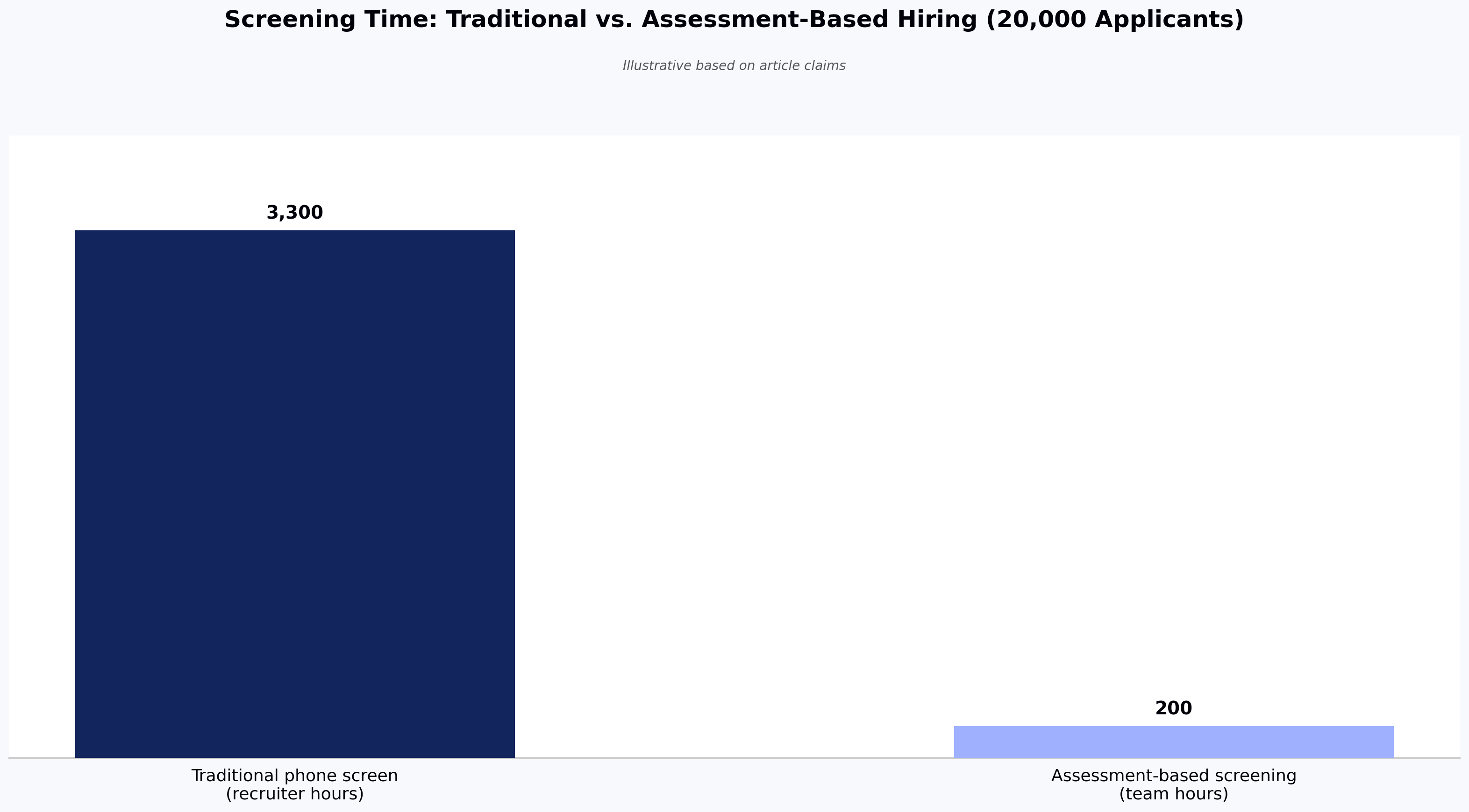
Async screening filters high volumes on core language proficiency, algorithmic thinking, and applied problem-solving. To keep results credible, teams use proctoring that flags suspicious behavior — window switches, off-screen glances, or external audio. In practice, this matters most for enterprise volume hiring, where a single unsecured screening round can push hundreds of unqualified candidates into interviewer calendars; enterprise-grade proctoring on HackerEarth screens is designed to preserve signal at that scale.
AI-assisted interviewing has changed the middle of the funnel. OnScreen — HackerEarth's AI interviewer that runs role-calibrated technical conversations and applies a deterministic evaluation framework to every candidate — produces evaluations that are more consistent across candidates than human-led screens, which can vary with interviewer fatigue or mood. OnScreen uses a deterministic evaluation framework and role-calibrated conversations that adapt to candidate responses; it does not replace human judgment on senior or architectural rounds, and its outputs should be reviewed rather than treated as final. As Discover Dollar has publicly noted using HackerEarth, roles have closed "within three to four weeks," and the platform has supported evaluation of 2,000 candidates in a single weekend at scale.
Global compliance and employment structures
International hiring means choosing an employment structure before you make an offer. Employment-structure decisions typically sit with Talent Acquisition, HR, or Finance rather than engineering managers, but engineering leaders should understand the trade-offs because they shape hiring speed, cost per hire, and where you can practically build teams. The three main options are engaging independent contractors, partnering with an Employer of Record (EOR), or setting up a local legal entity. The right choice depends on headcount plans, risk tolerance, and how long you expect to hire in the country.
Independent contractors are the fastest way to onboard global talent and fit short-term projects or market tests. Misclassification risk is the main downside: regulators in France, Italy, Spain, and California have all tightened scrutiny of contractor relationships that look like full-time employment. Reported penalties vary widely by jurisdiction and by whether the misclassification is treated as inadvertent or willful — the US Department of Labor and country-level tax authorities publish current penalty structures, and any specific liability estimate should be confirmed with local counsel rather than quoted from secondary sources.
EORs have become the default for mid-sized tech companies building compliant teams across multiple countries. An EOR is the legal employer of record — handling payroll, local tax withholdings, and statutory benefits — while your team runs day-to-day work. The trade-off worth naming: EORs are convenient but expensive at scale, and they can complicate equity grants and long-tenure employment. A commonly cited threshold puts the crossover at roughly 5–10 employees in a single country, though the exact point varies by country, EOR pricing, and the type of benefits offered; EOR providers and payroll publications typically recommend running the entity-vs-EOR math annually per country.
Compensation strategy and the 2026 remote hiring roadmap salary landscape
Paying remote developers fairly means choosing between location-based pay, role-based pay, and hybrid models — and each has real costs. In 2026, many teams have moved toward "precision compensation," concentrating budget on high-impact roles and scarce skills rather than spreading raises evenly. This is typically a CHRO or Head of TA call; engineering managers usually inherit the bands rather than set them, but should push back when a band undercuts a specific hire.
Location-based pay adjusts salaries to local market benchmarks and cost of living. It keeps budgets predictable but creates friction when developers in lower-cost regions see peers in expensive cities paid more for similar work. Role-based pay standardizes compensation regardless of location. It reads as more equitable and simplifies administration, but it makes competing for talent in San Francisco or London harder without pricing yourself out of lower-cost markets.
For most companies below a few hundred engineers, role-based pay banded to a global standard produces better retention and less internal conflict than location-based pay, even though it costs more in aggregate. The savings from location-based pay tend to be eaten by turnover and by the internal politics of explaining pay bands — a dynamic worth stress-testing before locking a compensation philosophy into your remote hiring 2026 roadmap.
Some organizations have introduced pay differentials for in-office work, sometimes framed as a "presence premium" or a "flexibility discount" for fully remote roles. Concrete examples are still uncommon in published data, and specific percentage figures reported in the trade press vary widely and are rarely tied to representative surveys. Some hiring data suggests that AI literacy is increasingly reflected in pay bands, with developers who can effectively use AI-assisted development tools commanding premiums in certain markets, though this is more anecdotal than systematically measured.
Structured onboarding in a remote hiring 2026 roadmap
Onboarding is the most common failure point in remote hiring, and the piece of the remote hiring 2026 roadmap most often owned jointly by engineering managers and HR. Without the ambient social integration of an office, remote onboarding has to be engineered — clear logistics, defined ramp-up milestones, and structured social contact across the first 90 days.
Before day one, focus on logistics. Ship hardware at least a week ahead. Provision software licenses, VPN credentials, and system access before the start date. An onboarding wiki that documents team structure, communication norms, and system architecture lets the new hire absorb context on their own timeline. A buddy system — pairing the new hire with a peer for the first few weeks — handles the questions that are too small to raise with a manager.
The first week should produce a shipped change, however small. Early wins build confidence and surface access or environment problems while they are still cheap to fix. Daily check-ins during week one catch isolation early. By day 90, the developer should be contributing to significant features and running with meaningful autonomy.
Early attrition in remote roles is commonly reported in distributed-team research and practitioner accounts, often traced to weak social integration and unclear expectations rather than technical fit. Teams that treat onboarding as a checklist rather than a program are the ones that see it.
Trust-based management and productivity in 2026
Remote engineering teams work when management measures output, not activity. Line-of-code counts and hours-logged metrics have been discredited as productivity signals. Leading teams use frameworks like SPACE and DORA to assess engineering health at the team level.
SPACE covers satisfaction, performance, activity, communication, and efficiency — a multi-dimensional read rather than a single score. DORA metrics focus on delivery: deployment frequency, lead time for changes, change failure rate, and mean time to recovery. Both frameworks are intended to identify systemic bottlenecks, not to rank individuals; using them to rank people breaks the psychological safety that makes them work.
Communication in distributed teams defaults to async: written documentation, threaded discussions, and recorded video walkthroughs so information is accessible across time zones. Real-time meetings are reserved for complex problem-solving, strategic decisions, or deliberate social contact — protecting the multi-hour blocks that deep engineering work requires. Async has its own failure modes: decisions stall waiting for responses, context gets scattered across tools, and quiet team members go unheard. Teams that ignore these costs end up rebuilding synchronous meetings under new names.
Frequently asked questions
How do I hire remote developers in 2026? The point most teams miss: sequencing matters more than any single step. Choose the employment structure before you post the role, not after the offer stage — because the country you can legally hire in constrains sourcing, and EOR availability may narrow your realistic candidate pool more than skill screening will. Most bad remote hires are structural mistakes made early, not assessment failures made late.
What is an EOR for remote hiring? An Employer of Record is a third-party company that legally employs your remote worker in their country, handling payroll, tax withholding, and statutory benefits, while you direct their day-to-day work. EORs let you hire compliantly in countries where you don't have a legal entity, and they are typically the default choice for teams with fewer than 5–10 employees per country. Above that threshold, setting up a local entity often becomes more cost-effective — see the compliance section above for how to think through the crossover point.
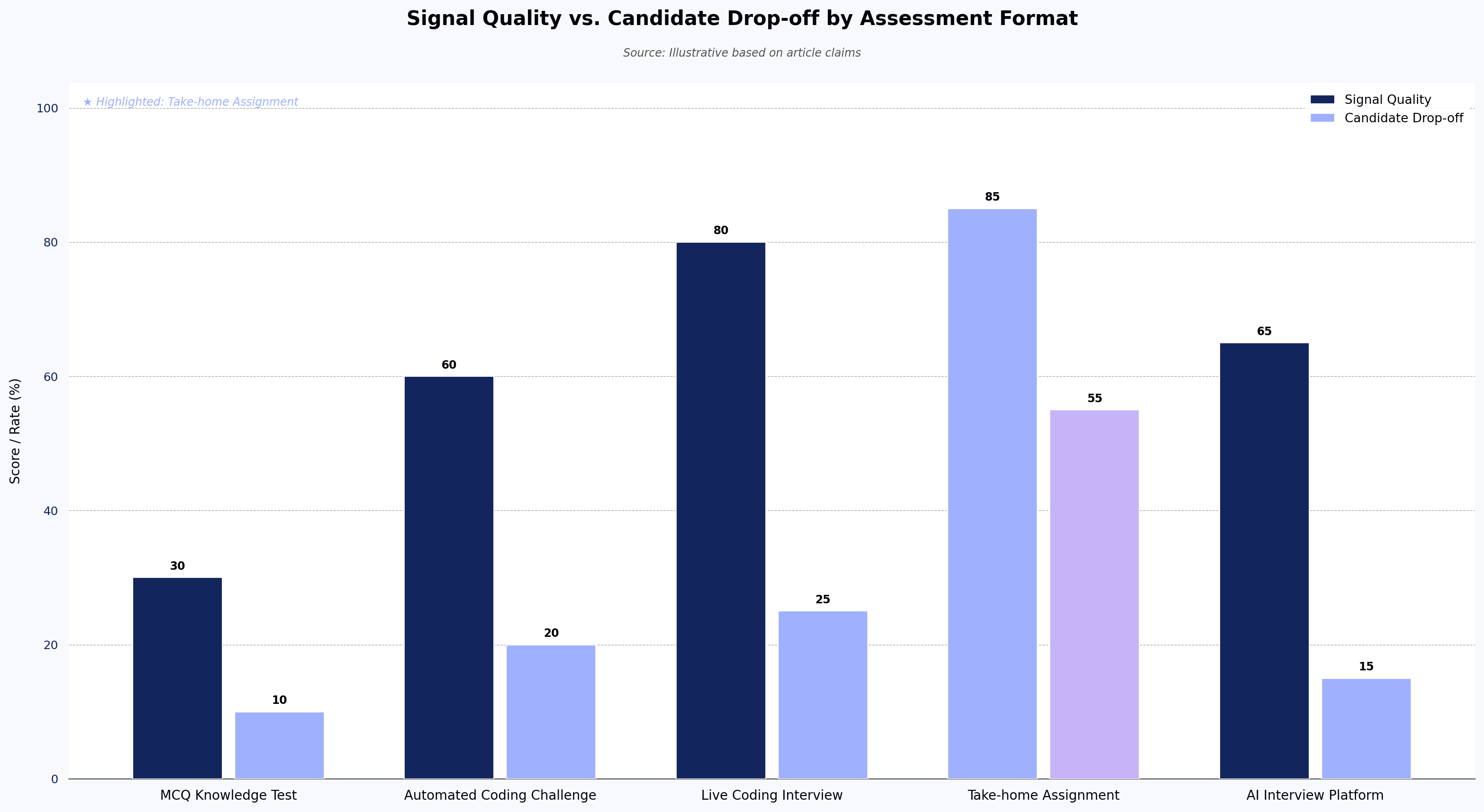
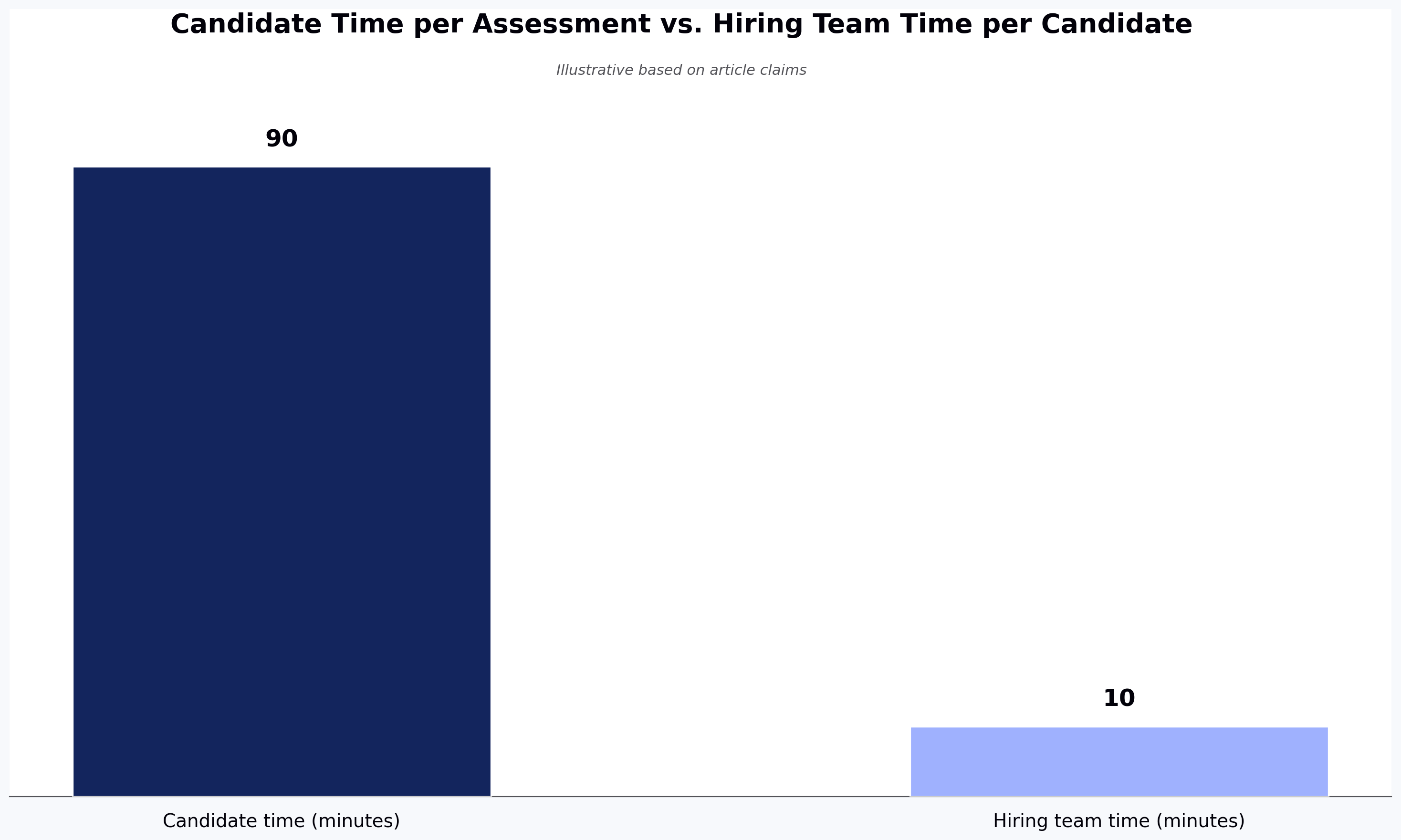
How do I assess remote developer skills fairly? Use structured, role-specific technical assessments rather than open-ended take-home projects that consume unpaid candidate time. Combine an async coding assessment with a live pair-programming or system design round. Apply the same rubric to every candidate — AI-assisted evaluation tools help by scoring consistently across candidates rather than varying with interviewer fatigue.
Is location-based or role-based pay better for remote teams? For most companies below a few hundred engineers, role-based pay tied to a global band produces better retention and less internal conflict, even though it costs more in aggregate. Location-based pay is cheaper on paper but tends to lose the savings to turnover and pay-band disputes. The right answer depends on your headcount, geography mix, and growth plans.
When should remote hiring not be used? Hardware-dependent roles, positions with heavy on-site customer contact, and early-stage teams that need daily high-bandwidth product discovery are common cases where fully remote hiring adds more friction than it removes. Junior hires in fully distributed teams also require heavy investment in mentorship — without it, ramp-up and retention both suffer.
What metrics should I use to manage remote engineers? Use DORA metrics (deployment frequency, lead time for changes, change failure rate, mean time to recovery) for delivery health, and the SPACE framework for a broader read on productivity and satisfaction. Apply both at the team level to find systemic bottlenecks — using them to rank individuals breaks the trust the frameworks depend on.
Next steps
If you're building a remote engineering team in 2026, the highest-leverage change is usually the assessment step — where inconsistent screening produces most bad hires. See how HackerEarth's technical assessments work, explore OnScreen for AI-led technical interviews, or request a demo to talk through how a structured, rubric-based assessment fits your remote hiring workflow.