Online Coding Interview Tools: Features, Benefits, and How to Choose
An online coding interview tool is a shared browser-based environment where an interviewer and a candidate write, run, and discuss code together in real time. It replaces the awkward screen-share-plus-local-IDE setup that most engineering teams used until roughly 2018 and in 2026, the better tools now sit inside the ATS, record the session, and feed scorecards back to the panel automatically.
The category is also crowded, and most of the differences between platforms don't matter until you hire past a certain volume or seniority. This guide covers what an online coding interview tool actually does, which features earn their price, where live interviews stop being the right tool, and how to pick one without ending up with another seat license nobody uses.
What is an online coding interview tool?
An online coding interview tool is software that lets a hiring team run a technical interview over the web usually a split-pane browser view with a collaborative editor on one side, video on the other, and a question library or whiteboard somewhere in reach.
Three things separate a real interview tool from a Google Doc with syntax highlighting:
- Live code execution. The candidate's code compiles and runs in the browser against test cases, so the interviewer sees output, not just syntax.
- Multi-user editing with low latency. Both people can type without the lag that kills a pair-programming conversation.
- Session artifacts. The code, the test runs, the whiteboard, and often the video get saved against the candidate record so a panel can review later.
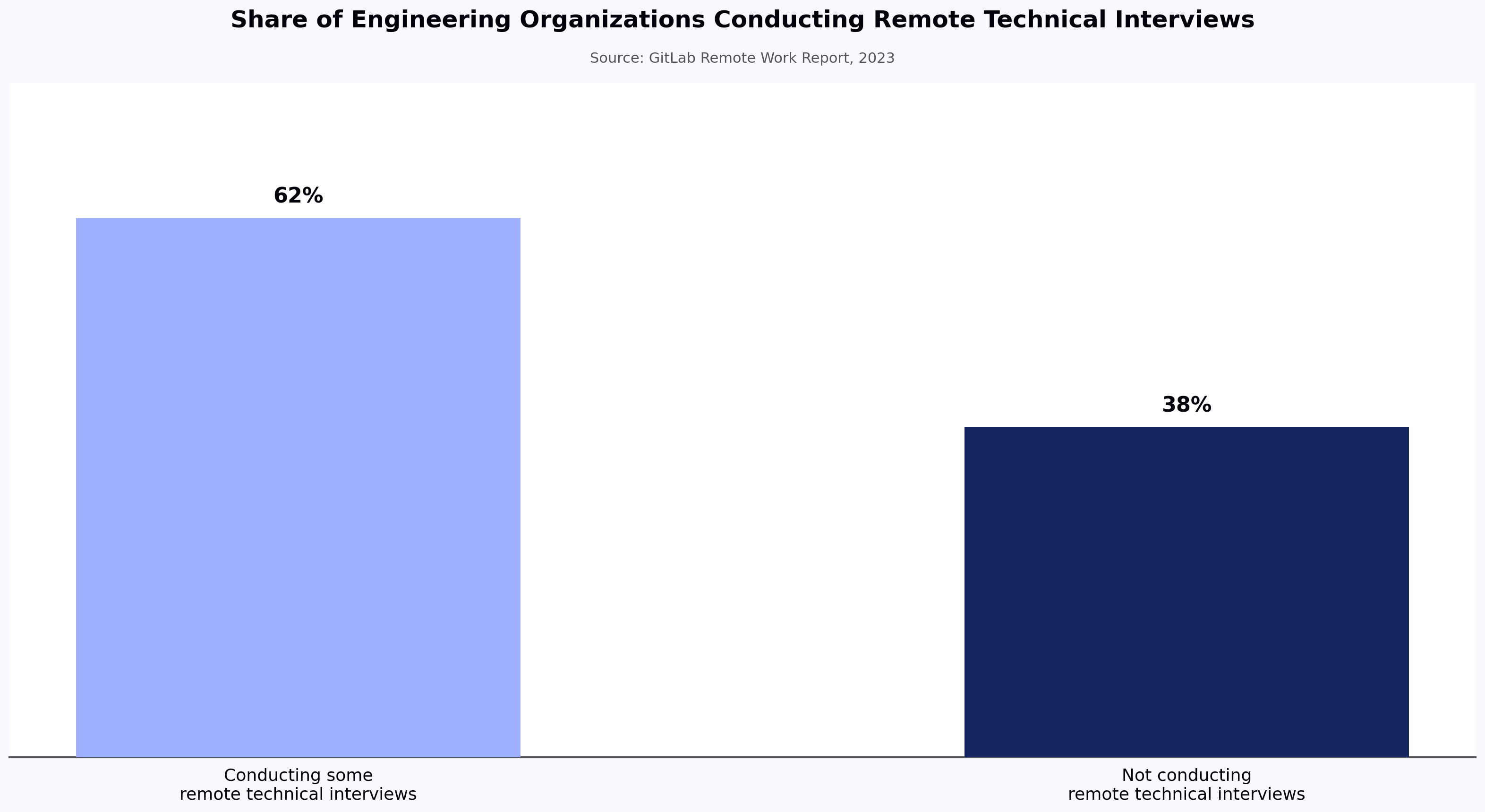
The category grew up alongside remote hiring. GitLab's 2023 Remote Work Report found that 62% of engineering organizations were conducting at least some technical interviews remotely by default. The share has not gone back down.
How does an online coding interview tool work?
A typical live coding interview session runs in five stages. The specifics vary by platform, but the shape is consistent.
1. Setting up the interview. The recruiter or hiring manager creates an interview, picks a question (either from a library or a custom problem bank), and chooses the languages the candidate can use. For a senior backend role you might lock the language to Go, Python, and Java; for a frontend role you'd open up JavaScript, TypeScript, and the common frameworks.
2. Inviting the candidate. The platform generates a link. Good platforms embed a browser compatibility check and a dry run the candidate confirms their mic, camera, and editor work before the clock starts, not during the first five minutes of a 45-minute slot.
3. Collaborating in real time. Both parties join the shared workspace. The interviewer can type into the editor, switch to a whiteboard for system design, or paste in a follow-up question. In our experience, the single biggest usability difference between platforms is how quickly the whiteboard loads if the interviewer has to click through three menus to draw a box, they'll stop drawing boxes.
4. Running and reviewing code. The candidate executes code against sample inputs. The interviewer watches test output in real time, asks the candidate to walk through their reasoning, and probes edge cases. Some platforms auto-run against hidden test cases; others leave execution fully manual. Both have a place — hidden tests are good for consistency, manual runs are better for seeing how a candidate debugs.
5. Evaluating performance. After the session, the interviewer fills out a rubric. The platform stores the code, the session recording (if enabled), and the scorecard against the candidate record. The panel then calibrates in the debrief using the same artifact set.
Key features to look for in an online coding interview tool
Not every feature matters for every team. These are the ones that actually change how an interview runs.
Live collaborative code editor. The baseline. What varies is latency, multi-cursor support, and whether the editor behaves like a real IDE (autocomplete, syntax errors, bracket matching) or a toy. For senior interviews, candidates notice.
Multiple programming language support. 20 languages is usually enough; 40+ matters only if you hire for niche stacks (Erlang, OCaml, Haskell). Check whether language support includes the actual framework ecosystem, not just the compiler — React with hot reload is different from "we support JavaScript."
Code execution and debugging. Running code is table stakes. Debugging breakpoints, variable inspection, stepping through — is not, and most platforms don't do it well. If your interviews depend on it, test the feature with your engineers before signing.
Interviewer and candidate collaboration tools. Shared whiteboard for system design, built-in video, chat for sharing links, and the ability for the interviewer to take private notes the candidate can't see. The private-notes feature sounds minor; the first time an interviewer accidentally types "this is going badly" into the shared editor, you'll understand why it matters.
Evaluation scorecards. Structured, rubric-based scoring that the panel fills out in the same session. If the scorecard lives in a separate tool, half of your interviewers will skip it. If it's inline, most will complete it. This single UX decision drives whether your hiring data is any good.
Interview recording and playback. Useful for calibration, dispute resolution, and training new interviewers. Required in regulated industries. Check whether playback is editor-only, video-only, or both synchronized playback (video + code replay) is the version that's actually useful.
ATS integrations. Native integrations with Greenhouse, Lever, Workday, Ashby, and SAP SuccessFactors are the ones most teams need. "We have an API" is not the same as "the recruiter never has to copy-paste a scorecard."
How online coding interview tools help technical recruiters
A good online coding interview platform does four things for recruiters that a video call plus a shared doc cannot.
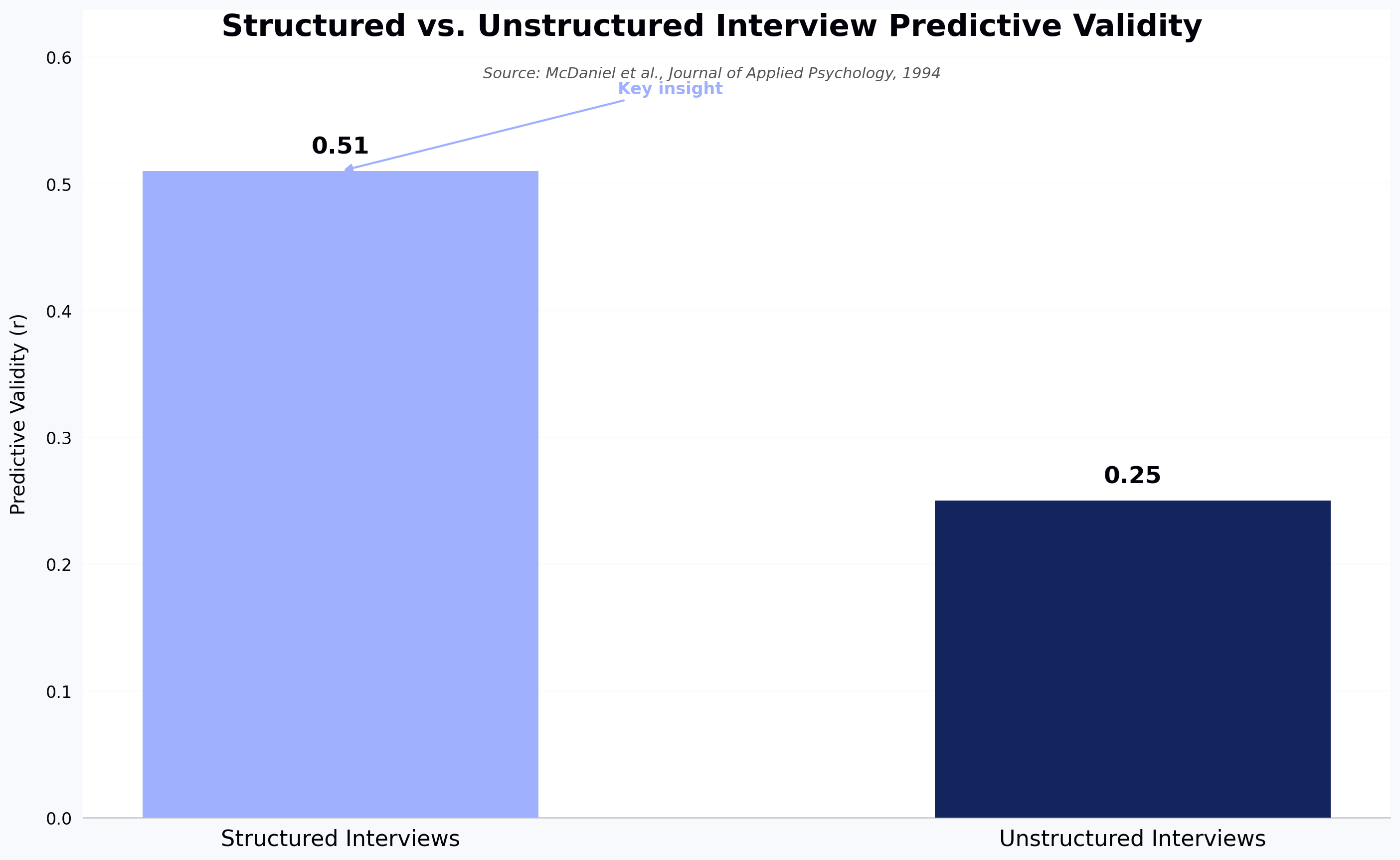
Consistent candidate evaluation. Every candidate for the same role gets the same question set and the same rubric. The variance you're trying to eliminate isn't between candidates — it's between interviewers. Published research on structured interviews (McDaniel et al., Journal of Applied Psychology, 1994) found structured interviews roughly twice as predictive of job performance as unstructured ones. That meta-analysis is 30 years old and remains foundational; the underlying mechanism — same questions, same rubric, same scoring — is what interview platforms operationalize.
Reduced coordination effort. Scheduling, environment setup, link generation, and reminder emails get handled by the platform instead of the recruiter's inbox. The time savings here are real but not transformative expect to reclaim a few hours per week per recruiter, not days.
Better collaboration with engineering teams. When the scorecard sits inside the interview tool and feeds the ATS automatically, hiring manager debriefs stop being "did anyone write anything down?" Our guide to running better technical interview debriefs covers the calibration layer that sits on top of this.
Visibility into technical skills. Session artifacts (code, notes, recordings) make it possible to review a decision three weeks later when the hiring manager asks why candidate A was advanced over candidate B. For regulated hires, this is not optional — it's the audit trail.
The trade-off worth naming: live coding tools generate signal only when the interviewer runs the session well. A bad interviewer with a good tool produces slightly cleaner artifacts of a bad interview. The platform does not fix calibration; it exposes it.
Online coding interview tools vs. coding assessment platforms
These are two different products that often share a vendor. Confusing them is one of the most common procurement mistakes.
A live coding interview tool is synchronous. An interviewer is in the room (virtually). The signal is partly the code, partly the conversation — how the candidate thinks, how they handle ambiguity, how they respond to hints. CoderPad, CodeInterview, and HackerEarth's FaceCode are examples.
A coding assessment platform is asynchronous. The candidate completes a timed test on their own; the system auto-grades against test cases and produces a report. HackerRank, Codility, and HackerEarth's Skill Assessments are examples. For the full picture on async evaluation, see our overview of skill assessment platforms.
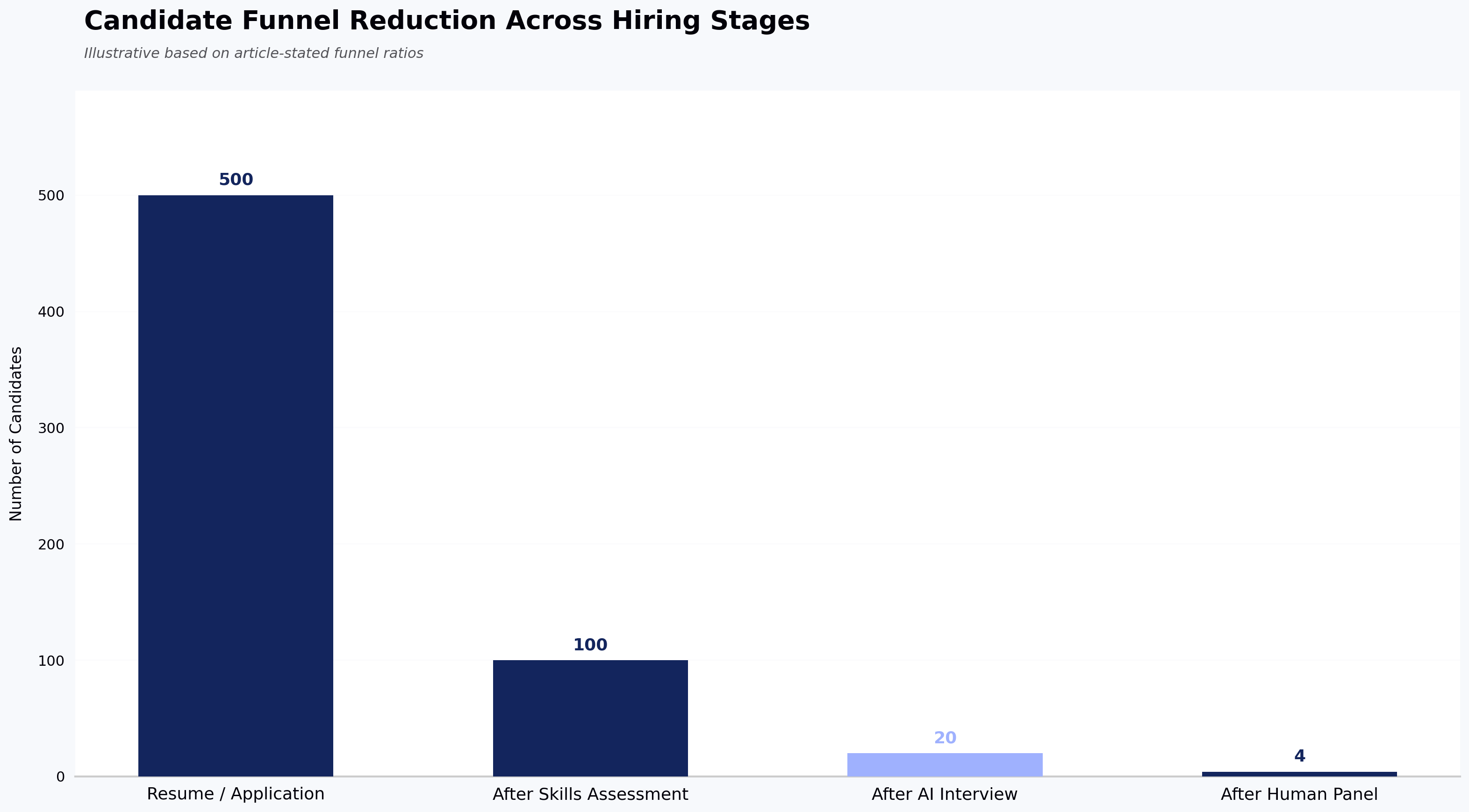
Use async assessments when candidate volume is high, early-stage filtering is the goal, and you want to protect your engineering team from screening 200 resumes a week. A take-home or timed assessment catches most of the "cannot code" cases before anyone's calendar gets touched.
Use live interviews when the question is no longer "can this person code" but "how do they code, and how do they think with another engineer in the room." That's a different signal and you can't get it async.
Most mature hiring funnels use both: an async assessment first, a live interview second. The tools that offer both in one platform reduce ATS reconciliation work; the tools that specialize in one usually do that one thing better. There's no universal right answer — it depends on volume, seniority, and how much your team wants to manage.
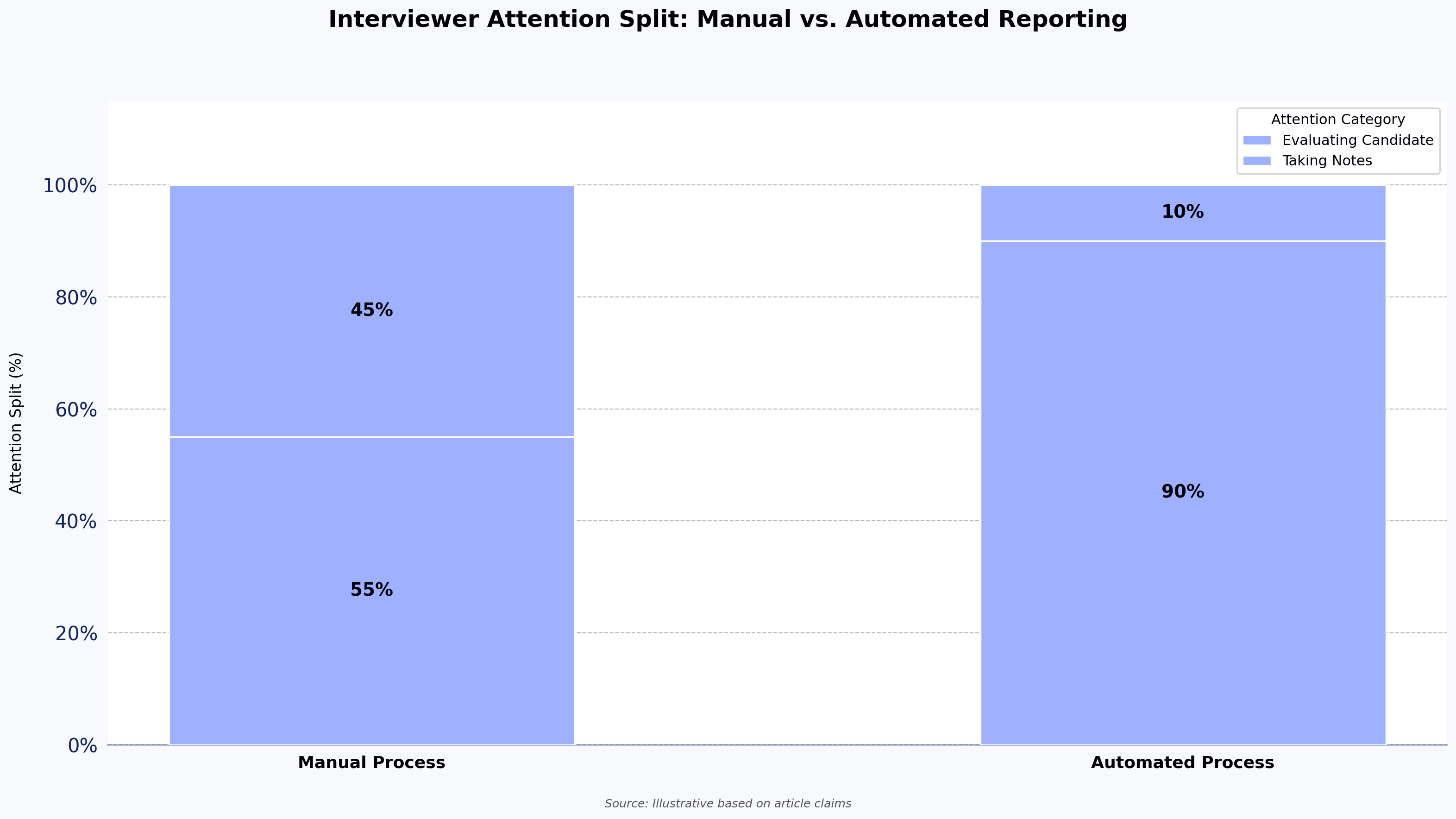
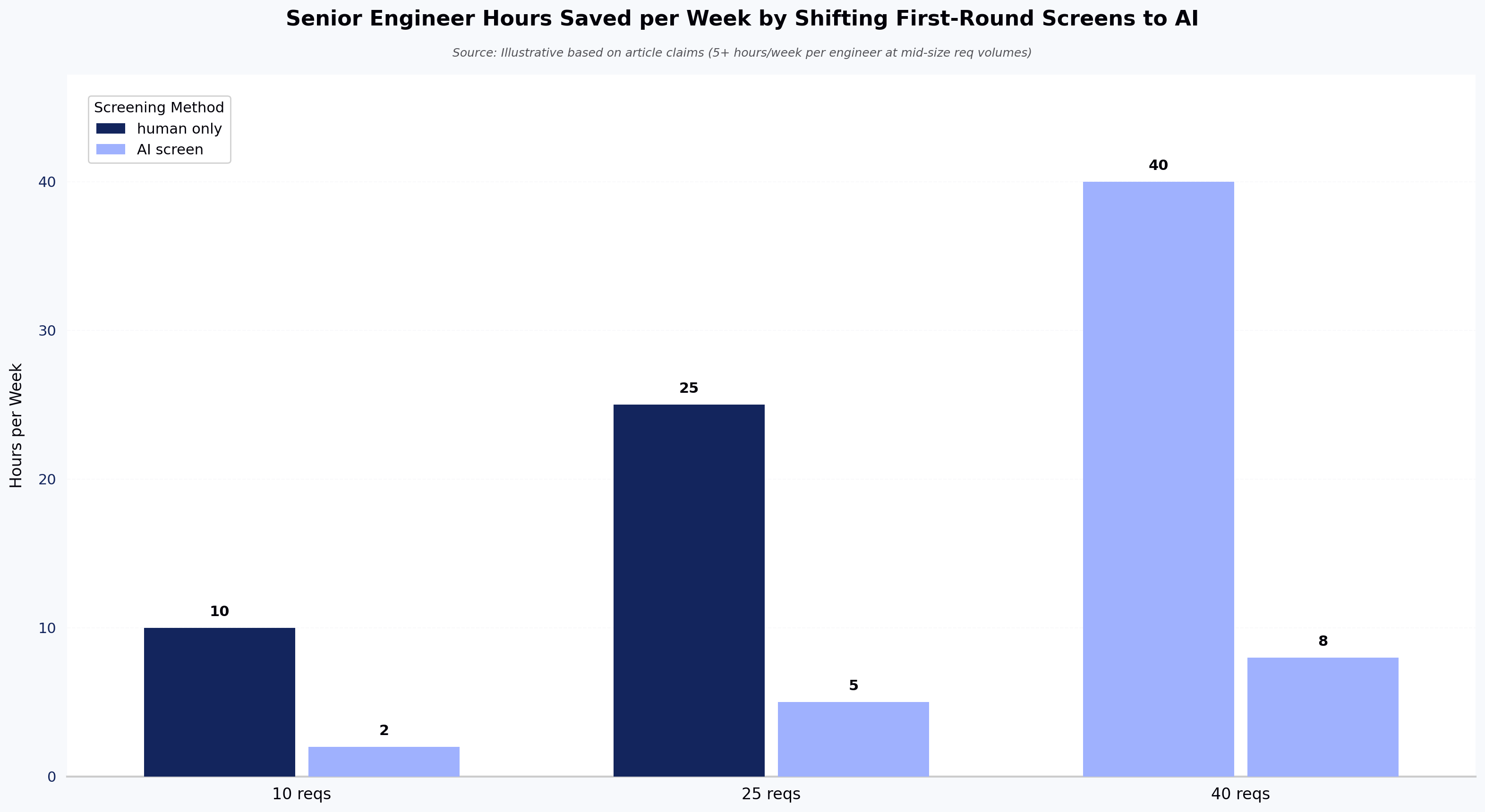
A newer third category sits alongside live and async: AI-led interviews. HackerEarth's OnScreen conducts structured technical interviews with video-avatar interviewers 24/7, with built-in proctoring and identity verification. It fits where screening volume is high enough that scheduling friction loses candidates, but engineering time on live screens is still expensive. It does not replace the final-round live interview — it replaces the first-round screen that your senior engineers resent doing.
How to choose the right virtual coding interview platform
Pick on these dimensions, in this order.
Hiring volume. Under 20 technical hires a year, almost any platform works and price should drive the decision. Above 200 hires a year, platform reliability, ATS integration, and reporting matter more than the editor UX. Above 1,000 hires a year, you're probably running assessments first and only using live interviews for finals different buying criteria.
Role requirements. A platform optimized for frontend interviews (React, hot reload, DOM inspection) is not the same as one optimized for systems interviews (C++, memory profiling, multi-file projects). Test with the stack you actually hire for.
Candidate experience. The candidate joins the link once and then forgets your platform exists. If they can't if they hit a browser compatibility wall, a login flow, or a laggy editor you lose them. Interview a candidate on the tool before you buy it.
Integrations. Native ATS integration should be a hard requirement at any scale. API-only integrations require engineering time most TA budgets don't have.
Security and compliance. SOC 2 Type II is the baseline. For BFSI and healthcare, confirm the vendor supports data residency, SSO, and audit logs. KYC-grade identity verification matters more for high-stakes roles where proxy candidates are a real risk.
Scalability. The question is not "can the platform handle 1,000 concurrent interviews" (almost all can). The question is whether your scorecard, rubric, and reporting layer still make sense when you 10x volume.
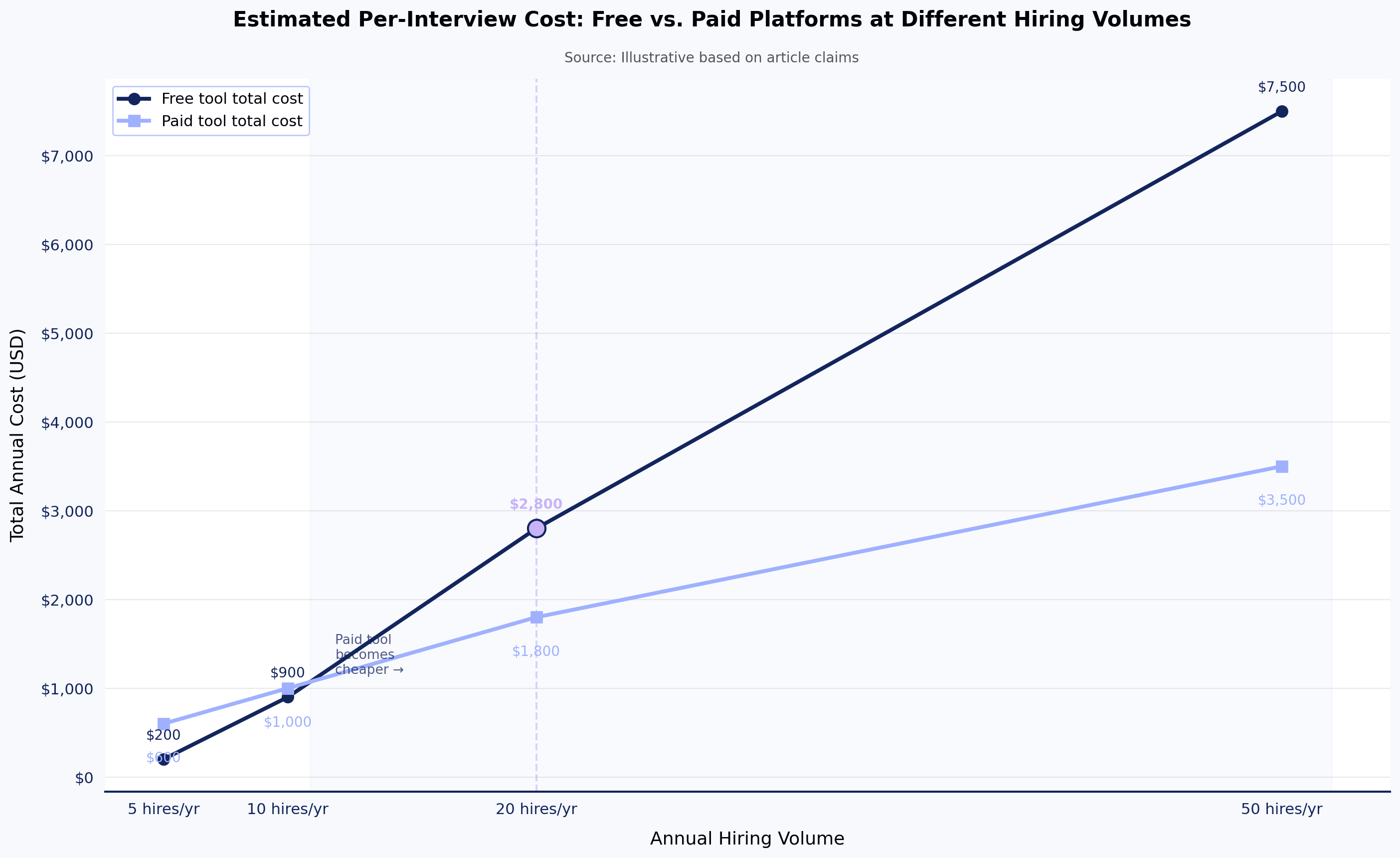
Pricing. Published pricing in this category ranges from free (SharePad, OnlineInterview.io) to roughly $20–$150 per interview for enterprise tools, with volume discounts. "Up to 50% cost reduction" vendor claims almost always compare against single-tool point pricing without volume commits do your own math.
Can you use a free online coding interview platform?
Free online coding interview tools exist and work for low-volume use. SharePad, OnlineInterview.io, Codeshare, and the free tiers of CoderPad and CodeInterview are the common ones.
The honest trade-offs:
- Collaboration features are usually fine at the free tier — editor, execution, basic languages.
- Session artifacts, scorecards, and ATS integration are not. You'll be copy-pasting code into a Google Doc and manually logging scores.
- Reliability varies. Free tiers run on shared infrastructure; the one time your platform lags during a senior candidate's final interview is the time you'll regret saving $200 a month.
- Candidate experience signals brand. For roles where the candidate is choosing between you and three competitors, the interview tool is part of the perception.
Free tools fit well for individual developers practicing with peers, small teams hiring their first few engineers, and short-term pilot use. For hiring teams making more than a handful of technical hires a quarter, the operational cost of patching free tools together usually exceeds the license cost of a paid one.
Frequently asked questions
What is the best virtual coding interview platform?
There is no single best virtual coding interview platform. CoderPad is typically picked for mid-market product companies, Codility and HackerRank are used by many enterprises, and HackerEarth is strong where hiring volume and skills intelligence are both priorities. Growing less in importance is LeetCode's interview product. Pick based on hiring volume, ATS integration, and whether you need live, async, or both.
How do live coding interview tools work?
The interviewer sends a link, the candidate joins a browser-based workspace with a collaborative editor and video, and both work through a coding problem together. The platform runs the code, saves the session, and feeds a scorecard into the ATS. Most sessions run 45–60 minutes; sessions longer than 90 minutes consistently correlate with candidate drop-off rather than signal.
What is the difference between a live coding interview and a coding assessment?
A live coding interview is synchronous and interviewer-led — the signal includes how the candidate thinks and communicates, not just whether the code works. A coding assessment is asynchronous and auto-graded — the signal is whether the candidate can produce correct code against test cases on their own. Most hiring funnels use the assessment to filter and the live interview to evaluate.
Which coding interview tools are best for recruiters?
Tools with strong ATS integration, inline scorecards, and interview recording — because those are the features that remove recruiter work rather than add it. The editor sophistication matters more to engineers than to recruiters.
Are free online coding interview platforms suitable for hiring teams?
For hiring teams making fewer than roughly 10 technical hires a year, free tools can work with some manual reconciliation. Above that volume, the time cost of patching free tools together — copying code, logging scores, chasing scheduling — usually exceeds a paid license. Free tools remain fine for internal practice, mock interviews, and candidate preparation.
See it in action
If you're evaluating platforms for live technical interviews alongside async assessments and AI-led screening, book a walkthrough of HackerEarth's interview and assessment stack — we'll run through FaceCode, Skill Assessments, and OnScreen against the roles you're actually hiring for.