The 3 biggest changes on FaceCode since you were last here
Last updated: April 2026 (originally published September 2022) • Read time: 4 minutes
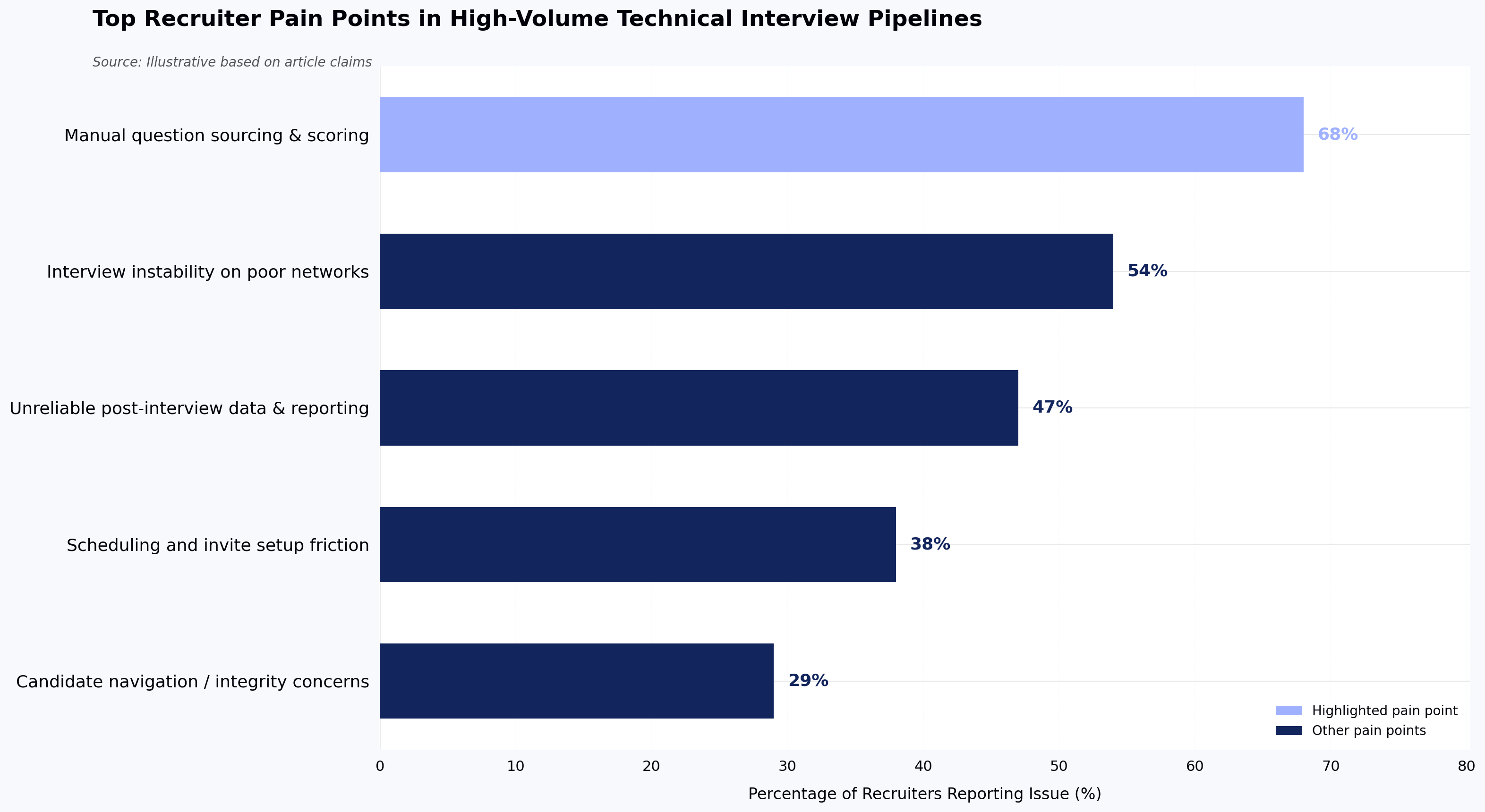
If you're a technical recruiter managing a high-volume hiring pipeline, the friction usually shows up in the same places: sourcing interview-ready questions, keeping interviews stable on shaky networks, and pulling reliable data out of every conversation. The biggest changes on FaceCode over the past release cycle target exactly those pain points, based on feedback from recruiters using the platform day to day. (FaceCode is HackerEarth's live technical interview platform, built for recruiters and hiring managers who need to run structured, collaborative coding interviews in real time.)
Below is a summary of the biggest changes on FaceCode, along with what each update means for your interview workflow, where it may fall short, and how to evaluate whether it fits your team. Three primary updates lead the release; a few smaller refinements follow as a brief changelog.
Editor's note (April 2026): This article reflects a 2022 release cycle. Feature states, library counts, and product boundaries have evolved since — most notably, HackerEarth's proctoring capabilities are now delivered through OnScreen, launched April 2026. Confirm current feature availability with your account team before standardizing workflows.
The three biggest changes on FaceCode
1. Ask questions and evaluate with less manual overhead
You no longer have to solve each test case manually, which drastically reduces the risk of manual scoring errors on standard programming and SQL questions.
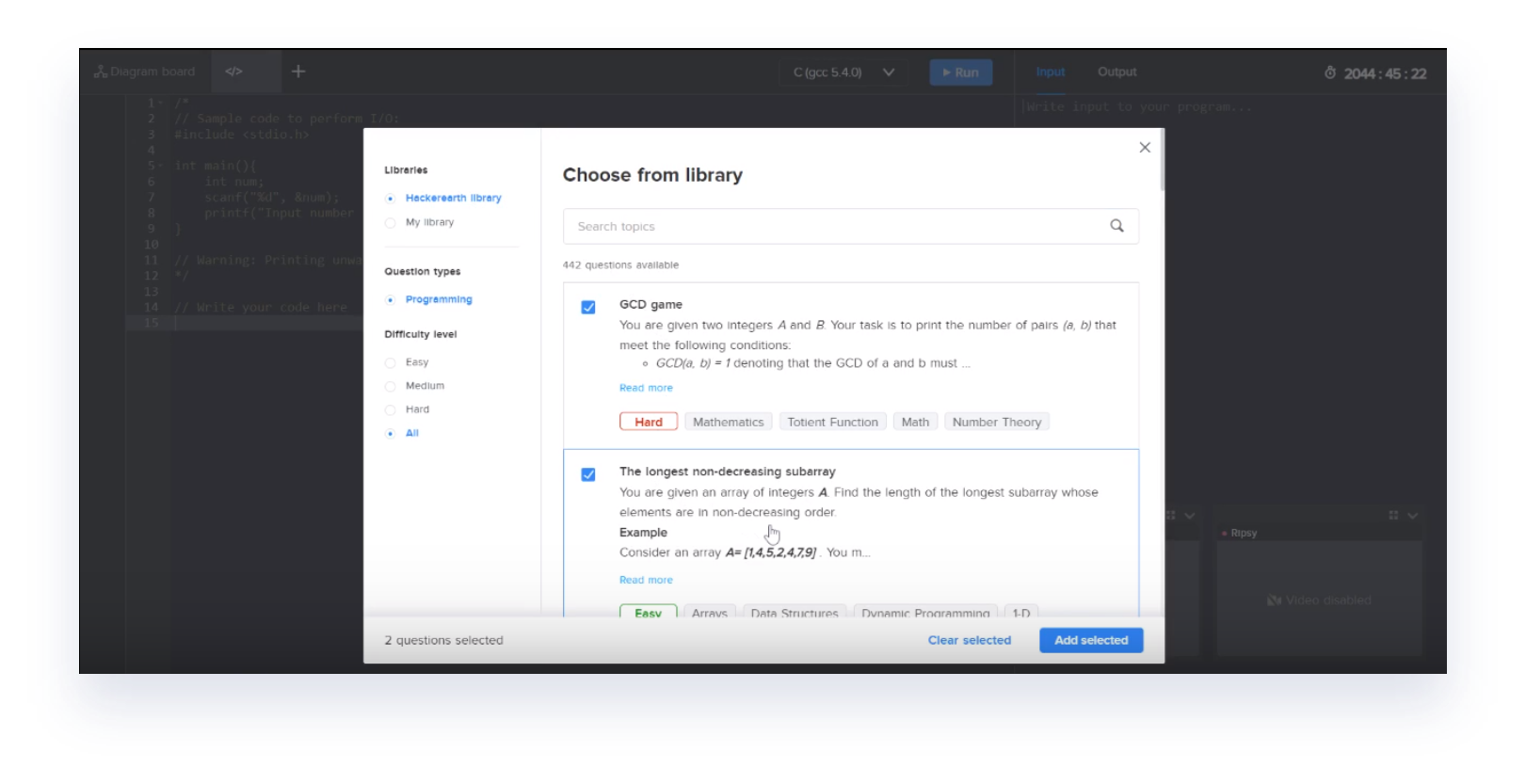
Interviewers no longer need to write coding questions from scratch or evaluate every test case by hand. FaceCode now integrates with HackerEarth's cross-product question library, which spans a broad range of technical skills, and adds an auto-evaluation feature for supported question types.
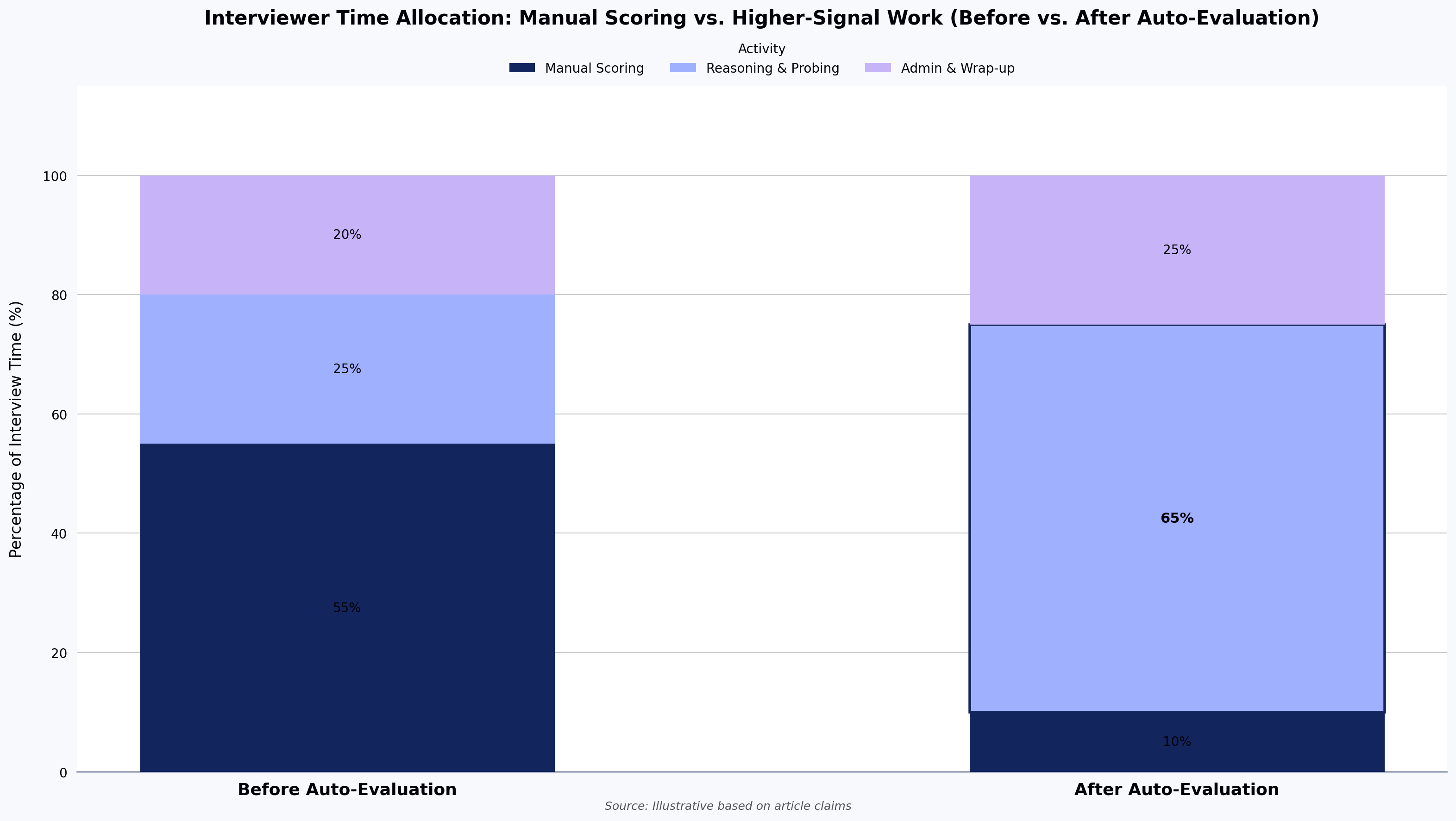
- Auto-evaluation runs test cases against a candidate's submission and returns a pass/fail signal, automating the manual scoring step and reducing inconsistency on standard programming and SQL questions.
- Interviewers can pull questions during the session directly from the library rather than preparing them ahead of time.
- Any question can also be shared with the candidate through a link in the live chat panel during the interview.
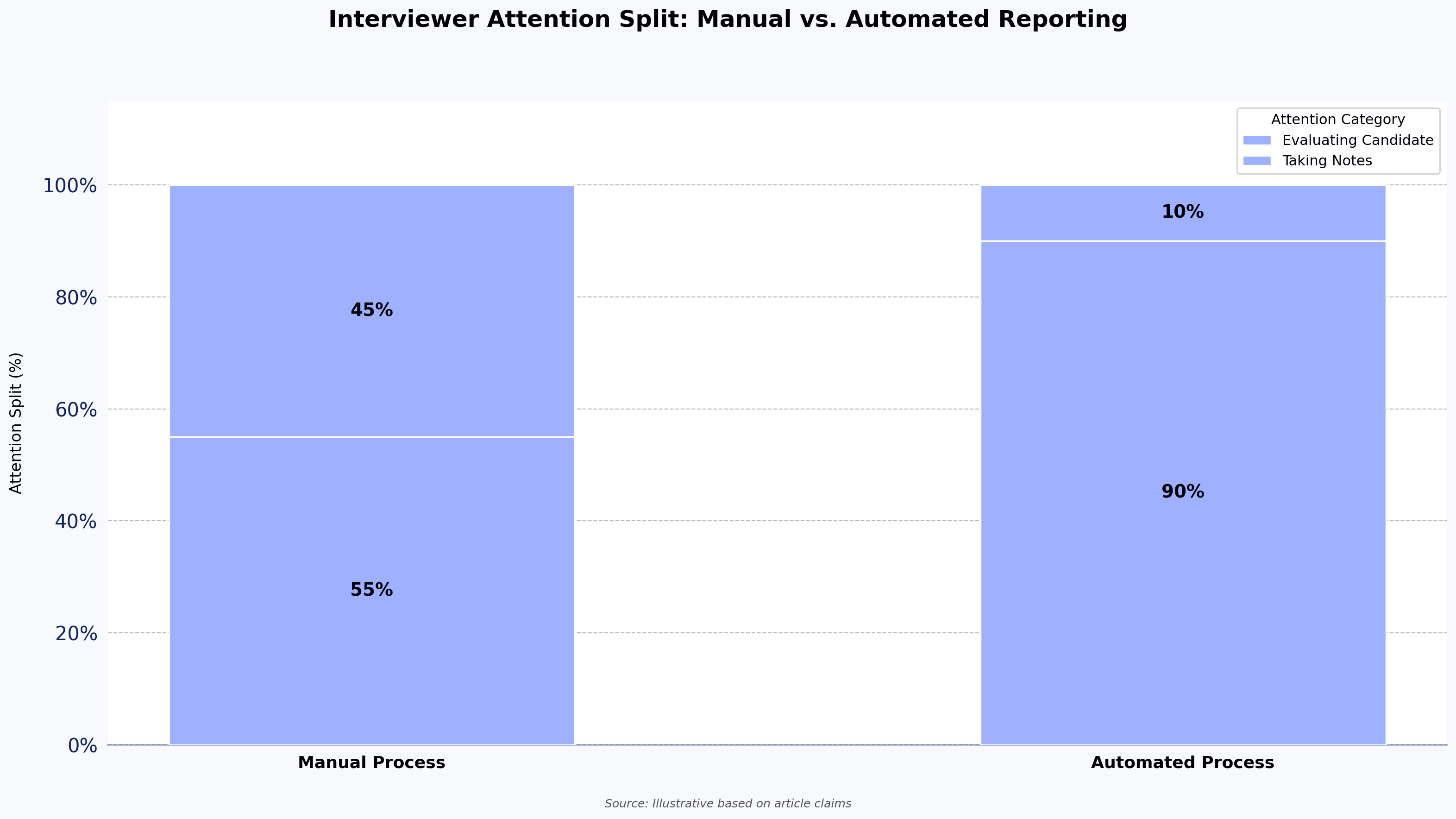
For coding interviews specifically, this shifts the interviewer's time from mechanical grading toward higher-signal work: probing reasoning, exploring edge cases, and calibrating on candidate communication — the parts of a coding interview that don't automate well.
Trade-offs to consider: Auto-evaluation is most useful for questions with deterministic test cases. Open-ended system design or behavioral discussions still require interviewer judgment. If your team relies heavily on custom, proprietary questions, verify library coverage for your specific skill areas before switching workflows. For a deeper look at running structured interviews, see FaceCode — the definitive way to conduct coding interviews.
2. Improved stability on unreliable networks
Interview quality drops when a network drops. One of the biggest changes on FaceCode addresses this: when a session loses connectivity, FaceCode attempts to re-establish the connection without ending the interview. (Reconnection thresholds and technical specifics should be confirmed with the HackerEarth product team before publishing as verified claims.)
- Network events are surfaced in the post-interview view so recruiters can factor connectivity issues into their evaluation.
- Recruiters get context to review disputed sessions rather than relying on candidate self-reports.
Trade-offs to consider: Automatic reconnection reduces disruption but does not fully offset a poor connection on the candidate's side. For candidates in low-bandwidth regions, consider setting expectations in the invite and having a backup channel available. If candidate experience is a recurring concern, our guide on 5 reasons for bad candidate experience in tech interviews covers the most common failure modes.
3. A redesigned, easier-to-navigate interface
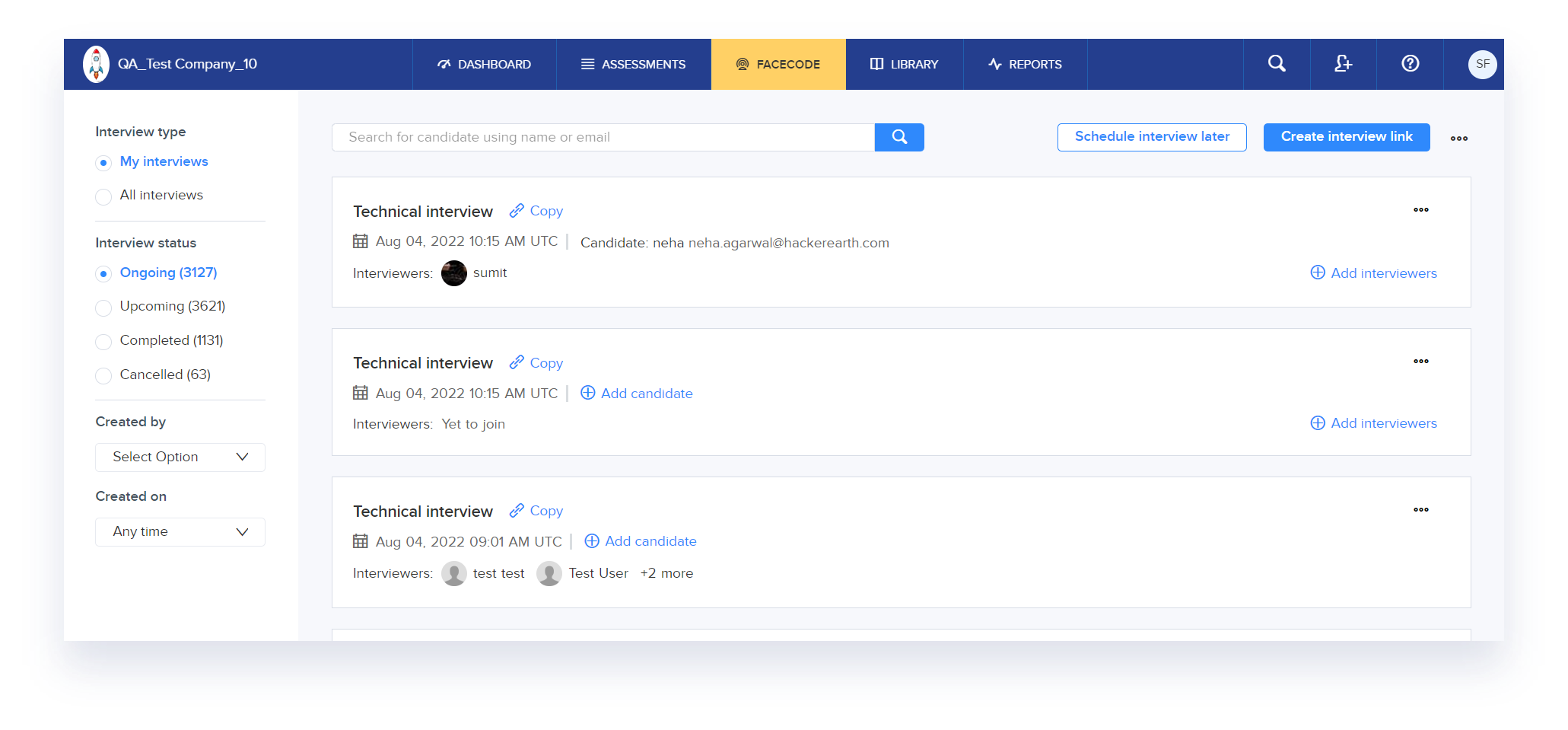
The interface has been rebuilt to reduce clicks between scheduling, running, and reviewing interviews.
- The updated UI groups interview setup, live interview, and review flows into a clearer navigation structure.
- A search bar lets recruiters look up specific candidates directly from the dashboard.
- Built-in filters (by role, date, or interviewer) narrow candidate lists without exporting to a spreadsheet.
Trade-offs to consider: Recruiters familiar with the previous interface will need a short ramp-up. Confirm browser support with your account team before rolling out to all interviewers.
Smaller changes on FaceCode worth reviewing
The three updates above are the ones most recruiters notice first. A few smaller refinements — reported by recruiters using the platform through the 2022 release cycle — are worth knowing about; some capabilities below should be re-verified against current product documentation before publication.
Focus alerts during interviews

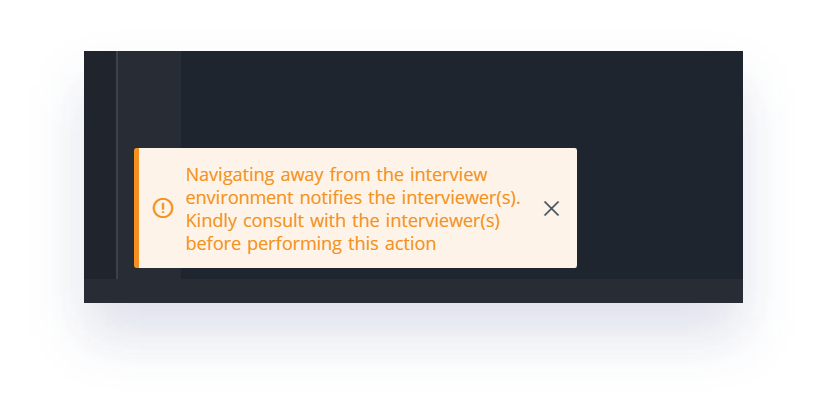
FaceCode is reported to alert the interviewer if the candidate navigates away from the interview window (verify current behavior with the product team). This can serve as a lightweight integrity signal during live interviews, though it is not a substitute for full proctoring. Teams needing enterprise-grade proctoring for asynchronous assessments should evaluate HackerEarth's OnScreen proctoring product separately.
Email summary of interviews
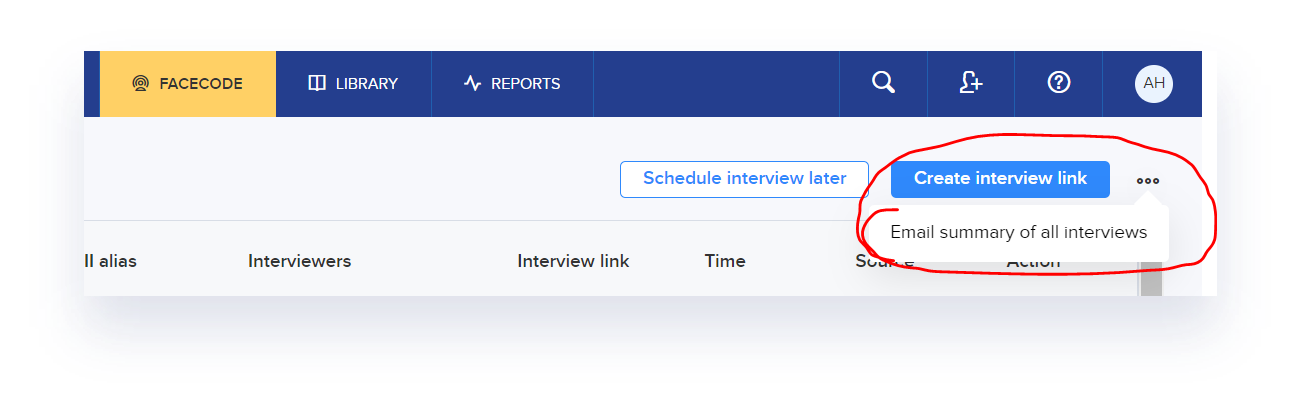
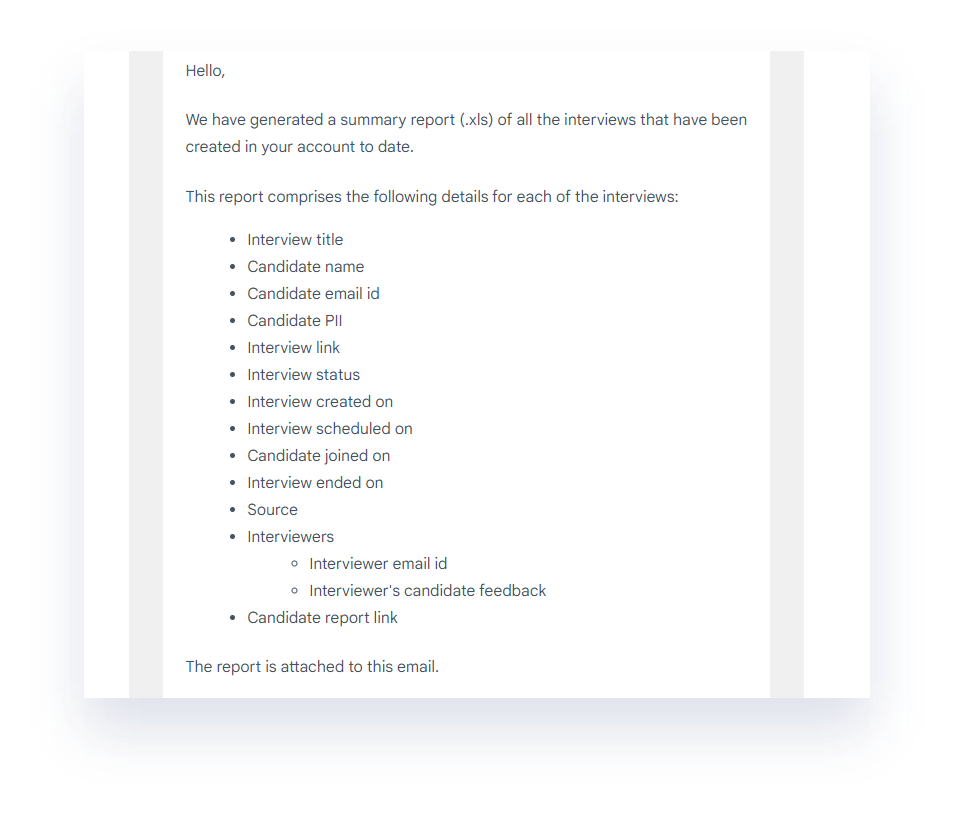
An email summary is reported as part of this release cycle. Recruiters receive a rolled-up view of interviews conducted by the team, which can be used to review interviewer consistency, spot bottlenecks in the funnel, and decide whether the process needs adjustment. (Confirm current availability and format with your HackerEarth account team.)
A simplified meeting invite flow
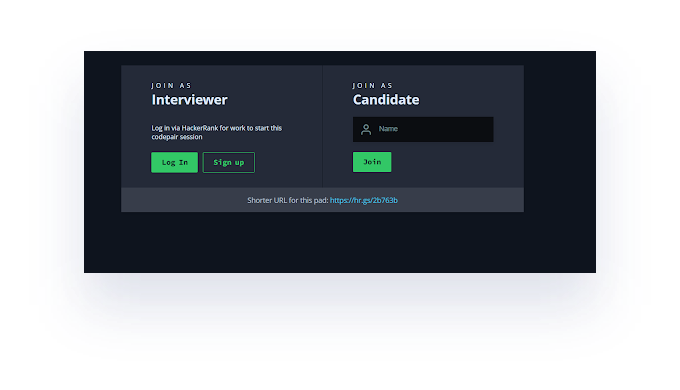
Scheduling previously required populating multiple fields, including title and evaluation criteria. In this release cycle, the flow was streamlined so interviewers can generate an invite link with minimal setup — useful for ad-hoc technical screens where formal setup slows the process. (Confirm current field requirements with your account team.)
When FaceCode may not be the right fit
FaceCode is designed for live, interviewer-led technical interviews. It may not be the best fit if:
- Your primary need is high-volume, asynchronous coding assessments — HackerEarth's assessments platform is designed for that workflow.
- You require enterprise-grade proctoring with ID verification and full-session monitoring — that capability now sits with OnScreen; confirm current availability with your account team.
- Your candidates are in regions with limited browser support or very low bandwidth — validate connectivity requirements before rolling out.
A forward-looking take
Here's a claim worth pushing back on: within the next two years, auto-evaluation will replace rubric-based scoring for the majority of standard coding interview loops — the kind built around deterministic algorithm and SQL questions. Interviewer time will shift almost entirely to reasoning, communication, and system-design conversations, and hiring teams still running manual per-test-case scoring will look like the outliers. Not everyone will agree, and teams with heavily proprietary question banks will lag the curve, but the direction of travel on the biggest changes on FaceCode — and on comparable platforms — points that way.
FAQ
Which change on FaceCode should recruiters prioritize adopting first? For most hiring teams, auto-evaluation delivers the fastest workflow gain because it removes the per-test-case manual scoring step that tends to stretch interviewer debriefs. In the author's judgment, teams running a lower weekly interview volume may see more value from the redesigned dashboard first, since the time saved on evaluation compounds most at higher volume. Confirm the right sequencing for your team with your account manager.
Is FaceCode a coding assessment platform? No. FaceCode is a live technical interview platform for interviewer-led sessions. HackerEarth's separate assessments product is used for asynchronous coding tests — a distinction worth clarifying with candidates in the invite, since expectations differ.
Does FaceCode support proctoring? FaceCode includes a lightweight focus alert when a candidate moves away from the interview window. For ID verification, continuous monitoring, and enterprise-grade proctoring, teams should look at OnScreen rather than relying on FaceCode alone.
How does FaceCode fit into coding interview best practices? Modern coding interview practice leans on three principles: standardized questions across candidates, minimal interviewer overhead on mechanical scoring, and structured evidence in the post-interview review. The biggest changes on FaceCode map to each — a shared question library for standardization, auto-evaluation to reduce manual grading, and session diagnostics that surface context in review. Pair the platform with a written rubric and a calibration step across interviewers to get the most out of it.
How many questions are in the FaceCode question library? FaceCode draws from HackerEarth's cross-product library covering a broad range of technical skills. Exact question counts by language or skill area shift with each library update and are best confirmed with your account team before you standardize a role-specific interview loop.
Where can I read recruiter reviews of FaceCode? Third-party recruiter reviews are available on G2 and Gartner Peer Insights, which are typically more useful than vendor case studies when comparing live-interview tools head to head.
See it in action
If you run technical interviews and want to see how the biggest changes on FaceCode affect your workflow, book a FaceCode walkthrough with the HackerEarth team.