Agentic AI trends in 2026
Agentic AI trends in 2026 mark a shift from AI that answers prompts to AI that executes multi-step work on its own. Just a few years ago, we were amazed that a chatbot could write a decent poem or summarize a meeting. As a technical recruiter or engineering leader, you are no longer just looking for people who can "prompt" an AI; you are looking for the architects of AI systems that execute work end to end.
This shift is driven by agentic AI. If generative AI were the engine, agentic AI would be the driver. It is the difference between a tool that waits for your every command and a partner that understands your goal and goes out to achieve it. In this article, we will break down the biggest agentic AI trends of 2026 and what they mean for your hiring pipelines and development teams.
What is agentic AI?
Agentic AI refers to software systems that pursue a goal autonomously by planning multi-step tasks, calling external tools such as APIs or code, observing the results, and adjusting their approach when steps fail. Unlike generative AI, which produces content in response to a prompt, agentic AI executes workflows end to end with limited human intervention.
How agentic AI plans, acts, observes, and reflects
To understand how these agents work, think of them as having a four-step brain cycle. First, they plan by breaking a complex request into smaller tasks. Then, they act by using digital tools like searching the web, writing code, or calling an API. Next, they observe the results of that action. Finally, they reflect. If something went wrong, they don't just stop; they learn from the error and try a different approach.
Agentic AI vs. generative AI
It is easy to get these two confused. Generative AI is like a very talented writer who sits in a room and waits for you to ask for a story. Agentic AI is like a project manager who takes that story, finds a publisher, negotiates the contract, and manages the book tour. Generative AI creates content; agentic AI executes workflows.
Why agentic AI exploded in 2025 and why 2026 is the year it reaches production
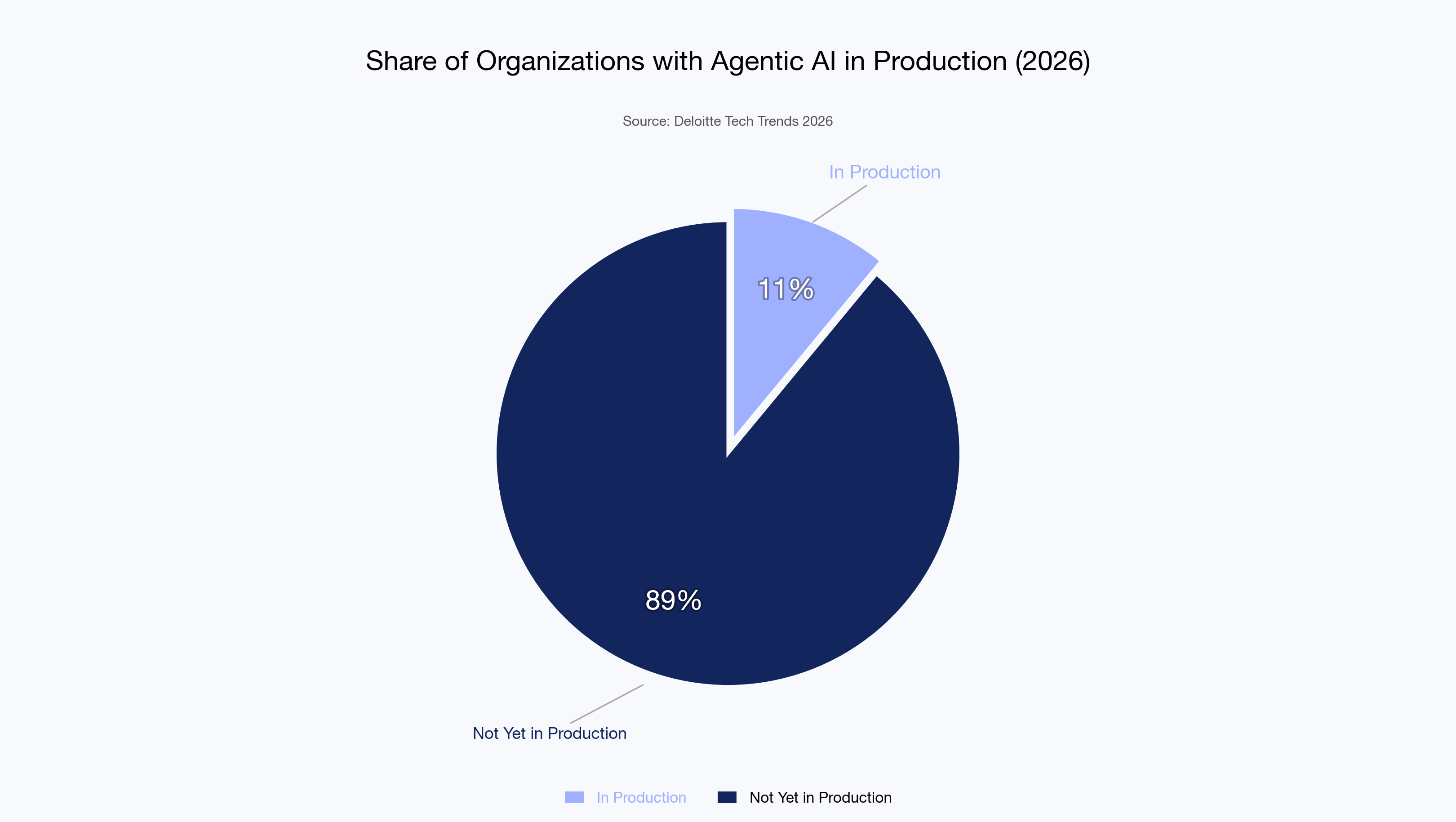
In 2025, companies realized that simply having a "GPT for enterprise" delivered smaller productivity gains than expected. The friction was always the human in the middle who had to copy-paste data between apps. 2026 is an inflection point because frameworks and models have matured enough to close the reliability gap for well-scoped workflows, even though broad production adoption remains early. With better frameworks and more powerful models, agents can now handle multi-step workflows autonomously for well-scoped tasks, though Deloitte's Tech Trends 2026 report on agentic AI strategy found only about 11% of organizations have moved agentic AI into production.
10 Agentic AI trends defining 2026
1. Multi-agent systems go mainstream
Multi-agent systems, in which specialized agents collaborate on a shared goal, are moving from experiments into mainstream production use in 2026. Instead of one general agent, companies are deploying systems where one agent might be a security expert, another a database specialist, and a third a front-end designer. They communicate in the background to build entire features. This is enabled by emerging interoperability standards such as the Model Context Protocol (MCP) and early agent-to-agent (A2A) collaboration protocols, which let agents from different vendors exchange context and delegate tasks.
2. Agent frameworks mature into production-grade platforms
Agent frameworks have moved past the experimental stage. LangGraph (from LangChain) has emerged as the production leader for stateful, graph-based agent workflows. CrewAI offers a lighter role-based framework suited to simpler multi-agent setups. Microsoft Agent Framework, which reached general availability in 2026, is Microsoft's recommended platform going forward; AutoGen entered maintenance mode in October 2025. Together with open standards like MCP, these tools now offer the logging, security, and scalability enterprises need to run agents around the clock.
3. Agentic AI moves into recruiting and HR
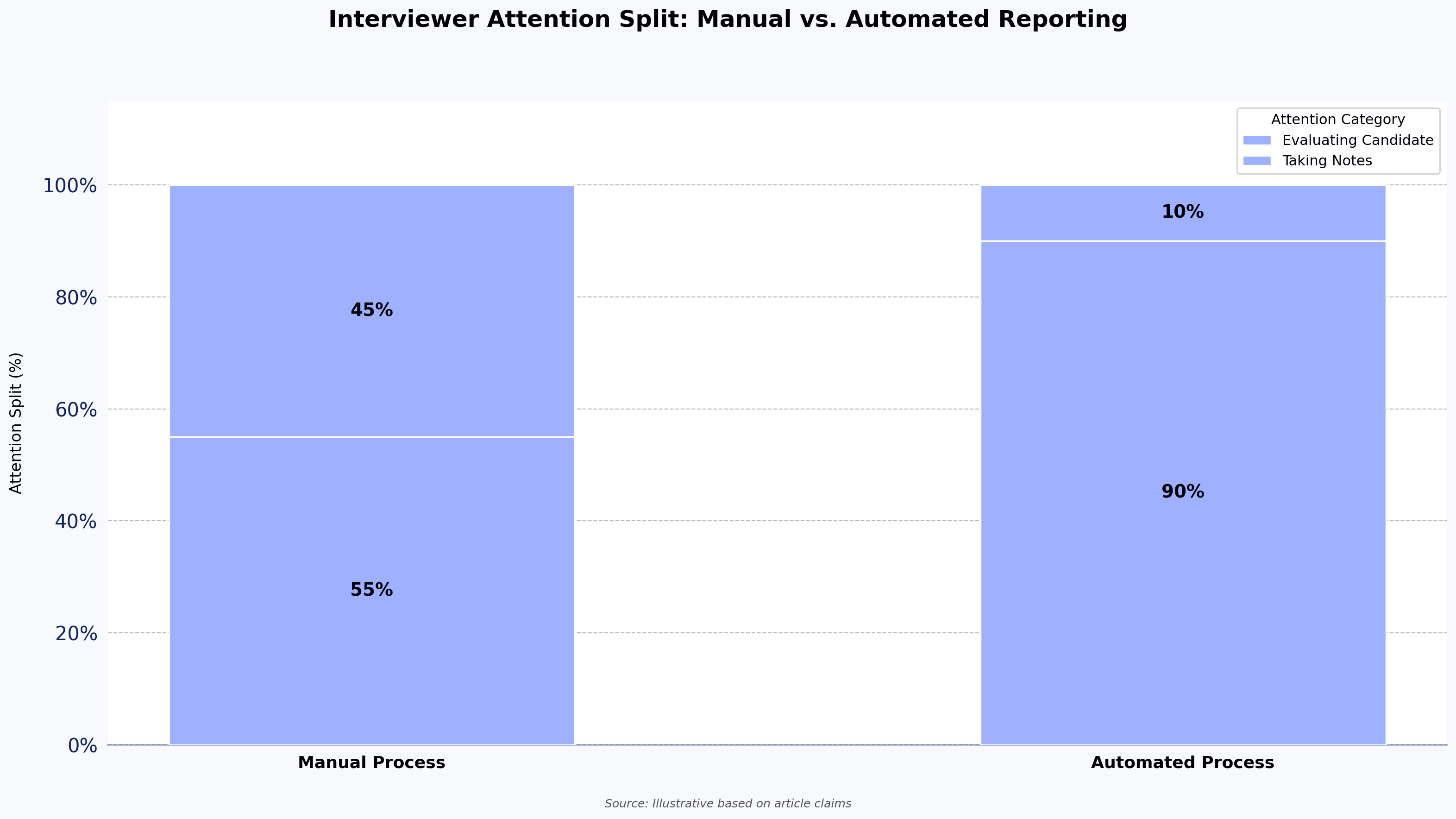
Agentic AI is moving into recruiting workflows. Agents can now source candidates without recruiter prompts by analyzing niche technical forums, conduct initial skills-gap assessments, and even handle the complex back-and-forth of interview scheduling. This isn't just automation; it is coordination across systems.
4. Agentic workflows replace linear automation
Old automation was a straight line: if A happens, do B. Agentic automation is a loop. It can handle "if A happens, try B, but if B fails because of C, then try D." This makes business processes much more resilient. Platforms like Temporal, n8n, and LangGraph now support these branching, retry-driven workflows in production.
5. The rise of "agent-native" developer roles
Agentic AI hiring is emerging as a distinct track, with companies recruiting developers specifically to design agent memory, permissions, and orchestration logic. Companies are looking for developers who understand how to give agents "memory," how to limit their permissions safely, and how to orchestrate their logic. The agent engineer role is emerging as a distinct hiring track.
6. Enterprise guardrails and agent governance become non-negotiable
As agents get more power, the risk of them taking unintended actions or making costly mistakes increases. In 2026, every agentic AI platform must have built-in guardrails — strict rules that keep agents from accessing sensitive data or spending over a certain budget.
7. Agentic AI rewires the developer workflow
Engineers are shifting from writing every line of code to orchestrating AI agents that ship code independently under human review. Instead of writing every line of code, developers are becoming "agent orchestrators." They spend their day reviewing the work of AI agents that ship code independently and guiding the system's high-level architecture.
8. Vertical-specific AI agents emerge
We are seeing a shift from general-purpose agents to specialists. There are now agents built specifically for healthcare compliance, legal research, or cloud infrastructure management. These agents are typically adapted — through prompting, retrieval, or fine-tuning — to the jargon and workflows of their target industries, though compliance still depends on human review.
9. Agent evaluation and observability become a discipline
You can't just "test" an agent like a piece of normal software because its behavior changes. Observability tools built for agents — such as LangSmith, Langfuse, and Arize Phoenix — are now essential. These tools track an agent's "thought process" so humans can understand why it made a specific decision.
10. Open-source agent ecosystems accelerate innovation
Open-source agent projects are shipping capabilities quickly alongside proprietary platforms. Many of the most advanced "autonomous AI agents" are being built on open-source frameworks, allowing smaller companies to compete with tech giants without massive budgets. Projects such as LangGraph, CrewAI, AutoGPT, and OpenHands illustrate how open-source frameworks are keeping pace with proprietary offerings.
Where agentic AI still falls short in 2026
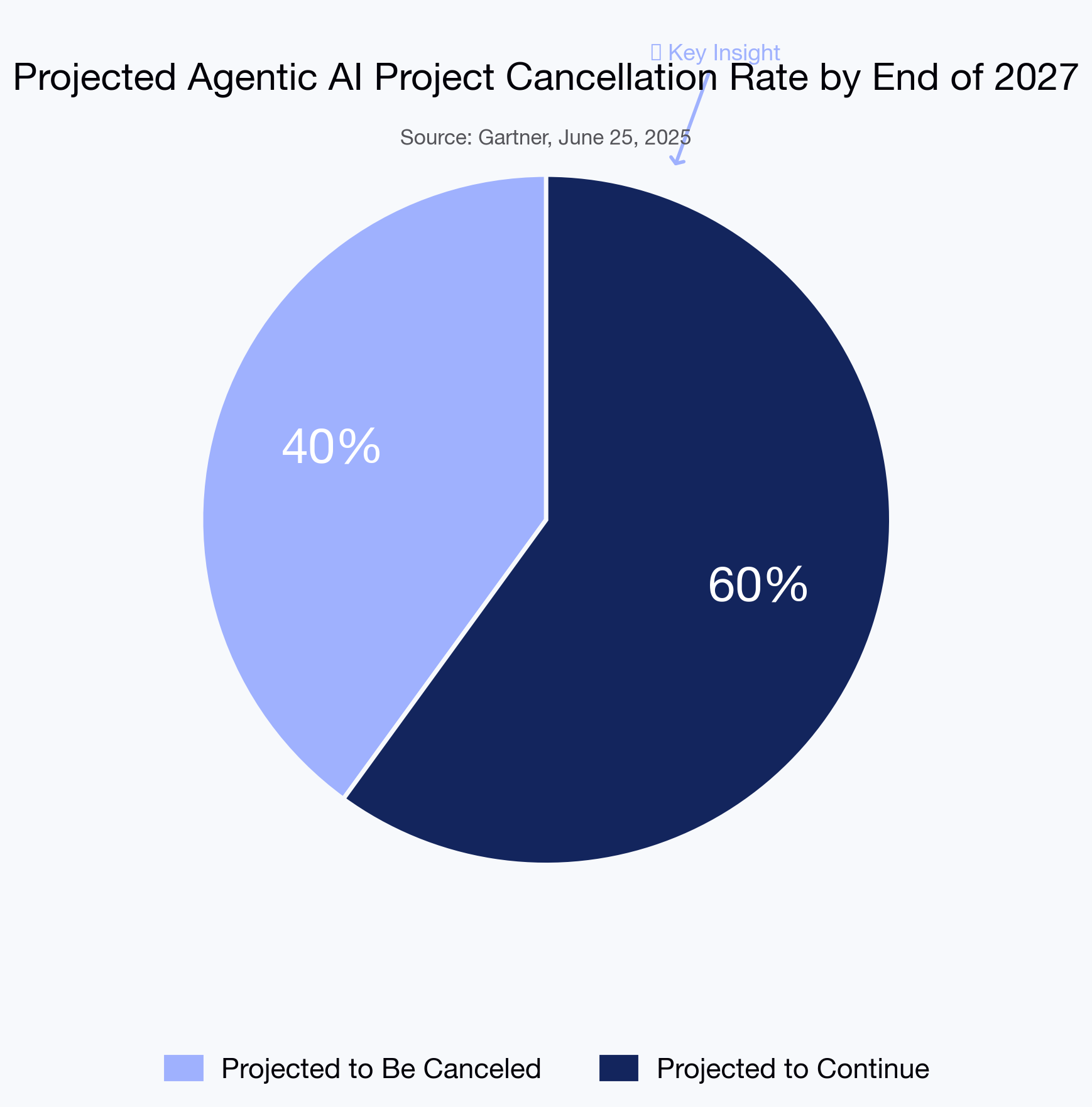
Agentic AI is not a fit for every workflow. Latency and token costs compound across multi-step agent loops, hallucinations at one step can cascade into wrong actions, and Gartner has predicted that over 40% of agentic AI projects will be canceled by the end of 2027 due to escalating costs, unclear business value, and inadequate risk controls (Gartner, June 25, 2025). High-stakes, low-tolerance workflows — regulated financial transactions, clinical decisions, irreversible infrastructure changes — still require tight human review.
What does this mean for hiring teams?
Hiring in 2026 requires a new lens. You are no longer just checking for Python or React skills; you are looking for people who can manage an AI-driven ecosystem.
New skills to assess when hiring agentic AI developers
For a deeper look at building assessments for emerging skills, see our guide on technical recruiting.
- Framework proficiency: Look for experience with LangGraph, CrewAI, or Microsoft Agent Framework (the successor to AutoGen, which entered maintenance mode in late 2025).
- Agentic orchestration: Can they design a workflow where multiple agents work together without getting stuck in a loop?
- Evaluation & testing: How do they ensure an agent is actually doing its job correctly?
- Security mindset: Do they know how to prevent "prompt injection" or unauthorized data access by an agent?
FAQ
What are the best agentic AI frameworks in 2026?
The right choice depends on workflow complexity and stack. Choose LangGraph when you need stateful, graph-structured workflows with fine-grained control over agent memory and branching. Choose CrewAI for smaller role-based crews where setup speed matters more than orchestration depth. Choose Microsoft Agent Framework when you are standardizing on Azure, Semantic Kernel, or Copilot Studio — it is the supported migration path from AutoGen.
What is the next evolution of agentic AI?
The next step is multi-agent collaboration under shared standards such as the Model Context Protocol (MCP) and emerging agent-to-agent (A2A) protocols, moving from single autonomous agents to coordinated teams of specialized agents with governance and observability built in.
What are the key AI trends for 2026?
The most consequential shift is not any single trend but the combination of two: agents are becoming multi-agent teams at the same time that governance, evaluation, and observability are becoming hard requirements. That pairing is what separates 2026 pilots that reach production from those that get canceled — capability without guardrails no longer ships.
Conclusion
Agentic AI trends in 2026 change how work gets done: software now plans, acts, and recovers from failure with limited human input. In 2026, the most successful companies won't just be the ones with the best AI but the ones with the best people to build and manage that AI. For technical recruiters and engineering leaders, start looking for the builders of autonomous systems today.
Ready to evaluate candidates for agentic AI roles? Schedule a demo to see how HackerEarth Assessments offers role-based, skills-first evaluation across 1,000+ skills — request a demo.