10 best soft skills assessment tools in 2026
The 10 best soft skills assessment tools in 2026 help technical recruiters, CHROs, and heads of talent shorten time-to-fill, raise quality-of-hire, and defend hiring decisions with evidence rather than gut feel. This guide compares ten platforms recruiters commonly evaluate — including HackerEarth — with named trade-offs, sourced statistics, and the legal risks (EEOC, Illinois AIVIA, EU AI Act) that now shape any AI-assisted hiring stack. Selection criteria and methodology are described in the implementation section.
Why soft skills define the 2026 labor market
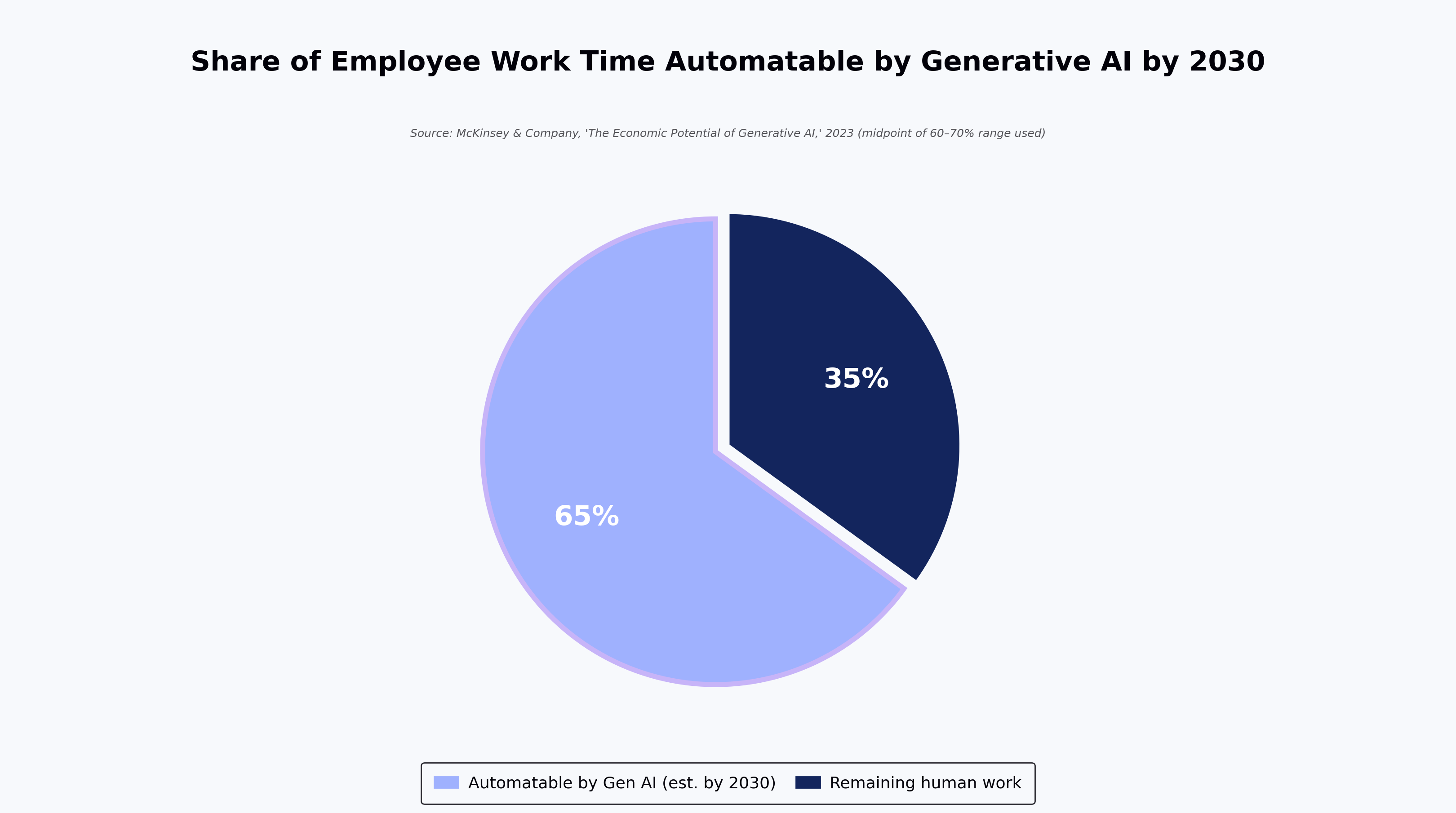
Soft skills now sit inside the recruiter's core scorecard because generative AI has absorbed a growing share of routine cognitive work, leaving communication, judgment, and collaboration as the traits that most reliably predict on-the-job performance. McKinsey estimates that generative AI could automate work activities absorbing up to 60–70% of employees' time by 2030 — a forecast, not a present-day figure, but one that reframes what a slate should screen for.
The shift is compounded by hybrid work. According to Owl Labs' State of Hybrid Work 2023, a majority of workers report higher productivity in hybrid or remote settings, and Future Forum's Pulse research found flexibility ranks near compensation as a job-decision factor. Resumes and unstructured panels do not surface the behaviors — asynchronous communication, self-direction, cross-time-zone collaboration — that determine whether a candidate closes a req successfully in a distributed team. This is the operational gap soft skills assessment tools are built to close.
A contestable point worth naming up front: gamified and behavioral assessments are not neutral. They can introduce their own selection bias — for example, against introverted high performers or candidates with disabilities that affect reaction-time-based games — which is why the EEOC issued guidance in 2023 on adverse impact from algorithmic hiring tools.
How soft skills assessment tools work
Soft skills assessment tools are software platforms that measure behavioral, cognitive, and interpersonal traits through validated tests, simulations, and AI-scored interactions. In 2026, the category has moved beyond multiple-choice questionnaires into multimodal environments that combine behavioral science, psychometrics, and AI scoring.
Situational judgment and behavioral simulations
The core method is the Situational Judgment Test (SJT). Candidates are presented with hypothetical, job-related scenarios and asked to choose the most appropriate course of action. SJTs test what a candidate would do in context rather than what they can recall. By 2026, many SJTs have evolved into behavioral simulations — platforms like Vervoe and WeCP put candidates inside digital environments that mirror the actual role, such as drafting a client response or pairing with an AI co-pilot on a system design problem. For a deeper primer, see our guide to psychometric testing in hiring.
Conversational AI and multimodal analysis
Conversational AI now conducts first-round interviews using Natural Language Processing (NLP) to interpret intent rather than match keywords. Some systems analyze multimodal cues — voice modulation, speech patterns, transcription — to score communication clarity and empathy.
This is also where legal risk concentrates. The Illinois Artificial Intelligence Video Interview Act requires candidate notice and consent for AI analysis of video interviews. The EU AI Act classifies AI systems used in employment decisions as "high-risk," triggering documentation, bias-testing, and human-oversight obligations. The EEOC's May 2023 technical assistance document applies Title VII disparate-impact standards to algorithmic hiring tools. Recruiters buying multimodal AI in 2026 should treat vendor claims about behavioral analysis as claims that require legal review, not features to enable by default.
Neuroscience and gamification
Gamified assessments — popularized by Pymetrics — measure cognitive and emotional traits through short interactive tasks. A "Money Exchange" task probes fairness and social intuition; "Tower" tasks probe planning. Vendors report gamified formats can lift candidate completion rates, though independent validation of engagement lift varies by role and geography.
Why soft skills assessment matters in the 2026 hiring funnel
Assessment tools affect three operational metrics recruiters are measured on: time-to-fill, quality-of-hire, and pipeline diversity.
Time-to-fill and screening throughput
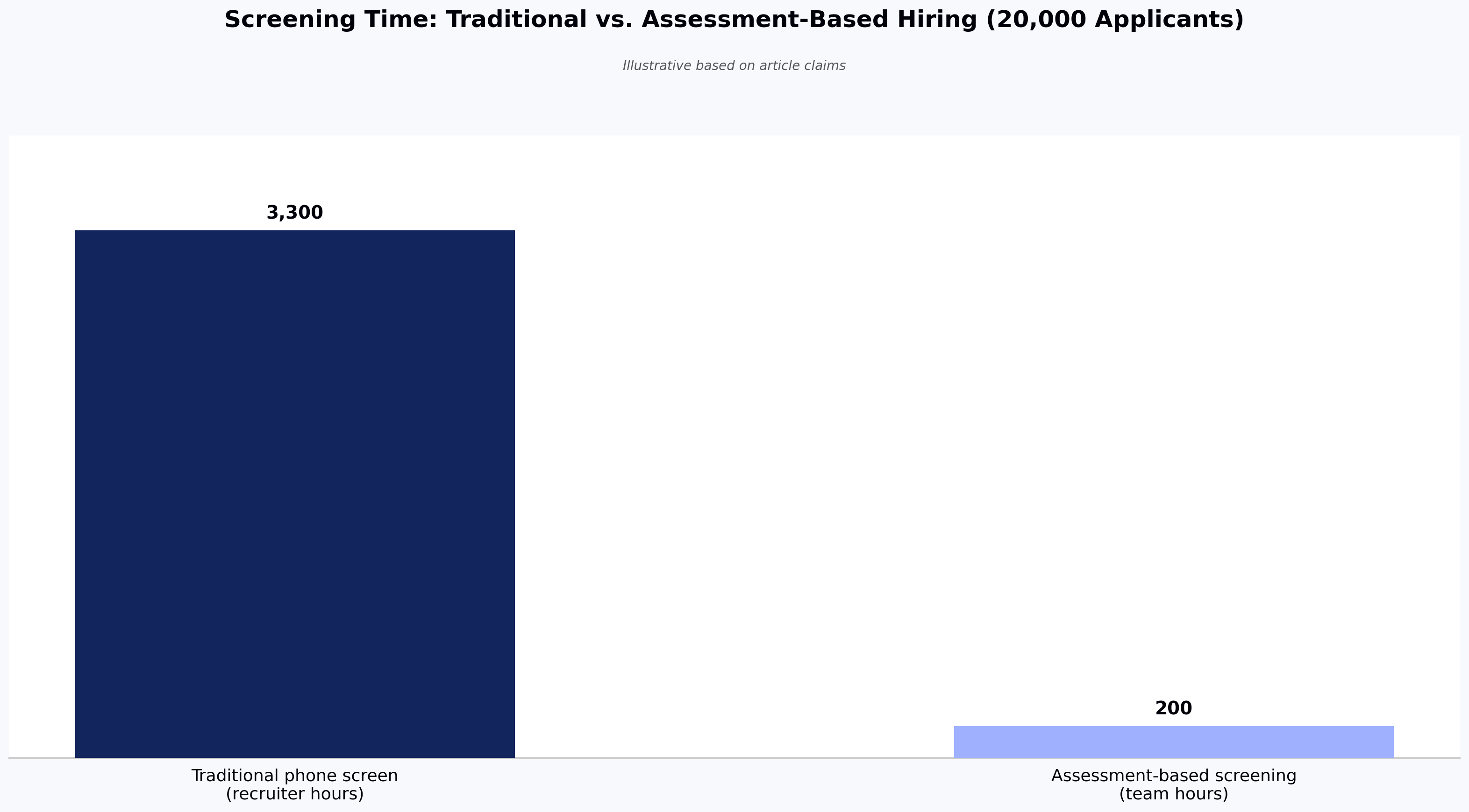
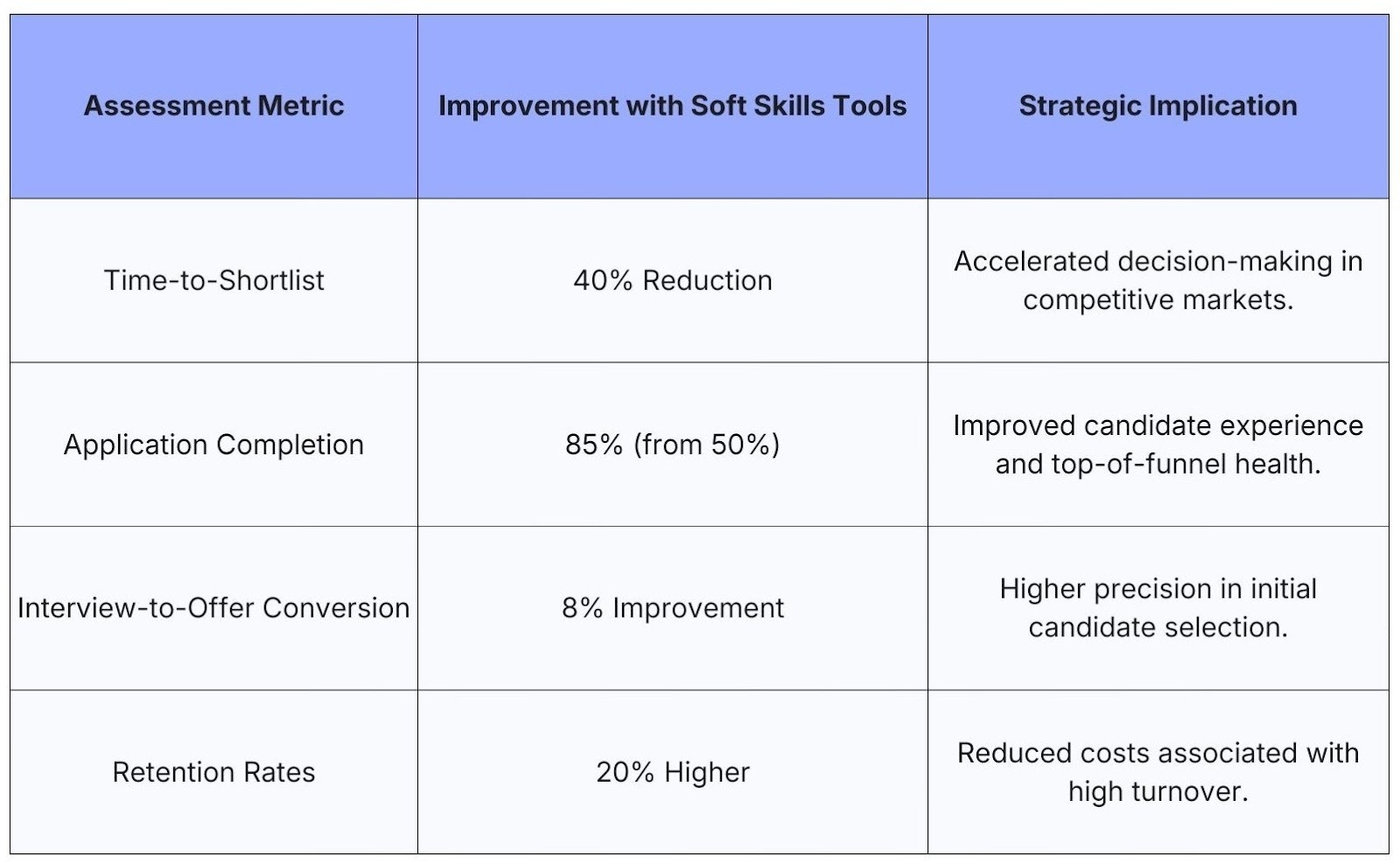
Automated screening and structured AI interviews can compress early-funnel work. Vendor-reported reductions in time-to-hire commonly fall in the 20–50% range depending on role volume and baseline process maturity; independent benchmarks are thinner, so treat vendor claims as directional. For high-volume roles in retail, hospitality, and BPO, asynchronous video allows candidates to complete screens across time zones, widening the top of the pipeline.
Mitigating unstructured-interview bias
Structured, skills-based assessments reduce reliance on the subjective impressions that drive adverse impact in unstructured panels. According to Talogy candidate research, a majority of candidates view structured, skills-based evaluations as fairer than resume screening — though "fairer" is not the same as "unbiased," and adverse-impact testing remains the recruiter's responsibility, not the vendor's.
Predicting quality-of-hire
Soft skills correlate strongly with retention and performance. LinkedIn's Global Talent Trends report has repeatedly found that soft-skill gaps are among the leading causes of new-hire failure. Assessing traits like accountability, resilience, and coachability during the screen stage gives hiring managers a defensible signal against which to weigh interview feedback.
The 10 best soft skills assessment tools in 2026: deep dives
The following analysis covers the ten platforms recruiters most commonly shortlist in 2026, with capabilities, target buyers, and — critically — known trade-offs. Inclusion reflects category coverage and buyer relevance in enterprise and mid-market technical hiring; it is not an endorsement ranking.
1. HackerEarth
HackerEarth is where this article's perspective sits: we built the platform to solve the operational problem recruiters are describing above — how to score a slate on behavior and skill together, at technical-hiring volume, without sacrificing candidate experience. HackerEarth's assessments combine coding validation with a psychometric library of situational judgment tests, and FaceCode enables live technical interviews where interviewers can score communication and problem decomposition alongside code. Skills Intelligence surfaces gaps across an existing workforce so L&D and TA can plan against the same data. The AI here does specific things: it scores code correctness against test cases, flags proctoring anomalies, and clusters candidate responses to open-ended prompts — it does not attempt to infer personality from facial expressions.
- Best for: Technical recruiting teams and engineering hiring managers running high-volume tech pipelines who need behavioral signal without leaving their coding-assessment workflow.
- Trade-off: Buyers hiring exclusively for non-technical roles (pure sales, hospitality) will find deeper role libraries elsewhere.
2. Toggl Hire
Toggl Hire leads with short skills challenges rather than resume upload, which shortens screening for high-volume, generalist roles. The pipeline view is Kanban-style and the question library covers technical, soft-skill, and language proficiency items.
- Best for: SMBs and high-growth startups hiring generalist roles at speed.
- Trade-off: Vendor-reported speed improvements ("up to 86% faster" per Toggl Hire's own marketing) are self-reported and unaudited; enterprises with complex reqs and structured panel workflows often outgrow the tool. Pricing tiers for larger question libraries are not fully transparent on the public site.
3. TestGorilla
TestGorilla lets recruiters stack up to five tests — cognitive, personality, role-specific — into a single assessment with AI-assisted grading and benchmark comparisons. Anti-cheating includes webcam and screen monitoring.
- Best for: Mid-market and enterprise TA teams needing configurable multi-competency screens across diverse roles.
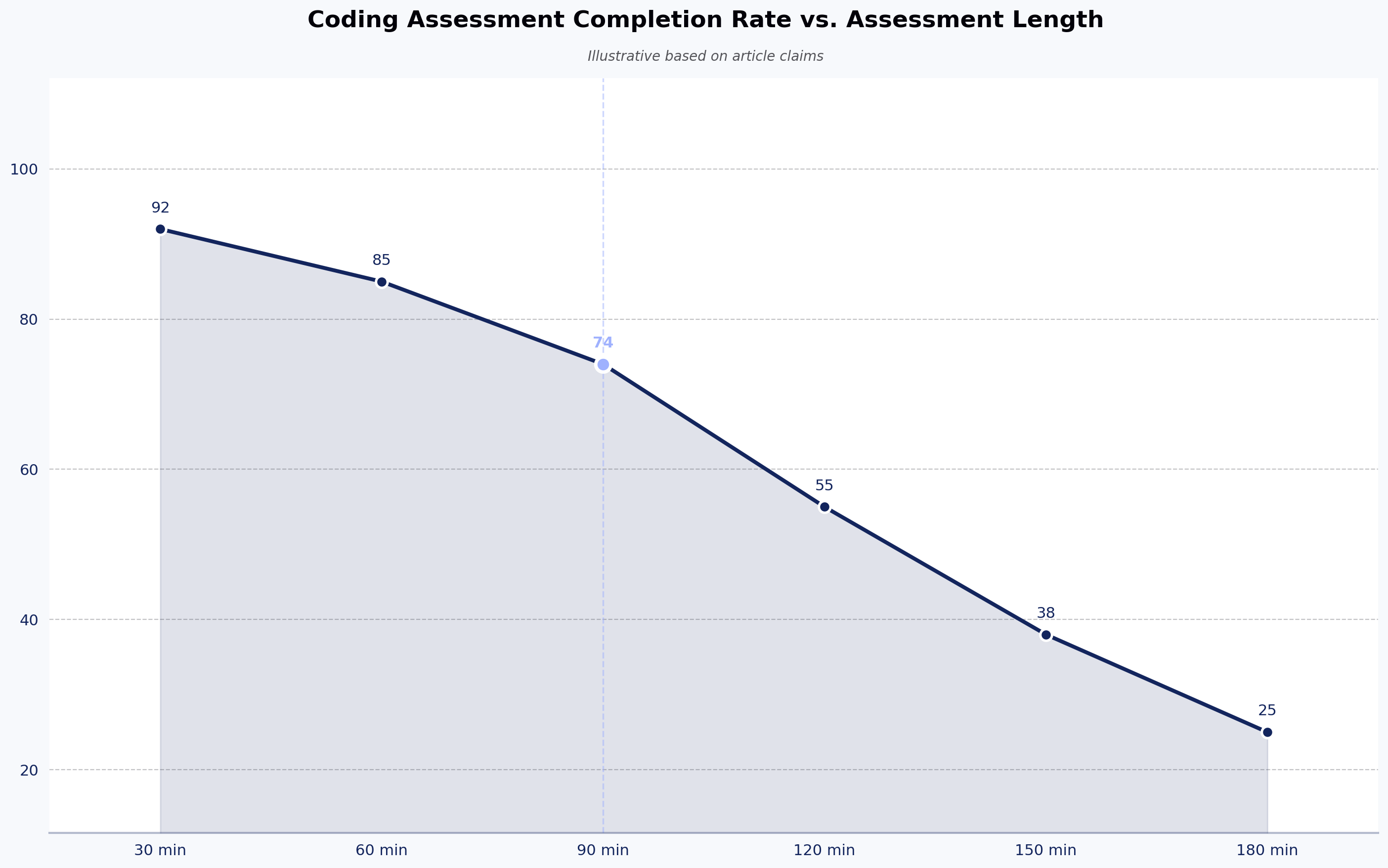
- Trade-off: Webcam monitoring raises candidate privacy questions under GDPR and several US state biometric laws; consent language and data-retention settings need legal review before deployment. Some hiring managers report assessment length pushes completion rates down for passive candidates.
4. Pymetrics (Harver)
Pymetrics, now part of Harver, uses neuroscience-based games to build a behavioral profile mapped to role-specific benchmarks. Harver publishes bias-audit methodology, which is one reason it is common in high-volume enterprise pipelines.
- Best for: Enterprises running large early-career or high-volume pipelines who want a validated behavioral layer.
- Trade-off: Reaction-time-based games can disadvantage candidates with certain disabilities; accommodations processes must be defined before rollout. Interpretation of "trust" or "fairness" scores requires calibration against actual on-the-job performance data, which many teams skip.
5. iMocha
iMocha's library spans 3,000+ tests covering technical, cognitive, and communication skills, with AI scoring for spoken and written responses. Skill-benchmarking analytics support both hiring and internal mobility.
- Best for: Global IT services firms and enterprises with heavy internal-mobility programs.
- Trade-off: Breadth comes at the cost of depth in any single domain; teams hiring exclusively for senior engineering roles typically pair iMocha with a code-native platform.
6. Bryq
Bryq is grounded in 16PF and Big Five (OCEAN) models and produces a Talent Match Score aligning candidate traits with role and team requirements. The AI Job Builder parses job descriptions to suggest assessment configuration.
- Best for: Organizations weighting culture add and team compatibility, especially for internal mobility decisions.
- Trade-off: Culture-fit scoring is inherently contestable — over-weighting it can narrow diversity outcomes, and Bryq's model requires the hiring team to define target profiles carefully to avoid encoding existing team homogeneity.
7. Mercer Mettl
Mercer Mettl offers a cloud-based platform with 400+ role assessments and strong proctoring, used at scale across enterprises, universities, and public-sector employers. It supports localized languages across 100+ countries.
- Best for: Large enterprises and public-sector organizations requiring high-security, compliant testing at scale.
- Trade-off: Configuration complexity and enterprise pricing put Mettl out of range for SMBs. Rollout typically requires vendor services.
8. Vervoe
Vervoe scores realistic job simulations using three AI models covering process, output, and preference alignment. Candidates handle tasks — draft emails, resolve tickets, complete code — that mirror the role.
- Best for: Sales, support, and creative roles where task performance predicts success better than psychometrics.
- Trade-off: Simulation design quality varies by role library; poorly configured simulations produce noisy rankings. AI scoring of open-ended responses still benefits from human calibration for senior roles.
9. eSkill
eSkill lets recruiters build custom assessments from an 800+ subject library and layer in one-way video interviews. It's often chosen when the ATS drives modular test configuration.
- Best for: HR teams needing flexible, modular tests across many role types.
- Trade-off: Because eSkill is highly configurable, the burden of test validity sits with the buyer — off-the-shelf configurations may not be validated for adverse impact in the buyer's specific applicant pool. One-way video interviews raise the same AIVIA and EU AI Act considerations noted above.
10. Codility
Codility, best known for coding challenges, has expanded CodeLive for interactive technical interviews and added Skills Intelligence for workforce planning. Behavioral tracking monitors for integrity signals.
- Best for: Engineering teams that want collaborative interview signal alongside coding output.
- Trade-off: Soft-skill depth outside engineering contexts is limited compared with dedicated behavioral platforms; non-engineering teams will find better fit elsewhere.
The power skills of 2026
Hiring managers surveyed in LinkedIn's 2024 Workplace Learning Report consistently rank the following as the most valuable non-technical capabilities:
- Communication — translating complex data into decisions and collaborating asynchronously across time zones.
- Professionalism and accountability — reliability and ownership, especially in distributed teams where managerial visibility is lower.
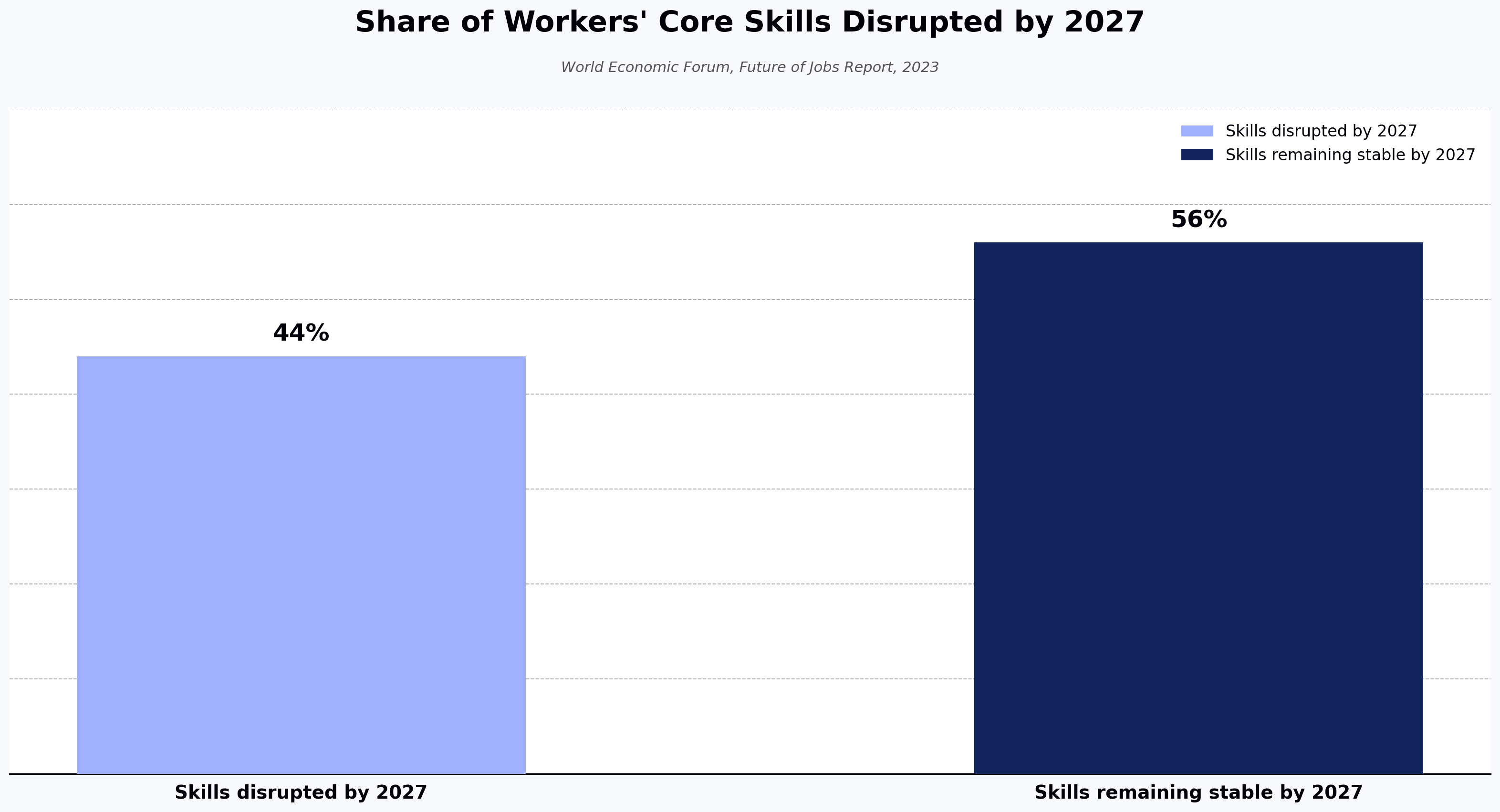
- Adaptability — the World Economic Forum's Future of Jobs Report 2023 projects 44% of workers' core skills will be disrupted by 2027, making learning agility a screening priority.
- Critical thinking and ethical judgment — auditing AI-generated content for bias and error is now a job skill, not a research task.
- Emotional intelligence — the basis for conflict resolution and leadership in mixed-tenure hybrid teams.
What's next: VR, agentic AI, and skills inventories
Two shifts are worth tracking. First, Virtual Reality is starting to appear in assessment for high-stakes roles; PwC's VR training research reported learners in VR completed training four times faster than in classroom settings — a training finding, not an assessment validation, but one that suggests VR may support scenario-based evaluation over time. Second, "agentic AI" recruiters are running adaptive first-round interviews. Both are subject to the legal frameworks named above; both should be piloted with adverse-impact testing before scaling.
Separately, more TA teams are running internal skills inventories to identify redeployable talent before opening external reqs — a practical use case for skills-intelligence data your assessment platform already collects.
Implementation strategy: how to select a soft skills assessment tool
Use these five criteria, each expressed as a specific question to put to the vendor:
- Scientific validity — ask for the technical manual. Request the vendor's validity and reliability studies, adverse-impact analysis, and the psychometric model (OCEAN, 16PF, or proprietary) with reference publications. Decline if the vendor cannot produce these.
- Role coverage — map to your open reqs. Cross-check the vendor's role library against your last 12 months of hires. Fewer than 70% coverage means significant custom-content work post-purchase.
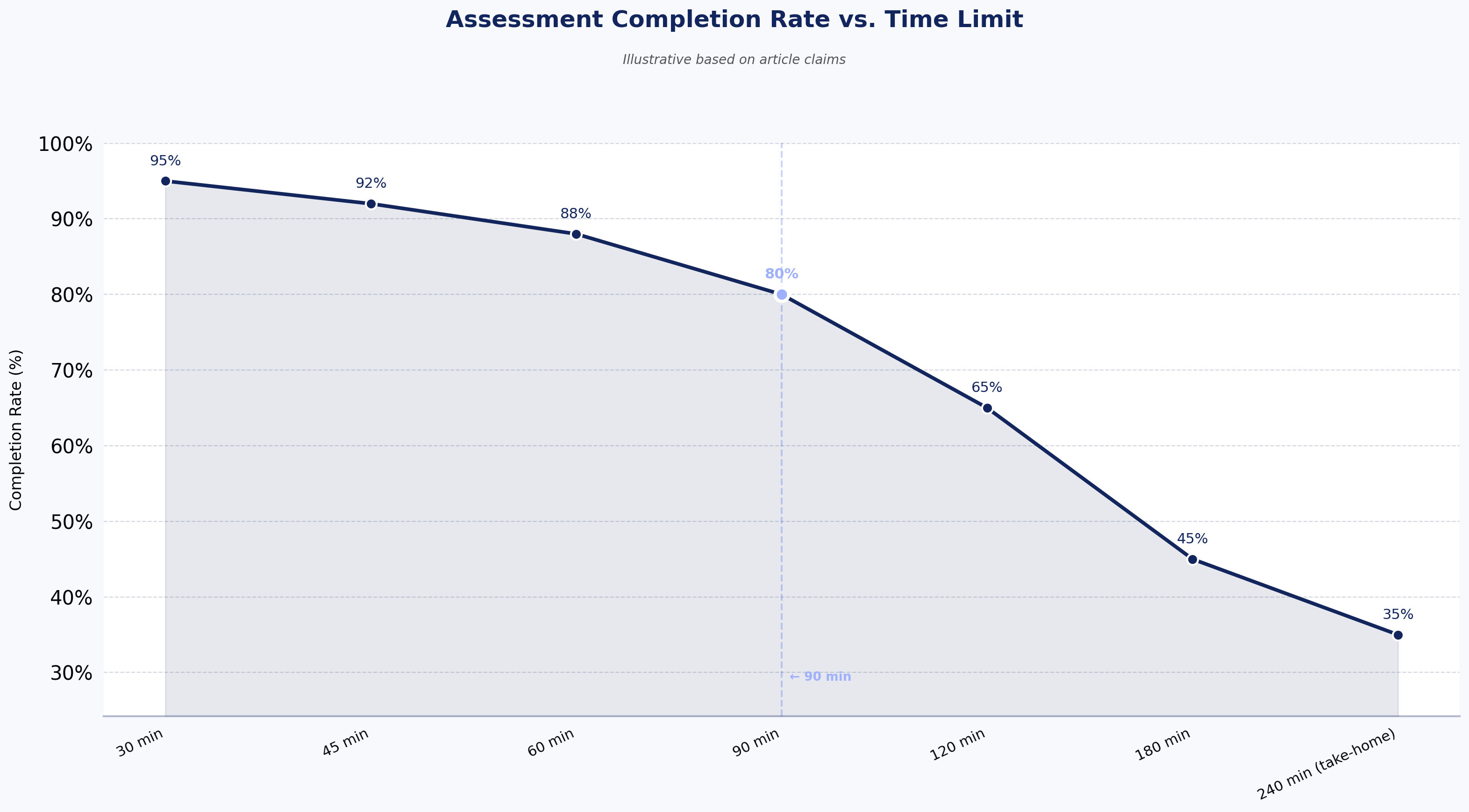
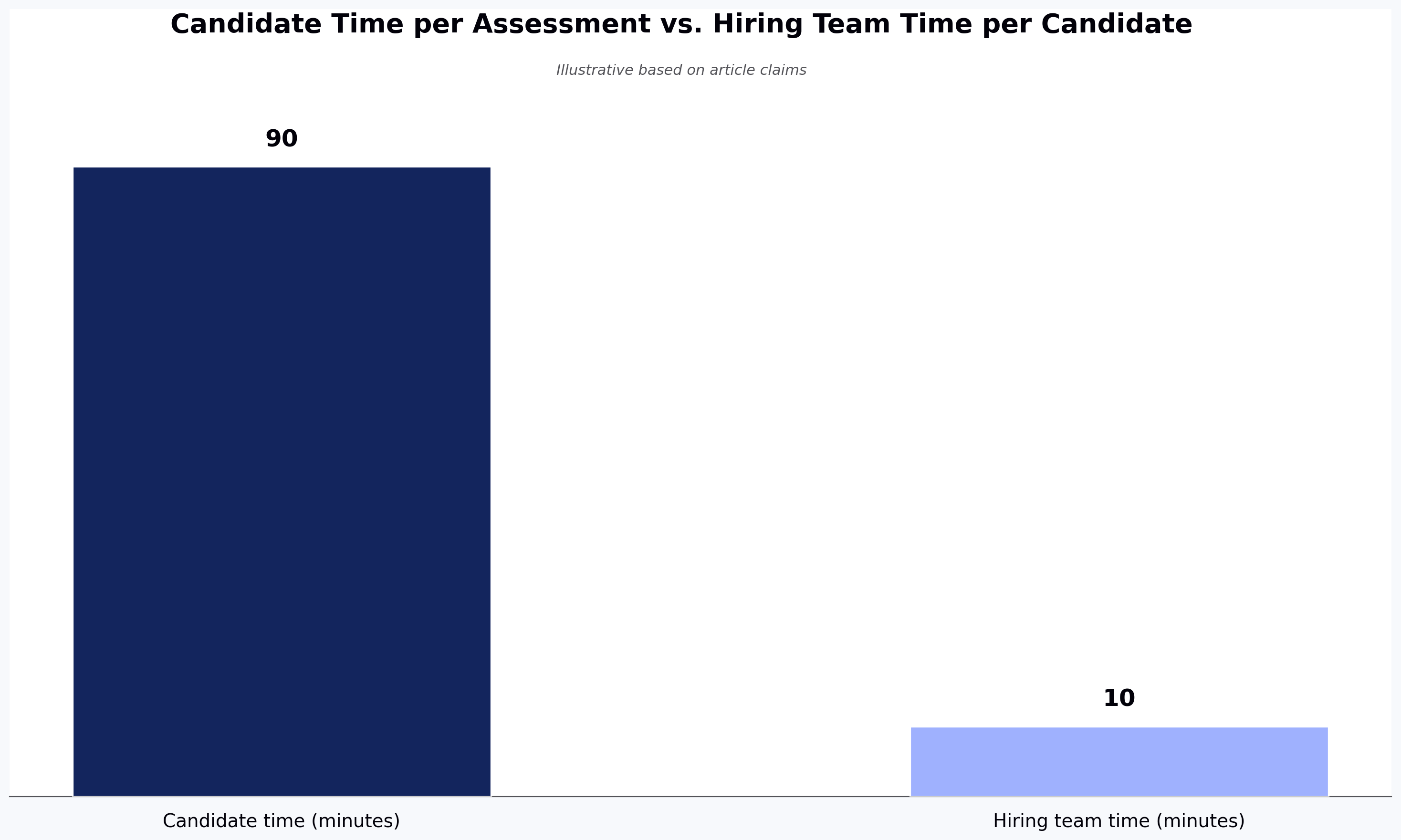
- Candidate experience — measure completion, not marketing. Ask for average completion rate and time-to-complete by role type, and pilot with 25–50 real candidates before signing. Target under 30 minutes for screening-stage assessments.
- Decision-support analytics — require ranked shortlists with confidence intervals. Flat score exports are not enough. Ask whether the platform outputs a ranked slate with score confidence and adverse-impact flags at the req level.
- Integrations — confirm bidirectional ATS sync. Verify native connectors for your ATS (Greenhouse, Workday, iCIMS, Lever) and that scores write back to the candidate record, not just to the vendor's dashboard.
Frequently asked questions
What is a soft skills assessment tool? A soft skills assessment tool is a software platform that measures behavioral, cognitive, and interpersonal traits — such as communication, adaptability, and judgment — through validated tests, simulations, and AI-scored interactions, producing data recruiters can use to rank a slate.
What is the best soft skills assessment tool for small businesses? For most SMBs, Toggl Hire or TestGorilla balance cost, setup speed, and question-library breadth. Both offer self-serve onboarding and per-seat pricing that scales down; enterprises with structured panels typically outgrow them.
How accurate are AI-based soft skills assessments? Accuracy depends on the construct being measured and how the tool was validated. Well-designed cognitive and situational judgment tests show validity coefficients comparable to structured interviews. AI inferences about personality from facial expressions or voice tone have weaker independent validation and carry legal risk under the EU AI Act and EEOC guidance.
Are AI soft skills assessments legal to use in hiring? They can be, but usage is regulated. The Illinois AI Video Interview Act, New York City Local Law 144, the EU AI Act, and EEOC guidance all impose disclosure, bias-audit, or consent requirements. Buyers should require vendor documentation of adverse-impact testing and confirm compliance with applicable jurisdictional law.
How do soft skills assessments reduce time-to-hire? They compress early-funnel screening by producing ranked shortlists based on skill and behavior, letting recruiters skip resume-only screening for large candidate pools. Reported reductions vary widely; teams should baseline current time-to-fill before deployment to measure real gains.
Should soft skills assessments replace interviews? No. Assessments produce a defensible signal for ranking a slate; interviews validate that signal, probe context, and give candidates a chance to evaluate the employer. Structured panel interviews plus assessment scores outperform either method alone.
Next steps
If your team is running technical hiring at volume and wants behavioral signal alongside coding validation, book a HackerEarth demo to see how assessments, FaceCode interviews, and Skills Intelligence work together on a live req. For a broader view of how skills data supports hiring and internal mobility, see our skills intelligence overview.
Editorial note on scope: this article compares platforms recruiters commonly evaluate in 2026 based on category coverage, buyer relevance in technical hiring, and publicly available product documentation. It is not a ranked endorsement. Metadata (meta title: "10 best soft skills assessment tools in 2026" — 52 chars; meta description to be locked to 140–155 chars referencing the ten-tool comparison, sourced statistics, and legal-risk framing) should be finalized before publishing.