Home
/
Blog
/
Tech Assessment
/
Top 5 Talent Assessment Templates: Ready-to-Use Frameworks for Recruiters

Top 5 Talent Assessment Templates: Ready-to-Use Frameworks for Recruiters

Author
Medha Bisht
Calendar Icon
November 24, 2025
Timer Icon
3 min read
Share

Explore this post with:

What is a talent assessment template?

A talent assessment template serves as a critical, structured framework used to evaluate specific data points related to a candidate’s or employee’s potential, performance, and overall fit within an organization. By implementing a consistent structure, organizations can collect standardized information regarding skills tests, cognitive ability results, work samples, and personality profiles tailored to key job requirements.

The goal of the talent assessment process is to identify the most suitable individual for a role based on data-driven, proven results, especially when faced with multiple well-qualified candidates who possess similar educational backgrounds and general experience. These frameworks facilitate the collection of objective information, which provides a more complete view of an individual's skills, underlying competencies, and potential alignment with the organizational culture.

The crucial distinction: talent vs. skill assessment

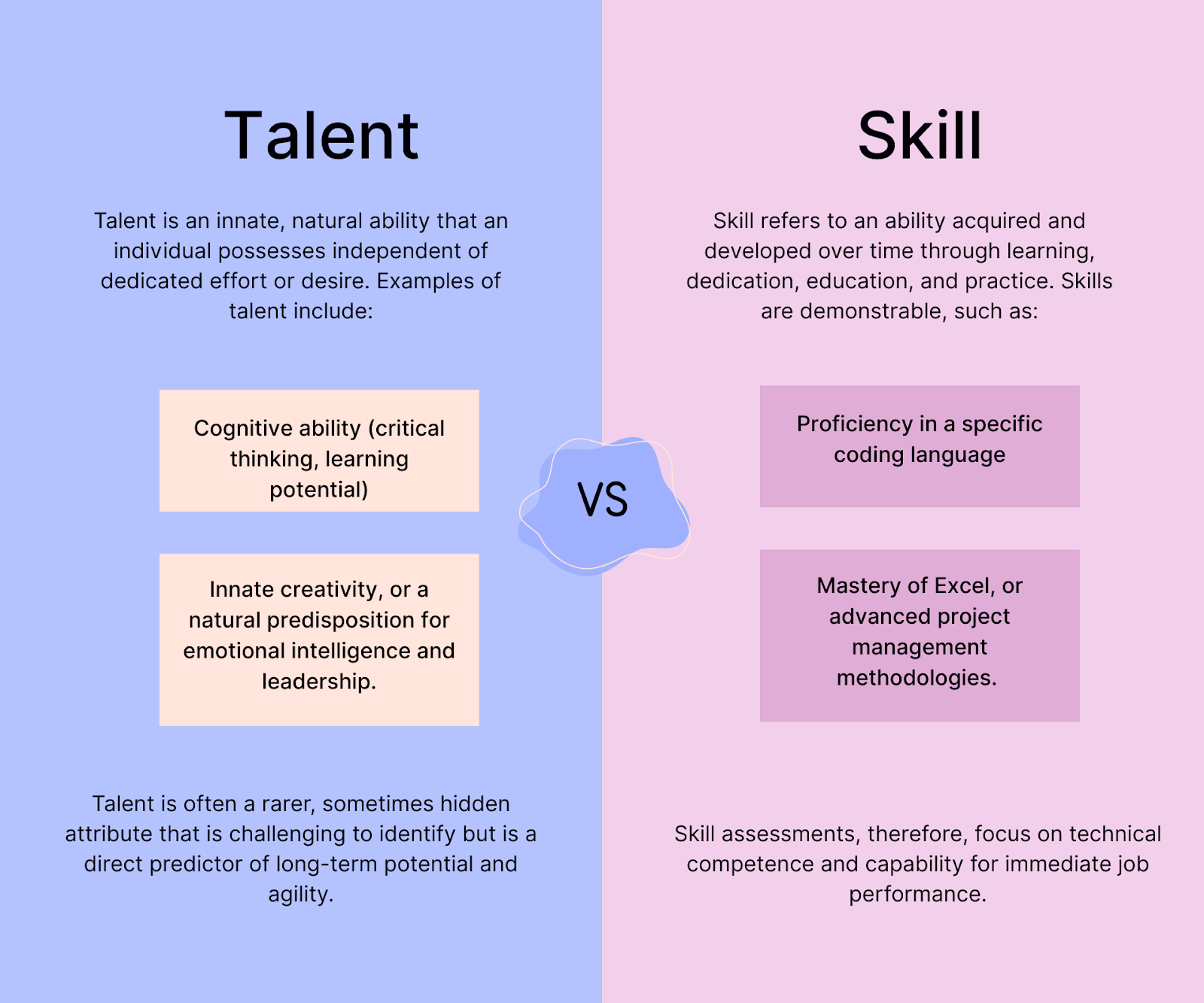
An effective talent strategy necessitates a clear differentiation between inherent talent and acquired skills. 

The strategic necessity of maintaining a dual-focus assessment strategy—evaluating both skill and talent—is essential for mature organizations. Relying solely on skill assessment measures current performance, which is valuable for immediate hiring needs. However, assessing talent (potential) is paramount for strategic workforce planning, succession management, and identifying high-potential employees capable of handling complex future roles. 

Why assessment standardization is critical for 2025 HR practices

The evolution of HR in the contemporary labor market places immense pressure on talent acquisition teams to ensure not only efficiency but also equity. Standardization of assessment templates is the foundational strategy for meeting these demands.

Achieving consistency and standardizing evaluations

Standardization refers to establishing a systematic and consistent set of procedures, methods, and guidelines applied across all job positions within an organization. This structure ensures that all employees or candidates are evaluated using the identical set of benchmarks and performance metrics, regardless of their specific department, tenure, or the manager conducting the review.

Historically, performance evaluations were vulnerable to personal biases and inconsistency. The structured and repeatable nature of standardized templates minimizes subjectivity and promotes objectivity in evaluations, leading to more accurate and reliable assessments. This consistency in evaluation criteria is crucial for creating a transparent system that fosters fairness, thereby enhancing employee engagement and cultivating a culture of continuous improvement.

Reducing bias and ensuring fairness

One of the most significant strategic advantages of structured talent assessment is its ability to reduce unconscious bias. During unstructured interviews or resume screening, subjective impressions often sway decisions. Conversely, a data-driven talent assessment provides objective facts based on how candidates perform on relevant, measurable criteria.

By ensuring every candidate undergoes the same structured process and is assessed against the same criteria, the organization promotes diversity and inclusivity by focusing strictly on skills and potential, not background or personal characteristics. This practice enforces fact-based decisions, significantly reducing the influence of personal unconscious bias on hiring outcomes and supporting the organizational commitment to diversity, equity, and inclusion (DEI) goals. The structure introduced by templates provides the minimum necessary discipline to mitigate the legal and ethical risks associated with arbitrary or biased selection processes.

Improving hiring decisions and employee growth

Talent assessment templates provide objective insights into a candidate's skills, behaviors, and long-term potential, leading directly to higher quality of hire. By using relevant assessments, organizations can more accurately evaluate competencies and predict a candidate’s likely success in the position. The measurement of traits necessary for on-the-job productivity—such as cognitive ability, problem-solving skills, and emotional intelligence—can be highly indicative of future performance.

Furthermore, standardized assessment data is vital for internal talent management. The objective results inform strategic decisions regarding development opportunities, promotions, and corrective actions. This evidence-based approach enables managers to focus coaching and development efforts precisely where they are needed, ensuring employees receive the support and guidance required to thrive and grow within the company.

Talent assessment frameworks you can implement today

The following frameworks represent essential structures for comprehensive talent evaluation, spanning career management, technical capacity, behavioral judgment, holistic performance, and cultural alignment.

1. The Nine-Box grid: mapping potential and performance

The Nine-Box grid (sometimes called the 9-block grid) is an assessment tool designed to visually map and categorize employees based on two key axes: their current performance and their future potential for growth within the organization.

Purpose, When to Use, and Format

The primary purpose of the grid is to facilitate strategic talent management, including critical talent investment decisions, succession planning, and targeted development. The format is a straightforward three-by-three matrix. The X-axis typically represents performance (categorized as Low, Moderate, or High Performer), and the Y-axis represents potential (categorized as Low, Moderate, or High Potential). Accurate placement requires a collaborative exercise between HR, management, and leadership to ensure an unbiased and well-rounded perspective.

Sample questions (guiding calibration)

To accurately place employees on the grid, calibration discussions must move beyond simple opinions and use structured questions to probe both dimensions:

  • Does this individual consistently meet or exceed the goals, targets, and objectives set for them? 
  • Does this person have a reliable track record of delivering what they promise?
  • How receptive is this person to feedback and coaching, demonstrating a willingness to learn and grow? 
  • Does this person demonstrate the cognitive ability, influence, and motivation necessary for higher-level leadership roles?

Critical limitations of the Nine-Box grid

While fast, easy to implement, and forward-focused, the Nine-Box Grid has inherent strategic risks.

  1. Subjectivity in potential: The evaluation of "potential" is often imprecise and rooted in subjectivity, making it challenging to define and measure objectively. This subjectivity can be compounded during leadership discussions, where personal biases or the persuasive abilities of managers may influence the final placement.
  2. Lack of objective data: The framework often suffers from a scarcity of concrete, objective data to back up the ratings, relying instead on subjective manager observations.
  3. Risk of disengagement: When misused, the grid can apply static labels to employees, inhibiting motivation. Employees assessed as "Low Potential" (LoPo) may become discouraged and disengaged, particularly among younger generations who place a high value on career mobility and developmental opportunities.

To mitigate these limitations, the grid must be used primarily as a calibration tool for discussion and investment decision-making, not as the sole source of evaluation data. Objective assessment data from other tools (e.g., technical or behavioral tests) should inform the performance ratings, and leaders must prioritize follow-up development plans over fixed labeling to maintain engagement.

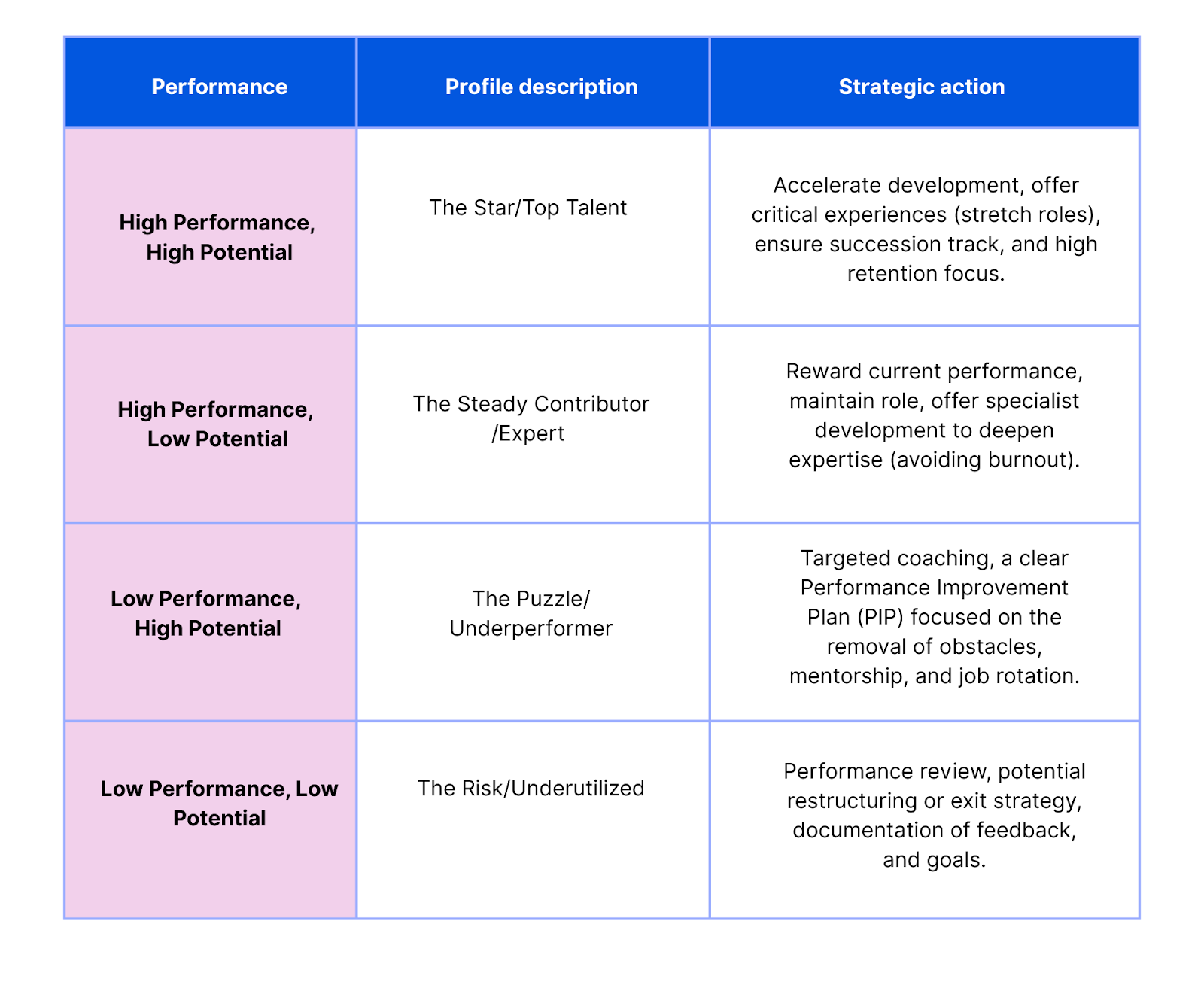
Nine-Box grid segments and recommended actions
2. Technical skills assessment template

Purpose, when to use, and format

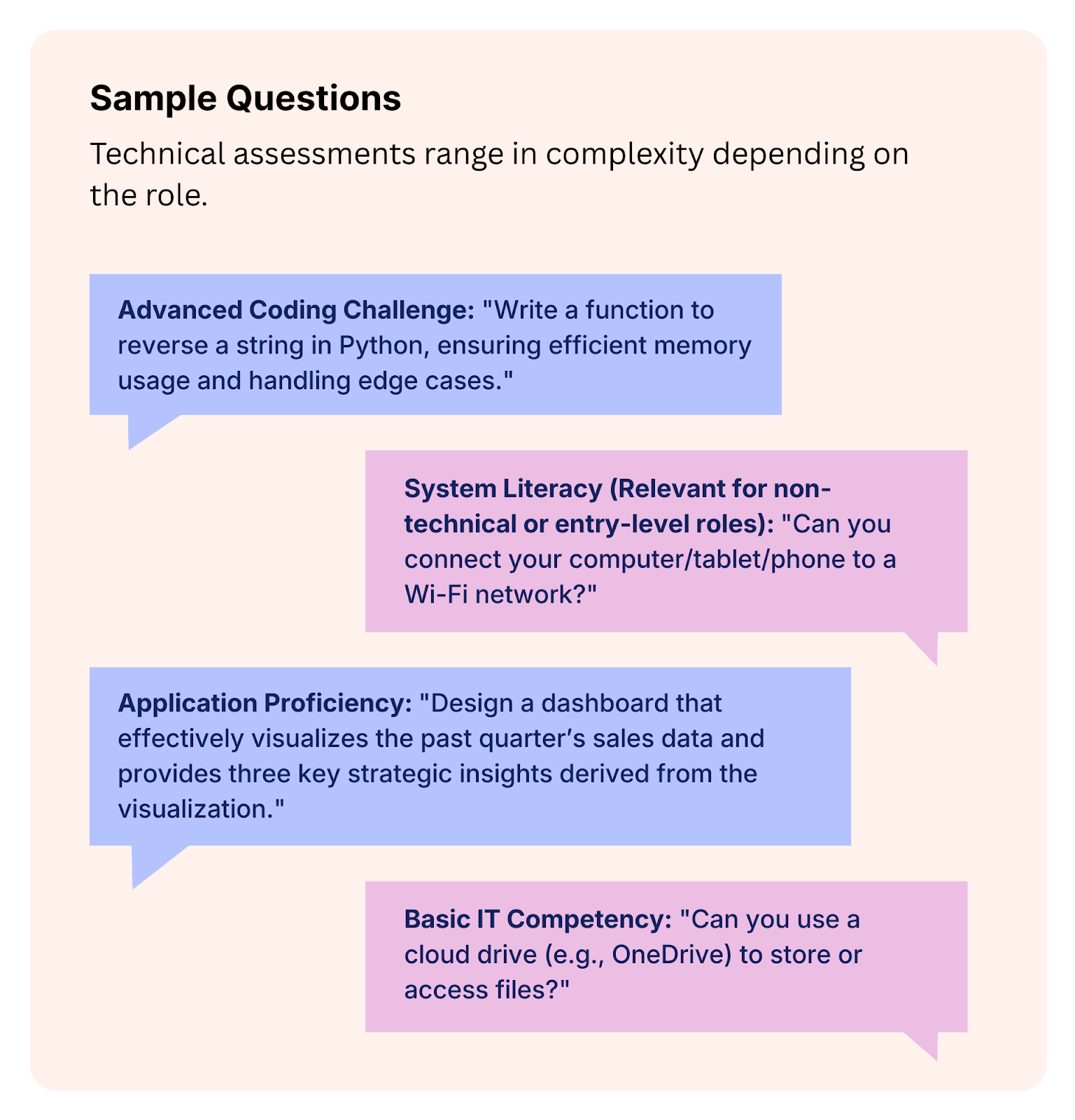
The Technical Skills assessment template is designed for the objective measurement of job-specific hard skills, ensuring that a candidate or employee possesses the verifiable competencies necessary to perform a role efficiently. These assessments are critical for verifying capability and helping recruitment teams pinpoint under-qualified candidates early in the process.

These templates are most effective when used for early screening of high-volume technical roles (such as software engineering, data science, or IT support) or for late-stage validation in highly specialized positions.

The preferred format emphasizes demonstrating application over recalling theoretical knowledge. This includes hands-on tasks, coding simulations, work samples (e.g., a design challenge), or application-focused multiple-choice questions (MCQs). For senior or specialized technical roles, the assessment must shift strategically from evaluating execution skills (e.g., writing a function) to evaluating capabilities related to technical architecture, system design principles, and complexity management. A common strategic failure in technical hiring is assessing theoretical knowledge instead of verified capability.

3. Soft skills & communication template (situational judgment tests)

Purpose, when to use, and format

The soft skills and communication template focuses on measuring behavioral, interpersonal, and leadership competencies—the critical traits that predict success in complex, collaborative work environments. These are often referred to as effectiveness in social functioning.

This template is best utilized during mid-stage screening or for managerial and leadership assessments, where factors like emotional intelligence, influence, and judgment carry high stakes. It complements technical skill assessment, providing the vital behavioral context that skills tests often miss. 

The most recommended standardized format is the Situational Judgment Test (SJT). SJTs present applicants with a description of a work problem or critical workplace scenario and ask them to identify the most appropriate, effective, or least effective response.
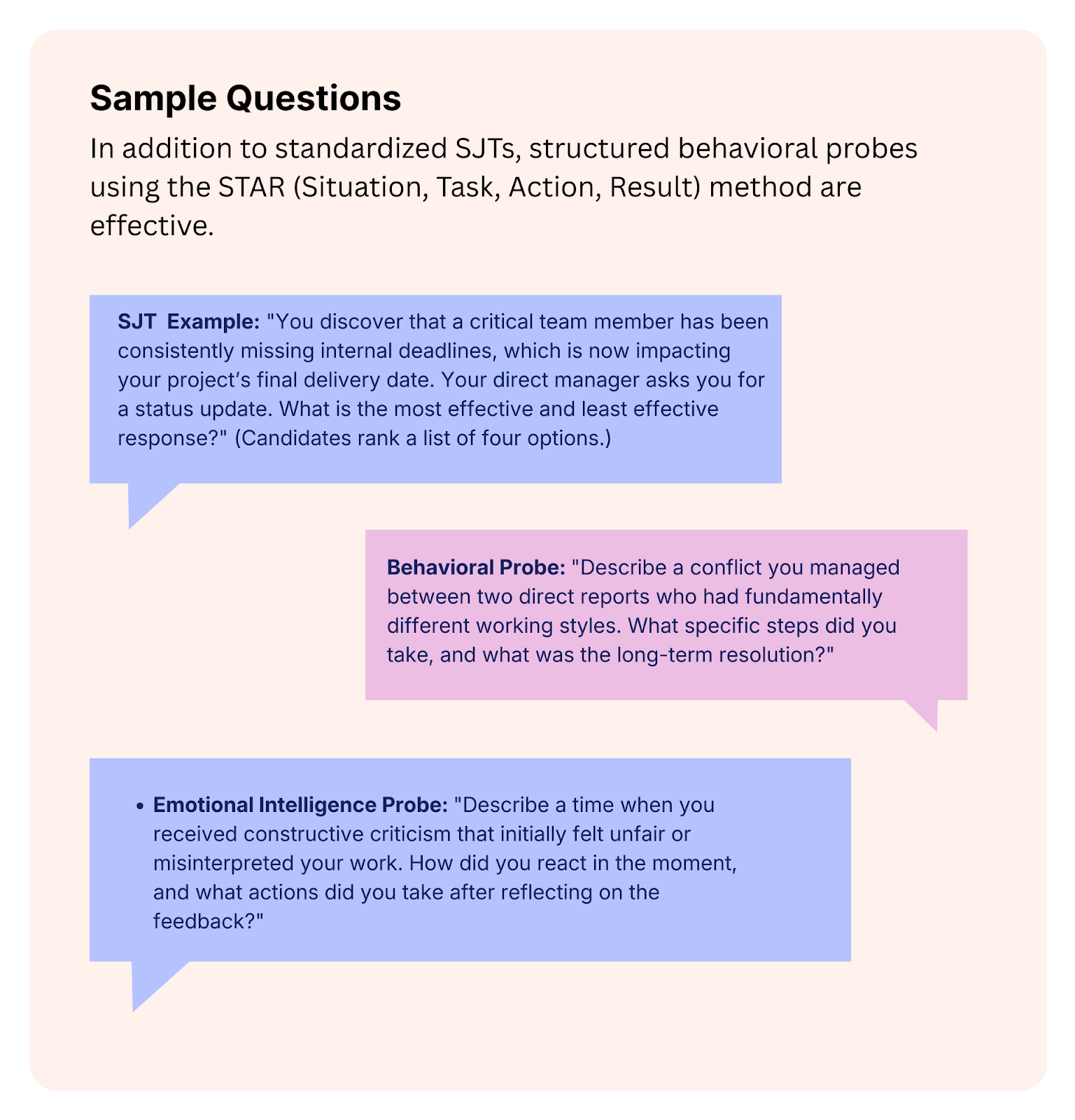
By standardizing both the situation presented and the scoring criteria for acceptable responses, SJTs effectively transform the inherently subjective nature of behavioral evaluation into objective, comparable data, significantly reducing the likelihood of evaluator bias during the hiring process.

4. 360-degree feedback template

Purpose, when to use, and format

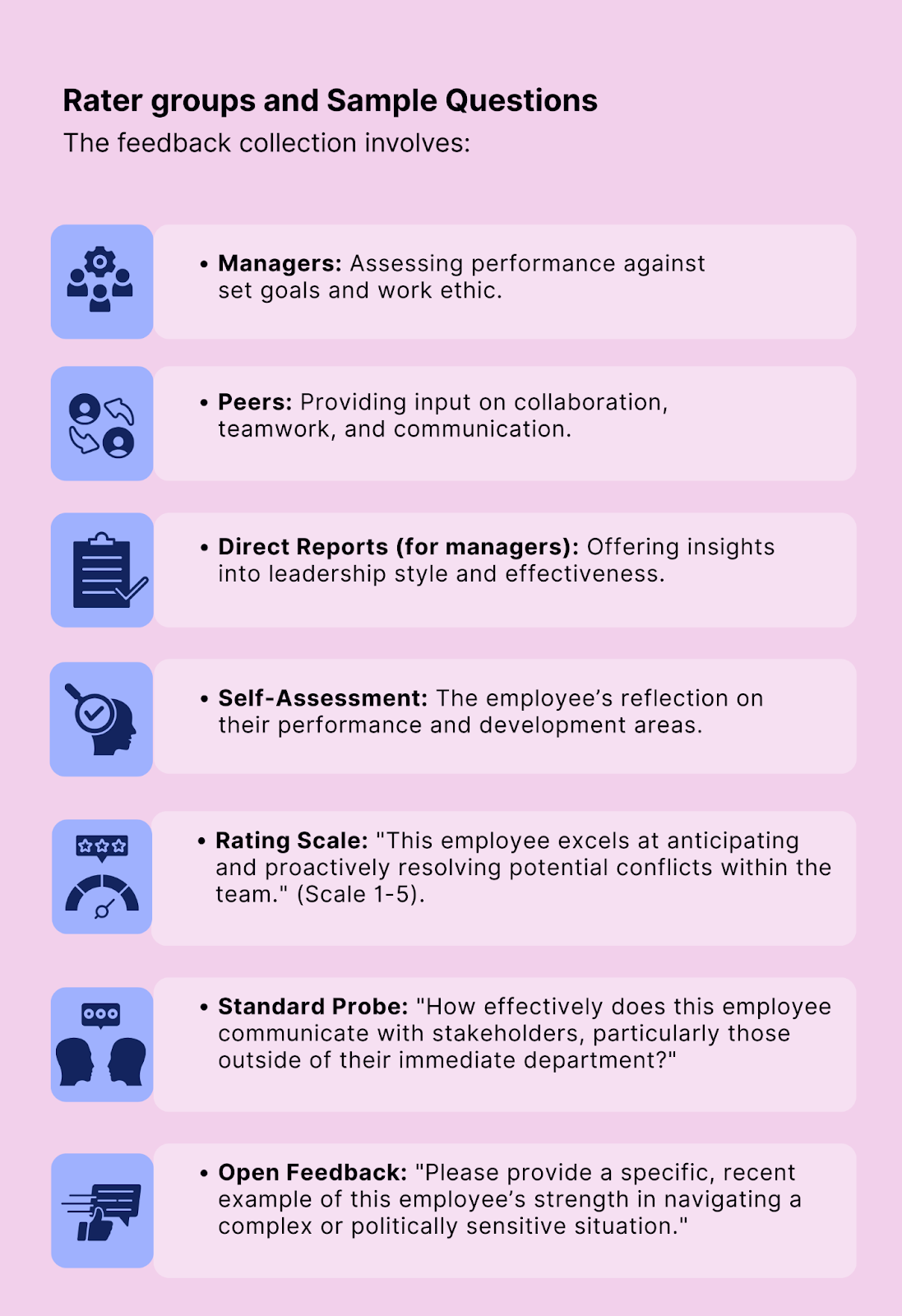
The 360-degree feedback template provides a comprehensive, holistic, multi-rater performance evaluation. Its purpose is to gather feedback on an employee from multiple stakeholders—managers, peers, direct reports, and the employee themselves—to provide a complete and well-rounded picture of individual performance and development needs. This system expands upon traditional manager-only reviews, ensuring the evaluation is as comprehensive as possible.

This framework is highly beneficial for leadership development programs, annual performance reviews, and for assessing employees whose roles rely heavily on cross-functional collaboration, influence, and stakeholder management.

The format is a structured template organized by key competency categories, such as communication, leadership, and teamwork, ensuring the questions align with the company's core values. Effective templates use an easy-to-understand rating scale (numerical or descriptive) and, crucially, include open-ended questions that invite specific examples and actionable insights.

For strategic application, the 360-degree feedback template should be utilized primarily for identifying specific professional blind spots and development areas. If the results are tied exclusively to compensation or punitive actions, raters often temper their honesty, compromising the developmental value of the data. Best practices dictate that the process must be positioned as a tool for continuous improvement and growth, not solely as a compensation determinant.

5. Motivation & culture add assessment template

Purpose, when to use, and format

The motivation and culture add assessment template measures a candidate's intrinsic drivers, values alignment, and behavioral preferences. The goal is to predict long-term engagement and ensure the new hire will enhance the existing cultural environment.

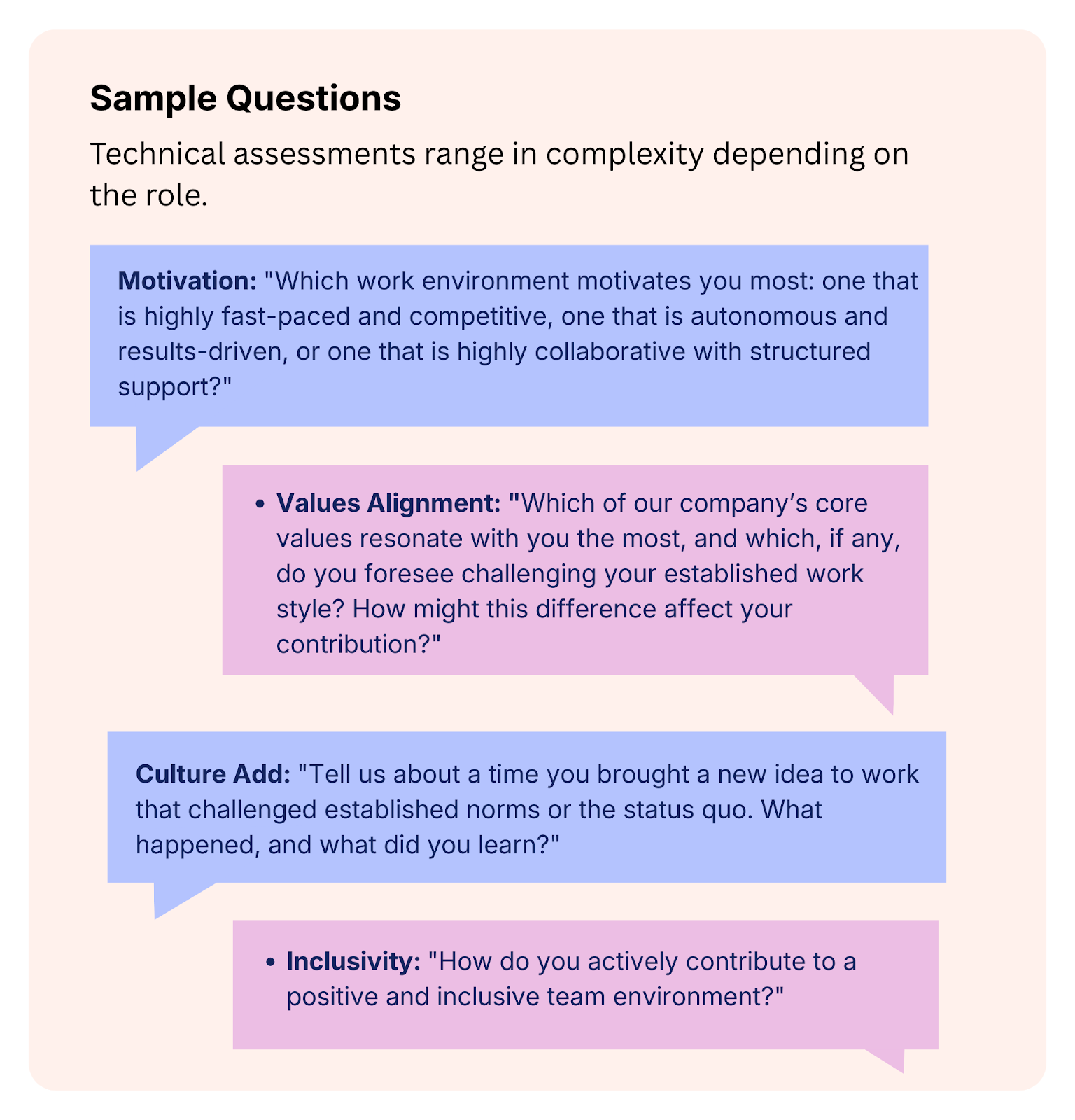
A critical evolution in modern HR strategy is the shift from hiring for "Culture Fit"—which often leads to organizational homogeneity and unconscious bias by selecting candidates similar to existing employees—to hiring for Culture Add. Culture Add focuses on identifying individuals who bring fresh ideas, unique perspectives, and diverse experiences that enhance, diversify, and strengthen the company culture. This approach actively seeks a "missing piece" that drives a more dynamic and inclusive workplace.

These assessments are typically deployed during the final interview stages and incorporated into onboarding processes. The format includes value ranking exercises, personality assessments (such as the 12 Driving Forces, which reveal intrinsic motivations ), and highly structured behavioral and situational questions designed to solicit unique perspectives.

Values alignment and intrinsic motivation are direct predictors of long-term employee retention. By prioritizing Culture Add—evaluating how a candidate’s unique background strengthens the team—the assessment template serves as an active anti-bias measure, ensuring the organization fosters innovation by welcoming diverse perspectives.

Tailoring templates for organizational needs

While templates provide standardization, they must not become rigid instruments that ignore the unique demands of specific roles. Strategic customization and digitization are necessary steps to enhance both relevance and efficiency.

Tailoring questions to specific roles and seniority

Generic templates sacrifice relevance. The strategic imperative is to achieve a balance between standardized format (consistency) and dynamic content (relevance). Templates must be tailored to align directly with the specific required competencies and the seniority level of the role.

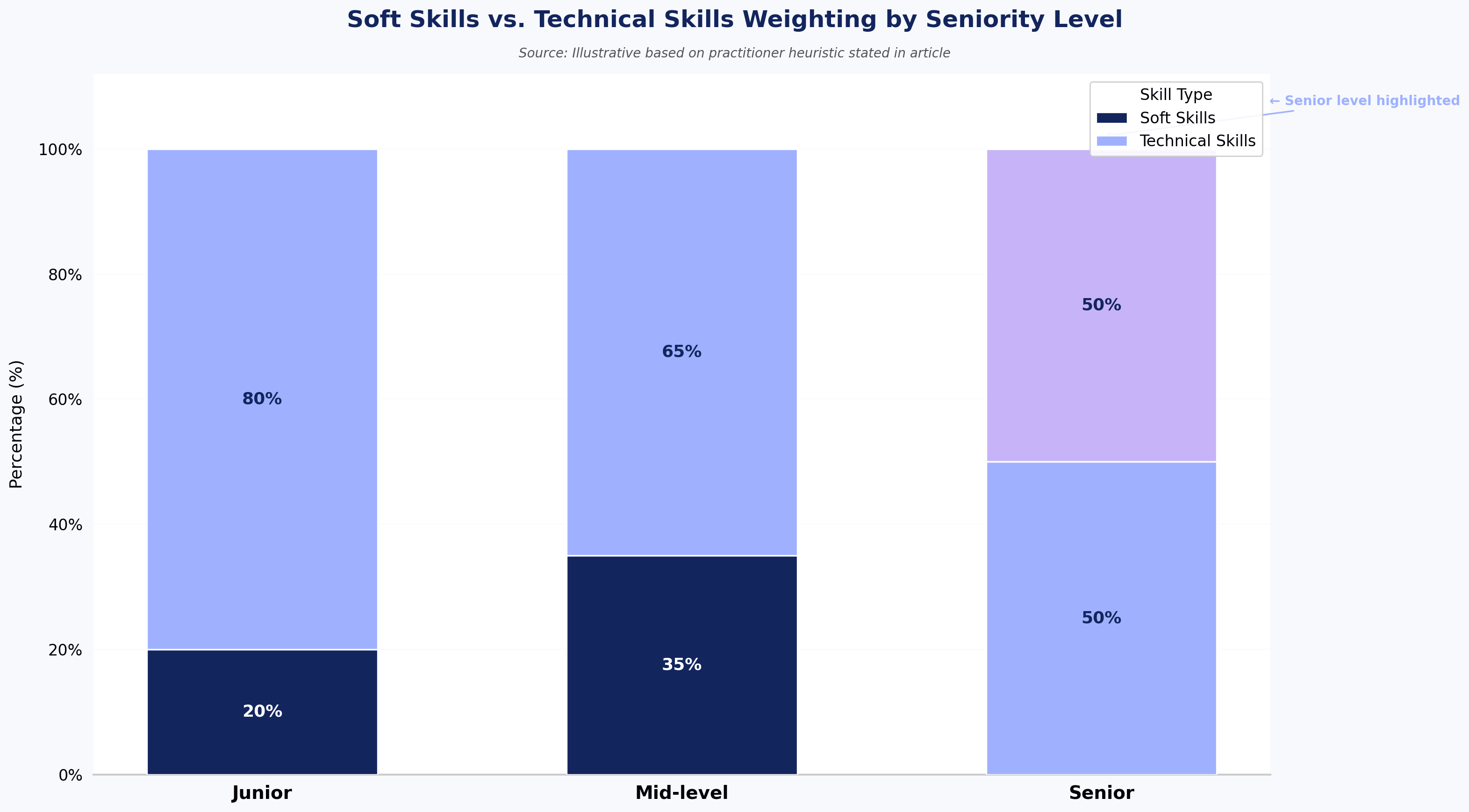
For instance, an assessment for a junior role should focus heavily on immediate technical execution and basic compliance. Conversely, senior assessments must dedicate significant weight (often 50% or more) to assessing soft skills such as influence, organizational vision, strategic decision-making, and complexity management, rather than mere technical execution. These senior assessments must also align the measurement criteria with overarching business imperatives and priority areas of the company.

Advanced HR teams are leveraging AI to customize this process. Generative AI tools can rapidly convert detailed job descriptions into structured lists of essential technical and soft skills and subsequently generate tailored behavioral and technical questions based on the required competency framework. This technology helps hiring managers maintain consistency while ensuring questions are highly job-relevant.

The platform upgrade: moving beyond templates

For organizations focused on high-volume, specialized technical recruitment, the limitations of templates quickly become critical blockers to strategic growth. A reliance on manual assessment processes introduces inconsistency and administrative overload.

A strategic platform approach, such as that offered by HackerEarth, provides the technological solution necessary to overcome these inherent limitations. The platform enforces a skill-first hiring philosophy, ensuring that talent is assessed purely based on ability.

Crucially, platforms enforce bias reduction that manual templates cannot guarantee. Features such as PII masking automatically anonymize personal details, including names and education, during coding tests and other technical evaluations. This technological design enforces blind hiring practices, ensuring candidates are judged only on objective abilities, thereby promoting fairness at scale.

By providing validated skill assessments based on real-world scenarios and enabling structured scoring and data aggregation, assessment platforms support the essential validation studies required to prove the predictive value of the hiring model. For strategic leaders committed to speed, equity, and predictive accuracy in technical talent acquisition, the transition from simple templates to a dedicated assessment platform is a required evolution.

FAQs: Implementing Talent Assessments Strategically

How to write a talent assessment?

Writing an effective talent assessment is a structured process that moves from defining organizational needs to validating the predictive outcomes:

  1. Define Job Competencies: Start by conducting a rigorous job analysis to identify the core technical skills, behavioral competencies, and cognitive abilities that are absolutely essential for success in the role. These competencies must be measurable.
  2. Select the Appropriate Framework/Template Type: Based on the competencies, select the most suitable assessment framework (e.g., technical challenge for hard skills, SJT for behavioral judgment, or the 9-Box Grid for internal potential review).
  3. Draft Structured, Objective Questions: Ensure all questions are standardized and clearly linked back to the defined competencies. For behavioral questions, use the STAR format. For technical questions, prioritize application and problem-solving over theoretical recall.
  4. Create a Standardized Scoring Rubric: Develop a pre-defined, structured rubric that dictates exactly how responses will be evaluated and scored. This is essential for minimizing subjective interpretation and ensuring consistency across different evaluators.
  5. Pilot and Validate the Assessment: Before mass deployment, pilot the assessment with a control group (e.g., existing high performers) to test for clarity, timing, and relevance. Once deployed, conduct a validation study to correlate assessment scores with future job performance data to confirm the assessment's predictive value.

What are the 9 boxes in talent review?

The nine boxes in talent review refer to the nine segments created when evaluating an employee based on two dimensions: Performance (the X-axis) and Potential (the Y-axis).16 Each dimension is rated as Low, Moderate, or High, creating nine unique segments, each with corresponding strategic implications for development and succession planning.17

The nine segments are:

  1. Low Performer, Low Potential
  2. Moderate Performer, Low Potential
  3. High Performer, Low Potential
  4. Low Performer, Moderate Potential
  5. Moderate Performer, Moderate Potential
  6. High Performer, Moderate Potential
  7. Low Performer, High Potential
  8. Moderate Performer, High Potential
  9. High Performer, High Potential

The strategic use of these nine boxes involves collaboratively determining where an employee fits based on objective data and management discussion. It is crucial to use these segments as a basis for action planning, such as acceleration for high-potentials or targeted coaching for high-potential/low-performing individuals (The Puzzle). They must not be used merely as static labels that can discourage employee motivation.

Subscribe to The HackerEarth Blog

Get expert tips, hacks, and how-tos from the world of tech recruiting to stay on top of your hiring!

Author
Medha Bisht
Calendar Icon
November 24, 2025
Timer Icon
3 min read
Share

Hire top tech talent with our recruitment platform

Access Free Demo
Related reads

Discover more articles

Gain insights to optimize your developer recruitment process.

Psychometric Assessments

What is psychometric testing and how to use it in hiring

In today’s competitive hiring landscape, engineering managers and recruiters are constantly seeking innovative ways to assess candidates beyond traditional resumes and interviews. Psychometric testing has emerged as a powerful tool to evaluate a candidate's cognitive abilities, personality traits, and behavioral tendencies. This data-driven approach not only enhances the recruitment process but also ensures more objective and comprehensive assessments of potential hires. With HackerEarth's psychometric tests, organizations can make informed, bias-free decisions that are based on reliable data and predictive insights.

What is psychometric testing?

Psychometric testing refers to standardized assessments designed to measure a candidate's mental capabilities and behavioral style. These tests offer deep insights into an individual's suitability for a role by evaluating their cognitive abilities, personality traits, and potential for success in specific job functions. Unlike traditional interviews, psychometric tests provide objective data that can help predict a candidate's future performance and cultural fit within an organization.

Why it matters in modern recruitment

In an era where hiring decisions are increasingly data-driven, psychometric testing offers several advantages:

  • Objective evaluation: Reduces reliance on subjective judgments, minimizing biases in the hiring process.
  • Predictive validity: Offers insights into a candidate's potential job performance and long-term success.
  • Scalability: Allows for efficient assessment of large volumes of candidates, particularly in tech hiring and campus recruitment.
  • Enhanced candidate experience: Provides candidates with a fair and transparent evaluation process.

Types of psychometric tests

Psychometric tests can be broadly categorized into four main types, each serving a distinct purpose in the recruitment process. HackerEarth offers a suite of psychometric tests, including the following:

Aptitude tests

Aptitude tests assess a candidate's cognitive abilities and potential to perform specific tasks. Common subtypes include:

  • Numerical reasoning: Evaluates the ability to work with numbers and interpret data.
  • Verbal reasoning: Assesses understanding and reasoning using concepts framed in words.
  • Logical reasoning: Measures the ability to identify patterns and logical sequences.

Personality tests

Personality tests aim to identify consistent patterns in a candidate's thoughts, feelings, and behaviors. These assessments help determine cultural fit and predict how a candidate might respond to various work situations. HackerEarth's personality tests are designed to assess how well candidates align with your organization’s values and the demands of specific job roles.

Situational judgment tests (SJTs)

SJTs present candidates with hypothetical, job-related situations and ask them to choose the most appropriate response. These tests assess decision-making and problem-solving skills in real-world contexts. HackerEarth’s SJTs are tailored to evaluate candidates’ practical abilities to handle real-world challenges specific to the role they’re applying for.

Role-specific skill tests

Particularly relevant in technical hiring, these tests evaluate a candidate's proficiency in specific skills required for the role. For example, coding assessments for software developers or domain-specific tests for data analysts. HackerEarth provides specialized role-based skill assessments, ensuring that you evaluate candidates on the exact competencies required for success in their job role.

How psychometric tests work in recruitment

The integration of psychometric tests into the recruitment process typically follows these steps:

  • Candidate experience: Candidates complete the assessments online, often as part of an initial application or after a preliminary screening.
  • Test structure: Tests are designed to be role-specific, ensuring relevance to the position in question.
  • Scoring and interpretation: Results are analyzed to provide insights into the candidate's abilities and fit for the role.
  • Integration with ATS: Many Applicant Tracking Systems (ATS) now integrate psychometric assessments, allowing for seamless incorporation into existing workflows.

Streamlining hiring with HackerEarth

With HackerEarth’s psychometric tests, recruiters can easily integrate the results directly into their Applicant Tracking Systems (ATS) for quick analysis and decision-making. This integration enhances the overall recruitment efficiency, particularly for large-scale hiring processes like campus recruitment or tech hiring.

Challenges and limitations

While psychometric testing offers numerous advantages, there are potential challenges to consider:

  • Misuse without context: Interpreting test results without considering the candidate's background and experience can lead to inaccurate conclusions.
  • Over-reliance on assessments: Relying solely on psychometric tests without incorporating interviews and other evaluation methods may overlook important candidate attributes.
  • Cultural bias: Some tests may inadvertently favor candidates from certain cultural backgrounds, potentially leading to biased outcomes.

Best practices for using psychometric tests in hiring

To maximize the effectiveness of psychometric testing, consider the following best practices:

  • Align with job role and competencies: Ensure that the tests are tailored to the specific requirements of the role.
  • Use validated, reliable assessments: Select tests that have been scientifically validated and are known for their reliability. HackerEarth’s psychometric assessments meet these criteria, ensuring you get accurate and actionable results.
  • Ensure fairness and inclusivity: Choose assessments that are free from cultural biases and are accessible to all candidates.
  • Provide feedback to candidates: Offer constructive feedback to candidates based on their test results, promoting transparency and trust.

Conclusion

Incorporating psychometric testing into the hiring process enables organizations to make more informed, objective, and effective recruitment decisions. By understanding and leveraging the various types of psychometric assessments, engineering managers and recruiters can enhance their ability to identify candidates who are not only technically proficient but also align with the organization's culture and values. For those in the tech industry, platforms like HackerEarth provide specialized tools to streamline this process, offering role-specific assessments and comprehensive analytics to support data-driven hiring decisions. With HackerEarth's psychometric tests, recruiters can ensure that their hiring decisions are objective, accurate, and aligned with the needs of their organization.

8 best candidate sourcing tools in 2026: an expert evaluation guide

Introduction: the new reality of talent acquisition

The recruitment landscape in 2026 is defined by a significant paradox. While seven out of ten recruiters report that hiring volume is increasing and anticipate even more roles in the coming year, the fundamental challenge has shifted dramatically. The primary difficulty is no longer simply finding candidates; it is efficiently screening and ensuring the quality of those candidates. Recruiting teams report being overwhelmed, spending valuable time managing complex systems and administrative tasks rather than engaging directly with potential employees.

A major force driving this transformation is the global transition to a skills-first architecture, replacing outdated credential filters (like specific degree requirements) with competency-based matching. This skills-based approach, powered by modern AI, has already demonstrated tangible success, expanding talent pools by 3–5 times and improving workforce diversity by an average of 16% in early adopting organizations. This report provides an expert framework and detailed comparison of the top eight sourcing platforms engineered to navigate this complex, skills-first, and AI-driven era.

1. What is a candidate sourcing tool? 

Defining the sourcing layer

Candidate sourcing tools are specialized platforms designed to proactively identify, locate, and initiate engagement with passive candidates—talent who are not actively applying for jobs. Their core function is pipeline filling and talent community creation, operating at the very top of the hiring funnel.

Differentiating sourcing tools from core HR tech

To achieve operational efficiency and measurable return on investment (ROI), it is essential to distinguish sourcing tools from the other primary components of the TA technology stack: the Applicant Tracking System (ATS) and the Candidate Relationship Management (CRM) platform.

  • Applicant Tracking System (ATS): The ATS is focused on managing active applicants through the latter stages of recruitment, from application review to offer letter and compliance. Communication within an ATS is typically transactional (e.g., interview invites or rejection emails). It focuses on structured hiring workflows, compliance, and process tracking.
  • Recruiting CRM/Sourcing Tool: These systems focus on the earlier stages of attraction, engagement, and nurturing. They are engineered to build long-term relationships with potential talent before a job opening even exists. Communication is ongoing, personalized, and aims to strengthen the employer brand through content sharing and continuous engagement.

The true value of modern sourcing technology is realized when the sourcing tool/CRM layer integrates seamlessly with the ATS. Without strong integration, the efficiency gained from proactively finding candidates is negated by the administrative burden of manual data transfer. The inability to flow sourced data directly and cleanly into the ATS for tracking, compliance, and workflow management forces recruiters back into time-consuming administrative work. Therefore, the strength of ATS integration is not merely a feature, but the single greatest determinant of long-term sourcing tool ROI and operational scalability in 2026.

2. How AI, skills intelligence, and governance are reshaping sourcing 

The platforms dominating the market today rely heavily on three core technological advancements: intelligent automation, semantic search, and robust governance features.

Intelligent automation and the predictive future

AI investment is rapidly expanding in recruitment, but its primary utility remains augmentation. AI handles the data-heavy lifting of finding and screening candidates, automating administrative tasks such as scheduling, screening, and drafting initial outreach. This liberation allows recruiters to elevate their function, focusing on strategic counsel and complex decisions.

Data is the crucial foundation for every modern recruiting decision. Predictive sourcing tools leverage this data to go beyond simple historical tracking. Predictive analytics help TA leaders forecast hiring needs and, more importantly, anticipate which sourced candidates are most likely to succeed in a role. Furthermore, the rise of Agentic AI allows platforms to take over entire workflows, managing automated, personalized email sequences that can achieve response rates up to three times higher than traditional manual outreach.

Semantic search and skills intelligence

The shift to skills-first hiring is technically enabled by semantic search. Unlike traditional keyword matching, which relies on rigid buzzwords, semantic search improves recruiting by interpreting the underlying meaning and context within a candidate's profile. This allows platforms to find stronger matches by connecting candidates based on transferable skills and experiences, even if they lack the exact job title keywords.

This richer, contextual understanding has several profound benefits: it increases hiring speed by delivering fewer irrelevant results, expands discovery by surfacing hidden talent beyond traditional filters, and directly supports modern, forward-looking hiring strategies by highlighting candidates with adjacent skills and growth potential who can quickly adapt to changing industry demands.

Governance, risk, and diversity (DEI)

As AI plays a larger role in initial filtering, governance and bias mitigation have become critical pillars of platform evaluation. When designed responsibly, AI promotes equitable hiring by focusing on objective skills and potential over traditional pedigree. Semantic search inherently helps reduce bias risk because its consideration of broader context avoids the unintentional exclusion caused by narrow keyword filters. This focus on objective criteria has produced quantifiable results: companies like Unilever reported a 16% increase in diversity hires after implementing AI-driven processes.

However, the success of expanded talent pools relies entirely on the quality and objectivity of the subsequent evaluation step. Semantic search can expand the talent pool by 3–5x , but these newly surfaced candidates—who may not fit traditional resumes—still require objective verification of their competence. If the sourcing tool's advanced AI matching is not immediately followed by an objective, standardized assessment, the system fails to solve the critical quality challenge identified by recruiters. Therefore, for technical roles, integrating an objective qualification platform is an absolute necessity within the modern TA stack.

3. The enterprise evaluation framework for choosing a sourcing tool

Selecting a high-cost enterprise sourcing tool is fundamentally a vendor risk management exercise focused on future scalability, compliance, and measurable efficiency gains.

Essential evaluation pillars

  1. Database Scale and Specificity: The platform must aggregate talent from multiple sources to build a comprehensive, searchable database. For technical roles, this means covering niche communities; for broad roles, it means unmatched volume.
  2. Predictive and Filtering Power: Recruiters must look beyond basic Boolean functionality. Top platforms offer advanced features like AI-powered scoring, predictive analytics for hire success probability, and detailed granular filters (some tools boast over 300 filter options).
  3. Outreach Automation and Personalization: The tool must provide sufficient contact credits (emails, InMails) and sophisticated automation sequence builders capable of high personalization to ensure strong response rates.
  4. Integration and Data Flow: As established, integration is non-negotiable. The chosen tool must seamlessly sync data with core Applicant Tracking Systems (ATS) and CRMs to ensure unified analytics, reduce manual data entry, and streamline the candidate journey.
  5. Diversity and Fairness Features: The platform must demonstrate a commitment to bias mitigation, offering features that support standardized evaluation and provide verifiable analytics for tracking internal diversity goals.
  6. Scalability and Support: For rapidly scaling organizations, selecting a solution that is global-ready, mobile-friendly, and backed by robust, often 24/7, SLA-backed customer support is paramount.

Strategic pricing and negotiation insights

A key challenge in the AI recruiting software market is pricing opacity; despite being a market exceeding $661 million, many vendors default to "contact for pricing" models. Annual costs vary wildly, generally ranging from $4,800 per user per year to custom enterprise contracts that can climb past $90,000 annually.

Most enterprise software relies on a per-seat licensing model, meaning costs multiply rapidly with team size. Because pricing is often negotiated, enterprise buyers should utilize internal leverage (such as growth projections or timing purchases for vendor quarter-ends) to achieve significant savings. Industry data indicates that successful contract negotiations often result in discounts averaging between 11% and 16% off the initial sticker price.

5. Strategic comparison: key insights and the sourcing tool matrix

The modern TA leader understands that technology effectiveness is maximized not through selecting a single, all-encompassing tool, but through strategically layering complementary platforms. A successful strategy requires combining a broad search engine with niche automation, and crucially, an objective skills verification layer.

This strategic layering approach addresses the quality challenge directly. Sourcing tools focus on finding the candidate, and their AI is geared toward initial matching—the first hurdle. However, relying solely on a sourcing tool’s match score before an interview introduces risk of bias or misalignment. The optimal workflow uses the sourcing engine to fill the funnel and the assessment engine (like HackerEarth) immediately after to verify the candidates against objective, skills-first criteria. The seamless data transition between these two layers is the key to maximizing the efficiency of the entire recruitment process.

6. Tool vs manual sourcing: when to use which

The introduction of intelligent sourcing tools does not eliminate the human element; rather, it demands a sophisticated hybrid workflow.

Defining hybrid sourcing workflows

Hybrid models are those where automation handles bulk, repetitive operations, and human sourcers provide the crucial context, judgment, and relationship-building expertise. AI handles transactional, low-value work—finding profiles, scheduling, and basic outreach drafting. This strategic distribution of labor allows recruiters to focus on high-impact work that machines cannot replicate, such as assessing cultural fit, navigating complex negotiations, and building deep candidate relationships.

When selecting candidates, human judgment remains irreplaceable in interpreting nuanced information and contextual factors that AI might miss. The successful sourcer's skill set shifts from being a "database expert" to a "strategic relationship architect" and a "data interpreter." They must leverage predictive data and manage complex human interactions, requiring significant investment in continuous training for the TA team.

Common mistakes to avoid

The most frequent error in adopting new sourcing technology is an over-reliance on automation without sufficient human oversight. This often manifests in two ways:

  1. Automation Without Context: Fully automated workflows can fail when judgment is required. Generic, automated outreach sequences, for instance, lead to poor candidate experience and low response rates. Personalized, human review is essential before initiating high-stakes outreach.
  2. The Data Trap and Bias: Using AI screening without proper governance risks perpetuating existing biases if the underlying training data is not audited and diverse. Without a standardized, objective evaluation step immediately following the AI match, the system may simply amplify bias under the guise of efficiency.

7. Strategic implementation: how to choose the right tool for your context

The process of choosing a sourcing tool requires internal diagnosis based on team size, budget, specific role type, and existing technical stack integration capabilities.

Contextual decision flow

Decision-makers should map their primary hiring needs against the core strengths of the available platforms.

Rigorous pilot evaluation (vendor selection)

To ensure the significant investment yields results, a sourcing tool evaluation must follow a data-driven vendor selection process.

  1. Define Scope and Metrics: Clearly establish measurable metrics (e.g., increased response rate, decreased time-to-hire for niche roles, accuracy of AI matching). Ensure role requirements are structured to leverage skills intelligence effectively.
  2. Execution and Data Collection: Run a structured pilot for a defined period (typically 4 to 12 weeks). Collect comprehensive data across sources, measuring both efficiency (time saved on administrative tasks) and efficacy (candidate quality and conversion rates).
  3. Stakeholder Feedback and Analysis: Collect qualitative feedback from end-users (recruiters on usability) and hiring managers (on the quality of candidates submitted). Analyze trends in the data to identify bottlenecks and validate results.
  4. Integration Check: Rigorously test the integration with the existing tech stack (ATS, assessment tools). Verify that the system enhances the candidate experience and that data flows seamlessly for streamlined, compliant back-end management.

Conclusion

The definition of a top candidate sourcing tool transcends simple database size. The best platforms are characterized by intelligent AI augmentation, a commitment to skills-first architecture, predictive analytics, and robust governance features. While platforms like LinkedIn Recruiter, SeekOut, and Gem are essential for filling the pipeline and nurturing relationships, they fundamentally address the challenge of finding talent.

However, the core quality and screening challenge facing TA leaders today requires a layered solution. The most successful technical organizations will leverage these powerful sourcing engines to generate qualified interest, but they will rely on a dedicated skill validation partner to ensure objectivity and quality at scale. HackerEarth provides the essential qualification layer, transforming the high volume of sourced profiles into a verified pool of skilled talent, thereby ensuring that the substantial investment in sourcing technology translates directly into high-quality, efficient hiring outcomes.

Frequently asked questions (FAQs)

What are the best candidate sourcing tools?

The "best" tool depends entirely on the organization's context. For maximum reach and volume, LinkedIn Recruiter is the standard. For deep niche, complex searches, and diversity reporting, SeekOut and Entelo are the market leaders. For pipeline building and automated outreach, Gem and HireEZ are highly effective. For objective technical qualification, HackerEarth is an essential partner.

What is the difference between sourcing software and an ATS?

An Applicant Tracking System (ATS) manages active applicants, compliance, and structured workflow from the moment of application through hiring. Sourcing software (or a recruiting CRM) focuses on the pre-application stage, focusing on proactive engagement, attraction, and long-term relationship nurturing with passive candidates.

How do AI sourcing tools reduce bias?

AI can reduce unconscious human biases by implementing skills-first matching and semantic search, which evaluate candidates based on objective experience and potential rather than rigid pedigree. The use of structured, standardized assessments (as provided by HackerEarth) reinforces fairness by comparing every candidate against the same high standard.

Can sourcing tools replace recruiters?

No. AI and sourcing tools serve as augmentation, not replacement. These tools automate the transactional, low-value work (data analysis, scheduling, screening), allowing recruiters to focus on strategic, high-value tasks. The human recruiter remains central to assessing cultural fit, building deep candidate relationships, and navigating complex negotiations.

Navigating AI Bias in Recruitment: Mitigation Strategies for Fair and Transparent Hiring

Introduction: The unavoidable intersection of AI, talent, and ethics

Artificial intelligence (AI) is fundamentally reshaping the landscape of talent acquisition, offering immense opportunities to streamline operations, enhance efficiency, and manage applications at scale. Modern AI tools are now used across the recruitment lifecycle, from targeted advertising and competency assessment to resume screening and background checks. This transformation has long been driven by the promise of objectivity—removing human fatigue and unconscious prejudice from the hiring process.

However, the rapid adoption of automated systems has introduced a critical paradox: the very technology designed to eliminate human prejudice often reproduces, and sometimes amplifies, the historical biases embedded within organizations and society. For organizations committed to diversity, equity, and inclusion (DEI), navigating AI bias is not merely a technical challenge but an essential prerequisite for ethical governance and legal compliance. Successfully leveraging AI requires establishing robust oversight structures that ensure technology serves, rather than subverts, core human values.

Understanding AI bias in recruitment: The origins of systemic discrimination

What is AI bias in recruitment?

AI bias refers to systematic discrimination embedded within machine learning systems that reinforces existing prejudice, stereotyping, and societal discrimination. These AI models operate by identifying patterns and correlations within vast datasets to inform predictions and decisions.

The scale at which this issue manifests is significant. When AI algorithms detect historical patterns of systemic disparities in the training data, their conclusions inevitably reflect those disparities. Because machine learning tools process data at scale—with nearly all Fortune 500 companies using AI screeners—even minute biases in the initial data can lead to widespread, compounding discriminatory outcomes. The paramount legal concern in this domain is not typically intentional discrimination, but rather the concept of disparate impact. Disparate impact occurs when an outwardly neutral policy or selection tool, such as an AI algorithm, unintentionally results in a selection rate that is substantially lower for individuals within a protected category compared to the most selected group. This systemic risk necessitates that organizations adopt proactive monitoring and mitigation strategies.

Key factors contributing to AI bias

AI bias is complex, arising from multiple failure points across the system’s lifecycle.

Biased training data

The most common source of AI bias is the training data used to build the models. Data bias refers specifically to the skewed or unrepresentative nature of the information used to train the AI model. AI models learn by observing patterns in large data sets. If a company uses ten years of historical hiring data where the workforce was predominantly homogeneous or male, the algorithm interprets male dominance as a factor essential for success. This replication of history means that the AI, trained on past discrimination, perpetuates gender or racial inequality when making forward-looking recommendations.

Algorithmic design choices

While data provides the fuel, algorithmic bias defines how the engine runs. Algorithmic bias is a subset of AI bias that occurs when systematic errors or design choices inadvertently introduce or amplify existing biases. Developers may unintentionally introduce bias through the selection of features or parameters used in the model. For example, if an algorithm is instructed to prioritize applicants from prestigious universities, and those institutions historically have non-representative demographics, the algorithm may achieve discriminatory outcomes without explicitly using protected characteristics like race or gender. These proxy variables are often tightly correlated with protected characteristics, leading to the same negative result.

Lack of transparency in AI models

The complexity of modern machine learning, particularly deep learning models, often results in a "black box" where the input data and output decision are clear, but the underlying logic remains opaque. This lack of transparency poses a critical barrier to effective governance and compliance. If HR and compliance teams cannot understand the rationale behind a candidate scoring or rejection, they cannot trace errors, diagnose embedded biases, or demonstrate that the AI tool adheres to legal fairness standards. Opacity transforms bias from a fixable error into an unmanageable systemic risk.

Human error and programming bias

Human bias, or cognitive bias, can subtly infiltrate AI systems at multiple stages. This is often manifested through subjective decisions made by developers during model conceptualization, selection of training data, or through the process of data labeling. Even when the intention is to create an objective system, the unconscious preferences of the team building the technology can be transferred to the model.

The risk inherent in AI adoption is the rapid, wide-scale automation of inequality. Historical hiring data contains bias, which the AI treats as the blueprint for successful prediction. Because AI systems process millions of applications, this initial bias is instantaneously multiplied. Furthermore, if the system is designed to continuously improve itself using its own biased predictions, it becomes locked into a self-perpetuating cycle of discrimination, a phenomenon demonstrated in early high-profile failures. This multiplication effect elevates individual prejudiced decisions into an organizational liability that immediately triggers severe legal scrutiny under disparate impact analysis.

Real-world implications of AI bias in recruitment

The impact of algorithmic bias extends beyond theoretical risk, presenting tangible consequences for individuals, organizational diversity goals, legal standing, and public image.

Case studies and examples of AI bias

One of the most widely cited instances involves Amazon’s gender-biased recruiting tool. Amazon developed an AI system to automate application screening by analyzing CVs submitted over a ten-year period. Since the data was dominated by male applicants, the algorithm learned to systematically downgrade or penalize resumes that included female-associated language or referenced all-women's colleges. Although Amazon’s technical teams attempted to engineer a fix, they ultimately could not make the algorithm gender-neutral and were forced to scrap the tool. This case highlights that complex societal biases cannot be solved merely through quick technological adjustments.

Furthermore, research confirms severe bias in resume screening tools. Studies have shown that AI screeners consistently prefer White-associated names in over 85% of comparisons. The system might downgrade a qualified applicant based on a proxy variable, such as attending a historically Black college, if the training data reflected a historical lack of success for graduates of those institutions within the organization. This practice results in qualified candidates being unfairly rejected based on non-job-related attributes inferred by the algorithm.

Mitigating AI bias in recruitment: A strategic, multi-layered approach

Effective mitigation of AI bias requires a comprehensive strategy encompassing technical debiasing, structural governance, and human process augmentation.

Best practices for identifying and mitigating bias

Regular audits and bias testing

Systematic testing and measurement are non-negotiable components of responsible AI use. Organizations must implement continuous monitoring and regular, independent audits of their AI tools to identify and quantify bias. These audits should evaluate outcomes based on formal fairness metrics, such as demographic parity (equal selection rates across groups) and equal opportunity (equal true positive rates for qualified candidates). Regulatory environments, such as NYC Local Law 144, now explicitly mandate annual independent bias audits for automated employment decision tools (AEDTs).

Diversifying training data

Because the root of many AI bias problems lies in unrepresentative historical data, mitigation must begin with data curation. Organizations must move beyond passively accepting existing data and proactively curate training datasets to be diverse and inclusive, reflecting a broad candidate pool. Technical debiasing techniques can be applied, such as removing or transforming input features that correlate strongly with bias and rebuilding the model (pre-processing debiasing). Data augmentation and synthetic data generation can also be employed to ensure comprehensive coverage across demographic groups.

Explainable AI (XAI) models

Explainable AI (XAI) refers to machine learning models designed to provide human-understandable reasoning for their results, moving decisions away from opaque "black-box" scores. In recruitment, XAI systems should explain the specific qualifications, experiences, or skills that led to a recommendation or ranking.

The adoption of XAI is essential because it facilitates auditability, allowing internal teams and external auditors to verify compliance with legal and ethical standards. XAI helps diagnose bias by surfacing the exact features driving evaluations, enabling technical teams to trace and correct unfair patterns. Tools like IBM’s AI Fairness 360 and Google’s What-If Tool offer visualizations that show which features (e.g., years of experience, speech tempo) drove a particular outcome. This transparency is critical for building trust with candidates and internal stakeholders.

Technological tools to mitigate AI bias

Fairness-aware algorithms

Beyond mitigating existing bias, organizations can deploy fairness-aware algorithms. These algorithms incorporate explicit fairness constraints during training, such as adversarial debiasing, to actively prevent the model from learning discriminatory patterns. This approach often involves slightly compromising pure predictive accuracy to achieve measurable equity, prioritizing social responsibility alongside efficiency.

Bias detection tools and structured assessments

One of the most effective methods for mitigating bias is enforcing consistency and objectivity early in the hiring pipeline. Structured interviewing processes, supported by technology, are proven to significantly reduce the impact of unconscious human bias.

AI-powered platforms that facilitate structured interviews ensure every candidate is asked the same set of predefined, job-competency-based questions and evaluated using standardized criteria. This standardization normalizes the interview process, allowing for equitable comparison of responses. For instance, platforms like the HackerEarth Interview Agent provide objective scoring mechanisms and data analysis, focusing evaluations solely on job-relevant skills and minimizing the influence of subjective preferences. These tools enforce the systematic framework necessary to achieve consistency and fairness, complementing human decision-making with robust data insights.

Human oversight and collaboration

AI + human collaboration (human-in-the-loop, HITL)

The prevailing model for responsible AI deployment is Human-in-the-Loop (HITL), which stresses that human judgment should work alongside AI, particularly at critical decision points. HITL establishes necessary accountability checkpoints where recruiters and hiring managers review and validate AI-generated recommendations before final employment decisions. This process is vital for legal compliance—it is explicitly required under regulations like the EU AI Act—and ensures decisions align with organizational culture and ethical standards. Active involvement by human reviewers allows them to correct individual cases, actively teaching the system to avoid biased patterns in the future, thereby facilitating continuous improvement.

The limitation of passive oversight (the mirror effect)

While HITL is the standard recommendation, recent research indicates a profound limitation: humans often fail to effectively correct AI bias. Studies have shown that individuals working with moderately biased AI frequently mirror the AI’s preferences, adopting and endorsing the machine’s inequitable choices rather than challenging them. In some cases of severe bias, human decisions were only slightly less biased than the AI recommendations.

This phenomenon, sometimes referred to as automation bias, confirms that simply having a human "in the loop" is insufficient. Humans tend to defer to the authority or presumed objectivity of the machine, losing their critical thinking ability when interacting with AI recommendations. Therefore, organizations must move beyond passive oversight to implement rigorous validation checkpoints where HR personnel are specifically trained in AI ethics and mandated to critically engage with the AI’s explanations. They must require auditable, XAI-supported evidence for high-risk decisions, ensuring they are actively challenging potential biases, not just rubber-stamping AI output.

A structured framework is necessary to contextualize the relationship between technical tools and governance processes:

Legal and ethical implications of AI bias: Compliance and governance

The deployment of AI in recruitment is now highly regulated, requiring compliance with a complex web of anti-discrimination, data protection, and AI-specific laws across multiple jurisdictions.

Legal frameworks and compliance requirements

EEOC and anti-discrimination laws

In the United States, existing anti-discrimination laws govern the use of AI tools. Employers must strictly adhere to the EEOC’s guidance on disparate impact. The risk profile is high, as an employer may be liable for unintentional discrimination if an AI-driven selection procedure screens out a protected group at a statistically significant rate, regardless of the vendor’s claims. Compliance necessitates continuous monitoring and validation that the tool is strictly job-related and consistent with business necessity.

GDPR and data protection laws

The General Data Protection Regulation (GDPR) establishes stringent requirements for processing personal data in the EU, impacting AI recruitment tools globally. High-risk data processing, such as automated employment decisions, generally requires a Data Protection Impact Assessment (DPIA). Organizations must ensure a lawful basis for processing, provide clear notice to candidates that AI is involved, and maintain records of how decisions are made. Audits conducted by regulatory bodies have revealed concerns over AI tools collecting excessive personal information, sometimes scraping and combining data from millions of social media profiles, often without the candidate's knowledge or a lawful basis.

Global compliance map: Extraterritorial reach

Global enterprises must navigate multiple jurisdictional requirements, many of which have extraterritorial reach:

  • NYC Local Law 144: This law requires annual, independent, and impartial bias audits for any Automated Employment Decision Tool (AEDT) used to evaluate candidates residing in New York City. Organizations must publicly publish a summary of the audit results and provide candidates with notice of the tool’s use. Failure to comply results in rapid fine escalation.
  • EU AI Act: This landmark regulation classifies AI systems used in recruitment and evaluation for promotion as "High-Risk AI." This applies extraterritorially, meaning US employers using AI-enabled screening tools for roles open to EU candidates must comply with its strict requirements for risk management, technical robustness, transparency, and human oversight.

Ethical considerations for AI in recruitment

Ethical AI design

Ethical governance requires more than legal compliance; it demands proactive adherence to principles like Fairness, Accountability, and Transparency (FAIT). Organizations must establish clear, top-down leadership commitment to ethical AI, allocating resources for proper implementation, continuous monitoring, and training. The framework must define acceptable and prohibited uses of AI, ensuring systems evaluate candidates solely on job-relevant criteria without discriminating based on protected characteristics.

Third-party audits

Independent, third-party audits serve as a critical mechanism for ensuring the ethical and compliant design of AI systems. These audits verify that AI models are designed without bias and that data practices adhere to ethical and legal standards, particularly regarding data minimization. For example, auditors check that tools are not inferring sensitive protected characteristics (like ethnicity or gender) from proxies, which compromises effective bias monitoring and often breaches data protection principles.

Effective AI governance cannot be confined to technical teams or HR. AI bias is a complex, socio-technical failure with immediate legal consequences across multiple jurisdictions. Mitigation requires blending deep technical expertise (data science) with strategic context (HR policy and law). Therefore, robust governance mandates the establishment of a cross-functional AI Governance Committee. This committee, including representatives from HR, Legal, Data Protection, and IT, must be tasked with setting policies, approving new tools, monitoring compliance, and ensuring transparent risk management across the organization. This integrated approach is the structural bridge connecting ethical intent with responsible implementation.

Future of AI in recruitment: Proactive governance and training

The trajectory of AI in recruitment suggests a future defined by rigorous standards and sophisticated collaboration between humans and machines.

Emerging trends in AI and recruitment

AI + human collaboration

The consensus among talent leaders is that AI's primary role is augmentation—serving as an enabler rather than a replacement for human recruiters. By automating repetitive screening and data analysis, AI frees human professionals to focus on qualitative judgments, such as assessing cultural fit, long-term potential, and strategic alignment, which remain fundamentally human processes. This intelligent collaboration is crucial for delivering speed, quality, and an engaging candidate experience.

Fairer AI systems

Driven by regulatory pressure and ethical concerns, there is a clear trend toward the development of fairness-aware AI systems. Future tools will increasingly be designed to optimize for measurable equity metrics, incorporating algorithmic strategies that actively work to reduce disparate impact. This involves continuous iteration and a commitment to refining AI to be inherently more inclusive and less biased than the historical data it learns from.

Preparing for the future

Proactive ethical AI frameworks

Organizations must proactively establish governance structures today to manage tomorrow’s complexity. This involves several fundamental steps: inventorying every AI tool in use, defining clear accountability and leadership roles, and updating AI policies to document acceptable usage, required oversight, and rigorous vendor standards. A comprehensive governance plan must also address the candidate experience, providing clarity on how and when AI is used and establishing guidelines for candidates' use of AI during the application process to ensure fairness throughout.

Training HR teams on AI ethics

Training is the cornerstone of building a culture of responsible AI. Mandatory education for HR professionals, in-house counsel, and leadership teams must cover core topics such as AI governance, bias detection and mitigation, transparency requirements, and the accountability frameworks necessary to operationalize ethical AI. Furthermore, HR teams require upskilling in data literacy and change management to interpret AI-driven insights accurately. This specialized training is essential for developing the critical ability to challenge and validate potentially biased AI recommendations, counteracting the observed human tendency to passively mirror machine bias.

Take action now: Ensure fair and transparent recruitment with HackerEarth

Mitigating AI bias is the single most critical risk management challenge facing modern talent acquisition. It demands a sophisticated, strategic response that integrates technological solutions, rigorous legal compliance, and human-centered governance. Proactive implementation of these measures safeguards not only organizational integrity but also ensures future competitiveness by securing access to a diverse and qualified talent pool.

Implementing continuous auditing, adopting Explainable AI, and integrating mandatory human validation checkpoints are vital first steps toward building a robust, ethical hiring process.

Start your journey to fair recruitment today with HackerEarth’s AI-driven hiring solutions. Our Interview Agent minimizes both unconscious human bias and algorithmic risk by enforcing consistency and objective, skill-based assessment through structured interview guides and standardized scoring. Ensure diversity and transparency in your hiring process. Request a demo today!

Frequently asked questions (FAQs)

How can AI reduce hiring bias in recruitment?

AI can reduce hiring bias by enforcing objectivity and consistency, which human interviewers often struggle to maintain. AI tools can standardize questioning, mask candidate-identifying information (anonymized screening), and use objective scoring based only on job-relevant competencies, thereby mitigating the effects of subtle, unconscious human biases. Furthermore, fairness-aware algorithms can be deployed to actively adjust selection criteria to achieve demographic parity.

What is AI bias in recruitment, and how does it occur?

AI bias in recruitment is systematic discrimination embedded within machine learning models that reinforces existing societal biases. It primarily occurs through two mechanisms: data bias, where historical hiring data is skewed and unrepresentative (e.g., dominated by one gender); and algorithmic bias, where design choices inadvertently amplify these biases or use proxy variables that correlate with protected characteristics.

How can organizations detect and address AI bias in hiring?

Organizations detect bias by performing regular, systematic audits and bias testing, often required by law. Addressing bias involves multiple strategies: diversifying training data, employing fairness-aware algorithms, and implementing Explainable AI (XAI) to ensure transparency in decision-making. Continuous monitoring after deployment is essential to catch emerging biases.

What are the legal implications of AI bias in recruitment?

The primary legal implication is liability for disparate impact under anti-discrimination laws (e.g., Title VII, EEOC guidelines). Organizations face exposure to high financial penalties, particularly under specific local laws like NYC Local Law 144. Additionally, data privacy laws like GDPR mandate transparency, accountability, and the performance of DPIAs for high-risk AI tools.

Can AI help improve fairness and diversity in recruitment?

Yes, AI has the potential to improve fairness, but only when paired with intentional ethical governance. By enforcing consistency, removing subjective filters, and focusing on skill-based evaluation using tools like structured interviews, AI can dismantle historical biases that may have previously gone unseen in manual processes. However, this requires constant human oversight and a commitment to utilizing fairness-aware design principles.

What are the best practices for mitigating AI bias in recruitment?

Best practices include: establishing a cross-functional AI Governance Committee; mandating contractual vendor requirements for bias testing; implementing Explainable AI (XAI) to ensure auditable decisions; requiring mandatory human critical validation checkpoints (Human-in-the-Loop) ; and providing ongoing ethical training for HR teams to challenge and correct AI outputs.

Top Products

Explore HackerEarth’s top products for Hiring & Innovation

Discover powerful tools designed to streamline hiring, assess talent efficiently, and run seamless hackathons. Explore HackerEarth’s top products that help businesses innovate and grow.
Frame
Hackathons
Engage global developers through innovation
Arrow
Frame 2
Assessments
AI-driven advanced coding assessments
Arrow
Frame 3
FaceCode
Real-time code editor for effective coding interviews
Arrow
Frame 4
L & D
Tailored learning paths for continuous assessments
Arrow
Get A Free Demo