meta_title: "Top 10 Talent Assessment Tools of 2025 | Hiring Guide" meta_description: "Compare the top 10 talent assessment tools of 2025. See features, pricing, pros & cons to pick the right platform for fair, fast hiring."
Top 10 talent assessment tools of 2025: accurate, fair & fast
Read time: 12 min
Editorial note: This article is published on HackerEarth's domain. HackerEarth is included in the list below; we've worked to keep coverage even-handed and flag where each platform has a distinct advantage. Pricing, G2 ratings, and feature counts are vendor-reported and shift continuously — verify on each provider's site before purchase.
If you're a recruiter or head of talent acquisition, talent assessment tools are how you stop the most expensive hire you'll make this year — the one a resume convinced you to make. These platforms are software that evaluates candidates' skills, knowledge, and behavioral traits through tests, simulations, and psychometric instruments. They exist to make that decision less of a gamble. According to the 2025 SHRM State of the Workplace Report, HR technology ranked as a top-three investment priority for HR leaders in 2024, and many HR professionals report room for improvement in how effective their current HR tools feel day-to-day.
For recruiters running high-volume hiring funnels, the practical promise is concrete: measurable signal on whether a candidate can actually do the job, shorter time-to-shortlist, and reduced adverse impact through structured, skills-based hiring. That is what separates a list of vendors from a buyer's guide.
This guide walks through 10 talent assessment tools used in 2025, where each one fits, and — just as important — where assessment tools aren't the right answer.
What to look for in talent assessment tools
Strong talent assessment tools share a small set of criteria that hold up across role types and team sizes. Not every team needs every feature; weight them against the roles you actually hire for. For non-technical roles, code assessment and proctoring matter much less than test validity, candidate experience, and bias controls.
- Validated, job-relevant tests: Tests should be backed by published predictive validity evidence and mapped to the specific competencies of the role. A cognitive ability test for an analyst role and a personality inventory for a sales hire are very different instruments — both should have documented validity.
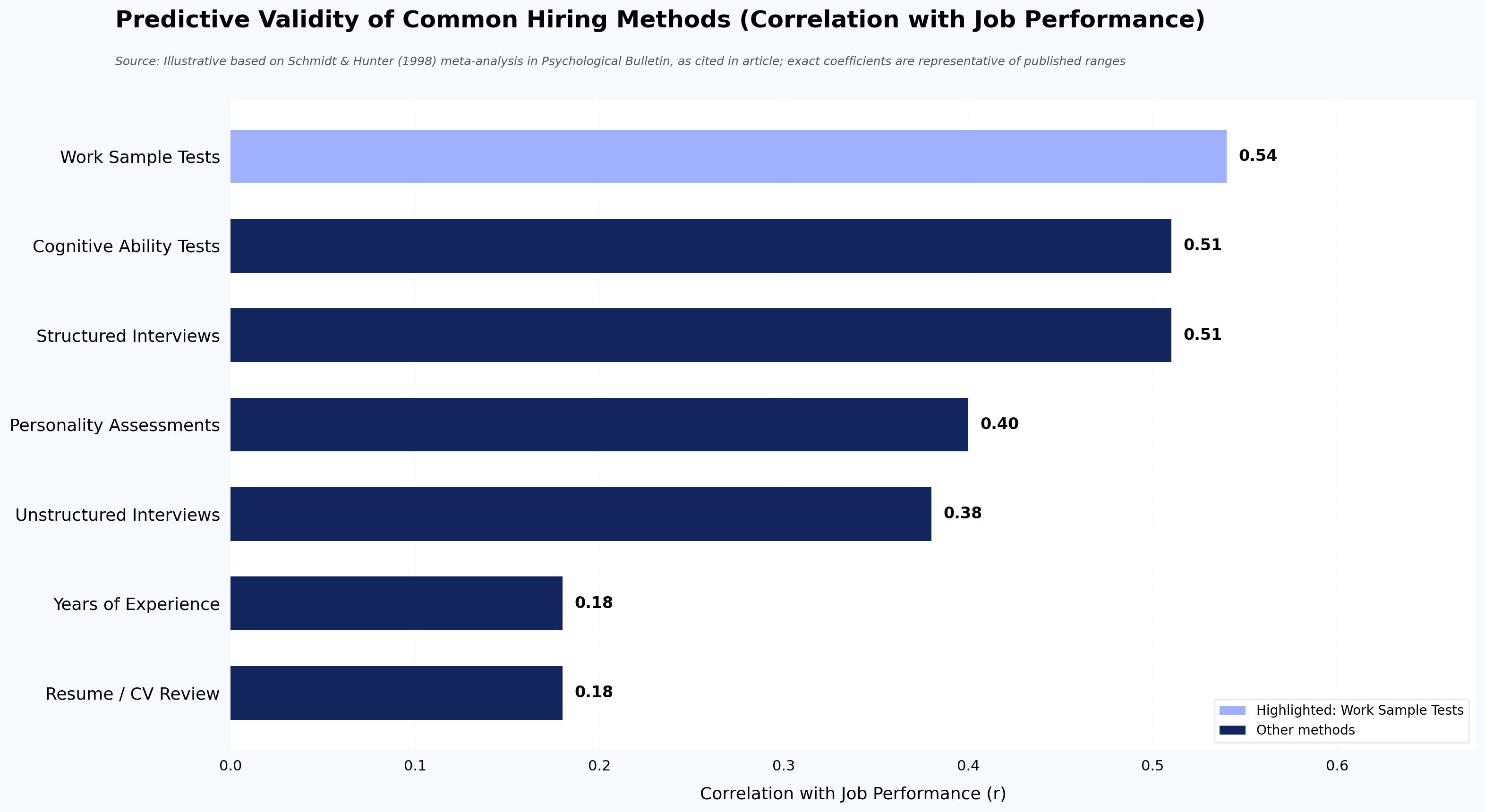
- Fairness and bias controls: Look for documented adverse-impact analysis, options to anonymize candidate data, and reporting that surfaces score distributions across demographic groups. Research on structured assessments — including the Schmidt and Hunter (1998) meta-analysis in Psychological Bulletin and the SIOP Principles for the Validation and Use of Personnel Selection Procedures published by the Society for Industrial and Organizational Psychology — consistently finds that structured tests and structured interviews tend to reduce bias compared with unstructured interviews. See also the EEOC Uniform Guidelines on Employee Selection Procedures for adverse-impact standards.
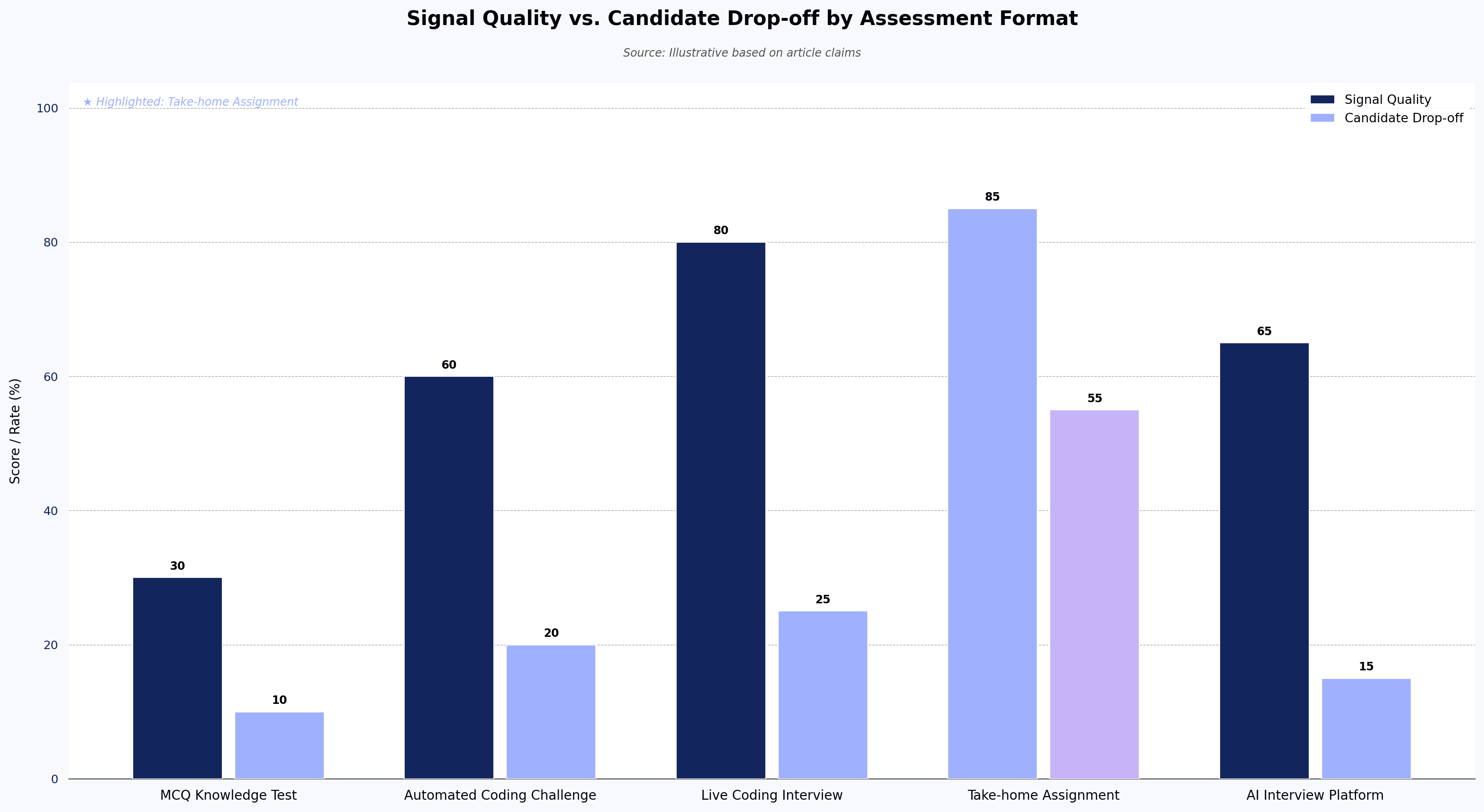
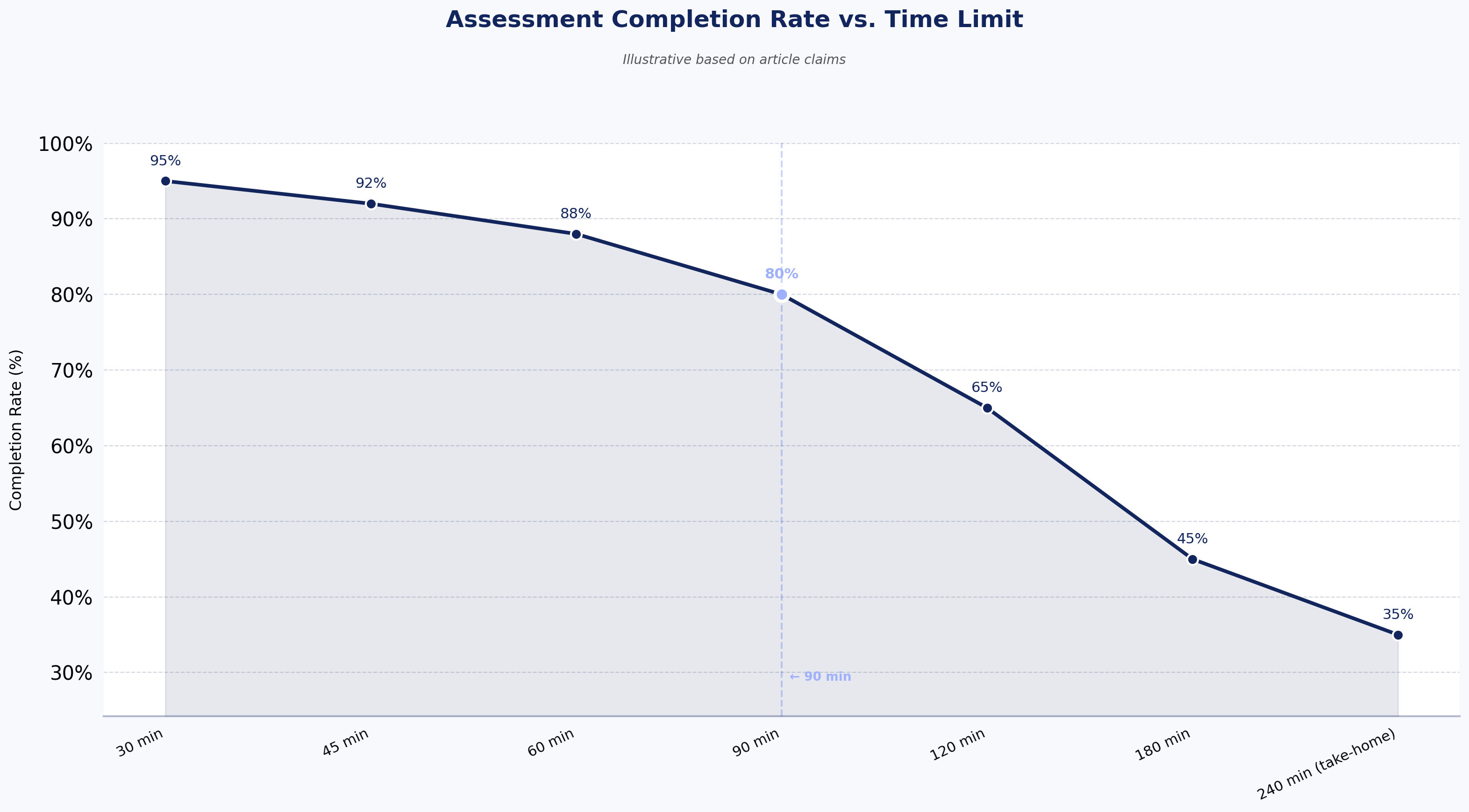
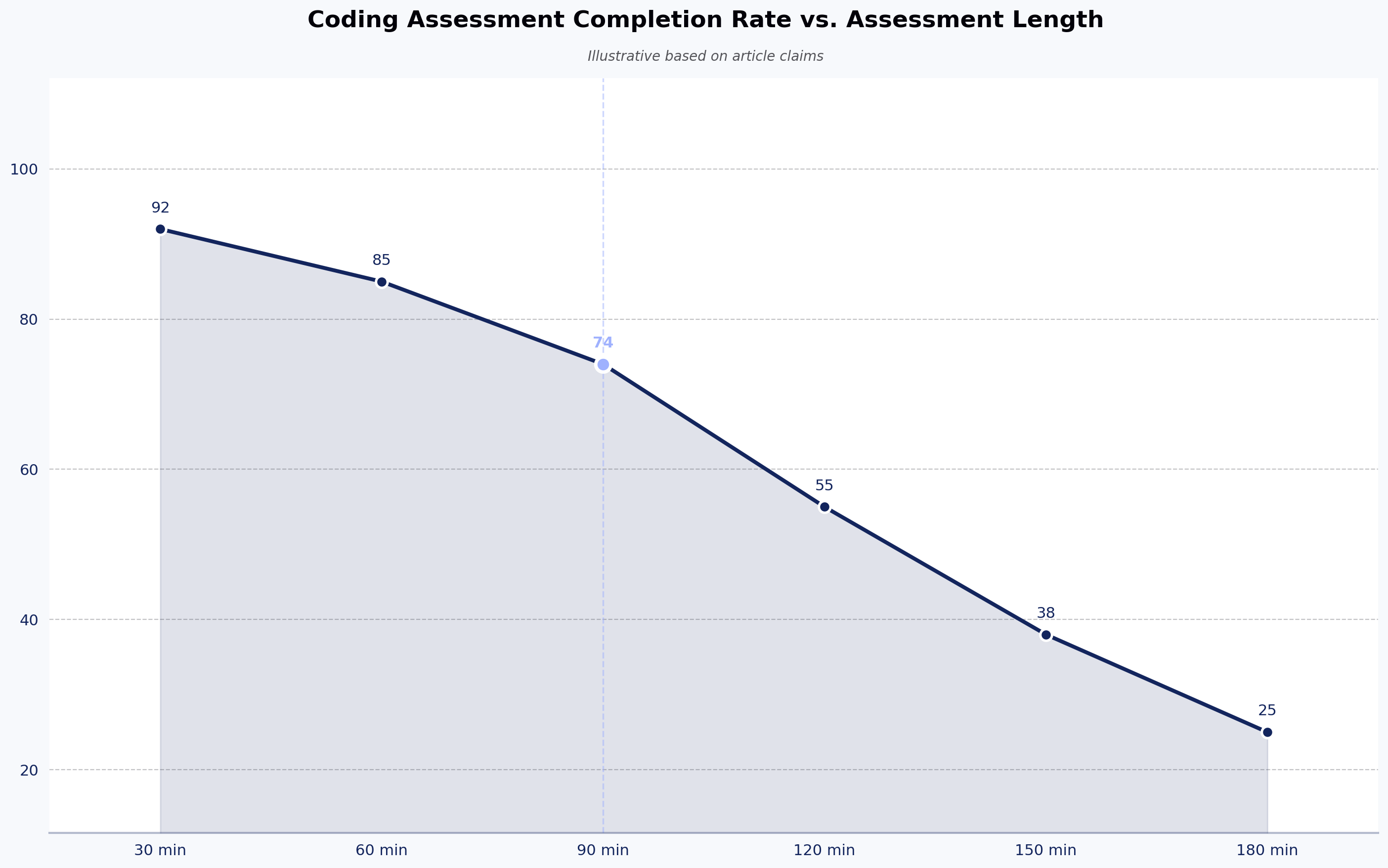
- Candidate experience: Some research suggests drop-off rates rise with long, clunky assessments. Time-to-complete, mobile support, and clear instructions matter as much as the test content.
- Role-specific customization: The platform should let you build assessments that mirror the demands of each job — choose from a question library, define custom skills, and set realistic time limits.
- Integrity controls proportional to risk: Proctoring, plagiarism detection, and tab-switch monitoring matter for high-stakes, remote-only assessments. For early-funnel screening, lighter controls are often enough.
- Analytics you'll actually use: Reports should answer "is this candidate likely to succeed in this role?" — not just produce raw scores. Be cautious of vendors marketing predictive AI without explaining what data the model is trained on or how it's validated.
- Workflow integration: The tool should connect to your applicant tracking system (ATS) so candidate data, scores, and stage changes flow automatically rather than living in a separate dashboard.
When talent assessment tools may not be the right fit
Talent assessment tools are not a universal answer. They tend to underperform when:
- Hiring volume is very low. If you hire one or two people a year, the setup time and license cost rarely pay back.
- The role is highly senior or judgment-based. For executives and senior ICs, structured reference checks and work-sample reviews usually predict success better than a standardized test.
- The skill is genuinely hard to test. Strategy, taste, and stakeholder management are difficult to assess in a 60-minute window; over-relying on a test here filters for test-takers, not performers.
- Compliance regimes restrict automated decision-making. In jurisdictions with rules on automated employment decisions (e.g., NYC Local Law 144), some AI scoring features may require bias audits or candidate disclosures.
Top talent assessment tools comparison: at a glance
This table summarizes each of the talent assessment tools below by key features, best use case, cons, and G2 rating so you can quickly see which one fits your hiring needs. Third-party feature counts (test libraries, question banks) are vendor-reported; G2 ratings shift continuously, so confirm on each provider's site before purchase.
| Tool | Key Features | Best For | Cons | G2 Rating |
|---|---|---|---|---|
| HackerEarth | Coding challenges across 40+ languages; AI-assisted test creation and evaluation; proctoring; detailed reporting; large skills library; non-technical role coverage (sales, support, finance) through custom content. | Technical and mixed-role hiring at scale | Steeper learning curve for new users; smaller G2 review base than HackerRank | 4.5/5 |
| HackerRank | Coding challenges in many languages, candidate management, ATS integration, proctoring, test library. | Organizations hiring many developers at scale | Some assessment grading inconsistencies reported; navigation can be difficult | 4.5/5 |
| Codility | Real-time coding tests, algorithmic puzzles, plagiarism detection, role-based tests | Large-scale tech hires | Less flexible on test structure; weaker soft-skill evaluation; deeper code quality review may require manual effort | 4.6/5 |
| Coderbyte | Multiple coding languages, video playback, multiple question types, reports | Smaller companies or teams | UX bugs reported; some users want more variety in question types; occasional platform issues | 4.4/5 |
| Mettl (Mercer) | Technical, behavioral, cognitive, personality, communication assessments; remote proctoring | Enterprises wanting broad assessment capability | Can be more expensive; slower ROI in some cases; setup can take time | 4.4/5 |
| TestGorilla | Validated tests across technical, cognitive, language, and soft skills; vendor-reported AI candidate scoring; anti-cheating; side-by-side comparison | Companies wanting to assess beyond coding | Less specialized for deeper coding/algorithmic problems; interface and customization may lag dedicated coding platforms | 4.5/5 |
| CoderPad | Real-time collaborative code interviews, live coding environment, shared IDE, candidate experience focused | Teams doing live interviews | Less depth in test library; may lack certain analytics; more suited to final-stage interviews than large-scale screening | 4.4/5 |
| Devskiller | Real-world task-based coding tests, broad tech stack, detailed analytics, TalentBoost options | Companies wanting assessments that mirror actual work | More expensive; steeper setup; requires more time to evaluate results thoroughly | 4.7/5 |
| iMocha | Large skills library, AI-based analytics (vendor-reported), coding simulators, proctoring, technical and functional assessments | Organisations wanting broad coverage across non-tech and tech roles | UI can be confusing; cost for full feature set; learning curve in using advanced analytics | 4.4/5 |
| Xobin | Tests across many skills (tech, non-tech), scale assessments, automation, proctoring | Organisations hiring for many different roles | Some reports of limitations in candidate experience; analytics depth less documented publicly | 4.7/5 |
Devskiller and Xobin currently sit at the top of the G2 rating range in this list at 4.7/5 each, though ratings can move quarter to quarter. Use the table as a directional snapshot, not a final ranking.
Best talent assessment tools for technical and mixed-role hiring in 2025
For competitive hiring, the right talent assessment tools help recruiters make evidence-based, less biased decisions. These platforms reduce manual review at the top of the funnel and surface ranked, evidence-backed shortlists so recruiters spend more time on the candidates most likely to succeed.
Here's a closer look at the top tools shaping hiring in 2025.
1. HackerEarth

HackerEarth platform with advanced proctoring and role-based assessments
HackerEarth is a coding and skills assessment platform used by hiring teams for technical and mixed-role screening. Its Skill Assessments product covers software engineering roles alongside non-technical functions including sales, customer support, and finance. Custom content creation is available for larger customers who need to cover roles outside the standard library. Beyond Skill Assessments, HackerEarth's broader platform also includes FaceCode for live interviews, OnScreen for in-browser proctored assessments, SkillsGraph, and Hiring Challenges for community-scale events.
For live interviews, FaceCode offers a built-in code editor and collaborative IDE. HackerEarth reports customers across enterprise technology and global services; specific time-to-hire and screening-volume outcomes vary by customer and are available in vendor case studies on request.
HackerEarth's Skill Assessments include AI-assisted question recommendation and code-submission scoring. Per the product team, these features are designed to support recruiter decisions rather than replace them; outputs include confidence indicators and the system has documented limits on free-form rubric evaluation. Specific training-data details should be confirmed with HackerEarth's AI Labs team before being cited externally.
Key features: End-to-end coding and skills assessments across technical and non-technical roles; proctoring options including image processing and tab-switch detection; AI-assisted test creation and evaluation to reduce time-to-shortlist; ATS integration via API and prebuilt connectors; and a large skills library covering 40+ supported programming languages.
Strengths: Coverage extends across technical and non-technical roles through custom content — for example, sales aptitude, customer-support communication, and finance reasoning tests can be built on the same platform as a backend coding challenge. Project-based assessments mirror real work, and FaceCode is available for live coding interviews when teams need them. To see how this fits into a broader hiring process, see our guide to skills-based hiring practices for technical teams.
Limitations: Steeper learning curve for new users; smaller G2 review base than HackerRank.
Pricing: Plan structure includes Growth, Scale, and Enterprise tiers; refer to HackerEarth's pricing page or contact sales for current figures.
📌Suggested read: The 12 Most Effective Employee Selection Methods for Tech Teams
2. HackerRank
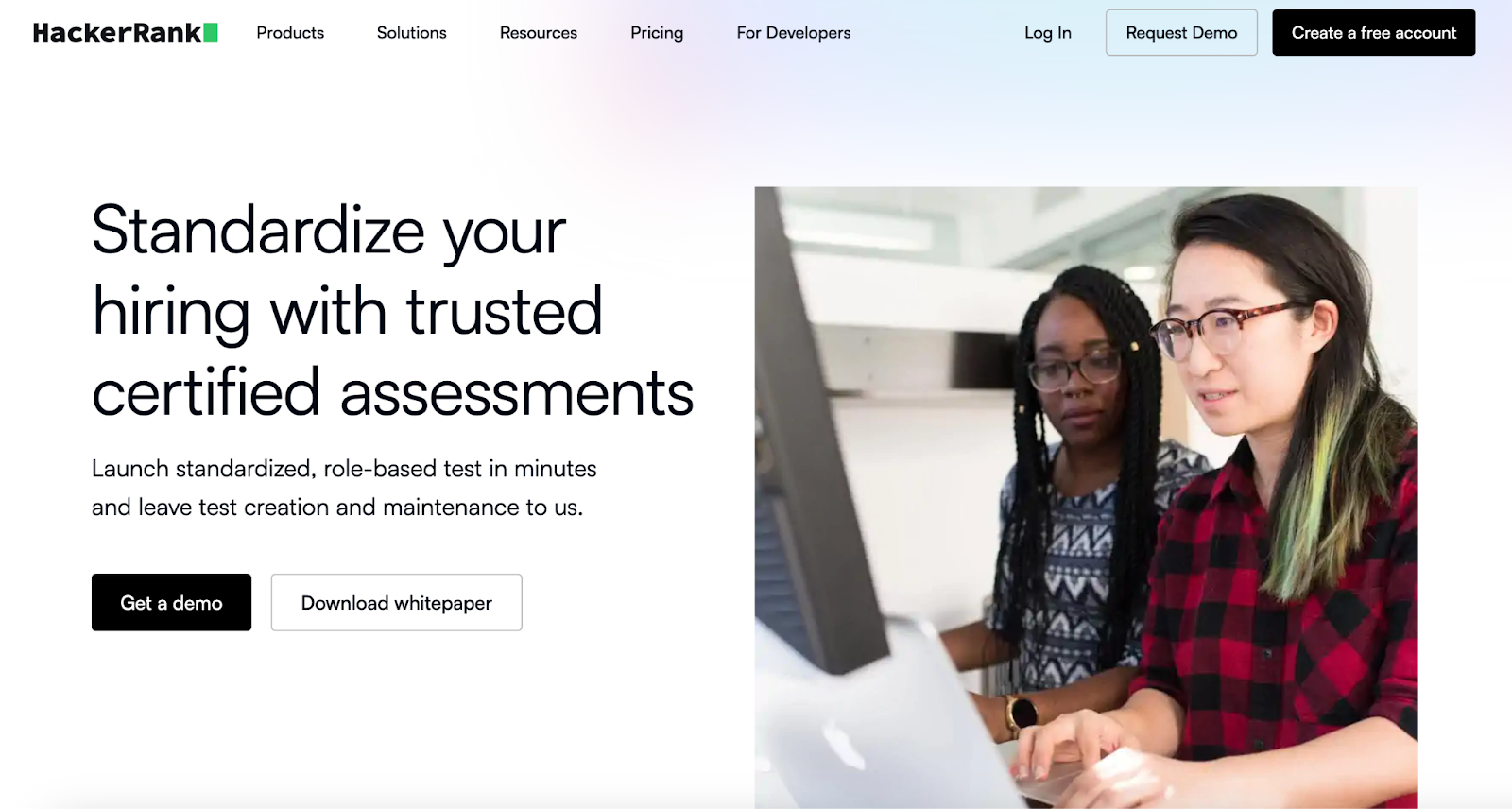
HackerRank certified assessments validate candidate skills with trusted benchmarks
For hiring teams that need rigorous technical screening, HackerRank offers a mature platform with large question sets, strong grading, live coding interviews, and cheating detection. It provides a library of pre-built coding challenges and supports live interviews for coding and problem-solving assessments. It fits well where coding-skill verification must be precise and standardized. HackerRank markets AI-assisted scoring on certain question types; the vendor has not publicly detailed the training data or validation methodology, so treat scores as a signal rather than a final judgment.
Key features: Live coding interviews for real-time proficiency checks; automated grading that evaluates submissions on accuracy, efficiency, and scalability; and customizable assessments by skill level, language, and problem type.
Strengths: Large library of coding challenges; reduces time-to-shortlist with automated assessments; integrates with major ATS systems.
Limitations: Limited customization for interview setups; can be expensive for small teams.
Pricing: Pricing tiers change frequently; see HackerRank's current pricing page for live figures.
3. Codility
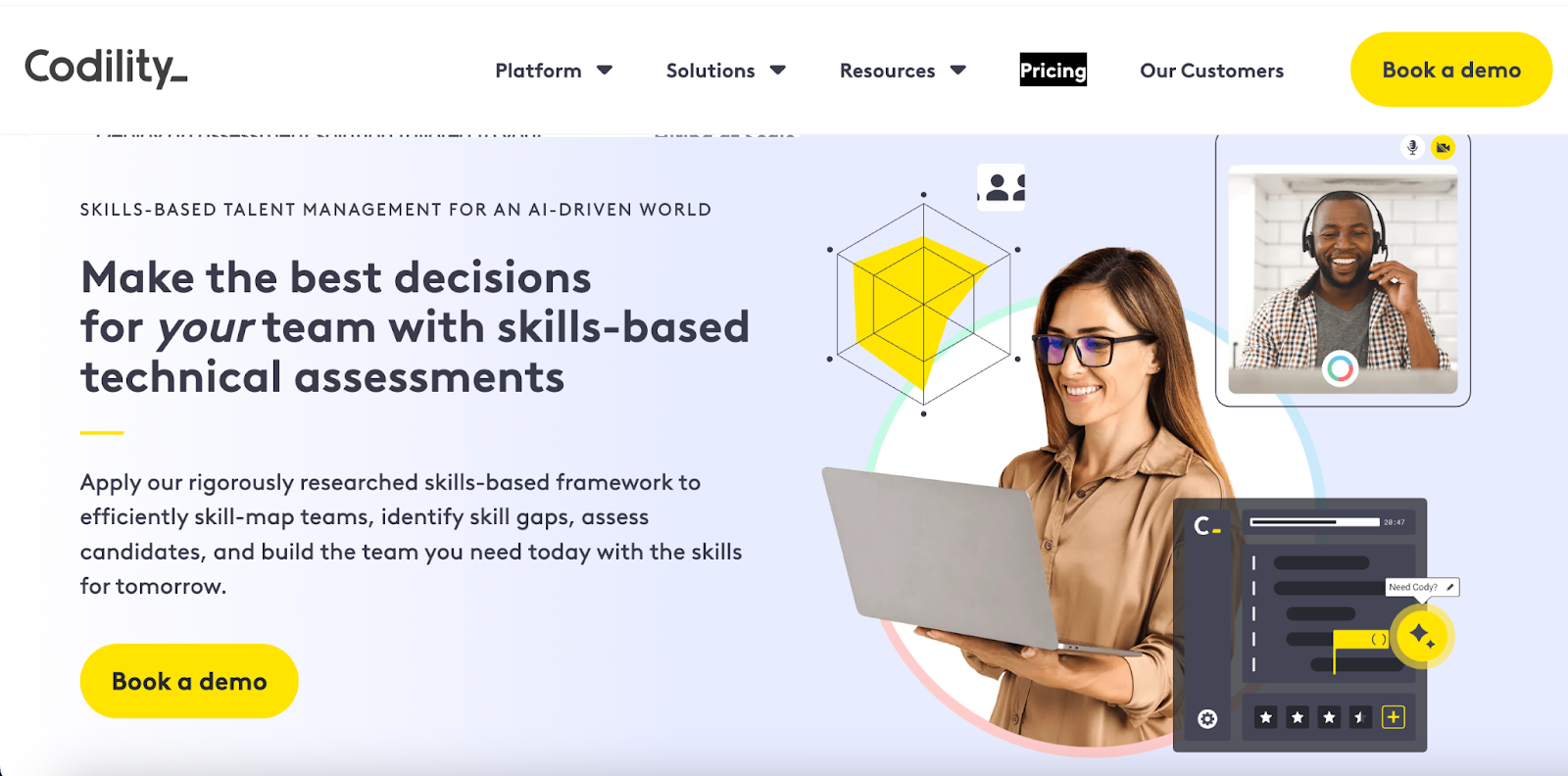
Codility offers screen-and-interview products for enterprise technical hiring
Codility is a coding assessment platform designed to evaluate developers' algorithmic thinking and problem-solving skills. It lets recruiters create and customize coding tests that assess technical skills through real-time challenges.
The platform includes anti-cheating mechanisms like plagiarism detection to protect assessment integrity. Codility's integrated interview features also support live coding during interviews.
Key features: Algorithmic coding tests that assess problem-solving, algorithms, and data structures; anti-cheating mechanisms that detect similarities in code submissions; and plagiarism detection that automatically flags likely plagiarism.
Strengths: Clear insights into candidate code performance and mistakes; reliable UX with good support and varied tasks; strong cheating protection for credible assessments.
Limitations: Requires manual review for deeper quality beyond automated scoring.
Pricing: Tier names and figures change frequently; check Codility's pricing page directly for current Starter, Scale, and Enterprise rates.
4. Coderbyte
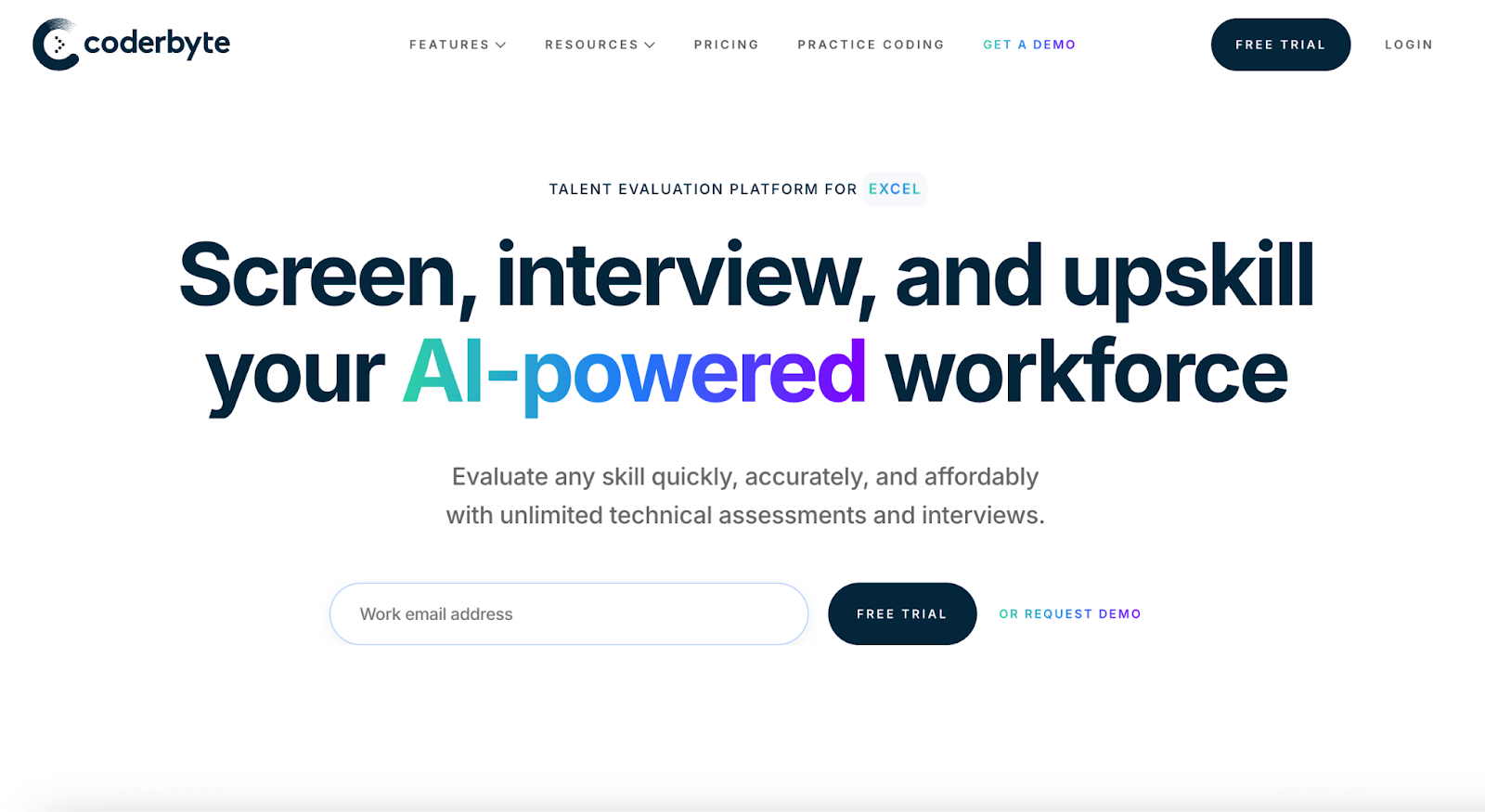
Coderbyte offers coding tests, interviews, and skill training
Coderbyte focuses on coding assessments for developers, helping recruiters test technical skills through pre-built challenges. It includes challenges across multiple languages and difficulty levels, along with live coding interviews.
Small to mid-size teams that want flexibility often pick Coderbyte because it supports project-based screenings, interviews, and take-home tasks. It suits mixed roles where coding clarity and candidate experience matter.
Key features: Hundreds of ready-made challenges across multiple programming languages; live coding interviews; and custom test creation aligned to specific job roles.
Strengths: Realistic tasks that reflect on-the-job work; strong UX for both recruiters and candidates; lower-cost entry for smaller teams.
Limitations: Pricing may feel expensive if many custom or take-home tasks are involved.
Pricing: Pro and Enterprise plans are offered; refer to Coderbyte's pricing page for current figures.
5. Mettl (Mercer)
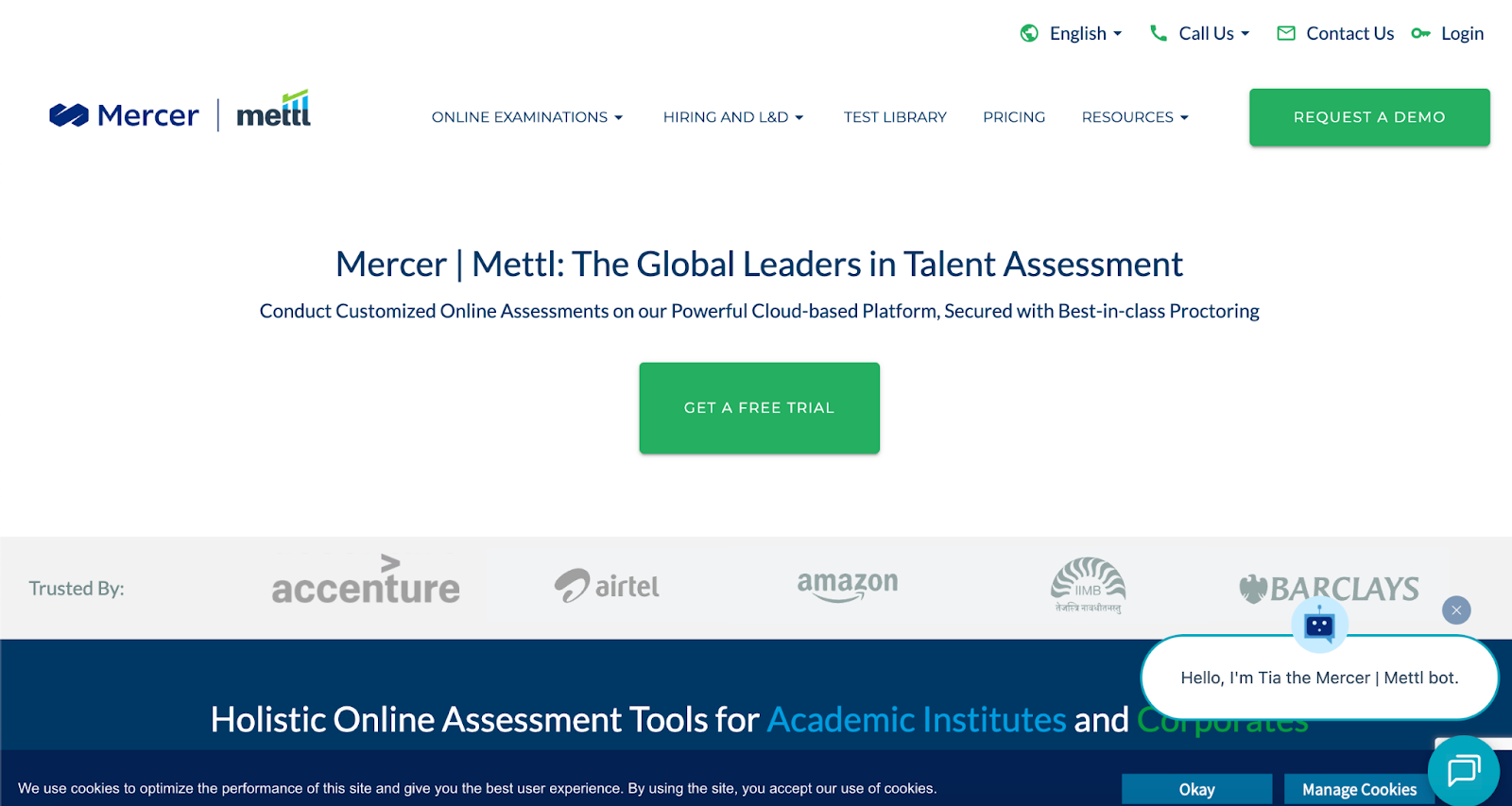
Mettl offers a broad set of online assessments for hiring
Mettl, now part of Mercer, offers technical, cognitive, and behavioral assessments. It evaluates candidates across programming, personality traits, and aptitude.
Mettl markets AI-assisted insights; the vendor describes these as recommendations for reviewers rather than autonomous scoring decisions, and remote proctoring helps maintain fair testing conditions.
Key features: Psychometric assessments that measure personality, cognitive ability, and aptitude; technical assessments for IT and non-IT skills, digital readiness, and coding via simulators and customized tests; and 360-degree feedback supporting multi-rater performance insights.
Strengths: Covers both hiring and L&D needs; strong security and exam-integrity features; experience managing assessments globally at scale.
Limitations: Some users find dashboards less modern or intuitive.
Pricing: Custom pricing.
6. TestGorilla
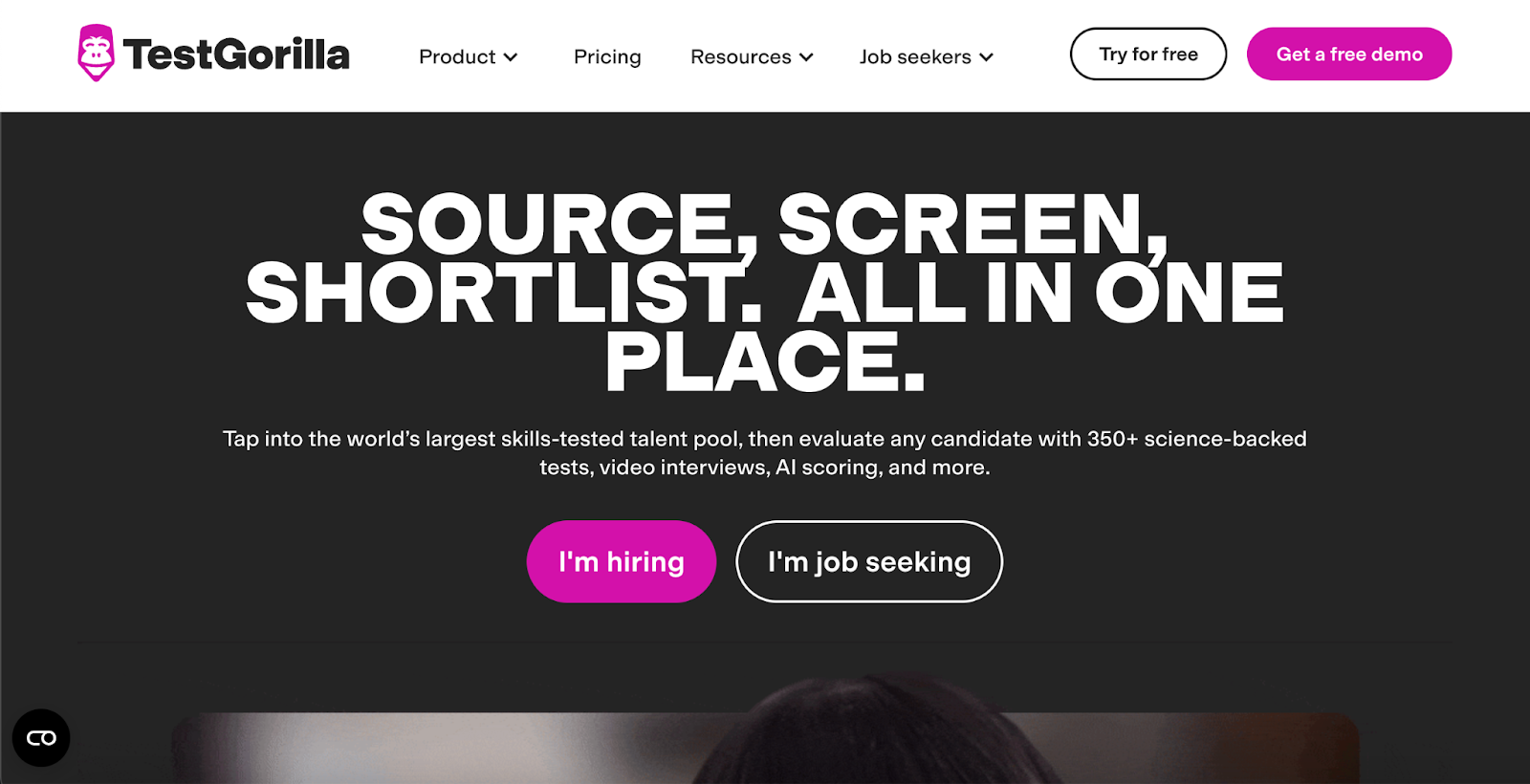
Hundreds of validated tests, AI scoring, and a global talent pool
TestGorilla is a talent assessment platform that helps companies identify candidates with a data-driven approach. According to TestGorilla, it offers a large library of tests covering technical, soft, and job-specific skills; verify the current count on the vendor site, as libraries change frequently.
The platform includes custom questions and vendor-reported AI-driven candidate scoring and ranking. TestGorilla describes its scoring AI as trained on standardized test responses to rank candidates against a normed benchmark; the vendor has not published peer-reviewed validity studies, so use AI scores as one input rather than a single decision criterion. Anti-cheating measures are built in.
Key features: A library of skills tests across cognitive ability, technical skills (including coding), personality, language, and job-specific functions; custom assessment building with up to 20 custom questions; and built-in anti-cheating integrity controls.
Strengths: Saves time by using premade, validated tests across many disciplines; AI scoring reduces manual review and speeds up evaluation; flexible credit-based or annual plans match hiring volume.
Limitations: Lower-tier plans limit branding, integrations, and some test types.
Pricing: Free, Core, and Plus tiers are offered; refer to TestGorilla's pricing page for current figures.
📌Related read: How Talent Assessment Tests Improve Hiring Accuracy and Reduce Employee Turnover
7. CoderPad
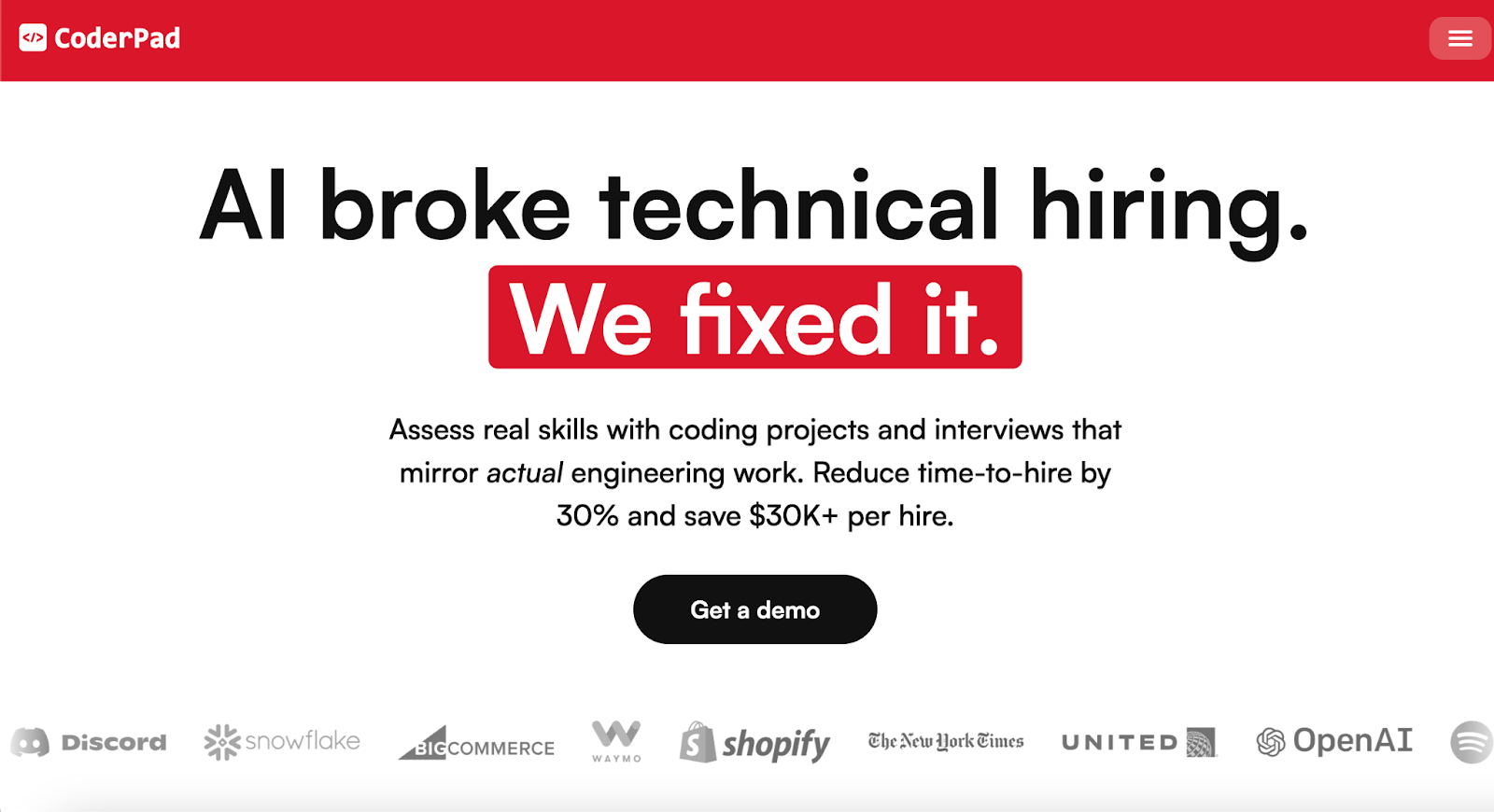
CoderPad provides real-time coding interviews and assessments
CoderPad specializes in live coding interviews and collaborative coding environments, letting interviewers watch how a candidate works in real time. It suits final-stage interviews and pair programming more than mass screening.
A practical note for hiring leaders: live coding interviews are often overweighted in final stages. They test how a candidate performs under observation in 45 minutes, which is a different skill from how they ship code over a sprint. Use them, but pair them with take-home or project-based work where the role allows.
Key features: Multi-file IDE for projects in a familiar VS Code-based environment; live coding for writing, executing, and debugging code together in the browser; and gamified coding challenges that maintain assessment integrity.
Strengths: Lets hiring teams observe candidates working live, with immediate feedback; authentic simulations of real work tasks rather than isolated puzzles; high candidate engagement through interactive, hands-on tasks.
Limitations: Requires interviewer time during live sessions vs. asynchronous screening.
Pricing: Free, Starter, Team, and Custom plans are offered; refer to CoderPad's pricing page for current figures.
8. Devskiller
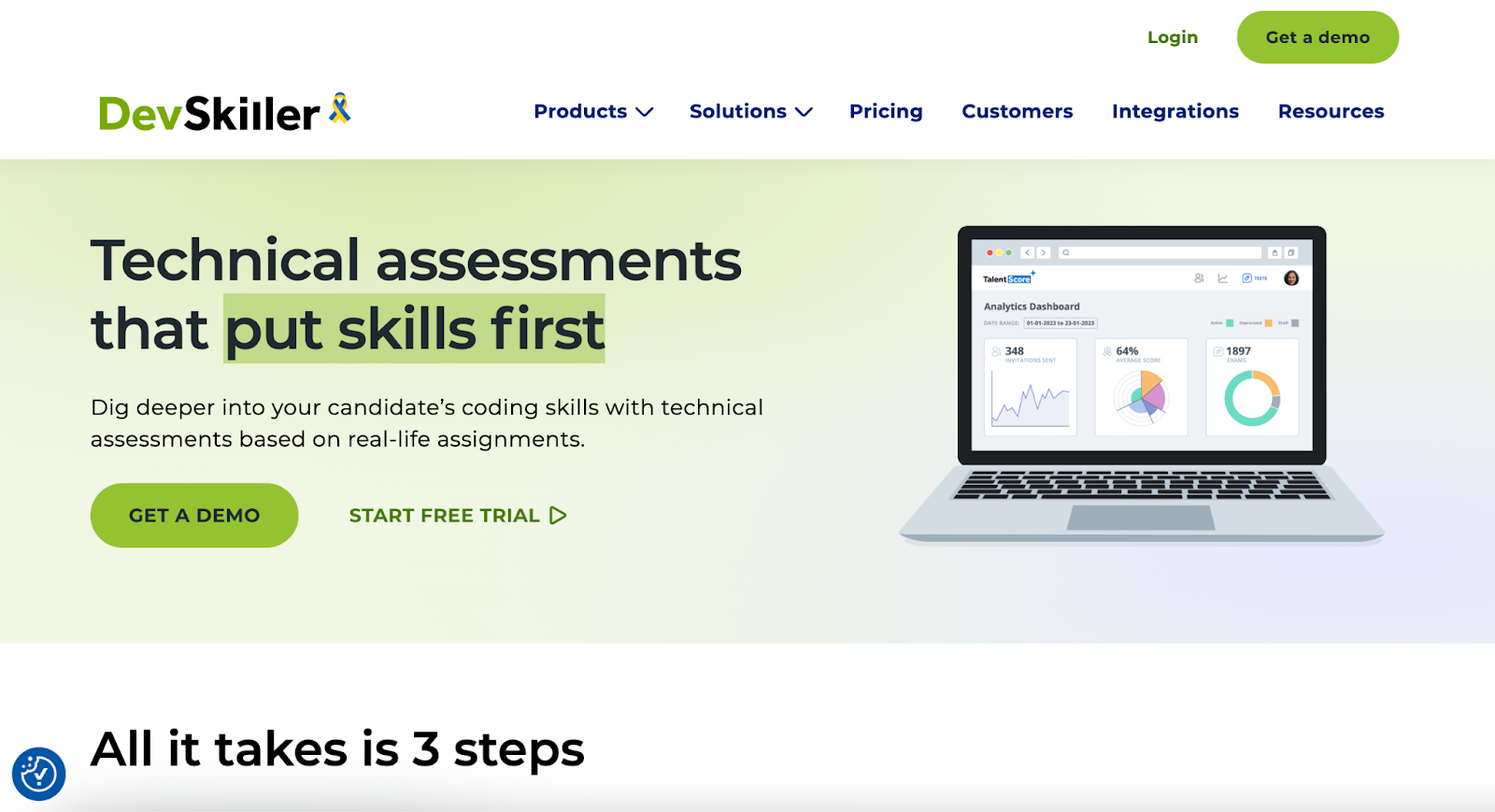
DevSkiller technical assessments page with skills tests and features
For assessing technical talent, Devskiller is built around realism and objectivity, and it sits at the top of the G2 rating range in this list (4.7/5 at time of writing). Its core is the RealLifeTesting™ methodology for remote coding tests, which uses a library of customizable recruitment tasks to replicate real-world scenarios.
The platform aims to provide a strong candidate experience while protecting integrity through automated objective scoring, real-time observation of tests, and anti-plagiarism tools. For hiring teams, ATS integration handles candidate data sync and stage updates, and the platform extends to ongoing skill management and employee development.
Key features: Customizable assessments with a ready-to-use task library plus the ability to create custom tasks; remote, flexible testing with invites that can be sent from anywhere; and automated, objective scoring designed for both technical and non-technical reviewers.
Strengths: Realistic, job-like assessments designed to mirror day-one tasks; deep insight into coding style and architectural understanding; reduces bias from artificial or contrived test formats.
Limitations: Longer setup and evaluation time per candidate because of detailed tasks.
Pricing: Skills Assessment and Skills Management & Assessment plans are offered; refer to Devskiller's pricing page or sales team for current figures.
9. iMocha
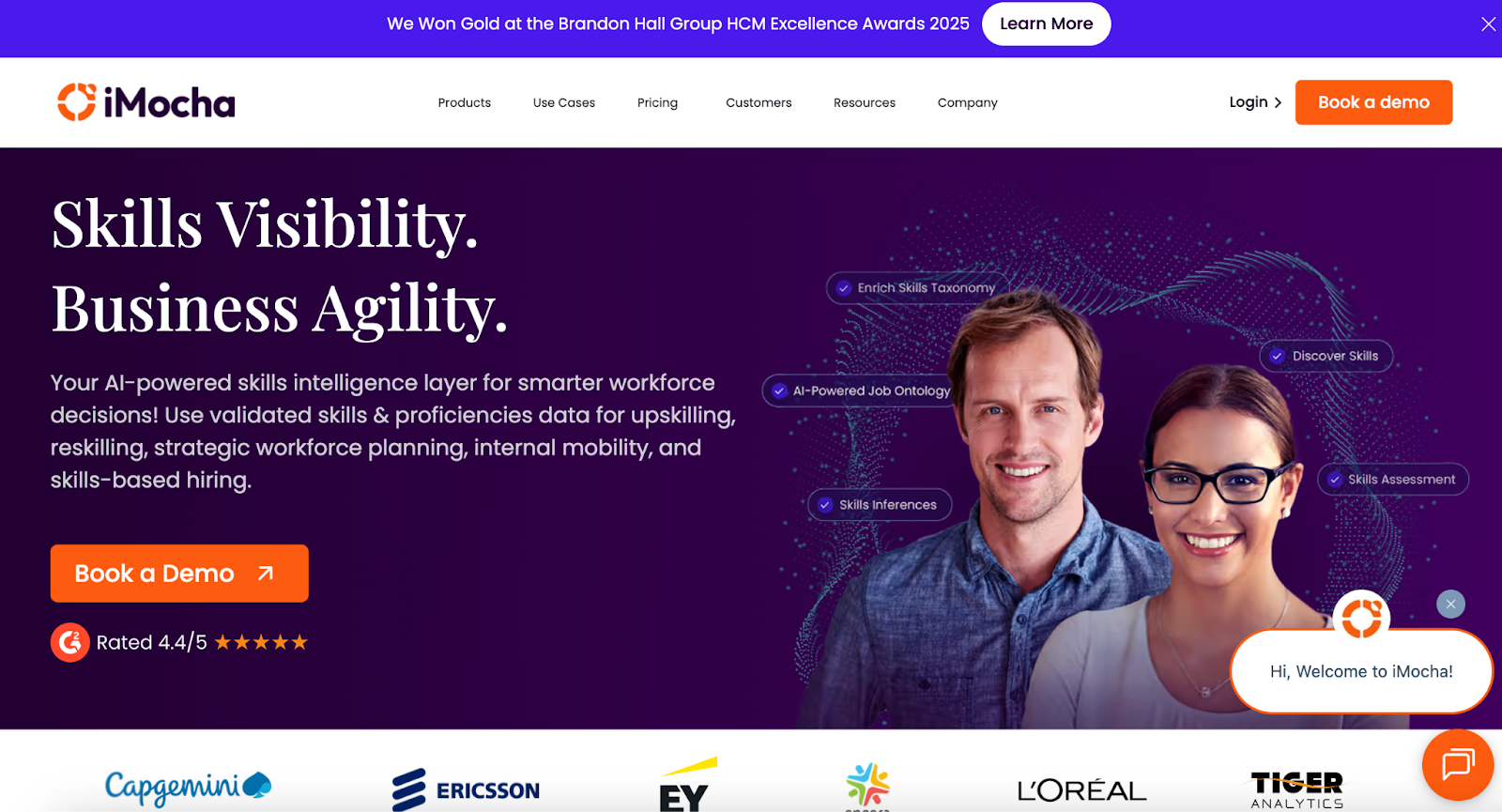
iMocha offers a large skills assessment library and skills-based hiring solutions
Targeting a fair, skills-based hiring approach, iMocha provides an extensive library of pre-built and customizable assessments for technical, soft, and cognitive skills. The platform features AI tools including AI-LogicBox, a code-free logic simulator that scores patterned reasoning tasks, and AI-EnglishPro for communication evaluation, which the vendor describes as a CEFR-aligned scoring model for English speaking and writing samples. Both are vendor-reported features; independent peer-reviewed validity studies have not been published, so treat outputs as one signal alongside human review.
Key features: Large skills library across