Home
/
Blog
/
AI Recruiting
/
10 Best AI Resume Screening Tools in 2026

10 Best AI Resume Screening Tools in 2026

Author
Vineet Khandelwal
Calendar Icon
November 10, 2025
Timer Icon
3 min read
Share

Explore this post with:

  • Hiring in 2026 looks nothing like it did a few years ago. AI resume screening tools have taken over repetitive manual reviews, helping recruiters shortlist top candidates more accurately.
  • As companies embraced these systems, the process became fairer, reducing unconscious bias and promoting diversity by focusing purely on skills and experience rather than demographics.
  • This evolution has also led to smarter integrations and greater scalability, with platforms like HackerEarth now handling thousands of applications seamlessly.
  • Together, these tools have turned recruitment into a balanced collaboration between human intuition and machine intelligence, shaping a future where hiring is faster, more consistent, and far more human at its core.

Hiring teams have completely transformed how they review candidates, thanks to the rapid growth of AI resume screening tools. Traditional screening often slows down the process and creates bias, which makes it harder to identify qualified talent quickly. 

In fact, over 90% of employers now use technology platforms for HR functions, up from 70%, and more than half of these activities run through a single central system for greater consistency. AI tools for resume screening now handle tasks that once took hours, analyzing experience, filtering skills, and ranking candidates in minutes. These platforms help recruiters make faster and fairer hiring decisions while improving the overall quality of hire.

In this blog, we’ve gathered the 10 best AI resume screening tools making the biggest impact in 2026.

What are AI Resume Screening Tools?

AI resume screening tools are automated systems that use machine learning algorithms to analyze resumes. These tools identify relevant qualifications and experiences by comparing applicant data against job requirements. They help hiring teams review applications faster while maintaining consistency in how every resume is assessed.

Some of the core features of AI tools for resume screening include:

  • Resume parsing: The tool extracts candidate information, such as contact details, work experience, and education, from resumes.
  • Candidate ranking: It scores and sorts applicants based on how well their profiles match the job description.
  • Skill matching: The system compares candidate skills to required competencies and highlights suitable profiles.
  • Keyword identification: It detects specific terms or phrases that reflect relevant experience or technical knowledge.

📌Suggested read: 7 Best Resume Screening Software of 2026: AI & Fairness Reviewed

Why Use AI for Resume Screening?

Recruiters face massive volumes of applications that slow down hiring and limit focus on truly qualified candidates. That reality triggers a strong use-case for AI resume screening tools:

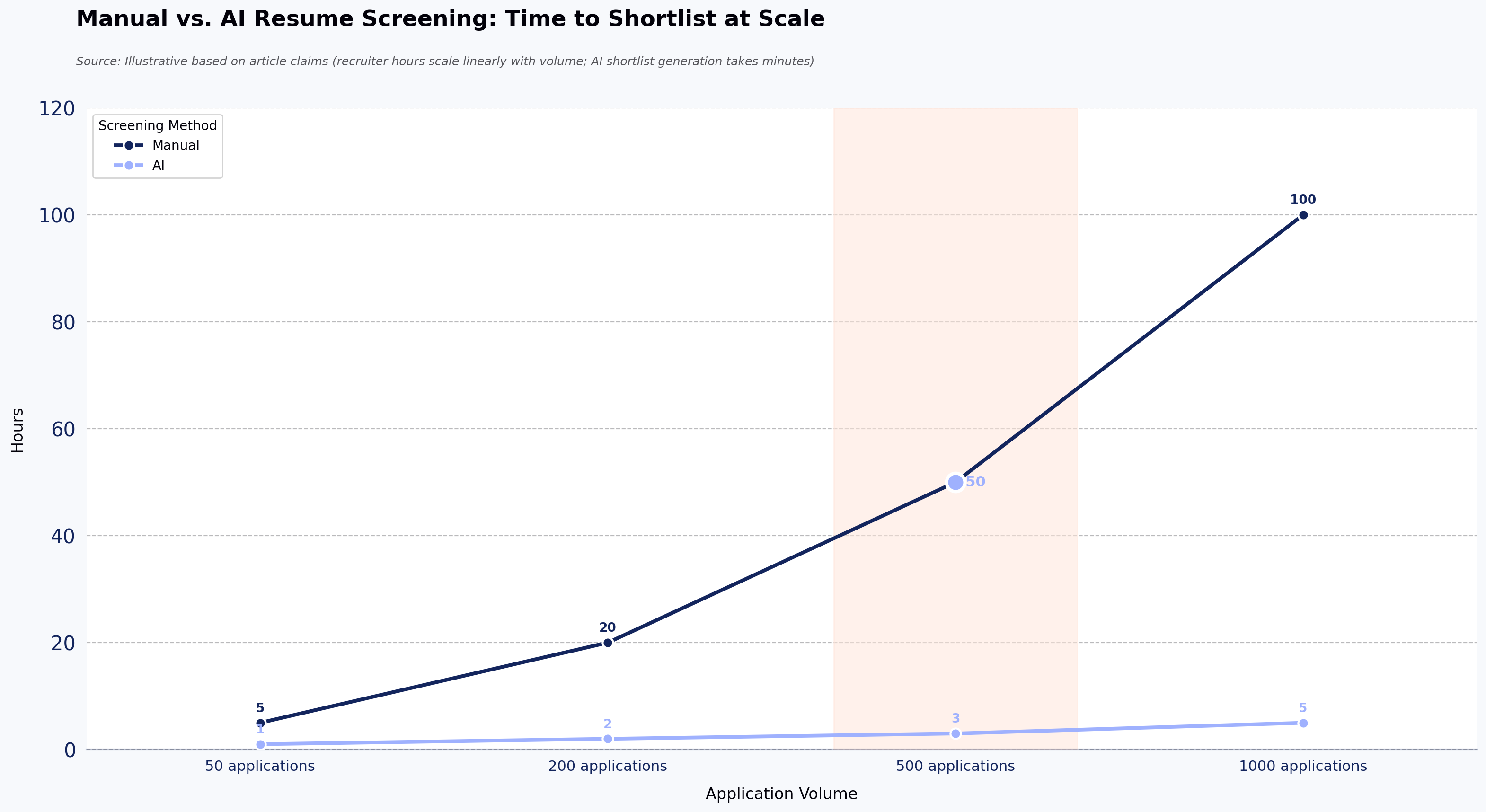
  • Time-saving: With AI resume screening tools, companies can sift through hundreds or thousands of resumes in a fraction of the time required for manual review.
  • Improved accuracy: These tools match candidates more effectively by evaluating their skills, experience, and qualifications against the requirements of the role.
  • Bias reduction: When models are trained on fair data, these tools can help remove bias by focusing only on skills rather than gender, age, or ethnicity.
  • Diversity support: Over half of organizations (55%) using AI resume screening tools report measurable improvements in candidate diversity.
  • Scalability: Whether you’re screening 50 or 50,000 resumes, the same system holds up and keeps performance steady for high-volume hiring.
  • Candidate experience boost: A 2025 survey found that 98% of hiring managers who use AI in screening reported noticeable improvements in process efficiency and overall candidate feedback. 
  • Cost control: Data from 2025 shows that nearly 82% of recruiters now use AI to review resumes, and the cost per hire drops significantly when screening becomes faster.

These combined benefits show why AI resume screening tools are becoming a key part of modern hiring strategies.

Key Features of AI Resume Screening Tools

Now that you know the benefits of using AI for hiring, let’s explore the key features of AI resume screening tools in 2025.

  • Resume parsing: These tools automatically break down resumes to extract key data points such as skills, experience, and education, which helps you focus on candidates who match role requirements.
  • Keyword matching: The system evaluates resumes by identifying relevant keywords, phrases, and skill sets, so you spend less time reviewing irrelevant applications.
  • Customisable screening: You can set up screening criteria tailored to your hiring needs, allowing you to filter out applicants who do not meet essential benchmarks.
  • ATS integration: These tools plug into your Applicant Tracking System so that screening results flow directly into your existing workflows and recruiter dashboards.
  • Bias mitigation: Properly designed algorithms focus on merit-based data and reduce unconscious bias based on gender, ethnicity, or age while recruiting.
  • Analytics and reporting: The platform provides insights into how well your hiring process is performing and tracks metrics such as candidate diversity, time-to-hire, and cost efficiency.

Research shows that 75 % of HR teams noted a clear drop in screening time when using these systems. When you combine those numbers with these automated features, your hiring team can process high volumes of applications, discover qualified talent faster, and track key metrics over time.

At a Glance: Best AI Resume Screening Tools of 2026

Here is a detailed AI resume screening tools comparison, showcasing the 10 best platforms for 2026:

Tool Best For Key Features Pros Cons G2 Rating
HackerEarth Comprehensive end-to-end hiring, skill assessments, benchmarking, and continuous talent development Resume parsing, coding challenges, proctoring and analytics Strong in screening large candidate pools for tech roles Limited deep customization, no low-cost, stripped-down plans 4.5
Ideal (by Ceridian) High-volume hiring with AI candidate matching Skill-match engine, chatbots, candidate ranking User-friendly and strong support experience Less transparency on detailed feature ratings 4.8
Eightfold AI Enterprise talent intelligence and long-term talent pools Automated resume screening, career pathing, talent rediscovery Strong enterprise workflows and AI-powered career mapping The setup and learning curve may be steeper 4.2
iMocha Pre-employment skill assessments and screening Skills tests, proctoring, and custom landing pages Good platform for skills-based screening with proctoring Question variety and reporting could improve 4.4
Glider AI Candidate experience and full-funnel screening Automated screening, gamified assessments, skill matching Engaging candidate process and skill focus Less widely referenced in recent public ratings 4.8
Xobin SME hiring and skill-based screening Resume parsing, assessments, ATS integrations Good value for smaller teams Less enterprise-grade features 4.7
Vervoe Skills-based assessments across roles AI ranking, job simulations, customizable tests Very good rating for candidate screening and custom tests Monthly test limits on lower pricing tiers 4.6
TestGorilla Large-scale screening with assessments and resume scoring AI resume scoring, test library, analytics Strong for skills-based screening and integration Pricing can escalate with volume 4.5
HireEZ Sourcing and screening with AI-driven candidate discovery Candidate search, resume parsing, engagement workflows Excellent sourcing capabilities, strong rating Primarily sourcing tool; screening focus may be less deep 4.6
WeCP (We Create Problems) Multi-skill assessments, especially for technical and service roles Large assessment bank, role-based tests, analytics Very strong rating and broad skill coverage, supports high-volume assessment needs Less widely known than some big names 4.7

Best AI Resume Screening Tools of 2026

Here are the top 10 tools that offer the best features, benefits, and scalability for different business needs:

1. HackerEarth

HackerEarth online tech recruitment platform for screening
Use HackerEarth for tech talent assessment and screening

HackerEarth is a comprehensive resume screening software designed to help tech recruiters efficiently identify and evaluate top candidates in high-volume recruitment scenarios. It integrates AI-powered resume parsing to quickly filter resumes based on relevant skills, experience, and qualifications. The platform offers a question library of 36,000+ questions covering 1,000+ technical skills, allowing screening across software engineering, data science, and machine learning.

HackerEarth’s AI Interview Agent simulates real interviews using a video avatar and adapts questions according to candidate responses, evaluating both technical and soft skills, including problem-solving, logical reasoning, adaptability, and communication. The AI Screening Agent flags top candidates by analyzing resumes and assessment results, removing up to 80% of unqualified applicants early in the process.

Advanced analytics provide insights into candidate performance across assessments, highlighting strengths and areas for improvement. SonarQube-based code quality scoring assesses technical submissions in depth, while CodePlayer records every keystroke during coding challenges, allowing recruiters to analyze logic and programming skills. The health score index evaluates questions based on difficulty, programming language, and prior attempts, ensuring a fair and rigorous screening process.

Additionally, the platform supports over 100,000 concurrent online assessments and offers 24/7 support, making it ideal for enterprises looking to scale hiring while maintaining quality talent acquisition.

Key features

  • AI monitoring: Use AI to monitor candidate behavior, detecting potential cheating such as screen sharing or using external resources
  • Code feedback: Get detailed feedback on candidate code submissions, highlighting areas such as maintainability, security, and complexity
  • Question library: Access 36,000+ questions across 1,000+ technical skills and 40+ programming languages
  • Analytics scoring: Leverage advanced analytics and code quality scoring to identify top talent with precision
  • Candidate insights: Use the health score index and CodePlayer to gain deeper insights into candidate capabilities
  • ATS integration: Integrate seamlessly with ATS systems, enabling a smooth transition into hiring pipelines
  • High volume: Scale effortlessly, handling high volumes of resume screening with enterprise-level support

Pros

  • Unlimited concurrency, supporting 100,000+ candidates simultaneously
  • Scalable for large enterprises and high-volume recruitment
  • Global community of 10M+ developers across 133 countries and 450+ universities through hackathons

Cons

  • Does not offer low-cost or stripped-down plans

Pricing

  • Growth Plan: $99/month 
  • Scale Plan: $399/month 
  • Enterprise: Custom pricing with volume discounts and advanced support

📌Related read: Automation in Talent Acquisition: A Comprehensive Guide

2. Ideal (by Ceridian)

Resume screening dashboard analyzing candidate skills and experience
AI-powered resume screening for faster hiring decisions

Ideal is an AI‑powered resume screening platform designed to help reduce bias in hiring and improve the quality of candidate shortlisting. The platform uses predictive analytics to assess candidates’ potential success in the role based on their experience, skills, and other relevant factors. 

Additionally, it integrates with existing ATS systems to automatically identify the best candidates based on predefined criteria.

Key features

  • Predictive analytics: Use predictive analytics to assess a candidate's likelihood of success in a role
  • Bias detection: Detect and reduce bias with the platform’s tools designed to foster diversity and fairness
  • ATS integration: Integrate seamlessly with your ATS for a smooth workflow, incorporating AI‑powered resume screening into your recruitment process

Pros

  • Improve candidate quality by utilizing predictive analytics that help shortlist the best candidates
  • Easily integrate with ATS systems, simplifying the addition of Ideal’s AI screening capabilities to your recruitment tech stack
  • Increase fairness in hiring by reducing unintended bias in resume screening processes

Cons

  • Requires high‑quality input data for effective predictive analytics

Pricing

  • Custom pricing

3. Eightfold AI

Eightfold.ai's platform for AI candidate screening
Screen candidates for top talent decisions

Eightfold AI delivers an AI‑based candidate screening solution that interviews, evaluates, and summarizes applicants, so recruiters can focus on strategic hiring decisions. Its platform uses agentic AI to conduct initial candidate interviews and ranks potential top talent using robust datasets of over 1.6 billion career profiles and 1.6 million skills.

Its scheme supports autonomous processes and promotes responsible AI design to make hiring more inclusive and transparent.

Key features

  • Agentic AI: Conduct automated interviews and flag top candidates based on performance data
  • Massive data: Leverage 1.6 billion profiles and 1.6 million skills for deep candidate‑matching
  • Responsible AI: Embed transparency and fairness into the screening and decision process

Pros

  • Speed up hiring by automating first‑round interviewing and candidate evaluation
  • Match candidates with roles using vast datasets for higher relevance
  • Promote inclusive hiring through transparent AI‑supported screening

Cons

  • Requires time to train recruiters on its full matching and scoring functions 

Pricing

  • Custom pricing

4. iMocha

iMocha's homepage showing AI-powered skills validation
Use iMocha for AI-powered skills assessment and screening

iMocha provides scalable, job‑role‑aligned assessments that evaluate real‑world skills with AI‑powered precision, helping organizations make faster, more objective hiring decisions. The platform covers technical, functional, cognitive, and soft skills, offering coding challenges, logic assessments, and language tests. 

Its AI‑driven proctoring and interview solutions prevent cheating while supporting live and asynchronous formats. With accessibility for 50+ languages, iMocha helps global enterprises hire talent efficiently while maintaining fairness and assessment quality.

Key features

  • Assessment library: Access 10,000+ ready‑to‑use tests across technical, functional, cognitive and soft skills
  • Coding platform: Use 30+ compilers and 5,000+ coding problems to evaluate full‑stack, AI and ML proficiency
  • Proctoring suite: Deploy AI‑powered monitoring of webcam, screen and tab switches to prevent cheating

Pros

  • Offer a world‑class library of skills tests covering 300+ job roles
  • Integrate multilingual support and accessibility with 50+ global languages
  • Support live and asynchronous interview formats for flexible candidate evaluation

Cons

  • Some questions and automatic scoring may require manual review to correct inaccuracies

Pricing

  • 14-day free trial
  • Basic: Contact for pricing
  • Pro: Contact for pricing
  • Enterprise: Contact for pricing

5. Glider AI

Glider's homepage highlighting AI Guided Interviews
Use Glider's AI for fast, accurate interview screening

Glider AI transforms the screening interview process by using AI-guided interviews to validate skills quickly and accurately. The platform generates vetted questions from job descriptions, scores candidate responses, and provides client-ready reports. 

It integrates seamlessly with ATS systems, enables live or scheduled video interviews, and uses AI proctoring to detect fraud. Recruiters can make data-driven decisions with automated skill matching, performance reports, and optimized future interview insights.

Key features

  • AI questions: Upload a job description and generate relevant, vetted questions instantly
  • AI evaluation: Analyze candidate responses on skills, fit, and performance automatically
  • Performance reports: Access insights to optimize recruiter efficiency and interview outcomes

Pros

  • Conduct guided interviews that reduce preparation time significantly
  • Generate ranked, client-ready candidate reports to speed up hiring
  • Integrate directly with ATS systems for seamless workflow

Cons

  • Advanced analytics require additional training to interpret results

Pricing

  • Custom pricing

📌Also read: The 12 Most Effective Employee Selection Methods for Tech Teams

6. Xobin

Xobin landing page showcasing automated video interview and resume screening software
AI-powered resume screening and automated video interviews for recruiters

Xobin offers a unified dashboard that combines AI‑powered screening, including resume parsing, deep context reading, and candidate scoring, to transform hiring workflows. Using video‑first job application forms (XoForms), the platform enables you to receive applications and schedule assessments and interviews with a single click.

It uses AI to automate the shortlisting process, which includes analyzing video interviews, generating AI-based candidate scores, and filtering applicants based on their actual skills and competencies, not just their resumes.

Key features

  • AI screening: Use automated resume screening with deep contextual understanding of candidate profiles
  • Resume parsing: Apply smart parsing to extract skills, job titles, certifications, and soft skills
  • Keyword matching: Leverage AI‑driven keyword matching that understands context, not just keyword frequency

Pros

  • Use a candidate scoring engine that ranks applicants based on employer‑defined metrics
  • Integrate seamlessly with ATS, onboarding, and payroll platforms for full HR ecosystem support
  • Employ built‑in tools for bias reduction, human oversight, and algorithm transparency

Cons

  • Requires more advanced customization options to suit very niche roles

Pricing

  • Complete Assessment Suite: Starting from $699/year

7. Vervoe

Vervoe AI resume screening and hiring platform 
Hire better talent with Vervoe 

Vervoe focuses on AI‑powered skills assessments to screen resumes effectively and rank candidates based on real‑world performance rather than just paper credentials. The platform uses an AI Assessment Builder that extracts skills from job descriptions, maps them to a dynamic taxonomy, and then creates tailored assessments in under a minute. 

With seamless ATS integrations and automated candidate‑ranking, Vervoe helps hiring teams discover talent faster and more fairly.

Key features

  • AI assessment: Build custom assessments by uploading a job description and generating relevant skill questions instantly
  • Candidate ranking: Automatically grade and rank applicants based on performance, relevance and role fit
  • ATS integration: Connect with major ATS platforms to share results, submissions and candidate data seamlessly

Pros

  • Simplify candidate shortlisting with AI‑based ranking and merit‑focused screening
  • Increase hiring fairness by basing decisions on tasks and skills rather than resumes only
  • Integrate easily with existing HR systems to maintain workflow continuity

Cons

  • Some users experienced occasional platform performance and user interface issues

Pricing

  • Free (7 days)
  • Pay As You Go: $300 (10 candidates)
  • Custom: Contact for pricing

*Pay As You Go is charged as a one-time payment

8. TestGorilla

TestGorilla's platform for sourcing skilled talent
Use TestGorilla for smarter, skills-based candidate screening

TestGorilla offers a powerful platform that helps you source and screen pre‑assessed talent from over two million job seekers, using AI‑powered matching and skills‑based data instead of relying solely on resumes. 

The platform emphasizes transparency with data‑led candidate comparisons, supports 350+ skill tests, and enables you to set filters like skills, location, and salary to build pipelines efficiently.

Key features

  • Talent sourcing: Use AI to discover pre‑assessed talent matching your skills, location, and salary criteria
  • Skill testing: Conduct assessments using 350+ tests covering technical, language, cognitive, software and personality skills
  • Candidate comparison: View side‑by‑side skill‑based data to make hiring decisions faster and fairer

Pros

  • Access a large live pool of skills‑tested job seekers for rapid hiring
  • Use AI‑based matching to build candidate pipelines aligned with specific role filters
  • Rely on objective skills data to reduce bias and focus on actual candidate abilities

Cons

  • Users found specific integrations and module customizations to be limited

Pricing

  • Free
  • Core: $142/month (billed annually)
  • Plus: Contact for pricing

📌Related read: How Talent Assessment Tests Improve Hiring Accuracy and Reduce Employee Turnover

9. HireEZ

hireEZ homepage showing AI resume screening feature
Use hireEZ's Applicant Match for AI resume screening

HireEZ accelerates hiring by offering AI resume screening tools that instantly evaluate applicants and rank them by fit to reduce manual resume review by as much as 80%. The platform’s Applicant Match feature provides transparent rankings backed by explainable logic and integrates deeply with your ATS. 

It also includes ResumeSense, which detects fake resumes and misleading candidate data to protect hiring decisions and maintain fairness.

Key features

  • Automated screening: Use Applicant Match to screen, rank, and filter resumes for strong role‑fit
  • Threat detection: Deploy ResumeSense to spot fake resumes or misleading candidate credentials early
  • ATS integration: Integrate smoothly with your ATS so resume screening happens at application time

Pros

  • Automate resume screening and ranking, reducing recruiter workload dramatically
  • Deliver transparent candidate rankings supported by explainable AI logic
  • Protect hiring integrity by identifying fake resumes and misleading credentials

Cons

  • Requires familiarization, as the complete set of features has a learning curve

Pricing

  • Custom pricing

10. WeCP

WeCP's homepage asking about AI Interviewer screening
Use an AI Interviewer for smart, scalable screening

WeCP offers AI-powered resume screening tools that analyze role‑specific context, candidate background, and skills to generate personalized screening interviews. The platform handles high volume with sub‑second response time, standardized scoring across candidates, and extensive proctoring features to maintain integrity and fairness.

Key features

  • Context matching: Use AI to generate personalized questions based on job description and candidate background
  • Rapid screening: Conduct AI‑driven interviews that evaluate candidates and rank them instantly
  • Secure proctoring: Deploy monitoring tools that detect impersonation, AI‑assisted cheating and suspicious behavior

Pros

  • Deliver fast role‑fit results with consistent evaluations across all candidates
  • Scale screening operations globally without increasing the hiring team workload
  • Maintain high integrity with comprehensive monitoring and fraud‑prevention controls

Cons

  • May require a learning curve to fully use advanced features

Pricing

  • Premium Plan: $240/month
  • Custom/Enterprise Plan: Contact for pricing

How to Choose the Right AI Resume Screening Tool

When you shop for AI resume screening tools, you need a clear path to pick the best match for your hiring process. Here are the key factors you should evaluate:

  • Company size: Smaller firms often benefit from simpler tools that manage moderate applicant loads, while larger enterprises may require advanced systems capable of handling thousands of resumes and complex workflows.
  • Integration: Pick a tool that integrates smoothly with your existing ATS and HR software to avoid duplicate workflows and lost data.
  • Budget : Set a clear budget and compare pricing plans against expected benefits such as reduced time‑to‑hire and improved candidate fit to gauge ROI.
  • Scalability: Choose a solution that can grow with your hiring volume and adapt to changing job roles so you won’t outgrow the system within months.
  • Trial and demos: Use free trials and live demos to test real‑world performance and usability so you don’t commit to a tool that looks good on paper but fails operationally.

If you weigh each of these criteria carefully, you can pick AI resume screening tools that match your organization’s size, workflow, budget, growth plans and user experience, without being led by hype or appearances.

Challenges of AI in Resume Screening

Adopting AI resume screening tools in 2025 can improve hiring speed and accuracy, but it also introduces some serious challenges:

  • Over‑reliance on keywords: When recruiters depend solely on keyword matching in AI systems, they risk overlooking strong candidates whose resumes use different phrasing or unconventional language. A 2024 survey found that 35% of recruiters worry that AI tools may exclude candidates with unique skills and experiences.
  • Algorithmic bias: When AI models train on past hiring data, they can replicate human prejudice, leading to unfair candidate filtering. A report shows that 9% of firms believe the AI systems they use always produce biased recommendations, while 24% say bias occurs often.
  • Lack of human intuition: AI may excel at scanning resumes and matching skills but it struggles to assess cultural fit, candidate motivation, or soft skills like empathy and communication. Without human judgment, the hiring process can feel impersonal and lose valuable nuance.

Because of these risks, teams using AI resume screening tools must combine automation with human review to preserve fairness, accuracy and candidate engagement, rather than relying solely on machines.

📌Related read: 10 Best Hiring Assessment Tools of 2025

The Future of AI in Recruitment

AI screening tools have matured from keyword filters into intelligent hiring systems that evaluate real skills and potential. The best platforms now combine accuracy, fairness, and data transparency, helping recruiters make faster, evidence-based decisions without losing the human element.

Among them, HackerEarth stands out for its balance of technical precision and fairness-driven design, giving teams deeper candidate insights and measurable improvements in time-to-hire.

Try HackerEarth’s AI resume screening tool today to build a faster, fairer, and more consistent hiring process.

FAQs

How effective are AI resume screening tools?

AI resume screening tools can quickly process large volumes of resumes and highlight top candidates based on skills and experience. They significantly reduce time-to-shortlist while maintaining consistent evaluation across every applicant.

Can AI tools replace human recruiters?

AI tools cannot fully replace human recruiters because judgment, intuition, and cultural fit assessments still require human decision-making. AI works best as a support system that efficiently handles repetitive screening tasks.

What features should I look for in an AI resume screening tool?

Look for tools that analyze resumes contextually, provide structured reports, and scale with your hiring volume. HackerEarth offers personalized question generation, instant candidate evaluation, and standardized scoring to make your recruitment process faster and fairer.

Can AI resume screening reduce bias in hiring?

AI tools can reduce bias by evaluating candidates solely on skills, experience, and role requirements. HackerEarth applies consistent scoring criteria and GDPR-compliant processes to help companies make fair, data-driven hiring decisions across all teams.

Subscribe to The HackerEarth Blog

Get expert tips, hacks, and how-tos from the world of tech recruiting to stay on top of your hiring!

Author
Vineet Khandelwal
Calendar Icon
November 10, 2025
Timer Icon
3 min read
Share

Hire top tech talent with our recruitment platform

Access Free Demo
Related reads

Discover more articles

Gain insights to optimize your developer recruitment process.

Gamification in Recruitment: Engaging Candidates With Interactive Hiring

Gamification in recruitment involves integrating interactive, game-design elements into the hiring process, transforming what were once passive tasks into engaging experiences. This innovative approach is not merely a novelty; it is a validated methodology that delivers measurable business value. Research indicates that game-based strategies are proven to boost applicant engagement significantly, with documented increases of up to 40%.

Traditional screening methods are failing

The contemporary talent market presents a significant challenge to HR leadership: achieving high-volume efficiency while maintaining high-quality selection. Traditional recruitment methods, reliant primarily on curriculum vitae (CVs), applications, and sequential interviews, are demonstrating systemic failures in meeting this dual mandate. These processes inherently rely heavily on subjective judgment, which is well-documented to introduce significant unconscious biases and yield low predictive validity regarding a candidate's eventual success in a specific role.

The high digital volume of modern job applications compounds this problem, creating systemic friction characterized by high time-to-hire (TTH) metrics and a resulting poor candidate experience (CX). When candidates perceive the application process as tedious or unfair, they often disengage, leading to high dropout rates. This systemic friction suggests that the inefficiency of traditional screening processes is directly proportional to their subjectivity. Gamification emerges as a crucial strategic intervention, designed to replace subjective review with objective, quantifiable behavioral data.

Defining the Discipline and Its Deep Roots

Defining Gamification: Mechanics vs. Serious Games

Gamification is formally defined as the application of game design elements and principles into non-game contexts, specifically within the Human Resource Management (HRM) domain.

This practice leverages typical elements of game playing, such as point scoring, structured competition, and defined rules, and applies them to business activities like recruiting, employee training, or sales force management. In the context of talent acquisition, gamification involves applying game technology—including game theory, mechanics, and design—to attract, select, onboard, and develop employees.

It is essential for HR leaders to distinguish gamification from the concept of "Serious Games." Serious Games are full, self-contained games created for a non-entertainment purpose, such as advanced skills training or simulating complex operational environments. Conversely, gamification is the integration of elements or mechanics (like a leaderboard or a progress bar) into an existing business process (like a standardized candidate screening module). The critical distinction lies in the nature of the integration: gamification enhances the experience of a routine task, whereas a serious game constitutes the task itself.

Leveraging intrinsic and extrinsic motivation

The effectiveness of gamification is rooted firmly in organizational psychology and behavioral economics. Gamification techniques leverage powerful, innate psychological desires, including the need to socialize, learn, master, compete, achieve status, express oneself, and more. By integrating game elements, the system can capture the user's attention and direct their behavior toward specific business objectives.

The critical mechanism is the transition from extrinsic motivation (working for a paycheck or a job offer) to intrinsic motivation (the joy derived from competence and progress). By tying milestones and achievements to recognition, employees and candidates gain a sense of progress similar to advancing levels in a video game. For instance, providing badges for meeting certain metrics or recognizing performance on a leaderboard can incentivize engagement. This triggers the Mastery-Status Cycle: gamified assessments succeed because they subtly shift the candidate's focus away from the high-stakes, extrinsic reward (the final job offer) toward the immediate, intrinsic reward of demonstrating mastery and competence within the assessment environment. 

Core game elements in HR contexts

A successful gamified recruitment system utilizes a suite of well-tested game design elements. These mechanics include points, badges, leaderboards, avatars, performance graphs, and meaningful narrative stories. In the hiring context, these elements are strategically applied:

  • Points and Badges: Candidates earn points for completing specific tasks, achieving assessment milestones, or demonstrating required skills.
  • Progress Bars: Visual representations of completion rates and progress keep candidates motivated, ensuring they maintain momentum through lengthy application sequences.
  • Leaderboards: These foster healthy competition and can be used to unlock later interview stages based on assessment performance.

The application of these elements turns the traditionally dull, one-way steps of screening and testing into engaging, interactive experiences.

Strategic benefits and operational impact

Enhancing Candidate Experience (CX) and employer branding

Gamification transforms the often stressful and bureaucratic recruitment process into a more enjoyable and interactive journey. By making the process feel like "play rather than a chore," gamification substantially increases candidate motivation and investment in the application process. This change in approach is particularly resonant with the modern workforce, especially Gen Z, who are accustomed to interactive technology and value corporate innovation.

Furthermore, gamification is a powerful tool for employer branding. Companies that utilize game-based assessments showcase their culture as modern, innovative, and focused on candidate welfare. Candidate desirability is directly linked to this innovation; research indicates that 78% of applicants stated that the inclusion of gamification in the hiring process would make an employer more desirable.

Data-backed, objective candidate evaluation

A core benefit of gamification is its ability to transition hiring from subjective judgment to objective, quantifiable measurement. Traditional interviews and assessments are susceptible to human biases, but gamified assessments provide objective results based on how candidates behave and perform within realistic, controlled scenarios.

These tools gather rich, multi-faceted data, enabling recruiters to assess skills, cognitive abilities, emotional intelligence, and personality traits, providing a comprehensive 360-degree view of a candidate’s capabilities. Instead of relying on resume keywords or self-reported capabilities, employers can observe candidates demonstrate real-world skills through interactive tasks and simulations. This data-driven approach allows hiring managers to make better decisions, ensuring the selection of candidates who possess the right attributes to succeed in the role and thrive within the organizational culture.

Efficiency gains and time reduction

Efficiency in talent acquisition is fundamentally improved through process automation and standardization. Gamification automates significant aspects of the recruitment process, particularly screening and assessment, which allows hiring managers to concentrate their limited time on the most promising candidates. Since gamified tests often take only minutes to complete and provide instant results, they are highly effective time management tools.

The substantial reduction in time-to-hire (TTH) is a direct consequence of standardizing the assessment input. By requiring all candidates to engage with the same objective metrics, HR can leverage technology for rapid, bias-free elimination, accelerating the high-volume top-of-funnel (MoFu) activities. Measurable results include a demonstrated 40% shorter interview cycle and a 62% higher offer ratio in implementations involving gamified skills assessments. Unilever, for example, successfully reduced its overall screening time by 75% using science-based mobile games.

Mitigation of unconscious bias and increased diversity

One of the most profound benefits of gamified assessments is their effectiveness in removing hiring bias. Since games are designed to focus purely on behavior and performance, they naturally mitigate the influence of irrelevant demographic data, educational background, or professional pedigree. Gamification provides objective insights, allowing organizations to hire for potential rather than solely on past achievements.

To avoid unconscious bias, gamified systems typically employ two key mechanisms:

  1. Blind Scoring: Candidates are evaluated solely based on their test results. The hiring team sees the quantitative assessment scores first, before any identifying information, such as the candidate’s name, resume, or photo, is revealed.
  2. Anonymized Candidate Profiles: This process ensures that personal details, including gender, age, education level, or other protected demographic characteristics, are not visible to the hiring manager during the initial decision-making phase, ensuring the selection is based purely on objective performance.

By focusing on competence and potential, gamification effectively expands and diversifies the talent pool.

Measuring performance and validating investment

Does gamification in recruitment really deliver results?

Gamification in recruitment is definitely supported by research and statistical evidence demonstrating measurable, tangible results. It offers concrete improvements across key areas of the talent lifecycle.

Quantifiable evidence of success: metrics that matter

The performance of gamified processes can be quantified through various metrics:

  • Engagement: The interactive nature of gamified experiences significantly increases user commitment. Engagement rates show a 48% increase when the work experience is gamified, and 85% of users state they would spend more time using gamified software.
  • Efficiency: Gamified skills assessments dramatically compress the hiring timeline. Data supports a 40% reduction in the interview cycle and a 62% higher offer ratio, demonstrating accelerated progression through the funnel.
  • Retention: Leveraging gamification in the onboarding process has shown a documented capability to reduce employee turnover rates from 25% to 8%.
  • Desirability: The modern approach makes the employer brand more attractive, with 78% of applicants viewing employers with gamified hiring processes more favorably.

Calculating Return on Investment (ROI): The strategic view

Measuring the return on investment (ROI) from gamification presents unique challenges. While the operational results (e.g., reduced TTH) are robust, quantifying the financial ROI can be difficult due to the complex cost structure. Initial development, continuous creative updates (avatars, new challenges), ongoing community management and policing, and crucial compliance/legal costs can cause the overall cost of recruitment-focused games to escalate.

To mitigate this complexity, HR leaders must frame gamification as a strategic infrastructure investment characterized by high capital expenditure (CapEx) and continuous operational expenditure (OpEx). ROI validation must therefore shift from short-term transaction costs to longitudinal metrics, focusing on the quality of hire (QoH) and the cost savings associated with reduced attrition and significantly shorter TTH. 

Metrics for evaluating gamification ROI and success

The success of a gamified recruitment system is best evaluated by comparing baseline hiring data against post-implementation results across several key performance indicators (KPIs).

Metrics for Evaluating Gamification ROI and Success

The future of interactive Talent Acquisition

Gamification represents a foundational, unavoidable shift toward a more insightful, fair, and immersive approach to talent acquisition, positioning it as a significant component of the future of hiring. As technology continues to evolve rapidly, gamification is moving beyond novelty and becoming a necessity for maintaining candidate engagement and improving assessment accuracy.

AI-Powered Adaptive Assessments and Hyper-Personalization

The next evolution of gamified hiring will be driven by artificial intelligence (AI). Future game-based assessments will be adaptive, dynamically adjusting their difficulty, pacing, and scenario complexity in real time based on how candidates perform. This adaptation ensures the assessment is neither too easy (failing to measure peak performance) nor too hard (leading to frustration and dropout), thereby capturing the candidate's true capacity and maximizing the predictive insight collected.

Immersive reality (VR/AR) simulations

Virtual Reality (VR) and Augmented Reality (AR) are poised to dramatically increase the fidelity of gamified assessments. Immersive environments will move assessments closer to the physical reality of the actual job. This technology will enable the testing of complex, integrated competencies that are difficult to measure in a flat digital environment, such as collaboration under stress, fine motor skill precision, or complex spatial reasoning within a simulated work site. The use of VR/AR makes assessments feel increasingly like real work, providing unprecedented behavioral data.

Predictive analytics and performance mapping

The future of talent technology will prioritize the closure of the feedback loop. Advanced tools will correlate gamified assessment data directly with long-term job performance, tenure, and turnover metrics. By mapping the initial behavioral data captured during the game to subsequent on-the-job success, organizations can continuously refine and validate their predictive models, ensuring the assessments are measuring precisely what they are designed to measure—future success.

Ethical design and algorithmic governance

As the mechanisms for data collection become increasingly sophisticated, the emphasis on ethical design and fairness must increase commensurately. Transparency in assessment design and robust algorithmic governance are becoming critical requirements. HR leaders must insist on clear validation studies for any proprietary assessment algorithms, demanding proof of non-bias and external certification, ensuring that fairness remains a core tenet of technological adoption.

The trajectory of talent acquisition indicates that gamification is fundamentally shifting the hiring process to become smarter, faster, and more effective, underpinned by principles from organizational psychology and validated by technology. Its successful implementation allows companies to identify talent based on objective potential rather than subjective credentials. The strategic question for HR leadership is not whether gamification works, but how quickly the organization can strategically and effectively integrate it into its core hiring methodology.

Data-Driven Recruiting: How to Hire Smarter With Analytics

Data-Driven Recruiting (DDR) represents a fundamental strategic shift, transforming Talent Acquisition (TA) from a reactive, cost-based administrative function into a proactive, strategic partner.

DDR mandates the replacement of subjective judgment and intuition ("gut feelings") with verifiable, quantitative evidence across the entire talent lifecycle. By applying advanced analytics and leveraging statistical modeling, TA leaders gain the capability to secure executive budget approval by proving a verifiable Return on Investment (ROI). This report details the strategic necessity of this transition, outlining the essential analytical components.

Why conventional hiring falls short: The high cost of intuition

Traditional, intuition-led hiring processes introduce significant risks and costs that materially impede organizational performance, often leading to selection errors and high turnover.

The subjectivity trap: gut-based bias and selection error

Conventional hiring methods struggle to provide objective indicators of future job performance. Traditional, unstructured job interviews are notably poor predictors of subsequent success. These interactions are often highly subjective, allowing interviewers to judge candidates based on superficial or non-competency-related traits such as confidence or personal charisma, rather than actual job-relevant abilities.

Furthermore, reliance on human judgment at the screening stage actively reinforces biases that modern organizations strive to eliminate. Studies confirm that human recruiters are highly susceptible to unconscious bias when reviewing resumes and conducting interviews. 

This subjectivity introduces a critical bias-prediction paradox. If the selection process is fundamentally biased, it inevitably leads to non-optimal talent choices. Non-optimal selection, in turn, results in high early turnover and significant operational mis-hires. Therefore, implementing structured, data-supported assessment mechanisms is not merely a Diversity, Equity, and Inclusion (DEI) initiative; it is a direct operational necessity for reducing financial and performance risk. Methods like structured interviews and work sample tests—which are confirmed to be 29% more predictive of job performance than traditional interviews—are essential for overcoming this paradox.

Hidden inefficiencies and cost leakage

Without objective, measurable data guiding decisions, conventional processes fall prey to inefficiencies and the wasteful "Post and Pray" mentality, where recruiters passively wait for candidates rather than strategically targeting talent pools. When relying on poorly integrated or legacy Human Capital Management (HCM) systems, the process requires substantial manual data collection, which is non-compliant, time-consuming, and prone to critical human error.

The financial damage caused by ineffective screening is substantial. Recruitment processes lacking predictive rigor frequently result in mis-hires, sometimes referred to as "misfires." 

What is data-driven recruiting?

Data-Driven Recruiting (DDR) is the systematic process of collecting, analyzing, and applying quantitative insights from diverse talent acquisition sources to replace subjective intuition with objective evidence, thereby improving decision accuracy and predictable long-term outcomes.

Formal definition and strategic mandate

Fundamentally, DDR is the practice of making hiring decisions based on a wide variety of data sources that extend far beyond traditional measures like resume screening and interview feedback. A team committed to DDR continuously tracks the success of its process using a range of recruiting metrics, subsequently using the derived insights to iteratively refine and increase overall effectiveness.

Core components: The data ecosystem

The foundation of DDR rests upon a robust data ecosystem. The primary data sources include the organization’s HR technology stack, specifically the Applicant Tracking System (ATS) and specialized candidate assessment solutions. Data is strategically collected across the entire recruitment lifecycle:

  • Sourcing Data: Tracking effectiveness and cost-efficiency of channels (job boards, social media, referrals).
  • Selection Data: Objective scores from technical assessments, structured interview ratings, and work sample tests.
  • Experience Data: Candidate satisfaction (e.g., Net Promoter Score) and time elapsed between stages.
  • Post-Hire Data: Retention rates, new hire performance metrics, and productivity scores.

This approach represents a shift from basic HR reporting (describing historical outcomes) to predictive modeling. Predictive analytics utilizes historical data, statistical algorithms, and machine learning techniques to forecast future outcomes, allowing TA teams to predict which candidates are most likely to succeed in specific roles based on prior hiring success and retention patterns. 

Key benefits backed by data: measuring strategic ROI

The shift to DDR yields direct, measurable improvements across operational efficiency, financial health, and long-term workforce quality.

Financial optimization and cost savings

Data transparency allows organizations to rigorously track and optimize spending. By systematically identifying the most effective sourcing channels and implementing objective evaluation tools, organizations can deploy blind hiring and structured evaluations, which not only reduce unconscious bias but also minimize the frequency of costly mis-hires

Accelerated efficiency and speed

Data-driven approaches dramatically accelerate the speed of the hiring process by replacing manual steps with automated, optimized workflows. The implementation of predictive analytics accelerates decision-making by prioritizing candidates who match success criteria. Sourcing data can confirm that leveraging employee networks, such as through employee referral programs, is highly effective, with referral hires being onboarded 55% faster than candidates sourced through traditional means. 

Boosting quality, retention, and productivity

The primary strategic benefit of DDR is the ability to consistently improve the quality and tenure of new hires. Predictive analytics models, when implemented effectively, have been shown to reduce employee turnover rates by up to 50%. The ability to accurately predict success and retention simultaneously yields a substantial positive multiplier effect: reduced turnover inherently means lower CPH (fewer replacement hires required) and a higher overall Quality of Hire (QoH).

Real-world applications validate this impact:

  • Wells Fargo utilized predictive analytics to assess millions of candidates, leading to a 15% improvement in teller retention and a 12% improvement in personal banker retention.
  • A major UK fashion retailer, addressing an annual staff turnover rate of 70%, partnered with an analytics provider and achieved a 35% reduction in staff turnover by building a predictive model based on characteristics of high-performing, long-tenured employees.

Furthermore, structured, bias-free hiring processes inherently increase workforce diversity. The link between diversity and financial performance is strong, as companies with diverse management teams report 19% higher innovation revenue.8

Establishing the data foundation for TA success

A functional DDR strategy must be built on a rigorous foundation of objective metrics, moving beyond surface-level reporting to complex diagnostic calculations.

1. Fundamental velocity and efficiency metrics

  • Time-to-Fill (TTF): This critical metric measures the duration from the official approval of a job requisition until the successful candidate accepts the offer. It measures the TA function's efficiency in meeting organizational staffing needs.
  • Time-to-Hire (TTH): This focuses on the candidate experience, measuring the time elapsed from the candidate’s initial application submission to the final acceptance of the job offer.

2. Financial health metric: Cost-Per-Hire (CPH)

Cost-Per-Hire (CPH) is the average standard formula used to determine the total financial investment associated with securing one new employee.

A granular understanding of cost components transforms CPH from a simple reporting number into a powerful diagnostic tool for budget optimization:

  • Total Internal Costs include recruiter salaries, training, the expense of HR technology (ATS, CRM), and employee referral bonuses.
  • Total External Costs encompass direct outsourcing expenses such as job board fees, advertising costs, agency retainers, specialized pre-screening expenses, and candidate travel/accommodation.

By dissecting the CPH into internal versus external costs, TA leaders can diagnose specific financial inefficiencies. For example, if external costs are disproportionately high but the Quality of Hire remains low, the diagnosis suggests the sourcing channels are ineffective, and the budget must be reallocated. If internal costs are high relative to the number of hires, the internal process itself may be too long or resource-intensive. This analysis allows CPH to guide strategic budget reallocation for maximum ROI.

Cost-Per-Hire (CPH) Component Breakdown

3. Strategic metric: Quality of Hire (QoH)

Quality of Hire (QoH) is the most critical strategic metric, representing the long-term contribution of a new employee to organizational success relative to the pre-hire expectations.

The customizable nature of QoH

QoH is a complex, descriptive metric that must integrate both quantitative and qualitative data points; there is no single, universally agreed-upon standard calculation. Organizations must tailor the QoH formula, defining and weighting specific predictors based on departmental or strategic priorities.

The alignment of QoH inputs with specific business outcomes is paramount. By weighting performance metrics highly (e.g., 45%), the TA function implicitly commits to hiring individuals who achieve quantifiable, non-HR business KPIs, such as sales targets, code quality metrics, or customer satisfaction scores. The customization of QoH is the defining analytical act that aligns TA strategy directly with overall organizational performance.

A typical QoH calculation utilizes a weighted average structure.

Quality of Hire (QoH) Predictor Weighting Example

Elevating quality of hire: The role of advanced technical screening analytics

For roles requiring specialized, complex skills—particularly in engineering and technology—the "Core/Technical Skills Score" component of QoH (which may carry a 30% weighting or more) is notoriously difficult to measure objectively using traditional methods. Technical screening platforms address this challenge by providing verifiable, predictive data.

Advanced technical screening tools move assessment beyond superficial interviews by generating tangible data points on a candidate's actual aptitude and problem-solving methodology:

  • Spotting top performers with granularity: The platform enables recruiters to easily identify candidates who score above a specific percentile based not just on their total score, but also on granular factors such as time taken to complete the assessment or relevant work experience. This focus ensures that resources are concentrated early in the pipeline on the most promising talent.
  • Process analysis via codeplayer: The Codeplayer feature records every keystroke a candidate makes, replaying the session as a video that includes indicators for successful or unsuccessful code compilations. This provides rich qualitative evidence that complements the quantitative score, offering deep analysis of a candidate's underlying logical and programming skills. This data is invaluable for enhancing the post-assessment interview, transitioning the conversation from simple scoring verification to a nuanced discussion of problem-solving methodology, which is highly predictive of on-the-job efficacy.
  • Ensuring Assessment Integrity with Question Analytics: The accuracy of QoH relies entirely on the quality of the pre-hire assessment. HackerEarth provides a "health score index" for each question, based on parameters like the degree of difficulty, programming language choice, and historical performance data.  By ensuring the assessment content is relevant, high-quality, and reliable, the accuracy and predictive power of the technical evaluation are maximized, directly improving confidence in the final QoH score.
  • Test Effectiveness Measurement: Test Analytics features measure the overall effectiveness and difficulty of the assessment through hiring funnel charts. By tracking metrics such as the percentage of candidates who pass, the completion time, and the score distribution, TA teams can continuously refine the assessment structure, ensuring it functions as a strong, reliable predictor of future job performance.

Setting SMART recruiting goals: translating insights into actionable targets

Data analysis provides diagnostic insights, but strategic movement requires formalizing these insights into measurable objectives using the SMART framework.

The SMART framework ensures that goals are Specific, Measurable, Achievable, Relevant, and Time-bound. This structure translates high-level ambition (e.g., "hire better") into tactical accountability (e.g., "improve QoH by 15% in Q3").

Developing data-informed goal statements

Effective SMART goals integrate metrics (like QoH or CPH) with process improvements (like implementing skills assessments or referral programs) 

  • Quality-Focused Goal: Increase new hire performance ratings (a QoH predictor) by 15% within their first year by implementing structured interviews and advanced technical skills assessments by Q3.
  • Diversity-Focused Goal: Increase representation of women in technical roles from 22% to 30% by Q4 2025 through expanded university partnerships and revised job description language.
  • Efficiency-Focused Goal: Reduce time-to-fill for technical positions from 45 to 30 days by implementing a talent pipeline program and a dedicated hiring event strategy.
  • Financial Goal: Decrease cost-per-hire for sales positions by 18% (from $4,500 to $3,690) within six months by optimizing job board spending and implementing an enhanced employee referral program.

Strategic success is achieved when these goals are consistently tracked and visualized in a central dashboard.

Implement Tools and Train the Team

A strategic investment in technology is mandatory. Expert analysis indicates that organizations must invest in a dedicated TA platform. Relying solely on the bundled Applicant Tracking System included in a core HCM system is often insufficient, as these general HR tools rarely provide the specialized reporting, deep integrations, or dynamic, talent-centric analytics required for a successful DDR strategy. Dedicated platforms, such as technical screening analytics tools, provide the objective data (e.g., Codeplayer scores) that generic systems cannot generate.

Simultaneously, the TA team must undergo intensive training to foster data literacy, which is defined as the knowledge and skills required to read, analyze, interpret, visualize, and communicate data effectively. Without the competency to interpret dashboards and apply quantitative insights, recruiters will default back to subjective judgment.

Finally, organizations must integrate the dedicated TA platform with the core HCM provider to ensure data governance and break down organizational silos.

Real-World Case Studies: Quantifiable Success in Data-Driven TA

The strategic value of DDR is best demonstrated through quantifiable improvements across the core metrics of speed, cost, and quality.

Case A: Accelerating Time-to-Hire through predictive screening

A major technology firm faced a critical organizational constraint: a time-to-fill (TTF) averaging 90 days for core software engineering roles, largely due to lengthy, subjective interview loops and inefficient early-stage screening.

The firm implemented predictive analytics to rapidly score technical candidates based on standardized, objective early assessment data, similar to the high-speed evaluation utilized by firms like ChinaMobile. They optimized their technical screening process using objective platform analytics, identifying top-performing candidates within the first 48 hours of assessment completion.

Result: By replacing manual screening with data-driven prioritization, the firm reduced its time-to-fill for engineering roles by 45 days, achieving an efficiency gain of approximately 50%. This acceleration enabled the organization to onboard mission-critical teams faster, maximizing their market advantage.

Case B: The retention turnaround via data modeling

A financial services company experienced damaging early-stage turnover (exceeding 20% annually) in their high-volume service roles, incurring massive recurrent training and replacement costs.

The company performed a deep analysis of historical workforce data to identify key characteristics of its most retained and highest-performing employees. This data was used to construct a customized QoH predictive model, which heavily weighted factors such as objective assessment scores and indicators of cultural fit during the selection process, mirroring the strategy that yielded positive results for Wells Fargo and a leading UK retailer.

Result: Within a single year, the focused, data-driven hiring strategy achieved a 15% improvement in retention for their high-volume positions. This retention improvement translated directly into reduced recruitment backfill costs and hundreds of thousands of dollars in savings on training expenses, consistent with the trend that predictive analytics significantly enhances long-term retention.

Do’s and Don’ts: Navigating Common Pitfalls and Ensuring Strategic Success

DO’s: Best Practices for Strategic Deployment

  • DO: Invest in a Dedicated TA Platform: Talent acquisition is a dynamic, specialized function that requires best-of-breed technology for powerful reporting and deep data analytics. Specialized systems, such as advanced technical screening platforms, provide unique, objective insights (like Codeplayer analysis) that generic HCM suites are incapable of generating.
  • DO: Share Data Cross-Functionally: Ensure seamless integration between your specialized TA platform and your core HCM system. Integrating the entire HR technology stack breaks down data silos, preventing misinformation and guaranteeing that pre-hire assessment data is correctly linked to post-hire performance and retention data for accurate QoH validation.
  • DO: Standardize Assessment: Implement structured, validated assessments—including structured interviews and work sample tests—that produce reliable, quantitative data. These methodologies are statistically proven to be the most accurate predictors of job performance, removing subjective bias from the selection stage.

DON’Ts: Common Pitfalls and Mistakes

  • DON’T: Rely Only on HCM Bundled Tools: This common mistake prevents the TA function from achieving the necessary focus and analytical depth required for strategic decision-making. Recruitment success requires technology dedicated to the entire talent acquisition lifecycle.
  • DON’T: Ignore Context in Benchmarking: While comparing performance against external industry benchmarks is useful, blindly chasing average metrics for Time-to-Hire or CPH without critically assessing the unique context of the organization (e.g., highly specialized roles, market scarcity, or company size) leads to flawed strategies. The primary goal is internal optimization based on customized QoH targets, not achieving external vanity metrics. A higher CPH may be entirely justified if it secures exceptionally rare and high-impact talent.
  • DON’T: Track Too Many Irrelevant Metrics: Over-complicating the system by tracking dozens of marginally relevant metrics dilutes focus and obscures truly actionable insights. Focus limited resources on 3–5 core, high-impact KPIs (QoH, CPH, TTF) that are clearly tied to strategic business objectives.
  • DON’T: Operate with Siloed Data: Separate recruitment data analysis from core HR data storage. This segregation leads to errors, wasted resources, and profound misalignment between recruiting and post-hire operations.

Frequently Asked Questions (FAQs)

What is data-driven recruiting?

Data-driven recruiting is the systematic process of collecting, analyzing, and applying quantitative insights from various talent acquisition sources (ATS, assessments, HRIS) to replace subjective intuition with objective evidence, thereby improving decision accuracy and predictable outcomes like quality of hire and retention.

What is an example of a data-driven approach?

A practical example involves using predictive analytics to combine objective pre-hire assessment scores (e.g., technical skill scores verified by a Codeplayer analysis) with historical post-hire performance data. This analysis yields a regression model that can automatically and objectively predict which new candidates possess the strongest likelihood of achieving high performance and retention.

What are the four pillars of recruiting?

The term "four pillars of recruiting" refers to two distinct strategic frameworks. It may refer to the four components of recruitment marketing: employer brand building, content strategy, social media recruiting, and lead nurturing. Alternatively, it often refers to the core framework for talent acquisition strategy known as the "4 B's": Build, Buy, Borrow, and Bridge, which dictates how talent shortages are strategically addressed.

How to create a data-driven recruiting strategy?

A successful strategy follows a systematic five-phase playbook: 1) Audit the current subjective process to map the candidate journey; 2) Define and select core, measurable KPIs (QoH, CPH, TTF); 3) Set SMART, context-specific goals; 4) Invest in specialized technology and conduct thorough data literacy training; and 5) Implement a continuous review cycle for constant iteration and improvement based on measurable results.

Candidate Experience best practices to elevate your Recruitment Process in 2025

Defining candidate experience for the modern talent landscape

Candidate Experience (CX) is a collection of perceptions and emotions a job seeker develops regarding an organization throughout its hiring lifecycle. This journey begins long before the application, starting with the initial job search and exposure to employer brand, and extending through the screening methods, interview stages, final decision-making, and concluding with the onboarding process, regardless of whether the candidate is hired.

A robust CX is not merely a courtesy; it acts as a critical determinant of an organization’s ability to attract, select, and retain high-quality talent in a competitive environment.1

While the term Candidate Experience shares its acronym with Customer Experience (CX), their relationship within a business context is nuanced. Both focus on delivering positive interactions, yet Candidate Experience operates within a two-way evaluative process where the stakes are inherently higher. Candidates are rigorously vetting the company culture and operational professionalism just as intensely as the company is assessing their fit. 

The recruitment process itself is a deeply personal and high-stakes brand touchpoint for the applicant. A critical strategic realization for talent leaders is that a poor candidate experience can translate directly into lost customer loyalty and potential revenue. The manner in which a company manages its hiring pipeline becomes a public barometer of how it values its people, setting the foundation for the subsequent employee experience, which in turn, drives the eventual customer experience.

This competitive pressure is coupled with a pronounced shift in candidate expectations regarding speed and communication. Candidate patience is diminishing rapidly, giving rise to what is termed the "ghosting epidemic." 

This low tolerance for ambiguity necessitates that recruiters prioritize transparency and consistency across all stages of the pipeline.

Simultaneously, the industry is accelerating its pivot toward skills-based hiring. Traditional credentials are declining in perceived value; only 41% of job seekers today believe a college degree is "very important" in the job market. This fundamental change increases the demand for objective, relevant, and transparent assessments that validate a candidate’s practical abilities over academic qualifications, making the fairness and relevance of the evaluation stage a critical component of the overall candidate experience.

Why do you need to invest in candidate experience?

Investing in candidate experience yields measurable returns that extend far beyond simply filling a vacancy. The positive or negative nature of the hiring journey directly influences brand perception, future talent attraction, and financial performance.

Reputation management and business impact

A negative candidate experience has immediate and long-lasting reputational consequences. When candidates feel poorly treated, they act as active detractors within their professional networks and on public review sites. This digital word-of-mouth can inflict severe damage on an organization's employer brand, deterring future high-quality applicants. 

Talent attraction and pipeline health

The quality of the candidate experience determines an organization's long-term talent pipeline health. Providing constructive feedback and maintaining respectful communication makes talent four times more likely to consider applying to the company for future roles. This passive replenishment of the talent pipeline is highly cost-effective, leveraging past recruitment efforts. In contrast, 80% of job seekers report that they would not reapply to a company that failed to notify them of their application status.

Offer acceptance and quality of hire

Candidate experience heavily influences the final decision-making phase. Between 80% and 90% of candidates state that a positive or negative experience can change their minds about accepting a role or working for a company. 

The interview stage is particularly vulnerable: negative interactions during interviews cause 36% of candidates to decline offers, highlighting that talent acquisition teams must focus relentlessly on interview fairness and professionalism. 

Quantifying the strategic returns of positive candidate experience

Candidate experience best practices you should implement

1. Clear, transparent, and skills-focused job descriptions

The job description is the foundational document of the candidate journey, serving as the first formal point of communication. Organizations must make job descriptions highly specific, behavioral, and skills-focused. 

  • For roles in technical fields, this specificity is paramount. Instead of using generic phrases such as "develop software," the description should define specific technical expectations, such as "design and implement RESTful APIs in Python".
  • Furthermore, defining how success is measured (e.g., "deliver error-free releases at least 90% of the time") helps candidates accurately assess their ability to meet the role's demands.
  • By highlighting transferable skills and emphasizing demonstrable competence—such as problem-solving or coding proficiency—over strict adherence to degrees or certifications, recruiters align with the modern focus on skills-based hiring.

This approach also recognizes that only 41% of job seekers consider a college degree "very important" in today's market.

Similarly, transparency must extend to compensation. 

  • Nearly half (47%) of job seekers prioritize knowing salary details before they apply. Explicitly listing the salary range upfront demonstrates respect for the candidate’s time and serves as an effective initial filter, ensuring that applications received are from candidates whose expectations are already aligned with the opportunity.

2. Simplified, mobile-optimized application process

Application friction is a primary driver of candidate drop-off. Lengthy or impersonal application processes are frustrating and a significant barrier for high-quality candidates.

Organizations must recognize that the application conversion rate benchmark is low; for e-commerce, average conversion rates are often under 2%, suggesting that recruitment processes, which demand more personal effort, must be exceptionally streamlined to succeed. The mandate for a simplified process begins with a mobile-first approach. 

  • Over 61% of job seekers utilize mobile devices to apply for jobs. The application flow must adhere to modern mobile UX principles, prioritizing simplicity, clarity, and accessibility. This involves avoiding overly complex, clunky portals and ensuring forms are responsive and easy to navigate on small screens.
  • Recruiters should implement technology that minimizes manual data entry. Features such as automatic resume parsing, LinkedIn integration for auto-filling fields, and the critical "save progress" functionality prevent highly qualified applicants from abandoning an application halfway through.

3. Establishing hyper-personalized, timely Communication

The lack of timely and clear communication is consistently cited as the number one complaint from candidates, often leading to resentment and public criticism. With candidates assuming they have been ghosted after just one week of silence, rapid responsiveness is non-negotiable.

  • Automated tools are essential for achieving the required speed and consistency. Recruiters should utilize automated emails, texts, and chatbots to provide instant confirmation of application receipt, next steps, and status updates.
  • The use of conversational AI and LLM-powered virtual assistants can handle high-volume FAQs and initial pre-screening, a practice that has been shown to result in up to a 3x improvement in application completion rates and a 25% rise in candidate satisfaction scores. These automated touchpoints ensure that candidates never feel neglected.

However, automation must serve as a foundation for, not a replacement of, personalized engagement. To foster true connection, outreach must be hyper-personalized. This means moving beyond simply inserting a candidate's name. A practical strategy for enhancing this personalization is to ask candidates early in the process how they prefer to be contacted—via email, text, or phone—allowing the recruiter to tailor the interaction channel itself.

4. Use objective technology for seamless interviews and screening (The skills-first approach)

A foundational principle of excellent candidate experience in 2025 is the reliance on objective, skills-based evaluation methods that candidates perceive as transparent and fair.

Technical skills assessments, such as structured coding challenges or domain-specific simulations, are highly effective. By objectively evaluating candidates based on their actual skills, organizations can select individuals who are truly capable of doing the job, resulting in a reduction in bad hires and improved talent accuracy.

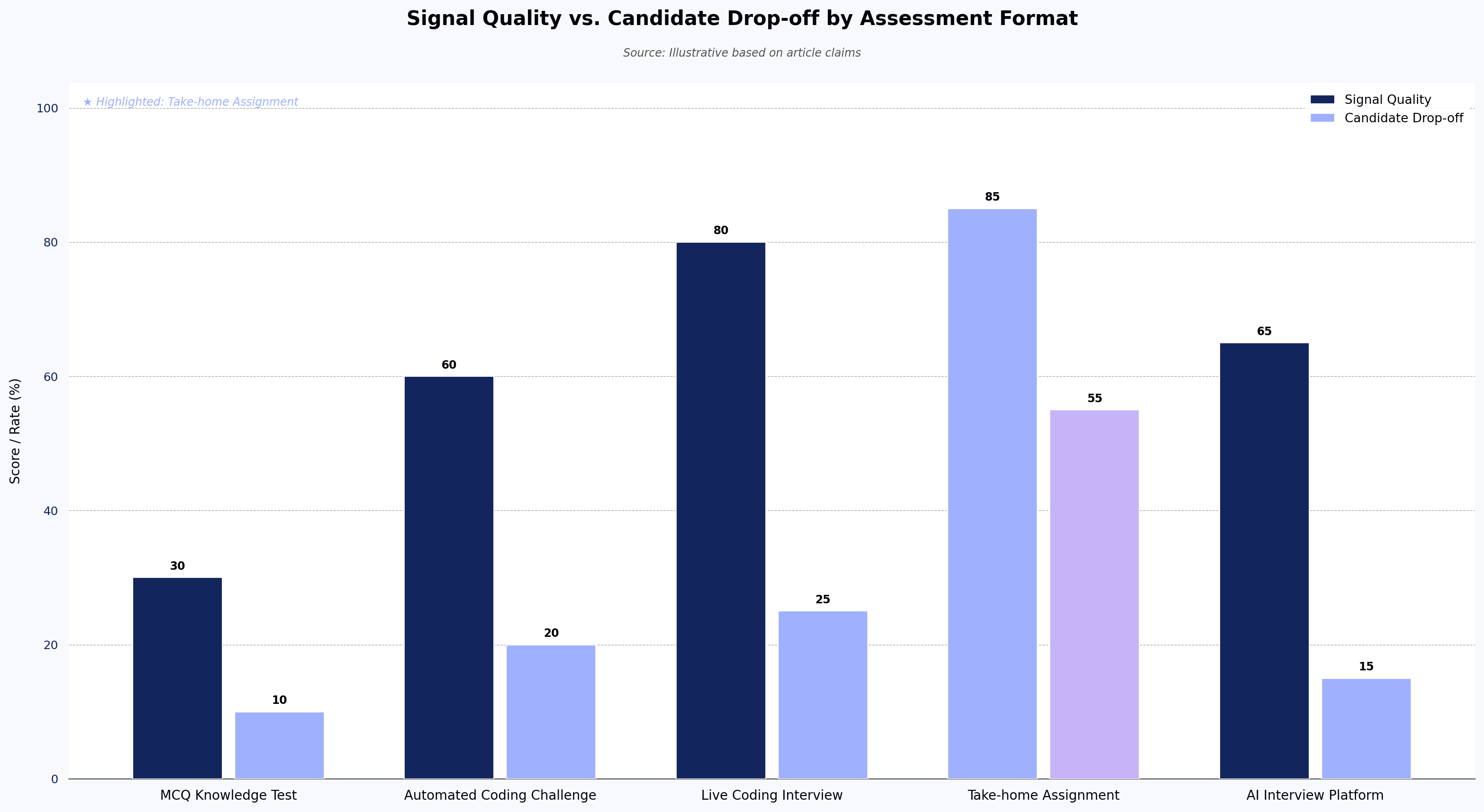
Furthermore, the format of the assessment profoundly affects the experience. Studies indicate that 62% of candidates experience significant anxiety during live technical interviews. In contrast, using take-home coding tests or simulated work environment challenges reduces this performance-limiting stress. This format allows candidates to demonstrate real-world problem-solving skills, conduct necessary research, and explore complex problems in an environment that more closely mirrors actual working conditions. 

5. Provide real-time, constructive feedback 

Providing timely, specific feedback is the most correlated factor with positive Candidate Net Promoter Scores (NPS), particularly among rejected candidates. Talent is four times more likely to consider applying again to a company that offers constructive feedback, demonstrating the long-term value of this practice.

To ensure feedback is effective, recruiters should adhere to a rigorous protocol:

  1. Timeliness: Feedback must be delivered as soon as possible after the interview or assessment, ideally within 24–48 hours, while the information is fresh in the candidate’s mind.
  2. Structure and objectivity: Feedback should be balanced, including both positive reinforcement of strengths and constructive identification of areas for improvement. It must remain professional, tied directly to the skills and requirements of the role, and avoid personal opinions.
  3. Actionability: The constructive elements must be actionable, offering clear, practical suggestions for improvement that the candidate can apply in future opportunities, transforming the rejection into a valuable learning interaction.

Delivering a generic, auto-generated rejection email is viewed as disrespectful and can immediately damage trust.

6. Create an inclusive, bias-free recruitment process

Ensuring fairness and inclusivity is a fundamental best practice, not only for ethical reasons but also for mitigating legal and reputational risk. This practice must now extend to the governance of automated tools used in screening. AI systems, particularly those powered by Large Language Models (LLMs), learn from historical data that often reflects and reinforces societal biases, creating risks of discrimination in hiring decisions.

Recruiters must adopt several strategies to mitigate both human and algorithmic bias:

  • Structured interviews: 72% of employers are now using structured interviews to standardize the evaluation process. By using a standard set of questions and clear scoring rubrics, organizations ensure that all candidates are assessed against the same objective criteria, significantly reducing the impact of unconscious bias.
  • Technological anonymization: Dedicated video interviewing and assessment software should be used to monitor for and reduce bias. Advanced platforms can anonymize applications and even transcribe speech to text during screening, allowing hiring managers to focus purely on skills, experience, and talent. Recruiters must prioritize accessible, intuitive platforms and ensure candidates are reassured that technical difficulties will not count against them.
  • Inclusive design: Job roles should be designed to be flexible by default, a practice that demonstrably increases applications from diverse groups, such as women. Job descriptions must avoid coded language and irrelevant requirements, ensuring that the roles are accessible to marginalized groups.

Critically, true inclusivity in 2025 demands rigorous AI governance. The "black box" nature of many AI algorithms, which obscures how decisions are reached, presents an ethical challenge. 

Key Metrics to Track:

  1. Candidate Satisfaction Scores (CSAT/NPS): This is the most direct gauge of sentiment and willingness to refer. Industry benchmarks show that the staffing industry Candidate NPS rose significantly to 30 in 2024. 
  2. Drop-Off Rates (by stage): Tracking where candidates abandon the process pinpoints friction. High drop-off rates often signal a too-lengthy application or assessment process, or a lapse in communication.
  3. Time-to-Hire (TTH) and Time-to-Contact: These operational metrics reflect efficiency and responsiveness. The average TTH is approximately 42 days, and given candidates' impatience (assuming ghosting after one week), reducing this cycle time is critical to maintaining positive sentiment.
  4. Offer Acceptance Rate: This metric serves as a final quality check on the entire candidate journey, indicating whether the experience was compelling enough to secure the top talent.

Conclusions and future outlook

The strategic management of Candidate Experience (CX) has become a primary driver of talent acquisition success in the competitive 2025 landscape. The central mandate for recruiters is the shift from transactional processes to relationship-based nurturing, grounded in fairness, transparency, and speed.

Moving forward, sustained CX excellence hinges on three strategic priorities:

  1. Prioritizing objectivity and fairness: The demand for fairness necessitates the widespread adoption of structured hiring methods and skills-based assessment technologies. By moving away from subjective evaluation towards objective measures of competence, organizations not only enhance the candidate experience but also mitigate the high risks associated with unconscious human bias and algorithmic bias in AI systems.
  2. Mastering communication velocity: Given the candidate's low threshold for perceived ghosting (one week of silence), rapid communication is mandatory. This requires leveraging LLM-powered automation for instant updates while using personalized data to maintain a high-touch, human connection.
  3. Establishing robust AI governance: HR leaders must ensure ethical oversight as agentic AI integrates deeper into recruitment. This means demanding transparency (XAI) and institutionalizing regular bias audits to ensure technology serves as an ally in reducing bias, rather than a system that reinforces historical inequalities.

Organizations focused on attracting elite technical talent must rely on objective assessment to fulfill the modern candidate's demand for a fair, skills-based evaluation.

FAQs: Candidate Experience Best Practices

How to make candidate experience better?

To improve the candidate experience, organizations must strategically focus on three fundamental areas: enhance speed by reducing Time-to-Hire and Time-to-Contact metrics; mandate transparency by publishing clear, skills-focused job descriptions and communicating next steps consistently; and ensure objectivity by implementing structured interviews and objective skills assessments.

What is the best candidate experience?

The best candidate experience is characterized by genuine respect for the candidate's time and effort, personalized communication that acknowledges their unique background, and a clear, objective evaluation process. This experience makes the candidate feel valued and ensures they are assessed based purely on the demonstrable skills relevant to the job, regardless of whether they are hired.

How to measure candidate experience?

Candidate experience is effectively measured by tracking a combination of operational efficiency metrics, such as Time-to-Hire, Drop-off Rates at each stage, and Offer Acceptance Rates, alongside subjective sentiment scores. The most critical sentiment metric is the Candidate Net Promoter Score (NPS) and Candidate Satisfaction (CSAT), which should be collected via short, stage-specific surveys sent immediately after key interactions to capture timely and accurate feedback.

Top Products

Explore HackerEarth’s top products for Hiring & Innovation

Discover powerful tools designed to streamline hiring, assess talent efficiently, and run seamless hackathons. Explore HackerEarth’s top products that help businesses innovate and grow.
Frame
Hackathons
Engage global developers through innovation
Arrow
Frame 2
Assessments
AI-driven advanced coding assessments
Arrow
Frame 3
FaceCode
Real-time code editor for effective coding interviews
Arrow
Frame 4
L & D
Tailored learning paths for continuous assessments
Arrow
Get A Free Demo