Why recruitment metrics are important
Recruitment metrics are measurable data points that provide a clear, quantitative view into the efficiency and effectiveness of the hiring process. These metrics act as a "GPS for your hiring process," providing direction and real-time feedback that helps teams stay on course toward their goals. By moving beyond gut feelings and subjective impressions, organizations can leverage these metrics to diagnose problems, identify opportunities, and validate the impact of their talent acquisition efforts on the broader business.
As companies navigate persistent talent shortages and a highly dynamic market for top professionals, the traditional approach to hiring is no longer sufficient.
Success now hinges on a strategic, data-driven framework that enables proactive decision-making and continuous process improvement. This evolution signifies a fundamental shift in the role of talent acquisition, transforming it from a mere administrative function into a critical pillar of business strategy. According to recent data, 87% of recruiting professionals agree that talent acquisition has become a more strategic function over the past year, underscoring this change.
The importance of tracking recruitment metrics cannot be overstated. They enable organizations to make more informed hiring decisions, pinpoint and resolve bottlenecks in the recruitment funnel, and optimize costs. Most critically, metrics provide a direct line of sight into the quality of new hires, which is arguably the most significant factor in long-term organizational success.
A study from LinkedIn's business resources highlights that poor hiring decisions can lead to higher turnover, increased training costs, and missed opportunities, demonstrating how metrics directly impact a company’s performance, productivity, and profitability. Therefore, understanding and leveraging recruiting metrics is no longer optional; it is the definitive roadmap for building a resilient and high-performing talent acquisition function.
Part I: The core pillars of recruiting metrics
For any talent acquisition team to operate effectively, a foundational understanding of key metrics is essential. These metrics can be broadly categorized into three pillars: efficiency and velocity, financial and ROI, and outcome and quality. Each provides a unique perspective on the health of the hiring process and contributes to a comprehensive, data-driven strategy.
1. Efficiency and velocity metrics
These metrics focus on the speed and fluidity of the hiring process, providing a measure of how quickly a team can move from an open role to a new employee.
Time-to-Fill
Time-to-Fill is a macro-level metric that measures the total duration from when a job requisition is approved to the day a candidate accepts the job offer. This metric provides a broad view of the entire recruitment process's efficiency.
Time−to−Fill = Date of Offer Acceptance − Date of Requisition Approval
- A shorter Time-to-Fill is a strong indicator of an efficient hiring process.
- A lengthy Time-to-Fill suggests significant delays, which can result in lost productivity and revenue from prolonged vacancies.
Time-to-Hire
While often used interchangeably with Time-to-Fill, Time-to-Hire is a more granular and focused metric. It tracks the duration from the moment a specific candidate first applies for a job to when they accept a formal offer.
Time−to−Hire = Date of Offer Acceptance − Date of Candidate Application
- This metric directly measures the internal recruiting team's efficiency and how quickly they can move an identified, qualified candidate through the funnel.
- Tracking both Time-to-Fill and Time-to-Hire provides a powerful diagnostic tool.
- A prolonged Time-to-Hire indicates delays in the candidate's journey, such as slow resume screening, long interview scheduling, or a protracted decision-making process.
Interview-to-Hire Ratio
The Interview-to-Hire Ratio is a crucial metric for evaluating the effectiveness of a team's pre-screening and candidate qualification processes. It is calculated by dividing the total number of candidates interviewed by the number of hires made from that pool.
Interview−to−Hire Ratio = Total Interviews ÷ Total Hires
- A low ratio indicates that the team's initial screening is highly effective at identifying well-suited candidates, reducing the time and resources spent on interviewing unqualified individuals.
- A high ratio, on the other hand, can signal a need to improve the initial stages of the funnel, whether through refining job descriptions, using better sourcing channels, or implementing more rigorous pre-screening assessments.
2. Financial and ROI metrics
Recruitment is a significant investment, and financial metrics are essential for demonstrating its return on investment (ROI).
Cost-per-Hire
Cost-per-Hire is a fundamental financial metric that measures the total expenses incurred to fill a single position.
Cost−per−Hire=Total Recruiting Costs÷Number of Hires
- The average Cost-per-Hire in the United States is approximately $4,129, though this can vary significantly based on the role, industry, and seniority level.
- A comprehensive calculation includes both internal and external costs. Internal costs encompass recruiter salaries, employee referral bonuses, and the labor costs associated with interviews and onboarding. External costs include advertising fees on job boards, agency commissions, technology subscriptions, and travel or relocation expenses for candidates.
Tracking this metric is vital for budgeting, resource allocation, and identifying opportunities to optimize recruitment spending without compromising the quality of hires.
3. Outcome and quality metrics
These metrics move beyond efficiency and cost to assess the actual value and long-term success of the hiring process.
Quality of Hire (QoH)
Quality of Hire is widely regarded as the most important recruiting metric, as it evaluates the long-term performance and contribution of new employees. Unlike other metrics, QoH is a composite index, not a single data point.
It is calculated by combining several post-hire indicators into a single score. A comprehensive Quality of Hire index often includes:
- Performance score: Based on formal performance reviews, typically conducted at 3, 6, or 12-month intervals.
- Hiring manager satisfaction: Gauged through surveys that ask managers to rate the new hire's performance, cultural fit, and overall contribution.
- New hire retention rate: The percentage of new hires who remain with the company for a specific period, such as one year.
- Time to productivity: The duration it takes for a new hire to become fully effective in their role.
The formula for the Quality of Hire Index is:
Quality of Hire Index = (Performance Score+Manager Satisfaction+New Hire Retention Rate+Time to Productivity)÷4
A high Quality of Hire is directly linked to business success, leading to increased team productivity and innovation. Conversely, a low QoH can result in wasted training costs, high turnover, and reduced employee morale.
Offer acceptance rate
The offer acceptance rate is a clear indicator of the competitiveness and appeal of an organization's job offers. It measures the percentage of job offers extended that are ultimately accepted by candidates.
Offer Acceptance Rate=(Offers Accepted÷Total Offers Made)×100
- A low Offer Acceptance Rate suggests that the company's offers—whether due to salary, benefits, company culture, or the overall candidate experience—are not competitive enough to secure top talent.
- Benchmarks suggest that an offer acceptance rate above 90% is considered excellent, indicating a highly effective and appealing recruitment process.
New hire retention rate
This metric, a key component of the Quality of Hire index, focuses on the stability of a company's new workforce. It is calculated as the percentage of new employees who are still employed after a set period, typically their first year.
New Hire Retention Rate = (Number of New Hires at End of Period÷Number of New Hires at Start of Period)×100
- A high new hire retention rate signifies that the hiring and onboarding processes are effective at finding individuals who are a good long-term fit for the role and the company culture.
- A high rate of first-year attrition, in contrast, is a red flag that points to potential issues with the hiring process, the accuracy of job descriptions, or the new hire onboarding experience.
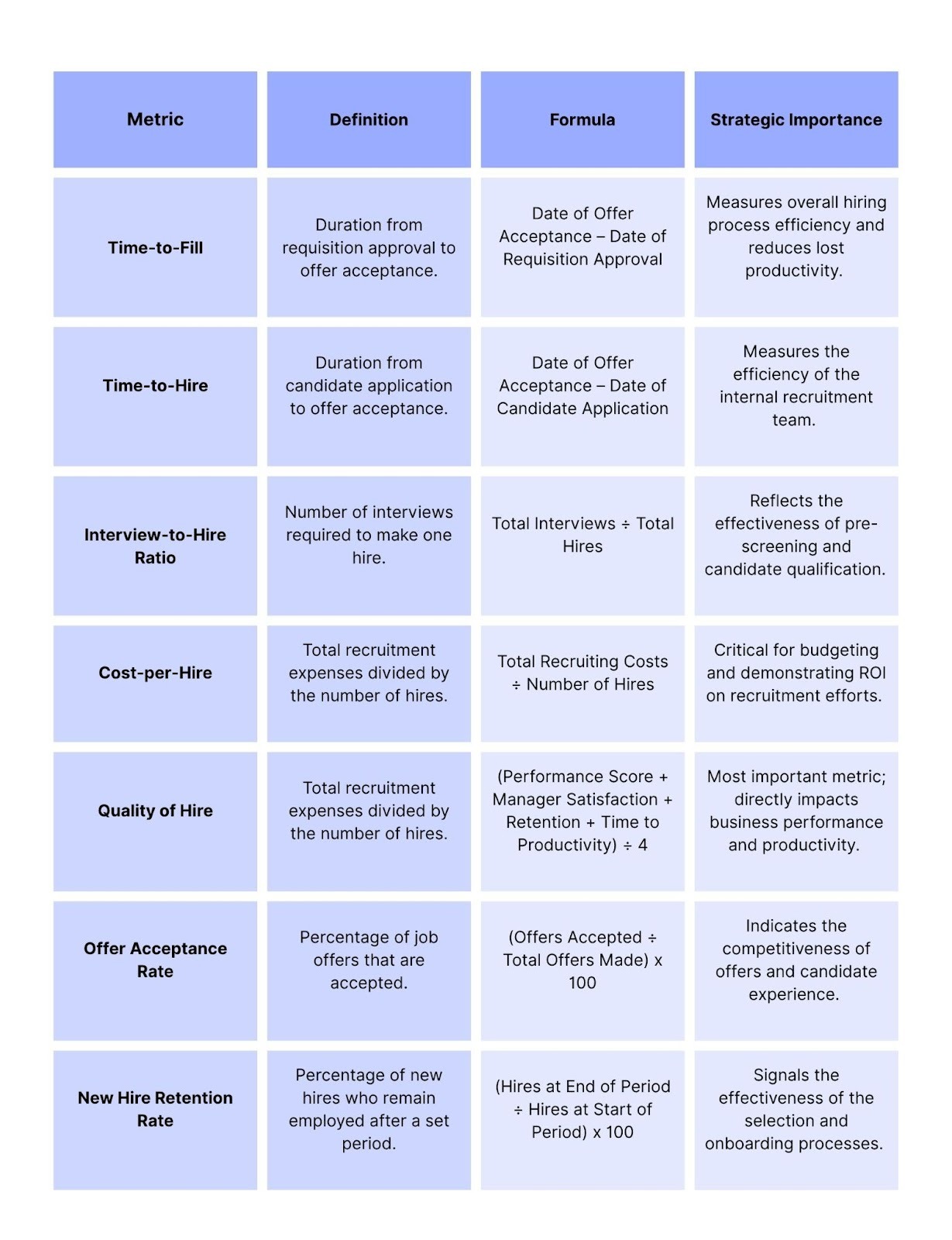
Essential recruiting metrics, formulas, and impact
Best practices for tracking and optimizing your metrics
Collecting data is only the first step; the real value lies in using it to inform strategy and drive continuous improvement. A modern, expert-level talent acquisition team relies on technology to automate data collection, integrate systems for a holistic view, and leverage advanced tools to enhance the quality of hire.
1. Automate data collection
Manual data collection, often performed through spreadsheets, is a significant drag on efficiency and is highly susceptible to human error. Automation is not a luxury but a necessity for accurate and timely reporting, especially in high-volume environments. AI and machine learning tools are transforming this process by automating tedious tasks like resume screening, interview scheduling, and candidate communication. This frees up recruiters to focus on high-value, human-centric activities such as candidate engagement and strategic planning. AI-driven platforms can process large volumes of applications, identify top matches based on skills, and handle routine inquiries with chatbots, ensuring candidates are kept informed and engaged without constant manual intervention from the recruitment team.
2. Leverage your ATS for deeper insights
An Applicant Tracking System (ATS) is the foundational technology for a metrics-driven recruitment team. It serves as a centralized data hub, automating the tracking of candidate movement through the funnel and providing real-time analytics. The true power of an ATS is realized through its ability to integrate seamlessly with other tools. By connecting to job boards, HRIS systems, and assessment platforms, an ATS creates a unified data pipeline. This eliminates data silos and provides a comprehensive view of the entire hiring process, from initial application to final onboarding. A robust ATS provides dashboards that allow for a quick, visual understanding of key metrics, enabling swift and data-informed decision-making.
3. Enhance quality of hire with skill-based assessments
The rise of skill-based hiring represents a significant evolution in recruitment, prioritizing a candidate's abilities over traditional credentials. This approach directly addresses the challenge of improving Quality of Hire by providing an objective, data-driven evaluation of a candidate's potential.
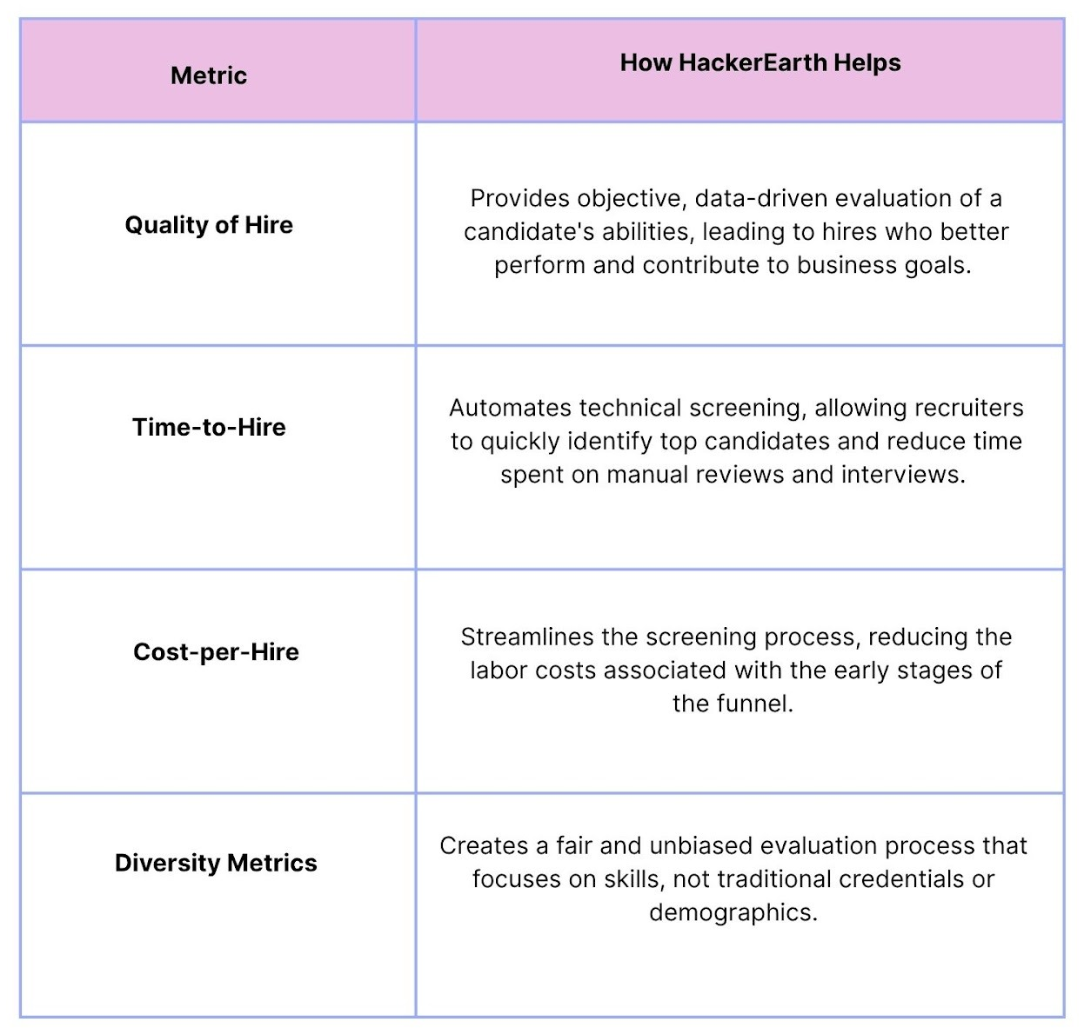
HackerEarth provides a suite of AI-powered skill-based assessments that directly impact key recruiting metrics. By moving beyond traditional resume screening, these platforms offer a clear, objective view of a candidate's technical abilities through coding tests, hackathons, and project-based questions. This approach helps companies hire top performers who might not have a conventional background, thereby enhancing Quality of Hire.26 The objective nature of these assessments also helps to reduce unconscious bias, creating a more equitable evaluation ground for every candidate.
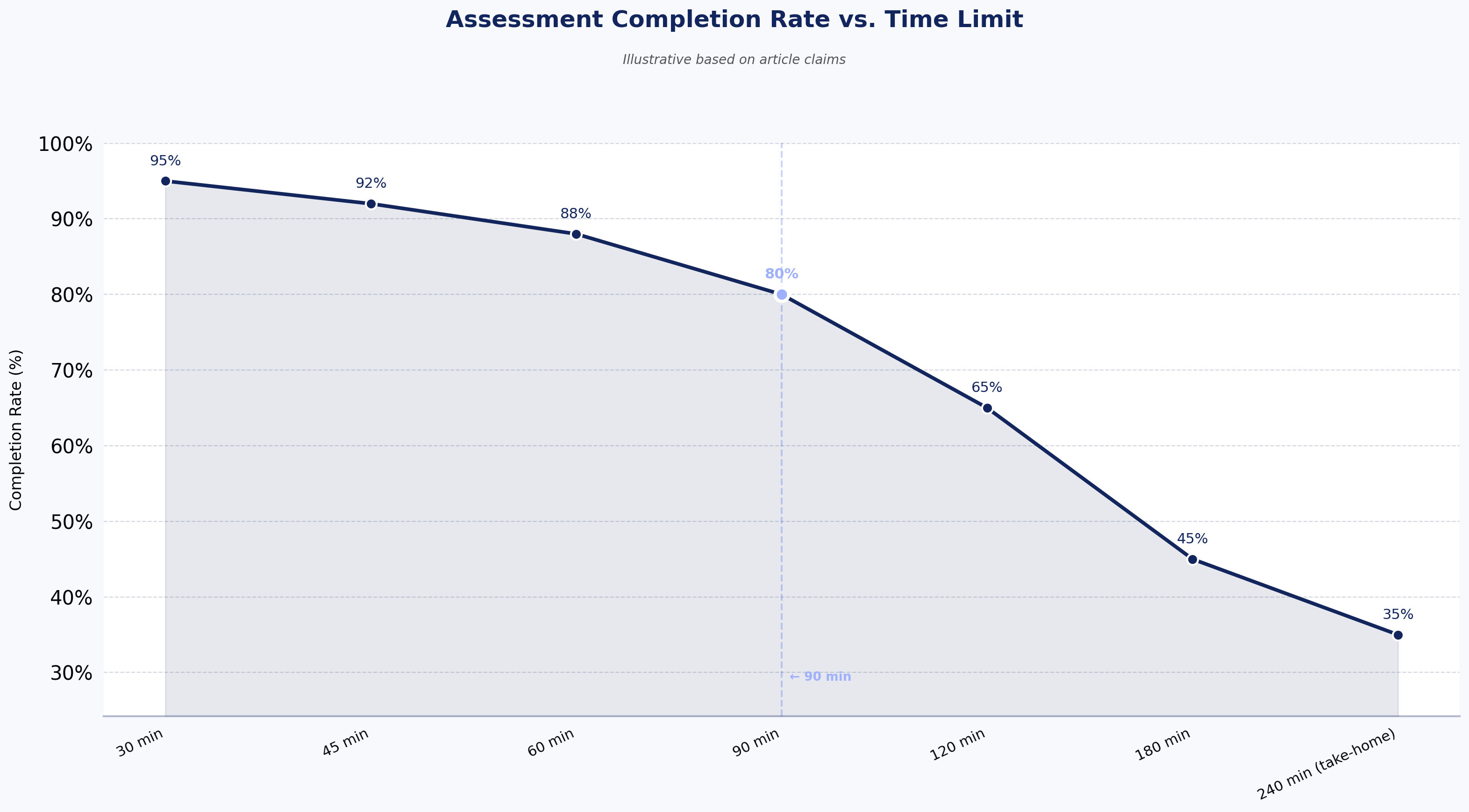
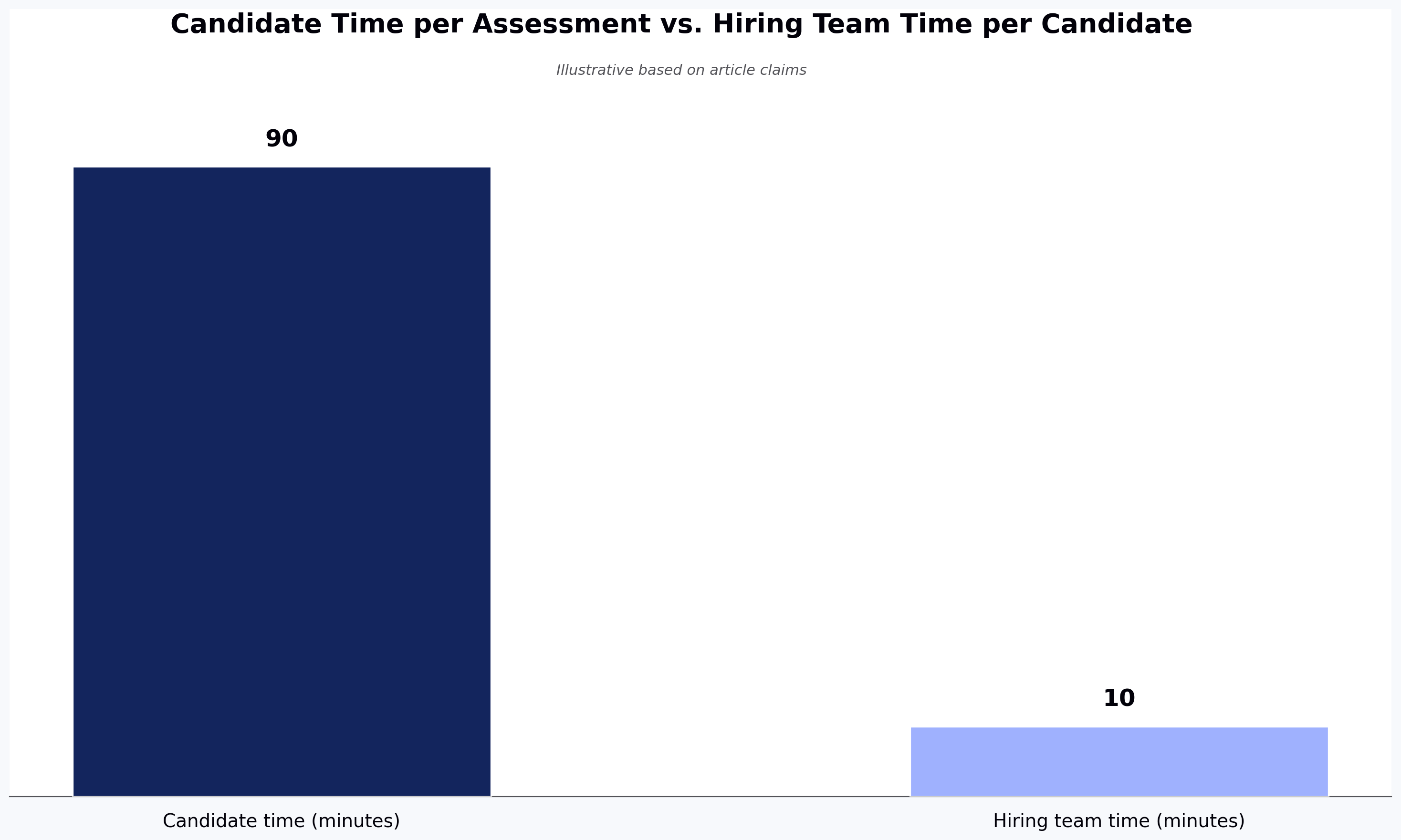
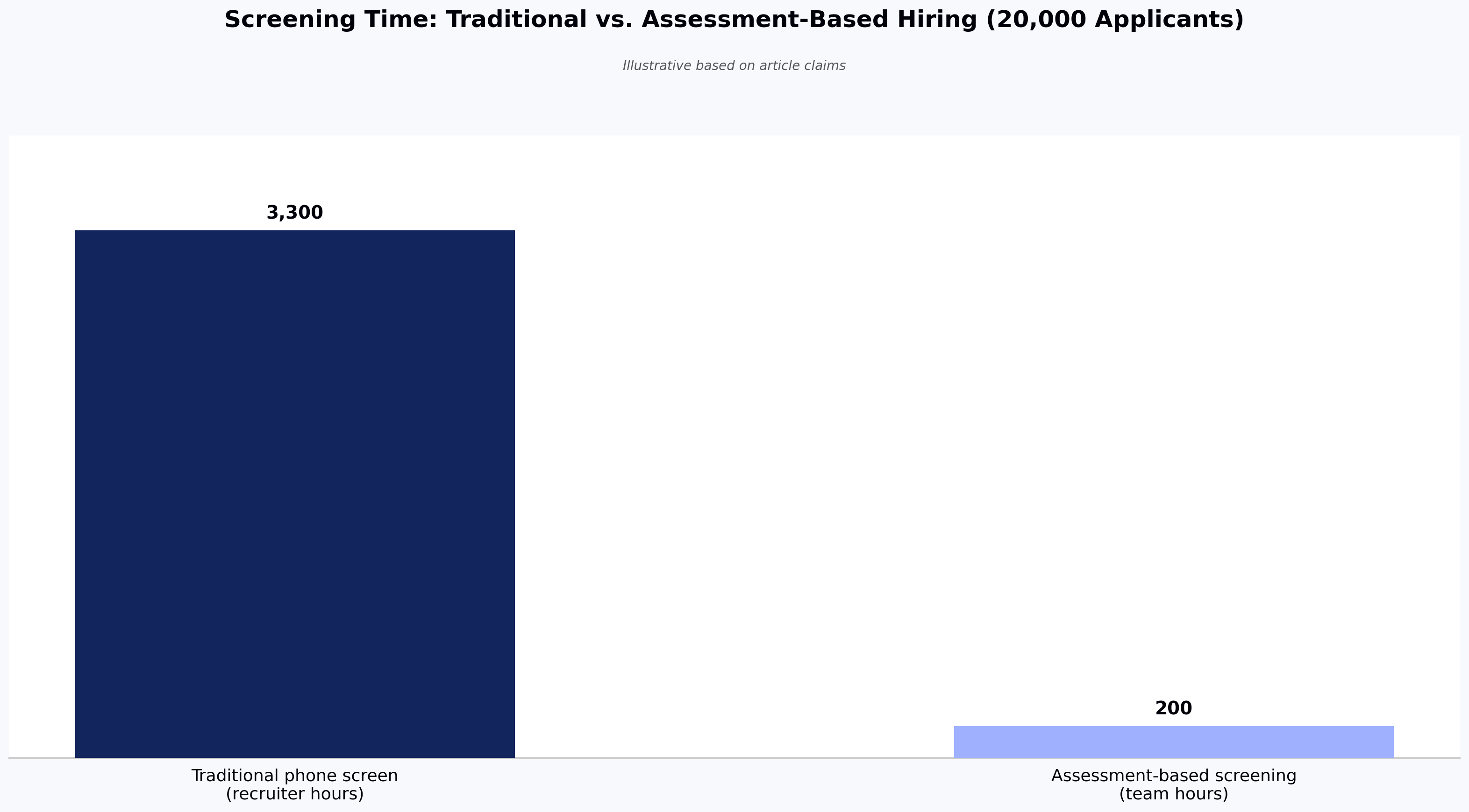
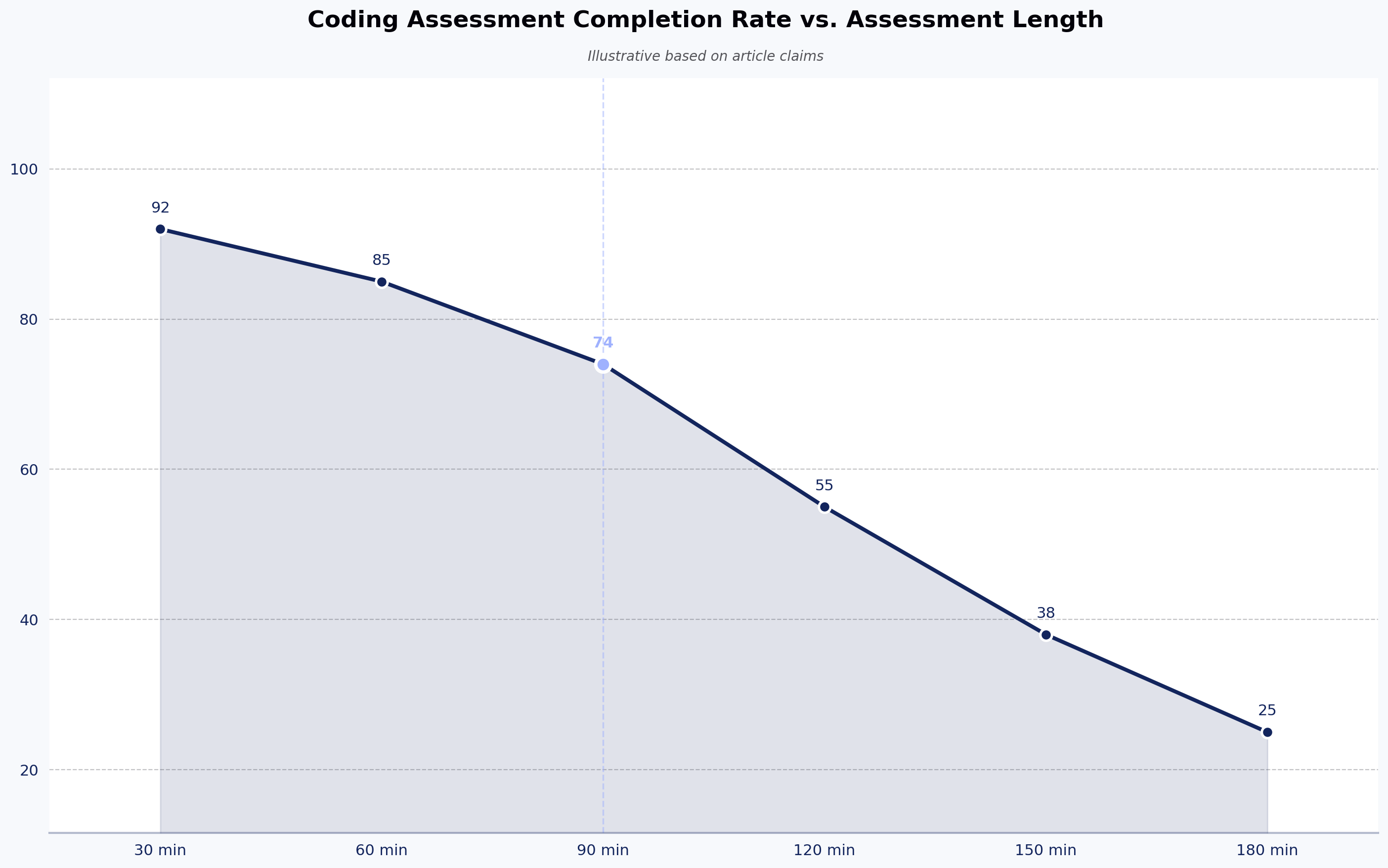
Furthermore, HackerEarth's solution significantly impacts efficiency metrics. Automating the technical screening process allows recruiters to quickly filter out unqualified candidates, reducing the time spent on manual resume reviews and unnecessary interviews. This directly contributes to a shorter Time-to-Hire and a lower Cost-per-Hire by streamlining the labor-intensive early stages of the recruitment funnel.
How skill-based assessments impact your metrics
Strategic analysis: from data to decision-making
Collecting metrics is the baseline; the true hallmark of an expert-level talent acquisition function is the ability to use that data to drive a strategic, proactive approach. Metrics are not static numbers to be reported on but dynamic tools for continuous improvement.
A fundamental best practice is to engage in continuous analysis and benchmarking. This means regularly reviewing metrics to identify emerging trends and predict future needs. A talent acquisition team should compare its performance against both internal and external benchmarks. For example, while the average Time-to-Fill is 42 days, a company might find that its internal benchmark for a specific role is 60 days. This internal comparison immediately signals a need for process optimization in that area.
Moreover, a sophisticated team understands the importance of building a comprehensive recruitment metrics dashboard. This dashboard provides real-time visibility into key performance indicators, enabling leaders to identify bottlenecks, reallocate resources, and make swift, data-driven decisions. By tracking and analyzing metrics, a team can move beyond a reactive stance, anticipating talent needs and building a talent pipeline before a position even becomes vacant.
Conclusion
The modern talent acquisition function requires a strategic, data-driven approach to navigate a competitive and complex landscape. By systematically tracking and analyzing key recruiting metrics, organizations can gain the necessary clarity and control to build a more efficient, cost-effective, and successful hiring process.
This report has detailed the core pillars of recruiting metrics, from the foundational measures of Time-to-Fill and Cost-per-Hire to the critical outcome-based metric of Quality of Hire. It has also explored the specialized metrics required for high-volume and DEI hiring, demonstrating how a tailored approach to data can solve complex, modern challenges. The central message is one of interconnectedness: no single metric tells the whole story. Instead, true success is achieved by understanding the entire recruitment funnel, identifying the cause-and-effect relationships between its stages, and leveraging data to create a feedback loop of continuous improvement.
For any organization seeking to transform its recruitment function, the path forward is clear: embrace technology and data as a strategic imperative. HackerEarth offers an essential tool for this transformation. Simplifying the process of tracking and improving key recruiting metrics through automated, skill-based technical assessments saves valuable time and costs while enhancing the quality of hire. With the correct data and the right technology, any talent acquisition team can build a more efficient, effective, and equitable hiring process, ensuring it not only meets the business's current needs but also fuels its long-term growth.